
CMAS
Nero-Sport Diving Center, Zakynthos, Griechenland
Google 5/5 (650 reviews)
11 km away as the crow flies
Zakynthos · Greece · Mediterranean
Max. depth · 40 mDescend along a wall into a canyon that leads towards the main Blue Cave, experiencing an overhead environment in depths up to 40 metres.
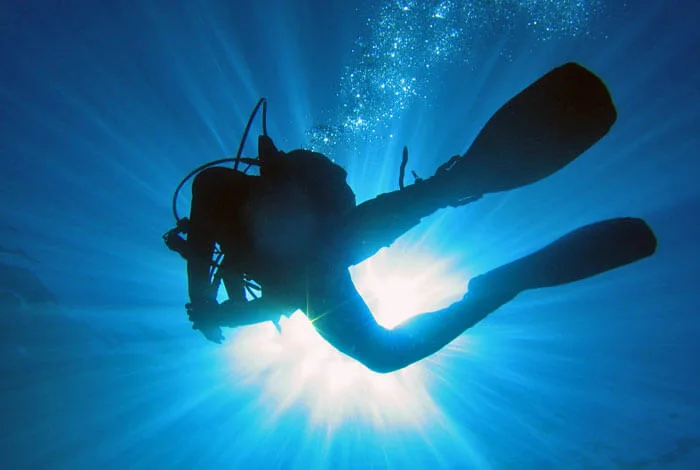
Diving the Blue Caves on Zakynthos' north coast takes you into a unique underwater landscape, distinct from the popular tourist boat routes. The dive begins with an initial drop-off over a white sand bottom, which quickly transitions into a wall descent. As you follow the wall, you'll find the topography shifting, guiding you deeper into a natural canyon formation. This early section sets the tone for a dive that explores both open water and more enclosed features, demanding attention to depth and surroundings.
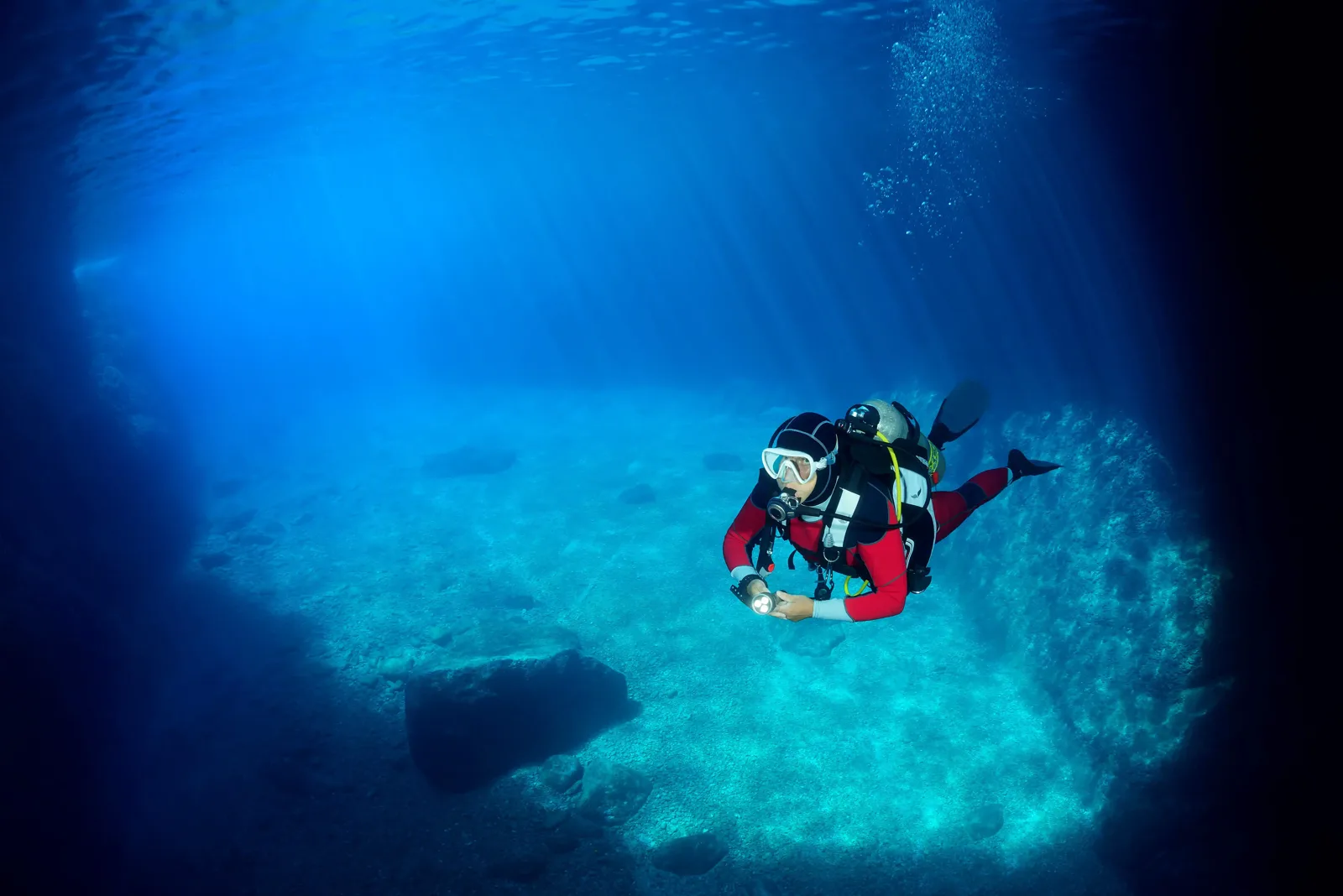
Following the canyon, the route leads directly towards the main natural cavern, which forms a significant overhead environment. This is not a simple swim-through; the cavern system here is extensive, requiring careful navigation and awareness of your air consumption and no-decompression limits. Light filters in from the cavern entrance, creating a dynamic visual experience as you move deeper into the protected space, contrasting with the open water beyond the canyon.
Within the cavern and along the surrounding rock formations, you will encounter diverse marine life adapting to the sheltered conditions. Sea bream (Sparus aurata) move through the filtered light, while yellowtail damselfish (Chromis chromis) school closer to the walls. Octopus (Octopus vulgaris) can often be found in crevices, and snowflake morays (Echidna nebulosa) might be spotted in their hideouts, adding to the variety of the resident fauna.
Beyond the main cavern, the dive continues to explore the complex topography, including large boulders that have detached from the cliff face over time. These provide additional habitat and cover. Further along, a notable pinnacle rises from the seabed, adorned with soft sponges. This structure acts as a focal point, drawing your attention away from the main cliff and offering a different perspective on the geological features of the site.
Visibility at the Blue Caves varies, ranging from 5 to 30 metres depending on conditions. This fluctuation can significantly alter the experience, particularly in the cavern, where clearer water allows more light penetration and extends the visual range. The current here is generally light, making for a less physically demanding dive, which is important given the overhead environment and the need for precise buoyancy control.
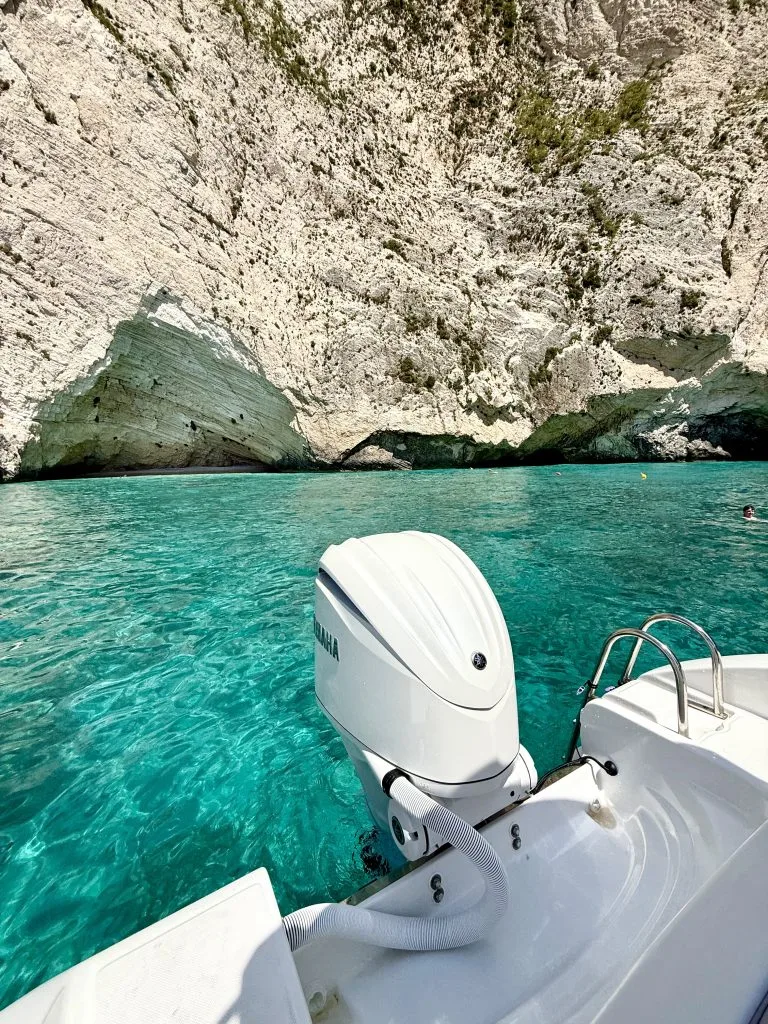
Access to the Blue Caves for diving is exclusively by boat, given the site's location on the northern coast near Cape Skinari. While some smaller caves in the area are shore-accessible, the main Blue Caves require boat transport. The dive experience is heavily influenced by weather and sea conditions; rough seas or strong winds can prevent safe entry into the cave systems, so planning is essential. Boat traffic within the caves also requires careful consideration.
The combination of a wall, canyon, and an extensive natural cavern sets this site apart from typical wall dives or simple cave explorations. It demands a diver who is comfortable with overhead environments and has the experience to manage varying light conditions and a deeper profile. The site's reputation as more than just a scenic stop is well-earned, offering a genuine technical and ecological challenge beneath the surface.
The maximum depth of 40 metres allows for extended bottom time within recreational limits for appropriately certified divers, but careful planning for an overhead environment is crucial. The interplay of light and shadow, combined with the structural complexity, creates an immersive experience that unfolds gradually as you navigate the different sections of the dive. This is a site that rewards preparedness and mindful diving.
This is an Advanced Diver site, primarily due to the maximum depth of 40 metres and the overhead cavern environment. Visibility can range from 5 to 30 metres, influenced by weather and sea conditions. Current is typically light, however access is strictly by boat and can be limited by wind and sea state. Diving is best experienced between May and October, when sea conditions are generally calmer.
Blue Caves is best experienced between May and October, when sea conditions are generally calmer. Because access is exclusively by boat, wind and sea state can affect whether the site is reachable. Weather also influences visibility, which may range from 5 to 30 metres during the dive.
Blue Caves is an Advanced Diver site because the dive can reach 40 metres and includes a significant natural overhead cavern environment. The route combines a wall descent, canyon formations and enclosed spaces, so you need careful depth awareness, precise buoyancy control, air management and attention to no-decompression limits.
Blue Caves is accessible only by boat, and rough seas or strong winds can prevent safe entry into the cave systems. The current is typically light, making the dive less physically demanding, but you still need to consider changing sea conditions, the overhead environment and boat traffic within the caves.
At Blue Caves, you can follow a white sand bottom into a deep wall, canyon formations and a natural cavern. Sea bream and yellowtail damselfish occupy the filtered light, while octopus and snowflake morays may shelter in crevices. Large boulders and a soft sponge-covered pinnacle add further structure.