
CMAS
Nero-Sport Diving Center, Zakynthos, Griechenland
Google 5/5 (650 reviews)
4.6 km away as the crow flies
Zakynthos · Greece · Mediterranean
Max. depth · 30 mDescend into the Keri Caves to navigate vast caverns, explore narrow tunnels, and surface in a natural chamber where bats reside above a milky sulphur layer.
For subtitles in English: start the video firstthen click the gearat the top right of the video, select “Subtitles/CC”, then “Auto-translate” and choose “English”.
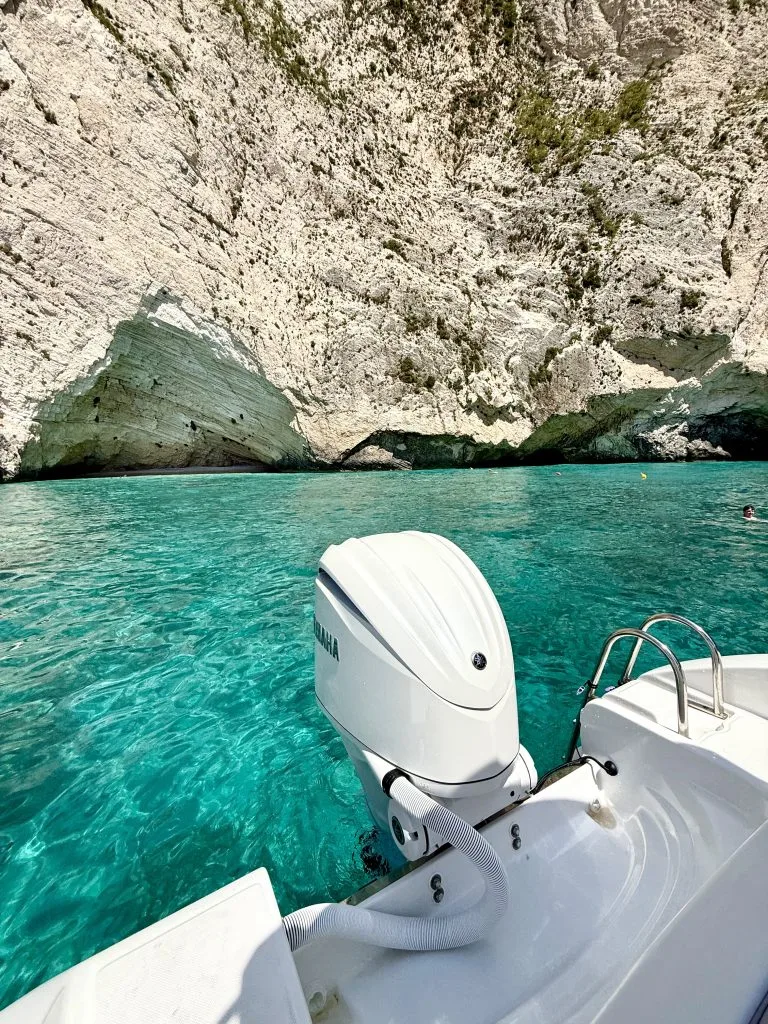
Diving Keri Caves in Zakynthos presents a unique exploration of interwoven cave and cavern systems. The site itself begins with mooring typically about 25 minutes from the harbour, bringing you into a limestone landscape carved by the sea. These caves are not just simple rock formations; they are complex environments, with varying profiles and conditions that require careful attention to dive planning and buoyancy.
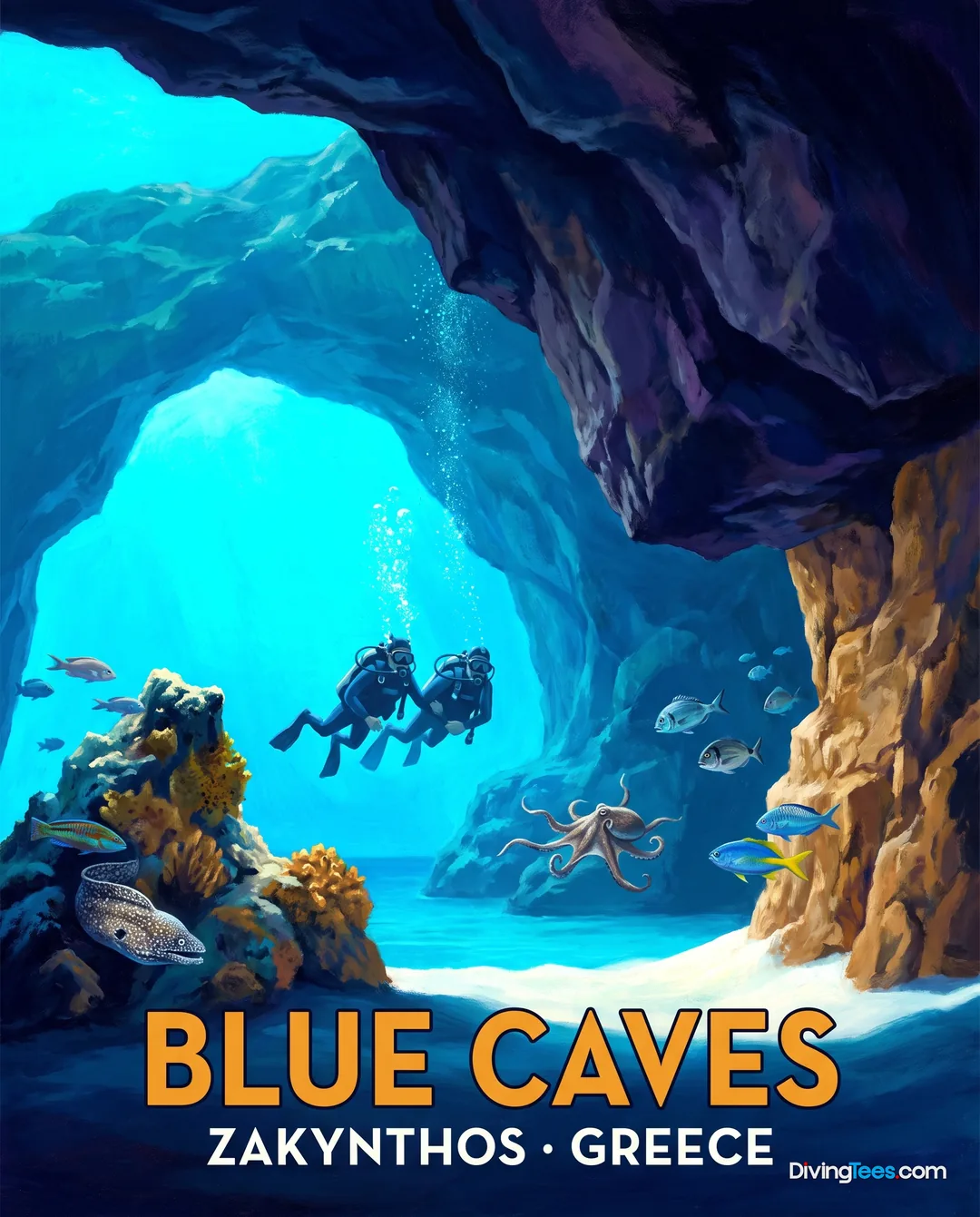
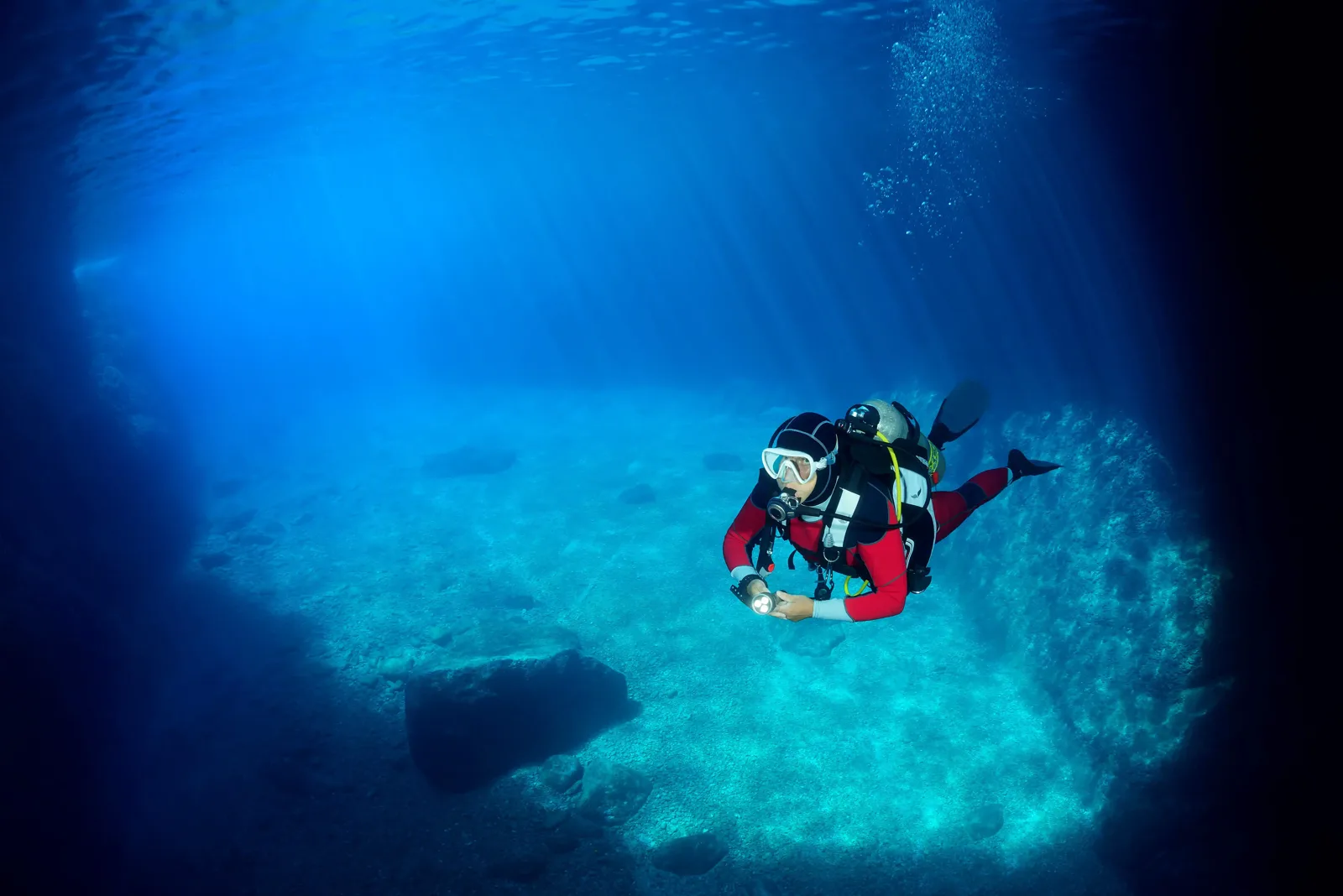
One of the initial points of interest is a large cavern, sometimes referred to as the Blue Cave, which begins at around 12 metres and exits at 5 metres. This cavern is substantial, like a natural cathedral, allowing multiple divers to swim abreast. Inside, it's notably dark, apart from the entrance light, making a dive torch essential to appreciate the scale and features of the rock formations within. This particular cavern is open from the top, providing an overhead environment that is still connected to the surface, maintaining a degree of ambient light despite its depth.
Beyond this larger cavern, if you follow the wall to the right upon exiting, you’ll find an archway at 12 metres that leads to another distinctive chamber. This space holds a layer of sulphur on top of the saltwater, creating a dense, milky soup about one metre thick. Dropping below this layer reveals crystal-clear water and a unique visual separation, but passing through it can momentarily reduce visibility to zero. This phenomenon is a signature characteristic of Keri Caves and demands controlled movement.
For divers seeking a different challenge, one of the three main cave systems here offers an advanced dive profile. Entry to this particular cave is at 30 metres, leading into a narrow tunnel. This tunnel eventually opens into a larger chamber filled with shrimp, a specific biotope that thrives in these sheltered, nutrient-rich environments. The exit from this cave is shallower, at 17 metres, requiring careful navigation through the internal structure.
Another accessible cavern, suitable for certified divers, starts at 9 metres and features an open top along a long passage. This design allows for a more relaxed exploration, as surface light continually filters in. A third grotto, also at 9 metres, offers an additional natural chamber where divers can surface within the cave itself for a safety stop before their final ascent, adding another layer to the variety of the site.
Marine life within the caves themselves often includes shrimp, particularly in the deeper, enclosed spaces. If you're fortunate, you might encounter a Mediterranean monk seal (Monachus monachus) moving through the caverns or near the entrances. Bats also inhabit the natural chambers that extend above the waterline, making the transition from underwater exploration to an air-filled grotto a unique experience.
Outside the caves, or on the surface approach, there's a chance to spot dolphins or other larger pelagic species. While the focus of Keri Caves is primarily on the geological formations and unique overhead environments, these encounters provide an added dimension. The dive here is as much about the exploration of geology as it is about the resident marine life shaped by these specific conditions.
Keri Caves offers dive depths ranging from a minimum of 5 metres to a maximum of 30 metres. The site is generally accessible for certified divers, with specific cave systems designated for Advanced Open Water Diver certification or higher due to depth and overhead environments. There is no specific current information for this site, and visibility typically remains good outside the unique sulphur layer.
Keri Caves is generally accessible to certified divers, while specific cave systems require Advanced Open Water Diver certification or higher. These areas involve greater depth and overhead environments, including narrow tunnels and internal chambers. Careful dive planning and buoyancy control are important throughout the interconnected cave and cavern systems.
Keri Caves ranges from 5 to 30 metres. The large Blue Cave begins at about 12 metres and exits at 5 metres, while another cavern starts at 9 metres. The advanced cave system begins at 30 metres and exits at 17 metres, requiring careful navigation through its narrow internal passage.
Visibility at Keri Caves is typically good outside the sulphur layer. Passing through the milky, roughly one-metre-thick layer can temporarily reduce visibility to zero, so controlled movement is essential. The caves also include overhead environments, darkness in the larger cavern, and passages where careful attention to buoyancy is needed.
Keri Caves features three cave and cavern systems, narrow tunnels, cathedral-like chambers, and a natural air-filled chamber where you can surface. You may see shrimp in the deeper enclosed spaces and possibly Mediterranean monk seals near the caverns or entrances. Bats inhabit chambers above the waterline, while dolphins may appear near the surface approach.