
Aquatours Almeria
Google 4.9/5 (272 reviews)
Spain · Mediterranean
Volcanic ledges, posidonia meadows, small arches and groupers meet beneath the arid landscapes of Cabo de Gata-Níjar.
For subtitles in English: start the video firstthen click the gearat the top right of the video, select “Subtitles/CC”, then “Auto-translate” and choose “English”.
Almería is a shore-based diving destination built around the volcanic coast of Cabo de Gata-Níjar. Underwater, the hard relief gives way to posidonia meadows, sandy patches, walls, arches and small cavities, while above the surface the landscape is dry, open and distinctly volcanic. San José, La Isleta del Moro, Las Negras, Agua Amarga and Carboneras provide different starting points. It suits a mixed-age group, with introductory dives and training alongside guided exploration for qualified divers.
The diving alternates between volcanic rock, drop-offs, posidonia meadows, sand and small overhangs. Some sections are best explored slowly, with a torch aimed into cracks rather than with an eye fixed on the open water. Currents are variable, so a planned route may become a gentle search along the rock or a drift dive, depending on the local conditions. Visibility also changes with the sea, and clearer water is associated with calmer periods rather than a guaranteed season-wide figure. Boat outings reach the reserve and other coastal sectors, while shore dives are available from several villages. Centres also arrange deeper dives for suitably qualified divers, as well as guided trips, courses and occasional Nitrox use for repetitive days.
The reward here is close inspection rather than a promise of constant pelagic action. Groupers, conger eels, moray eels, sparids, sea bass and octopuses use the volcanic cracks, ledges and small cavities, while posidonia meadows bring their own detail and movement. Nudibranchs are a particular reason to slow down during winter and spring. Eagle rays are an occasional late-summer encounter, not a dependable feature of every outing. The reserve and rocky habitats also make the bottom itself worth studying, from sand meeting rock to the edges of the seagrass. A patient diver who searches the anfractuosities will generally see more than one who simply scans for large animals.
Almería can be dived throughout the year, but the sensible choice is to build flexibility into the trip rather than chase a supposedly perfect month. Calm spells can bring clearer water, while winter and spring add interest for nudibranch watchers. Late summer offers the possibility of an eagle ray, though it remains occasional. Conditions and access can affect which sector is practical on a given day, particularly where boat diving and reserve rules are involved. A five- to seven-day stay gives room to move between villages, accept a changed departure point and keep one day free when the sea or the permit arrangements do not suit the original plan.
Beginners are catered for through introductory dives and training, and the volcanic shallows and shore entries can make a measured first experience. Certified divers can join guided boat or shore dives, with more demanding relief and deeper options available locally. An Advanced qualification, or an equivalent BSAC, PADI or SSI level, is useful for deeper dives. Nitrox may suit repetitive days if offered by the chosen centre, but it does not replace the need to match the dive to conditions and experience.
From London or Manchester, the usual approach is by air to Almería, followed by a hire car or road transfer to the chosen coastal village. The alternative is a longer road journey from elsewhere in Andalusia. There is no structural ferry or domestic flight leg for reaching Cabo de Gata. The important logistical point is that Almería is not the actual departure point for every dive. Bases are spread along the coast, so choose accommodation near the harbour or centre where the boat leaves. Some places can be managed on foot once settled in the village, but moving between San José, La Isleta del Moro, Las Negras, Agua Amarga and Carboneras requires a car, taxi or an agreed shuttle.
Do not book under the name Almería alone and assume the diving will be nearby. First identify the village and the centre’s actual departure point, then ask which coastal sector the trip uses. Before paying for a reserve outing, establish which administrative zone it enters and who handles the required authorisation for autonomous recreational diving. The marine reserve is not simply an extension of the land park: some areas prohibit diving, and anchoring is forbidden in the reserve. Keep the plan flexible, because a boat day may move between Cabo de Gata, Carboneras, the Mojácar coast and other local sectors when conditions or permissions dictate. Take thermal protection suited to the time of year and confirm the equipment configuration locally. For better wildlife encounters, spend time over crevices and posidonia rather than expecting large pelagic animals. A free day is useful here, not wasted time.
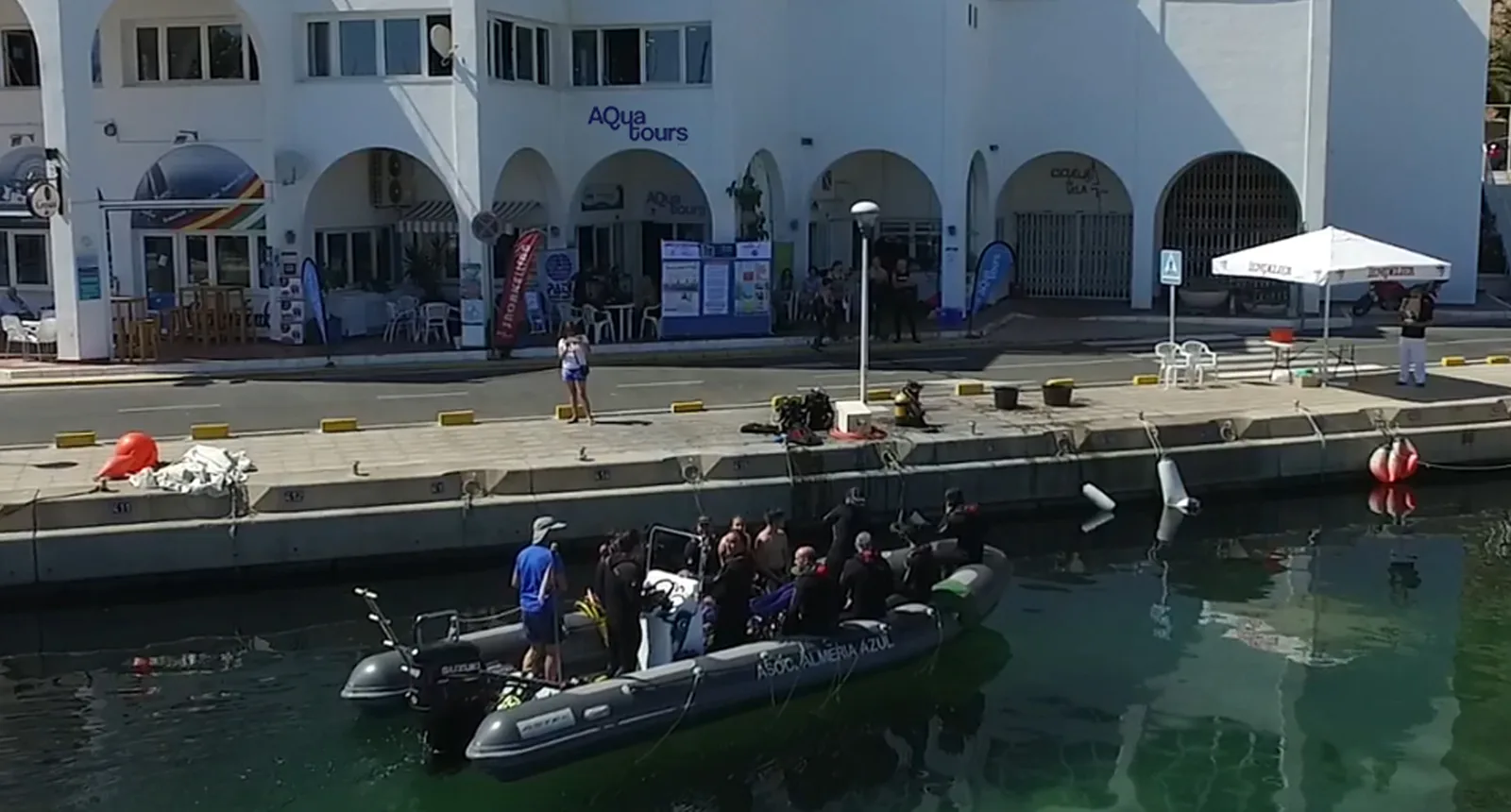
This is a land-based diving holiday, with daily boat trips and shore dives from coastal villages rather than a liveaboard. San José, La Isleta del Moro, Las Negras, Agua Amarga and Carboneras each give access to a different stretch of coast, so staying close to the chosen harbour keeps the routine simple. The same arrangement works for non-divers, with volcanic walks, beaches, snorkelling, birdwatching around the saltworks, village visits and kayaking when conditions allow.
Hello, I'm Marina, DivingDeal.com's AI assistant. I guide you through destinations, areas and countries.
Thinking about the whole trip and the flights? Talk it over with Edith →
Marina is an AI. Some links are affiliate links: DivingDeal may earn a commission, at no extra cost to you. Bookings are made with the partner.
You can dive in Almería throughout the year, but flexible planning matters because conditions and access can change. Calm spells may bring clearer water, while winter and spring suit nudibranch watching. Late summer offers an occasional chance of seeing eagle rays. Keep a free day for unsuitable sea conditions or permission issues.
Almería suits beginners through introductory dives, training and accessible shore entries. Qualified divers can join guided boat or shore dives, while deeper and more demanding relief is available locally. An Advanced qualification or equivalent level is useful for deeper dives. Match every dive to your experience, the conditions and the planned route.
In Almería, you can explore volcanic walls, drop-offs, arches, caverns, ledges, sandy patches and posidonia meadows. Rocky cracks and cavities shelter groupers, conger and moray eels, sparids, sea bass and octopuses. Slow searching may reveal nudibranchs, especially in winter and spring, while eagle rays appear occasionally towards late summer.
Plan your Almería stay around a specific coastal village and diving centre rather than the destination name alone. San José, La Isleta del Moro, Las Negras, Agua Amarga and Carboneras offer different bases. Stay near the actual harbour, arrange transport between villages, confirm reserve authorisation and departure sectors, and keep your itinerary flexible.