
Simply Diving
Google 4.3/5 (178 reviews)
Spain · Mediterranean
Rocky reefs, shallow wrecks, octopus and the walls, canyons and pinnacles of Las Bóvedas put Marbella’s easy shore diving beside deeper offshore water.
For subtitles in English: start the video firstthen click the gearat the top right of the video, select “Subtitles/CC”, then “Auto-translate” and choose “English”.
Las Bóvedas puts walls, canyons and pinnacles into the same holiday as Marbella’s shallow shore sites and wrecks. That makes the town useful for divers travelling with mixed experience, or with a non-diving partner who would rather have beaches, a historic centre and coastal walks. Start gently around Tower or a nearshore structure, then move offshore when conditions and experience justify it. The result is a land-based Mediterranean diving break with plenty to do between dives.
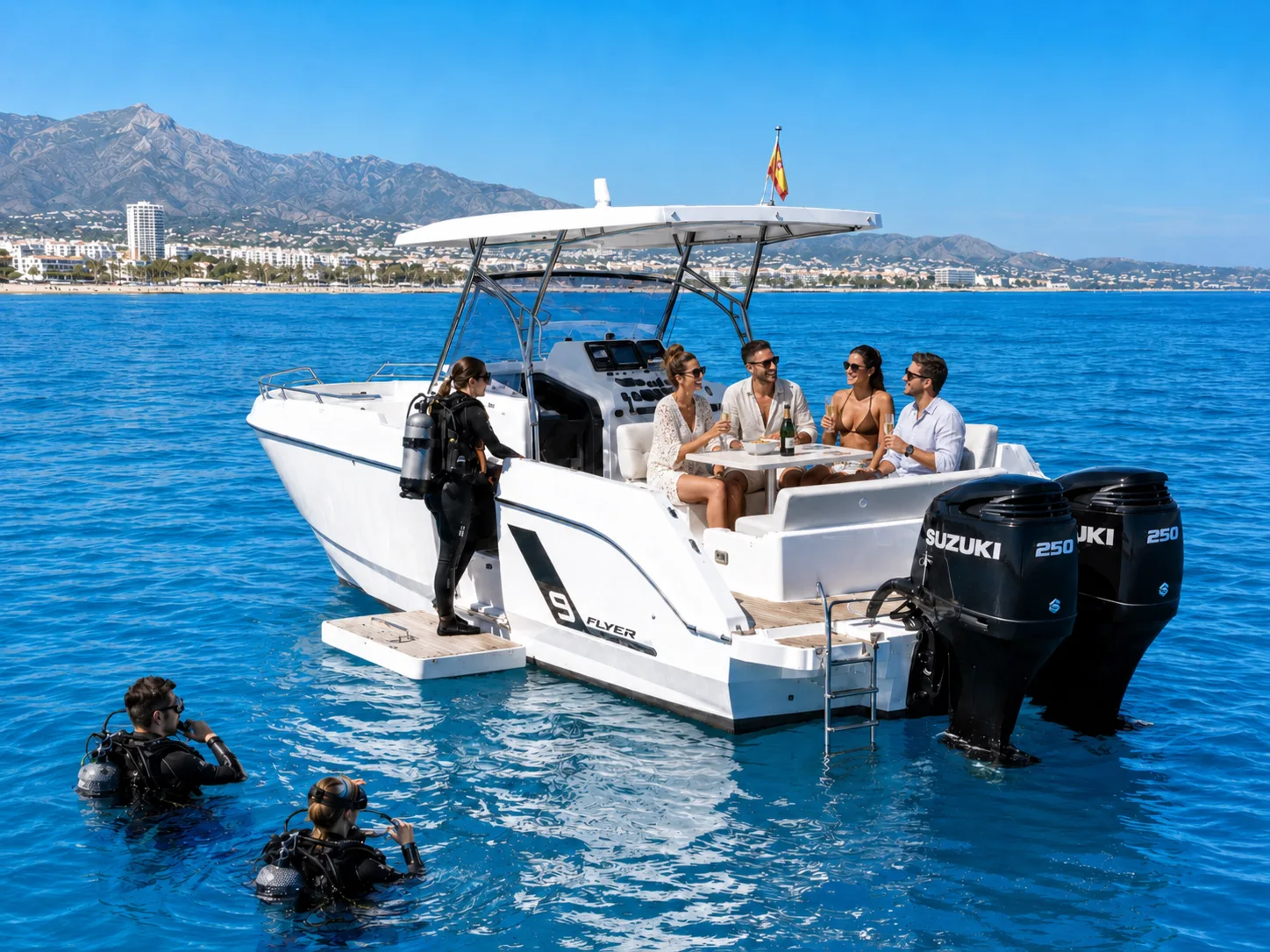
Marbella’s diving moves between beach entries, short boat trips over rocky reefs and artificial structures, accessible wrecks, and the more exposed relief of Las Bóvedas. There, walls, canyons and pinnacles create a proper three-dimensional dive, but depth and current can turn the outing into a demanding one. Current is variable rather than a constant feature, while visibility is often described around 15–20 metres in favourable conditions and can fall sharply after rough seas, runoff or suspended sediment. Offshore trips are therefore more weather-dependent than sheltered coastal dives. Expect Mediterranean profiles rather than tropical reef scenery: swim along rock, search overhangs and small cavities, and use a torch around wreck structures. Depending on the site, the day may involve a shore dive, a boat-based out-and-back dive, or a drift dive where the current dictates the route.
The usual reward is close observation rather than pelagic spectacle. Octopus and cuttlefish sit among rock and wreck cover, while conger eels and moray eels occupy holes and shaded edges. Wrasse, seabream and scorpionfish move over the reefs, with nudibranchs, sponges and corals rewarding a slower look into crevices. Seahorses and rays are possible but not dependable sightings. Cuttlefish are a regular presence, and squid are associated with the warmer part of the year, although their precise seasonal appearance varies. A torch is useful for finding the animals that retreat beneath ledges or into small cavities. The more interesting encounters often come from stopping beside the structure, not swimming quickly across open rock.
Diving runs throughout the year, but May, June, September and October offer the most sensible balance for a dedicated visit. From late spring into autumn, water comfort and visibility are generally more favourable, making both shore dives and boat outings easier to enjoy. July and August bring more holiday traffic around the ports and easier sites, so early departures help. The offshore reefs need a flexible plan in any month: rough water can reduce visibility dramatically and cancel a boat trip, even when the coast looks inviting. Put Las Bóvedas early in the stay, then keep a spare day for a rescheduled outing rather than building the whole holiday around one sea state.
Marbella genuinely suits all levels, provided the site matches the diver. Tower and other shallow structures can work for newer divers, including those training through BSAC, PADI or SSI. More experience is appropriate for Las Bóvedas, where depth, exposure and possible current matter. An Advanced qualification is useful for the deeper offshore profiles, while a Wreck qualification helps when the wreck itself is the focus. Nitrox may suit repetitive days if the centre and planned profiles allow it.
From London Heathrow, London Gatwick or Manchester, reach Marbella by travelling to Málaga and continuing by road or interurban bus. There is no commercial airport in Marbella, and no compulsory ferry or sea crossing forms part of the journey. Allow for the road connection after landing, and check the departure port before booking a day’s diving. Boats may leave from Marbella, Puerto Banús or a nearby harbour, rather than from one central base. Once in the area, the practical choice is to stay near the harbour used by your planned outings, or allow for taxis and centre transfers. Some shore sites are reached directly from the beach, but boat days involve getting to the correct port with equipment and enough time for loading.
Ask for the actual site before paying a deposit. Tower, Pimpollo and the shallow wreck structures are not interchangeable with Las Bóvedas, and the difference is exposure, depth and current, not simply a change of scenery. Book boat outings near the start of the stay, leaving a day that can absorb a cancellation. Do not rely on a promised 15–20 metres of visibility: after rough water or runoff, conditions can deteriorate to almost nothing. Take a torch for the small cavities, overhangs and wreck sections where conger eels, moray eels, octopus and nudibranchs hide. Check whether each day’s kit and meeting point fit the harbour being used, especially when moving between Marbella and Puerto Banús. For a first dive, use a shallow coastal site or artificial structure. Treat Las Bóvedas as a separate proposition, and confirm its depth, current and fallback plan before leaving shore.
Organise Marbella as a shore-based stay rather than a liveaboard trip. Choose accommodation for the harbour you will use, not merely for its address in the town, since Marbella and Puerto Banús departures are separate practical bases. A four- to seven-day visit gives room to mix shallow coastal dives, wrecks and an offshore outing while retaining flexibility for sea conditions. Non-divers have beaches, the old town, coastal walks, watersports and inland excursions close at hand. Keep the final day free of diving before flying.
Hello, I'm Marina, DivingDeal.com's AI assistant. I guide you through destinations, areas and countries.
Thinking about the whole trip and the flights? Talk it over with Edith →
Marina is an AI. Some links are affiliate links: DivingDeal may earn a commission, at no extra cost to you. Bookings are made with the partner.
May, June, September and October offer a comfortable balance for diving in Marbella, with generally favourable water comfort and visibility. July and August can bring more holiday traffic around ports and easier sites, so early departures help. Keep your schedule flexible, because rough seas can reduce visibility and cancel offshore trips.
Marbella suits different experience levels when you choose the site carefully. Tower and other shallow structures can suit newer divers, while Las Bóvedas demands more experience because of depth, exposure and possible current. An Advanced qualification helps with deeper offshore profiles, and a Wreck qualification is useful when the wreck is the focus.
Diving in Marbella offers Mediterranean rocky reefs, shallow wrecks, walls, canyons and pinnacles rather than tropical reef scenery. Look for octopus, cuttlefish, conger eels, moray eels, wrasse, seabream, scorpionfish and nudibranchs around cover. Sponges, corals and smaller animals reward slow searching with a torch beneath ledges, inside cavities and around wreck structures.
Plan Marbella as a shore-based stay, choosing accommodation near the harbour used by your outings. Check whether boats leave from Marbella, Puerto Banús or another harbour, and book offshore trips early while keeping a spare day for weather cancellations. Mix shallow coastal dives, wrecks and offshore sites, leaving time for beaches, the old town and coastal walks.