
Scuba Moraira
Google 4.7/5 (100 reviews)
Spain · Mediterranean
Rocky drop-offs, Posidonia seagrass, dark swim-throughs and sheltered shallows shape Moraira’s boat diving along the coast between Moraira, Jávea and Calpe.
For subtitles in English: start the video firstthen click the gearat the top right of the video, select “Subtitles/CC”, then “Auto-translate” and choose “English”.
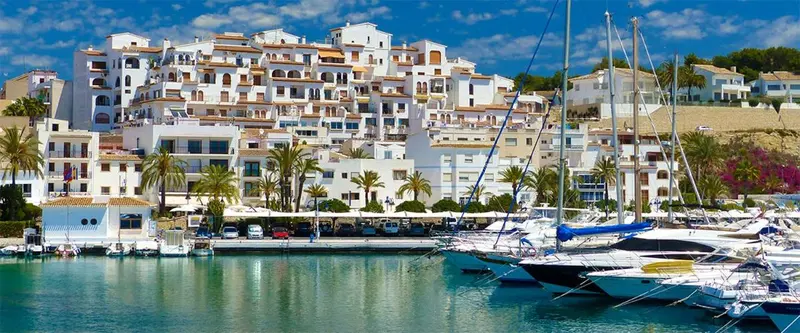
Moraira is a shore-based Spanish diving holiday built around a harbour, not a liveaboard itinerary. Boats run out to rocky drop-offs, Posidonia seagrass, blocks, overhangs and small caverns along the coast towards Benitachell, Jávea and Calpe. Some sites are shallow enough for an introduction or training, while others approach 40 metres. It suits divers who want several kinds of Mediterranean terrain, with beaches, villages and coastal walks for non-divers between outings.
Underwater, Moraira is about rock rather than coral: ledges, boulders, walls, seagrass and passages beneath the shoreline. The shallow sites make straightforward orientation dives, while deeper routes ask for better gas planning and, in places, more confidence around confined rock. Currents are variable, and some local itineraries are one-way dives or drift dives followed by the boat, so the briefing matters more than any assumed pattern. Visibility is often between 10 and 30 metres, but swell, weather and coastal run-off can change the picture. Most diving is from a boat, although shore entries are possible. Playetes is a useful gentle starting point, while the wider coast gives experienced divers the option of exposed sites, deeper contours and swim-throughs without pretending that a short passage is a cave-diving expedition.
Marine life here is tied closely to the Mediterranean habitat. Look across Posidonia meadows, pause beside rock blocks and inspect the shaded edges of overhangs and small caverns rather than expecting a coral-reef spectacle. The appeal is the combination of living seagrass and hard ground, with each site offering a different balance of open rock, shelter and shallow coastal habitat. No dependable seasonal wildlife calendar should dictate the trip, so plan around sea conditions and the type of terrain you want to see. Photographers will find more to work with on routes combining rock, seagrass and cavities than on stretches dominated by sand. Careful buoyancy matters, particularly near the seagrass, where touching down or finning carelessly damages a habitat that is part of the character of the coast.
Moraira can be dived throughout the year, but May, June, September and October offer the most convincing balance for a holiday. June and September usually bring warmer water, useful visibility and fewer people than July and August, when boats and popular sites are busiest. May and October keep the main season broad while leaving more room to move when the sea changes. Winter is possible, but calls for a warmer set-up and may narrow the choice of exposed sites. Allow five to seven days if you want to combine Moraira, Benitachell, Jávea and perhaps Calpe, with spare time for swell or a change of sector.
Moraira works for all levels, provided the dive matches the diver. Very shallow sites support introductions, training and uncomplicated refreshers, while deeper routes approaching 40 metres are better suited to an Advanced Open Water diver or equivalent. A swim-through is not automatically a cave dive: treat confined passages according to the centre’s briefing and your own training. Current can vary, and a drift dive or one-way route is more comfortable for divers who are happy to follow a boat and manage their position without clinging to the rock.
From London Heathrow, London Gatwick or Manchester, the journey starts with a flight to Alicante or Valencia, followed by a road transfer to Moraira. There is no ferry leg and no airport in Moraira, but the final approach is entirely by road. Allow roughly an hour to an hour and a half for that transfer, with summer coastal traffic capable of making it longer. Once there, staying near the harbour can put the diving within walking distance. Accommodation in the wider Teulada-Moraira urbanisations is a different proposition, so arrange a car or taxi, or check whether the centre offers a shuttle. A car is also useful for combining Moraira with Jávea, Benitachell and Calpe.
Tell the centre which coast you actually want to dive. A general outing can cover a broad stretch between Moraira, Benitachell, Jávea and Calpe, whereas choosing a nearer sector can reduce time on the boat. Ask before boarding whether the plan is a one-way route or a drift dive with the boat following, rather than assuming a conventional return to the entry point. Keep a spare day for exposed sites, since swell can move the programme elsewhere. If you are booking a first dive, Playetes is a more sensible request than a deeper or confined route. Ask exactly what kind of passage a named cave or swim-through involves, and stay within the limits given at the briefing. Bring motion-sickness protection if boats unsettle you. In winter, check the available exposure protection rather than relying on a generic year-round packing list. Do not collect shells, organisms or rock, and take extra care not to stand on Posidonia during shore access.
Moraira works best as a five- to seven-day base rather than a quick stop between flights. Stay near the harbour if walking to the boat matters, or use a car when based in the scattered urbanisations. Alternate diving sectors with a day for the coast, a village or a weather reserve. Non-divers have beaches, kayak and paddleboard outings, the seafront castle, Cap d’Or walks and excursions towards Jávea or Calpe’s Peñón de Ifach. Leave the final day clear of diving before flying.
Hello, I'm Marina, DivingDeal.com's AI assistant. I guide you through destinations, areas and countries.
Thinking about the whole trip and the flights? Talk it over with Edith →
Marina is an AI. Some links are affiliate links: DivingDeal may earn a commission, at no extra cost to you. Bookings are made with the partner.
Moraira can be dived throughout the year, but May, June, September and October offer a useful balance for a diving holiday. June and September generally combine warmer water, useful visibility and fewer people than July and August. Winter remains possible, though you may need warmer exposure protection and fewer exposed-site options.
Moraira suits all levels when the site matches your experience. Playetes and other very shallow sites support introductions, training and refreshers. Deeper routes approaching forty metres suit an Advanced Open Water diver or equivalent. Variable currents, drift dives and confined swim-throughs require careful briefing, appropriate training, buoyancy control and confidence.
Moraira offers Mediterranean rock terrain rather than coral reefs. You can explore rocky drop-offs, ledges, boulders, walls, Posidonia seagrass meadows, overhangs, blocks, small caverns and dark swim-throughs. Visibility is often between ten and thirty metres, while photographers may find varied compositions where rock, seagrass and sheltered cavities meet.
Use Moraira as a shore-based base near the harbour, where boats may be within walking distance. Allow five to seven days to combine nearby sectors and keep time for swell or weather changes. Ask the centre about the planned coast, drift or one-way routes, and consider a car for Jávea, Benitachell and Calpe.