
Posidonia Dive
Google 4.8/5 (311 reviews)
Spain · Mediterranean
Rocky bars, sandy bottoms and a submerged fish farm bring barracudas, shoals and occasional seahorses within reach of Barcelona.
For subtitles in English: start the video firstthen click the gearat the top right of the video, select “Subtitles/CC”, then “Auto-translate” and choose “English”.
Sant Andreu de Llavaneres is a practical Maresme base for boat diving from Port Balís, where natural rocky bars sit alongside sandy ground and a submerged former fish farm. The artificial structure gives the area its most recognisable underwater shape, with shoaling fish moving around it and barracudas passing through. Depths on the local sites run from roughly twelve to thirty metres, so a day can be tailored from straightforward reef profiles to more demanding relief. It is Mediterranean diving close to Barcelona, rather than a purpose-built marine-park destination.
The underwater character changes between rocky bars, open sand and the framework of the old fish farm. Around the artificial reef, swim the structure first, then drop your eyes to the sandy bottom beside it, where fish and smaller life can be easy to miss. Natural bars bring more pronounced relief, with site choice making a real difference to depth and difficulty. Currents are variable, so a calm-looking plan can still require sensible control and a well-managed ascent. These are chiefly boat dives from Port Balís, not shore-based excursions, and profiles range from about twelve to thirty metres. Ask whether the day is heading for rock or the fish-farm structure before you kit up. That simple distinction tells you more about the likely terrain and pace than the maximum depth alone.
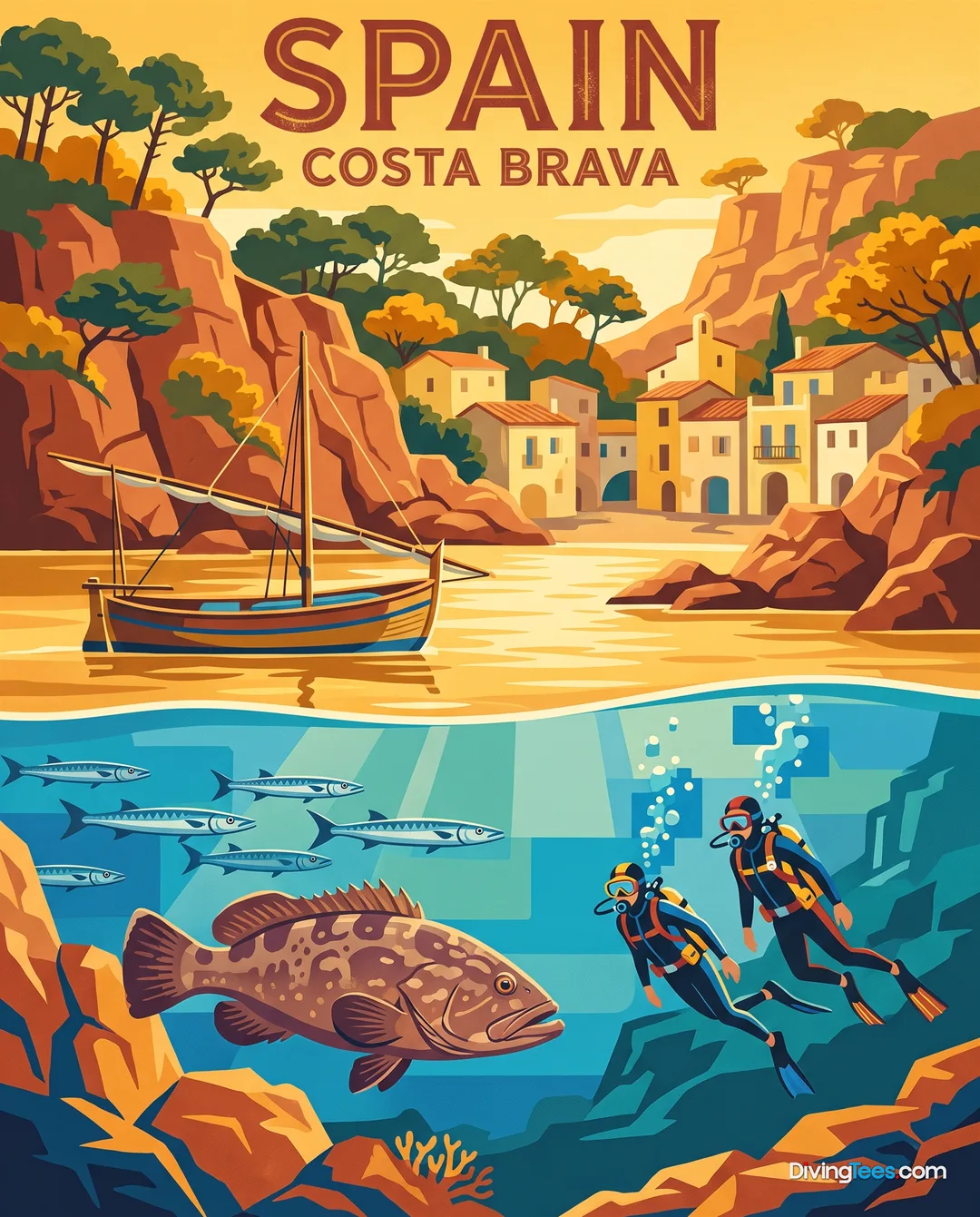
Barracudas are the most dependable headline encounter, particularly around the submerged fish-farm structure and its surrounding water. Expect shoaling fish to use the artificial framework, while congers may show only their heads from holes and gaps. Seahorses are possible but occasional, so the sandy ground beside the structure deserves a slow, observant look rather than a quick circuit of the metalwork. The rocky bars add the usual Mediterranean pleasure of searching cracks, edges and changes in relief, although no fixed wildlife calendar should be assumed. A patient diver may also find that the quieter details matter more than the passing barracuda. Keep the guide’s site choice in mind, because the balance between fish-farm structure, rock and sand shapes what you are likely to notice.
There is no firmly established calendar window to chase here, so plan around a workable boat day and the conditions offered by Port Balís. Barracudas are a regular possibility rather than a short seasonal attraction, while seahorses and congers remain occasional encounters. This makes Sant Andreu de Llavaneres suitable for a flexible land-based break, especially when the forecast supports the planned crossing and the selected profile. Conditions can alter the feel of a rocky bar quickly when currents vary, so the useful question is not simply which month is supposedly best. Ask which site and depth are sensible on the day, then allow the marine life to be an added reward rather than the sole reason for travelling.
The area suits all levels, provided the site is matched honestly to experience. El Santuari and La Virgen are described as easier choices, while deeper or more pronounced rocky profiles call for greater comfort in open water and with variable current. PADI, SSI and BSAC divers should find the main issue is not the badge but recent experience at the planned depth and in boat-diving conditions. Nitrox can be useful on repetitive outings when the profiles make that worthwhile. Newer divers should ask for the easier terrain, not simply accept the deepest available option.
From London Heathrow, London Gatwick or Manchester, travel via Barcelona, then continue by road or regional train. There is no ferry or domestic flight to add to the journey. By road, Port Balís is on the N-II at kilometre 651.5. The regional train reaches Sant Andreu de Llavaneres station, which is close to the port and can remove much of the need for a hire car. Allow connection time between the Barcelona arrival and the onward train or road leg, particularly with dive luggage. Once in the port area, nearby accommodation may be walkable. From farther parts of the municipality, plan on a car or taxi, as no permanent shuttle should be assumed.
Use Port Balís as your fixed reference point, and arrive with a proper margin before the boat, around forty-five minutes is a sensible local rule. If travelling without a car, check the regional train connection to Sant Andreu de Llavaneres station and do not leave the final walk until the last moment. Before committing to a dive, ask whether it is a rocky bar or the artificial fish-farm reef, then ask what depth and relief the guide considers suitable for your experience. Do not assume that every outing can be made from the shore, because the local pattern is boat diving. Nor should you treat the place as a tropical reef or a managed marine park. On the fish farm, look beyond the frame to the adjacent sand for seahorses, and into holes for congers. Choosing by maximum depth alone can give you the wrong dive.
This works best as a land-based stay centred on Port Balís. Boat outings leave from the marina, while beaches, swimming and watersports give a non-diving companion something to do nearby. Paddleboarding, kayaking, snorkelling and walks along the Maresme coast can fill a surface interval or a non-diving day. Stay close to the port if walking matters. Elsewhere in Sant Andreu de Llavaneres, a car or taxi is more realistic for reaching the marina and moving around after diving.
Hello, I'm Marina, DivingDeal.com's AI assistant. I guide you through destinations, areas and countries.
Thinking about the whole trip and the flights? Talk it over with Edith →
Marina is an AI. Some links are affiliate links: DivingDeal may earn a commission, at no extra cost to you. Bookings are made with the partner.
Sant Andreu de Llavaneres has no firmly established calendar window to chase. Plan around a workable boat day from Port Balís and the conditions for your selected site and profile. Barracudas are a regular possibility, while seahorses and congers remain occasional. Variable currents make the day’s conditions more important than a supposedly ideal month.
Sant Andreu de Llavaneres suits different experience levels when the site matches your ability. El Santuari and La Virgen are easier choices, while deeper or more pronounced rocky profiles require comfort in open water and variable current. Ask for terrain appropriate to your recent experience, rather than choosing solely by the deepest available profile.
Diving in Sant Andreu de Llavaneres brings barracudas around the submerged fish-farm structure, with shoaling fish using its framework. Congers may appear in reef holes and gaps, while occasional seahorses can be found on nearby sandy ground. Rocky bars add cracks, edges and changing relief, so a slow search reveals more than a quick circuit.
Plan a land-based stay around Port Balís, where boat dives depart. Arrive with a proper margin before the boat and confirm whether your outing visits rocky bars or the artificial fish-farm reef. The nearby regional train station can reduce the need for a hire car, while beaches, watersports and coastal walks suit non-diving companions.