
Manta Diving Valencia
Google 5/5 (570 reviews)
Spain · Mediterranean
Urban shore dives, volcanic lava canyons, large groupers and lobsters come together in a Spanish city break with a carefully planned offshore day.
Volcanic lava canyons and sheer drop-offs give the Columbretes their character, while Valencia itself offers straightforward coastal and boat diving close to a major Spanish city. This is a destination for combining underwater time with galleries, historic streets, beaches and the Albufera, rather than treating diving as the only reason to travel. The important distinction is logistical: the Columbretes are not a local hop from Valencia, but a regulated offshore excursion from Castellón province.
Around Valencia, expect rocky coastal sites and boat outings in generally sheltered water, with no significant ocean currents to plan around. Several areas suit different levels, making the coast useful for a first dive, a refresher or a quieter day between excursions. The Columbretes change the picture. Their volcanic terrain brings lava canyons and underwater drop-offs, with the boat positioned on the reserve's designated buoys rather than anchored over the bottom. Visibility is described as good at some coastal sites and excellent around the Columbretes, though it is not sensible to treat that as a fixed promise. This is mainly day-boat diving, not a liveaboard destination. Allow the crossing to occupy much of the day, and remember that the reserve's character comes from protected volcanic relief rather than a dense resort strip of immediately accessible dive sites.
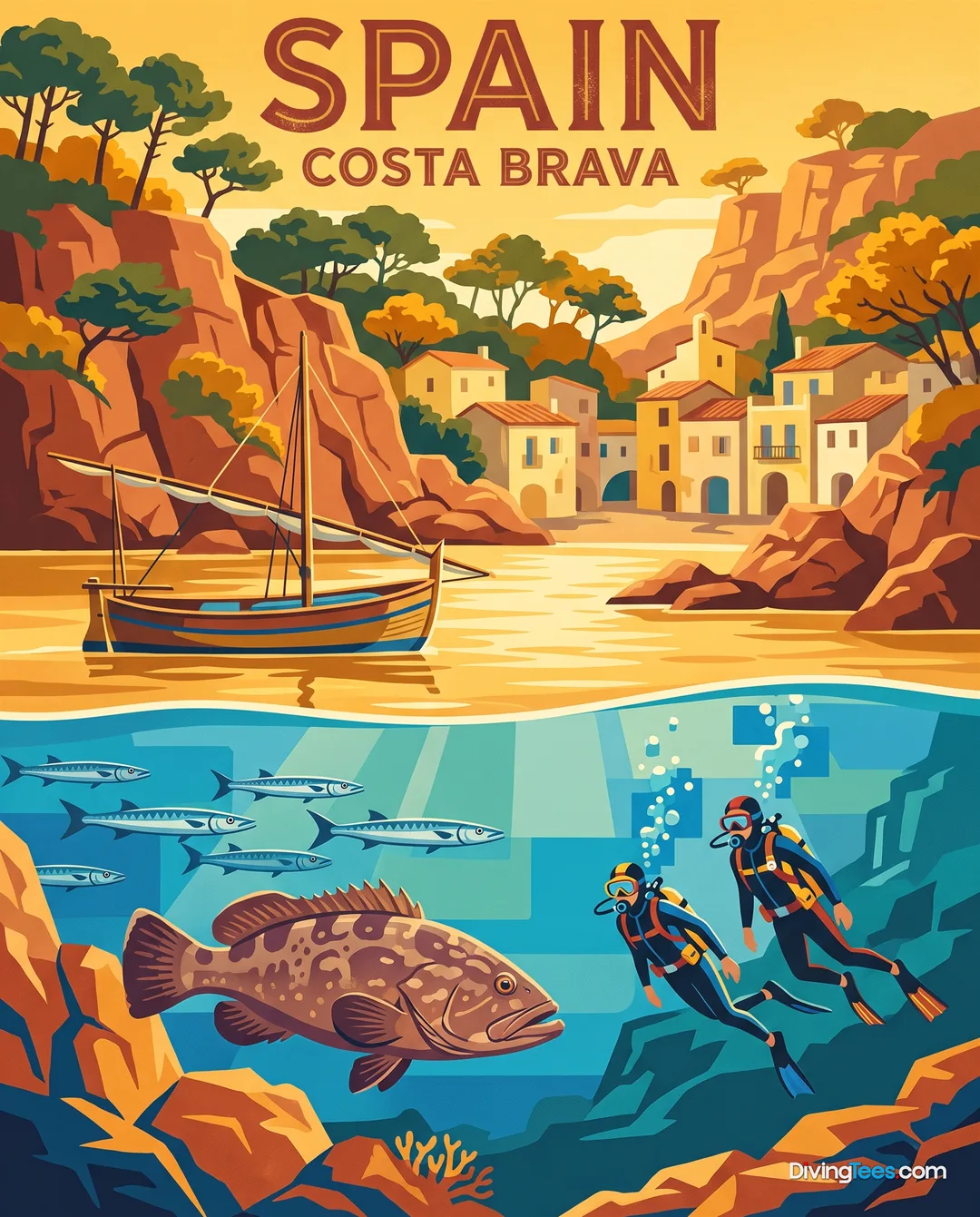
The clearest wildlife draw is at the Columbretes, where large groupers and lobsters are associated with the protected volcanic habitats. Swim along the lava canyons and drop-offs rather than expecting a sandy-bottom wildlife checklist. The reserve was created to protect habitats and species of fishing interest, and its regulated diving helps preserve that setting. Valencia's coastal diving provides rocky underwater scenery and the chance to compare a more local outing with the offshore reserve, but the material case for wildlife here is strongest around the Columbretes. No particular seasonal animal calendar needs to shape the trip, so plan around sea conditions, the authorised boat schedule and the time required to reach the archipelago.
The most useful window is May to October. Mediterranean conditions make diving possible over a long season, while centres are most active from spring through autumn. July to September is also when diving activity is highest, so the offshore trip needs more deliberate planning rather than a casual last-minute assumption. A full suit suited to the season is the sensible approach, with the exact choice depending on personal comfort and the month. There is no particular month that must be ruled out, but winter offers less certainty about operating schedules and the practical rhythm of a dive holiday.
Valencia's coastal diving suits all levels, including beginners and divers returning after a break. BSAC, PADI and SSI divers should match their qualification and recent experience to the individual boat outing, especially where volcanic drop-offs are involved. The Columbretes are not presented as a specialist technical destination, but they do demand comfort with a longer sea journey, a regulated reserve and a full day away from shore. Confirm the requirements for the chosen excursion with the authorised centre before booking.
From London Heathrow, London Gatwick or Manchester, reach Valencia by air, or travel overland, then continue to the coastal sites by road. Local diving around Valencia and Port Saplaya can be reached from accommodation on foot, by urban transport or by taxi, depending on the neighbourhood. The Columbretes require a separate journey. Travel by road from Valencia to a departure port in Castellón province, with centres operating from places including Castellón, Oropesa and Alcossebre, then allow roughly two to three hours at sea, depending on the boat and departure point. If travelling without a car, establish the Valencia to harbour connection before booking the excursion, because there is no standard shared transfer to rely on.
Treat the Columbretes as a separate expedition, not as another local dive. Book it through an authorised centre because bottle diving in the reserve requires permission, and check that the boat will use the installed mooring buoys rather than drop an anchor near the islets. Keep a spare day in the itinerary: the combination of an early land transfer, a two- to three-hour crossing and regulated access leaves little room for a missed connection. Staying in Valencia is workable, but choose accommodation that makes an early road departure realistic. Without a car, confirm the complete route to the harbour before committing to the boat day. Do not arrive expecting to arrange a casual dive on the spot, and do not confuse the natural park with a coastal suburb of Valencia. The reserve is offshore from Castellón, so the return journey is part of the dive day, not an incidental transfer.
A four- to seven-day stay gives the trip its proper shape. Use the first days for coastal or boat diving around Valencia, then set aside a dedicated day for the Columbretes and keep another day flexible around the crossing. Non-divers have plenty to do without following the dive schedule: the historic centre, the City of Arts and Sciences, urban beaches, the maritime front and the Albufera all work naturally within the same stay. Castellón and nearby coastal towns can frame the offshore outing.
Hello, I'm Marina, DivingDeal.com's AI assistant. I guide you through destinations, areas and countries.
Thinking about the whole trip and the flights? Talk it over with Edith →
Marina is an AI. Some links are affiliate links: DivingDeal may earn a commission, at no extra cost to you. Bookings are made with the partner.
The most useful window is May to October. Mediterranean conditions allow a long season, with centres most active from spring through autumn. Diving activity is highest from July to September, while winter brings less certainty around operating schedules and the practical rhythm of a dive holiday.
Valencia's coastal diving suits all levels, including beginners and divers returning after a break. BSAC, PADI and SSI divers should match their qualification and recent experience to the individual boat outing, particularly around volcanic drop-offs. The Columbretes also require comfort with a longer sea journey, regulated reserve and full day away from shore.
Around Valencia, expect rocky coastal sites and boat outings in generally sheltered water. The Columbretes add volcanic lava canyons, underwater drop-offs, large groupers and lobsters among protected rocky habitats. Visibility is described as good at some coastal sites and excellent around the Columbretes, though conditions should not be treated as fixed.
Treat the Columbretes as a separate full-day expedition from Castellón province, not as a local dive. Travel by road from Valencia to a departure port, then allow roughly two to three hours at sea. Book through an authorised centre and confirm the Valencia-to-harbour connection if travelling without a car. Keep a spare day around the crossing.