Philippines · Asia
Diving Dumaguete: Volcanic bottoms, macro and Apo Island reefs
Volcanic muck bottoms, shallow macro subjects, Apo Island’s protected reefs and Oslob’s whale sharks shape Dumaguete’s boat-diving days from the Negros coast.
What makes this destination special
- Apo Island’s protected reefs and community-managed no-take waters
- Volcanic bottoms suited to patient macro photography
- Shallow boat dives around Dumaguete’s coastal area
- Oslob whale-shark encounters in relatively shallow water
- April to June, the calmest measured sea period
- Short daily boat trips rather than liveaboard routines
- Fishing and anchoring bans around Apo Island
For subtitles in English: start the video firstthen click the gearat the top right of the video, select “Subtitles/CC”, then “Auto-translate” and choose “English”.
Overview
Apo Island’s protected reefs are the defining excursion from Dumaguete, while the coastal sites around the city provide shallower volcanic bottoms for slower, more observant diving. This is a land-based Philippine destination rather than a liveaboard hub: days are built around short boat trips, repeated recreational dives and the choice between macro subjects, muck-style searching and wider reef scenery. It suits divers who prefer a flexible week on shore to the fixed rhythm of a cruise.
Diving here
The local character is set by shallow volcanic bottoms, muck-style terrain and nearby reef dives rather than deep or technical profiles. Conditions are generally described as light-current recreational diving, with boat access making it straightforward to repeat dives without committing to a liveaboard schedule. Macro photographers can work slowly over the bottom, while Apo Island provides a broader reef setting and a change of scale for the day. Oslob brings a different underwater focus, with relatively shallow whale-shark encounters and surrounding reef ecosystems. Advanced certification is useful for divers who want more flexibility, but the area is primarily organised around conventional leisure diving. The main practical variable is the boat crossing: local sites may be easy to reach, while Apo Island requires a full day and enough flexibility to accommodate sea and transport conditions.
One dive not to miss
The underwater wildlife
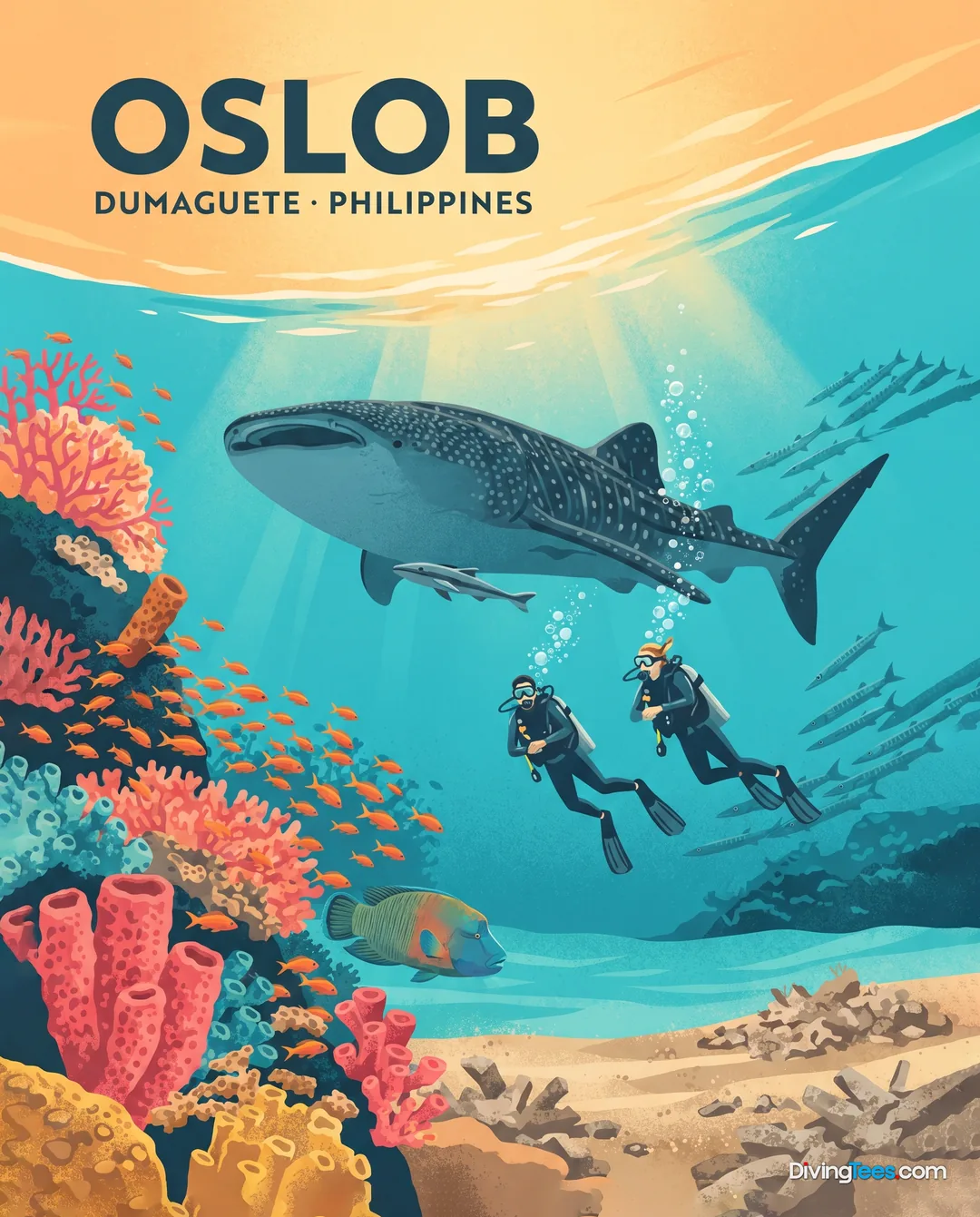
Wildlife watching here is split between the small and the conspicuous. Around Dumaguete, volcanic muck and shallow reef give macro photographers a reason to slow down: the pleasure lies in close observation rather than in covering ground. Apo Island changes the scale, with denser reef life within a protected landscape and seascape. Oslob offers a different encounter, as whale sharks gather consistently in relatively shallow water alongside the surrounding reef ecosystem. That combination suits divers who want patient, subject-led dives as well as broader reef scenery. Apo Island is also where the protected setting matters most to the experience, with no touching, feeding or taking marine life forming part of the way the site is managed.
Possible underwater encounters
When to go
April to June is the measured period when the sea is calmest, making it the most logical window for a stay centred on boat diving and the crossing to Apo Island. The lower-rainfall period extends from December to May, so the earlier part of that stretch can also work well for combining shore time with diving. The reason to favour April to June is practical rather than glamorous: calmer water makes the day’s boat movements more comfortable and gives the Apo Island excursion a better chance of fitting smoothly into a week. Conditions can still vary, so keeping a spare day in the programme is sensible.
Level required
Dumaguete is suitable for all levels when approached as recreational boat diving over shallow volcanic bottoms and reef. Beginners can use the easier coastal format, while experienced divers may prefer the slower pace required for macro photography or the broader reef dives around Apo Island. Advanced certification is useful rather than essential. Nitrox can also make sense for divers planning several boat dives across consecutive days. BSAC, PADI and SSI divers should find the general diving style familiar, provided they are comfortable with local boat procedures.
On the ground
From London Heathrow, London Gatwick or Manchester, the journey is built around reaching Dumaguete or Cebu by air; the exact routing depends on the connections available at the time of travel. Cebu can then require a road transfer followed by a ferry or fast craft, while Dumaguete gives the more direct land base for the southern Negros diving area. Apo Island adds another compulsory transport stage: a boat crossing from the southern Negros coast. This is therefore a shore-based trip with local maritime transfers, not a case of boarding a liveaboard once and leaving logistics behind. Once in Dumaguete, dive centres are generally in the urban or seafront area, so the final movement to the boat is usually a short walk or a light-vehicle transfer, depending on the accommodation.
Local tips
Protect a full day for Apo Island rather than treating it as an optional short add-on. It is the area’s clearest reef-focused outing, and an early booking leaves room to move it if the boat crossing is disrupted. Tell the organiser at the time of booking that macro is the priority: Dumaguete makes more sense when the day can be paced around patient searching instead of being judged only by big reef scenery. Combine Apo Island with the coastal volcanic sites so the week does not become repetitive. Apo is not an ordinary unregulated dive site: fishing and anchoring are banned, and touching, feeding or taking marine life is prohibited. Carry that expectation into the water. Finally, do not plan the trip as a cruise; keep bags and daily routines organised around returning to the same land base and taking separate boats for the day’s dives.
Planning your stay
Five to seven days gives the Dumaguete area enough breathing room for repeated coastal boat dives and a full-day Apo Island excursion. The most satisfying pattern alternates patient macro or muck-style dives near the city with the wider reef setting of Apo, rather than repeating one format throughout the stay. Dumaguete also works for non-divers, with coastal walks, short local excursions and surface time around Apo Island providing alternatives between diving days. The result is a flexible shore holiday, not a tightly programmed liveaboard itinerary.
Hello, I'm Marina, DivingDeal.com's AI assistant. I guide you through destinations, areas and countries.

Thinking about the whole trip and the flights? Talk it over with Edith →
Marina is an AI. Some links are affiliate links: DivingDeal may earn a commission, at no extra cost to you. Bookings are made with the partner.
Map of hotels, dive sites and dive centres in Dumaguete
Things to do in Dumaguete beyond diving
Your last day stays dry: no diving in the 18-24 hours before a flight the perfect window to see the destination from another angle.
 Nature
Dumaguete: Twin Lakes Balinsasayao nature adventure and city tour
⏱ 4 h · ★ 5.0 (8 reviews)
from €66
see on Viator ↗
 Nature
Apo Island and Dumaguete Countryside Tour
⏱ 8 h · ★ 5.0 (3 reviews)
from €129
see on Viator ↗
 Culture
Dumaguete Hidden Gems Tuk Tuk Tour Private
⏱ 7 h · ★ 5.0 (2 reviews)
from €114
see on Viator ↗
Ratings and reviews collected by Viator and Tripadvisor.