
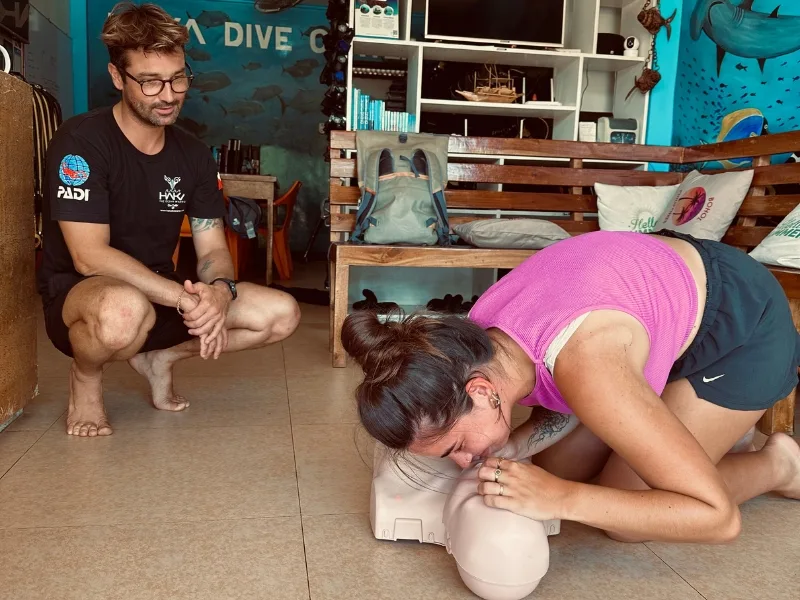

Haka Dive Center
Google 5/5 (928 reviews)
Philippines · Asia
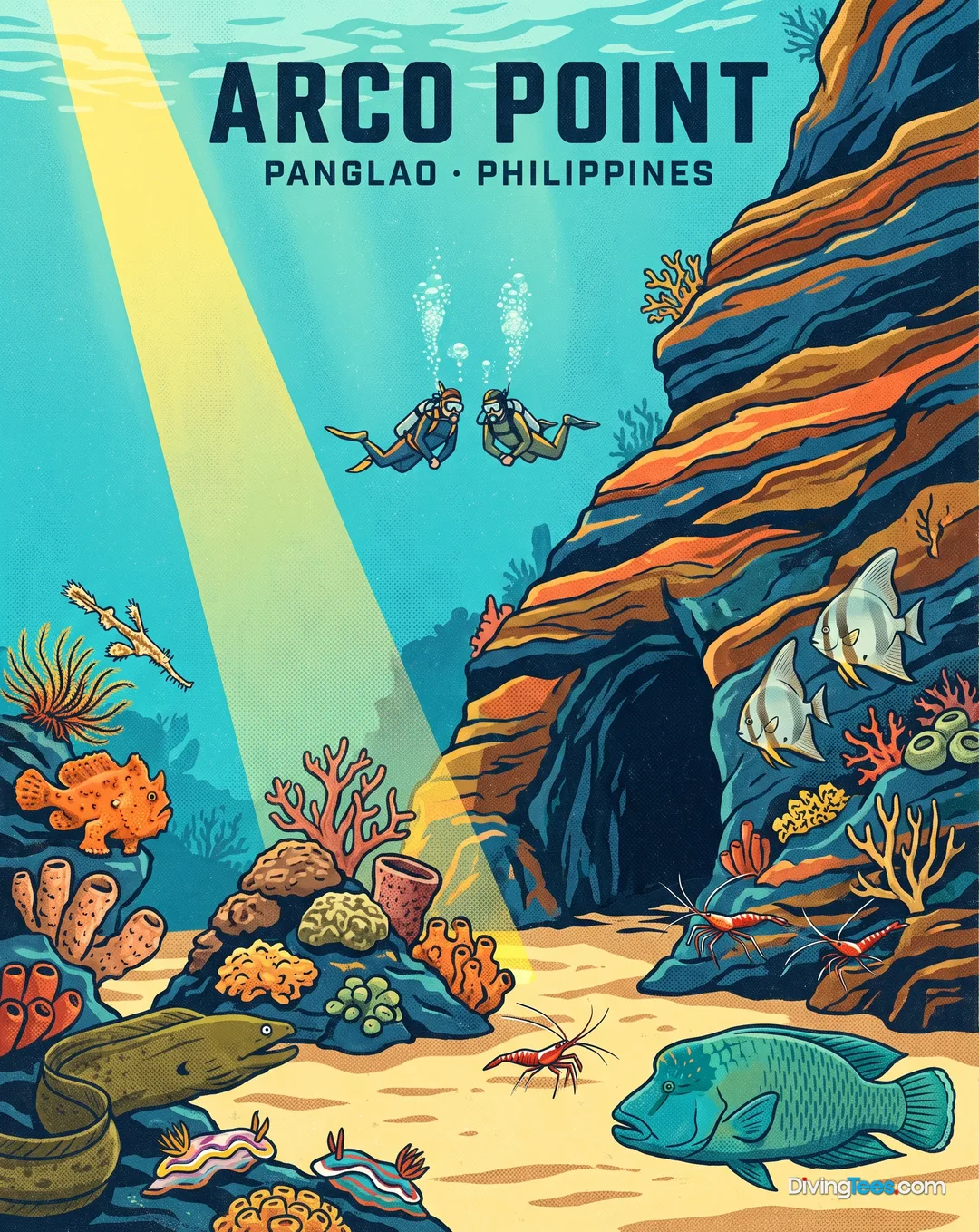
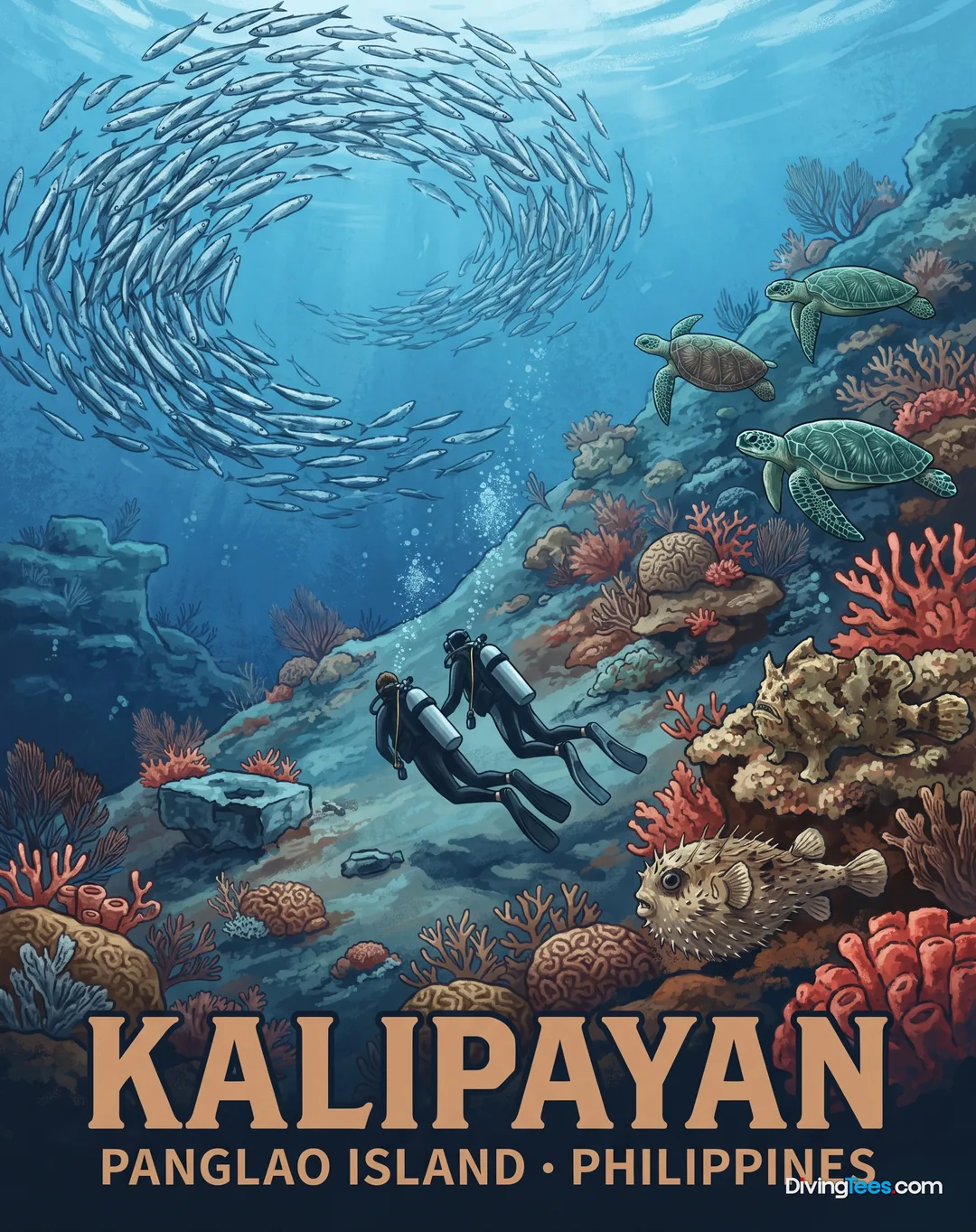
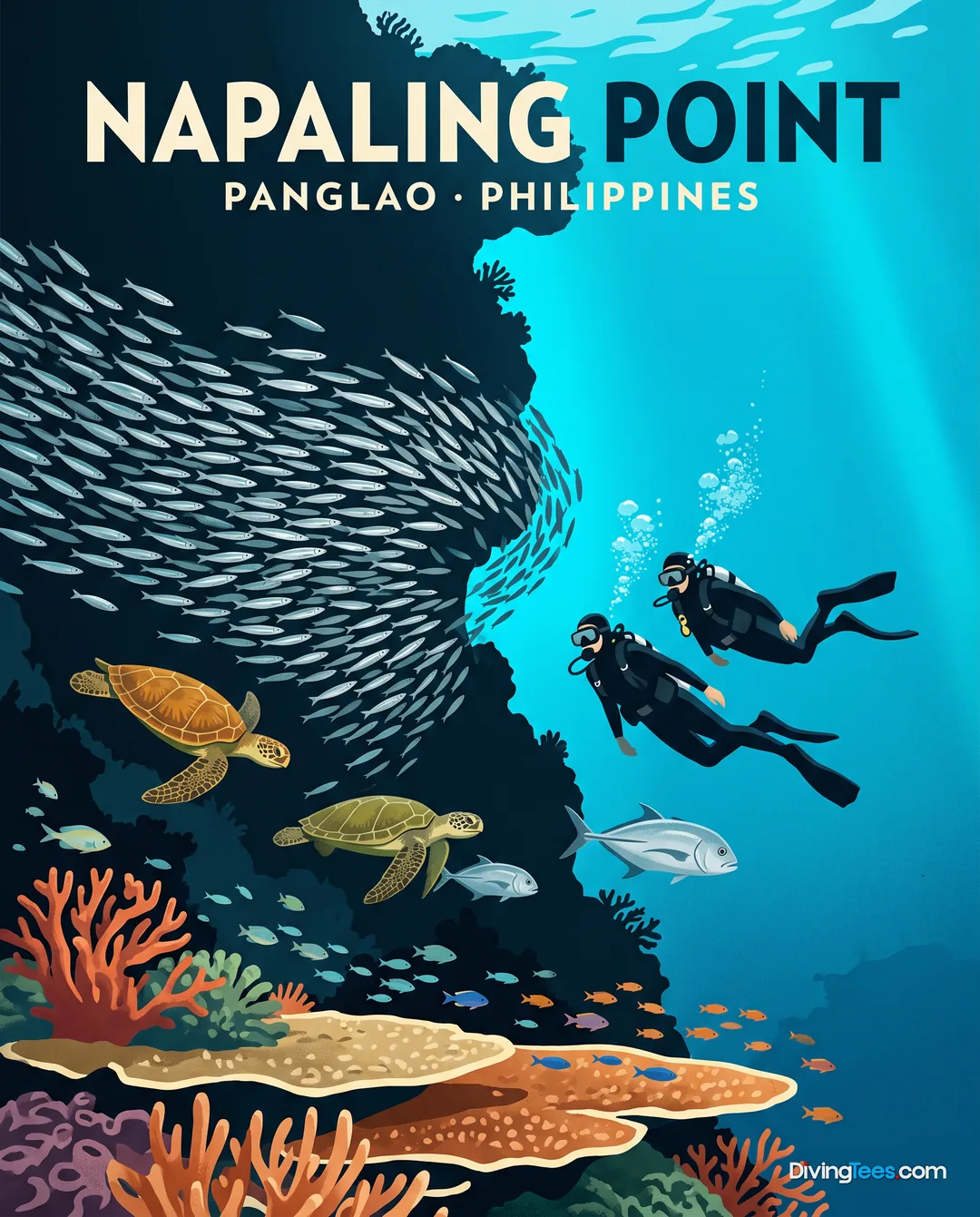
Arco Point’s arch and wall, Napaling Point’s sardine schools, and Kalipayan’s sandy slope give Panglao a practical mix of reef, macro and easy boat diving.
For subtitles in English: start the video firstthen click the gearat the top right of the video, select “Subtitles/CC”, then “Auto-translate” and choose “English”.
Panglao works well as a land-based Philippine dive base rather than a liveaboard destination. Its southern and eastern shores lead to boat dives over walls, coral slopes and managed marine sites, with enough variation for several mornings underwater. At Arco Point, the shallow reef passes through a recognisable arch before dropping away; Napaling Point brings sardine schools into the picture. Between dives, the island remains a useful base for beaches and inland Bohol excursions.
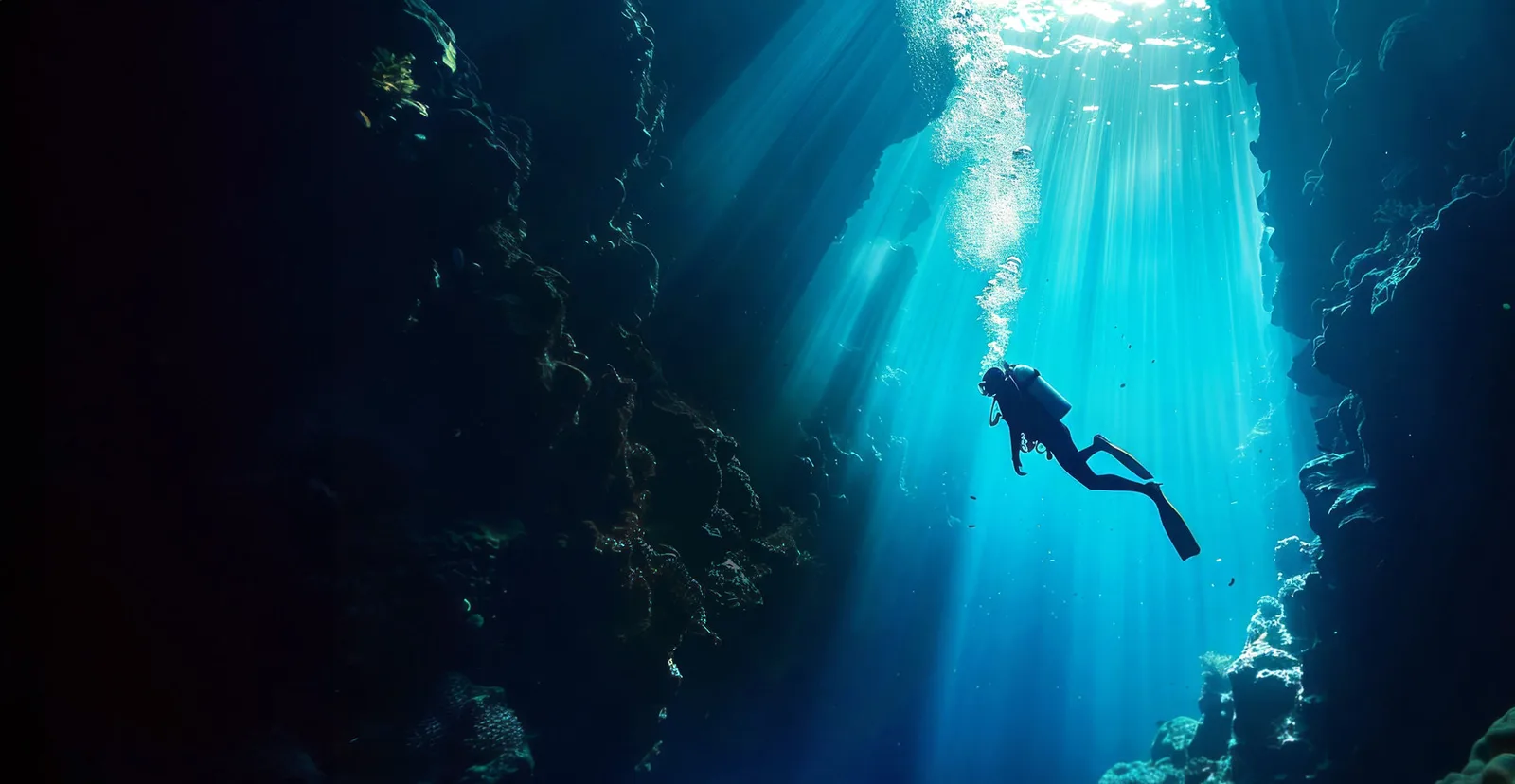
The diving is built around reef walls, sandy slopes and coral-covered drop-offs rather than wrecks. Arco Point is the clearest example: the arch begins in the shallows, continues towards 18 metres and leads into a wall reaching about 25 metres, with macro subjects among the vertical coral growth. Kalipayan is gentler, running from roughly 5 to 25 metres over a sandy slope and usually carrying little current. Conditions are not identical across the island. Currents are generally calm at the easier sites, but localised surge can affect the arch and current may vary at exposed locations such as Napaling Point. Visibility is often generous, around 15 to 30 metres at Arco Point and 20 to 30 metres at Kalipayan and Napaling. The usual rhythm is a morning boat programme, with site choice adjusted to the sea state and the group’s experience.
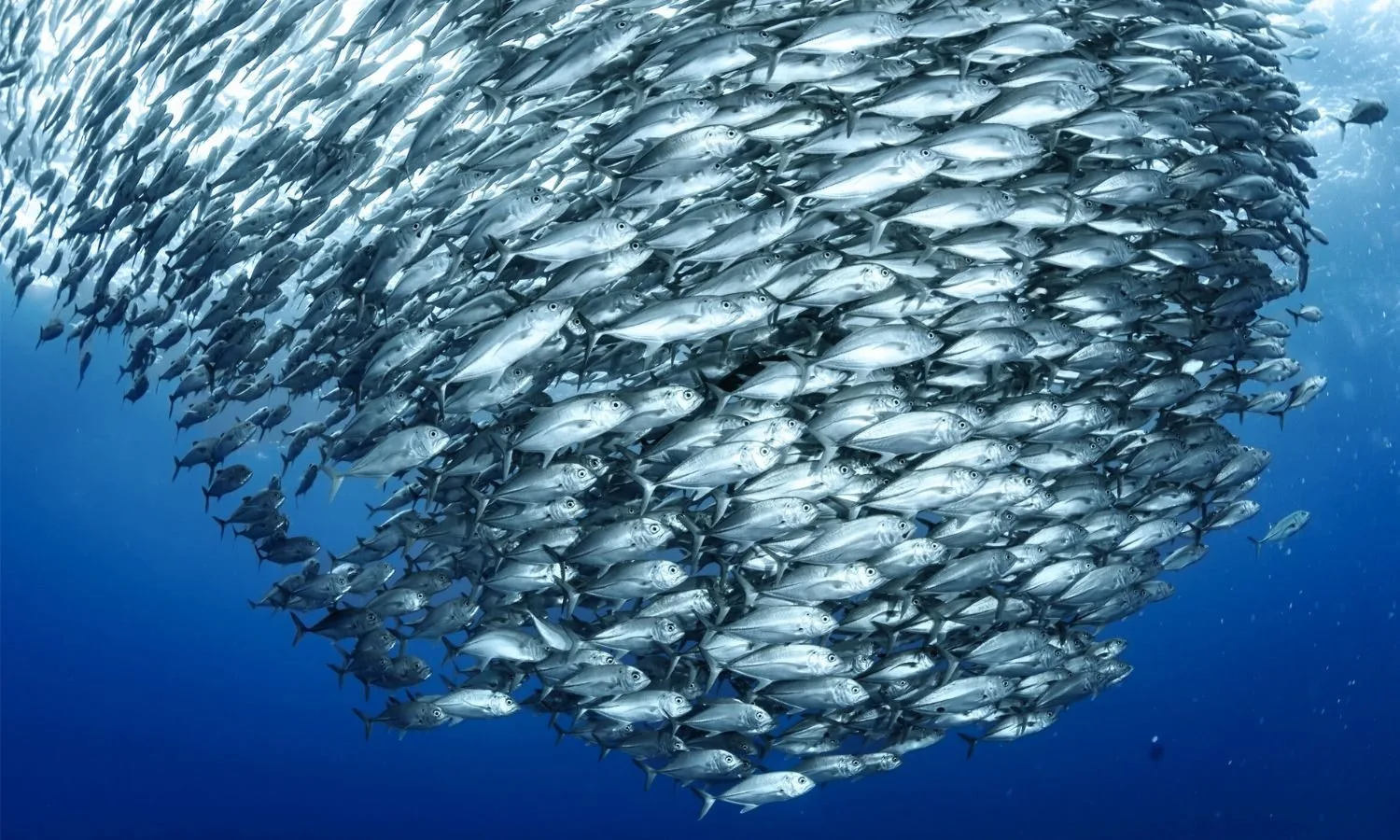
Napaling Point is the place to look for large sardine schools, an encounter that changes the character of a dive from individual reef watching to moving through a dense, shifting column of fish. Kalipayan’s sandy slope is suited to slow observation of reef fish, while Arco Point rewards a torch, camera and patient inspection of the coral growth around the arch and wall. Moray eels and frogfish are part of Panglao’s wider appeal, particularly for divers prepared to search rather than simply swim over the reef. There is no stated seasonal window for these encounters. Napaling Point is described as diveable year-round, so the practical variable is more likely to be the day’s conditions and the chosen site than a guaranteed month for a particular animal.
Panglao can be planned as a year-round diving destination, with Napaling Point specifically described as consistent through the year. That does not make every day interchangeable: exposed shores can bring changing current or sea conditions, so a flexible boat schedule is more useful than building the holiday around one fixed site. Visibility at the named sites is commonly in the 15-to-30-metre range, though it remains site-dependent. Holiday periods are the likeliest time for fuller boats, as Panglao is a compact resort and dive base. A five-to-seven-day stay leaves room to move dives around conditions rather than forcing the programme into a single weather window.
Panglao suits all levels when the site is matched to the diver. Kalipayan is accessible from Open Water Diver level, and the shallow sections of Arco Point allow less experienced divers to stay above the deeper wall. Current and localised surge still require a proper site briefing, particularly at exposed sites and on the return towards the ascent point. Advanced Open Water is useful for divers wanting more depth or flexibility, while Nitrox makes sense for repeated boat mornings. PADI, SSI and comparable BSAC training all fit the destination’s broad spread of diving, provided recent experience matches the conditions.
From London Heathrow, London Gatwick or Manchester, the journey to Panglao requires at least one long-haul connection in Asia; there is no standard direct Europe-to-Panglao service. The straightforward finish is a flight into Bohol-Panglao International Airport, on the island itself. An alternative is to fly to Cebu, take a ferry to the Bohol area, then continue by road to Panglao. Allow roughly 16 to 22 hours overall from Western Europe, depending on the connections. Once on the island, staying near Alona or the southern resort area keeps the practical side simple: dive departures are often walkable, while longer moves are handled by tricycle or taxi. Avoid lodging far across the island if several consecutive mornings are planned.
Build the trip around several separate boat mornings, not one overfilled day. That leaves room to use Kalipayan when a relaxed reef dive is appropriate, and to keep Arco Point or Napaling Point for conditions and divers that suit them. At Arco Point, expect the arch to involve localised surge even when the wider dive feels calm; at Napaling Point, pay attention to the current on the return to the ascent point. Nitrox is worthwhile here because Panglao rewards repeated diving rather than a single deep signature dive. Mixed groups should ask for split-site planning, allowing divers to take the boat while non-divers or snorkellers remain on land. Keep one day free for inland Bohol rather than filling every morning with the same reef loop. Finally, do not arrive expecting a wreck holiday: the useful mental picture is wall, slope, macro life and sardines.
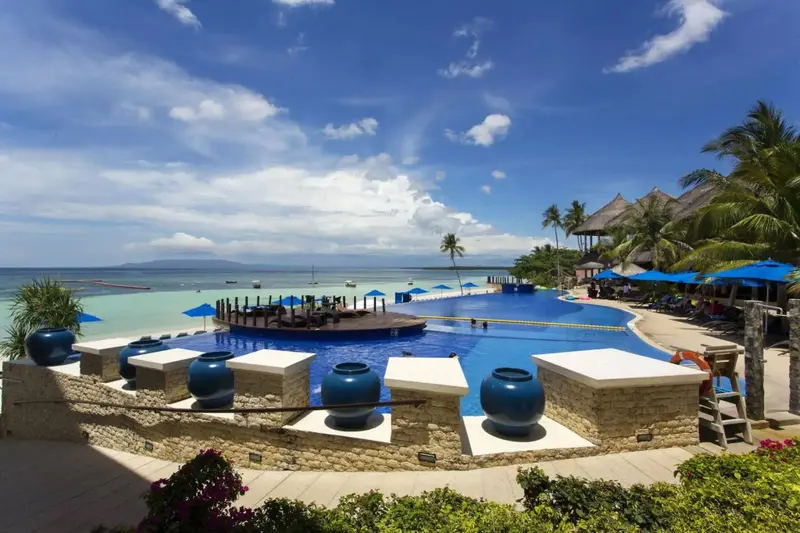
Five to seven days gives Panglao room to settle into its natural rhythm: repeated morning boat dives, a little flexibility for changing sea conditions, and a day away from the water. Accommodation near Alona or the southern resort area reduces daily transfers. A non-diving day can be used for beaches or an inland Bohol excursion, while the final day is better kept low-key before flying rather than spent on a demanding road journey. The island works particularly well when divers and non-divers share the same base.
Hello, I'm Marina, DivingDeal.com's AI assistant. I guide you through destinations, areas and countries.
Thinking about the whole trip and the flights? Talk it over with Edith →
Marina is an AI. Some links are affiliate links: DivingDeal may earn a commission, at no extra cost to you. Bookings are made with the partner.
Your last day stays dry: no diving in the 18-24 hours before a flight, the perfect window to see the destination from another angle.
 Nature
⏱ 7 h · ★ 4.8 (5 reviews)
from £81$109€97
see on Viator ↗
 Culture
⏱ 8 h · ★ 4.6 (5 reviews)
from £57$76€68
see on Viator ↗
Ratings and reviews collected by Viator and Tripadvisor.
Panglao can be planned as a year-round diving destination, with Napaling Point described as diveable throughout the year. Conditions still vary by day, especially at exposed locations where currents or sea state may change. A flexible boat schedule helps you choose suitable sites rather than building the trip around one fixed window.
Panglao suits different experience levels when the site matches the diver. Kalipayan is accessible to Open Water Divers, while shallower sections of Arco Point suit less experienced divers. Localised surge and changing current require a proper briefing, especially at exposed sites. Advanced Open Water training helps with greater depth or flexibility.
Panglao offers reef walls, sandy slopes, coral-covered drop-offs, macro life and sardine schools rather than wrecks. Napaling Point brings close encounters with moving sardine columns, while Arco Point offers an arch, wall and macro subjects in coral growth. Kalipayan suits slow observation of reef fish, with moray eels and frogfish also part of the appeal.
Plan Panglao around several separate morning boat dives from accommodation near Alona or the southern resort area. Keep the schedule flexible for sea conditions, using Kalipayan for a relaxed dive and Arco Point or Napaling Point when appropriate. Allow time for beaches or inland Bohol, and keep one day low-key before flying.