
The Adventure Club
Google 5/5 (3,823 reviews)
Koh Phi Phi · Thailand · Asia
Max. depth · 15 mDescend into the vibrant, shallow waters of Hin Klang, where a large central reef bursts with hard and soft corals, providing a nursery for countless tropical species.
For subtitles in English: start the video firstthen click the gearat the top right of the video, select “Subtitles/CC”, then “Auto-translate” and choose “English”.
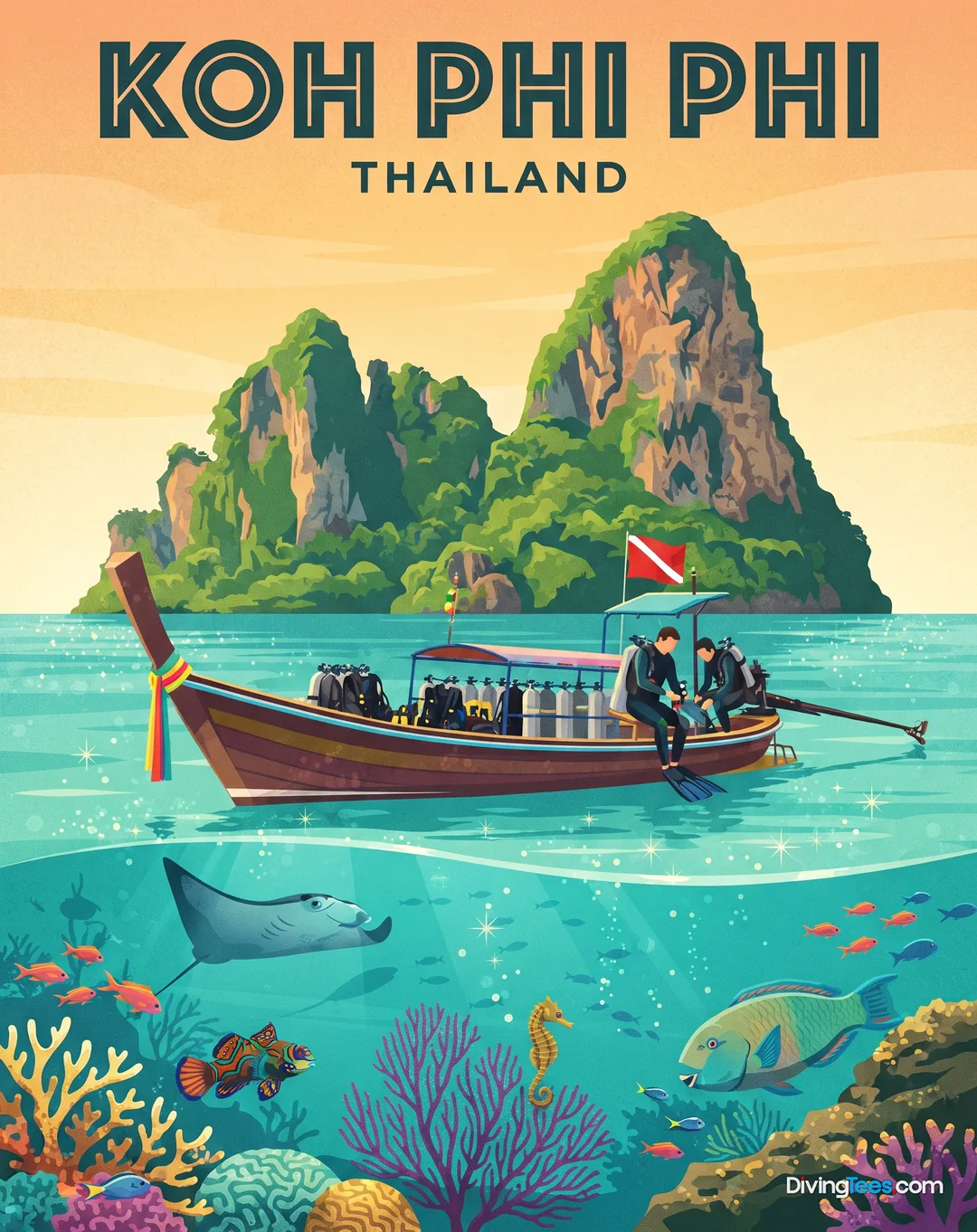
Dropping into Hin Klang, you immediately encounter a vast, sprawling central reef system that acts as a natural bridge between Phi Phi Don and Bamboo Island. The descent is gentle, bringing you quickly to the reef plateau, which starts remarkably shallow, making the vibrant colours of the corals immediately apparent. Sunlight penetrates deep into the water column here, illuminating every crevice and every movement within the reef structure, creating a consistently bright and inviting dive.
The topography of Hin Klang is dominated by extensive formations of both hard and soft corals, an impressive display of marine architecture that characterizes much of the dive. These shallow coral gardens are exceptionally fertile, providing shelter and foraging grounds for a dense population of fish. As you move across the reef, you'll notice the sheer breadth of the coral coverage, a testament to the site's healthy ecosystem and protected location.
Life here is abundant and constantly in motion. Schools of parrotfish (Scaridae family) graze lazily across the coral heads, their powerful beaks constantly reshaping the reef while contributing to the fine white sand you'll find in patches. Alongside them, the delicate and colourful butterflyfish (Chaetodontidae family) flit between the coral branches, often in pairs, their patterns standing out against the backdrop of the reef. The density of these familiar reef inhabitants transforms the reef into a dynamic, living tapestry.
Further exploring the nooks and crannies of Hin Klang, you'll discover numerous anemones, their tentacles swaying gently with the subtle movements of the water. Each anemone hosts its own community of commensal organisms, often including various species of anemonefish. These symbiotic relationships are a constant source of fascination, highlighting the intricate dependencies within this thriving shallow environment. The shallow profile encourages longer bottom times, allowing ample opportunity to observe these interactions up close.
Hin Klang is accessible for divers from beginner level, making it an excellent choice for those just starting their underwater journey or looking for a relaxing dive. The dive extends to a maximum depth of 15 metres, with the shallowest reef points encountered at 3 metres. Specific current and visibility details for Hin Klang are not reported, but the regional conditions in Phi Phi typically offer generally calm seas from November to April and good visibility. The best period to dive this area generally runs from November to April.
You can generally plan a dive at Hin Klang from November to April. During this period, the regional conditions around Phi Phi typically bring calm seas and good visibility. The site lies between Phi Phi Don and Bamboo Island, where its shallow reef and bright coral gardens create an inviting setting for exploration.
Hin Klang is accessible to beginner divers, so you can choose it when starting your underwater journey or when you want a relaxed dive. The reef ranges from 3 to 15 metres deep, with a gentle descent to a shallow plateau that lets you encounter the coral soon after entering the water.
At Hin Klang, you can explore a large central reef covered with abundant hard corals and thriving soft coral gardens. The site is home to numerous parrotfish and colourful butterflyfish, while many anemones add movement and detail among the reef formations. Shallow coral areas provide shelter and feeding grounds for dense fish life.
You can choose Hin Klang for its broad, shallow reef profile and gentle descent. Sunlight illuminates the coral formations, while the reef’s hard and soft corals support abundant marine life. The shallow environment allows you to spend longer observing parrotfish, butterflyfish, anemones and the small communities associated with them.