The Boat House
Google 4.2/5 (142 reviews)
Thailand · Asia
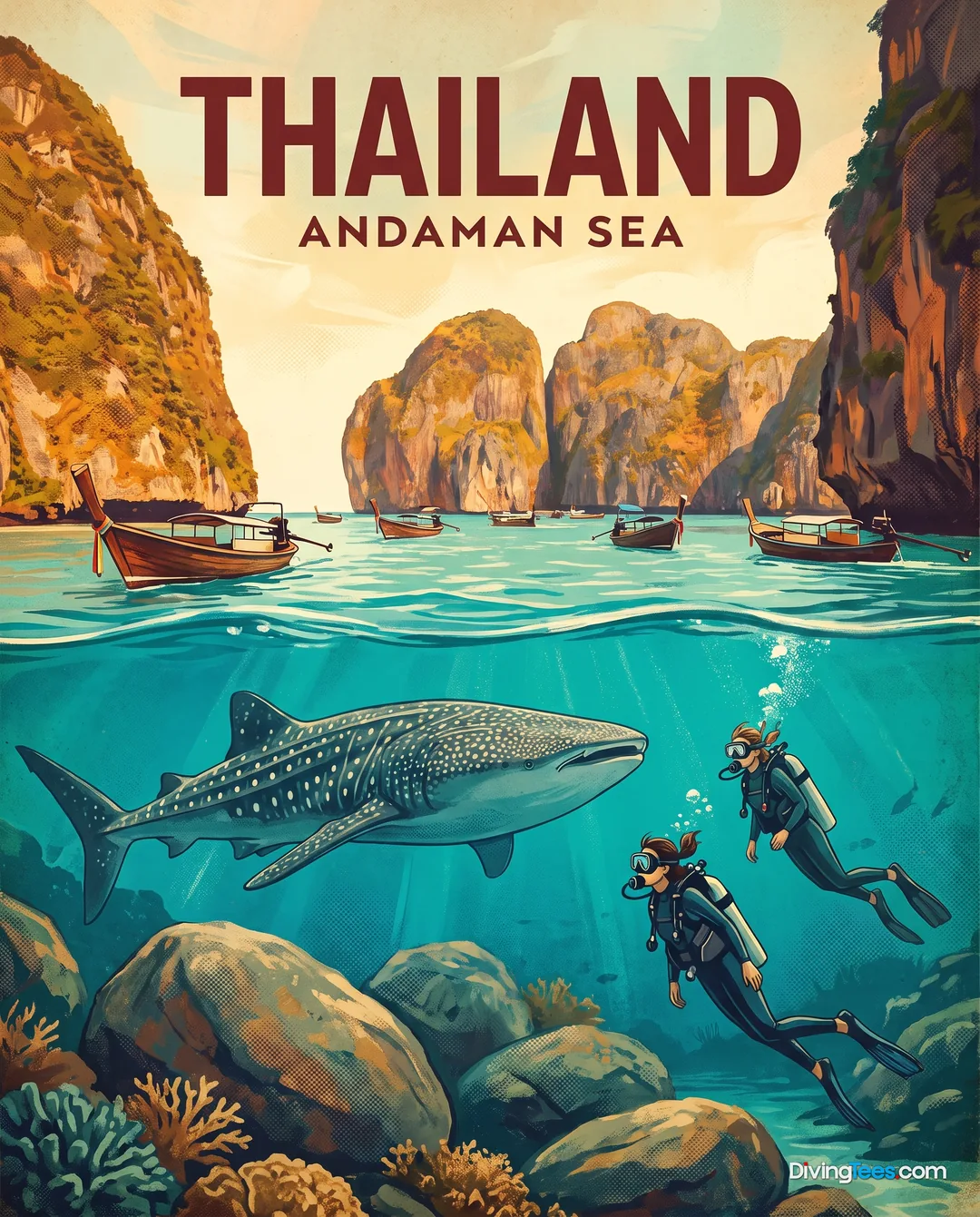
Reefs around Koh Chang and Koh Phayam, marine parks by boat, occasional manta rays and whale sharks from November to January.
For subtitles in English: start the video firstthen click the gearat the top right of the video, select “Subtitles/CC”, then “Auto-translate” and choose “English”.
Reefs around Koh Chang and Koh Phayam are the starting point for diving from Ranong, with boats also heading towards more distant marine parks and cruise sectors. That gives the trip two distinct shapes: an island stay with local dives, or a more committed liveaboard itinerary. Between dives, Koh Phayam and Koh Chang offer beaches, bays, mangroves and quiet water activities, while Ranong adds hot springs, markets and a mainland base for arranging the next crossing.
This is principally boat diving around islands and reef areas, rather than a shore-diving destination. Local outings from Ranong, Koh Chang and Koh Phayam contrast with longer journeys towards the marine parks and remote cruise sectors. Currents are variable, so a dive may be calm or require more attention to positioning and the descent and ascent plan. Visibility around Ranong is often about five to ten metres, affected by plankton, runoff, swell and current. Farther offshore, reports range from fifteen to twenty metres early in the season to more than twenty-five metres in favourable conditions, but those figures should not be treated as a promise for every site. Ask whether a boat is heading to local reefs or a distant park, because the time on the water, depth, current and whole-day commitment can be very different.
The most notable encounters are occasional manta rays and whale sharks, particularly in the more distant cruise sectors from November to January. They are possibilities rather than scheduled sightings, so the trip makes more sense when the reefs and the journey appeal in their own right. Early-season plankton can help explain why larger animals are present, but it can also reduce visibility. Around Ranong, the underwater scene is primarily reef diving around the islands, with the character of each outing shaped by current, swell and the distance travelled. Koh Chang and Koh Phayam suit divers happy to spend time looking closely over local reef areas, while the remote parks offer the stronger reason for choosing a cruise.
The practical diving season runs from November to April, when the monsoon has eased and crossings are more dependable. The sea can still be unsettled at the edges of the season, while plankton may be more noticeable early on. Visibility generally improves from February into April, making those months the safer choice if clear water matters most. November to January is the period associated with occasional manta rays and whale sharks in the cruise sectors, but neither encounter is guaranteed. From May to October, the rainy season brings rougher seas and more uncertain boat services, so local diving may be possible while the journey to it is not.
Ranong can suit beginners on straightforward local outings, as centres cater for different levels. It is less forgiving to assume that every boat trip will be a beginner dive: deeper sites, variable currents and distant marine parks call for more experience. Advanced Open Water is useful for deeper or changeable conditions, while Nitrox has a practical role on repetitive diving days and cruises. Be comfortable managing buoyancy, a safety stop and changing conditions before committing to the longer sectors.
From London Heathrow, London Gatwick or Manchester, the journey requires an onward route to Bangkok, followed by either a domestic flight to Ranong or a bus from Bangkok. Ranong is then the mainland departure point for Koh Chang and Koh Phayam. The ferry to Koh Phayam takes about two hours, while the fast boat takes roughly forty minutes; Koh Chang is also reached by boat from the Ranong coast. Timetables and crossings depend heavily on the monsoon and sea state. On the islands, expect to move on foot or by local transport according to where you stay, while Ranong uses local transport between town accommodation, the harbour and dive departures. Leave room between connections rather than treating the ferry as a fixed appointment.
Treat the crossing as part of the itinerary, not as a minor transfer. In the rainy season, larger ferries may stop and fast boats can be cancelled by swell, so check the service before travelling and keep a spare day before a cruise or important departure. Do not book a tight flight connection after an island crossing or liveaboard. When arranging diving, establish whether the boat is staying around Koh Chang and Koh Phayam or travelling to distant marine parks, because the two options are not interchangeable. If manta rays or whale sharks matter, go early in the season and regard them as occasional encounters. Compare departures from Ranong, Koh Chang and Koh Phayam to avoid unnecessary transfers. Carry cash and useful spares on the islands, where services and equipment availability are less predictable than on the mainland. Keep visibility expectations flexible, especially when a distant sector is advertised at its best rather than its usual.
Allow seven to ten days to combine local diving, an excursion to more distant sites or a cruise, and weather margin. Ranong works well as the organising base, while Koh Phayam or Koh Chang provide the slower island stay with local boat diving. A mixed plan avoids making one island responsible for every connection. Non-diving days can cover hot springs, markets, beaches, mangroves, kayaking and snorkelling. Keep land excursions and coastal activities for the day before a flight, not a crossing-dependent dive plan.
Hello, I'm Marina, DivingDeal.com's AI assistant. I guide you through destinations, areas and countries.
Thinking about the whole trip and the flights? Talk it over with Edith →
Marina is an AI. Some links are affiliate links: DivingDeal may earn a commission, at no extra cost to you. Bookings are made with the partner.
Choose November to April, when the monsoon has eased and crossings are more dependable. Visibility generally improves from February into April, while November to January is associated with occasional manta rays and whale sharks in cruise sectors. From May to October, rougher seas and uncertain boat services can disrupt longer journeys.
Ranong can suit beginners on straightforward local boat outings, as centres cater for different levels. Deeper sites, variable currents and distant marine parks require more experience. Advanced Open Water is useful for deeper or changeable conditions, while Nitrox helps on repetitive diving days and cruises. You should manage buoyancy, safety stops and changing conditions comfortably.
Diving around Ranong focuses on reef areas near Koh Chang and Koh Phayam, with the underwater character shaped by current, swell and visibility. More distant marine parks and cruise sectors may bring occasional manta rays and whale sharks, particularly from November to January. Around the islands, expect reef diving rather than scheduled large-animal encounters.
Use Ranong as the mainland organising base, then choose local boat diving around Koh Chang or Koh Phayam, or a longer cruise to remote marine parks. Allow time for weather and crossings, avoid tight connections, and ask where each boat is travelling. A mixed itinerary can include island stays, local diving, mainland activities and weather margin.