

Riamar Diving Center
Google 4.6/5 (170 reviews)
2.8 km away as the crow flies
Boa Vista · Cape Verde · Atlantic
Max. depth · 25 mExplore a complex labyrinth of volcanic rock columns and crevices starting from a 14m plateau.
For subtitles in English: start the video firstthen click the gearat the top right of the video, select “Subtitles/CC”, then “Auto-translate” and choose “English”.
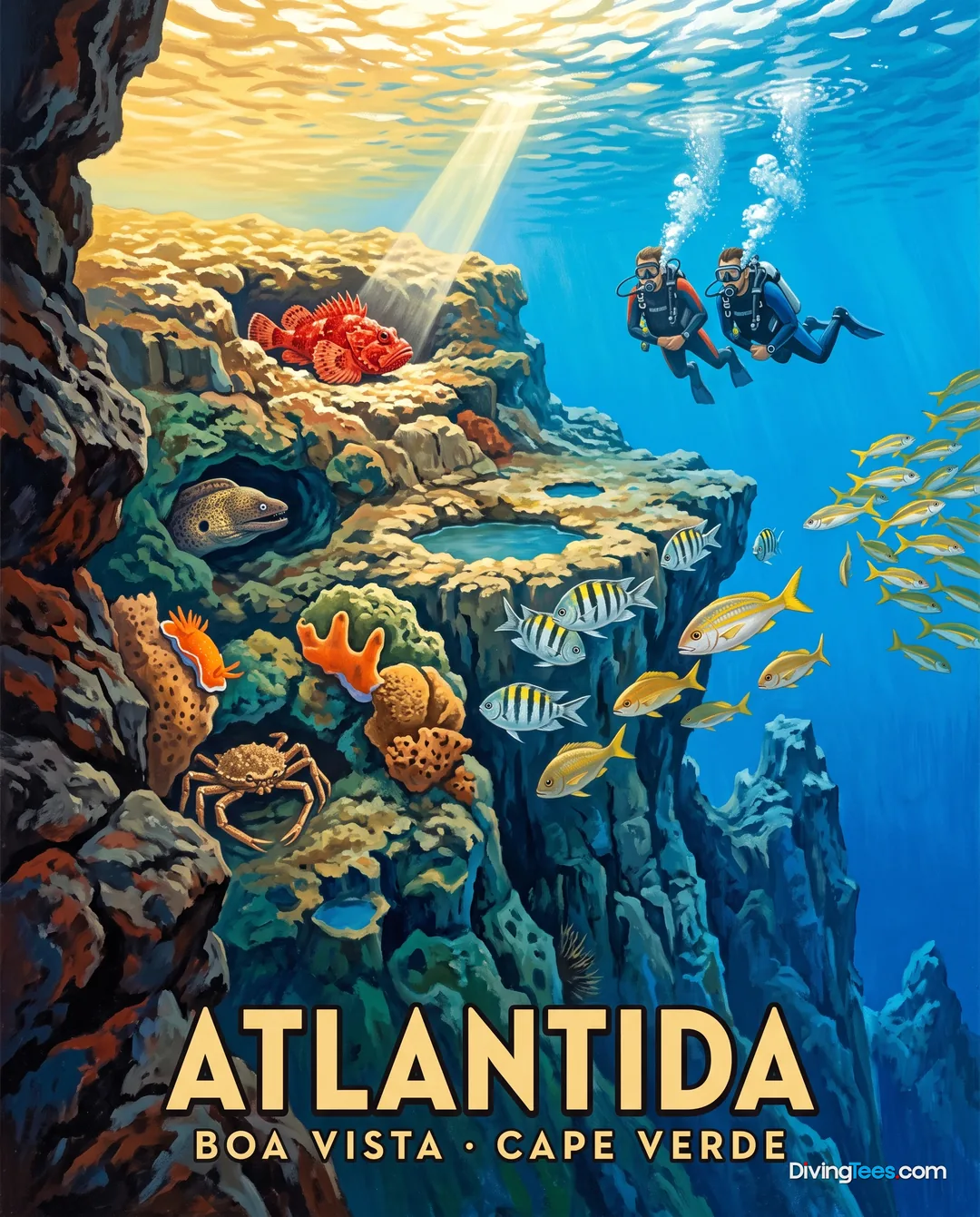
The topography of North Rocks begins with a distinctive, flat volcanic plateau at approximately 14 metres. This platform serves as the primary entry point for your dive, providing a stable area before the terrain drops away into a more complex landscape. From this terrace, the seafloor transitions into a dense labyrinth of volcanic rock formations and vertical columns. This structure creates a series of protected corridors and small overhangs that define the site's underwater architecture.
As you move deeper, the reef structure becomes increasingly intricate with various holes and large rock outcrops. The terrain rises from a sandy bottom at the base of the reef, which sits at depths between 20 and 25 metres. These volcanic formations provide countless crevices and sheltered spots that are essential for the high concentration of resident marine life. Navigating through these natural corridors requires careful attention to buoyancy to avoid contact with the rock surfaces.
The site's location on the north side of Boa Vista means it is directly exposed to the open Atlantic swell. Because of this position, the water conditions are heavily influenced by the wind and seasonal swell patterns. You should expect moderate to strong currents that can make maneuvering through the tighter rock formations challenging. The site is best experienced when the swell is manageable, allowing you to focus on the intricate details of the reef.
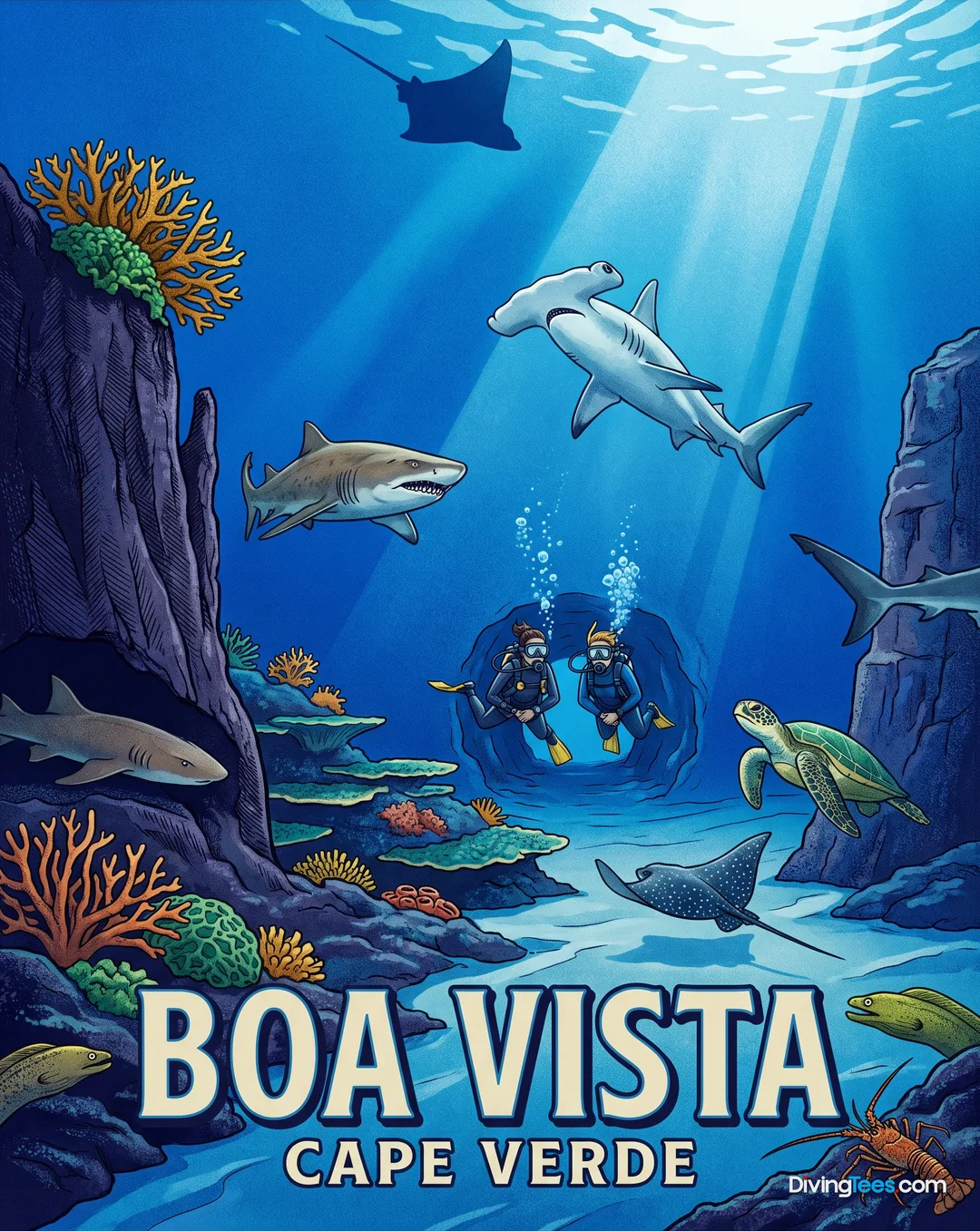
The resident fauna is highly concentrated within the cracks and columns of the rockwork. You will frequently encounter Caribbean spiny lobsters and moray eels tucked into the larger crevices. Smaller organisms, such as arrow crabs and various filefish, inhabit the shallower parts of the reef structure. The combination of complex topography and consistent water movement supports a high density of life across the entire site.
The biodiversity at North Rocks includes several key species that utilize the rocky terrain for protection. You may spot parrotfish grazing on the reef edges or blackspot picarel cruising through the water column. Spotted eagle rays and stingrays are also known to frequent the area, often gliding through the deeper sections of the reef. The variety of life is sustained by the nutrients brought in by the steady movement of the Atlantic currents.
Navigating the different depth zones provides a varying experience of light and scale. The shallower sections near the 14m plateau offer more light and detailed views of smaller reef inhabitants like fireworms and various crustaceans. As you descend toward the 25m mark, the scale increases with larger volcanic outcrops rising from the sandy bottom. This transition from a shallow plateau to a deeper, more rugged landscape makes the site one of the most versatile in the region.
For those exploring the deeper sections, the sandy areas between the volcanic outcrops provide a different perspective. This is where larger species like conger eels and island groupers are most likely to be found near the base of the walls. The visual clarity can vary significantly, ranging from 8 to 25 metres depending on the ocean conditions. Monitoring your depth and descent rate is essential as you move between the plateau and the deeper volcanic structures.
Depth: 10 to 25 metres. Required level: Advanced; divers must be comfortable in currents and surge. Visibility: 8 to 25 metres. Current: Moderate to strong due to exposure to Atlantic swell. Best season: June to October.
You should plan a dive at North Rocks between June and October. The site is exposed to the open Atlantic swell, with conditions influenced by wind and seasonal swell patterns. Diving when the swell is manageable lets you focus on the volcanic formations, corridors, overhangs, and resident marine life.
North Rocks requires an advanced level. You need to be comfortable in moderate to strong currents and surge, which can make maneuvering through the tighter rock formations challenging. Careful buoyancy control is also important as you navigate the natural corridors and avoid contact with the volcanic rock surfaces.
North Rocks ranges from 10 to 25 metres. The dive begins on a flat volcanic plateau at approximately 14 metres, then descends through columns, holes, overhangs, and larger outcrops. At the base, volcanic formations rise from a sandy bottom between 20 and 25 metres, creating varied depth zones.
At North Rocks, you can look for Caribbean spiny lobsters, moray eels, arrow crabs, filefish, parrotfish, and blackspot picarel among the cracks and columns. Spotted eagle rays and stingrays may pass through deeper sections, while conger eels and island groupers can be found near sandy areas at the base of the walls.