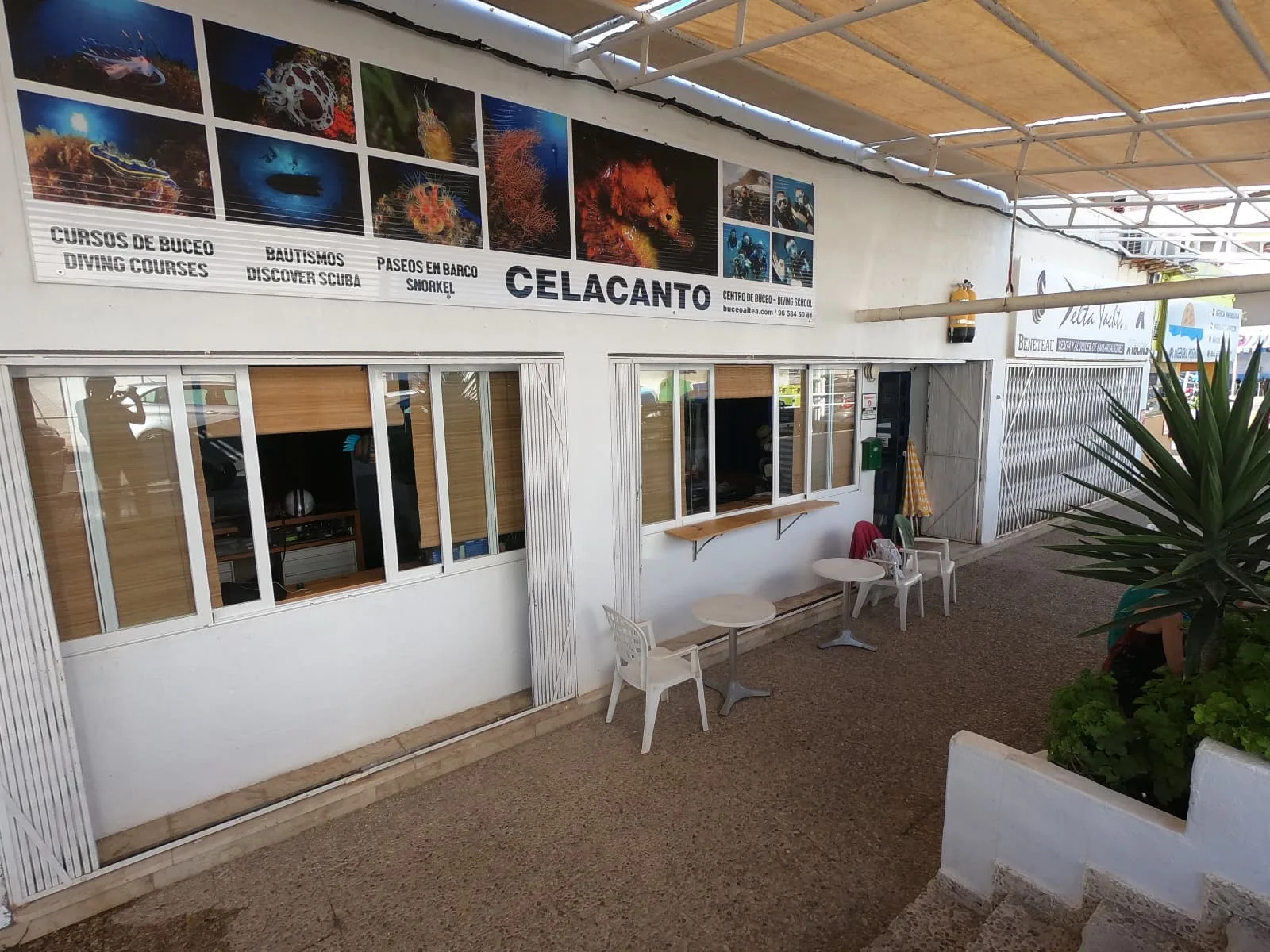

Celacanto escuela de buceo
Google 4.9/5 (243 reviews)
Spain · Mediterranean
Rocky walls at Mascarat, Posidonia meadows, Peñón de Ifach arches and an open underwater cavern shape Altea’s practical Mediterranean diving.
For subtitles in English: start the video firstthen click the gearat the top right of the video, select “Subtitles/CC”, then “Auto-translate” and choose “English”.
Altea is a shore-based Spanish destination where boat diving links the harbour at Luis Campomanes with the rocky coast around Mascarat, Cap Toix and Calp. Underwater, expect walls, platforms, Posidonia meadows, sand, arches and short passages rather than one signature reef. The appeal is the ability to match the day to the weather and your experience, from shallow relief around Peñón de Ifach to deeper wall profiles. Above water, the old town, beaches and Serra Gelada make sense for non-divers too.
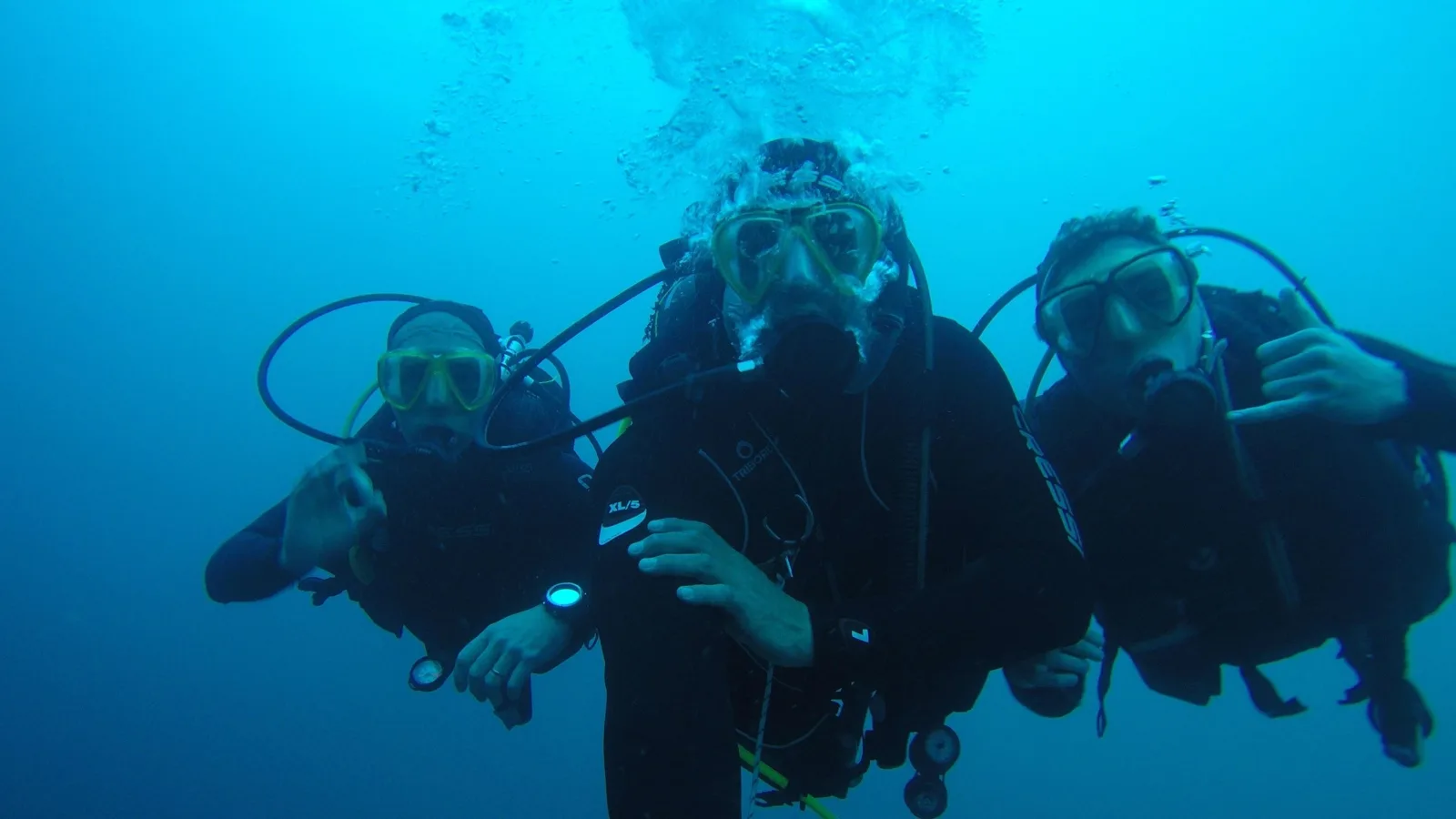
The diving is mainly by boat over rocky Mediterranean ground. At Mascarat, walls and ledges run from shallow water towards about 30 metres, while Cap Toix offers the more demanding deeper profiles. Around Peñón de Ifach, blocks, arches and open passages keep some dives shallower and more exploratory. Posidonia, sand and rock alternate across the sites, so the scenery changes without needing a long transfer. Currents are variable rather than a defining feature, and the skipper may sensibly alter the plan with wind and swell. Visibility is commonly around 15 to 25 metres from June to September, although coastal weather and summer thermoclines can reduce it, particularly around 15 to 18 metres. The outing is generally a local day boat, not a liveaboard, with site choice depending on conditions and the required profile.
Altea’s underwater character comes from its habitats: Posidonia meadows, bare rock, walls, sandy patches, arches and shadowed cavities. These give a dive more to look at than a simple descent and ascent, with the light changing as you move from open platform to overhang or tunnel. Mascarat and Cap Toix suit divers who want vertical rock and depth, while Peñón de Ifach offers more open, shallow relief. There is no particular seasonal wildlife spectacle around which to build the trip, so plan for the terrain rather than a species checklist. The clearest conditions are generally found from June to September, but thermoclines may interrupt the view below the warmer surface layer.
May, June, September and October are the most practical months for Altea. The sea is usually easier to work with than during the busiest part of summer, visibility is often good, and the coastal sites are less crowded. June to September generally offers the clearest underwater conditions, although summer thermoclines can separate warm surface water from cooler layers and affect the view at depth. July and August bring the greatest pressure on popular boat sites and bathing areas. Diving continues through winter, but plan for cooler water and fewer departures, with a quieter town and a less reliable choice of outings.
Altea works for beginners when the centre selects a shallow, open site, particularly around the less demanding relief of Peñón de Ifach. It also gives experienced divers more to work with on the walls of Mascarat and the deeper Cap Toix profiles. Advanced Open Water, or equivalent experience, is useful for deeper outings. Arches, tunnels and the Elephant Cave require calm buoyancy, good judgement and strict attention to the planned route. An open underwater cavity is not automatically a suitable penetration dive.
From London Heathrow, London Gatwick or Manchester, the usual route is by air to Alicante-Elche, followed by a road journey to Altea. Valencia is another road approach, but the local diving operation is centred on the coast rather than an inland transport hub. No ferry is needed. Once in the area, the harbour at Luis Campomanes is the practical base for departures, and it is not beside Altea’s old town. Stay nearby if you want to walk to the boat; otherwise allow for a hire car, taxi or an arranged transfer. Check the departure harbour carefully when booking, because a trip sold as Altea may head towards Mascarat, Cap Toix, Calp or Benidorm.
Treat the place names as a starting point, not a complete dive description. Mascarat, Cap Toix and Peñón de Ifach cover different moorings, depths and levels of shelter, so ask where the boat is actually going and what profile is planned. Let wind and swell decide the order of the days rather than fixing an itinerary weeks ahead. A lamp is worthwhile for the arches, tunnels and cavities, both to pick out the rock and to keep your bearings, but it does not turn an open passage into a cave dive. Be especially clear about the Elephant Cave: its entrance is around 12 metres and the cavity extends roughly 25 metres, so limits and exit points matter. Expect visibility and temperature to change around 15 to 18 metres in summer. Staying near Luis Campomanes avoids an awkward daily transfer from the old town.
Allow three to five days to work through the local sectors, and a week if you want to add outings towards Calp or Serra Gelada. Keep some flexibility in the programme, since wind and swell may change the most sensible site. Accommodation near Luis Campomanes simplifies early boat departures, while the old town offers a more atmospheric base but usually means a car, taxi or transfer. Non-divers have beaches, surface-water activities, La Olla, the old centre and Serra Gelada to fill the surface intervals.
Hello, I'm Marina, DivingDeal.com's AI assistant. I guide you through destinations, areas and countries.
Thinking about the whole trip and the flights? Talk it over with Edith →
Marina is an AI. Some links are affiliate links: DivingDeal may earn a commission, at no extra cost to you. Bookings are made with the partner.
May, June, September and October are practical months for Altea, with generally manageable sea conditions, good visibility and fewer crowds. June to September often brings clearer water, although summer thermoclines can affect views at depth. July and August are busier, while winter brings cooler water and fewer boat departures.
Altea can suit beginners when a centre chooses a shallow, open site, especially around Peñón de Ifach. Experienced divers can select Mascarat walls or deeper Cap Toix profiles. Advanced Open Water or equivalent experience helps for deeper outings. Arches, tunnels and the Elephant Cave require calm buoyancy and careful route awareness.
Altea offers varied Mediterranean terrain rather than one signature reef. You can explore Posidonia meadows, rocky platforms, walls, sandy patches, arches, short passages and shadowed cavities. Mascarat and Cap Toix provide vertical rock, while Peñón de Ifach offers shallower relief. Summer visibility is commonly around fifteen to twenty-five metres.
Allow three to five days for local sectors, keeping the schedule flexible because wind and swell may change the suitable site. Luis Campomanes is the practical departure harbour, so staying nearby simplifies boat mornings. Otherwise, plan a hire car, taxi or transfer. Ask which site and profile are actually planned before booking.