
Binibeca Diving
Google 4.8/5 (398 reviews)
Menorca · Spain · Mediterranean
Max. depth · 22 mA massive natural cavern system spanning three depth levels within the Isla del Aire marine reserve.
For subtitles in English: start the video firstthen click the gearat the top right of the video, select “Subtitles/CC”, then “Auto-translate” and choose “English”.
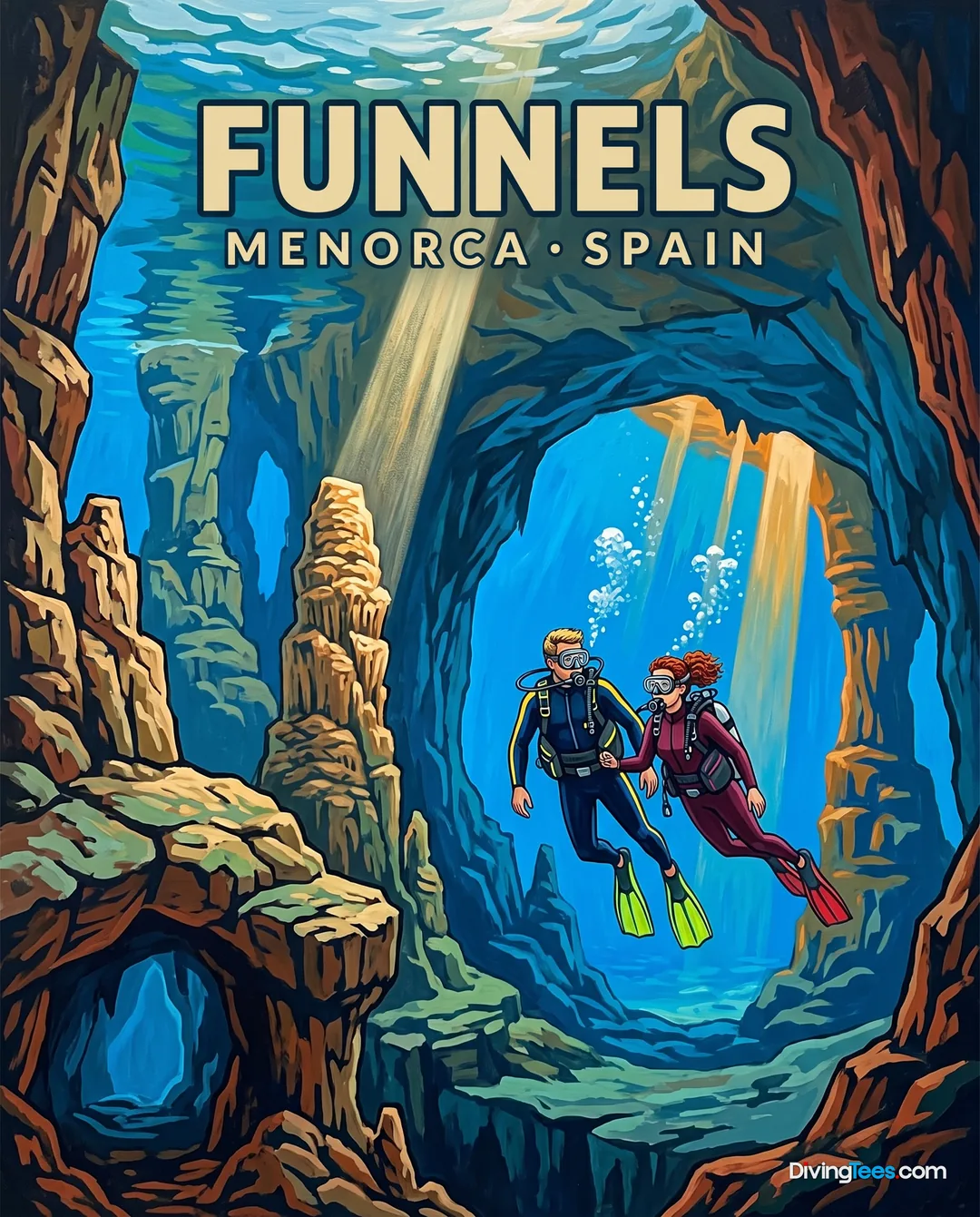
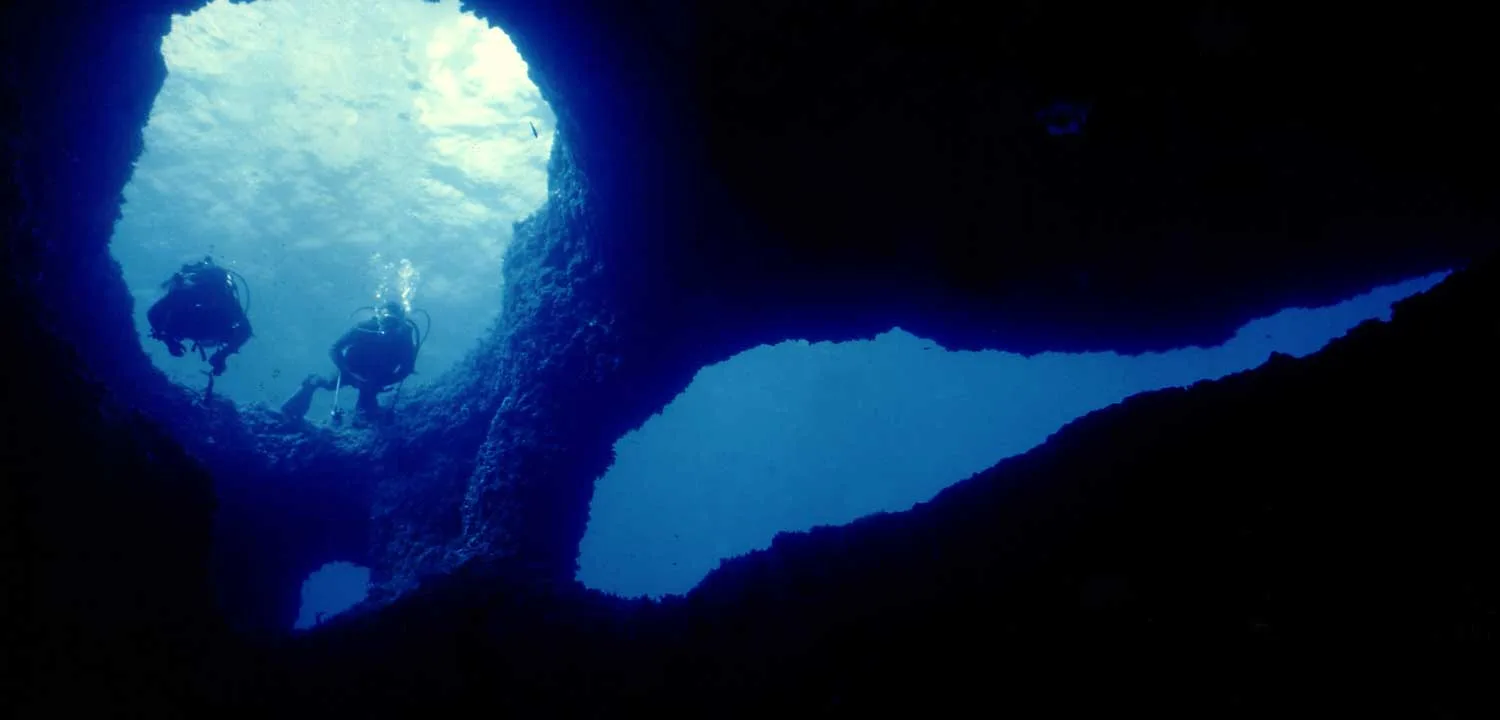
The Coral Galleries, also known as Cagaires, is defined by its massive natural cave structure that cuts through the edge of a Mediterranean cap. Unlike a simple vertical wall or a single reef drop, this site is organized into three distinct levels separated by natural sandy floors. This topographical layout creates a sense of immense scale and provides various environments within a single dive profile. As you move through the system, the architecture shifts from open sections to more enclosed, sheltered corridors.
Approaching the site by boat takes approximately 15 minutes from the local dive center. Once on-site, you can enter the water via a direct jump or use the stairs to facilitate a controlled descent toward the wall. The entry leads you toward the western access point, which climbs through a chimney structure toward the shallower reef sections. This allows for a progressive descent where you can manage your buoyancy before entering the more complex cavernous areas.
The interior of the galleries is characterized by a ceiling and walls densely covered in biological growth. You will find a rich layer of coral, encrusting anemones, and various sponge species that thrive in the filtered light of the cavern. The natural light penetrates the larger openings, creating a bright and spacious atmosphere that makes navigation intuitive. This light play against the textured surfaces is a defining characteristic of the site's visual experience.
The exit strategy involves following the wall to a second cavern that opens onto a sandy bottom. This transition from the enclosed coral-covered walls to the open sandy floor provides a clear directional marker for your ascent. Navigating the different levels requires careful buoyancy control to avoid contact with the sensitive sponge and coral formations. Staying close to the wall while moving between the natural floors ensures you remain within the main structure of the site.
The fauna at Coral Galleries is well-established within the various nooks and crevices of the rock. You can frequently encounter dusky grouper (Epinephelus marginatus) patrolling the mid-depth sections near the cavern ceilings. Moray eels (Muraena helena) and conger eels (Conger conger) are commonly found tucked into the darker recesses of the limestone walls. For those watching the open water near the cave entrances, European barracuda (Scomberomorus scomberus) are known to pass through the area.
Beyond the biological interest, the site holds historical significance that adds a layer of depth to the exploration. Within the sand and among the rocks, you may find remnants of past maritime activity, such as cannonballs, musket balls, and grapeshot. These artifacts are integrated into the seabed, requiring a keen eye during your swim along the natural floors. These objects serve as silent witnesses to the history of the Menorca coastline and the waters of the Isla del Aire reserve.
The site has a depth range of 5 to 22 metres. The best time to dive is during May, June, September, and October when conditions are typically calmer, though July and August are accessible during the warmer summer months.
Conditions are typically calmer at Coral Galleries during May, June, September, and October. You can also access the site during July and August, when the warmer summer months make diving possible. The boat journey from the local dive center takes approximately fifteen minutes before entering the water.
Coral Galleries ranges from five to twenty-two metres deep. You can begin with a progressive descent from the western access point, moving through a chimney toward shallower reef sections before exploring the cavern system. Three distinct levels are separated by natural sandy floors, creating varied depth environments during one dive.
At Coral Galleries, you can see cavern walls and ceilings covered with coral, sponges, and anemones, with natural light entering through larger openings. Dusky grouper, moray eels, and conger eels occupy the rock formations, while European barracuda may pass near entrances. Cannonballs, musket balls, and grapeshot lie among sand and rocks.
Coral Galleries requires careful buoyancy control as you move between its natural floors and sheltered corridors. Staying close to the wall helps you remain within the main structure and avoid sensitive coral and sponge formations. The second cavern opens onto a sandy bottom, providing a clear directional marker for your ascent.