null
South West Rocks Dive Centre
Google 5/5 (293 reviews)
South West Rocks · Australia · Pacific
Max. depth · 24 mDescend into Fish Rock's 120-meter ocean cave, an aggregation site for grey nurse sharks, connecting the shallow northern entrance to a deeper southern exit.
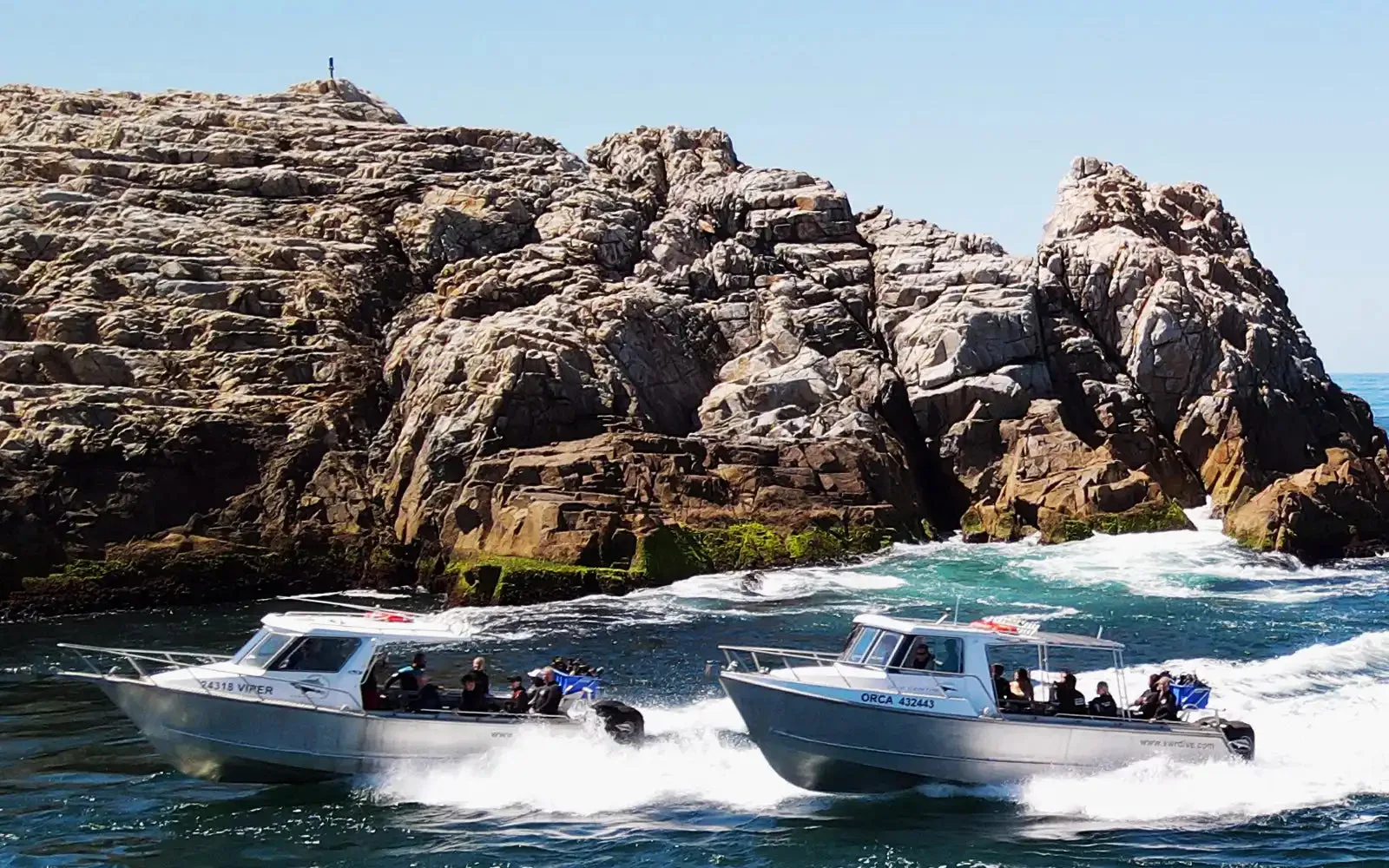
Fish Rock stands as a prominent offshore rocky island, distinctive for the 120-125 meter ocean cave that bisects it entirely. This cave, often cited as Australia's only true ocean cave dive, forms the backbone of the site, connecting a shallower, naturally lit northern entrance to a deeper, narrower southern opening. Approaching the island, you'll see a diverse topography around the rock, with gently sloping walls, scattered pinnacles, and a series of gutters and basins that define the outer reef structure.
The dive profile at Fish Rock offers a journey through varying environments. Starting at the northern side, the cave entrance opens into a wide, naturally illuminated cavern, where light filters in from above. As you progress deeper into the overhead environment, you'll pass through sections fringed with bright orange zoanthids and pink gorgonian corals before reaching the narrower, darker sections and chimneys that characterise the southern end. This transition from open light to overhead cave provides a dynamic dive experience, requiring comfort in confined spaces.
Outside the cave system, the terrain shifts to shark gutters and 'aquarium-like' sections, where the rocky reef gradually slopes. These areas are covered in dense schooling fish, creating a vibrant backdrop against the rock and shell-grit bottom. Chimneys within the cave system provide additional vertical exploration opportunities, leading upwards from the main passage towards the island's interior, but are generally reserved for those with specific overhead environment training due to their restricted nature.
Currents at Fish Rock can be a significant factor, varying with swell, tides, and wind. While conditions can be calm enough for less experienced divers in sheltered sections, you should expect noticeable current around the western fringe and along the outer walls. When the current is running, it often dictates a drift dive along the perimeter, carrying you from the northern point towards the shark gutters and the cave entrances. This current brings in the pelagic species and schooling fish that define much of the site's marine life.
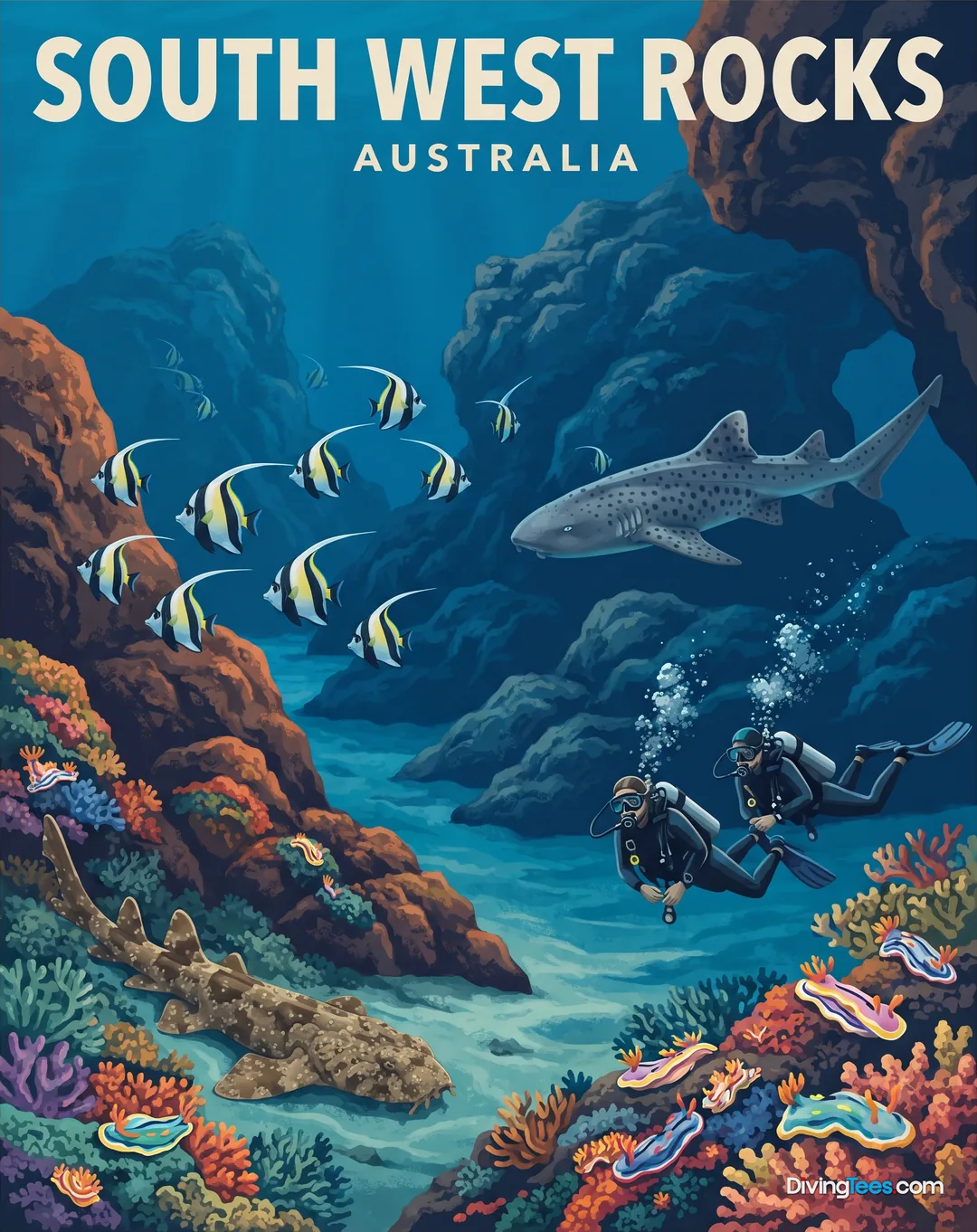
Fish Rock is particularly celebrated for its shark encounters, drawing divers specifically for its grey nurse shark aggregations. These sharks are present year-round, with their highest numbers typically observed during the cooler months from May to September, often gathering around both cave entrances and within the shark gutters. Beyond the grey nurse sharks, you'll also likely encounter wobbegong sharks, leopard sharks, and Port Jackson sharks, often found resting in crevices or under ledges.
The site hosts a unique blend of temperate and tropical species, distinguishing it from nearby shore reefs. You'll find bull rays, eagle rays, and black rays moving across the sandy patches and reef edges. Schools of yellowtail kingfish, yellowtail scad, silver sweep, and nannygai fill the water column, particularly in areas with current. Look closer into the reef structure for moray eels, octopuses, and a variety of nudibranchs, alongside eastern blue gropers and the impressive giant Queensland groupers.
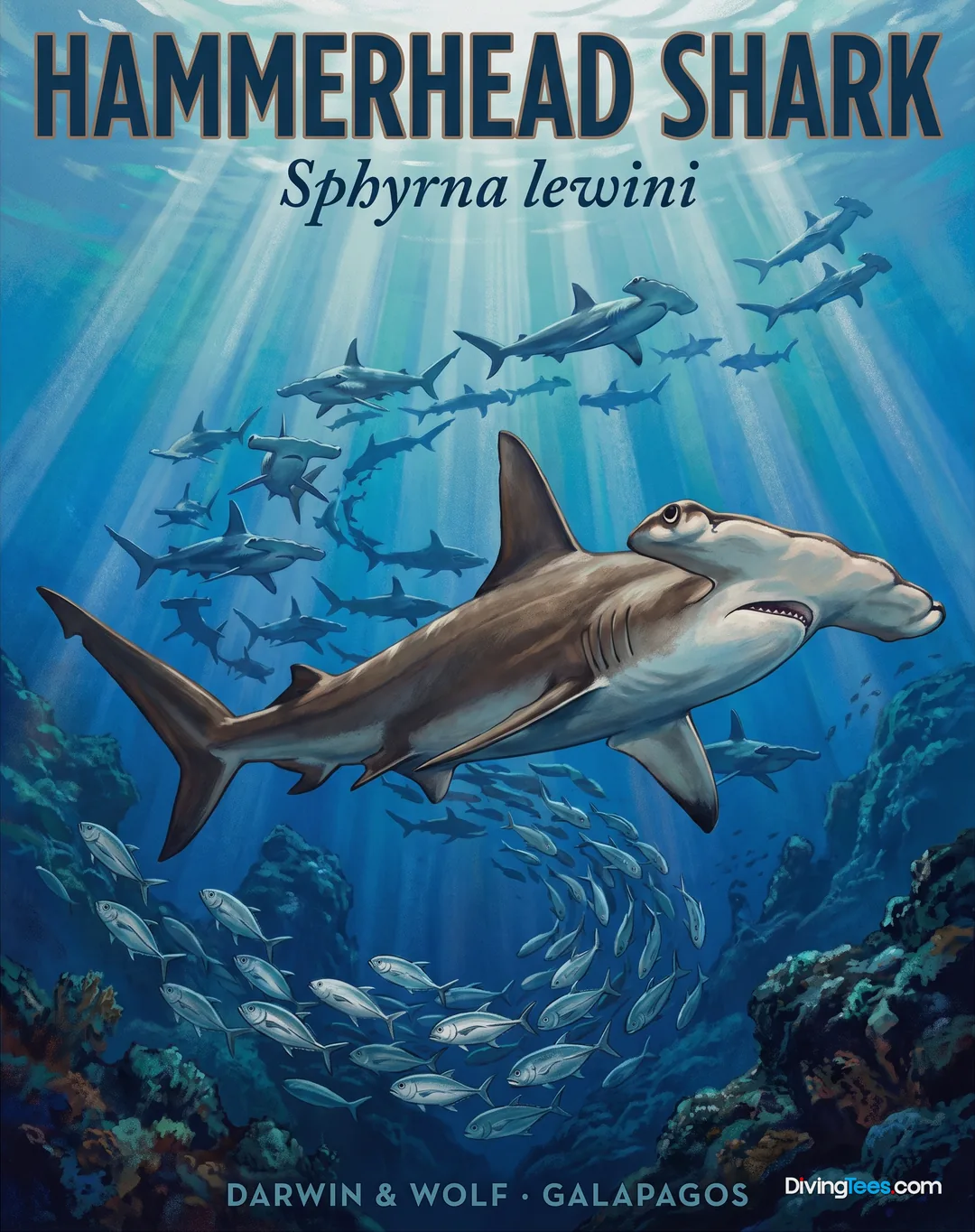
Pelagic visitors add another dimension to the dives. Turtles are commonly sighted, gracefully navigating the reef. During the warmer months, specifically from October to January, hammerhead sharks make their seasonal appearance, circling in the deeper, open water sections. Even dolphins are occasional visitors, adding to the richness of the marine life. This convergence of diverse species, from large pelagics to intricate macro life, makes Fish Rock a dynamic site.
The density of fish life and the abundance of invertebrates further enrich the experience, setting Fish Rock apart from other local sites. You’ll find crayfish, painted crayfish, and decorator crabs camouflaged within the reef. Bullseye, trumpetfish, black cod, leatherjackets, batfish, and various wrasses contribute to the vibrant ecosystem. The site is a compelling combination of large animal encounters and detailed reef exploration, making each dive unique.
Fish Rock offers diving between 8 and 24 meters, suitable for advanced divers comfortable in overhead environments and with experience in currents. Visibility generally ranges from 15 to 25 meters. Currents are variable, often noticeable around the western fringe and walls due to swell, tides, and wind, sometimes necessitating drift dives. Diving is possible year-round, with peak grey nurse shark numbers from May to September and hammerheads most often from October to January.
You can dive Fish Rock year-round. Grey nurse sharks are present throughout the year, with peak numbers from May to September around the cave entrances and shark gutters. Hammerheads are most often seen from October to January in deeper, open water sections. Seasonal conditions may influence the experience.
Fish Rock is suitable for advanced divers who are comfortable in overhead environments and experienced with currents. The cave includes confined sections, darker passages, and chimneys, while the restricted chimneys generally require specific overhead environment training. Sheltered sections can be calm enough for less experienced divers.
Fish Rock offers diving between 8 and 24 meters. Currents are variable and can be noticeable around the western fringe and outer walls, influenced by swell, tides, and wind. When current is running, you may follow a drift dive along the perimeter from the northern point toward the shark gutters and cave entrances.
At Fish Rock, you may encounter grey nurse, wobbegong, leopard, and Port Jackson sharks, along with bull, eagle, and black rays. Schools of yellowtail kingfish and yellowtail scad fill the water, while turtles, dolphins, moray eels, octopuses, nudibranchs, groupers, crayfish, and seasonal hammerheads add variety.