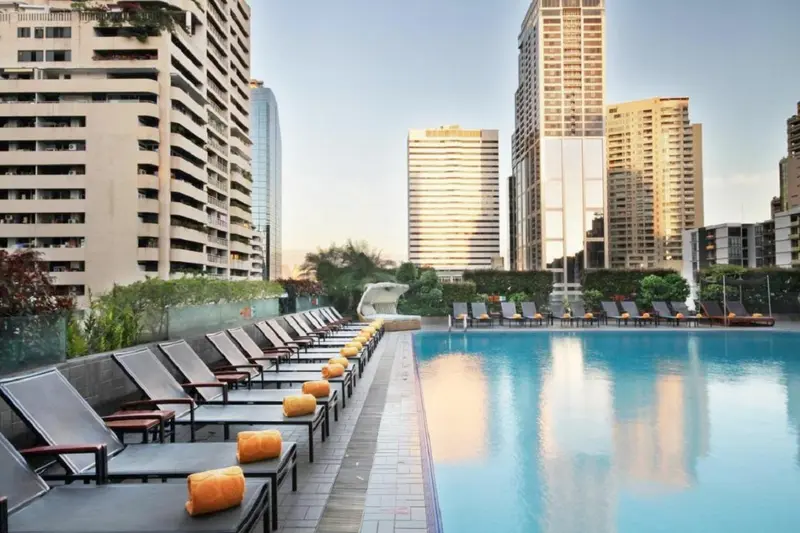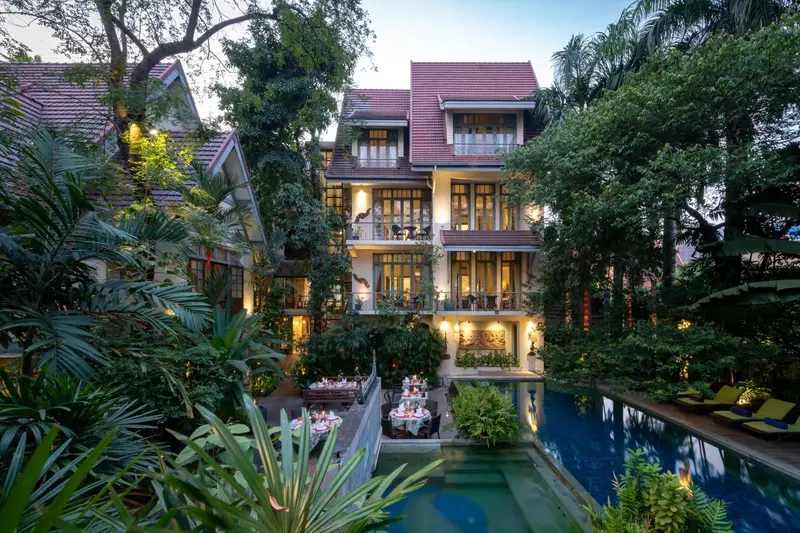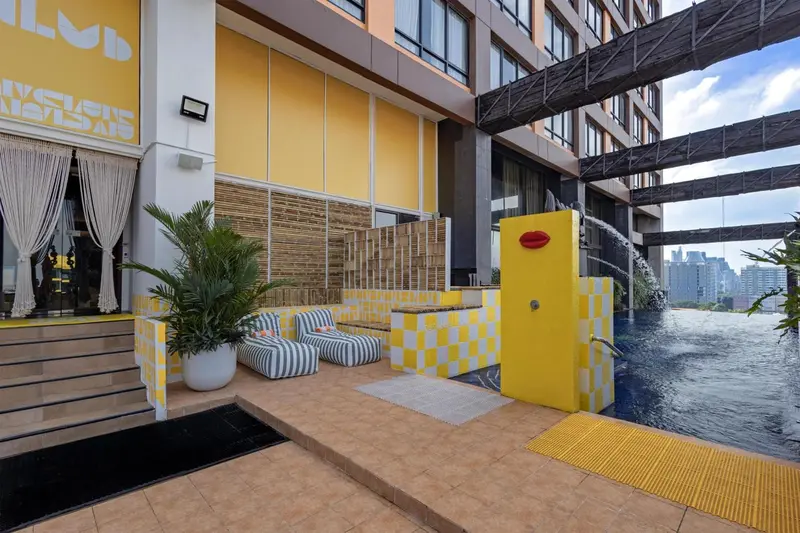
ibis Styles Bangkok Silom
★★★
Google 4.7/5 (3,644 reviews)
Thailand · Asia
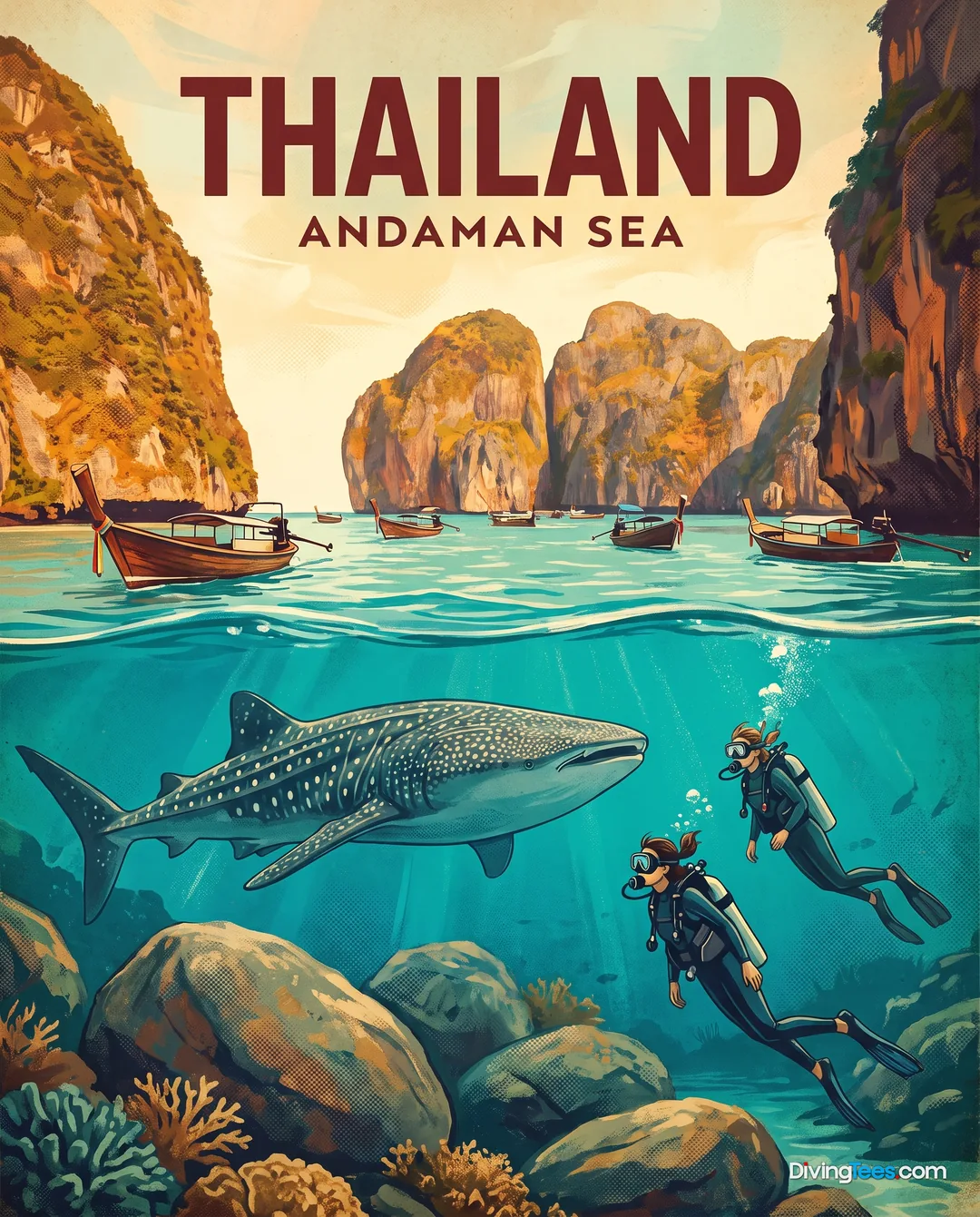
Military wrecks, artificial reefs around Koh Larn, Koh Sak and Koh Krok, protected Samae San waters, and boat-accessed island dives from Pattaya.
For subtitles in English: start the video firstthen click the gearat the top right of the video, select “Subtitles/CC”, then “Auto-translate” and choose “English”.
Military wrecks rest as artificial reefs off Pattaya, while the rocky islands of Koh Larn, Koh Sak and Koh Krok provide the nearer reef diving. Samae San adds a less urban setting, with island reefs, wrecks and marine-park waters reached through a separate harbour. Bangkok is therefore the arrival point rather than the place where you enter the water. Stay in Pattaya for the practical diving base, then add Bangkok's temples, markets and museums before or after the boat days.
The diving alternates between island reefs, more distant islands and military wrecks that have become artificial reefs. Koh Larn, Koh Sak and Koh Krok suit straightforward boat outings, while the Far Islands and Samae San involve longer transfers and greater dependence on the sea state. Currents are variable rather than a constant feature, so a drift dive or downcurrent section depends on the site and the day's briefing. Visibility commonly sits around 10 to 20 metres, but rain, swell and runoff can reduce it quickly. The wrecks bring a different sort of dive from the open reef, with depth, overhead spaces and penetration decisions that matter. Most days are organised as repeated boat dives, and the nearer islands are the sensible fallback when the monsoon makes exposed sites or longer crossings doubtful.
The underwater interest is the contrast between living island reefs and steel wrecks colonised as artificial reef. Around Koh Larn, Koh Sak and Koh Krok, expect reef structure, open water around the islands and the constant movement of fish over the hard surfaces. On HTMS Khram, HTMS Khood and the other wrecks, life gathers around railings, decks and broken edges, giving the dive a more enclosed, three-dimensional feel. Samae San adds reefs and wrecks in a less urban setting, with marine-park waters that are generally less crowded than the nearer Pattaya sites. There is no particular seasonal wildlife event to plan around, so the choice of dates is driven chiefly by visibility, sea state and access.
November to April is the most dependable period, when the sea is generally calmer and visibility is more often favourable. That matters most for the Far Islands, Samae San and the wrecks, where a longer run or exposed site is more easily disrupted by changing conditions. Diving continues through the rainy season and monsoon, but showers, swell and runoff can cloud the water and alter the day's plan. During that period, the islands close to Pattaya are often the practical refuge. Allow a spare day rather than building a tightly packed itinerary around one exposed wreck outing.
The area suits beginners as well as experienced divers, with reef outings that can be less demanding than the deeper wrecks. Advanced Open Water is useful for deeper wreck profiles, while a Wreck Diver qualification is the sensible prerequisite for any properly supervised penetration. Military wrecks are not automatically suitable for a first wreck dive, particularly where confined spaces or depth are involved. Nitrox can be useful on repeated boat-diving days, but it does not replace the required depth, wreck or penetration experience.
From London Heathrow, London Gatwick or Manchester, Bangkok is the arrival base, not the embarkation point. The structural transfer is by road: allow roughly two hours to reach Pattaya, depending heavily on traffic, then board locally for the nearer and farther islands or the wrecks. Samae San requires another road transfer from Pattaya, around 40 minutes, followed by approximately an hour by boat from its jetty. There is no need for a domestic flight or a ferry from Bangkok for these diving areas. Once in Pattaya, use the centre's collection service where available, or a taxi or local transport to the harbour. Do not schedule a tight onward flight after diving, because the road back to Bangkok can be slowed by traffic.
Treat Bangkok as the gateway and Pattaya as the working base. Sleeping in Pattaya avoids starting every boat day with the capital-to-coast road journey. Before booking, check whether the itinerary is for the Near Islands, Far Islands or Samae San, since the transfer time and exposure are different. Keep a weather day free for the wrecks and Samae San, especially during the rainy season and monsoon, when a nearer island may replace an exposed outing. For an artificial-reef wreck, confirm the depth, experience and penetration requirements before paying for the trip, and do not assume a military wreck is an introductory dive. Samae San is also a naval area as well as a marine park, so confirm access arrangements and any local formalities with the organiser before setting out. Avoid relying on a single day's advertised visibility, and leave room for the itinerary to change.
A normal stay is land-based, with Pattaya providing the boat departures for the nearer islands, Far Islands and wrecks. Samae San works as a separate day, combining the road transfer to its jetty with the boat journey offshore. Three to five diving days gives room for different sectors and a weather buffer, with Bangkok best placed before or after the diving rather than between early boat departures. Non-diving companions have beaches, local markets and cultural attractions in Pattaya, while Bangkok supplies temples, museums and food-focused sightseeing.
Hello, I'm Marina, DivingDeal.com's AI assistant. I guide you through destinations, areas and countries.
Thinking about the whole trip and the flights? Talk it over with Edith →
Marina is an AI. Some links are affiliate links: DivingDeal may earn a commission, at no extra cost to you. Bookings are made with the partner.
Plan diving in Bangkok around November to April, when seas are generally calmer and visibility is more often favourable. This is especially useful for Far Islands trips, Samae San and wreck outings, which are more exposed or involve longer transfers. Diving continues during rainy and monsoon conditions, but showers, swell and runoff can change plans.
Bangkok suits beginners and experienced divers, with island reef outings that can be less demanding than deeper wrecks. Advanced Open Water experience is useful for deeper wreck profiles. A Wreck Diver qualification is the sensible prerequisite for properly supervised penetration, and military wrecks should not automatically be treated as suitable first wreck dives.
Diving in Bangkok leads to Pattaya-area sites with living island reefs and military wrecks used as artificial reefs. Around Koh Larn, Koh Sak and Koh Krok, you can see reef structure and fish over hard surfaces. HTMS Khram, HTMS Khood and other wrecks offer railings, decks and broken edges colonised by marine life.
Use Bangkok as your arrival point and stay in Pattaya as the practical diving base. From there, boats reach nearer islands, Far Islands and wrecks, while Samae San requires a separate road transfer and boat journey. Check the sector, access arrangements and wreck requirements, keep a weather day free, and place Bangkok sightseeing before or after diving.