



Vietnam Active Phu Quoc Diving Center
Google 5/5 (1,280 reviews)
19 km away as the crow flies
Phu Quoc · Vietnam · Asia
Max. depth · 25 mNail Island offers a gentle reef exploration from mere surface depths down to 25 metres, ideal for refining buoyancy over diverse coral patches and rocky formations.
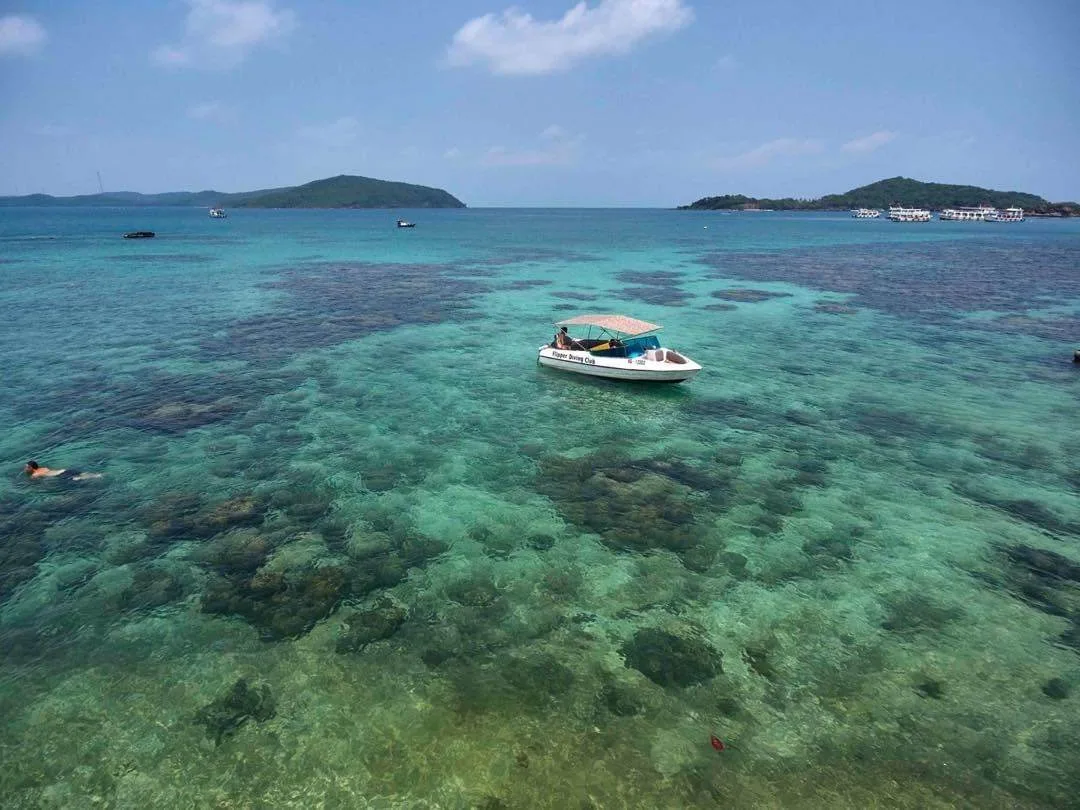
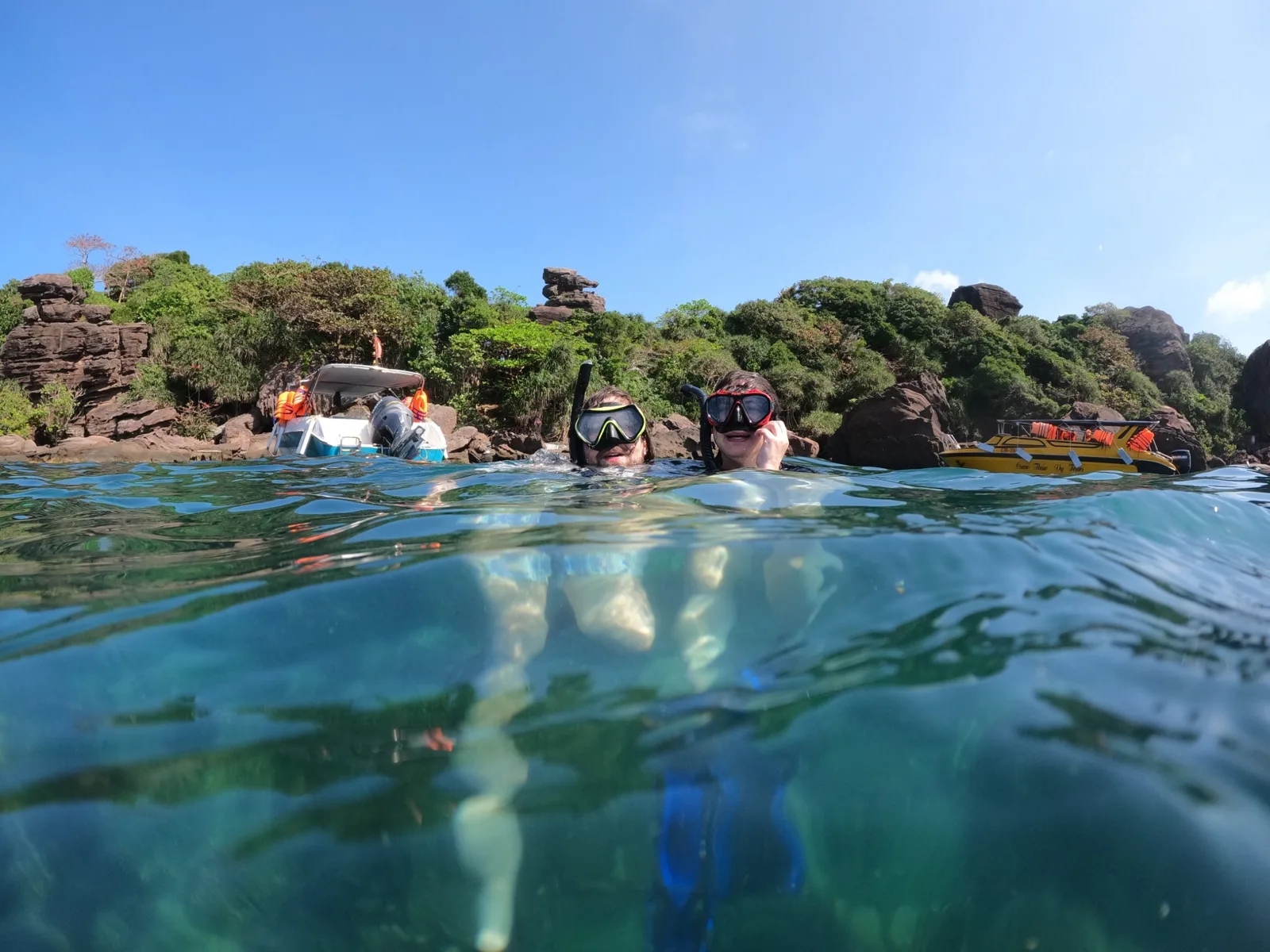
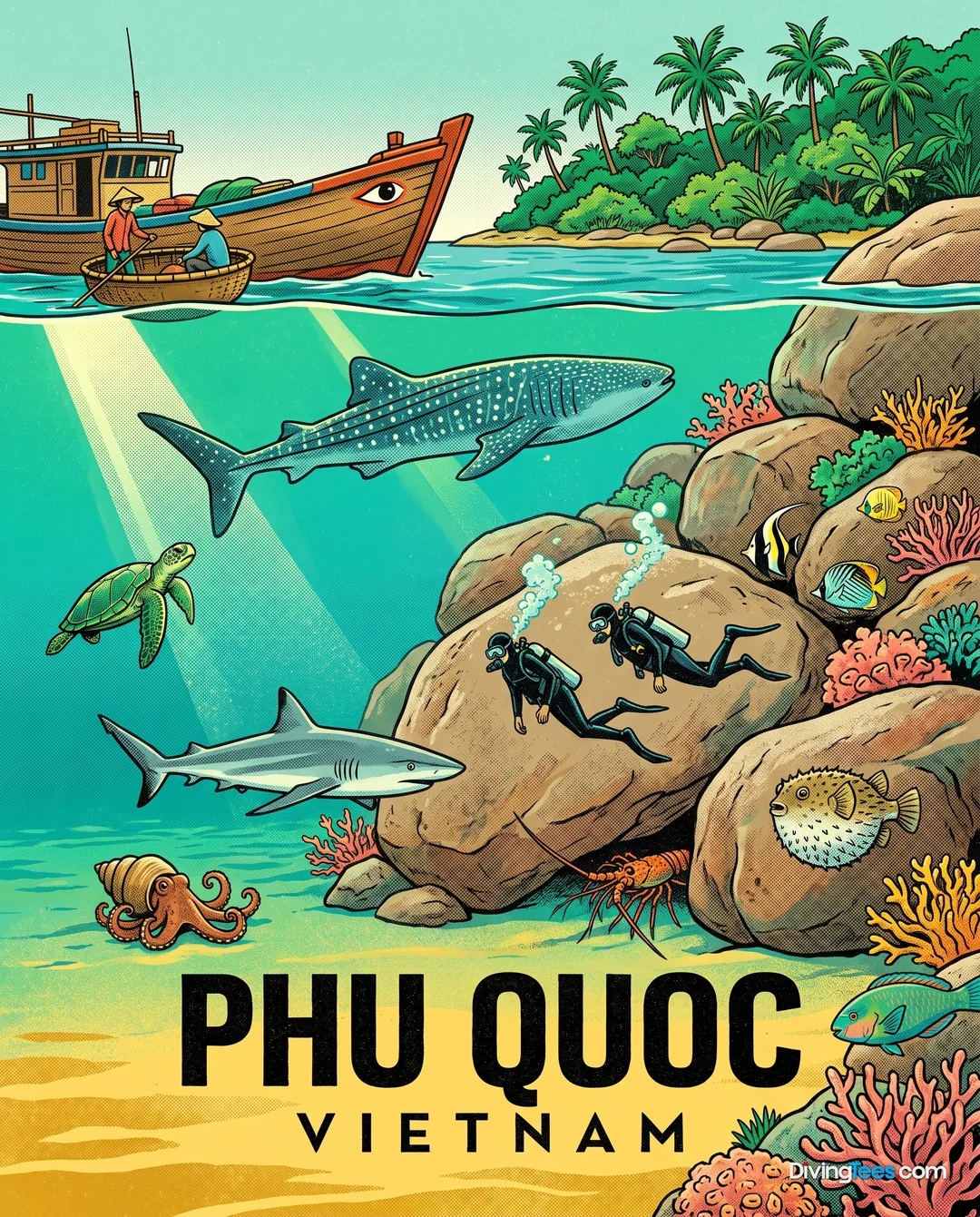
Approaching Nail Island, or Hon Mong Tay, you'll see a small landmass where the reef begins almost immediately at the surface. The underwater topography here is primarily a shallow reef system, extending from just a metre below the surface down to around 25 metres at its deeper edges. The initial descent reveals a gradual slope, not a wall or a drop-off, making the transition into the underwater world smooth and unhurried. You'll spend most of your time exploring large, scattered boulders that create a mosaic of hard and soft coral growth, interspersed with stretches of sandy bottom.
The character of the reef is defined by these large rock formations, which offer numerous hiding spots and micro-environments. As you fin along, you'll notice the structure shifts from denser coral patches in the shallower sections, roughly 8 to 12 metres, to more isolated bommies as you push deeper towards the 25-metre mark. Visibility here can vary, but generally, you'll be able to see enough to appreciate the intricate details of the reef and the marine life that calls it home. The light penetration, even at maximum depth, often remains good due to the gradual slope.
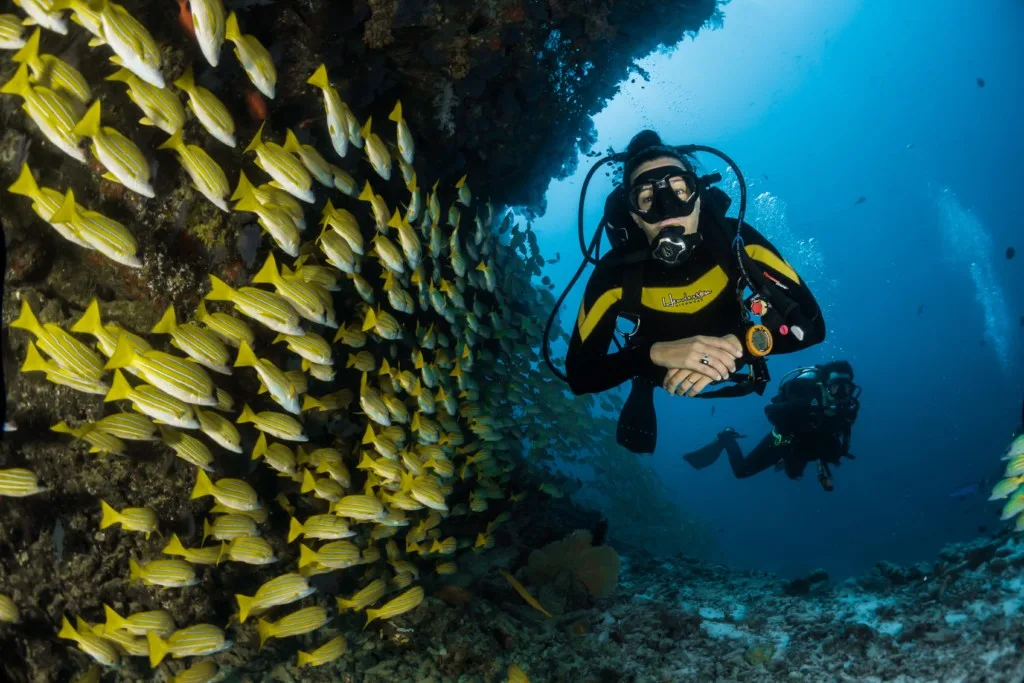
The marine life at Nail Island is characteristic of a healthy, shallow reef environment. Keep an eye out for octopus tucked into crevices or mantis shrimp guarding their burrows in the sand. You'll encounter a variety of reef fish, including angelfish and butterflyfish, darting among the corals. Parrotfish are common, often seen grazing on the algae, and you might spot a giant pufferfish slowly navigating the bottom. These resident species provide constant activity against the backdrop of the reef structure, making for a steady stream of observations.
While the site is primarily known for its reef life, there are also opportunities for larger encounters, particularly with sea turtles cruising through the blue. Barracuda occasionally patrol the deeper fringes, presenting a different scale of marine interaction. One notable feature of Nail Island is its association with seasonal whale shark sightings, though these are never guaranteed. Additionally, smaller, cryptic species like various nudibranchs are present, rewarding divers who take the time to look closely at the substrate and coral polyps.
The current at Nail Island is typically light, often described as mild or even absent, especially during the dry season and earlier in the day. This calm environment contributes to the site's beginner-friendly reputation, allowing divers to focus on buoyancy and observation without battling strong flows. While conditions can shift with seasonal monsoon influences, this remains a site where you generally won't be fighting the water. This predictability makes it an excellent location for newer divers to build confidence and for experienced divers to enjoy a relaxed exploration.
This site is accessible from Open Water Diver certification, with a depth profile ranging from 1 metre to a maximum of 25 metres. Current is consistently light, allowing for comfortable diving. Visibility typically ranges from 3 to 25 metres, improving outside of seasonal weather changes. The best diving conditions are generally found during the dry season, from November to April, though some periods between May and August also offer clear water.
You will generally find the clearest diving conditions at Nail Island during the dry season from November to April. Some periods between May and August can also offer clear water. Visibility typically ranges from 3 to 25 metres, although seasonal weather changes can affect what you see underwater.
You can dive Nail Island with an Open Water Diver certification. Its shallow reef system and gradual slope make the underwater transition smooth, while light currents allow you to concentrate on buoyancy and observation. The site is suitable for novices, and experienced divers can enjoy relaxed exploration among the reef structures.
Nail Island ranges from 1 metre below the surface to a maximum depth of 25 metres. The reef slopes gradually rather than dropping into a wall, with denser coral patches shallower and more isolated bommies deeper down. Currents are consistently light, and may be mild or absent, particularly during the dry season and earlier in the day.
At Nail Island, you can look for octopus in crevices, mantis shrimp near sandy burrows, and angelfish, butterflyfish, parrotfish, and giant pufferfish around the corals. Sea turtles and barracuda appear occasionally, while nudibranchs reward close inspection. Seasonal whale shark sightings are possible but not guaranteed.