
Octopus Diving Center
Google 4.9/5 (213 reviews)
70 km away as the crow flies
Terceira · Azores · Atlantic
Max. depth · 60 mDescend onto an active submarine volcano, where hydrothermal vents release gas bubbles and pelagic life congregates around a remote seamount.
For subtitles in English: start the video firstthen click the gearat the top right of the video, select “Subtitles/CC”, then “Auto-translate” and choose “English”.
Diving Banco D. João de Castro places you directly on an active submarine volcano, a dynamic structure constantly shaped by geological forces beneath the Atlantic. This isn't just a static rock formation; it's a living seamount where seismic shifts and volcanic activity are palpable, creating a unique underwater landscape. The topography is complex, with dramatic slopes and ledges sculpted by ancient lava flows and more recent events, all rising from a depth of approximately 1000 metres.
The seamount's summit forms a roughly 450-metre-wide crater, with its rim sitting between 12 and 15 metres below the surface. From this rim, the crater drops down to around 25 metres, while several outer peaks extend into the 40 to 50-metre range. The walls are often steep, approaching vertical in places, providing a dramatic profile for your descent. This structure acts as an oasis in the open ocean, drawing in marine life with its rich foraging grounds and providing shelter in an otherwise exposed environment.
One of the defining features of Banco D. João de Castro is its active hydrothermal field, a marine reserve where fumaroles and warm gas bubbles rise from the volcanic seabed. As you explore the top of the bank, you'll encounter these visual displays of ongoing geological activity, with curtains of bubbles ascending from thermal springs. This constant release of gases and heat contributes to a unique micro-environment that supports a diverse range of life, making the site distinct from other seamounts.
The exposed mid-ocean location of Banco D. João de Castro means it is prone to strong currents, which are a significant factor in the dive experience. These currents, while demanding, are also responsible for the frequent encounters with pelagic species that define this site. You'll need to be prepared for varying conditions, as the current can shift, bringing nutrients and attracting larger marine animals to the seamount's rich ecosystem.
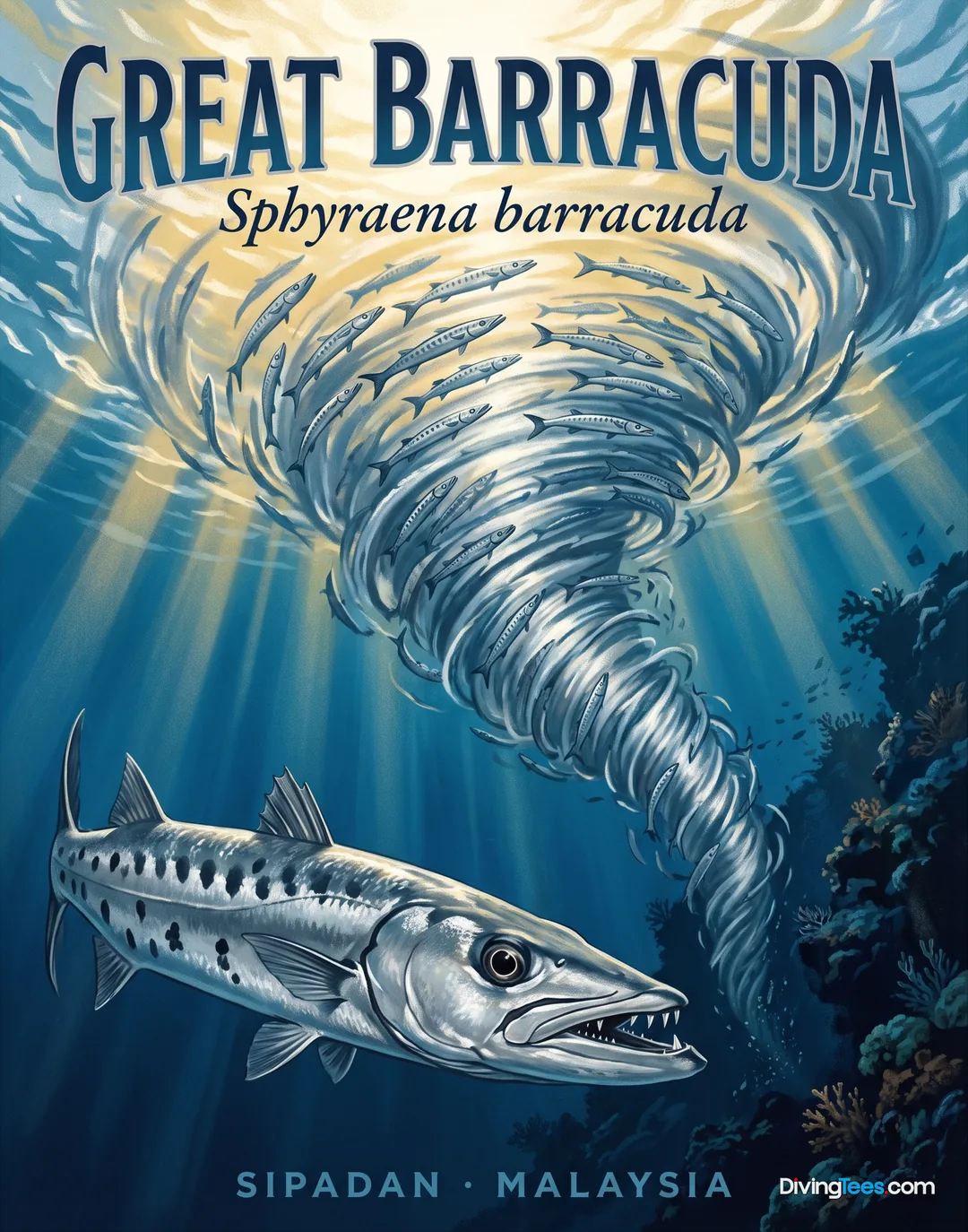
Visibility at the bank is consistently good, often ranging between 20 and 30 metres or more, allowing for clear views of the extensive pelagic life. You can expect to encounter large schools of barracuda and Atlantic bonito moving through the water column. Amberjack and wahoo are also common, often seen patrolling the deeper sections of the seamount, taking advantage of the strong currents to hunt.
The seamount also serves as a critical feeding ground for larger, migratory species. Devil rays (Mobula mobular) are frequent visitors, often seen gliding gracefully near the surface or along the slopes. Tuna and Bermuda chub are also present, adding to the diversity of the pelagic encounters. Keep an eye out for loggerhead turtles (Caretta caretta), which are often spotted navigating the currents around the bank.
Access to Banco D. João de Castro is exclusively by boat, given its remote location approximately 37 nautical miles from Terceira. The journey itself is part of the experience, with typical travel times around 110 minutes from Praia da Vitória harbour or 140 minutes from Angra do Heroísmo. This remoteness contributes to the pristine nature of the site, ensuring that each dive feels like a true exploration of an untouched underwater world.
The dive at Banco D. João de Castro ranges from a minimum depth of 13 metres to a maximum of 60 metres. Due to its exposed mid-ocean location and the potential for strong currents, this site is suitable only for experienced divers, requiring at least an Advanced Open Water certification or equivalent. Visibility typically ranges from 20 to 30 metres or more. Divers should be prepared for moderate to strong currents, which are a consistent feature of this site and contribute to its rich pelagic life.
Banco D. João de Castro is suitable only for experienced divers because its exposed mid-ocean position and strong currents can make conditions demanding. You should hold an Advanced Open Water certification or equivalent and be prepared for varying conditions during the dive.
Banco D. João de Castro ranges from 13 to 60 metres. The crater rim lies between 12 and 15 metres, then drops to around 25 metres. Outer peaks reach 40 to 50 metres, while steep walls and ledges create a complex volcanic profile for your descent.
You should be prepared for moderate to strong currents at Banco D. João de Castro. Its exposed mid-ocean location means currents are a consistent feature and can shift during the dive. These moving waters bring nutrients to the seamount and attract pelagic animals, but they also make conditions demanding.
At Banco D. João de Castro, you can explore an active submarine volcano with steep walls, volcanic topography and hydrothermal vents releasing warm gas bubbles. Encounters may include devil rays, barracuda, Atlantic bonito, amberjack, wahoo, tuna, Bermuda chub and loggerhead turtles, with visibility often reaching 20 to 30 metres or more.