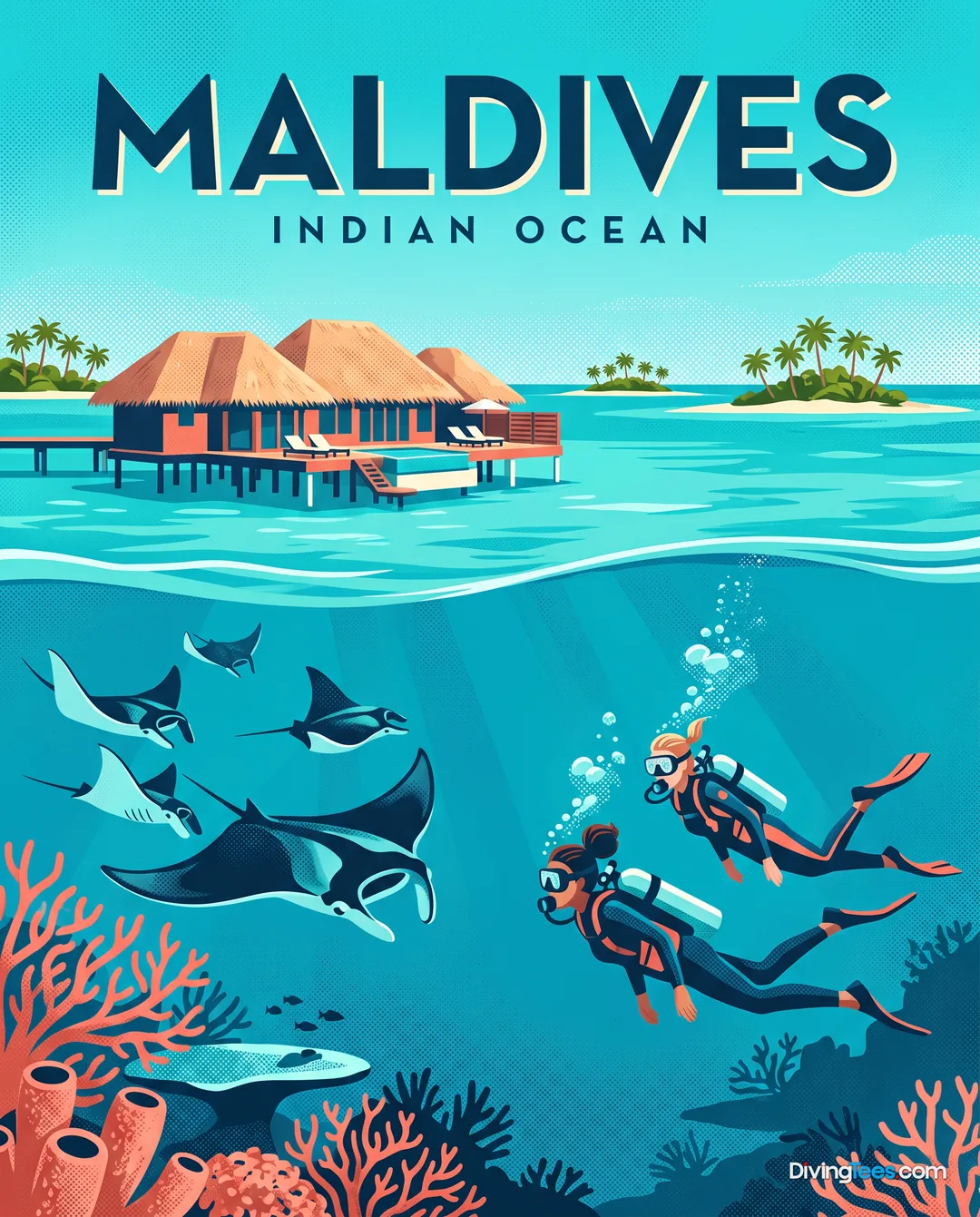
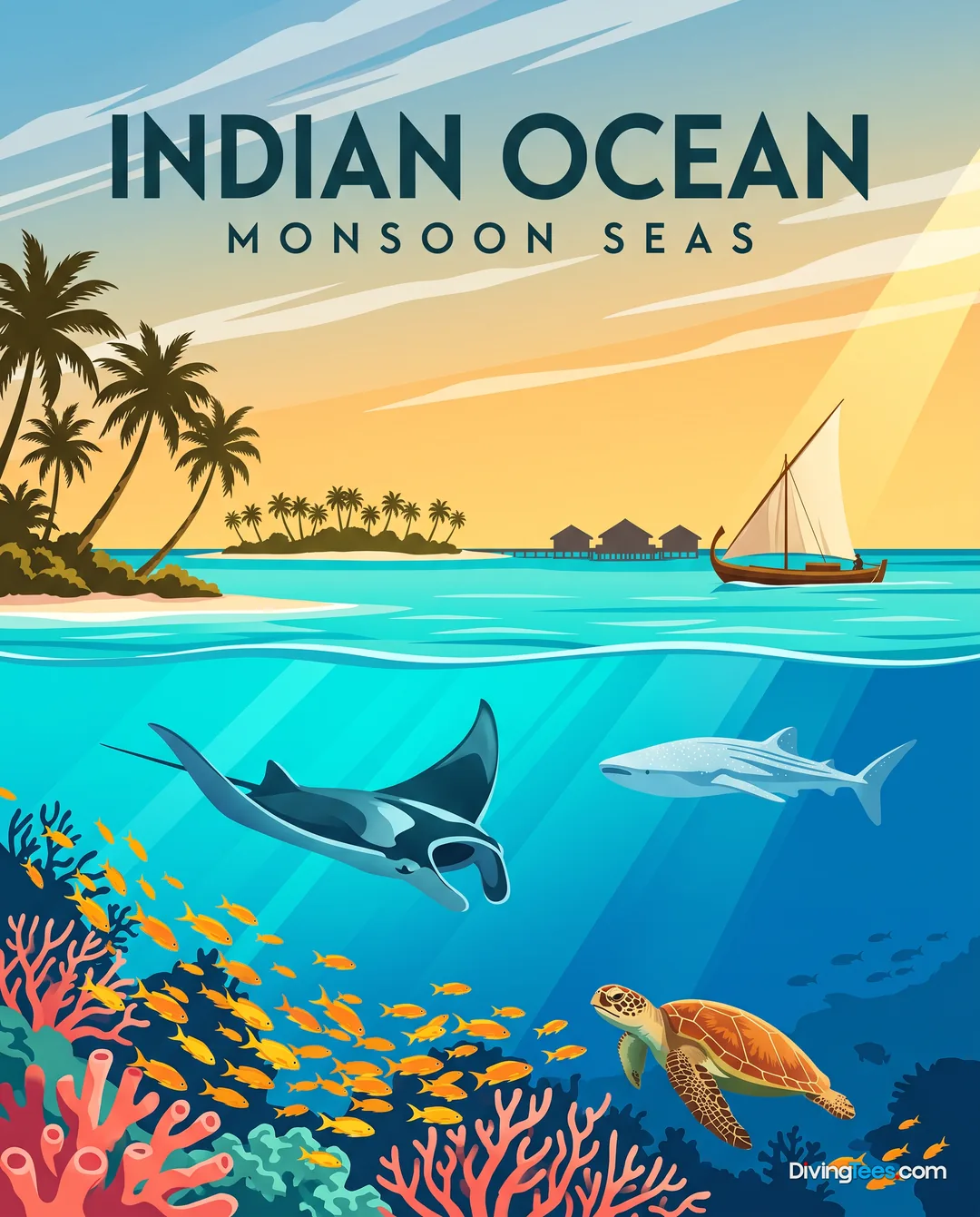
Liveaboards · Maldives
Maldives Aggressor II — a purpose-built dive yacht with a polished, social feel
What makes this boat unique
- The Maldives Aggressor II carries up to 22 guests in 11 private cabins and was renovated in 2017.
- All dives are made from a large dhoni, with up to 18 dives and 2 night dives on 7-night trips, or about 27 dives and 3 night dives on 10-night trips.
- The three cabin categories are Twin Stateroom, Deluxe Stateroom and Suite; the Suite is on the main deck with a panoramic window.
- The strongest onboard points are the food and crew, while the boat itself is comfortable rather than new.
For subtitles in English: start the video firstthen click the gearat the top right of the video, select “Subtitles/CC”, then “Auto-translate” and choose “English”.
The invitation
The Maldives Aggressor II is for divers who want the Maldives' big-animal sites without giving up the comforts of a full-service yacht. Three itineraries depart from and return to Malé, covering the central atolls and, on selected routes, the northern Lhaviyani area. The reason to choose this boat is the combination: a dedicated dive operation built around a spacious dhoni, a cabin with a proper private bathroom, and a galley that treats dinner as part of the trip rather than fuel between dives. The diving is not a gentle coral-garden holiday. Channels, pinnacles and cleaning stations bring currents, sharks, mantas and schooling fish into the picture. January and February can be particularly demanding, but the same stronger water can produce the most active big-animal encounters. This suits divers who are comfortable managing their own dives and want several chances each day to get the encounter right.
Boarding
At the dock, the Maldives Aggressor II presents as a working dive yacht rather than a small island hotel. The lines, tanks and tender make the purpose clear before anyone reaches the saloon, while the upper decks open into shaded and sunny places to sit. The 2006 hull was renovated in 2017, so the boat offers a maintained, established feel rather than the spotless minimalism of a new build. Inside, the air-conditioned saloon gives the group a reliable refuge from the heat, and the bar and grill keep the social centre close to the open deck. Movement between cabin, saloon and dive operation is straightforward, with the diving handled from the dhoni instead of the main yacht. That separation matters: wet gear, entries and exits happen on the boat designed for them, while the yacht remains the place to eat, rest and watch the atolls pass.
The atmosphere on board
The atmosphere is polished but not stiff. With 22 guests at capacity, the group is large enough to bring different diving habits and nationalities together, yet small enough that the same faces meet at breakfast, on the dhoni and around the bar. The crew's role is practical: brief the dive, move divers through the tender operation, support groups in the water, keep meals moving and solve the small problems that otherwise occupy a diver's head. Passenger scores place the crew at 9.2, just ahead of the boat at 9.1, while food leads at 9.6. That distinction is useful. The yacht is comfortable and well equipped, but its people are what sharpen the experience. English is the onboard working language. Evenings shift from fish identification and dive stories to films, games or the week's adventure video, with the day's best sighting usually retold more than once.
The sites you’ll dive
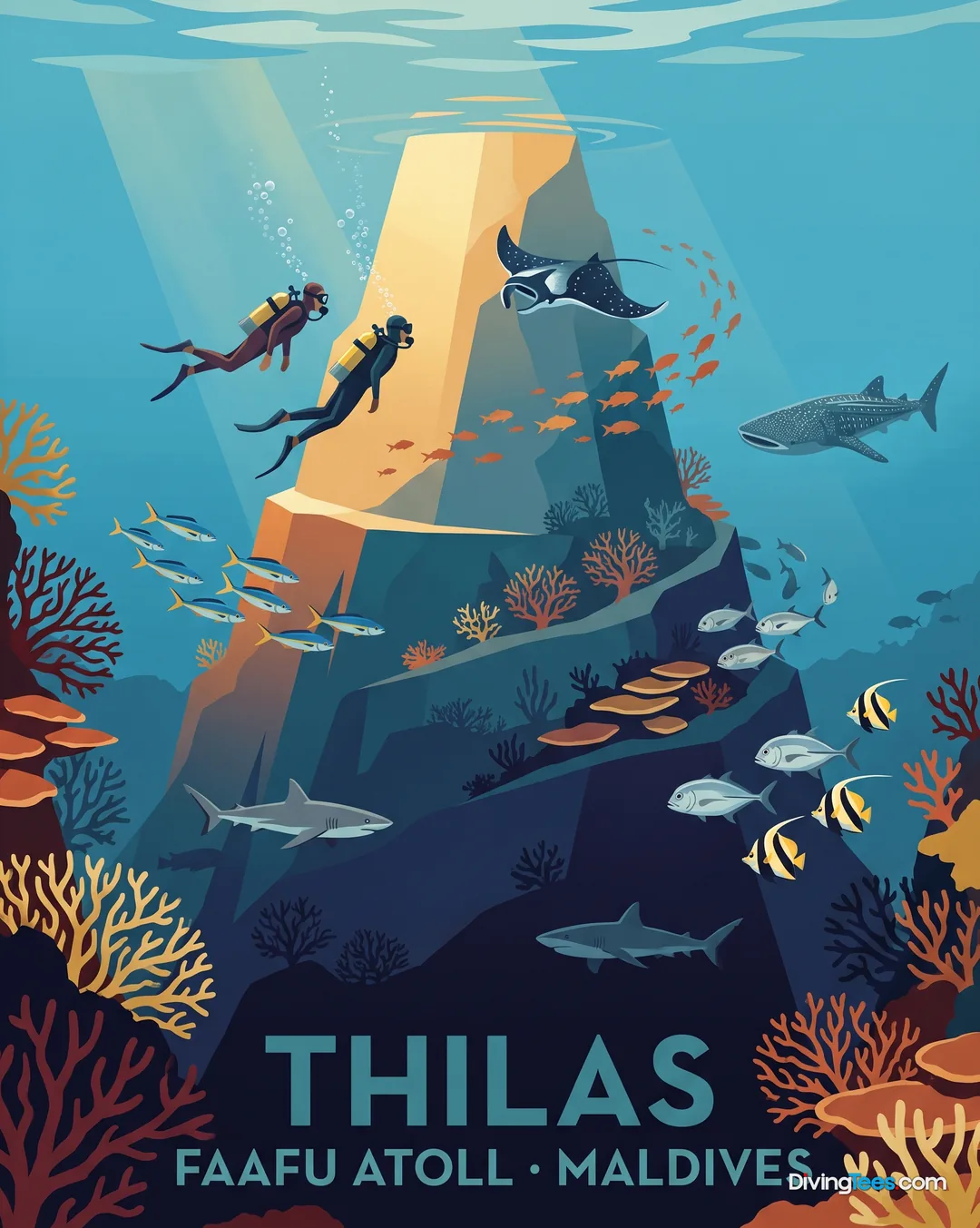
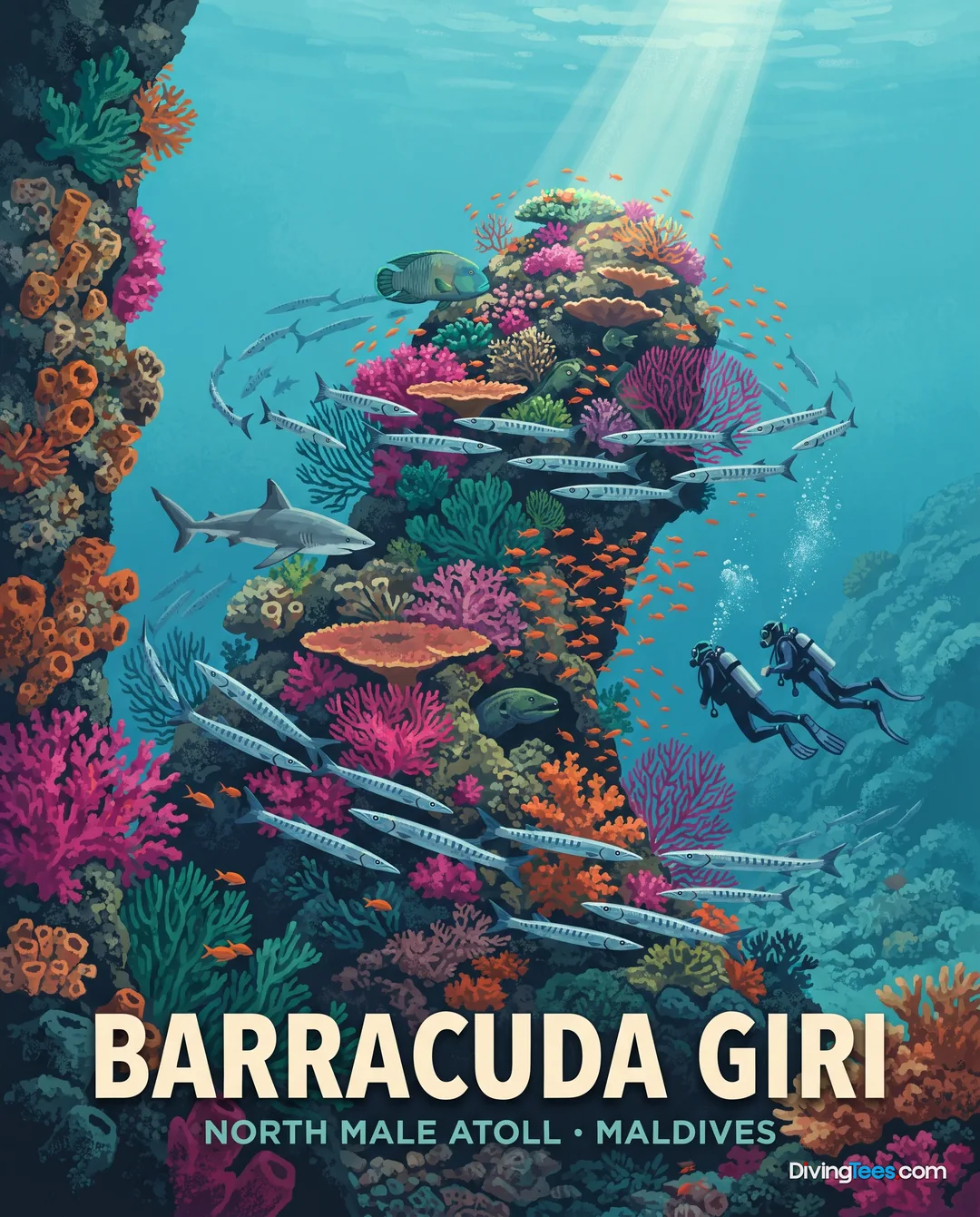
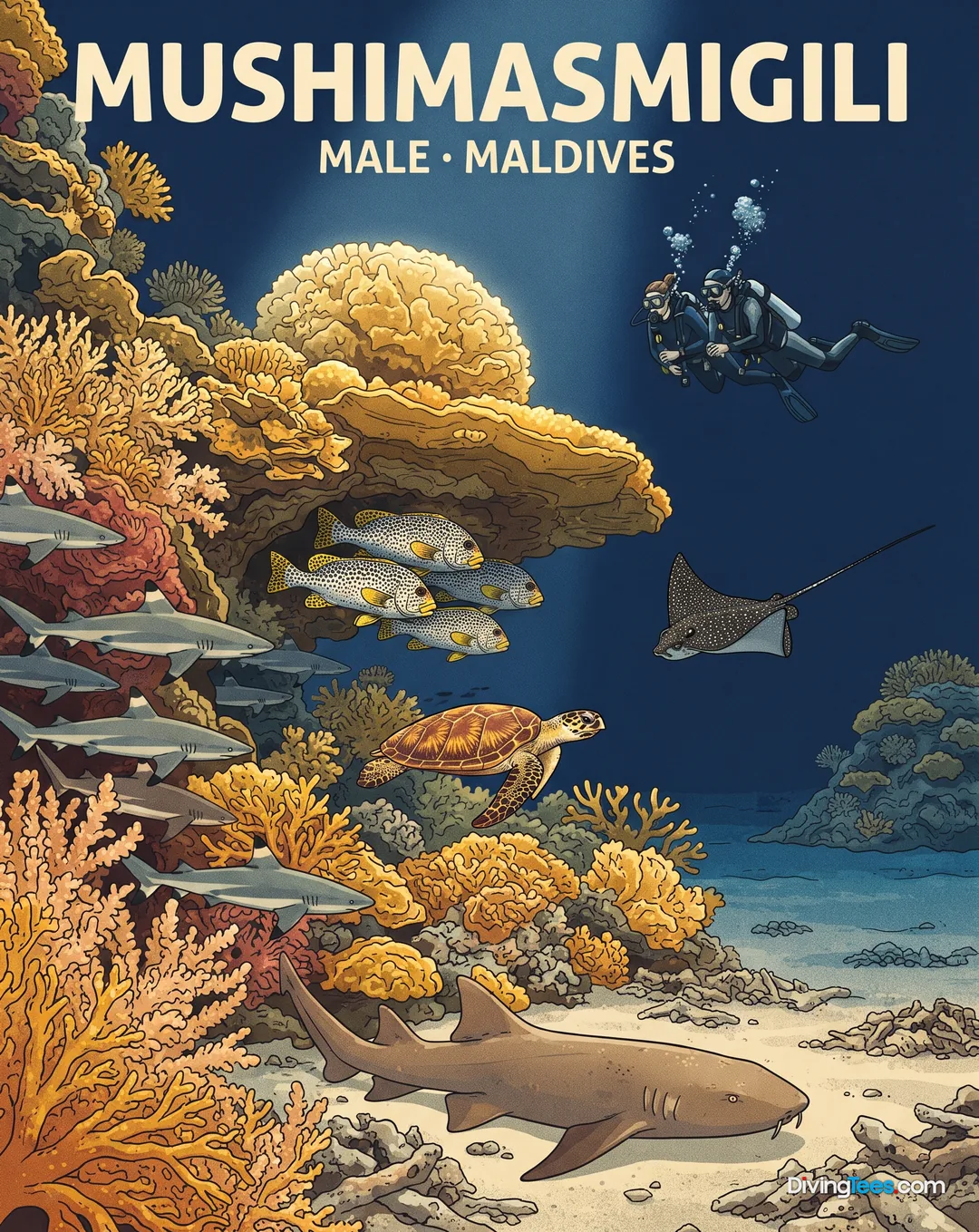
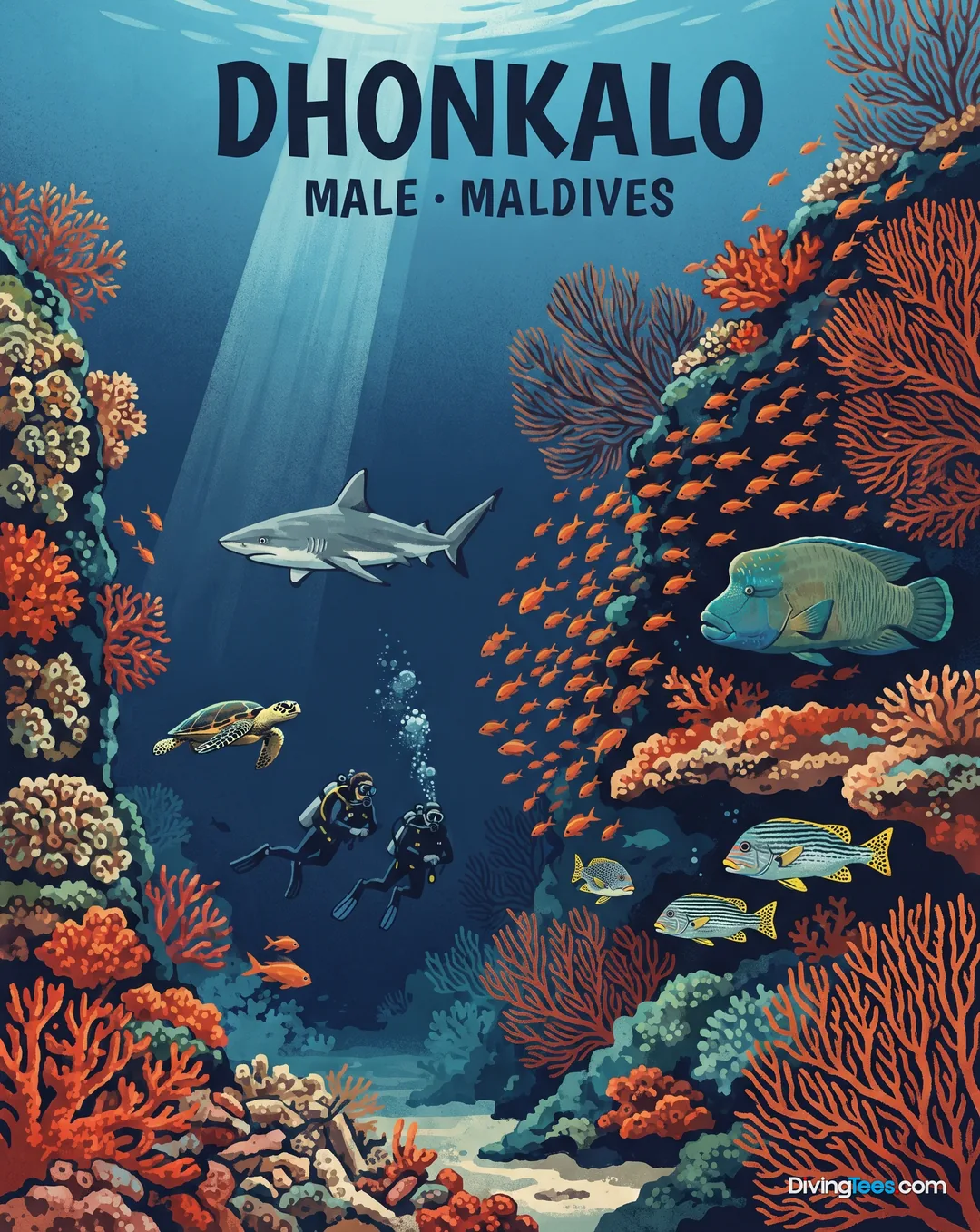
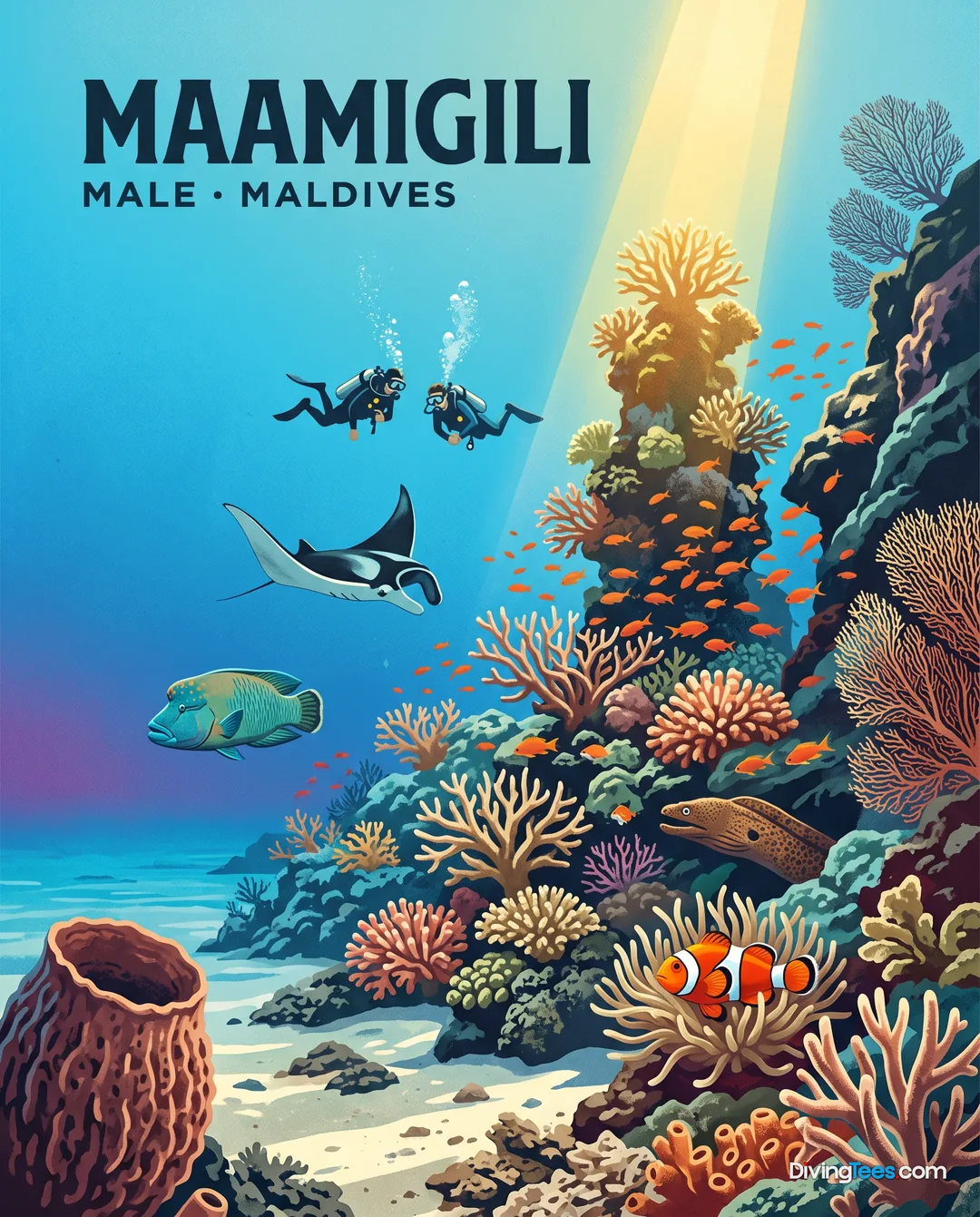
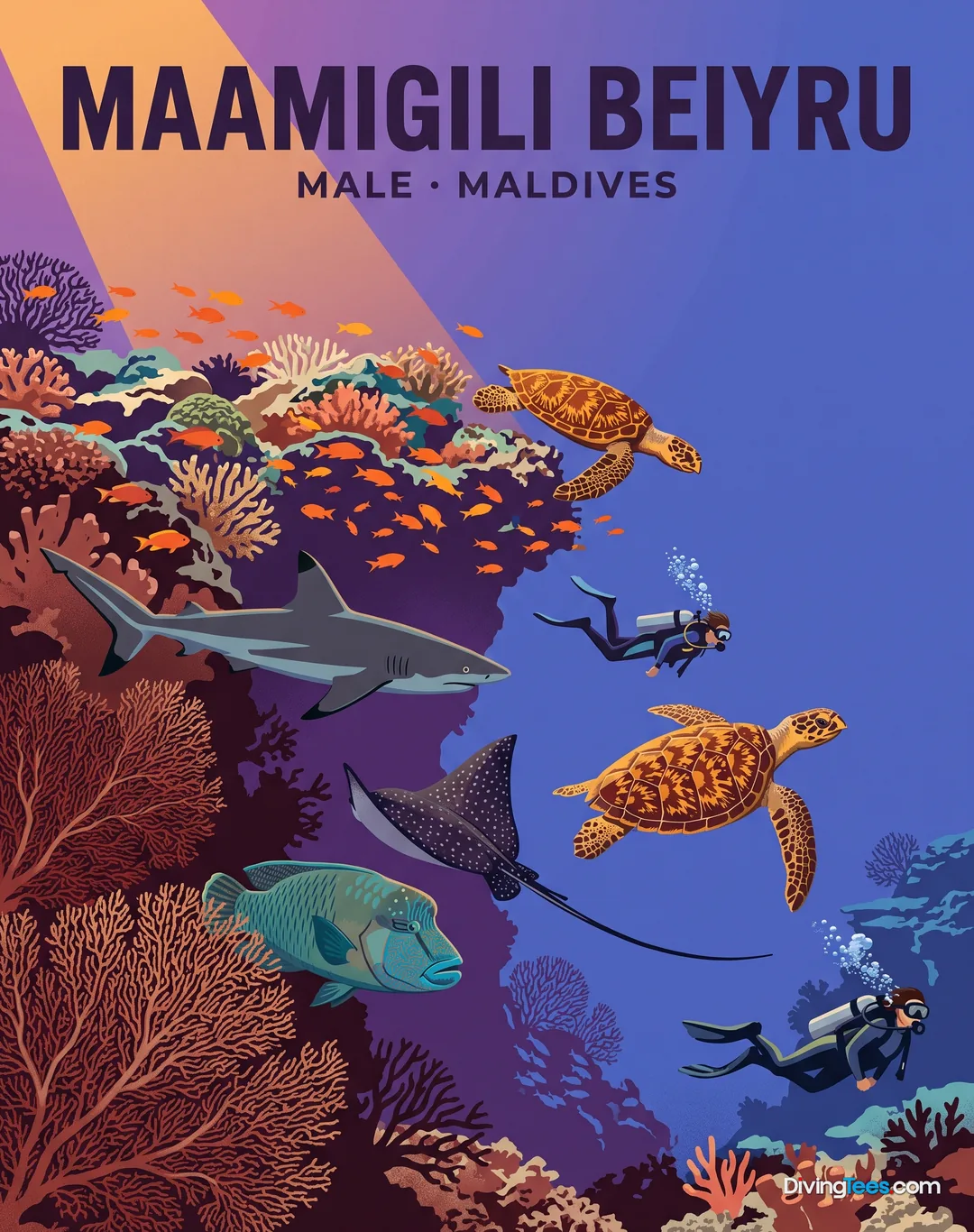
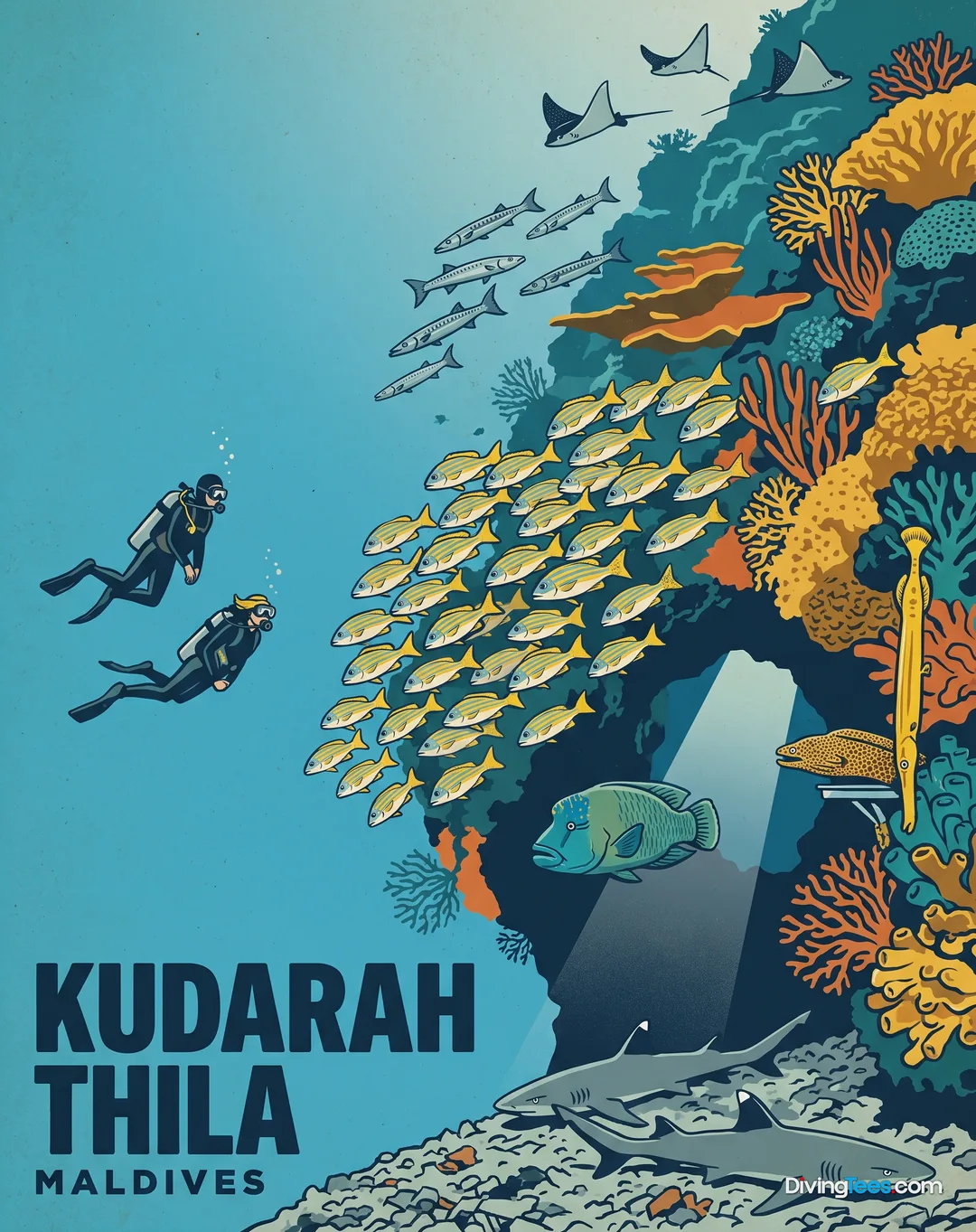
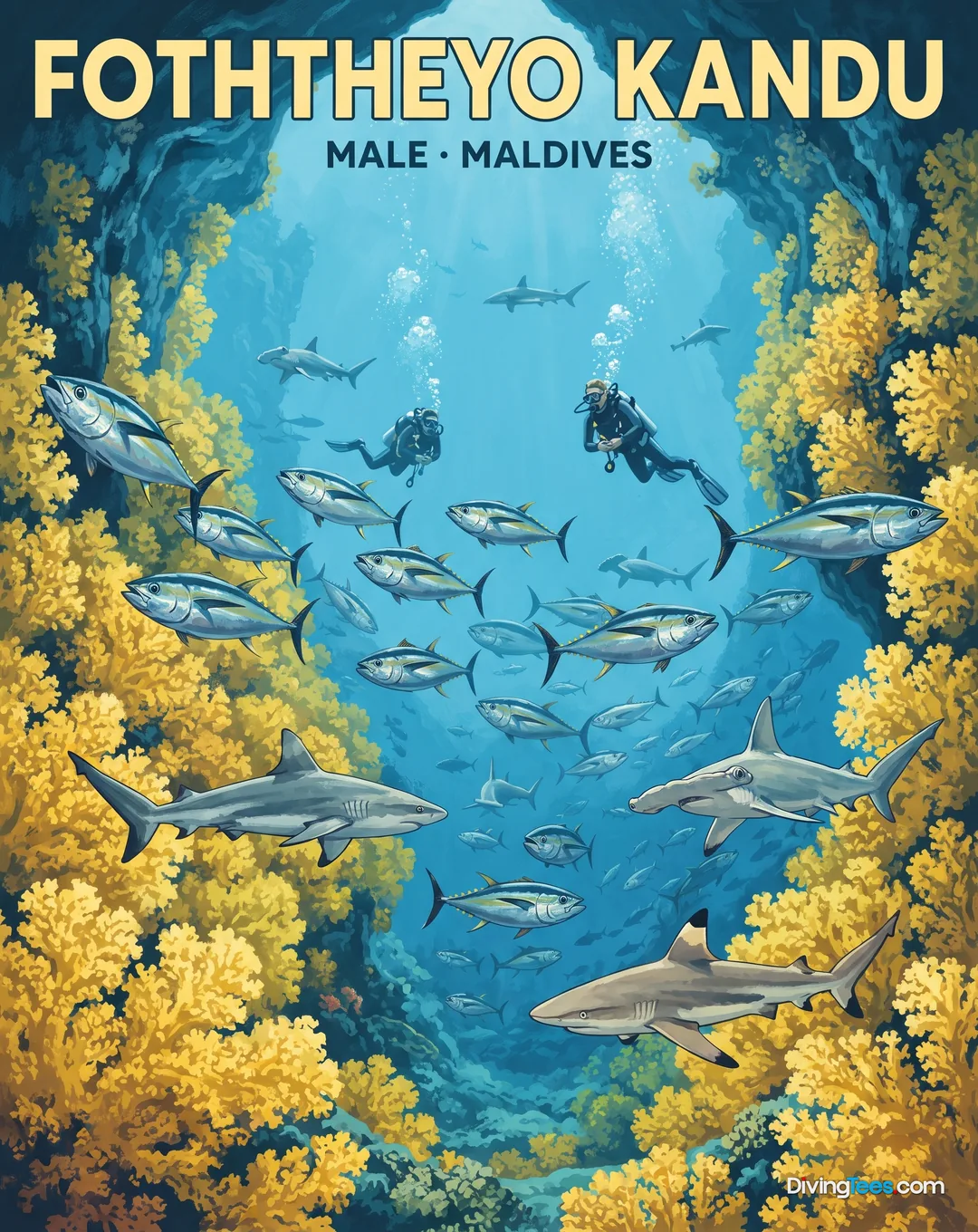
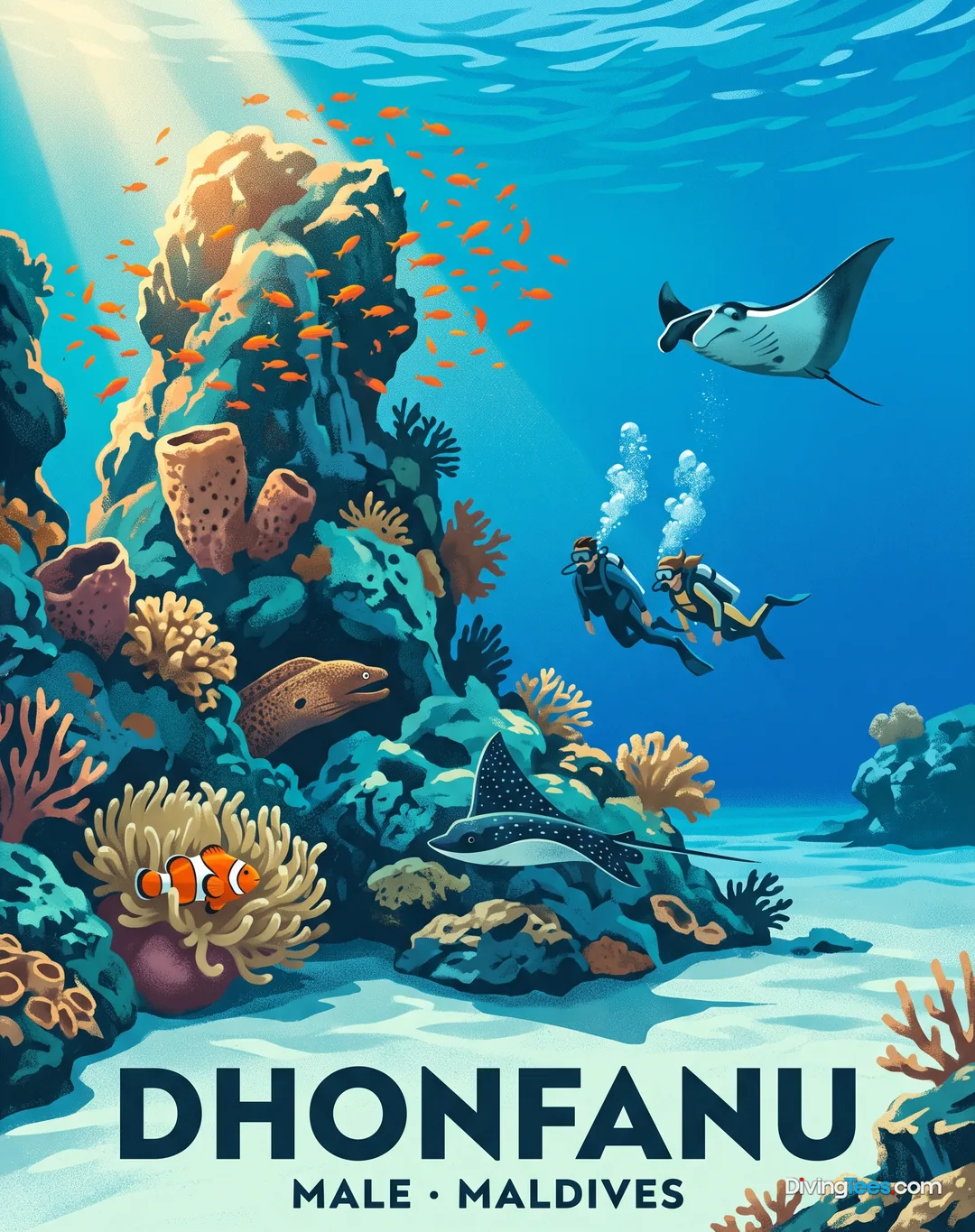
The Maldives Aggressor II offers three Maldivian itineraries: Best of Maldives trips run 8 days and 7 nights, while Best of Northern Maldives–Lhaviyani trips run 11 days and 10 nights; departures and returns are from Malé. The site mix is built around channels and isolated thilas rather than one repeated reef. Barracuda Giri reaches -30m, where current over three pinnacles gathers barracudas, tunas and jacks. Mushimasmigili Marine Reserve also reaches -30m and is known for grey reef sharks at the up-current pinnacle. Dhonkalo is a manta cleaning station in a sandy channel, while Maamigili and Maamigili Beiyru offer whale-shark and manta encounters in the South Ari Marine Protected Area, each to -30m. Kudarah Thila reaches -30m, with clefts, caves and batfish schools. Myaru Kandu, the Shark Channel, reaches -30m; Foththeyo Kandu reaches -40m, combining caves carpeted in yellow soft coral with strong current and pelagics. Fushifaru Thila reaches -35m and hosts manta cleaning stations. Northern routes add Baa Atoll sites such as Dhigalhi Haa and Dhonfanu, both to -30m, where coral, mantas and a swim-through shape the dive.
What you’ll meet underwater
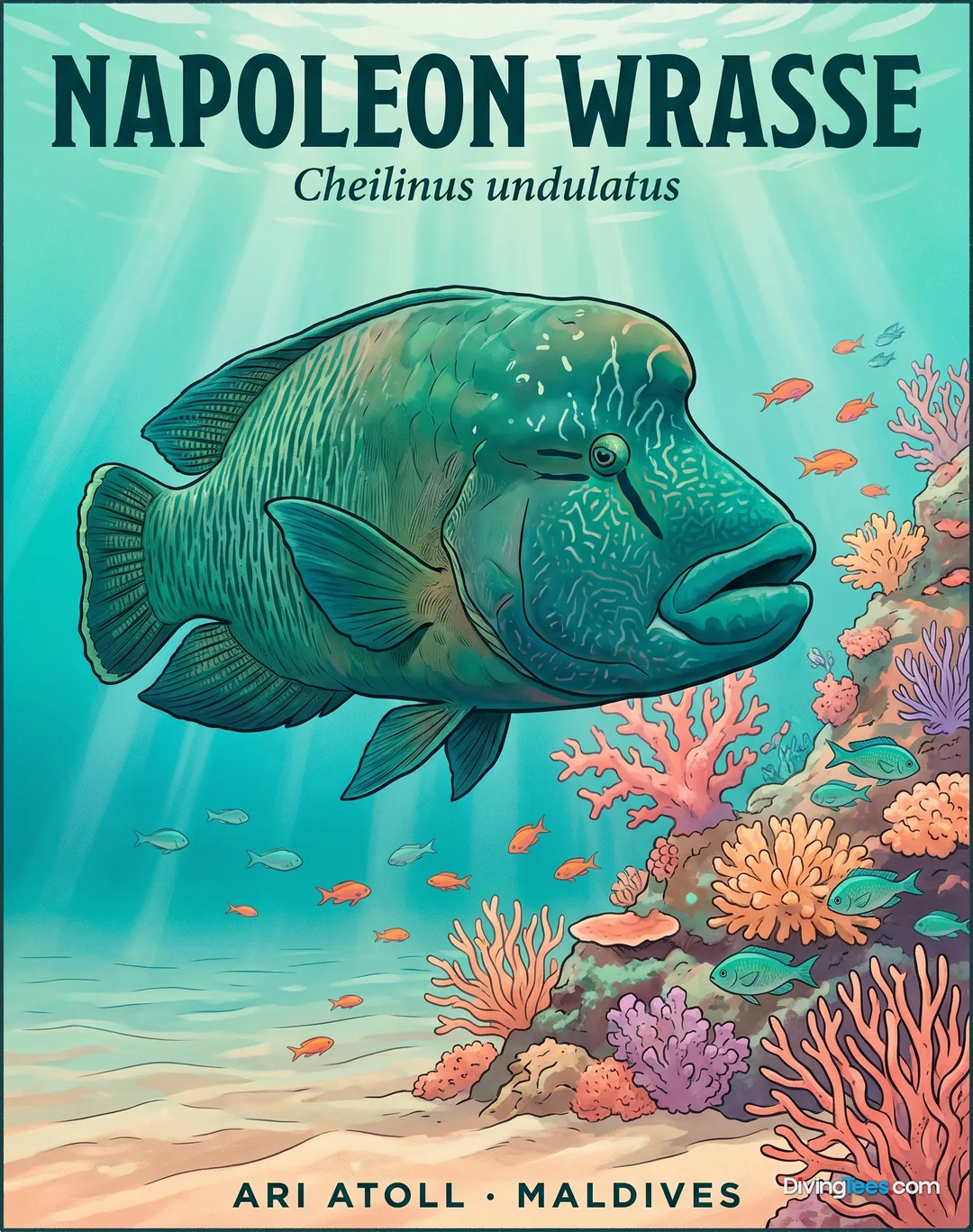
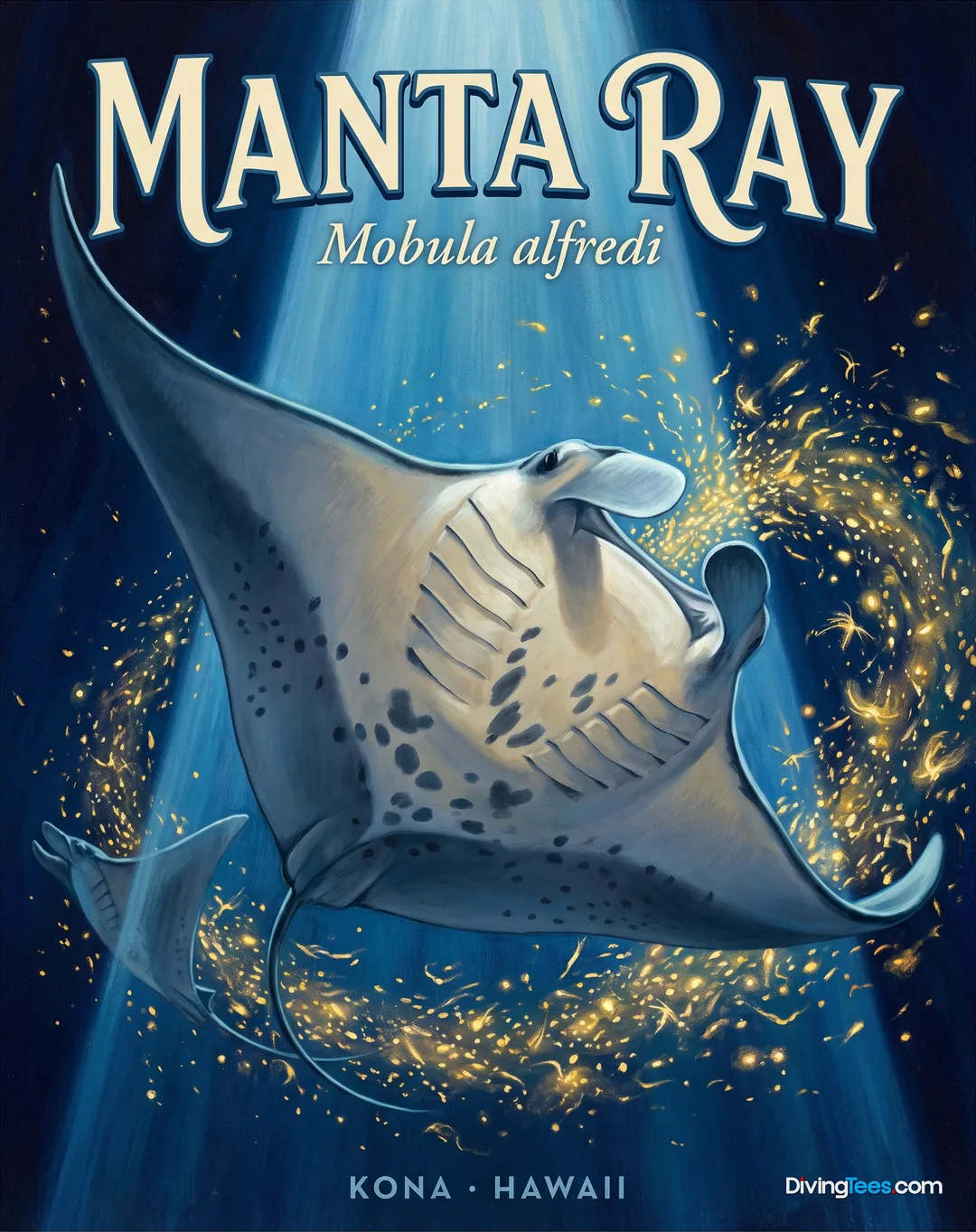
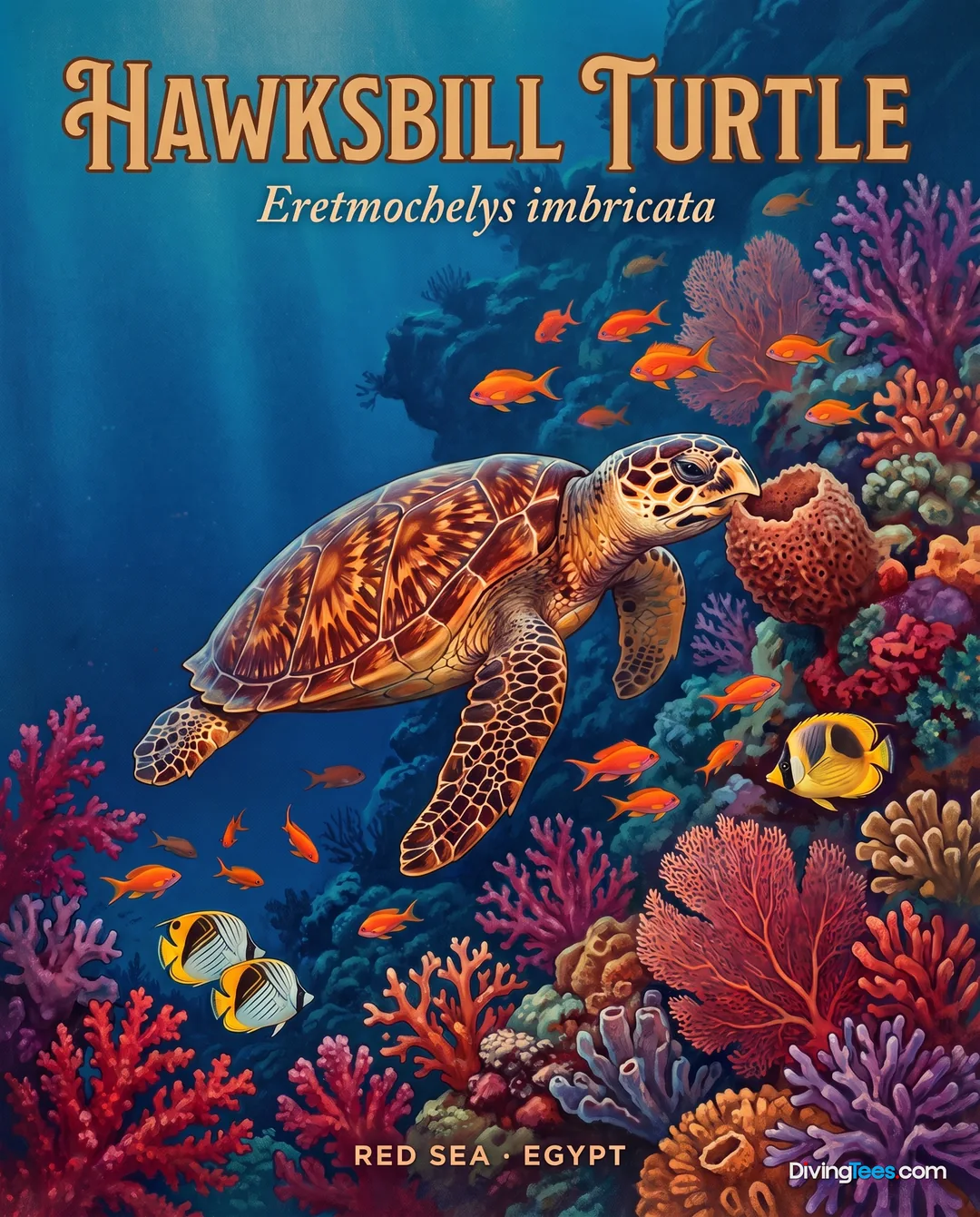
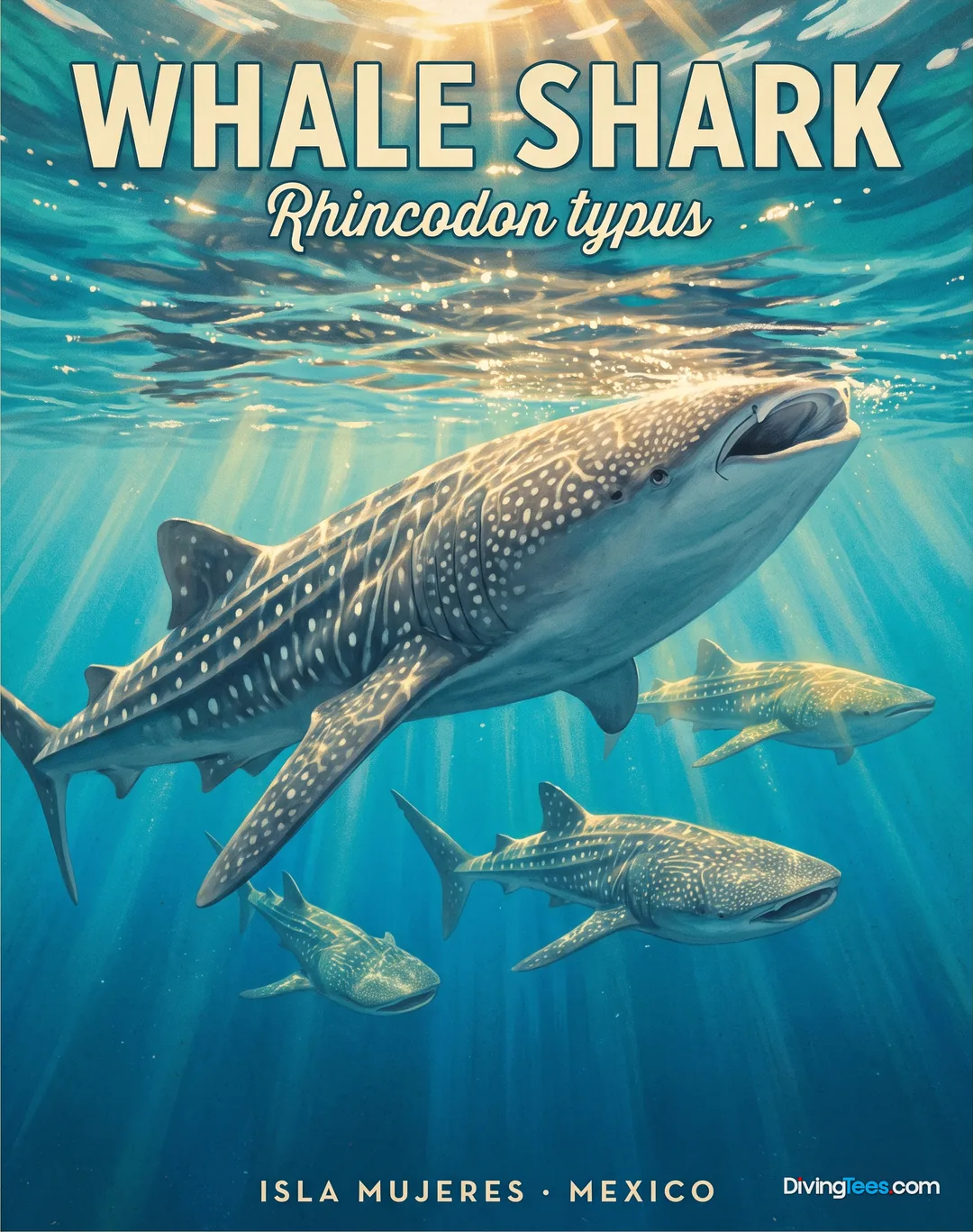
The recurring spectacle is large life moving through current: Napoleon wrasse and fusiliers are recorded at nine sites, grey reef sharks at nine, sea turtles at eight, eagle rays at eight, and barracudas, manta rays and tuna at seven. Jacks, trevally, white-tip reef sharks, moray eels and batfish add movement and scale to the reef scenes. The sites still have their own reasons to visit. Barracuda Giri is the only listed site for groupers and anthias; Banana Reef is the place for the recorded anemone; Dhigalhi Haa Marine Reserve is the one site associated with soft coral and gorgonians. Maamigili is the specific stop for the recorded sweetlips and porcupinefish, while Dhigu Thila is the only site listed for hawksbill turtles. Mantas are seen year-round in the Maldives, with the strongest period stated as May to November. Whale sharks are noted especially in April, May, October and November. Encounters remain conditional: the current and the animal decide the result.
Who puts you in the water
Every dive starts with a full briefing from the dive staff. Groups are buddy teams of two or three, and a staff member may accompany the dhoni group or enter the water to offer support, photography, videography and critter spotting. That person is not the diver's buddy unless the staff member and guest are the only two people making the dive, and staff do not directly supervise every diver underwater. The expectation is therefore a self-reliant recreational diver who can plan, monitor gas and depth, stay with a buddy and surface according to training. Current management matters on Maldivian channels, particularly in January and February. The boat carries oxygen, first-aid kits, fire alarms and extinguishers, radios, GPS, radar, sonar, emergency beacons and rescue boats. Advanced Open Water and Nitrox training can be arranged onboard, with other specialty courses presented during the initial briefings. The crew speaks English.
The dive deck and the gear
The diving is organised around a large 60-foot dhoni equipped for 28 divers, so entries and exits take place from the tender rather than the yacht. Divers gear up there, receive the site briefing, enter from its platform and signal the tender crew after surfacing. The yacht provides 80-cubic-foot tanks filled with air, weights and belts; the Maldives Aggressor II accepts both K and DIN valves, so a DIN diver does not need an adapter. Larger 100-cubic-foot or 15-litre tanks can be requested as a paid rental, subject to availability. Nitrox is available as an optional extra at 32% for certified Nitrox divers, with proof of certification required; students may use student fills after taking the Nitrox course onboard. Sidemount is accepted only with a single cylinder. Rebreathers, double tanks and underwater scooters are not supported. The dive setup includes shaded working space, rinse tanks, a platform, separate camera rinse facilities and an area for photography. An SMB and reel are required for tender diving.
Between dives
Between dives, the useful places are the shaded dive area on the dhoni, the yacht's interior saloon and the open decks with loungers and deck chairs. The jacuzzi gives the non-diving hours a destination of their own, while the bar, grill and outdoor showers keep the upper deck practical as well as social. Photographers have a dedicated camera area with separate camera rinse facilities and charging stations. A diver who wants quiet can retreat to the air-conditioned saloon or cabin; someone who wants company will usually find the group around the bar, comparing the last shark pass or checking a fish book. Evening options include fish-identification presentations, films, games and shared video. The yacht also welcomes non-divers and snorkellers, so a partner does not have to follow the full scuba programme to have a place in the day.
A day on board
A day begins before the heat has built, with the first briefing followed by the first dhoni dive. Breakfast comes around that early dive, then lunch separates the next part of the programme; dinner lands after the final dive and the return to the yacht. On a 7-night trip, the schedule averages up to 18 dives, including two night dives. A 10-night trip averages about 27 dives, including three night dives. The gaps are long enough to eat, rinse gear, sleep, sit in shade or watch the reef islands slide past while the yacht changes position. The boat may be underway between sites, but the diving remains the fixed centre of the day. A night dive, when included in the itinerary, changes the same reef into a different piece of water: torches replace daylight, and the tender collects divers after the last entry. Then comes food, a shower and sleep before the next briefing.
What you eat aboard
The galley serves a deliberately broad menu: Western and local dishes, seafood, beef or chicken, salads, vegetables, soups, sandwiches, homemade bread and fresh desserts. Breakfast begins with fruit, cereals, juices and hot food; lunch brings a hot dish alongside lighter options, and dinner is chef-prepared in the evening. Snacks remain available between meals, with non-alcoholic drinks, beer, cocktails and wine at dinner included in the onboard offering. The food is the clearest strength of the passenger feedback, scoring 9.6, and that matters on a schedule built around repeated dives. A proper meal after the second or third dive gives the day a useful reset rather than leaving everyone picking at whatever is easiest. Local cuisine appears alongside familiar food, so the table can serve both the diver who wants comfort and the traveller who wants a taste of the islands.
Nights at sea
The cabins are air-conditioned and all have private bathrooms with hot showers, but they are still cabins on a dive yacht, not hotel rooms with space to spare. Twin Staterooms use two single beds; Deluxe Staterooms offer either twin beds, with two cabins allowing them to be combined, or a queen bed for couples. The Suite is on the main deck, with a queen bed and panoramic windows. The window changes the experience more than another decorative detail would: daylight reaches the room, and the sea remains part of the view even when the diver is resting. Cabins have individual climate control, storage, towels, a hair dryer and a monitor with media player. The boat is non-smoking in the cabins. At night, the private bathroom and controlled temperature matter more than square metres, especially after several saltwater entries and a late return from the dhoni.
Twin Stateroom
Deluxe Stateroom
Suite
What to know before boarding
All Maldives Aggressor II itineraries embark and disembark in Malé. Airport transfer is included; hotel transfers are optional. Guests should arrive in Malé the day before boarding so a delayed flight does not become a missed departure. Boarding is at 4 p.m., and checkout is at 8 a.m.
Deck plan
- Year built
- 2006
- Year renovated
- 2017
- Length
- 41 m/41.1 m
- Beam
- 8.5 m/8.5 m
- Maximum number of passengers
- 22
- Number of cabins
- 11
- Number of bathrooms
- 12
- Engines
- Twin diesel engines
- Website
- aggressor.com ↗
Hello, I'm Marina, DivingDeal.com's AI assistant. I answer in detail about hotels, dive centres and liveaboards.

Thinking about the whole trip and the flights? Talk it over with Edith →
Marina is an AI. Some links are affiliate links: DivingDeal may earn a commission, at no extra cost to you. Bookings are made with the partner.