Liveaboards · Maldives
Emperor Virgo — a modern, diver-focused Maldives liveaboard
What makes this boat unique
- Emperor Virgo carries up to 18 divers in nine air-conditioned ensuite cabins, with cabin categories from the lower deck to the upper deck.
- A separate 17-metre dhoni handles the diving, with three dive guides and three dhoni crew.
- Free nitrox is available for certified divers, with DIN adaptors and a full range of rental equipment on board.
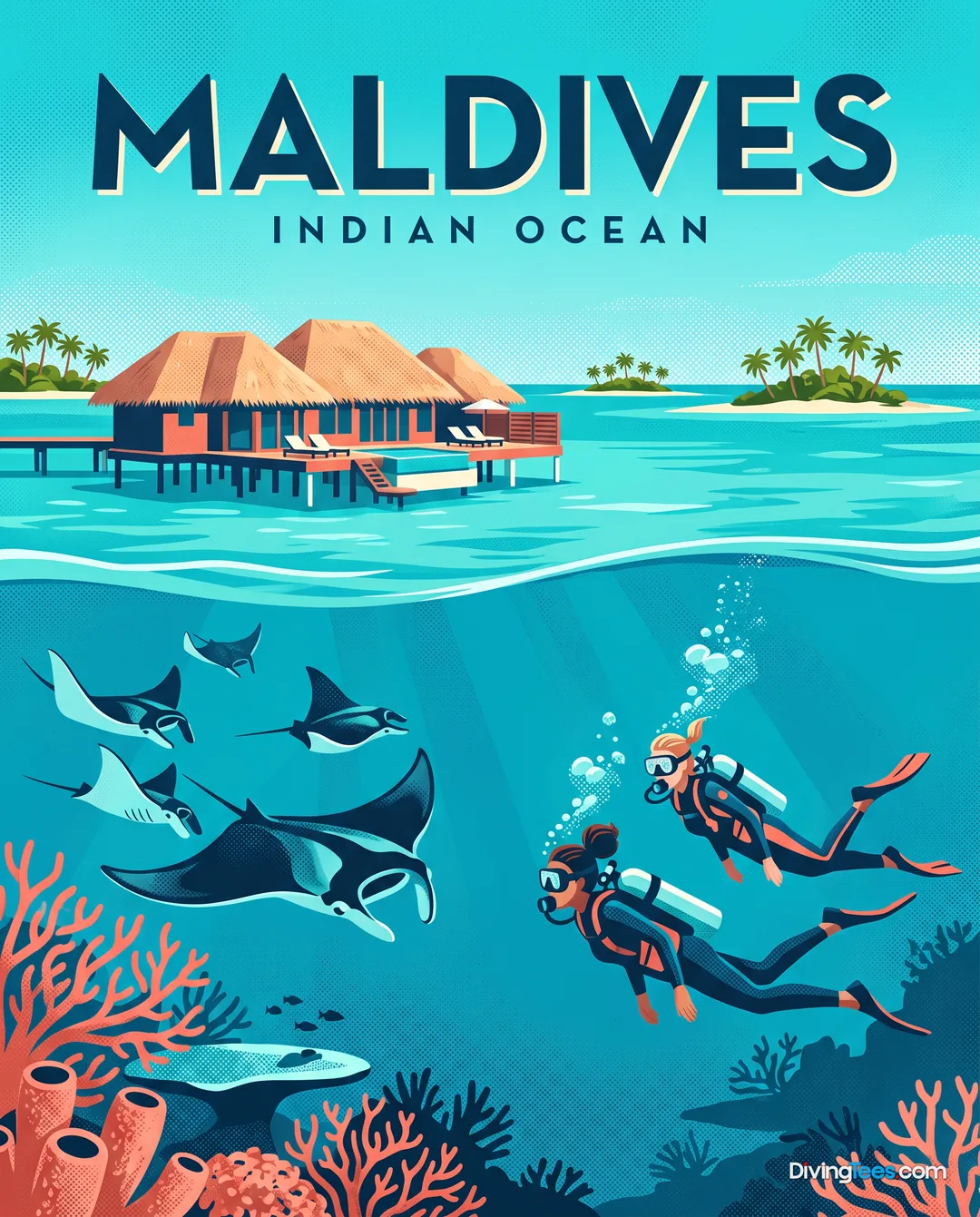
- The Best of Maldives route runs from Malé to Malé over 8 days and 7 nights.
- Park fees, port fees, fuel surcharges, transfers from the airport, the full-board meal plan and nitrox are included.
For subtitles in English: start the video firstthen click the gearat the top right of the video, select “Subtitles/CC”, then “Auto-translate” and choose “English”.
The invitation
Emperor Virgo is for divers who want the Maldives in a small group without giving up a proper liveaboard set-up. Eighteen guests is enough for a social boat, but not enough to make the dive operation feel anonymous. The main vessel keeps the living spaces calm; the separate dhoni takes the tanks, compressors and divers close to the reefs. That division matters over a week of current dives, entries and exits. The route is the Best of Maldives, linking Malé with North and South Ari, Vaavu and the Malé atolls. It is chosen for action: grey reef sharks, white tips, mantas, whale sharks, channels and pinnacles rather than a gentle resort-reef sampler. The crew’s role is practical and visible, from helping divers kit up on the dhoni to keeping the trip moving without fuss. Virgo suits divers who want useful guidance, included nitrox and a boat small enough for the crew to know who is in the water.
Boarding
From the dock, Emperor Virgo presents as a contemporary Maldivian liveaboard rather than a converted yacht with a dive operation added later. Light wood and clean modern lines carry through the interior, while the upper deck opens into a bar and outdoor seating area. The layout separates the air-conditioned lounge and dining room from the open decks, so guests can move from shade to sun without crowding the main living space. Boarding leads quickly to the practical centre of the trip: the dhoni, where tanks and dive equipment stay ready between dives. Back aboard, the boat is quiet enough for conversation in the lounge and open enough to spread out above deck. It has the polished feel of a vessel built around diving, with the comforts kept in their proper place.
The atmosphere on board
Virgo’s atmosphere comes from its size and the way the crew works around the divers. With no more than 18 guests, the same faces appear at breakfast, on the dhoni and around the bar, and the group becomes familiar quickly without needing forced entertainment. The dhoni crew helps with kitting up and keeps the process moving from tank to water to rinse. The wider crew is hands-on when something needs doing, whether that means carrying gear, answering a question or smoothing out a change in the day’s plan. English, French and Spanish are spoken on board. Evenings are low-key: a drink before dinner, the two-for-one happy hour on most nights, then food and talk in the air-conditioned dining room or outside. The crew scores slightly higher than the boat itself, which is a useful distinction: Virgo offers a polished, comfortable platform, while the people make the week feel cared for.
The sites you’ll dive
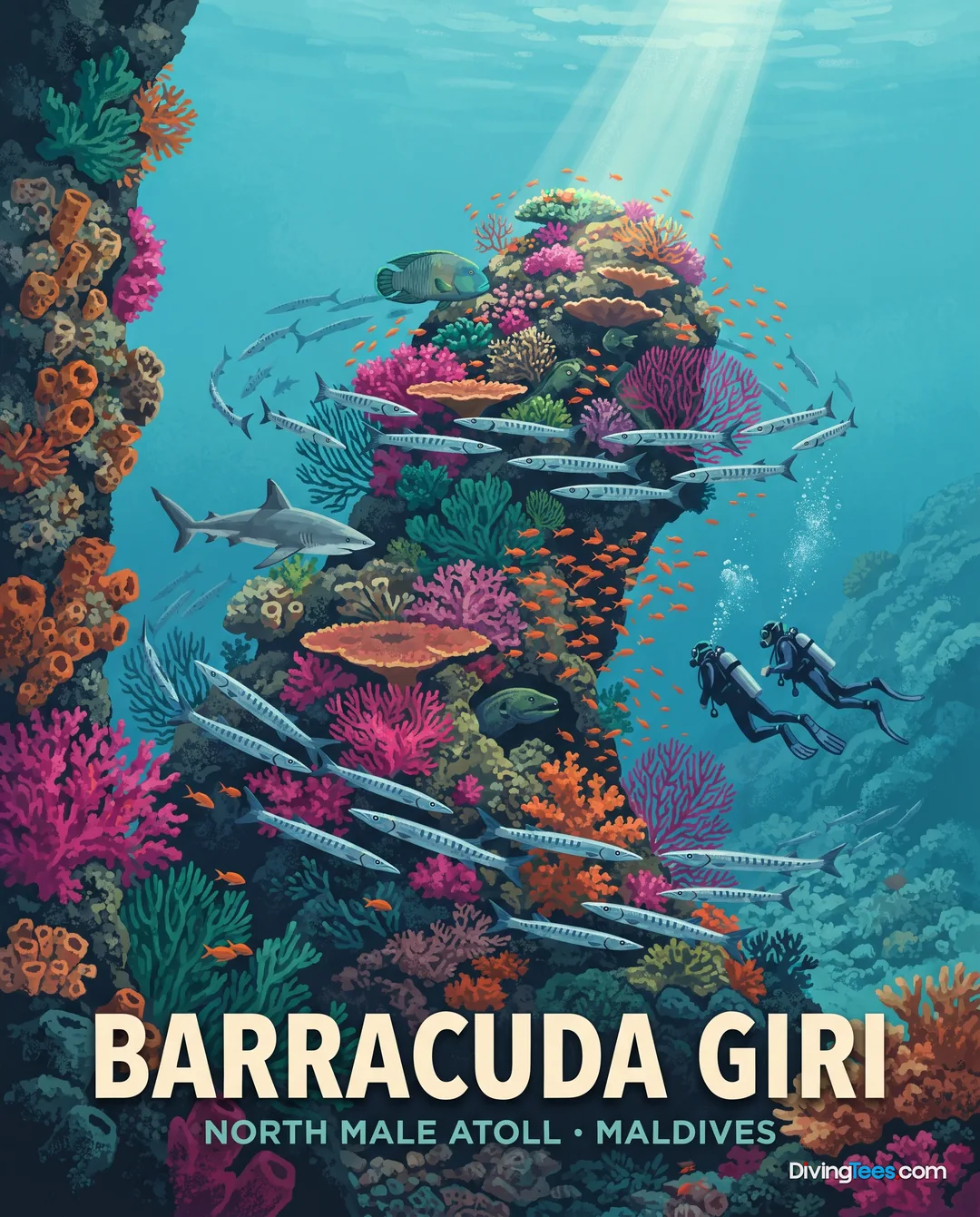
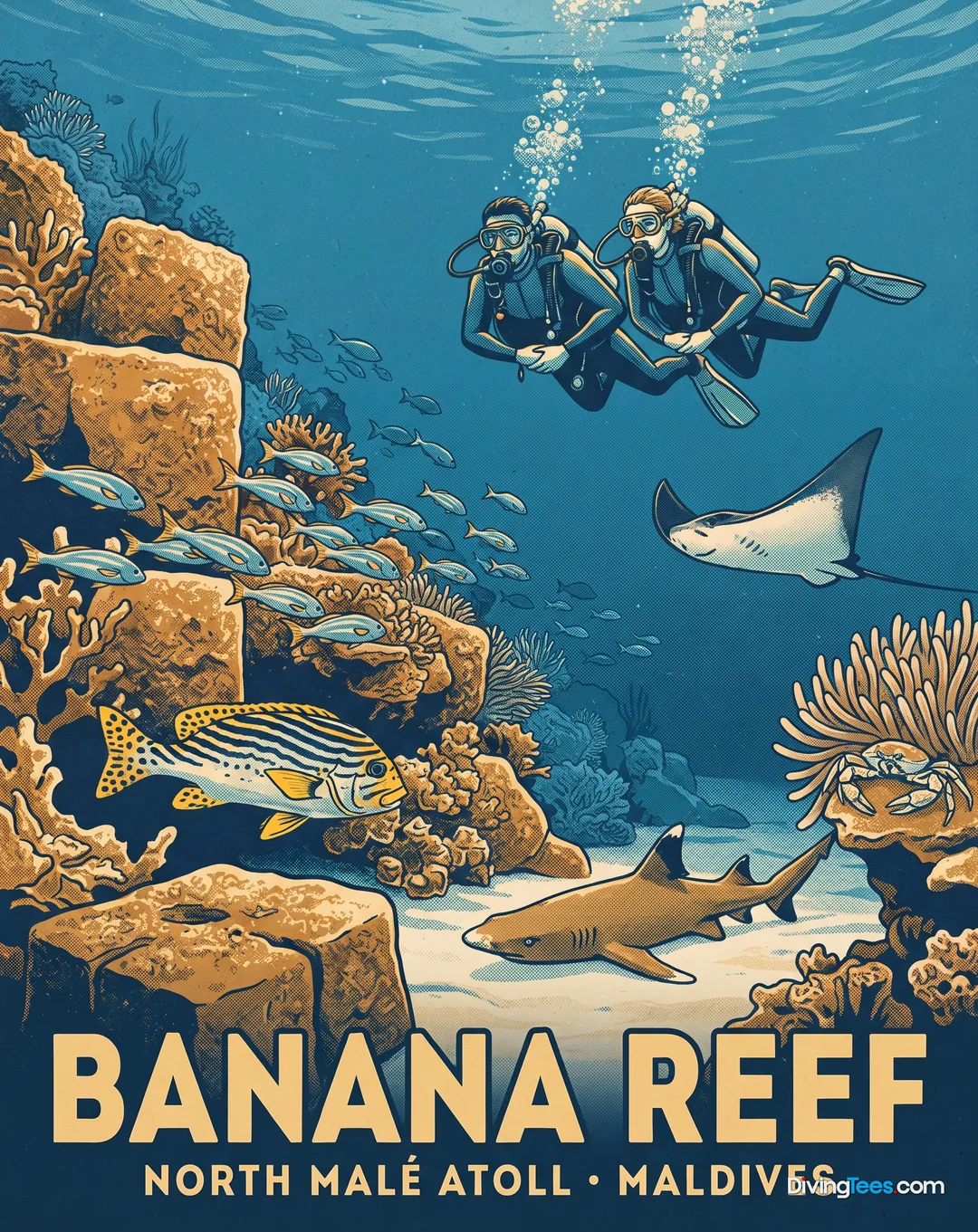
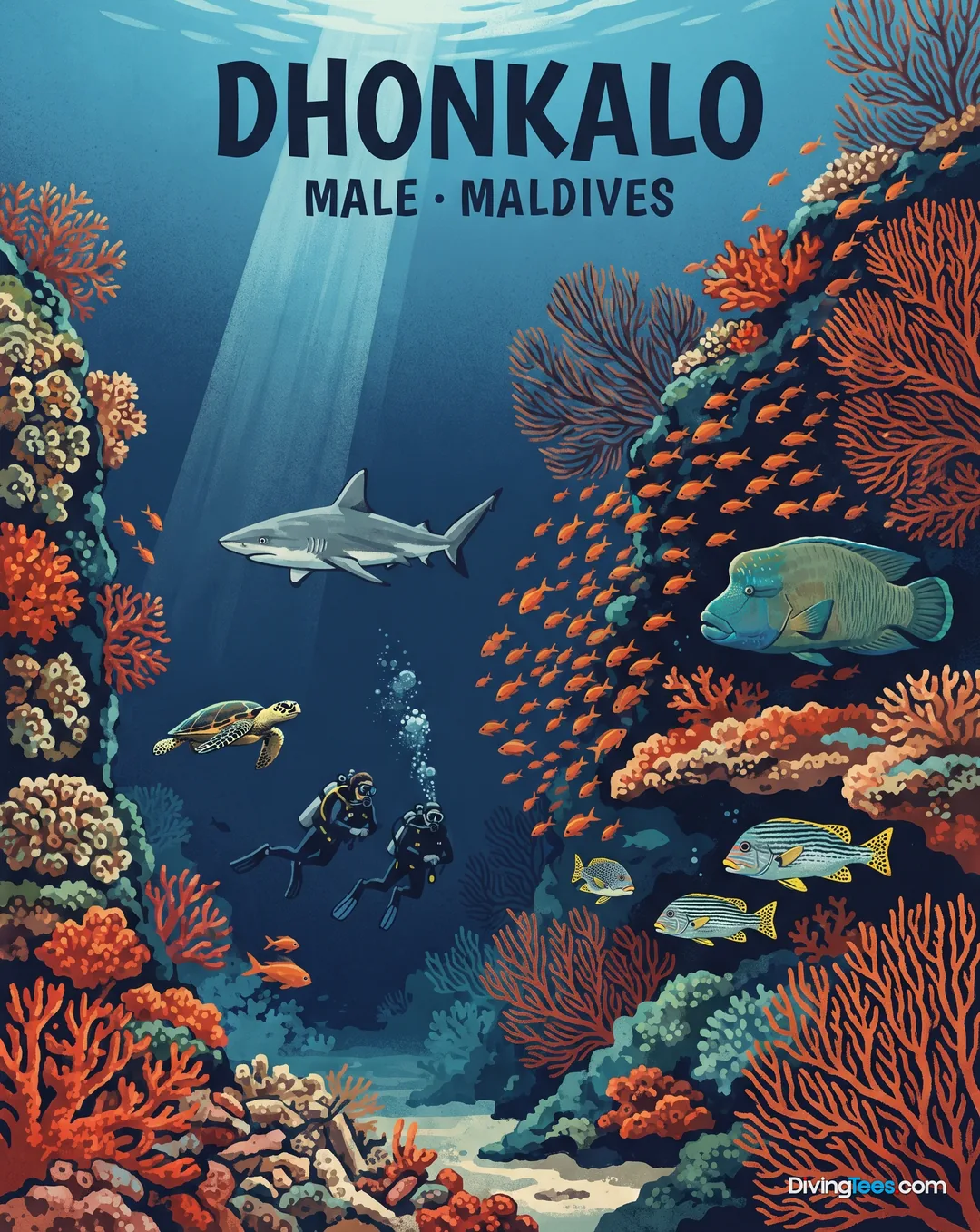
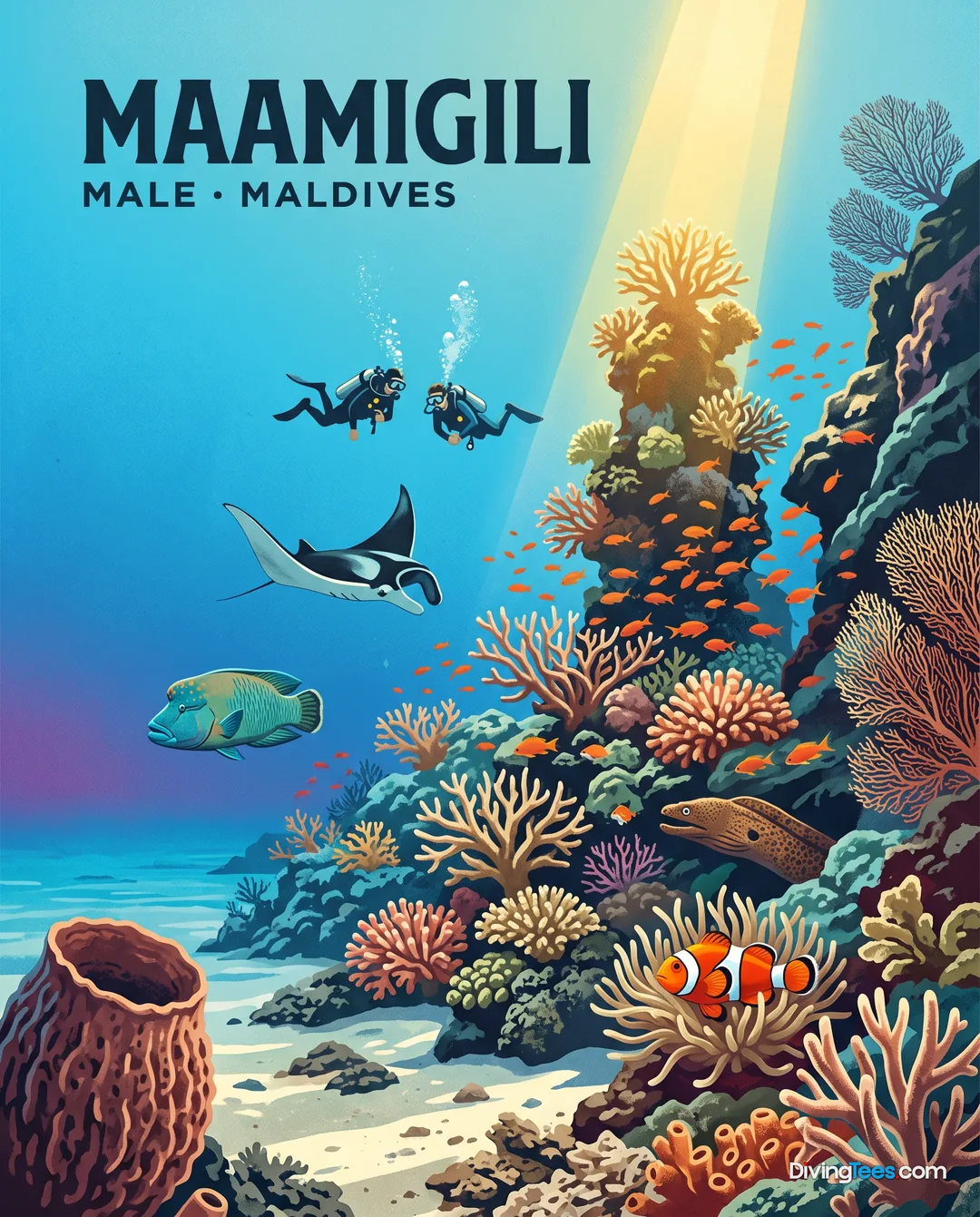
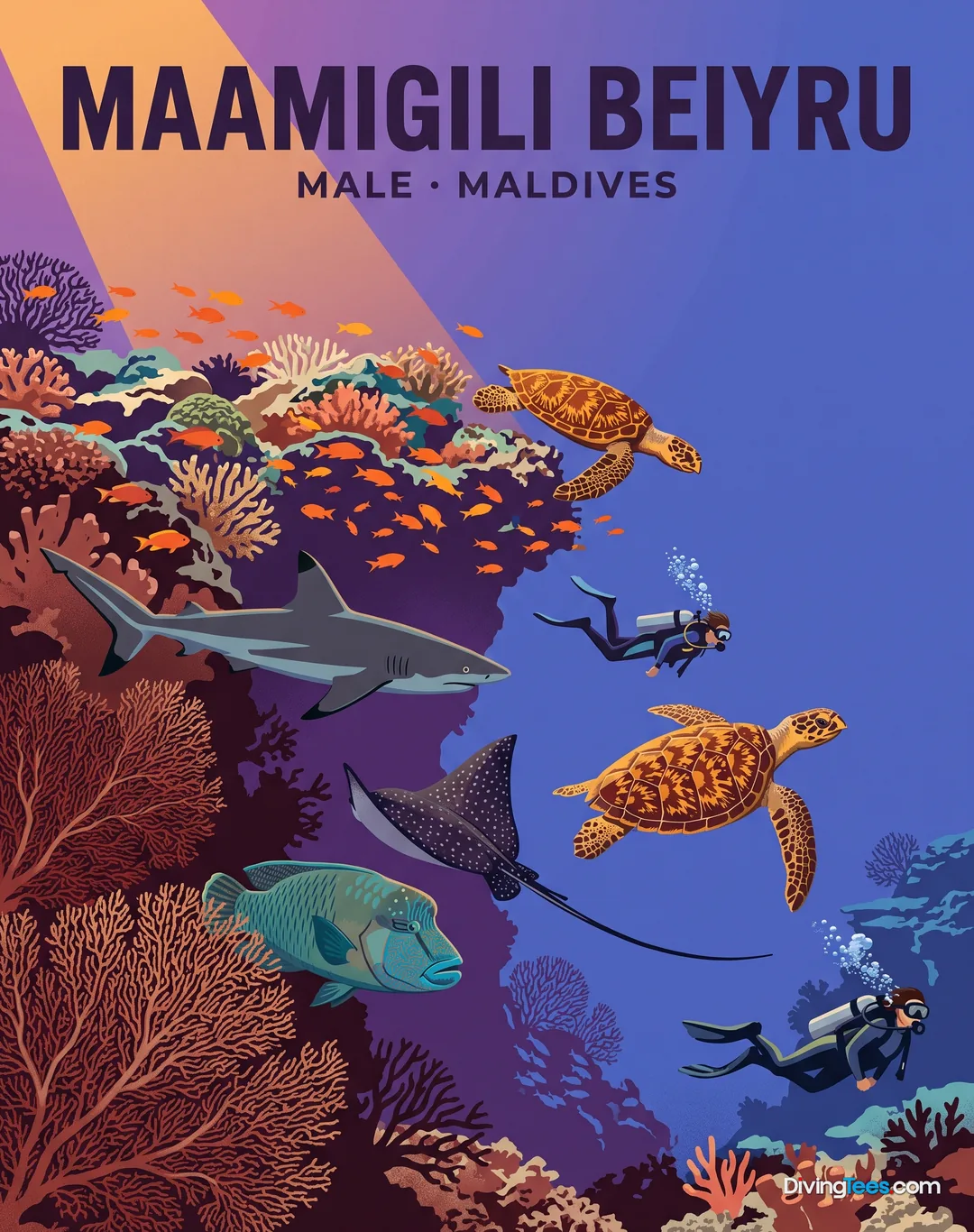
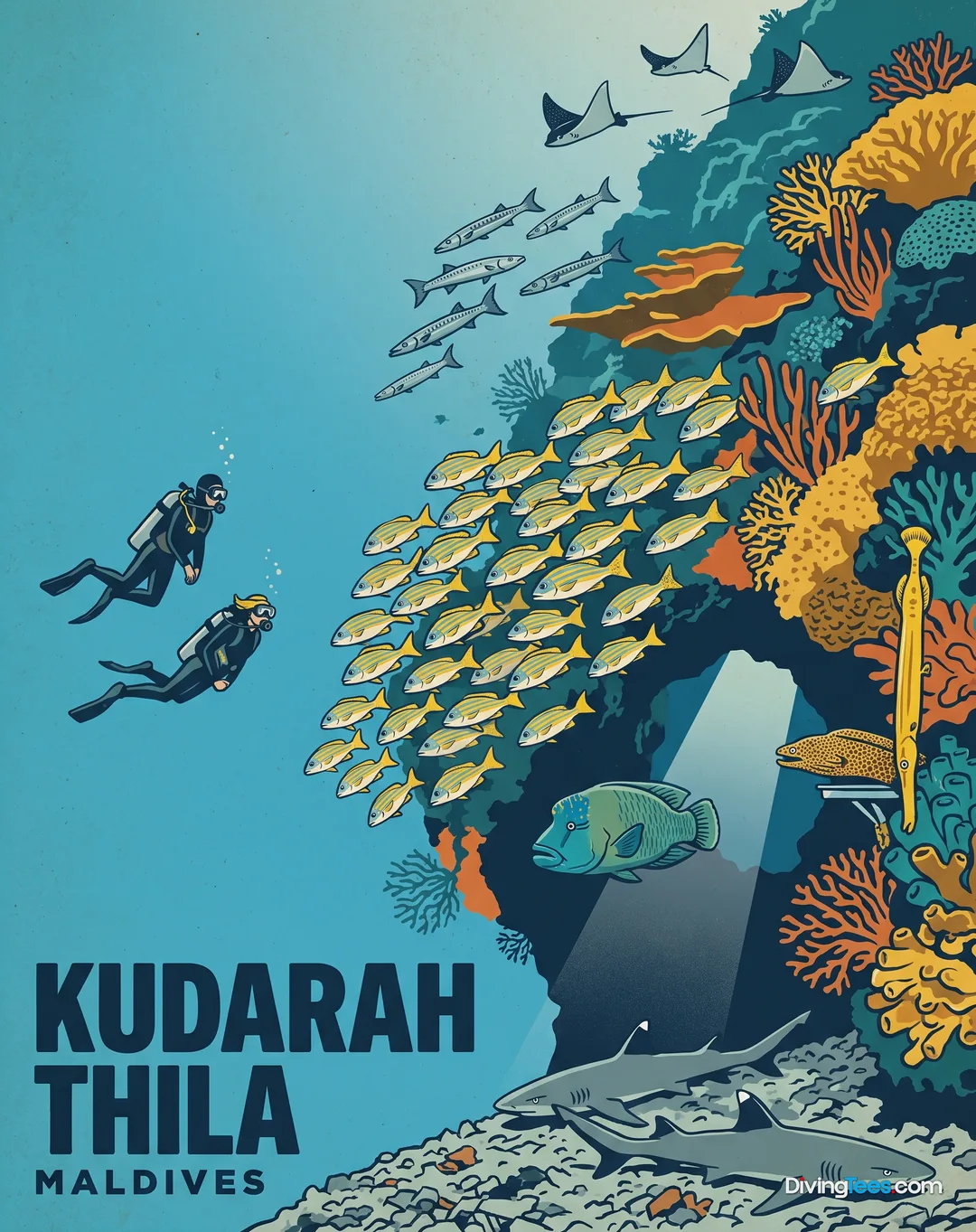
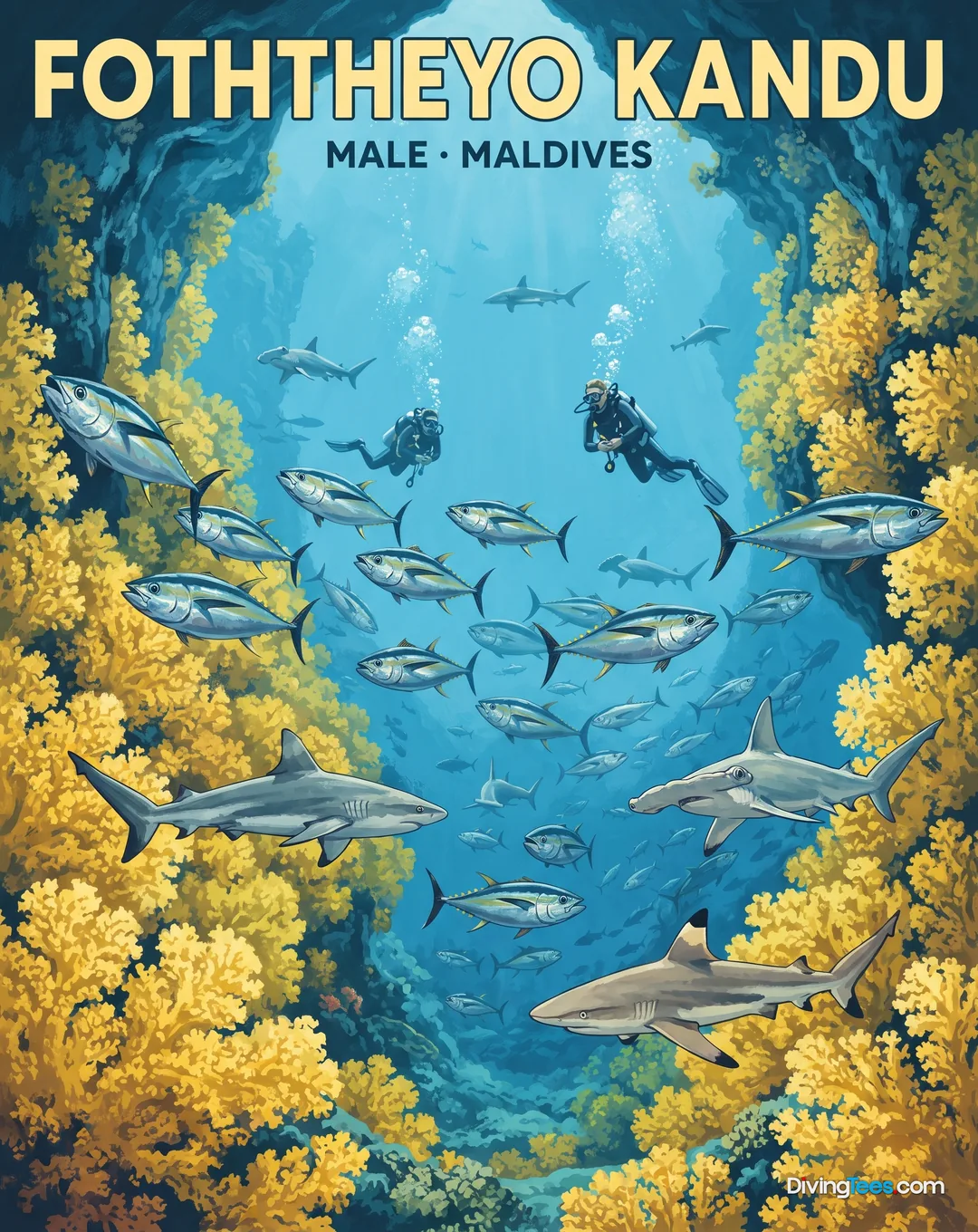
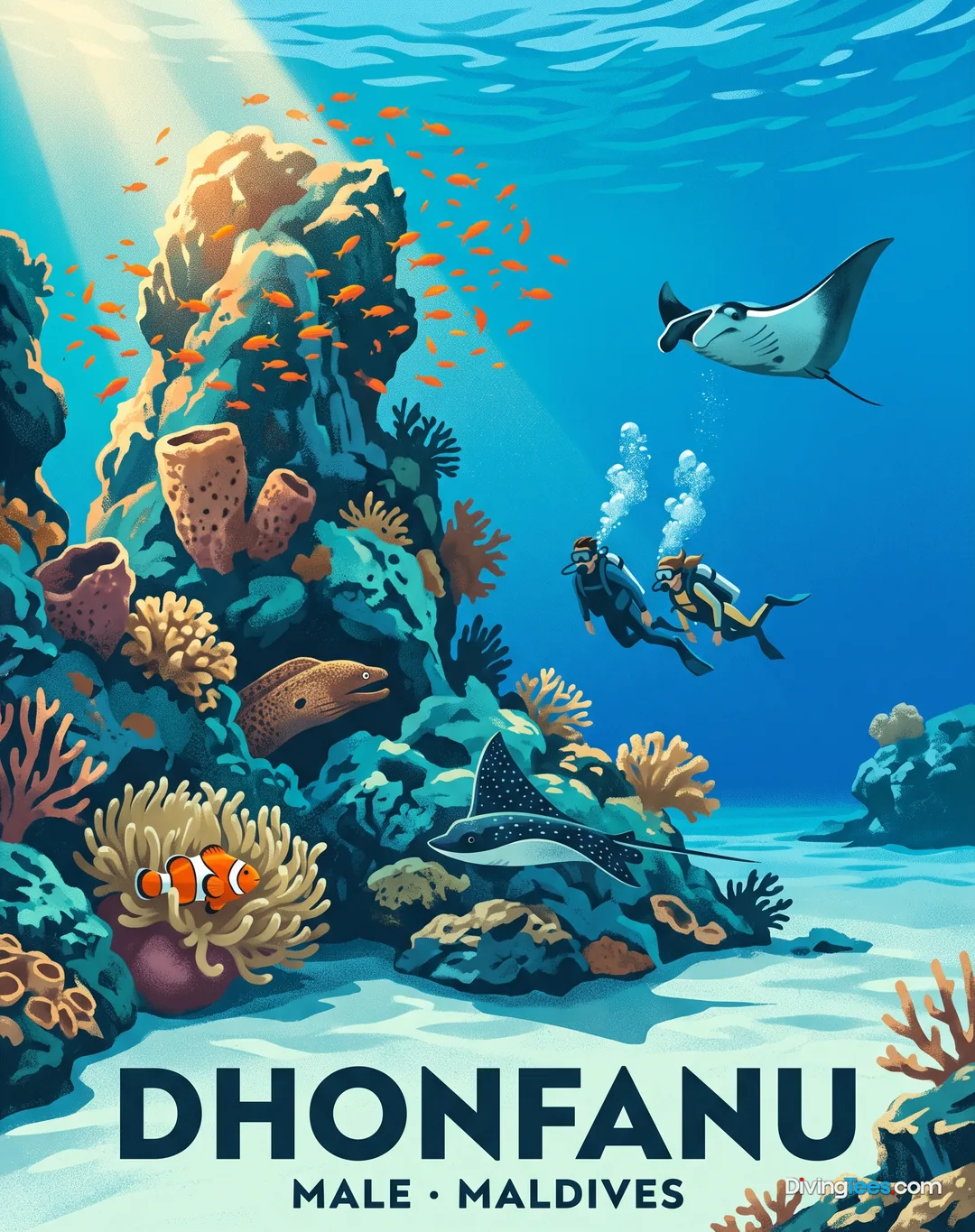
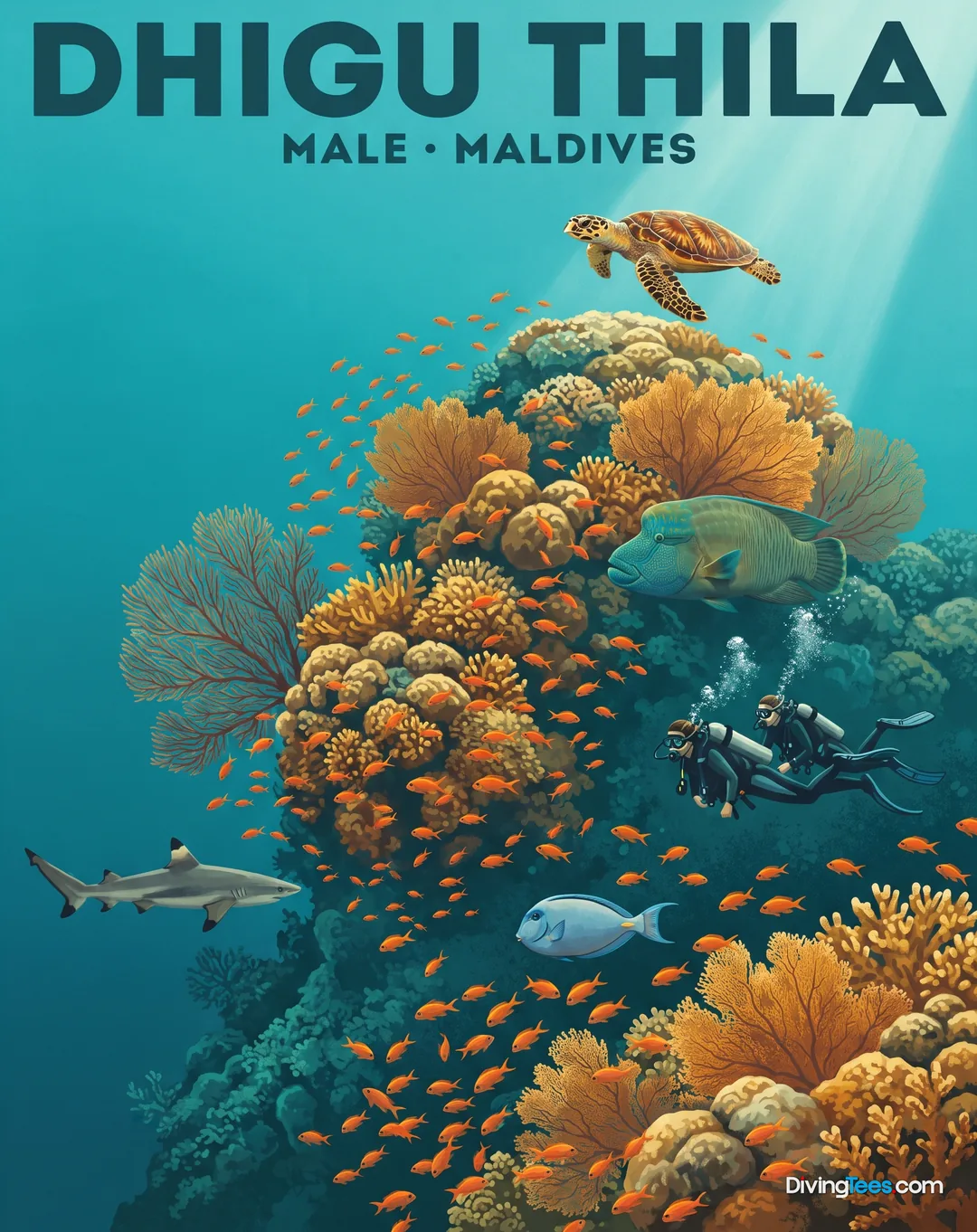
The 8-day, 7-night Best of Maldives itinerary leaves from Malé and returns to Malé, crossing the Malé, Ari and Vaavu atolls. Barracuda Giri drops onto three submerged pinnacles, where current brings barracudas, tunas and jacks together; its maximum depth is -30m. Banana Reef is a lively reef ecosystem near Thulhagiri Island Resort, with reef sharks and eagle rays among the reef fish. Mushimasmigili Thila is an isolated North Ari pinnacle known for grey reef sharks at its up-current point, to a maximum of -30m. Dhonkalo is a cleaning station in a sandy channel where mantas gather. Maamigili and Maamigili Beiyru sit in South Ari’s protected waters, with whale sharks and mantas the reason to make the dive; both reach -30m. Kudarah Thila adds clefts, overhangs and caves, with schools of batfish, to -30m. Guraidhoo and Myaru Kandu are current-fed shark channels. Foththeyo Kandu reaches -40m, combining caves carpeted in yellow soft corals with open-ocean pelagics. The route also includes Dhigalhi Haa, Dhonfanu, Dhigu Thila and Fushifaru Thila, where cleaning stations, pinnacles, mantas and reef sharks shape the dives.
What you’ll meet underwater
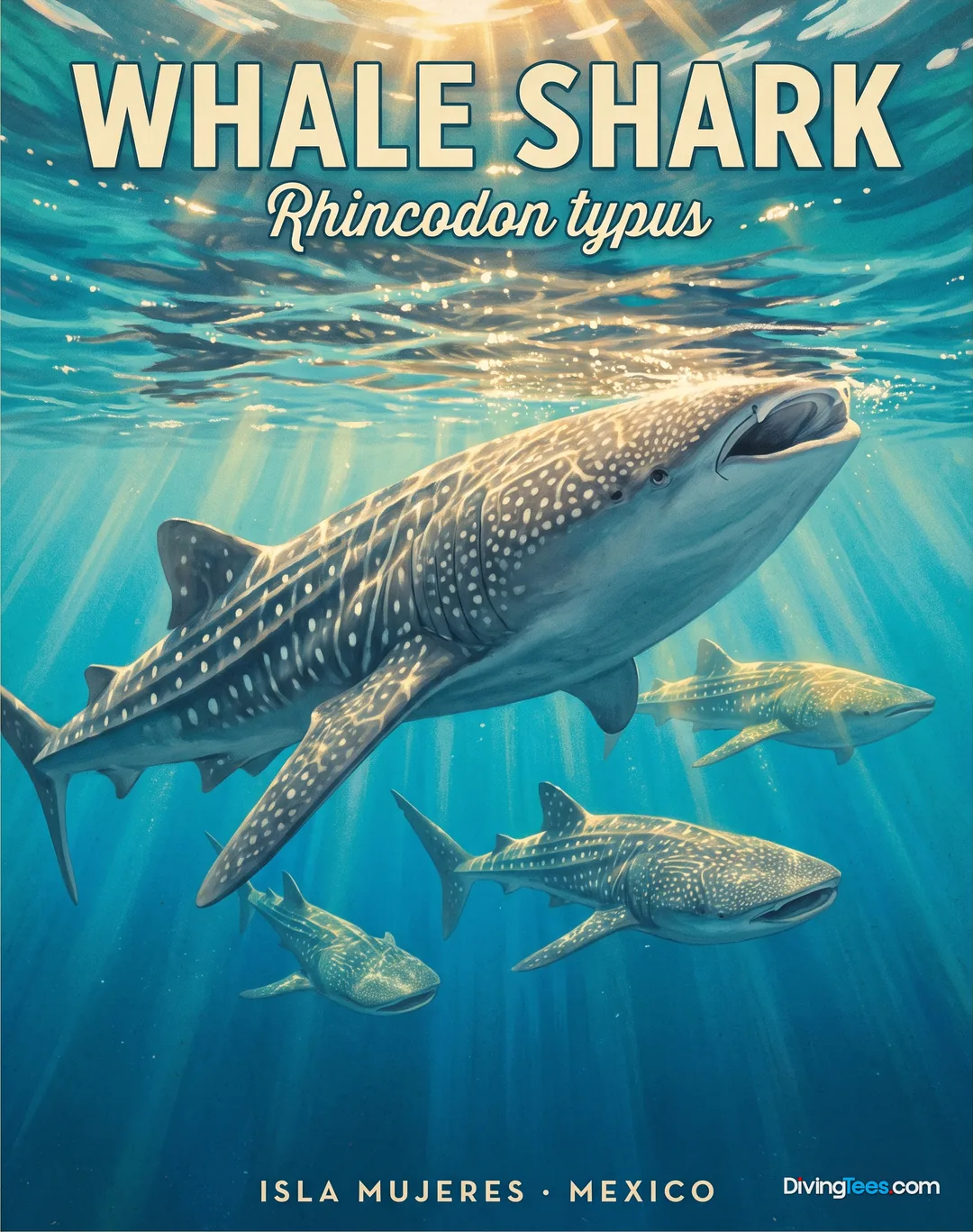
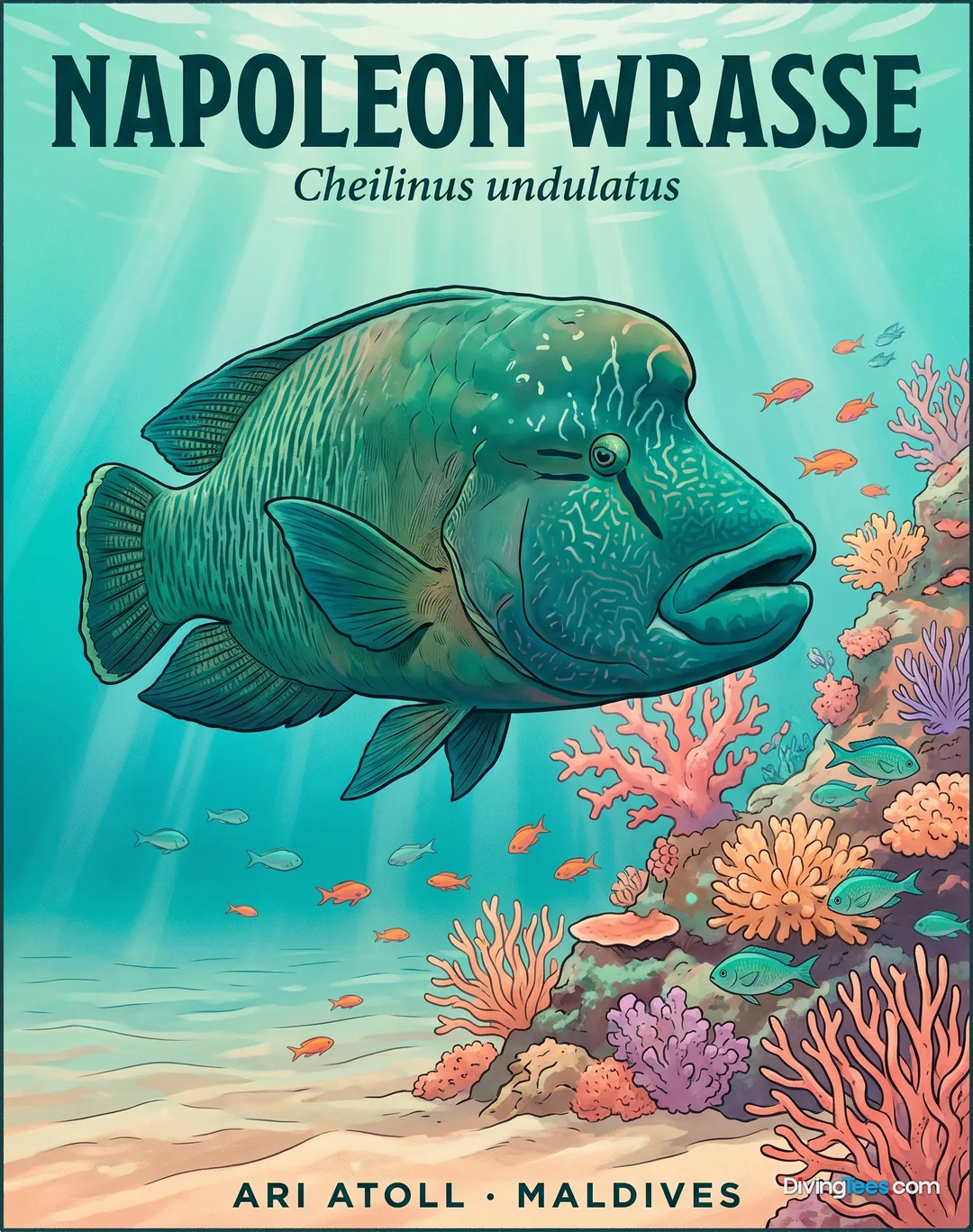
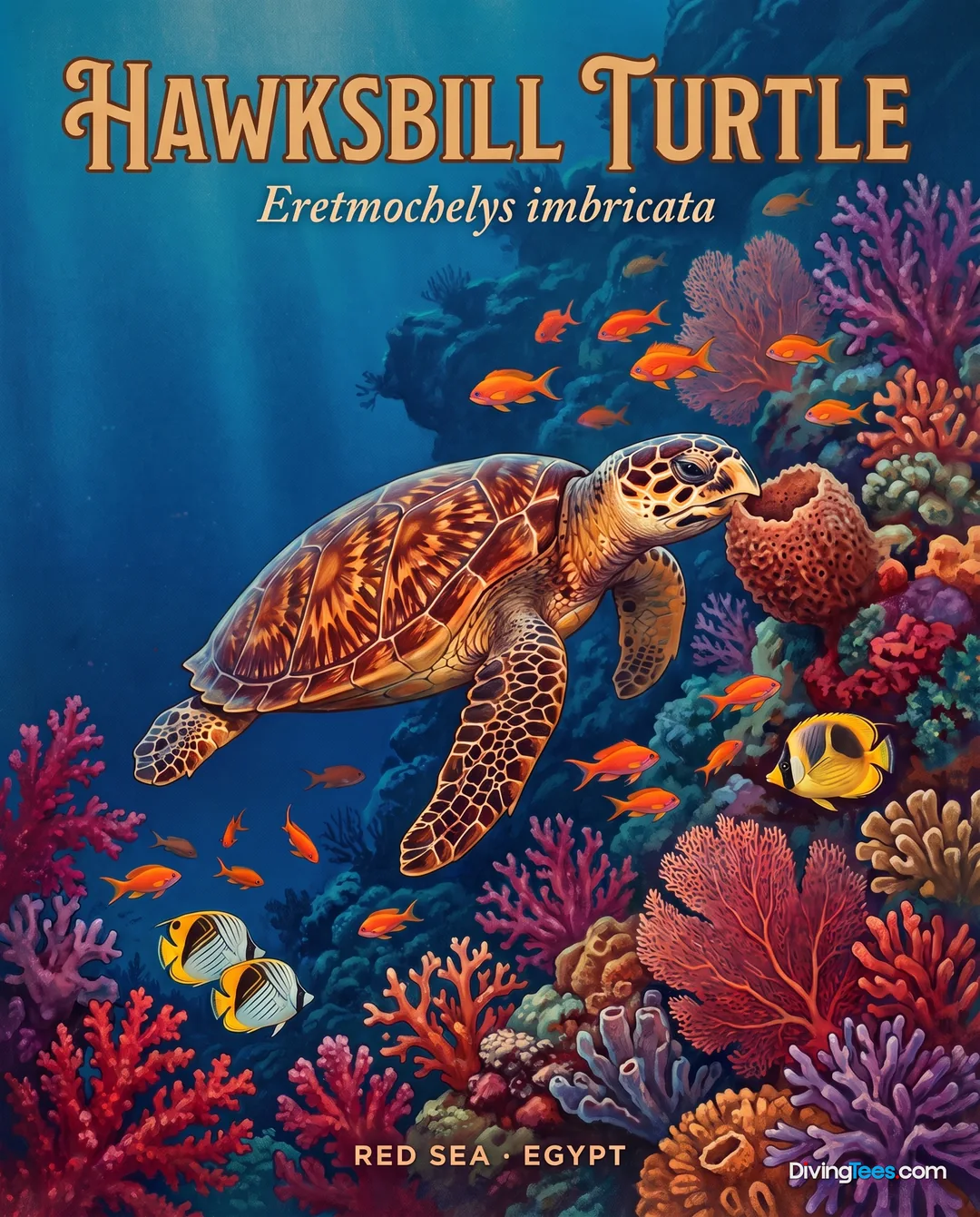
The route is built around animals that recur across several sites: Napoleon wrasse and fusiliers are recorded at nine sites, grey reef sharks at nine, sea turtles at eight, and barracudas, mantas and tuna at seven each. Eagle rays also turn up widely, as do jacks, trevallies, moray eels, batfish and white-tip reef sharks. The current is part of the reason: when water funnels through a channel or meets a thila, sharks, schooling fish and larger pelagics gather where the food moves. Mantas have particular reasons to be there. Dhonkalo is a cleaning station in a sandy channel, while Dhonfanu and Fushifaru Thila also focus on manta cleaning activity. Whale sharks are associated with Maamigili and Maamigili Beiyru in South Ari’s protected waters. The single-site details reward a closer look: groupers and anthias at Barracuda Giri, anemones at Banana Reef, soft corals and gorgonians at Dhigalhi Haa, and hawksbill turtles at Dhigu Thila.
Who puts you in the water
Three dive guides work with the group, speaking English, French and Spanish. The exact group size is not stated, but the boat’s capacity keeps the operation relatively small and the dhoni crew is there to help with equipment before entry. A check dive is required before normal diving begins, regardless of certification or experience. Divers must hold PADI Open Water or an equivalent qualification and be able to complete the dive with a buddy or guide. Currents can be unpredictable and strong, especially around channels and pinnacles, so Advanced Open Water or Deep Diver training is advised for dives below 18 metres. The maximum diving depth with an equally qualified buddy is 30 metres; decompression, solo and technical diving are not permitted. Advanced Open Water, Adventure Dives and specialties can be completed on board. Oxygen, comprehensive first aid and an AED are available through the diving operation.
The dive deck and the gear
The diving is run from a separate 17-metre dhoni with three crew members, compressors, oxygen, first-aid equipment and diving towels. Tanks are S80 aluminium 11.1-litre cylinders as standard; C100 aluminium 13.2-litre tanks can be requested. DIN adaptors are available. Nitrox is free, produced through a membrane system to a maximum of 32%, for certified nitrox divers. Rental equipment is available but must be arranged before boarding. Divers use a dive computer, SMB and reef hook on every dive, and a torch is required for night dives. The dhoni keeps the main vessel clear of cylinders and wet gear, and its crew assists with kitting up. Back on board, cameras have charging stations, an air gun, a camera table and a separate rinse tank. The arrangement is straightforward: kit once, leave it on the dhoni, and let the tender handle the repeated water work.
Between dives
Between dives, Virgo gives guests several different kinds of quiet. The air-conditioned lounge has sofas, a television and book, music and film libraries, while the upper deck offers outdoor seating beside the bar. The sun deck is for the simple version of a surface interval: lie down, dry equipment, watch the atolls pass and let the body cool before the next briefing. A shaded seat works better after a hard channel dive; the open deck works when the wind is up and the light is good. There is also a photo area with charging stations and separate camera rinsing, allowing photographers to deal with cameras without turning the general living space into a wet workbench. Excursions on land, snorkelling and other non-diving activities are part of the trip’s options, but Virgo remains organised around getting back in the water.
A day on board
A day starts with the first briefing before the boat’s dive rhythm takes over. Divers move to the dhoni, complete the entry, and return to the main vessel for food, showers and a proper surface interval. The next dive follows the same pattern, with the dhoni crew handling much of the repetitive lifting and kitting work. Later in the day, another dive fits around lunch and rest; the exact timing changes with currents, site choice and navigation. When the boat is underway, guests use the shaded lounge or upper and sun decks rather than being trapped in a single saloon. A night dive may be available as an Adventure Dive or specialty, with a torch required for that diving. Dinner closes the working part of the day, often after the bar’s happy hour, and the boat settles into the dark before the process begins again.
What you eat aboard
Meals are served as part of the full-board plan, with buffet service combining Western and local cooking and vegetarian choices available. Breakfast follows the first diving activity, while later meals arrive around the remaining dives and give the day its fixed pauses. The kitchen also handles a special dinner, snacks and dinner wine, so the table is more than a refuelling stop between tanks. There are beers, other alcoholic drinks and soft drinks on board, with a bar on the upper deck. On most evenings, the bar offers a two-for-one happy hour before dinner. The strong food score reflects what matters on a Maldives week: enough choice to suit different appetites, food that does not demand ceremony, and a reliable meal waiting after current diving.
Nights at sea
The cabins are the part of Virgo where the boat’s compact guest capacity makes the most difference. Lower Deck Twin, Lower Deck Double, Main Deck and Upper Deck cabins all have air conditioning, a private bathroom and a standard window; twin beds can be converted to a double when requested in the relevant cabins. The lower-deck rooms sit closest to the machinery and waterline, while the upper cabins give easier access to the open deck. No cabin turns the boat into a hotel room, but each gives a diver a private place to dry off, sleep and shut the door. The light wood continues inside, and the standard windows bring daylight without pretending the room is a panoramic suite. After a full day in the water, the useful luxuries are hot showers, daily cleaning and a bunk that is close to the next morning’s kit.
Lower Deck Twin Cabins
Lower Deck Double Cabins
Main Deck Cabins
Upper Deck Cabins
What to know before boarding
The Best of Maldives itinerary departs from Malé and returns to Malé. Airport transfer is included, and the transfer arrangements are provided with the trip information. Arriving in the Maldives the night before embarkation is sensible, especially when international connections are involved. That leaves room for delays without turning the first dive day into a race across the airport.
Deck plan
- Year built
- 2012
- Length
- 5 m
- Beam
- 9.4 m
- Maximum number of passengers
- 18
- Number of cabins
- 9
- Number of bathrooms
- 9
- Engines
- 500 hp Caterpillar
- Cruising speed
- 10 knots
- Tenders
- 1 Dhoni
- Website
- emperordivers.com ↗
Hello, I'm Marina, DivingDeal.com's AI assistant. I answer in detail about hotels, dive centres and liveaboards.

Thinking about the whole trip and the flights? Talk it over with Edith →
Marina is an AI. Some links are affiliate links: DivingDeal may earn a commission, at no extra cost to you. Bookings are made with the partner.