
Costa Verde Loisirs
★ 4.7/5 (179 reviews)
5 km away as the crow flies
Corsica · France · Mediterranean
Max. depth · 35 mDescend to the intact hull of the Alcione, a cargo wreck resting upright at 35 metres, its superstructure rising to a shallower 24 metres.
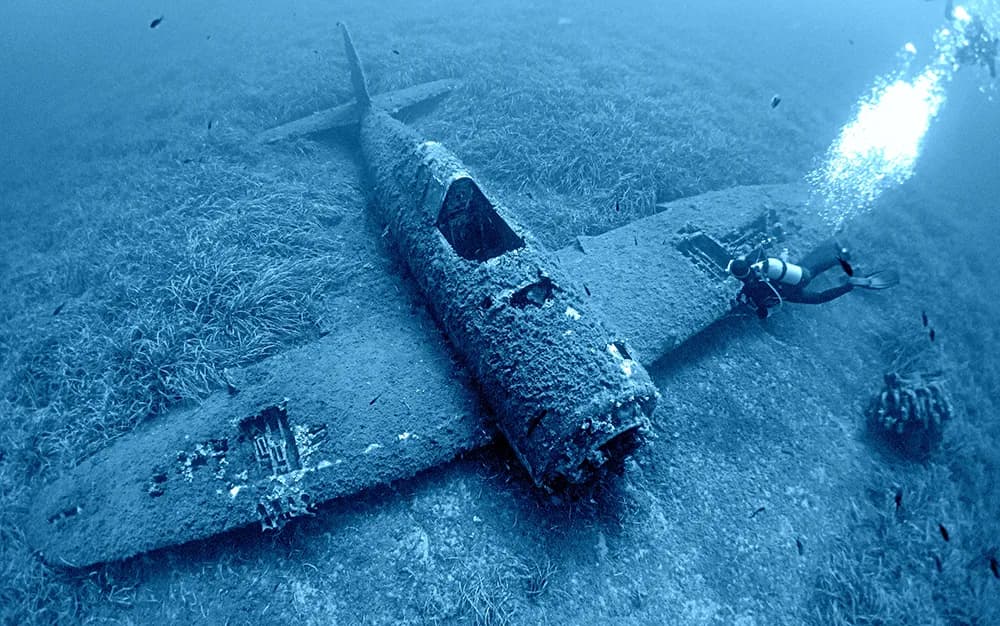
The Alcione wreck lies off the coast of Corsica, a substantial cargo vessel standing upright on a sandy seafloor. You'll find the main hull resting at a maximum depth of 35 metres, while its highest points, particularly the superstructure, ascend to a minimum of 24 metres. This vertical orientation makes for a striking silhouette as you descend, with the ship's length and overall form immediately recognizable from a distance. The bow and stern remain distinct, offering clear landmarks for navigation around the site.
Access to the Alcione is typically a boat dive, with a fixed mooring line guiding your descent directly to the wreck. This line is particularly useful given the site's exposure, as currents can be variable depending on sea state and local conditions. Following the line allows for a controlled and safe entry, bringing you directly to the shallower parts of the wreck. This approach ensures you can orient yourself quickly before beginning your exploration of the superstructure or heading towards the deeper sections of the hull.
Once you reach the wreck, the primary area of interest for many divers is the intact superstructure, which starts around 24 to 25 metres. This shallower depth allows for extended bottom time within recreational limits, letting you meticulously explore the ship's upper decks and the framework that remains. The structural integrity here means you can easily navigate between different sections, observing how marine life has colonised the metalwork. Light penetration is still good at this depth, highlighting the details of the wreck's features.
As you move deeper along the hull towards the sandy bottom at 33 to 35 metres, the sheer scale of the Alcione becomes more apparent. The intact nature of the wreck provides numerous hiding spots and sheltered areas for resident marine species. You will often encounter large groupers taking shelter within the deeper recesses, while moray eels can be spotted in the crevices and openings of the ship's structure. The wreck acts as an artificial reef, drawing in a variety of species that benefit from the shelter and food sources it provides.
The marine life around the Alcione is typical of an established Mediterranean wreck. Beyond the groupers and moray eels, you can observe scorpionfish camouflaged against the hull. Schools of anthias often hover above the deck, adding flashes of colour, while bogue and sea bream might be seen moving through the open sections. Larger pelagic species like dentex and meagre are also known to frequent the wreck, especially when current brings in nutrients. The interaction between these species and the wreck itself is a constant draw.
One of the distinguishing features of the Alcione is its exceptional state of preservation and its upright position. Unlike many wrecks that lie broken or on their side, the Alcione stands as if ready to sail, offering a unique perspective for divers. This allows for a more intuitive exploration of a ship's structure, making it easier to imagine its original form. The combination of its intactness and the resident marine life creates a dynamic environment that evolves with each dive.
Visibility at the Alcione generally ranges from 10 to 30 metres, providing clear views of the wreck and its surroundings on most days. The best conditions for diving the site are typically found from late spring through to autumn, with summer and early autumn offering the most consistent clarity and calmer seas. Planning your dive during these periods maximizes your chances of experiencing the wreck under optimal light and water conditions, enhancing your exploration of this significant Corsican dive site.
The Alcione wreck is a deep dive, with the highest points of the superstructure starting at 24 metres and the sandy seabed reaching 35 metres. This site requires an Advanced certification, and prior experience with deep wreck diving is highly recommended due to the depth and potential for variable current. While there is a fixed mooring line for descent and ascent, currents can be present depending on sea state and exposure, so a controlled approach is essential. Visibility typically ranges from 10 to 30 metres, with optimal conditions found from summer to early autumn.