CMAS
Hippocampe
Google 4.9/5 (542 reviews)
9.3 km away as the crow flies
Corsica · France · Mediterranean
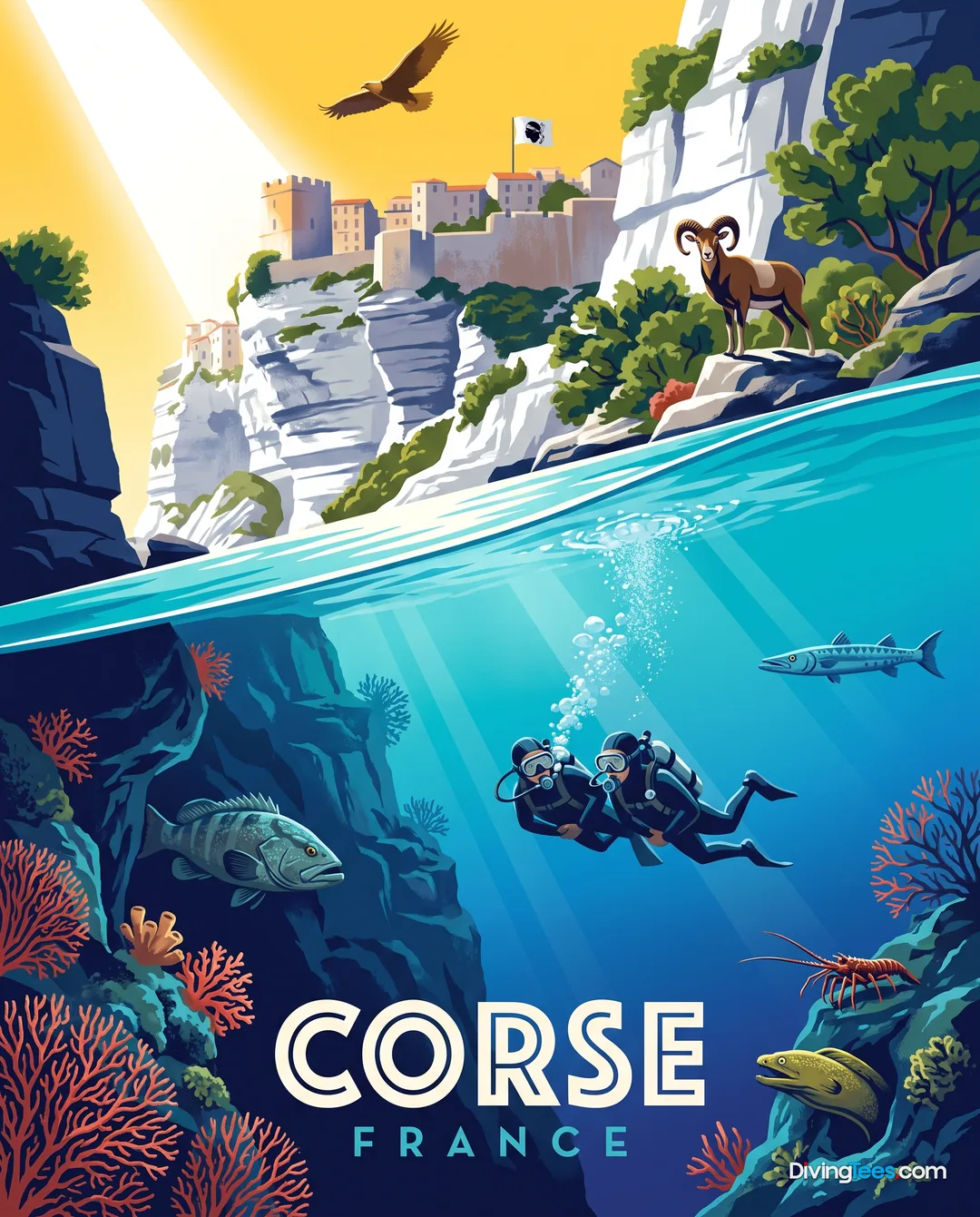
Max. depth · 40 mDescend onto a rocky seamount in Corsica, navigating granite blocks and encountering large groupers, barracuda schools, and dentex in significant currents.
Danger Du Toro presents a distinct topography, defined by two primary rocky plateaus, or blocks, separated by approximately 50 metres. These formations rise sharply from the seabed, with pinnacles reaching very close to the surface, creating an isolated structure in the open water. The site's character is shaped by a complex network of granite blocks, forming natural canyons, swim-throughs, and crevices that invite exploration. Vertical drop-offs, overhangs, and small caverns add further complexity to the underwater landscape, providing varied environments for marine life.
A typical dive at Danger Du Toro begins with a descent along the mooring line, usually positioned between the two main plateaus. From there, you can explore the intricate relief, navigating through the rock formations and investigating the numerous fissures. The dive profile often involves moving deeper to observe the walls before gradually ascending to shallower areas, allowing for a comprehensive view of the site's structure. The isolation of this seamount in the Cerbicales reserve contributes to its rich biodiversity, acting as an aggregation point for various species.
The currents at Danger Du Toro are a defining characteristic of the dive, often strong and variable, requiring attention to planning and execution. While not constant, they are frequent, and their intensity can shift depending on exposure and local weather conditions. This variability means that while one dive might be a comfortable drift, the next could demand more technical handling. Experienced divers will appreciate the dynamic nature of the site, which sculpts the environment and influences the behaviour of the marine life found here.
This site is particularly known for its resident population of large groupers, including both brown grouper and dusky grouper, which inhabit the deeper sections and the numerous hiding spots within the granite labyrinth. Mediterranean moray eels are commonly found in the crevices and under ledges, alongside a variety of wrasses such as the common wrasse and peacock wrasse. The structured habitat supports a diverse macrofauna, with lobsters and spider crabs often observed within the rock formations, especially during the spring months.
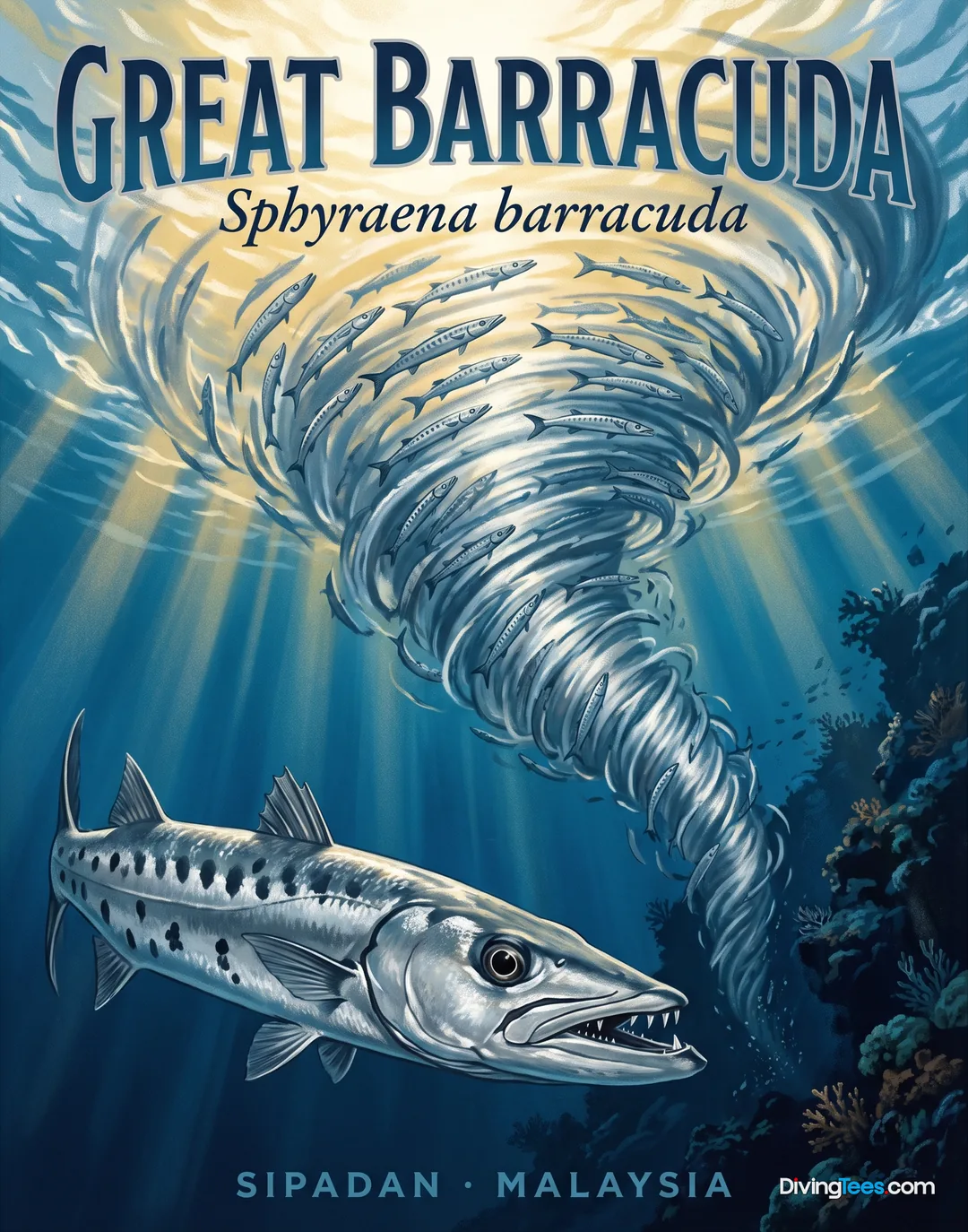
Pelagic encounters are a significant draw at Danger Du Toro, with large schools of barracuda frequently patrolling the deeper water column, particularly around the plateaus. Dentex are also commonly sighted, often hunting in the vicinity of the reef. The site's position as an isolated high-ground reef acts as a beacon for these larger species, making it a reliable location for observing predatory behaviour. These sightings, combined with the site's unique topography, distinguish it from other dive locations in Corsica.
The rich biological activity extends to smaller species inhabiting the reef. Common two-banded seabream and salema porgy move in schools across the shallower sections of the reef, while cardinalfish can be found sheltering in darker recesses and under overhangs. Occasionally, larger pelagic visitors are reported, drawn to the abundance of prey species. Even loggerhead sea turtles have been observed here, making their way through the open water surrounding the seamount, adding another dimension to the potential encounters.
Visibility at Danger Du Toro typically holds around 25 metres, providing clear views of the extensive reef system and its inhabitants. The combination of clear water, significant relief, and the density of marine life creates a visually engaging dive. Navigating the canyons and exploring the vertical walls under these conditions allows for a full appreciation of the site's scale and the vibrant ecosystem it supports. This consistent visibility enhances the experience, allowing divers to anticipate and observe the varied life forms from a distance.
This site is accessible from 3 metres, with a maximum depth of 40 metres. Due to frequent and variable currents, Open Water Diver certification is required, along with demonstrable experience in current diving. Visibility averages 25 metres. The best conditions for diving are typically between June and July, though spider crabs are more prevalent from February to June.
You will typically find the best diving conditions at Danger Du Toro between June and July. Spider crabs are more prevalent from February to June, making that period especially relevant if you want to look for them among the granite formations, crevices, and other sheltered areas of the reef.
You need Open Water Diver certification and demonstrable experience in current diving for Danger Du Toro. Currents are frequent, strong, and variable, with intensity changing according to exposure and local weather. You may encounter a comfortable drift on one dive and more demanding conditions on another, so careful planning is important.
Danger Du Toro is accessible from 3 metres and reaches a maximum depth of 40 metres. A typical dive begins on the mooring line between the two plateaus, then moves deeper along the walls before gradually ascending through shallower areas, canyons, swim-throughs, vertical drop-offs, overhangs, and crevices.
At Danger Du Toro, you can explore two rocky plateaus surrounded by granite blocks, canyons, and swim-throughs while looking for large groupers, barracuda, dentex, Mediterranean moray eels, and lobsters. Schools of wrasses, seabream, salema porgy, and cardinalfish inhabit the reef, with possible sightings of spider crabs and loggerhead sea turtles.