
Centre De Plongee Ketos
Google 4.8/5 (198 reviews)
France · Mediterranean
Drop-offs, rocky reefs and the 60-metre Trafik wreck lead from the port towards island waters and protected offshore Mediterranean sites.
For subtitles in English: start the video firstthen click the gearat the top right of the video, select “Subtitles/CC”, then “Auto-translate” and choose “English”.
Saint-Tropez is a shore-based Mediterranean holiday with diving built around daily boat departures. The underwater scenery runs from coastal rocks and drop-offs to deeper wreck country, with routes extending towards the Hyères islands and the protected waters of Port-Cros. It suits divers who want several different kinds of day out rather than a dedicated liveaboard trip. The town, beaches and port also make it workable for non-diving companions, although the cost and summer traffic require some planning.
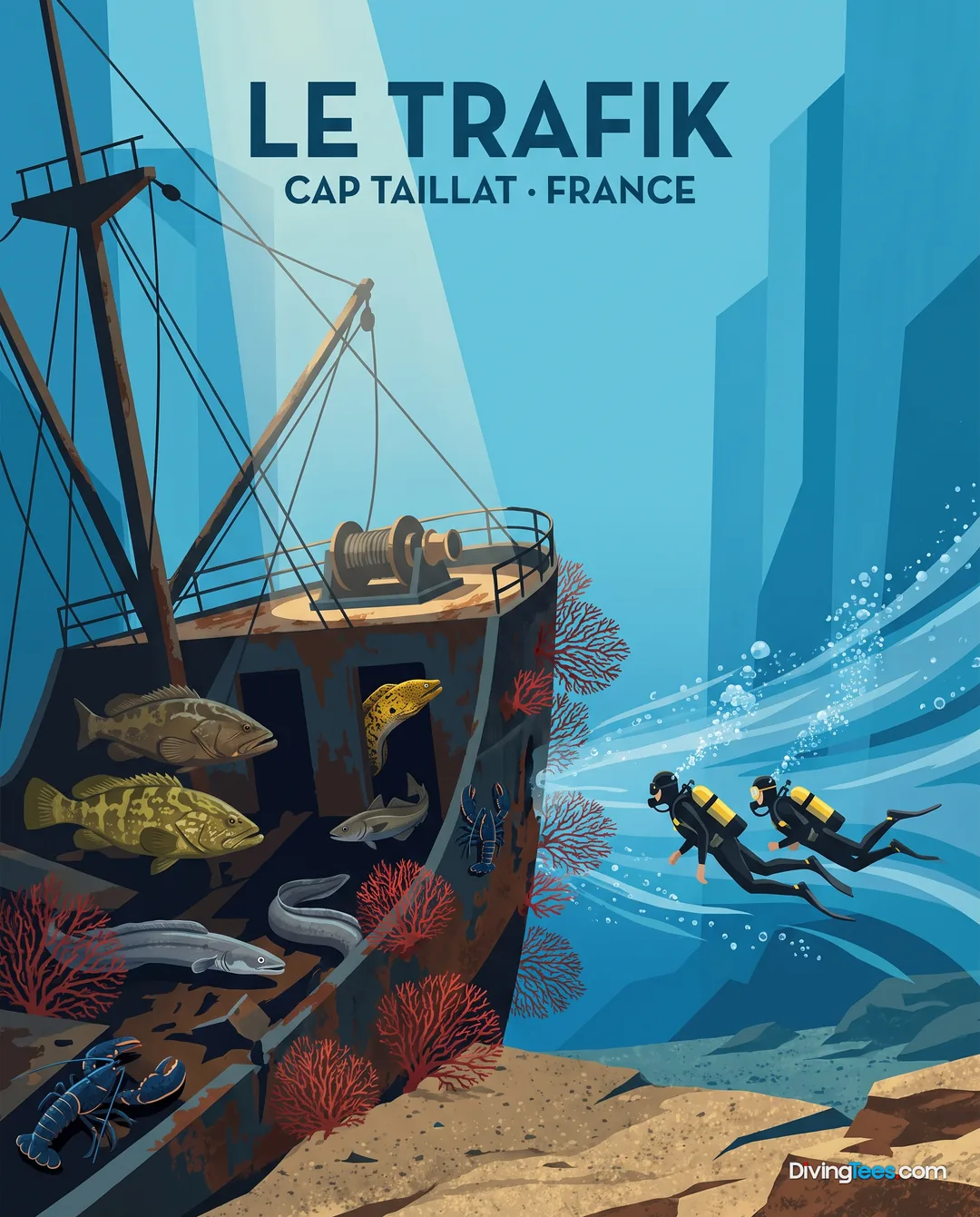
Most diving is from a boat, and the character of a day depends heavily on the route and the sea state. Coastal sites offer rock, drop-offs and sandy seabeds, while trips towards the islands and protected areas bring different exposure and often more interesting marine life. Currents are variable across the area, but they are a serious feature at Le Trafik. This cargo ship lies between 52 and 60 metres off Cap Taillat, where strong flow can demand careful positioning, controlled finning and disciplined gas management. Visibility can be excellent on the wreck, although plankton, wind and swell may reduce it elsewhere. The diving is therefore less about a single local reef than about choosing the right boat outing for the conditions, with deeper and more exposed sites reserved for divers who are properly prepared.
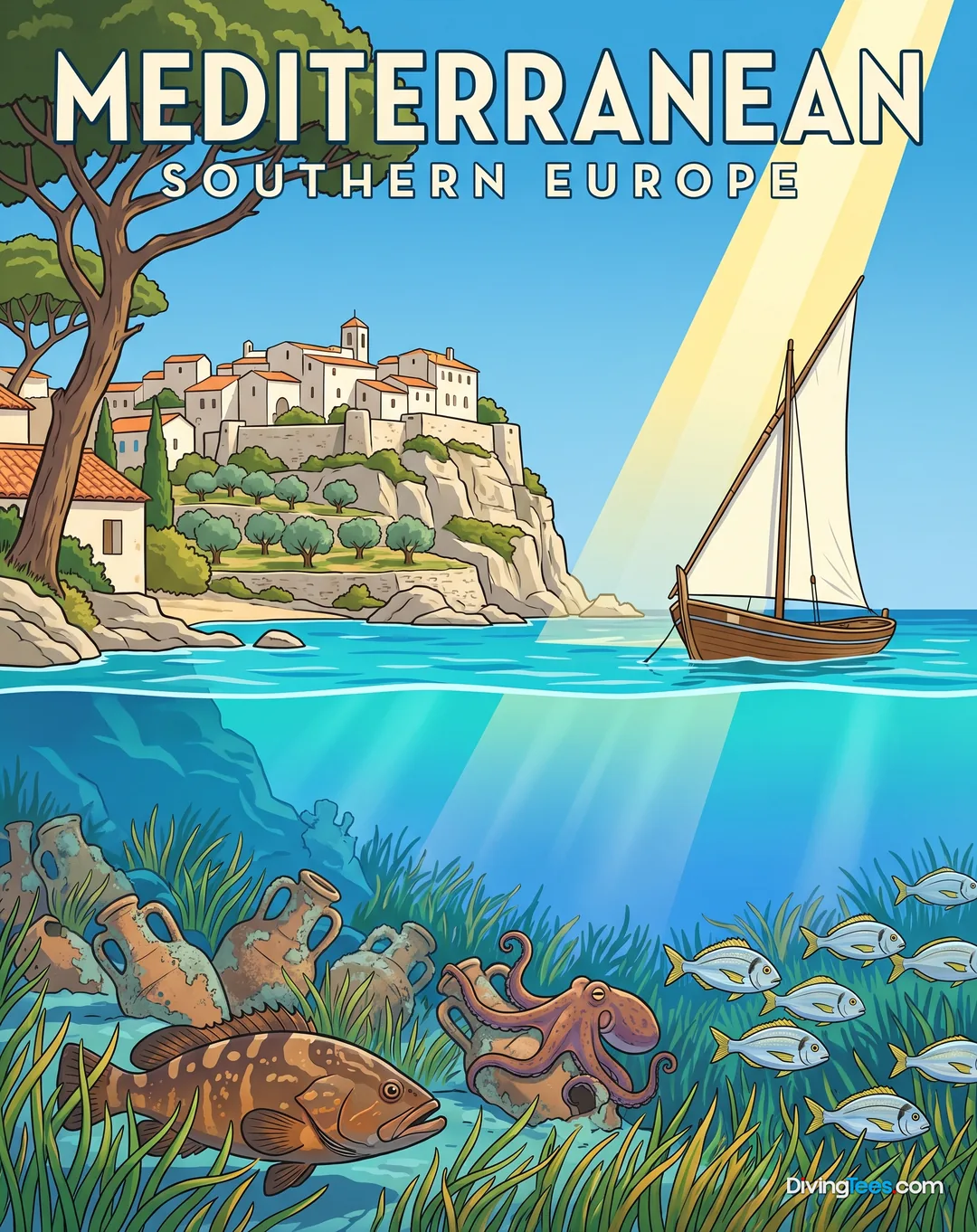
The local underwater life is Mediterranean rather than tropical: the interest lies in rocky habitats, protected sites and the chance of passing pelagic fish. Mediterranean barracuda are an occasional summer-to-autumn sight, while amberjack may also appear from summer into autumn. Dentex are occasional visitors during the summer, and brown grouper can turn up without being a dependable encounter. The waters around protected areas can hold better densities of marine life because anchoring, collecting and disturbance are controlled. Divers should look closely over rock and seagrass rather than expect a wall of fish. Offshore island trips are the better choice for those hoping to see more open-water movement; very coastal dives in the gulf are more about relief, shelter and the details of Mediterranean habitat.
June, September and early October are the most comfortable periods for a Saint-Tropez diving stay. They avoid the heaviest July and August pressure on the roads, port and boats, while generally offering a more manageable Mediterranean sea state than the busiest part of summer. Early starts are useful because they reduce the effect of leisure-boat traffic and make the day less vulnerable to changing wind and swell. The warmer part of the season is also the sensible window for occasional barracuda, dentex and amberjack, particularly on trips towards the islands. A four- to six-day stay gives several weather opportunities instead of making the whole trip depend on one boat departure.
The area has dives for all levels, provided the chosen outing matches the diver’s experience. BSAC, PADI and SSI divers can enjoy the shallower rock and coastal routes, but boat handling, buoyancy and comfort in open water matter more than a basic card alone. Advanced training is useful for deeper sites. Le Trafik is a technical wreck dive at 52 to 60 metres, with strong currents and a recommendation of at least 50 logged dives. Nitrox is useful when several dives are planned in one day, but it does not replace suitable depth training.
From London Heathrow, London Gatwick or Manchester, the journey needs to be treated as an air-and-road plan rather than a simple airport transfer. Air France, easyJet, Transavia France and Vueling are among the European carriers that may form part of the wider journey, but the final approach to Saint-Tropez is by road. Once in the area, the port is the practical centre of the diving operation and boat travel is part of the experience, especially for island and protected-area outings. Summer road congestion and a crowded waterfront can add considerably to transfers, so staying within walking distance of the port or embarkation point is useful. A taxi or car helps when accommodation is in a neighbouring commune; a car also provides more flexibility outside the busiest hours.
Book the earliest available departure when possible: it usually means less leisure-boat traffic and reduces the chance that wind and afternoon movement will spoil the day. When comparing trips, check the actual departure port and the area covered; a centre close to the town centre may not offer the same access as one operating towards the islands or protected waters. Keep one day flexible for sea conditions rather than scheduling every immersion tightly. On gulf dives, precise buoyancy is particularly valuable over rock, seagrass and fragile small communities, where an untidy kick quickly stirs particles or damages the bottom. A compact light and a personal computer are worthwhile for reading Mediterranean relief and for any wreck outing. Do not treat Le Trafik as an ordinary boat dive: its 52–60 metre profile, strong current and technical demands require the right qualification and logged experience. Finally, expect Mediterranean scenery, not tropical reef density; the reward is the structure of the rock, drop-offs, wreck and protected island habitats.
A four- to six-day stay works well from a shore base, allowing several daily boat outings without making one weather window decisive. Accommodation near the port keeps early departures simple and avoids the worst parking problems. Days without diving can be used for the waterfront, beaches and coves, or for an excursion towards the Hyères islands and protected coastal areas. Saint-Tropez is particularly suitable for mixed parties because companions have a full town and coastline to enjoy while the diver is on the boat.
Hello, I'm Marina, DivingDeal.com's AI assistant. I guide you through destinations, areas and countries.
Thinking about the whole trip and the flights? Talk it over with Edith →
Marina is an AI. Some links are affiliate links: DivingDeal may earn a commission, at no extra cost to you. Bookings are made with the partner.
Your last day stays dry: no diving in the 18-24 hours before a flight, the perfect window to see the destination from another angle.
 Culture
⏱ 6 h · ★ 5.0 (5 reviews)
from £352$470€420
see on Viator ↗
 Culture
⏱ 8 h · ★ 5.0 (5 reviews)
from £628$839€750
see on Viator ↗
 City
City⏱ 4 h · ★ 4.9 (16 reviews)
from £456$610€545
see on Viator ↗
 Nature
⏱ 2 h · ★ 4.7 (3 reviews)
from £3$4€4
see on Viator ↗
Ratings and reviews collected by Viator and Tripadvisor.
Choose June, September or early October for quieter diving conditions, less pressure on roads, boats and the port, and generally manageable Mediterranean sea states. Summer and autumn can bring occasional barracuda and amberjack, while dentex appear more often in summer. Early departures help avoid leisure-boat traffic and changing afternoon conditions.
Saint-Tropez offers shallower coastal rocks and boat routes suitable for divers from several recreational training systems, but open-water comfort, buoyancy and boat experience matter. Advanced training is useful for deeper sites. Le Trafik is a technical wreck with strong currents, requiring appropriate depth training, suitable preparation and substantial logged experience.
Saint-Tropez offers Mediterranean drop-offs, rocky reefs, sandy seabeds, seagrass and a deep cargo wreck rather than tropical reef density. Island and protected-area trips may bring occasional barracuda, amberjack and summer dentex, while brown grouper can appear. Look closely at the habitat, and choose offshore routes for more open-water movement.
Base yourself near the port when possible, as diving relies mainly on daily boat departures and early starts. Check each trip’s departure point and route, keep a day flexible for wind and swell, and consider staying several days for multiple weather opportunities. Road congestion makes a taxi, car or walkable accommodation useful.