CMAS
Epi Le Lavandou
Google 4.9/5 (136 reviews)
France · Mediterranean
Port-Cros drop-offs, Mediterranean wrecks, gorgonians and the 57-metre Hellcat define Le Lavandou, a practical shore-based base for island diving.
For subtitles in English: start the video firstthen click the gearat the top right of the video, select “Subtitles/CC”, then “Auto-translate” and choose “English”.
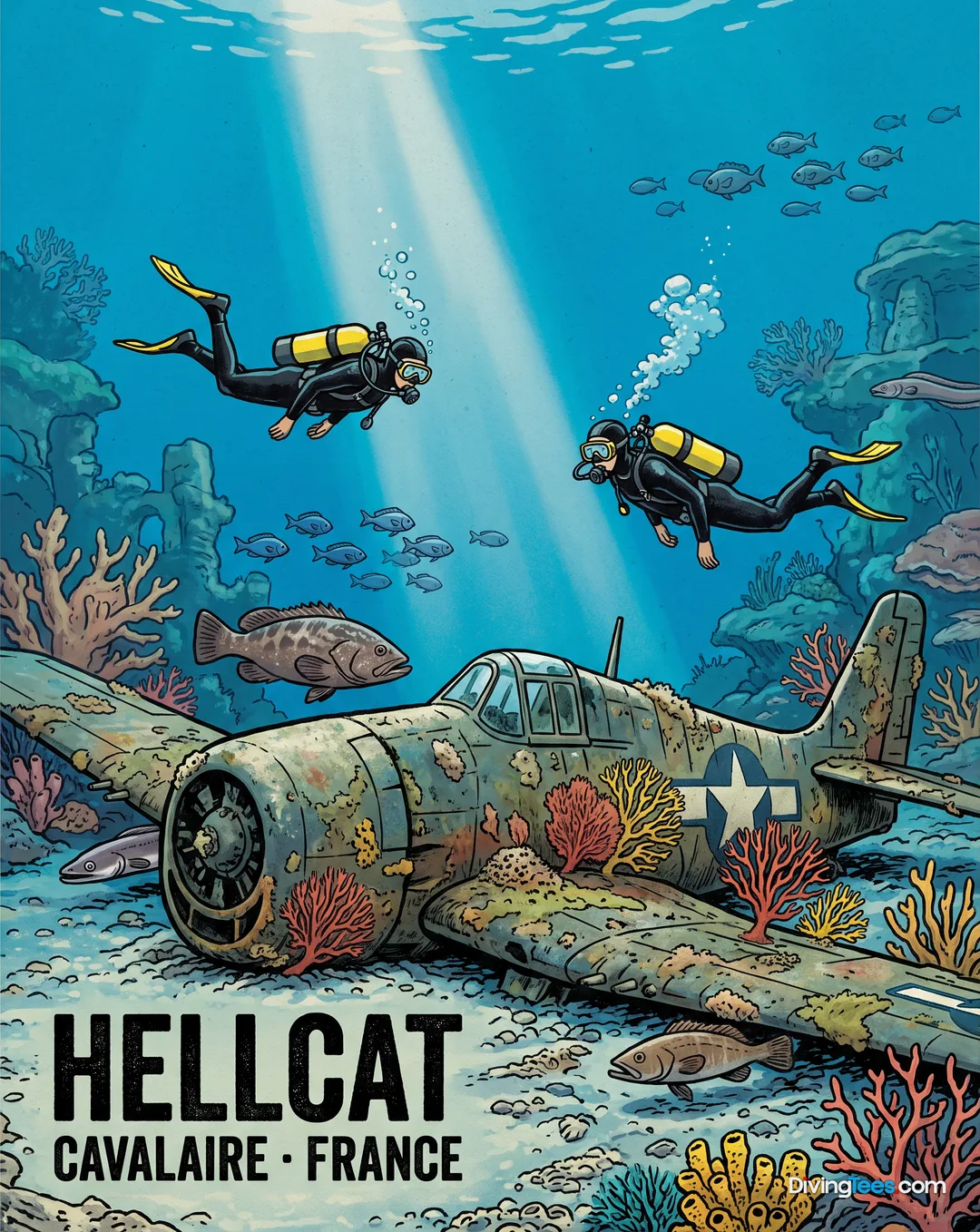
Le Lavandou is a coastal base for boat diving towards Port-Cros, the Levant and the nearby Var shoreline. The diving is built around rocky island relief, drop-offs and historic wrecks rather than beach entries. La Puissante gives less experienced divers a shallow wreck profile, while The Hellcat reaches 57 metres for properly qualified divers. Several local centres operate from the port, making this a straightforward land-based choice for a four- to six-day diving stay.
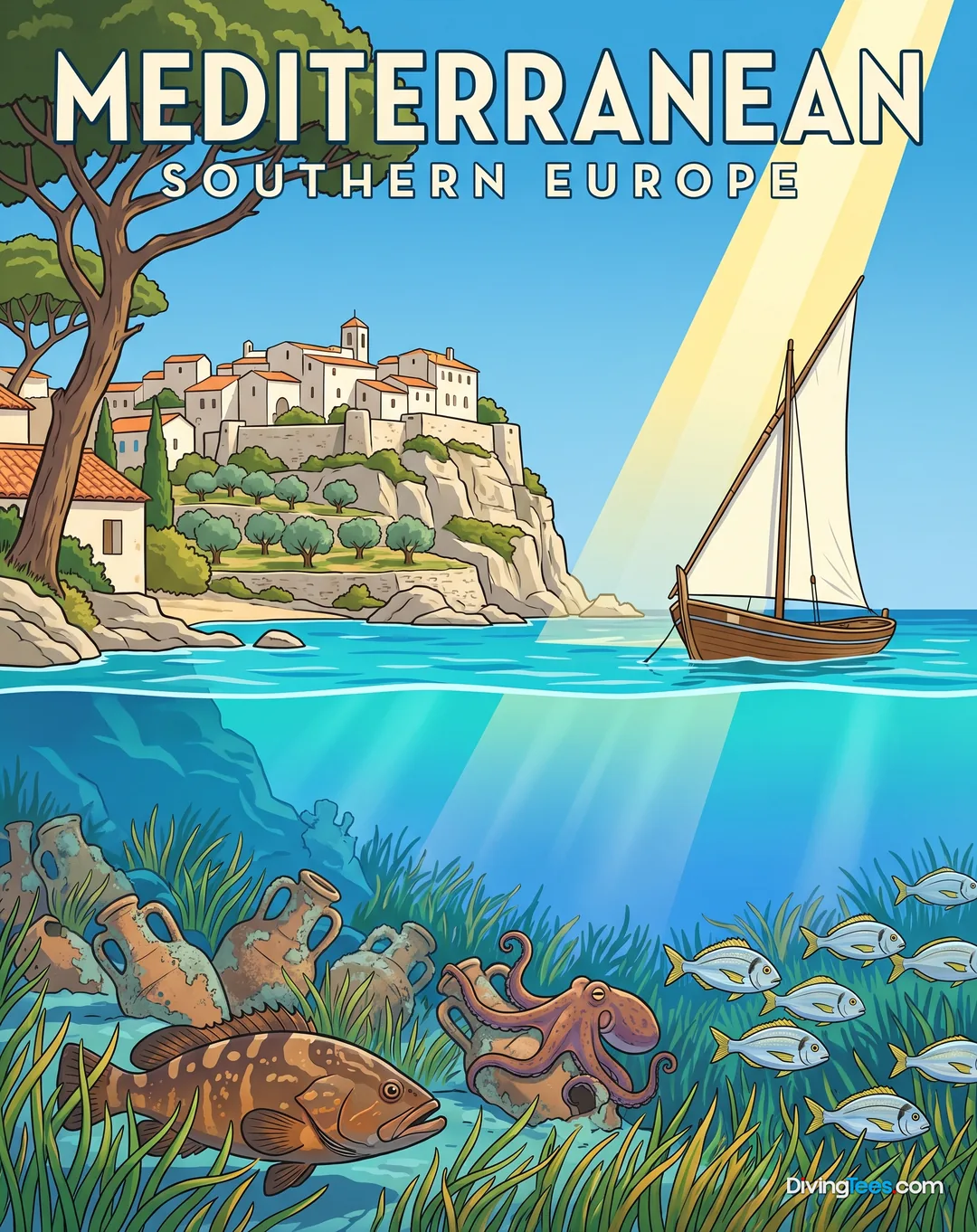
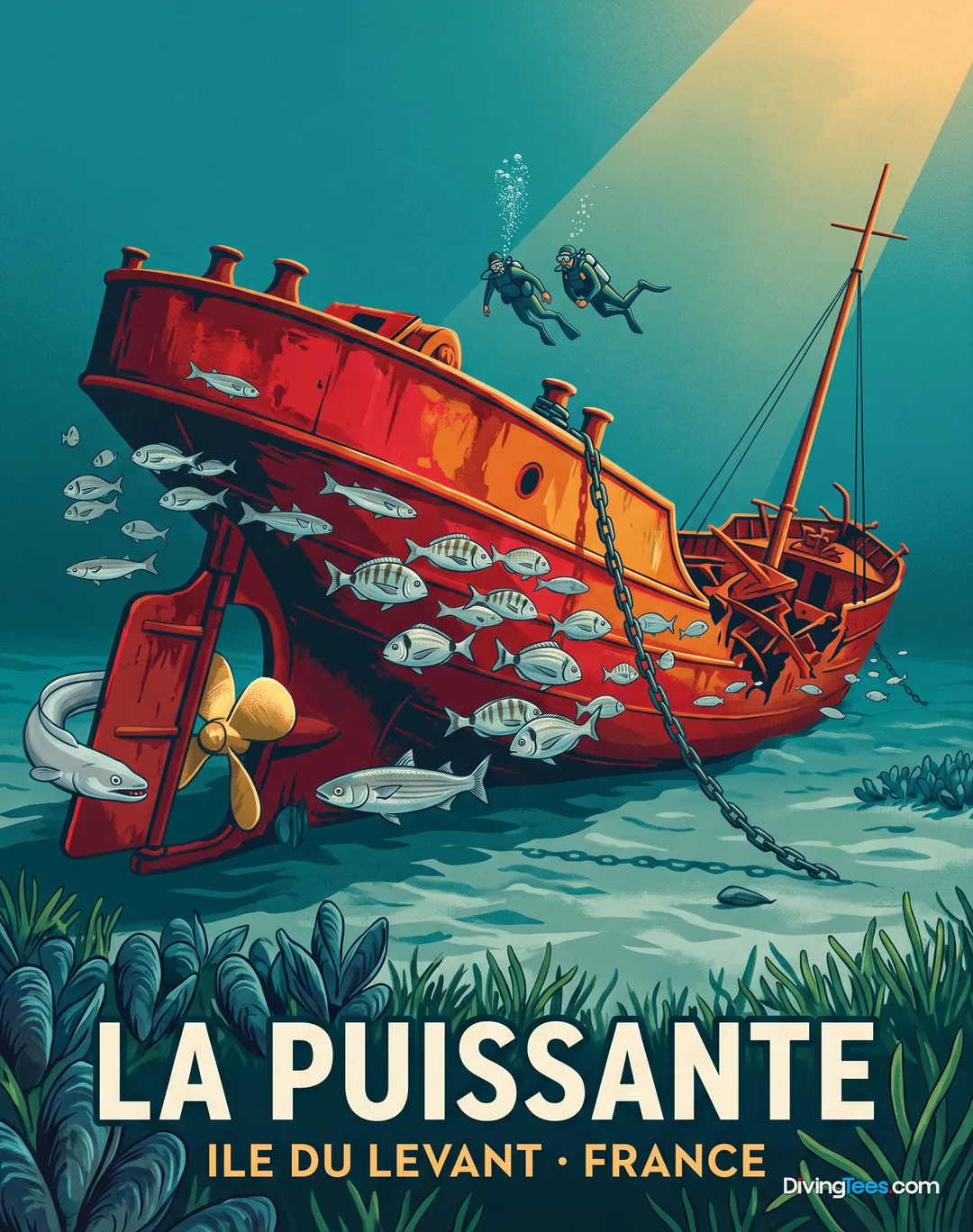
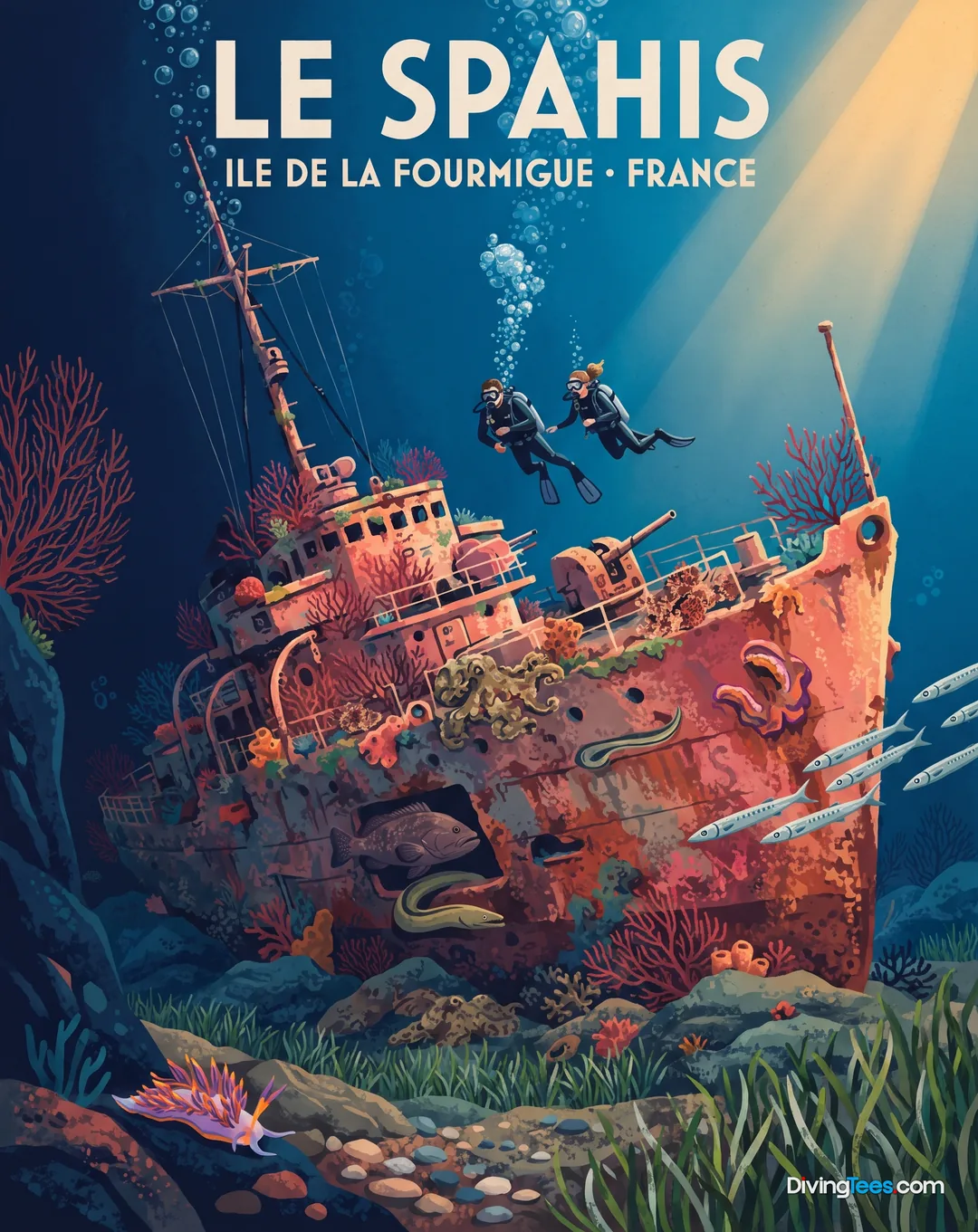
Expect classic Mediterranean boat diving: rocky ridges, island slopes, walls, cracks and wreck structures spread around Port-Cros, the Levant and the nearby coast. La Pointe de Maupertuis combines ridges and canyons down to 40 metres, with a drift profile useful for following the contours without forcing the route. At Ile de la Fourmigue, the reef begins at three metres and falls to 28 metres, alongside three historic wrecks. La Puissante is shallower, with its stern, propeller and rudder preserved between ten and fifteen metres. Currents are variable across the area, although several sites are generally manageable; conditions at Hellcat are described as clear and consistently low-current. Visibility should not be treated as a fixed promise across the whole sector. Outings are chiefly boat-based and normally run as day trips, with the exact site selected around wind, sea state and park rules.
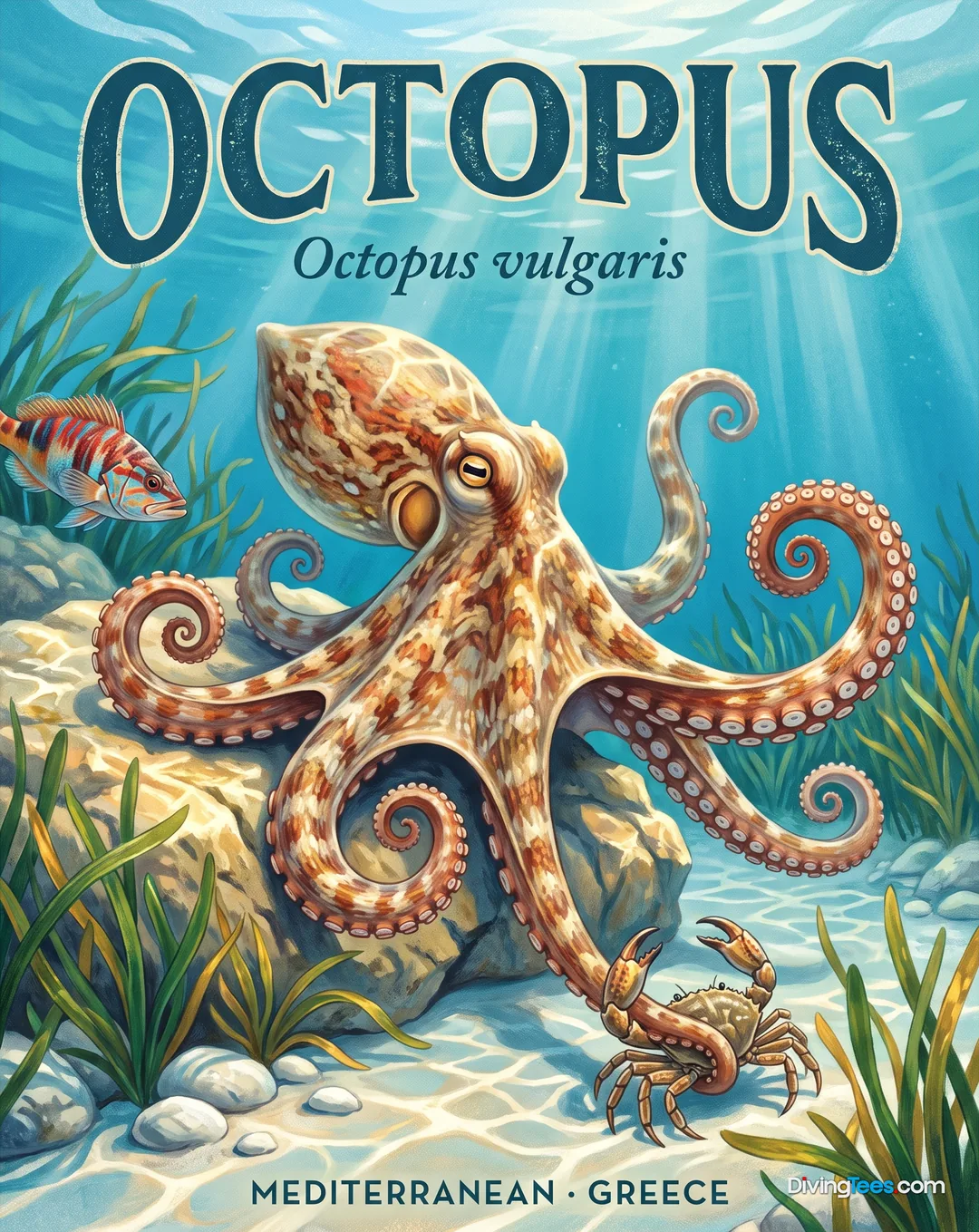
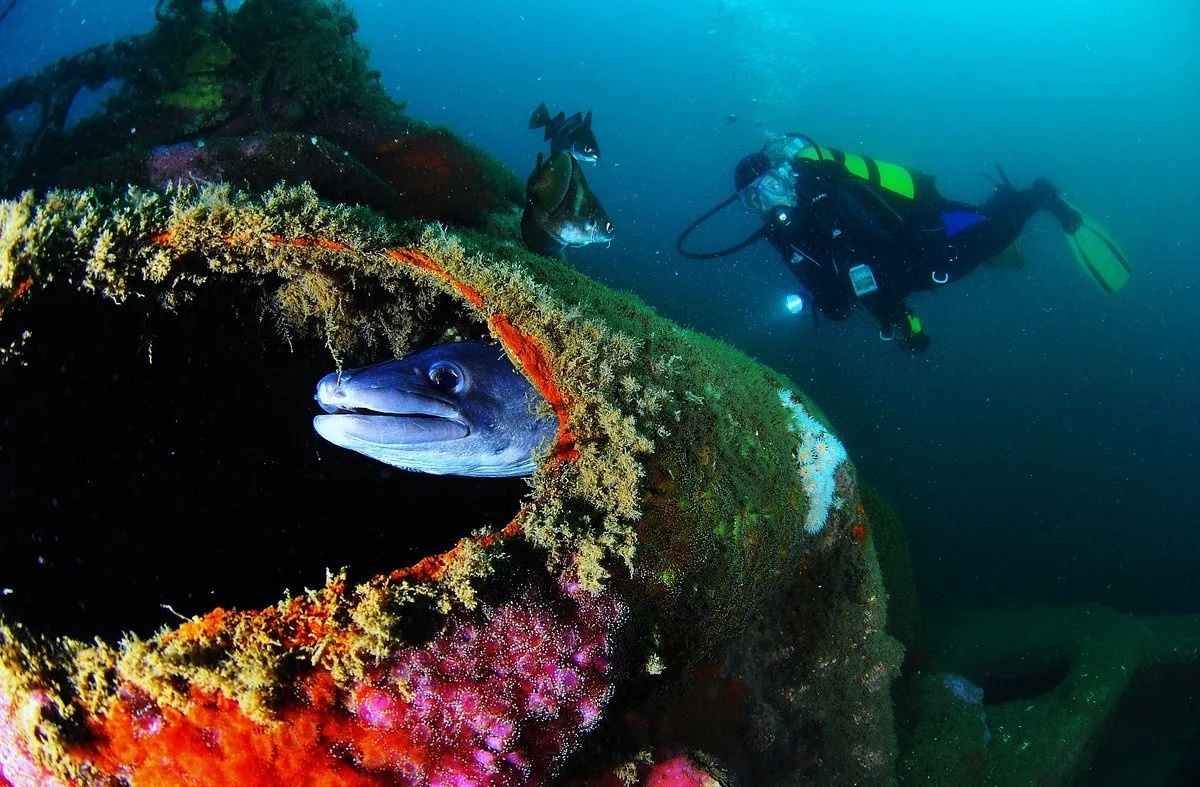
The wildlife is Mediterranean rather than built around a single headline encounter. Groupers and brown meagre are regular summer and late-season possibilities, while gorgonians remain part of the underwater scenery throughout the diving season. Barracudas are an occasional summer sighting. Rocky shelters and wrecks add the smaller-scale searching: Ile de la Fourmigue is noted for octopus, wrasse and chromis, while La Pointe de Maupertuis offers cracks and canyons where congers and morays may be found. The Spahis, an 1887 steamer, is particularly suited to looking closely around its boilers, bow and capstan, with macro life more interesting during the interseason. Encounters remain natural sightings, not a guaranteed schedule.
Measured conditions put the calmest sea between April and September, with the lowest rainfall generally from April to August. For a diving holiday, June to October is the useful working window: summer brings the strongest chance of seeing barracudas, while groupers, brown meagre and gorgonians fit the warmer months and the quieter late season. July and August are busy for boats and dive centres, so September and October can offer a more comfortable balance between workable sea conditions, marine activity and fewer people. A September or early-October stay also leaves some flexibility when wind changes the daily programme.
The area suits all levels, provided the individual site matches the diver's qualification and recent experience. Open Water or BSAC entry-level divers can use the shallower sections of Ile de la Fourmigue and La Puissante, while The Spahis ranges from ten to 25 metres, with its deeper parts better suited to Advanced Open Water, BSAC Advanced or equivalent training. Advanced qualification is useful for deeper sites such as La Pointe de Maupertuis and essential planning for The Hellcat at 57 metres. Nitrox is practical for repeated boat diving over several days.
From London Heathrow, Gatwick or Manchester, the practical approach is a road journey along the Var coast rather than a documented direct air route to the dive base. The final access to the islands, Port-Cros and the offshore sites is by boat from Le Lavandou or the immediate area; these are not shore-diving locations. Once accommodation is arranged in Le Lavandou, the port and local dive centres are usually reachable on foot, or by a very short taxi or car journey depending on where the room is. That makes the destination easier to manage without a vehicle than a remote diving outpost, although a car can simplify the coastal approach from the airport or rail-and-road journey.
Check that the planned boat programme actually includes Port-Cros, rather than assuming every departure reaches the protected island sector. In high season, boat places need reserving early; otherwise the available day may not match the sites wanted. Keep the itinerary flexible, because a change in wind or sea state can move the day's diving, and one day on site is a poor allowance if The Hellcat, La Pointe de Maupertuis or another exposed site matters. Do not arrive expecting mainly beach diving: the useful sites are reached by boat. At Ile de la Fourmigue, all-wind exposure can make mooring possible only in calm conditions, so a drift descent with a delayed-surface marker buoy may be the normal solution. La Puissante is sheltered in easterly or westerly winds, but a Mistral can push conditions towards the military zone and demands a careful pre-dive check. Bring a well-fitting mask and a familiar computer, and treat Port-Cros anchoring and wildlife rules as part of the dive plan.
This is a shore-based diving holiday, best shaped around four to six days rather than a rushed weekend. Boat trips leave the port, while evenings can remain simple: a walk along Le Lavandou's seafront and through the resort. A non-diving companion has coastal outings and the protected islands to explore. Keeping one day loose helps absorb a weather change, and a gentle seaside walk makes a sensible final-day activity before travelling home.
Hello, I'm Marina, DivingDeal.com's AI assistant. I guide you through destinations, areas and countries.
Thinking about the whole trip and the flights? Talk it over with Edith →
Marina is an AI. Some links are affiliate links: DivingDeal may earn a commission, at no extra cost to you. Bookings are made with the partner.
Your last day stays dry: no diving in the 18-24 hours before a flight, the perfect window to see the destination from another angle.
 Culture
⏱ 4 h · ★ 5.0 (8 reviews)
from £251$336€300
see on Viator ↗
 Culture
⏱ 2 h · ★ 4.0 (1 reviews)
from £5$7€6
see on Viator ↗
Ratings and reviews collected by Viator and Tripadvisor.
Choose Le Lavandou between June and October for the most useful diving window. April to September generally brings calmer seas, while April to August usually has less rainfall. Summer offers the best chance of barracudas, and September or early October can balance workable conditions, marine activity and fewer people.
Le Lavandou suits different experience levels when you match the site to your qualification and recent practice. Entry-level divers can use the shallower Ile de la Fourmigue sections and La Puissante. Advanced training helps at deeper La Pointe de Maupertuis sites, while The Hellcat at 57 metres requires careful planning and suitable qualification.
Le Lavandou offers Mediterranean boat diving across rocky ridges, walls, island slopes, cracks and wrecks. You may encounter groupers, brown meagre, gorgonians and occasional summer barracudas. Ile de la Fourmigue has octopus, wrasse and chromis, while congers and morays may inhabit La Pointe de Maupertuis. Wrecks add close-up exploration.
Plan Le Lavandou as a shore-based stay of four to six days, with boat trips arranged from the port and at least one flexible day for wind or sea-state changes. Reserve high-season places early, confirm that departures include Port-Cros, and remember that the main dive sites are reached by boat rather than from shore.