
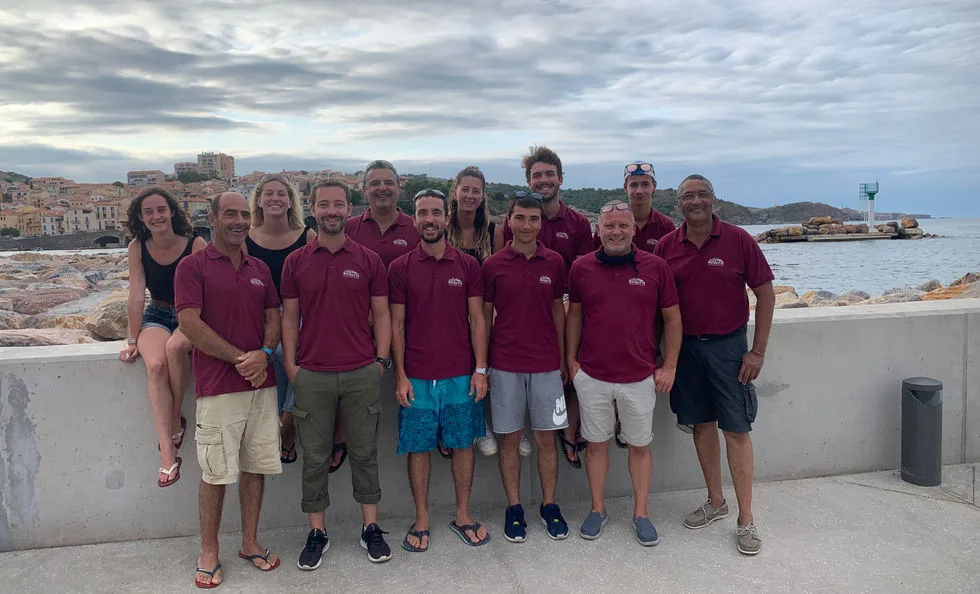

Rederis Plongee
Google 4.9/5 (436 reviews)
France · Mediterranean
Granite pinnacles, harbour wreckage, white gorgonians and groupers shape day-boat and shore diving along France’s Catalan coast.
For subtitles in English: start the video firstthen click the gearat the top right of the video, select “Subtitles/CC”, then “Auto-translate” and choose “English”.
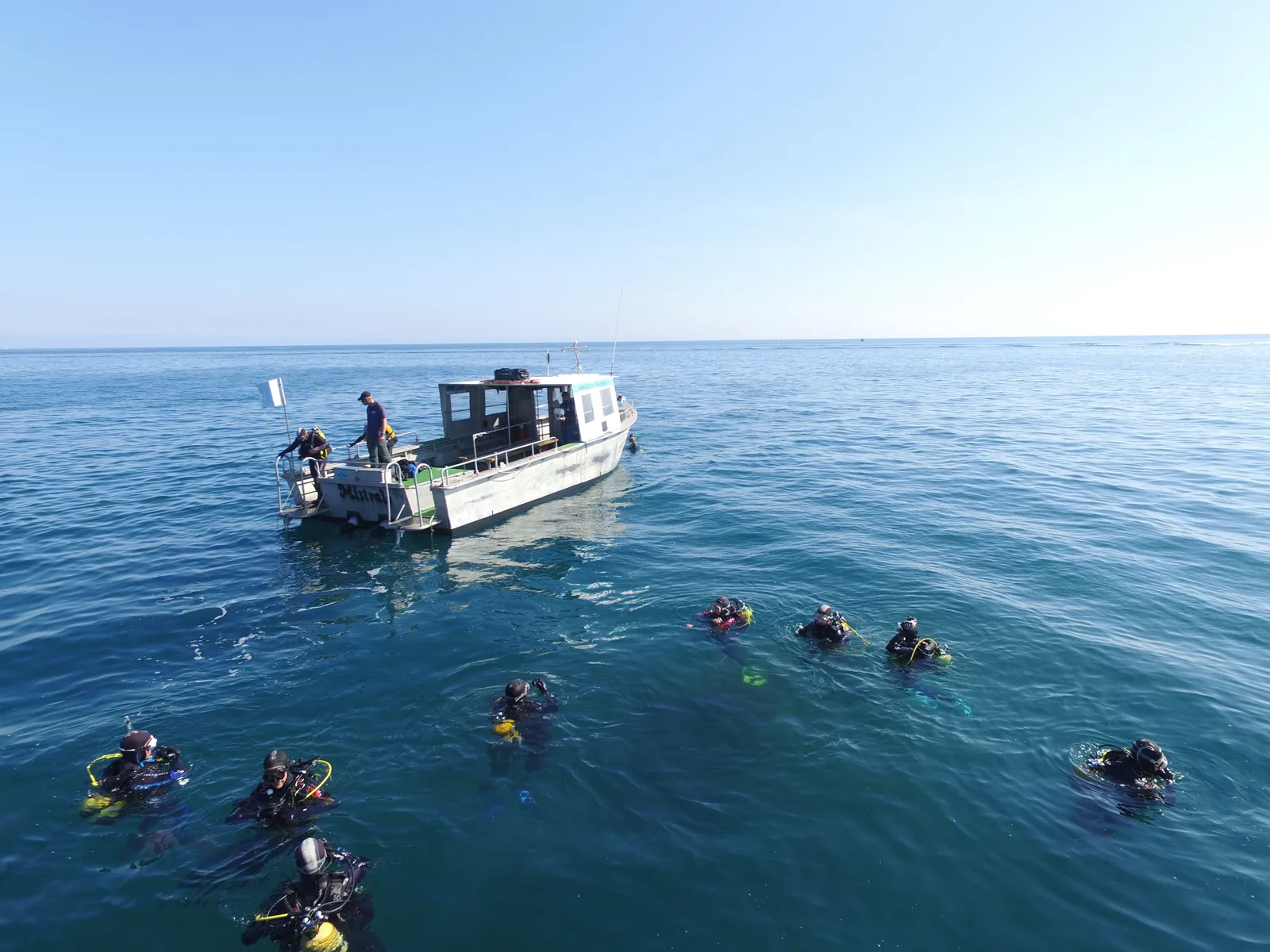
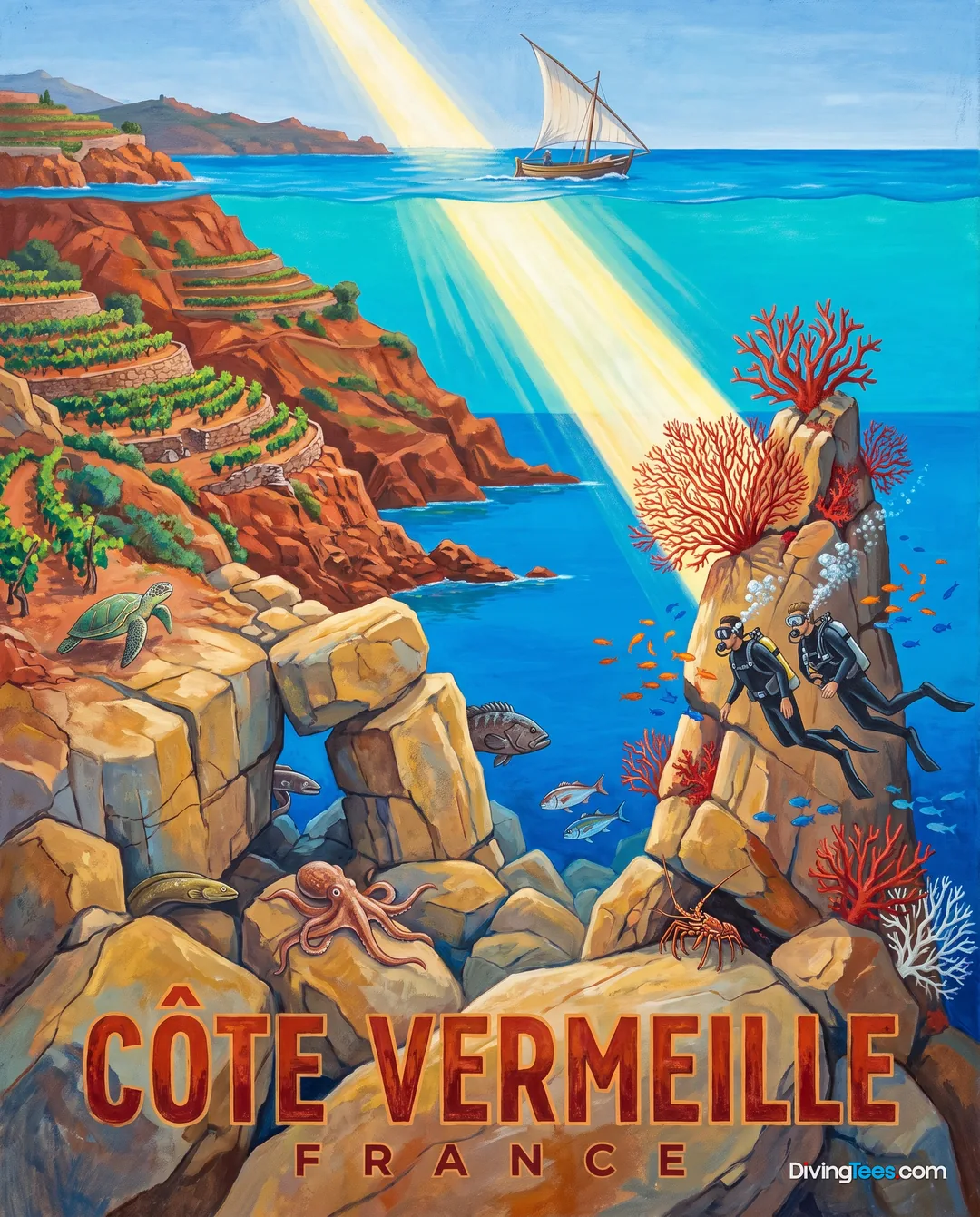
The Côte Vermeille is a French Mediterranean diving coast rather than a tropical-riff destination: boats leave ports such as Collioure, Banyuls-sur-Mer and Cerbère for rocky headlands, islets and protected coastal grounds. Shore diving adds a different rhythm, from the scattered boiler and stern remains of Le Pythéas to the deeper formations at La Mauresque. It suits divers who enjoy reading rock, faults and overhangs while looking for familiar Mediterranean life in a landscape shaped by wind and sea state.
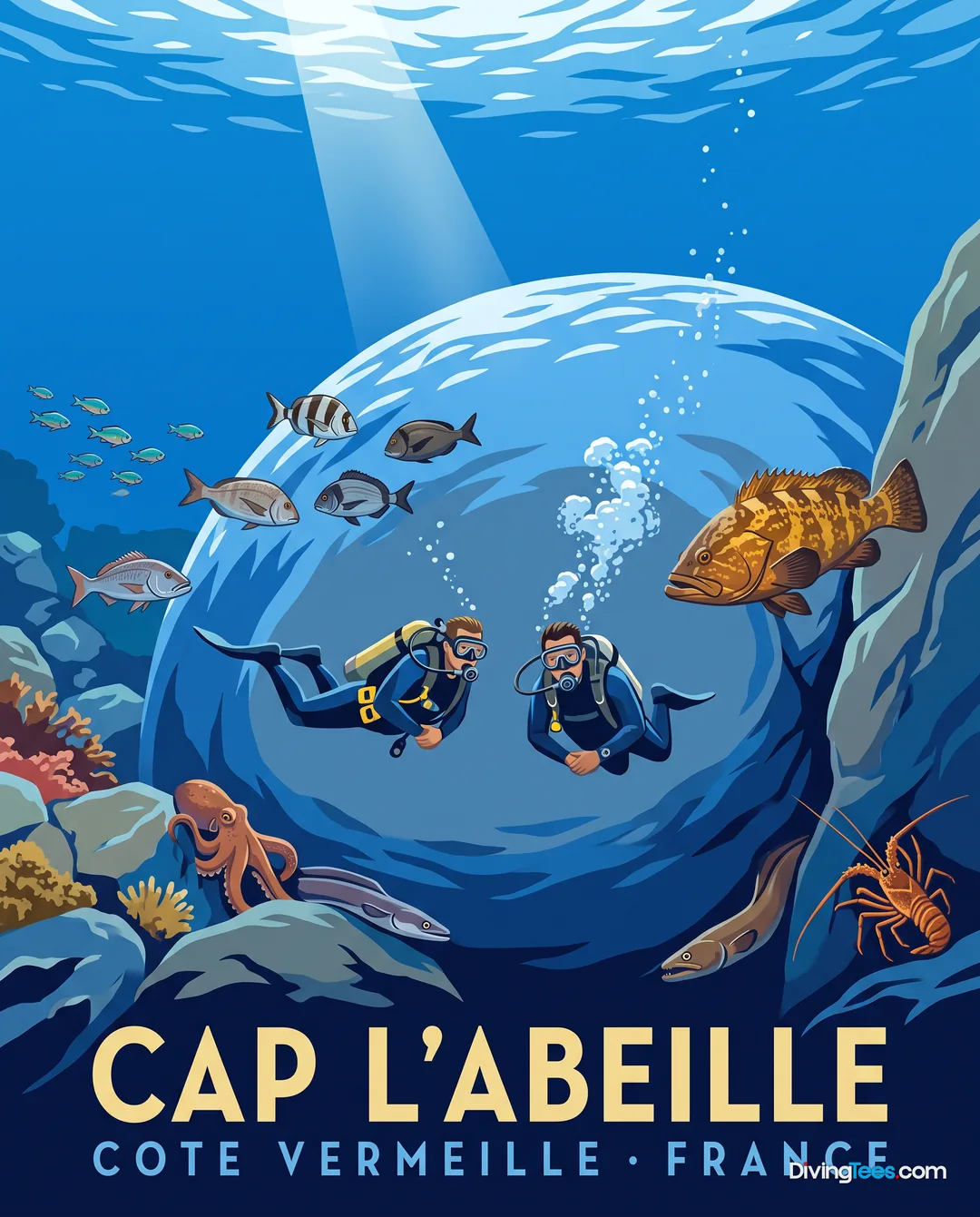
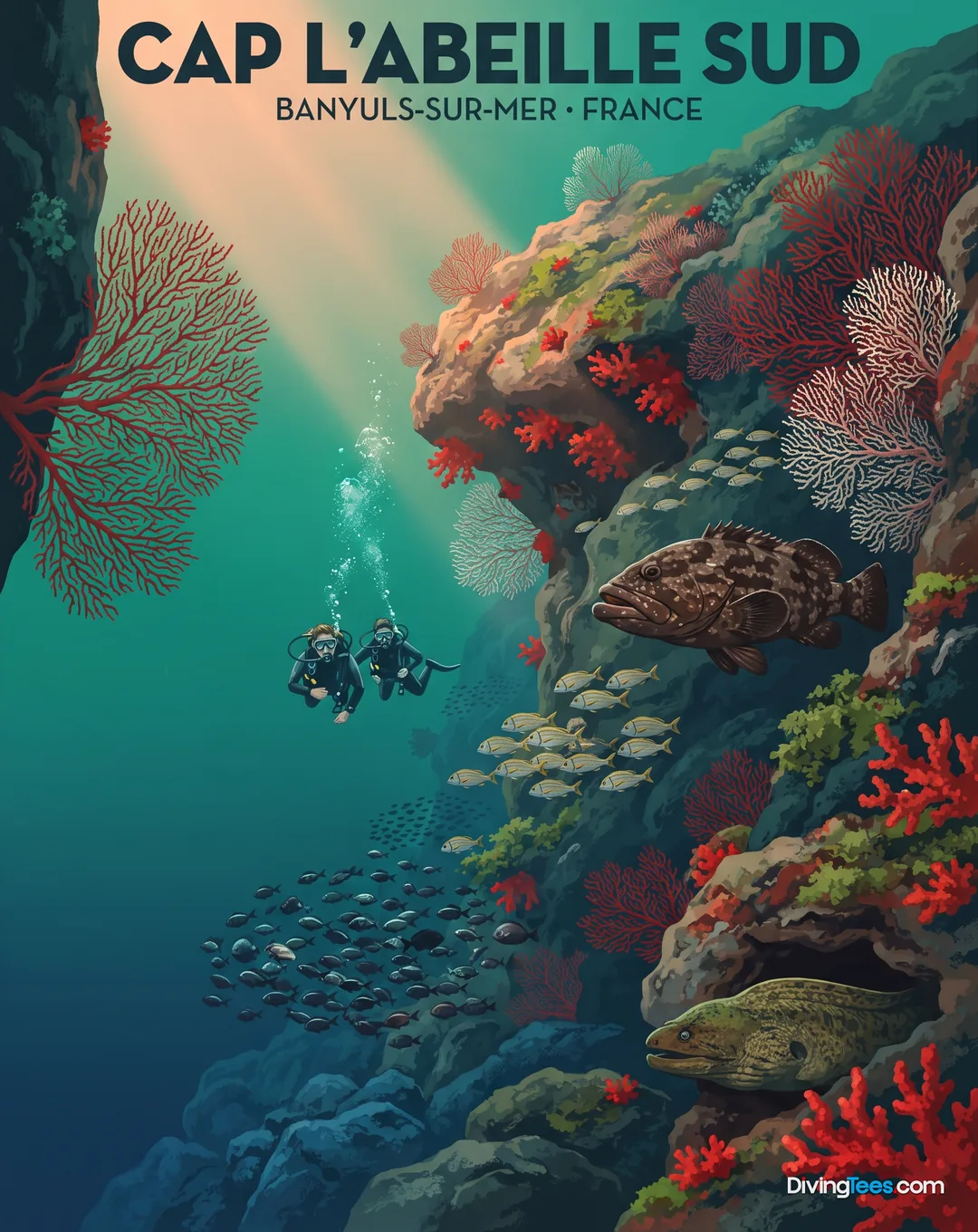
Underwater, the coast is built around rock walls, granite boulders, faults, overhangs, sandy patches and coralligenous growth. Cap l’Abeille runs from shallow plateaux to deep cracks, while Canadell offers a wall that falls beyond 40 metres, with swim-throughs, gorgonians and red coral on the deeper sections. La Mauresque and Anse de la Mauresque keep things closer to shore, and Le Pythéas provides a shallow wreck scattered along the rocky seabed. Le Jardin aux Gorgones is the more committed option, with two pinnacles and gorgonian fields between 20 and 36 metres. Currents are variable rather than reliably strong, responding to exposure, local weather and sea state. Visibility can be good, but wind, chop and coastal mixing can alter it quickly. Expect mainly day-boat diving, with some straightforward shore dives when conditions allow.
The wildlife is Mediterranean and closely tied to the rock. Groupers and corbs may appear around the deeper faults and protected formations, while octopuses, nudibranchs, conger eels and moray eels occupy cracks, ledges and rubble. Sea bream, white seabream and salema porgy move over the reef, and spiny lobsters reward careful searches in shaded recesses. White gorgonians are a feature of La Mauresque, while the deeper terrain at Canadell and Le Jardin aux Gorgones brings more substantial gorgonian growth. Rays are occasional rather than a dependable seasonal target. The sensible approach is to treat the whole June-to-October diving window as a chance to find the resident rocky-fauna mix, with conditions and site choice deciding what is seen.
June to October is the practical diving season, when the Mediterranean weather window is generally more settled and boat plans are less often disrupted by wind or a formed sea. July and August bring the busiest ports and weekends; September and October usually offer a quieter feel, while retaining the useful seasonal margin for diving. November to March is less dependable because wind, residual swell and changing sea conditions more readily affect departures. May can work, but the strongest case for a trip is a four- to six-day stay inside the main June-to-October window, leaving a spare day for weather rather than booking every day tightly.
Open Water divers can use the shallower sections of sites such as Le Pythéas, La Mauresque, St Catherine and Anse de la Mauresque, provided they are comfortable with coastal navigation and changing local conditions. Advanced certification, or equivalent BSAC experience, becomes useful for deeper walls, exposed sites and profiles beyond 20 metres. Cap l’Abeille and especially Le Jardin aux Gorgones call for sound buoyancy, depth awareness and confidence around rock. Nitrox is helpful when several similar boat dives are planned across consecutive days.
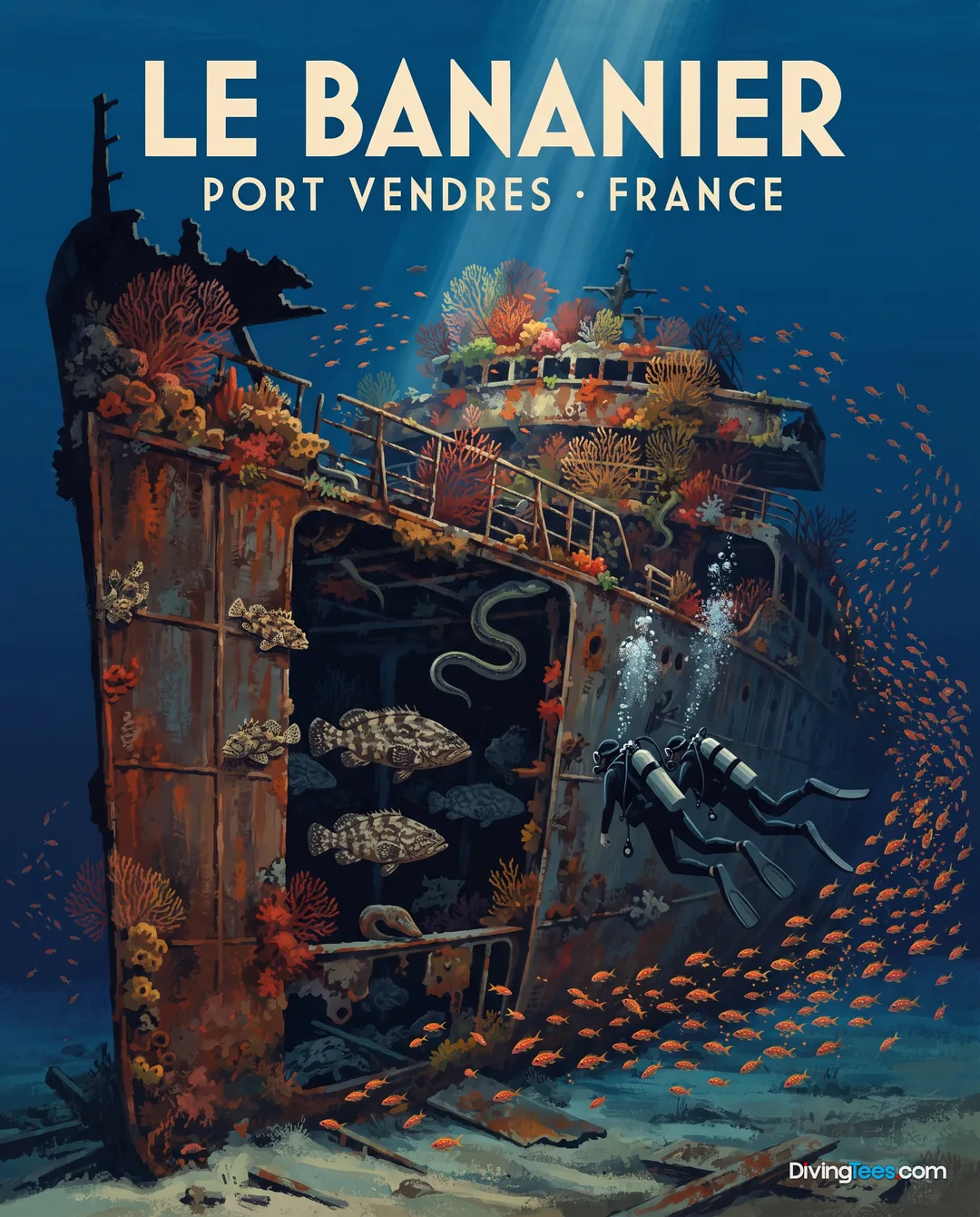
From London or Manchester, the Côte Vermeille is reached by road or rail to the coastal ports; there is no compulsory sea crossing and no local flight connection forming part of the journey. The practical choice is therefore an overland trip through the south of France, Spain or western Europe, with the final leg arranged around the port where diving is booked. Once there, staying close to the departure harbour keeps the morning logistics simple. In Collioure, Banyuls-sur-Mer, Cerbère or nearby Port-Vendres, accommodation may be within walking distance of the waterfront; short car or taxi journeys cover the gaps. A car is useful for moving between villages and shore sites, but the basic diving routine remains shore-based and straightforward rather than transfer-heavy.
Treat the weather plan as part of the diving, not as an inconvenience. West winds, the Tramontane and leftover swell can cancel a departure or move the day to a more sheltered site, so a spare day is more valuable here than a tightly packed itinerary. Sleeping near the departure port avoids a cross-coast morning transfer and makes those changes easier to absorb. Midweek outings are calmer than summer weekends. Ask before each dive whether the site lies under reserve or marine-park rules: anchoring on sensitive seabeds, collecting marine life and damaging the bottom are not acceptable in regulated areas. On rock, faults and overhangs, precise buoyancy matters more than a tropical-style sightseeing approach; careless finning quickly touches the relief or lifts silt. Photographers should favour calmer periods and sheltered sites. The Côte Vermeille is also the wrong choice for anyone expecting a liveaboard: the sensible format is a land stay with day trips.
Four to six days works well: it allows several day-boat outings while leaving room for a weather change. Collioure, Banyuls-sur-Mer, Cerbère and Port-Vendres provide distinct bases for combining harbour life, coastal walks and shore diving. A non-diving companion has villages, coves, coastal paths and marine activities to fill the surface interval. Keeping accommodation close to the port is the simplest arrangement, especially when wind changes the departure plan or shifts the programme towards a sheltered site.
Hello, I'm Marina, DivingDeal.com's AI assistant. I guide you through destinations, areas and countries.
Thinking about the whole trip and the flights? Talk it over with Edith →
Marina is an AI. Some links are affiliate links: DivingDeal may earn a commission, at no extra cost to you. Bookings are made with the partner.
Your last day stays dry: no diving in the 18-24 hours before a flight, the perfect window to see the destination from another angle.

⏱ 1 h
from £3$3€3
see on Viator ↗

⏱ 2 h · ★ 4.7 (12 reviews)
from £16$21€19
see on Viator ↗
 Culture
⏱ 4 h · ★ 4.5 (17 reviews)
from £35$46€42
see on Viator ↗
Ratings and reviews collected by Viator and Tripadvisor.
Plan your Côte Vermeille diving trip between June and October, when Mediterranean conditions are generally more settled and boat departures are less often disrupted. July and August bring busier ports and weekends, while September and October feel quieter. May can work, but winter conditions are less dependable because wind and swell affect departures.
Côte Vermeille suits Open Water divers on shallower sections of Le Pythéas, La Mauresque, St Catherine and Anse de la Mauresque, provided you are comfortable with coastal navigation and changing conditions. Deeper walls, exposed sites and profiles beyond twenty metres call for advanced experience, sound buoyancy, depth awareness and confidence around rock.
In Côte Vermeille, you can explore granite walls, boulders, faults, overhangs, sandy patches, wreck remains and coralligenous formations. Groupers, corbs, octopuses, nudibranchs, conger eels, moray eels, sea bream, salema porgy and spiny lobsters inhabit the rocks. White gorgonians feature at La Mauresque, with larger gorgonian growth at deeper sites.
Plan a land-based Côte Vermeille stay near a departure harbour in Collioure, Banyuls-sur-Mer, Cerbère or Port-Vendres. Use day boats and shore dives, keeping a spare day for wind, swell or a changed site. A car helps you move between villages and shore sites, while nearby accommodation simplifies early departures and programme changes.