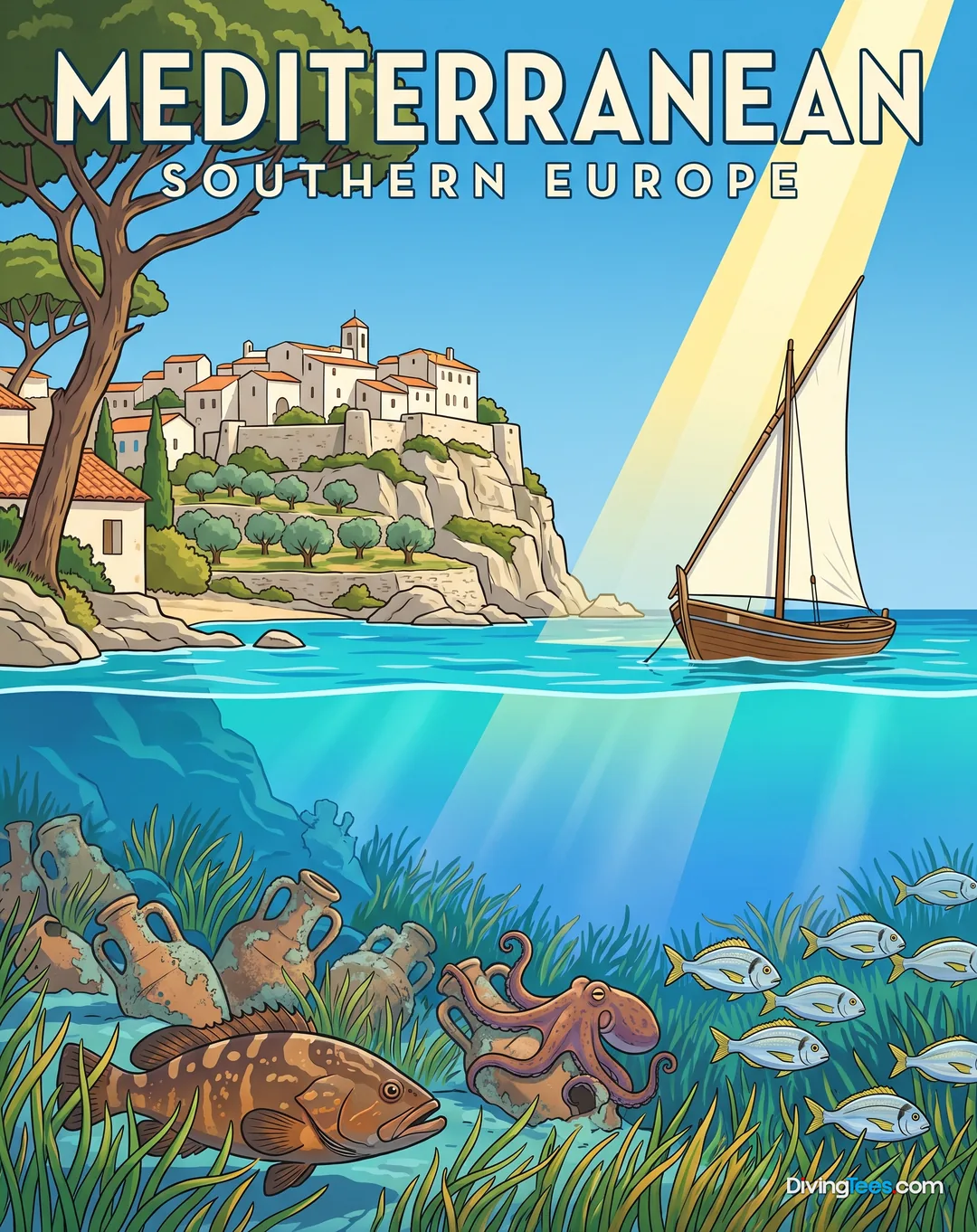
Mediterranean
France: Mediterranean variety and Atlantic coastal character
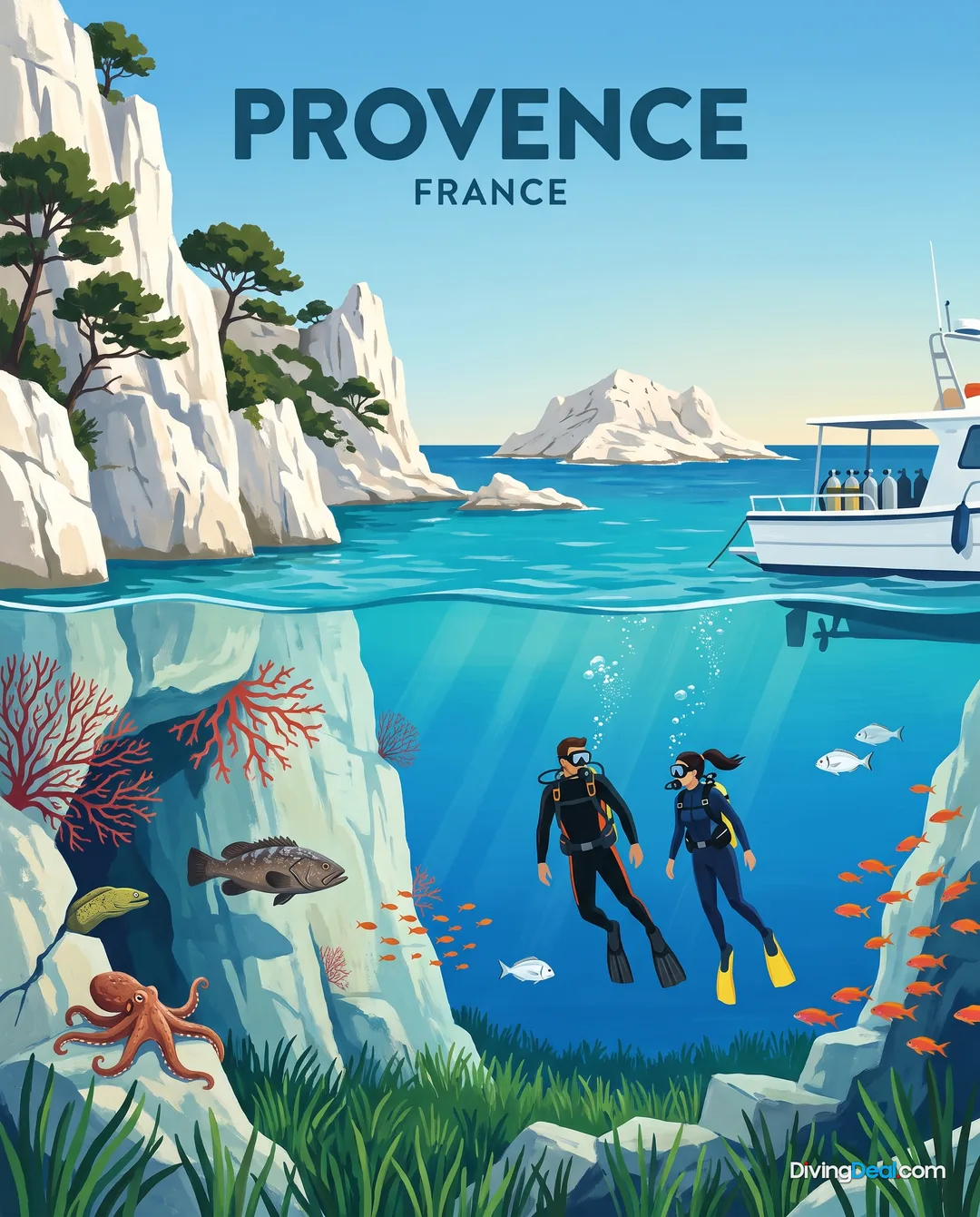
France brings together the bouillabaisse of Marseille, the rocky Côte Vermeille, Atlantic wreck waters and the island landscapes of Porquerolles.
What makes this country unique
- May opens Banyuls-sur-Mer and Argelès-sur-Mer together
- Port-Cros and Porquerolles bring protected island character
- Marseille pairs bouillabaisse with historic waterfront life
- Barracuda and grouper in Mediterranean itineraries
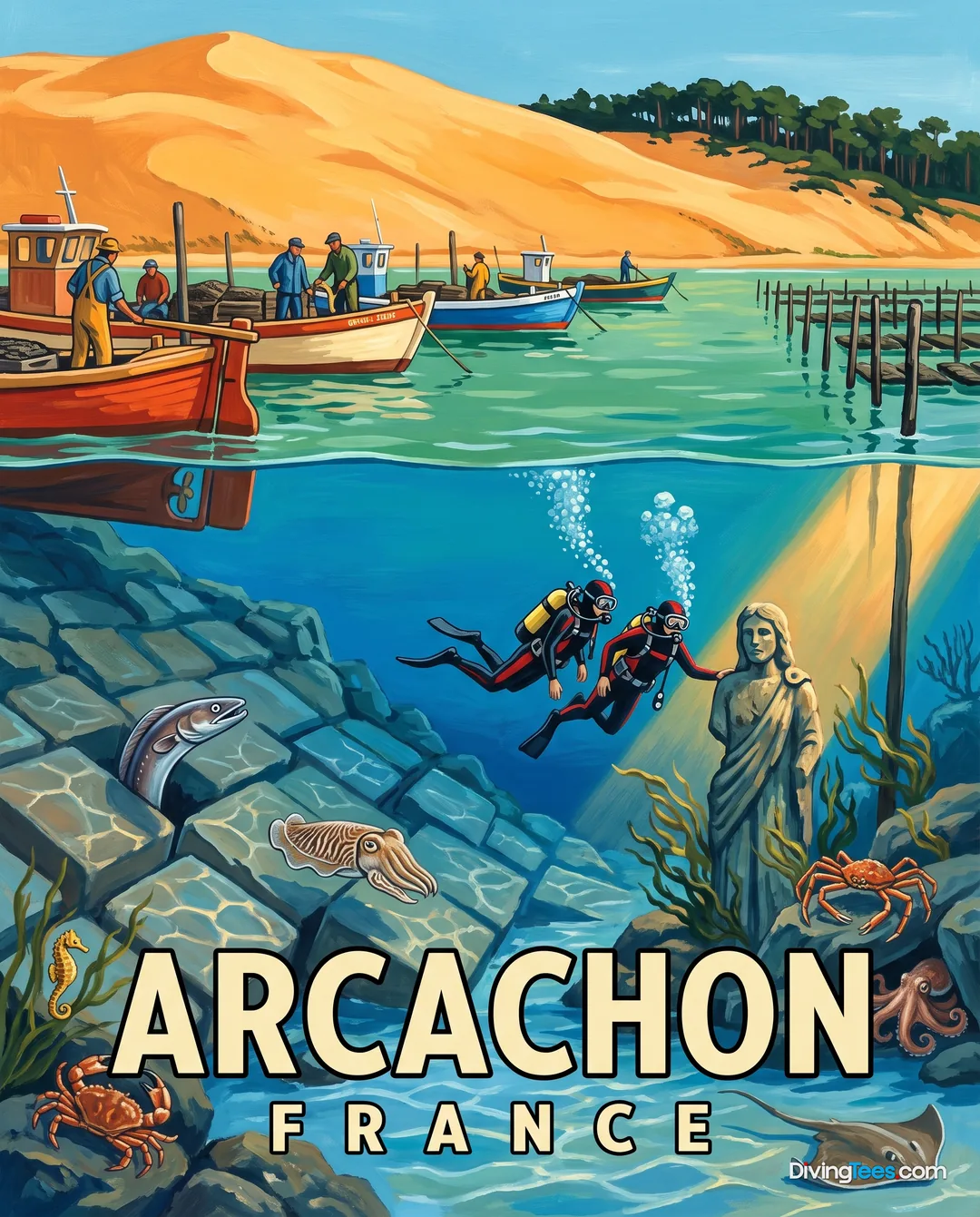
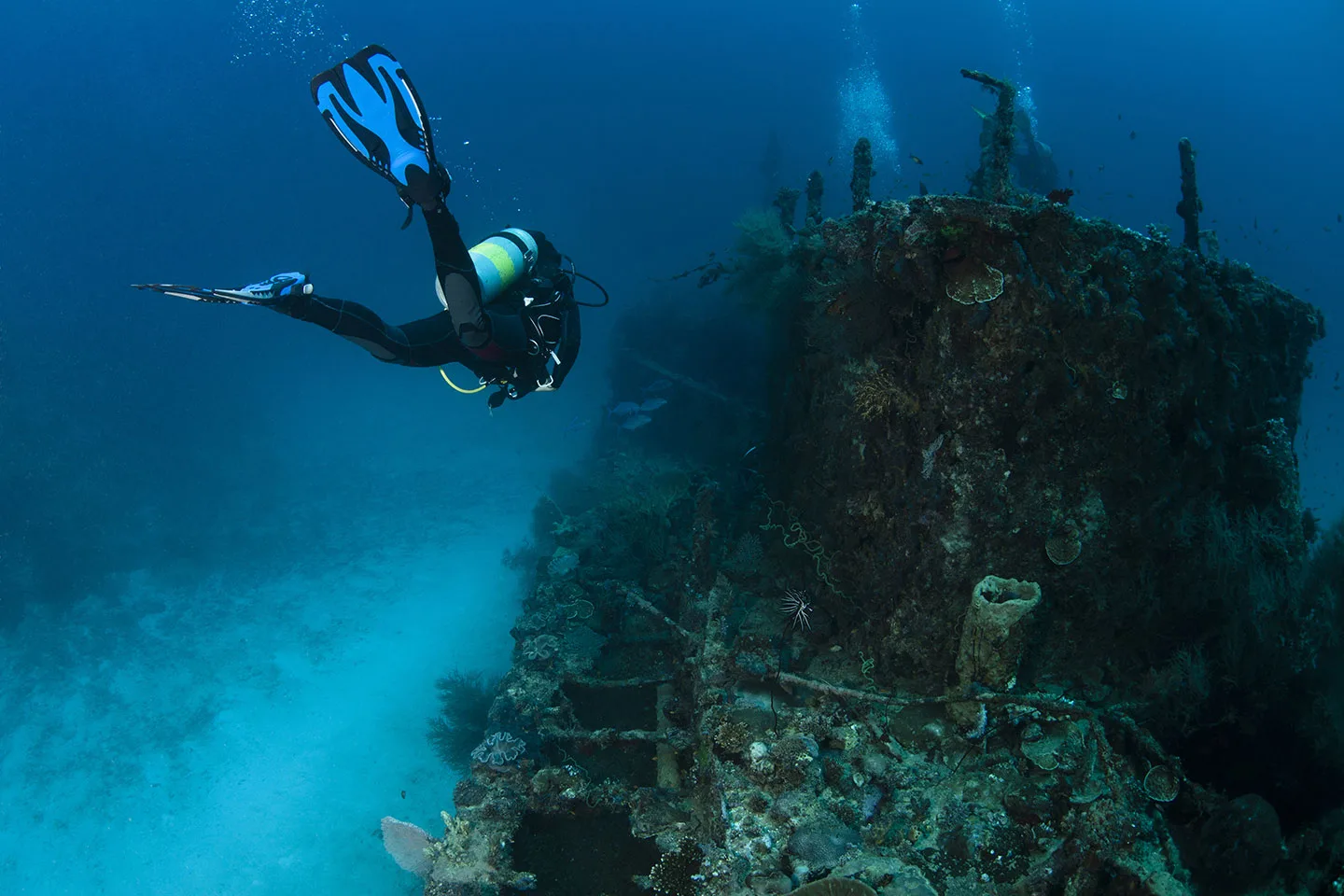
- Arcachon oysters beside Atlantic wreck diving
- April to October suits Ota and Porto Pollo
- Côte Vermeille links Collioure culture with rocky coast
For subtitles in English: start the video firstthen click the gearat the top right of the video, select “Subtitles/CC”, then “Auto-translate” and choose “English”.
This country for a diver
France is not one coherent dive destination but a set of very different maritime journeys. The Mediterranean side is built around rocky coastlines, islands, protected waters and a strong mix of wrecks and reefs; the Atlantic brings tidal environments, oyster country and wreck diving with a different rhythm. Corsica adds an island itinerary rather than simply another mainland resort. Across the country, the practical common ground is boat-led diving, variable current in many areas, and a need to leave room for changing departure plans rather than treating a site name as a guarantee.
How the country divides
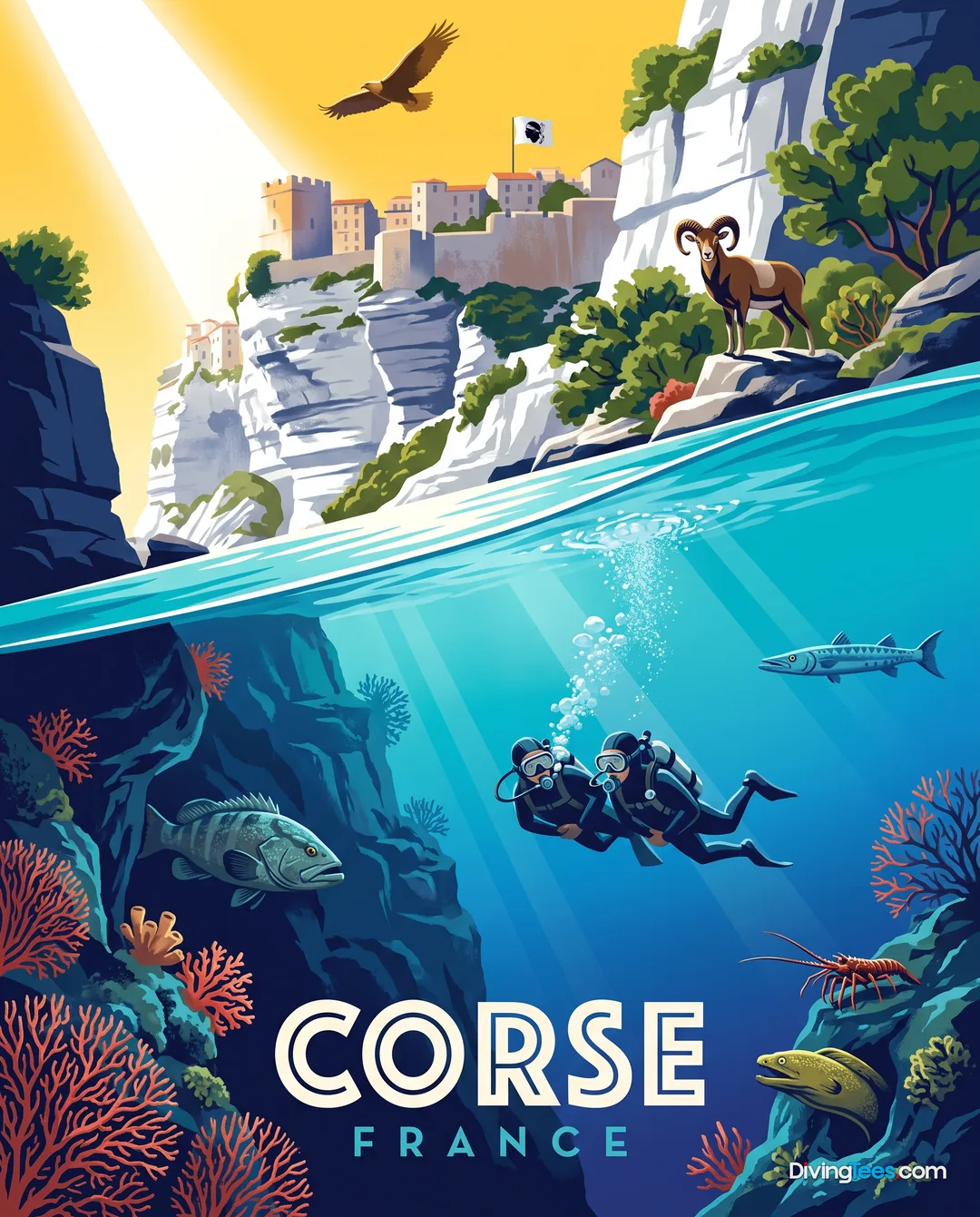
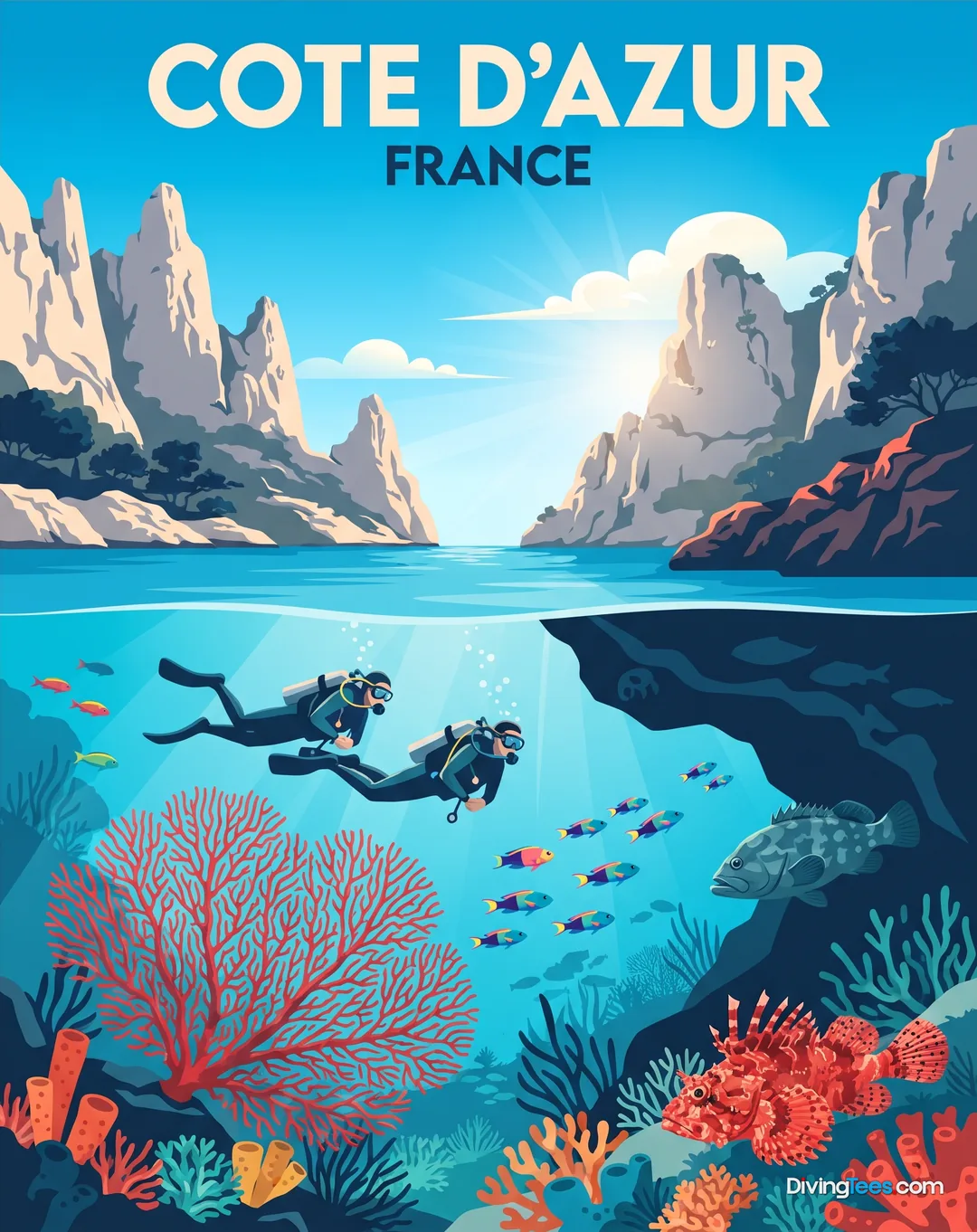
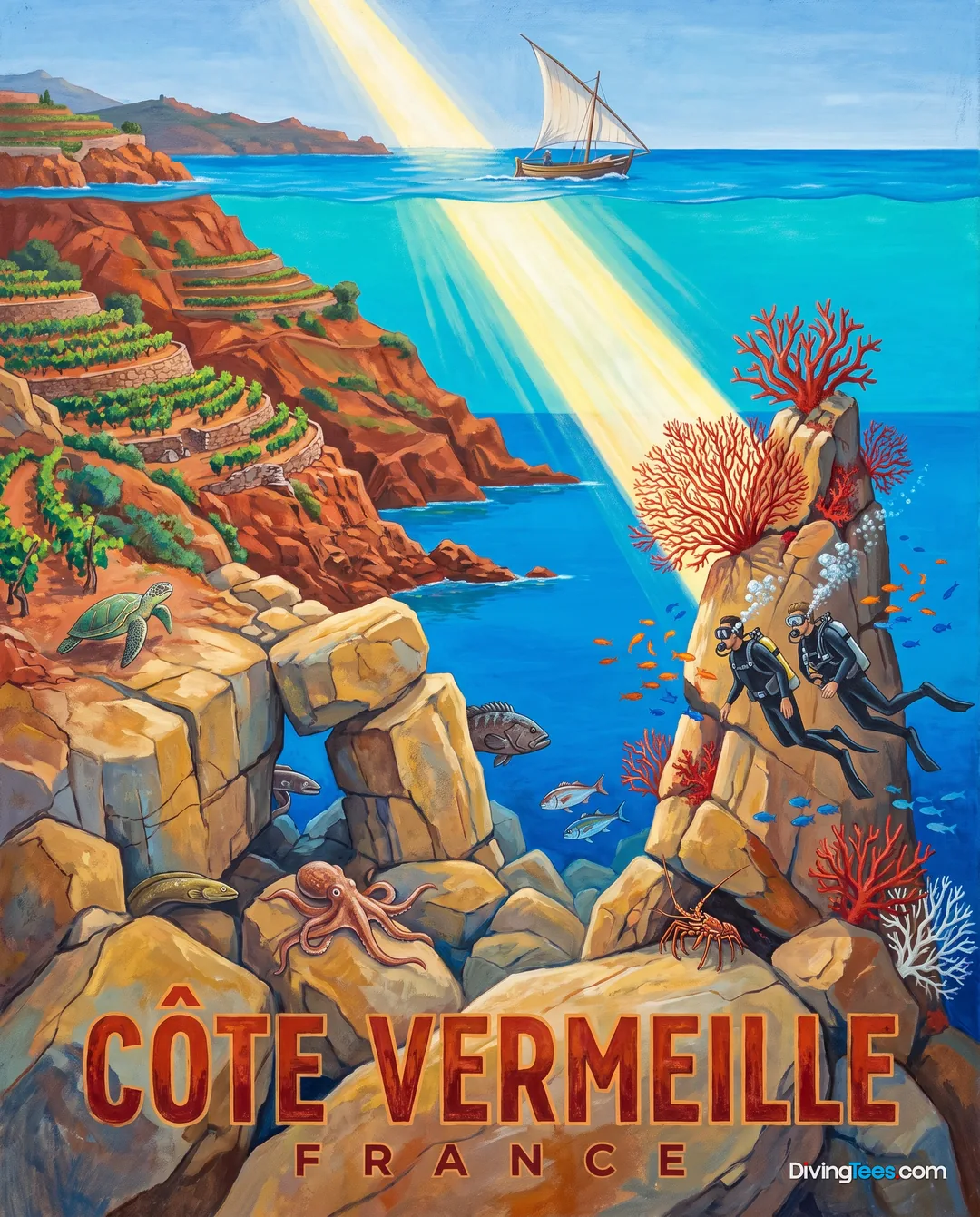
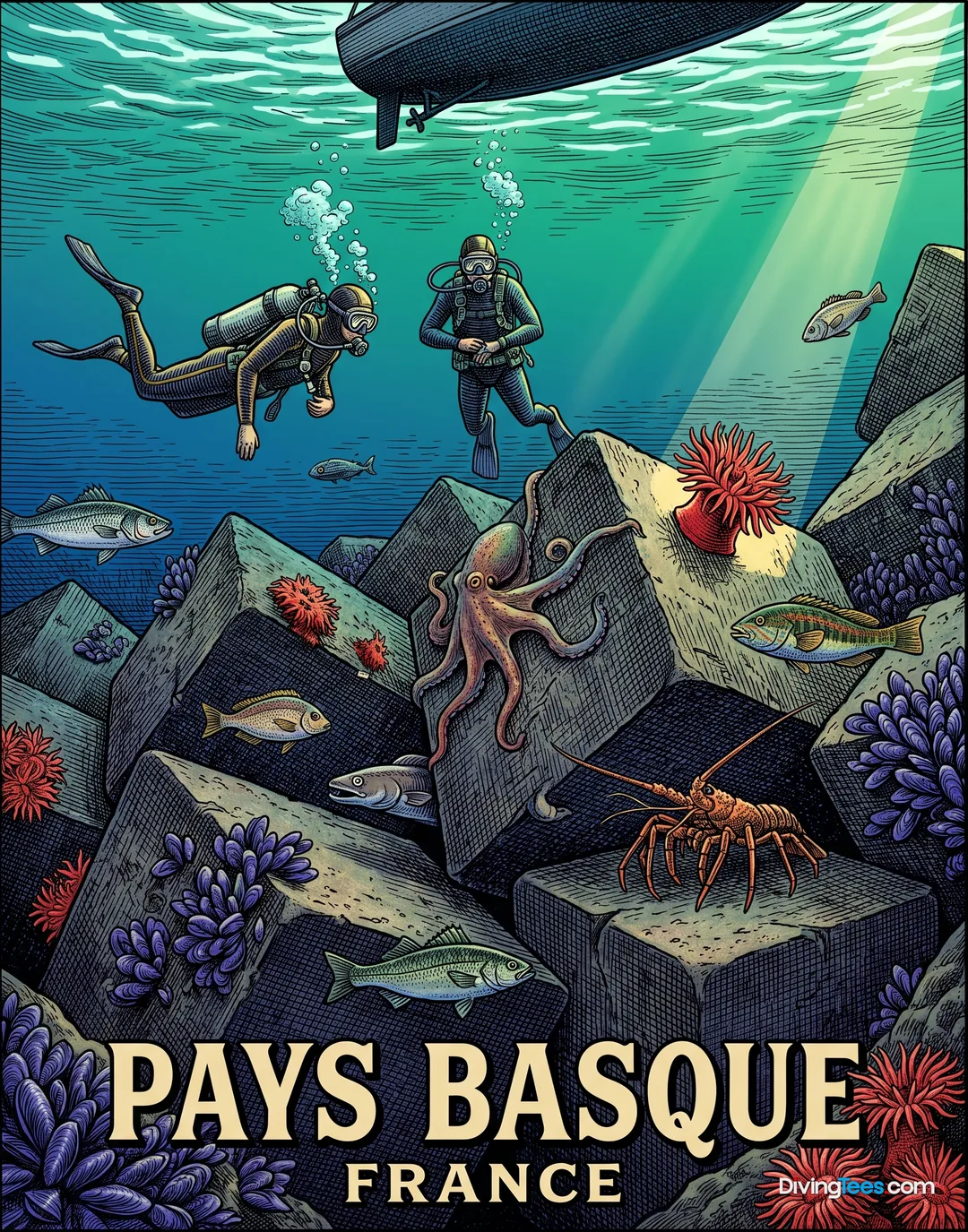
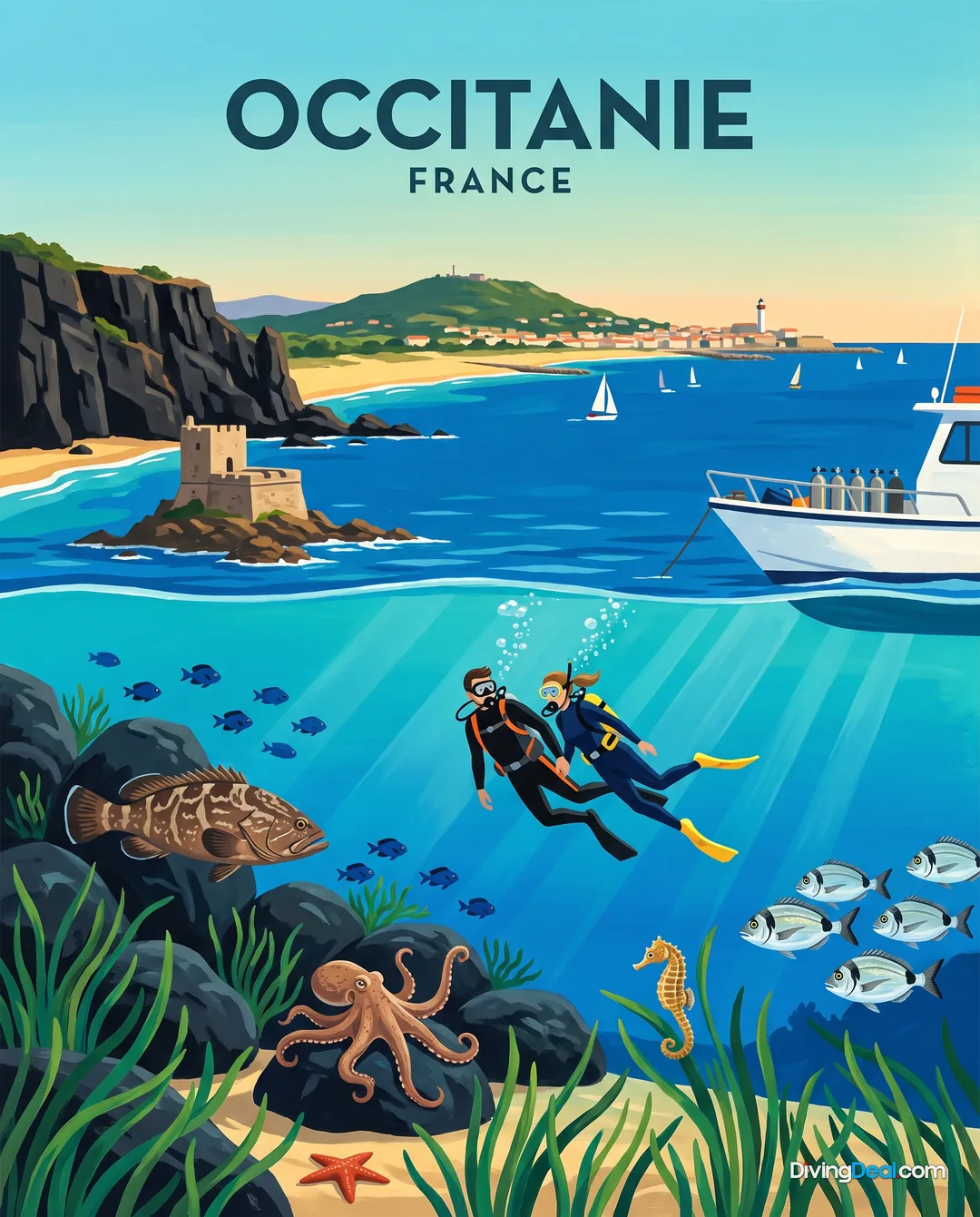
The country divides naturally into three diving journeys. The Mediterranean mainland runs from the Côte Vermeille through Marseille and the Var to Nice: it suits divers wanting rocky coast, islands, reserves and a choice of established ports. Banyuls-sur-Mer and Argelès-sur-Mer give the western end a quieter, more local feel, while Marseille and the Var put protected island waters and maritime history closer together. The Atlantic grouping, centred on the Bassin d’Arcachon and the Pays Basque, is a separate proposition: tidal planning, coastal villages and oyster culture matter as much as the boat ride. It is the better fit for someone who wants France’s seaboard rather than a Mediterranean week. Corsica, represented by Ota and Porto Pollo, stands apart as an island trip with its own April-to-October window. It rewards a compact base and deliberate pacing, rather than being treated as a quick extension of the mainland.
Diving destinations
Dive centres


Hotels
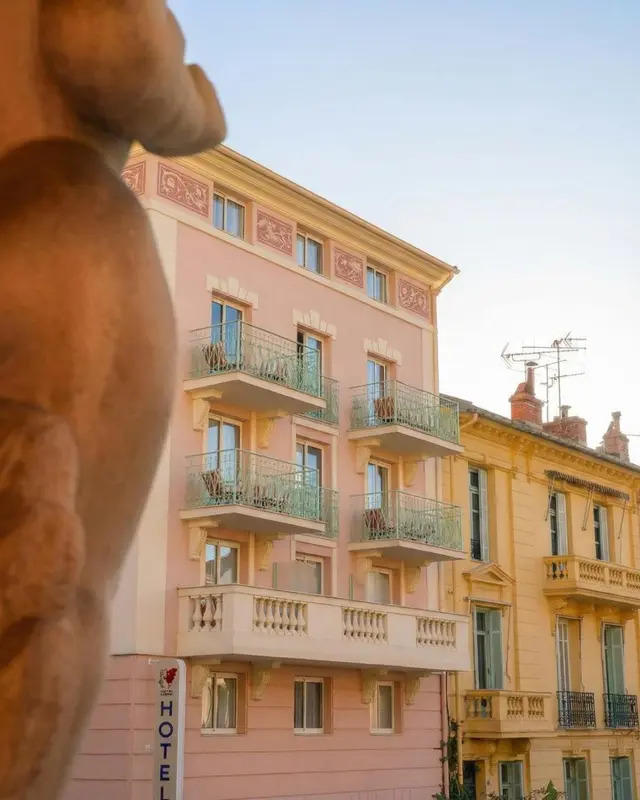
Hôtel Gabriel
Menton, Côte d'Azur
★★★
Google 4.9/5 (500 reviews)
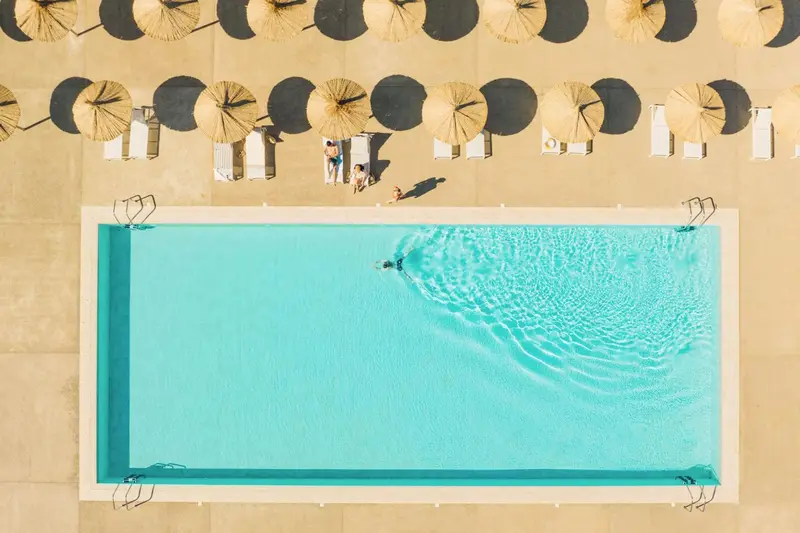
Résidence Pierre & Vacances Premium Domaine du Golfe du Lion
Saint-Cyprien, Côte Vermeille
★★★★
Google 4.8/5 (732 reviews)
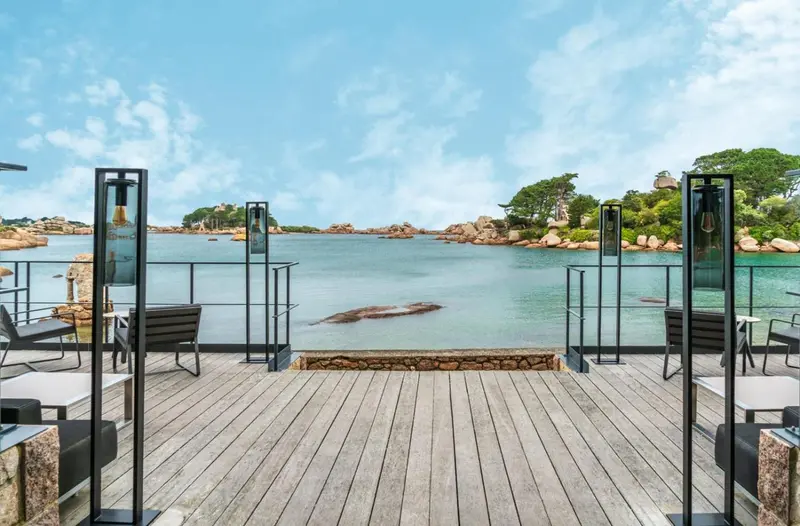
Castel Beau Site
Tregastel, Brittany
★★★★
Google 4.7/5 (1,427 reviews)
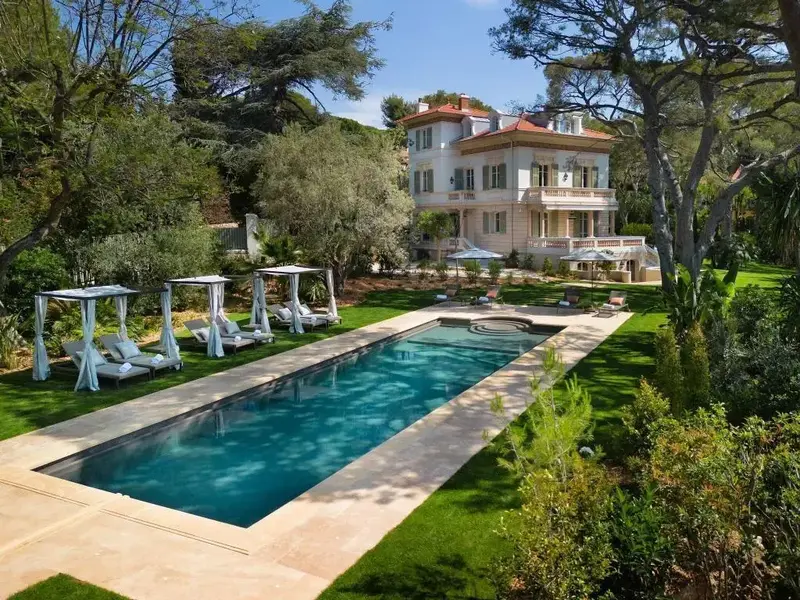
Grand-Hôtel du Cap-Ferrat, A Four Seasons Hotel
Nice, Côte d'Azur
★★★★★
Google 4.7/5 (1,392 reviews)
When to go, and where by month
January, February and March belong to the Atlantic grouping in the country’s seasonal pattern, so the Bassin d’Arcachon and the Pays Basque provide the clearest winter and early-year framework. From April, the Mediterranean mainland begins to open, alongside Ota and Porto Pollo in Corsica; this is the first month when the southern and island itineraries overlap with the Atlantic option. May through September is the broadest period for planning a French diving trip: the Mediterranean areas that open in spring are joined by Banyuls-sur-Mer and Argelès-sur-Mer, while Corsica remains in season. October narrows the choice back to the longer-window Mediterranean areas and Corsica. November and December return the emphasis to the Atlantic. The contrast is not a monsoon or a rainy season, but different operating windows along exposed Atlantic water, sheltered Mediterranean ports and island departures.
Marine life, coast by coast
The wildlife picture changes less sharply across the Mediterranean mainland than the map might suggest. From Banyuls-sur-Mer through Marseille and the Var towards Nice, an itinerary can be built around anthias, barracuda, dentex, groupers, moray eels and gorgonians, with octopus, nudibranchs and scorpionfish adding interest at closer range. That shared Mediterranean palette makes it possible to choose a coast for its scenery, port or protected area without abandoning the broader character of the fauna. A longer stay also gives more opportunity for encounters with lobster, spiny lobster, sea bream and moonfish. The Atlantic and Corsican journeys should be considered separately when choosing wildlife expectations, because their settings and diving environments create a different overall experience rather than simply repeating the Mediterranean itinerary.
Getting between the areas
The most sensible combinations are regional. Argelès-sur-Mer and Banyuls-sur-Mer are only six kilometres apart, making a Côte Vermeille base change unnecessary unless the harbour or accommodation suits better. Hyères and Porquerolles are similarly close at six kilometres, although the island connection still makes departure timing part of the day. The Var coast works as a compact chain: Cavalaire-sur-Mer is eleven kilometres from Ramatuelle and thirteen from Le Lavandou, while Bormes les Mimosas links naturally with Cavalaire-sur-Mer and Hyères. Corsica is different. Ota sits 196 kilometres from Nice and 197 from Ramatuelle, while the mainland-to-island combinations become longer still from the Var. Those journeys can consume a day once roads, ferries or flight connections are allowed for, so changing coasts repeatedly costs diving time.
Take off your mask
France’s shore-based appeal is regional rather than uniform. In Marseille, the Vieux-Port and Le Panier bring fish markets, cafés and bouillabaisse; Nice offers the Cours Saleya, the old town and the view from the castle hill. Around Hyères and Porquerolles, Port-Cros combines island paths, forts and a national-park landscape, while the Côte Vermeille runs from Collioure towards Cerbère with Catalan lanes and fishing harbours. The Bassin d’Arcachon has a different pace, with oyster ports, La Teste and the Dune du Pilat. Bayonne adds timber-framed streets, the Nive and Adour, jambon de Bayonne and piperade. Food is a serious part of the route: salade niçoise in Nice, aioli along the Provençal coast, oysters at Arcachon, cassoulet inland in Occitanie, and galettes of buckwheat in Brittany. Markets and port restaurants reward an early start, while dinner commonly begins around half past seven or eight.
What holds true everywhere here
French coastal travel has a few habits worth building into the plan. On the Mediterranean shore, July and August bring heavier harbour and boat traffic, so the useful departure windows can feel constrained even when the base itself is comfortable. A weather buffer matters particularly when a week depends on one port or one island crossing; a changed boat plan is easier to absorb from a compact base than during a hurried multi-coast itinerary. Tide-sensitive Atlantic areas such as the Bassin d’Arcachon and the Pays Basque require attention to the timing given by the operator. Protected waters also carry a more exacting etiquette: in Port-Cros, buoyancy, fin control and avoiding contact are part of entering the landscape, not optional niceties. A polite “bonjour” before asking for help remains essential in shops, markets and port offices.
Frequently asked questions about France
When is France a good destination for diving?
France offers different seasonal choices by region. May opens Banyuls-sur-Mer and Argelès-sur-Mer, while April to October suits Ota and Porto Pollo in Corsica. Mediterranean itineraries connect Banyuls-sur-Mer, Marseille, the Var and Nice, while Atlantic wreck diving and Arcachon oysters create a separate coastal experience.
What level of diving suits France?
France combines Mediterranean coastal itineraries, protected island areas, Atlantic wreck waters and Corsican diving environments. Your choice depends on the setting you want to explore, from rocky coasts and island landscapes to wrecks. The destination information describes these environments and wildlife, rather than assigning them to a particular diver level.
What can you see while diving in France?
Across the Mediterranean mainland, you may encounter anthias, barracuda, dentex, groupers, moray eels and gorgonians. Octopus, nudibranchs and scorpionfish add close-range interest, while longer stays offer chances to see lobster, spiny lobster, sea bream and moonfish. Atlantic and Corsican journeys provide different overall environments.
How should you plan a stay in France for diving?
Choose your base around the experience you want. Banyuls-sur-Mer links with Argelès-sur-Mer and Collioure culture, Marseille adds bouillabaisse and historic waterfront life, and Port-Cros and Porquerolles offer protected island character. Arcachon pairs oysters with Atlantic wreck diving, while Corsica suits an April to October itinerary.