CMAS
Argeles Plongee
Google 4.9/5 (250 reviews)
France · Mediterranean
L’Astrée’s preserved bridge, rocky coastal relief and the deep water off Cap Béar define Argelès-sur-Mer’s day-boat diving.
For subtitles in English: start the video firstthen click the gearat the top right of the video, select “Subtitles/CC”, then “Auto-translate” and choose “English”.
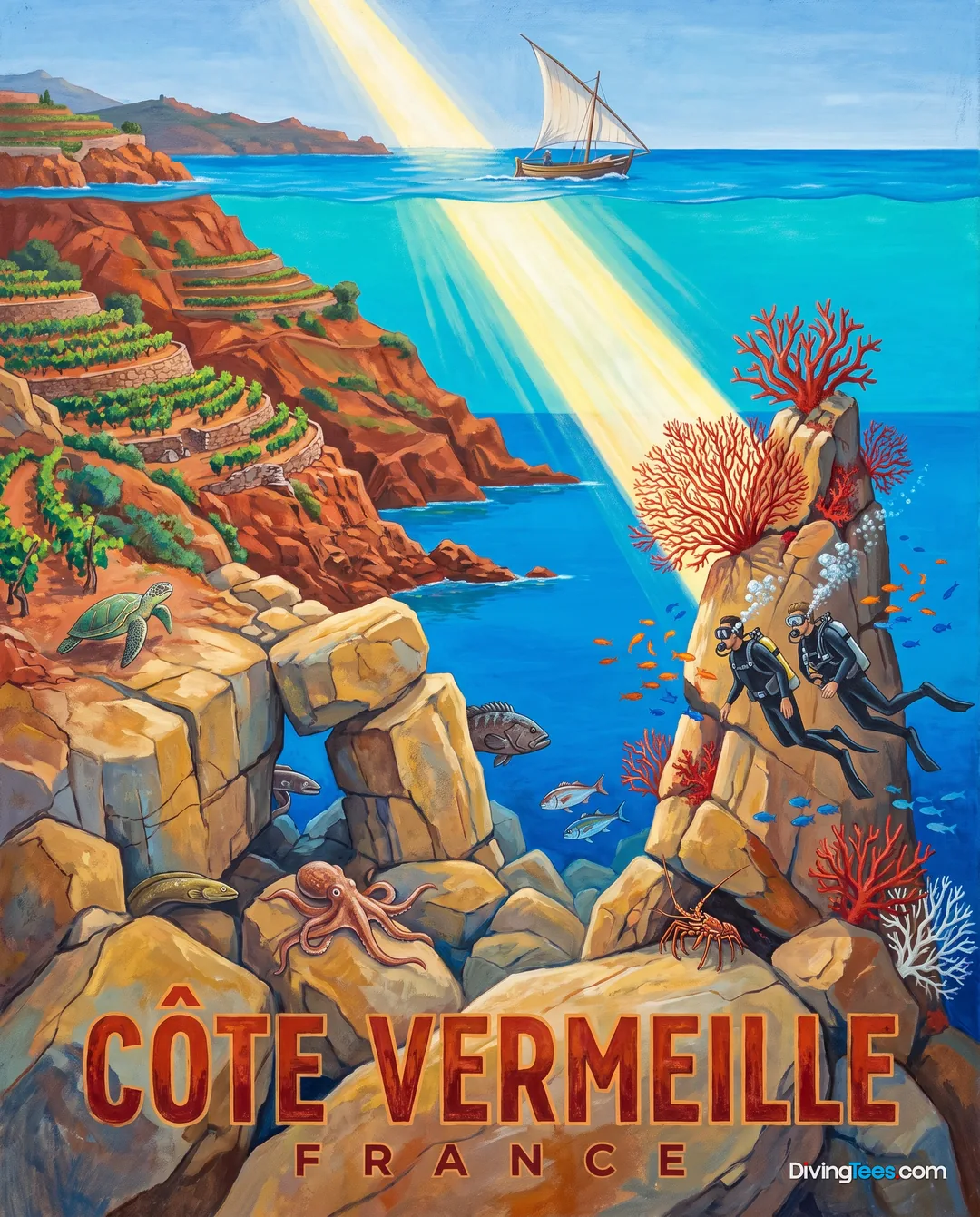
Argelès-sur-Mer is a practical base for exploring the rocky Côte Vermeille rather than a destination built around one resort reef. Local boats reach the coastline and wrecks around Collioure, Banyuls and Cap Cerbère, while the port, beach and wider town make a straightforward land-based stay. The standout dive in the supplied material is L’Astrée, a French cargo ship torpedoed in 1944 and lying upright in 38 to 47 metres.
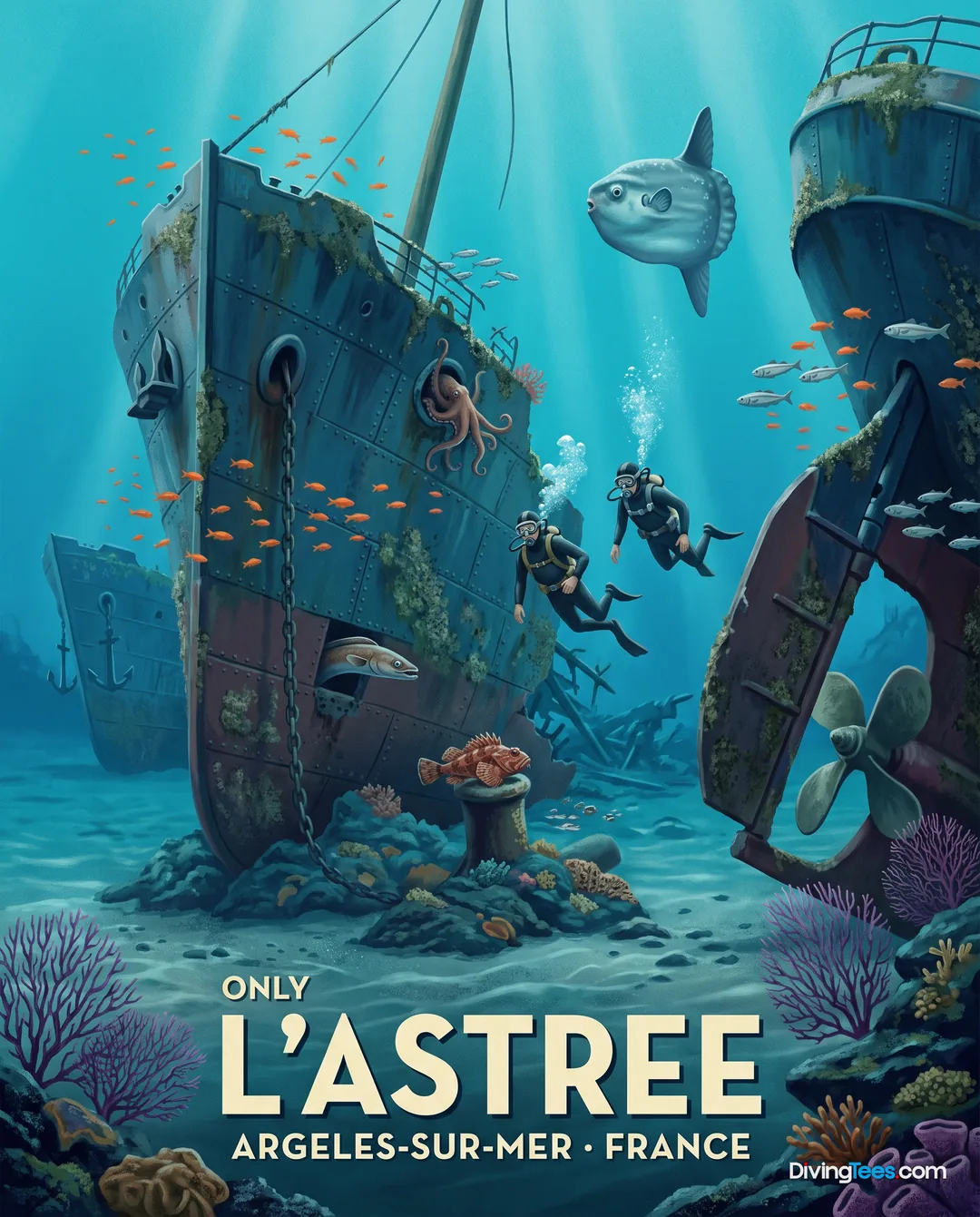
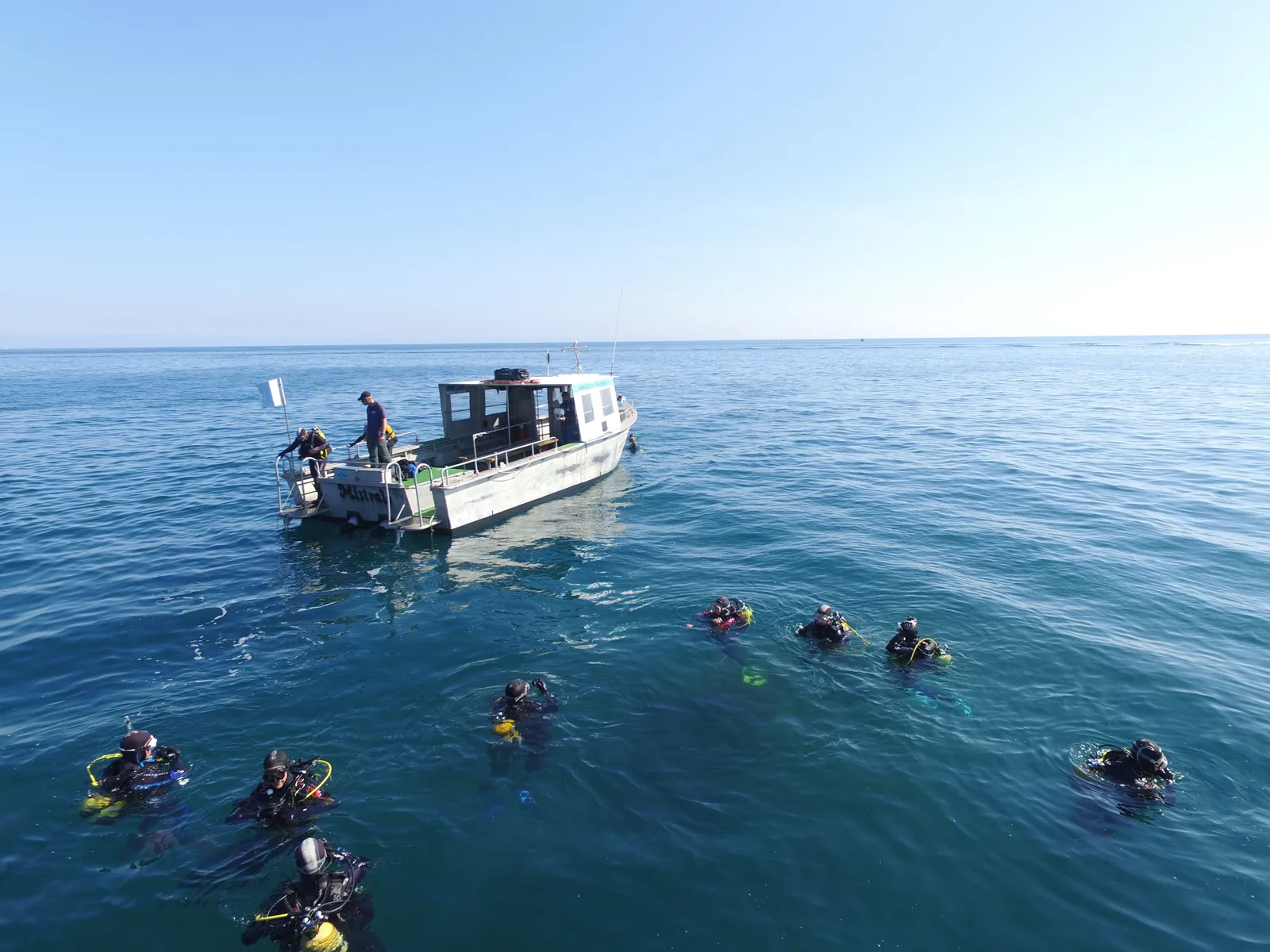
This is Mediterranean diving shaped by rock, wreck structure and changing sea conditions. L’Astrée lies upright from 38 to 47 metres, cut in two just forward of the superstructure. The preserved bridge and cargo holds give the dive a clear purpose, but the depth makes it a serious excursion rather than a casual shallow-water outing. Conditions are generally stable, and visibility can be good, although wind, swell and coastal runoff influence the day. Currents are usually light across the area, but they can strengthen around Cap Béar, so the ascent deserves proper planning. Most diving is from boats operating along the Argelès–Collioure–Banyuls stretch, with navigation and orientation more relevant than the easy, open-water familiarity of a tropical reef.
Marine life is part of the appeal of the rocky Mediterranean setting and the wrecks, especially where hard surfaces, broken structure and sheltered sections give animals places to live. On L’Astrée, divers can examine the bridge, cargo holds and the two separated sections while looking through the wreck for the abundant life reported around it. The surrounding coastal relief adds a different scale: open rock, ledges and changing contours rather than a continuous coral garden. The most rewarding encounters depend on the state of the water and the site chosen that day, so this is a destination for divers who enjoy observing what a temperate wreck and rocky seabed actually offer, not for anyone arriving with a fixed list of tropical species.
The useful diving season runs from late spring into autumn, with June to October the most practical window for regular outings. Measured conditions place the calmest sea from May through October, which matters because boat diving along this coast is readily altered by wind and swell. Rainfall is lightest from June to November, although runoff can still affect coastal clarity after unsettled weather. July and August bring the busiest beaches and marine traffic; September and October often offer a more settled rhythm for a dive-focused stay, while retaining access to the local day-boat programme.
Argelès suits all levels when the outing is appropriately supervised, but its more distinctive diving is not entry-level wreck tourism. L’Astrée begins at 38 metres and reaches 47 metres, so a Deep Diver qualification or equivalent, or at least French Level 2, is required. Advanced divers will find the depth and ascent planning more relevant than a basic qualification label. BSAC, PADI and SSI divers should bring certification evidence that matches the planned depth. Nitrox is useful for repeated boat dives during a stay, rather than being essential for every outing.
From London or Manchester, Argelès-sur-Mer is reached as a mainland coastal destination by road or rail, with no compulsory sea crossing and no dedicated domestic flight needed. The practical journey is therefore a land transfer into the town, followed by a short move to the local centre or boat departure point. Travellers should allow flexibility around train connections or the final road leg rather than treating the diving as an airport-resort transfer. Once in Argelès, accommodation near the port or seafront keeps early departures manageable. Depending on where the stay is based, the centres can be reached on foot or by bicycle; a car or taxi is more useful when carrying equipment or moving between parts of the coast.
Build in a weather day. A short, rigid itinerary is a poor match for a coast where wind, swell and runoff can change the practical choice of site. Several consecutive diving days make more sense than one isolated booking, because the boat can then use the conditions rather than having to force a particular plan. Log near the port or seafront if early starts matter; it removes an unnecessary transfer before a boat day. The first outing of the day is often the better choice for photographers and anyone wanting a less crowded plan of water. Treat Cap Béar with respect: even when the general current forecast sounds light, local flow can affect the ascent. Finally, reset expectations before arriving. This is rocky Mediterranean diving and a wartime wreck, not a brightly coloured tropical reef, so the pleasure lies in structure, depth and close observation.
Allow three to five days on land, with several day-boat outings and room for weather changes. Argelès works well for a mixed party: non-divers have the beach, seafront and Albères walks, while divers can reach Collioure, Banyuls and the wider Côte Vermeille. A day without diving is easily filled by visiting Collioure or the neighbouring coastal villages, and the town’s holiday infrastructure makes the stay less single-purpose than a remote dive base.
Hello, I'm Marina, DivingDeal.com's AI assistant. I guide you through destinations, areas and countries.
Thinking about the whole trip and the flights? Talk it over with Edith →
Marina is an AI. Some links are affiliate links: DivingDeal may earn a commission, at no extra cost to you. Bookings are made with the partner.
Your last day stays dry: no diving in the 18-24 hours before a flight, the perfect window to see the destination from another angle.

⏱ 2 h · ★ 4.7 (12 reviews)
from £16$21€19
see on Viator ↗
 Culture
⏱ 4 h · ★ 4.5 (17 reviews)
from £35$46€42
see on Viator ↗

⏱ 3 h · ★ 5.0 (1 reviews)
from £33$44€39
see on Viator ↗
Ratings and reviews collected by Viator and Tripadvisor.
Choose Argelès-sur-Mer from late spring into autumn, with June through October offering the most practical window for regular boat outings. Sea conditions are generally calmest from May through October, while June through November brings the lightest rainfall. July and August are busier, whereas September and October often feel more settled for diving.
You can dive Argelès-sur-Mer at different levels when the outing is appropriately supervised, but its distinctive wreck diving is not entry-level. L’Astrée lies from 38 to 47 metres, requiring a Deep Diver qualification or equivalent, or at least French Level 2. Bring certification evidence matching your planned depth; Nitrox can help with repeated boat dives.
Diving in Argelès-sur-Mer focuses on rocky Mediterranean seabeds, coastal ledges, changing contours and wartime wreck structure. On L’Astrée, you can explore the upright ship’s preserved bridge, cargo holds and two separated sections, while looking for life around the wreck. Boat trips also reach rocky sites and wrecks towards Collioure, Banyuls and Cerbère.
Plan three to five days in Argelès-sur-Mer, allowing several day-boat outings and a weather day. Stay near the port or seafront for easier early departures, and keep flexibility for wind, swell and runoff. A car or taxi helps with equipment and coastal transfers, while non-divers can enjoy the beach, seafront, Collioure and Albères walks.