
Sub'dive
Google 5/5 (955 reviews)
France · Mediterranean
Granite pinnacles, red gorgonians, wartime aircraft and grouper-filled walls shape Corsica’s boat diving, from sheltered bays to exposed sites reaching 55 metres.
For subtitles in English: start the video firstthen click the gearat the top right of the video, select “Subtitles/CC”, then “Auto-translate” and choose “English”.
At Revellata, granite ridges give way to canyons, caves and steep drop-offs, while Punta Muchillina combines a shallow plateau, a deep wall and an offshore seamount. Elsewhere, the B-17 Bomber Wreck lies upright on sand, and Vacca Nord offers a more relaxed pinnacle dive inside the Cerbicale reserve. Corsica is best understood as a collection of regional boat-diving bases, suited to a fixed stay or a carefully planned island itinerary.
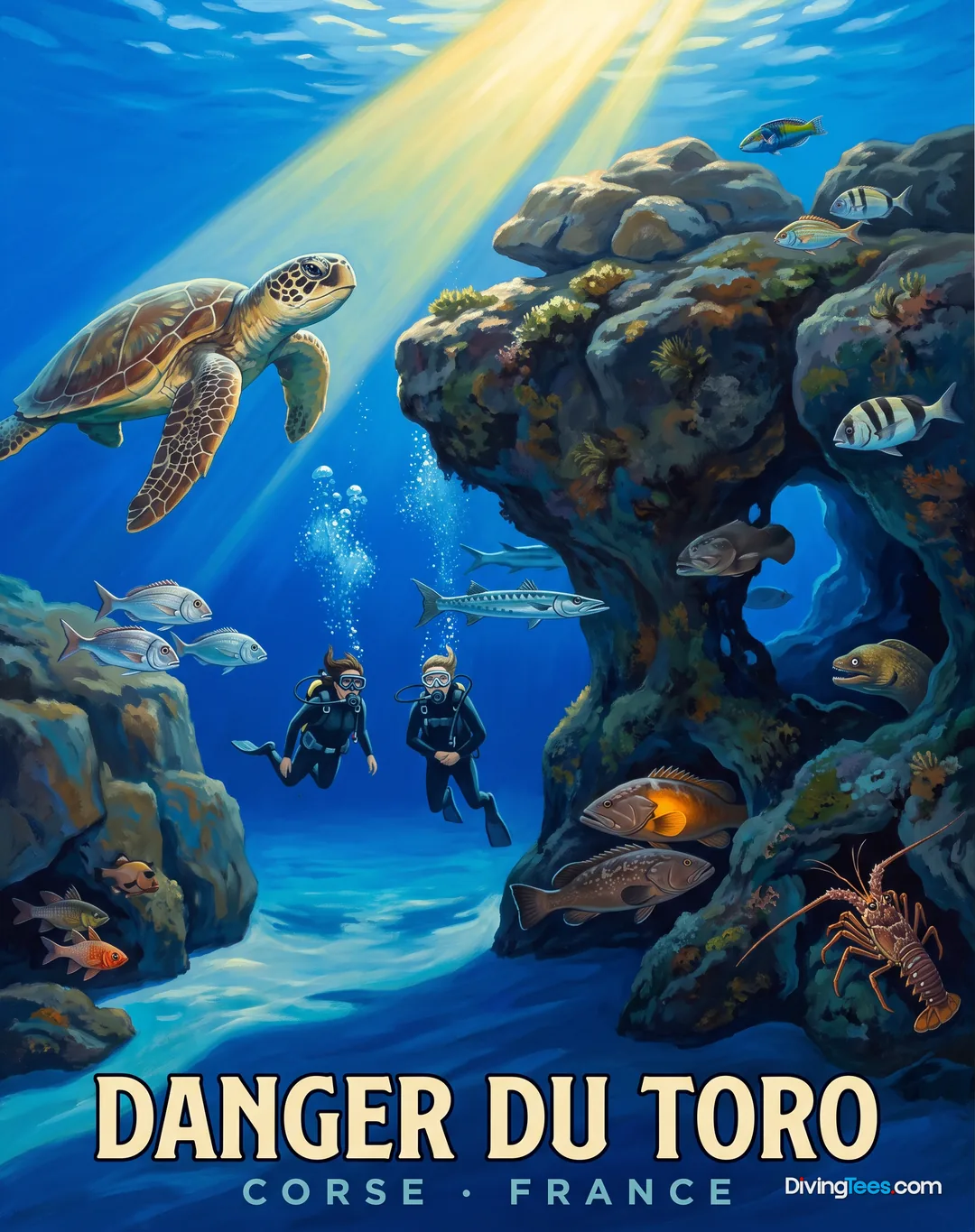
Corsica is built around rock: pinnacles, walls, plateaux, arches, swim-throughs and patches of posidonia. Calvi Plage and Île de Forana Nord-Ouest keep things shallow and sheltered, while the deeper sections of Revellata, Le Sec des Belges and Punta Muchillina bring canyons, red gorgonians and vertical scenery. The B-17 is a tidy historical wreck at 25–30 metres; Alcione reaches 35 metres and calls for more depth experience. Currents are variable rather than constant, but exposed sites such as Danger Du Toro and La Vallée des Mérous can become demanding. Visibility is often clear, with some sites reporting 20–30 metres, though wind, swell, plankton and coastal disturbance can reduce it. Most diving is by day boat from a local port, so sea conditions and the chosen sector matter as much as certification.
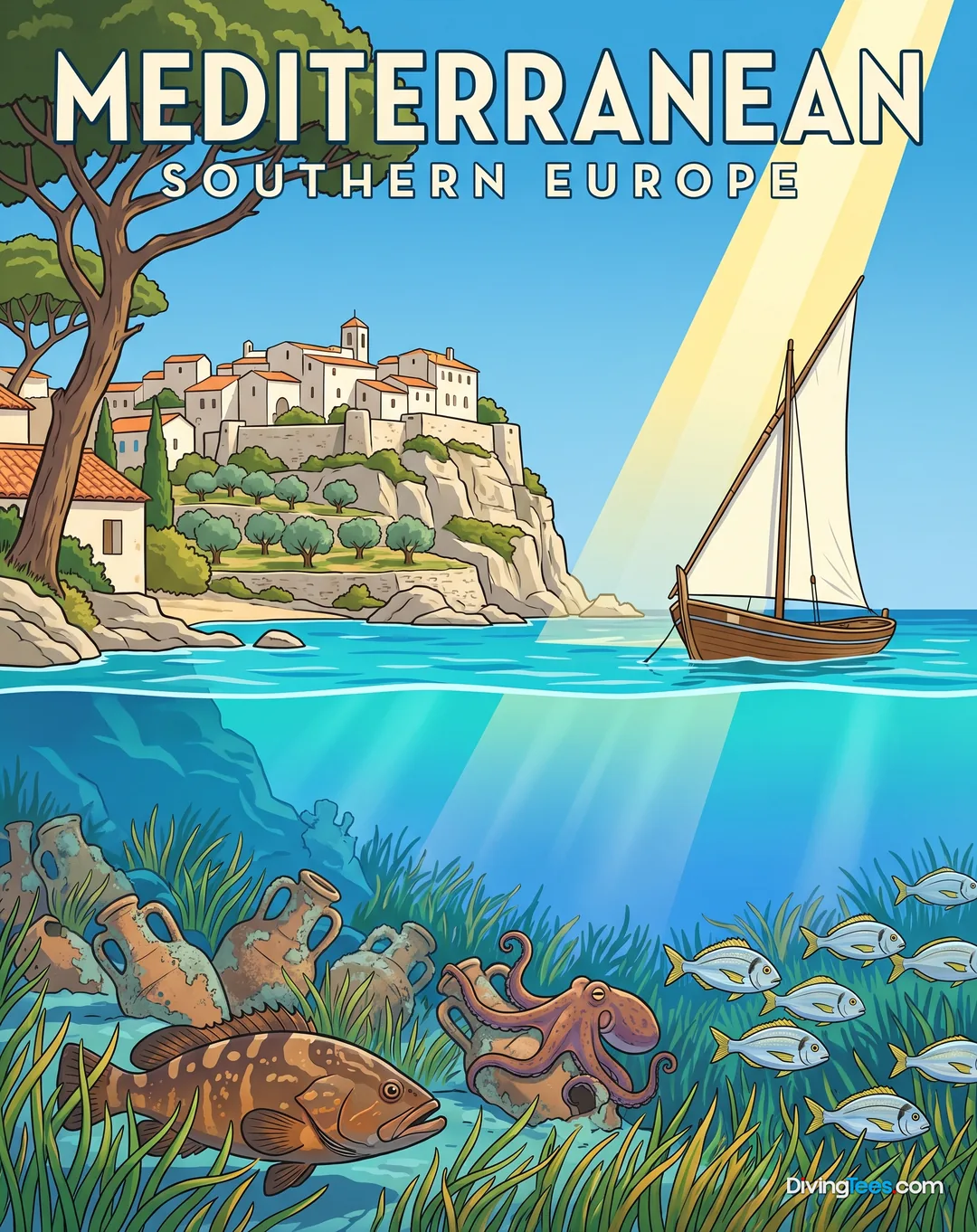
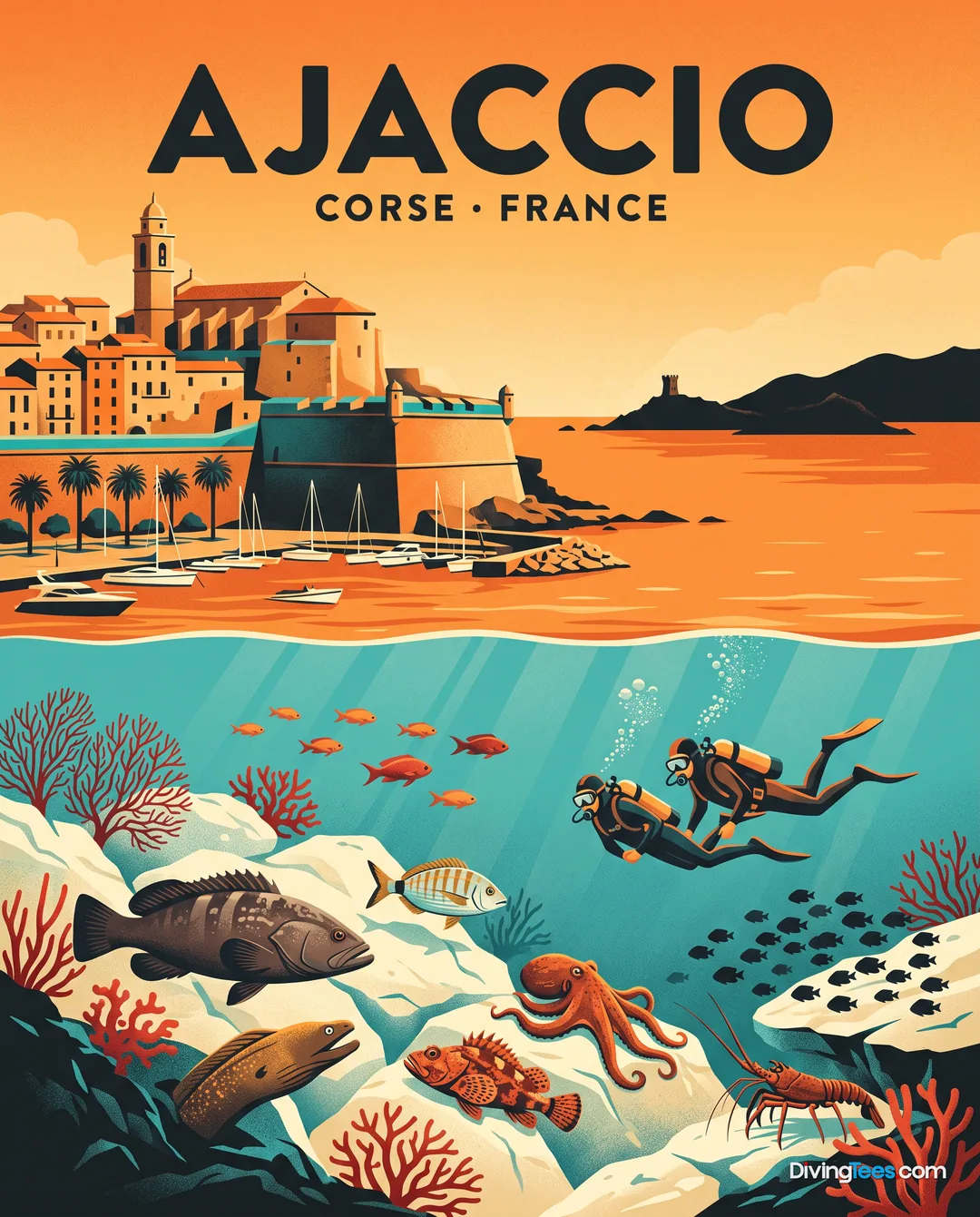
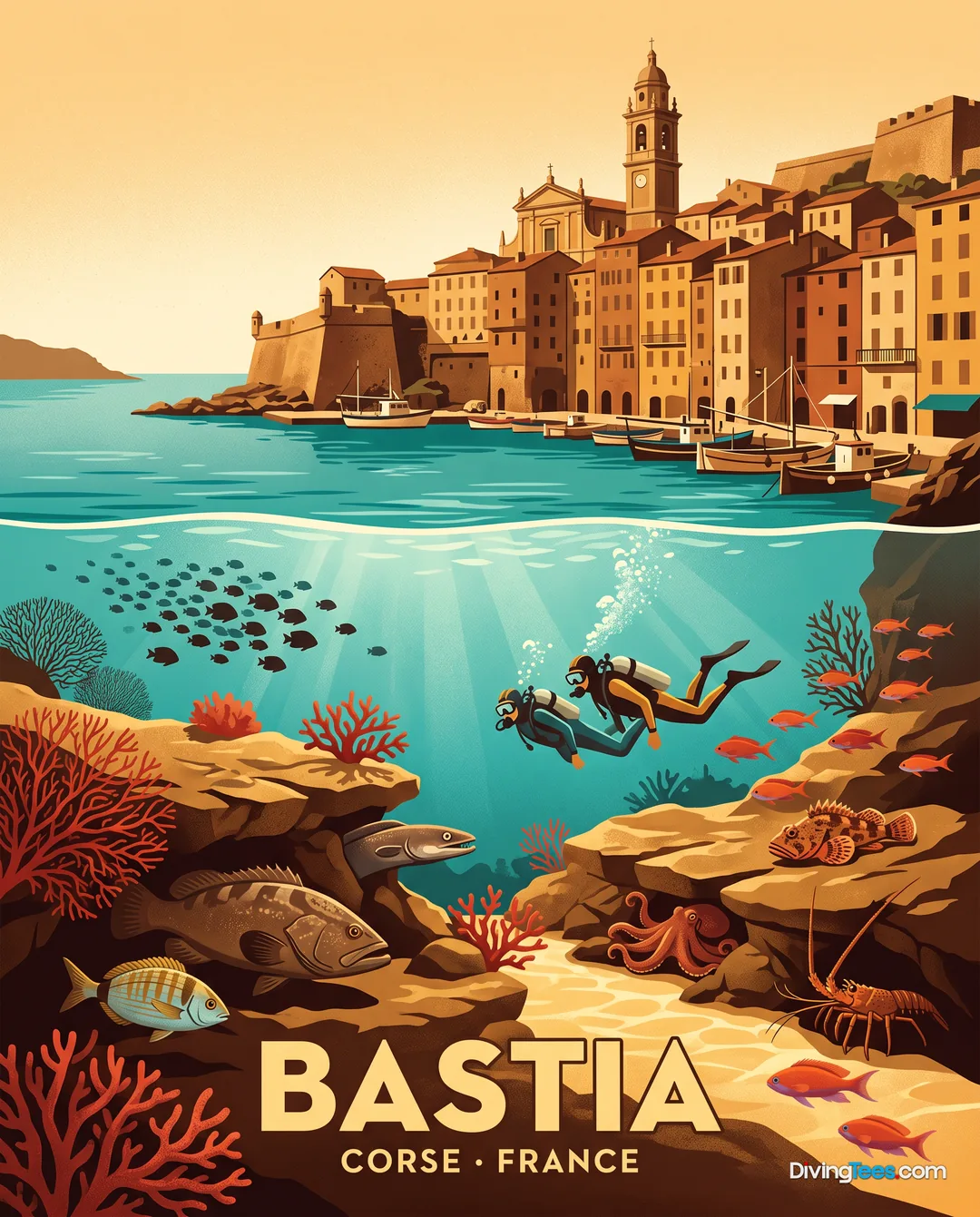
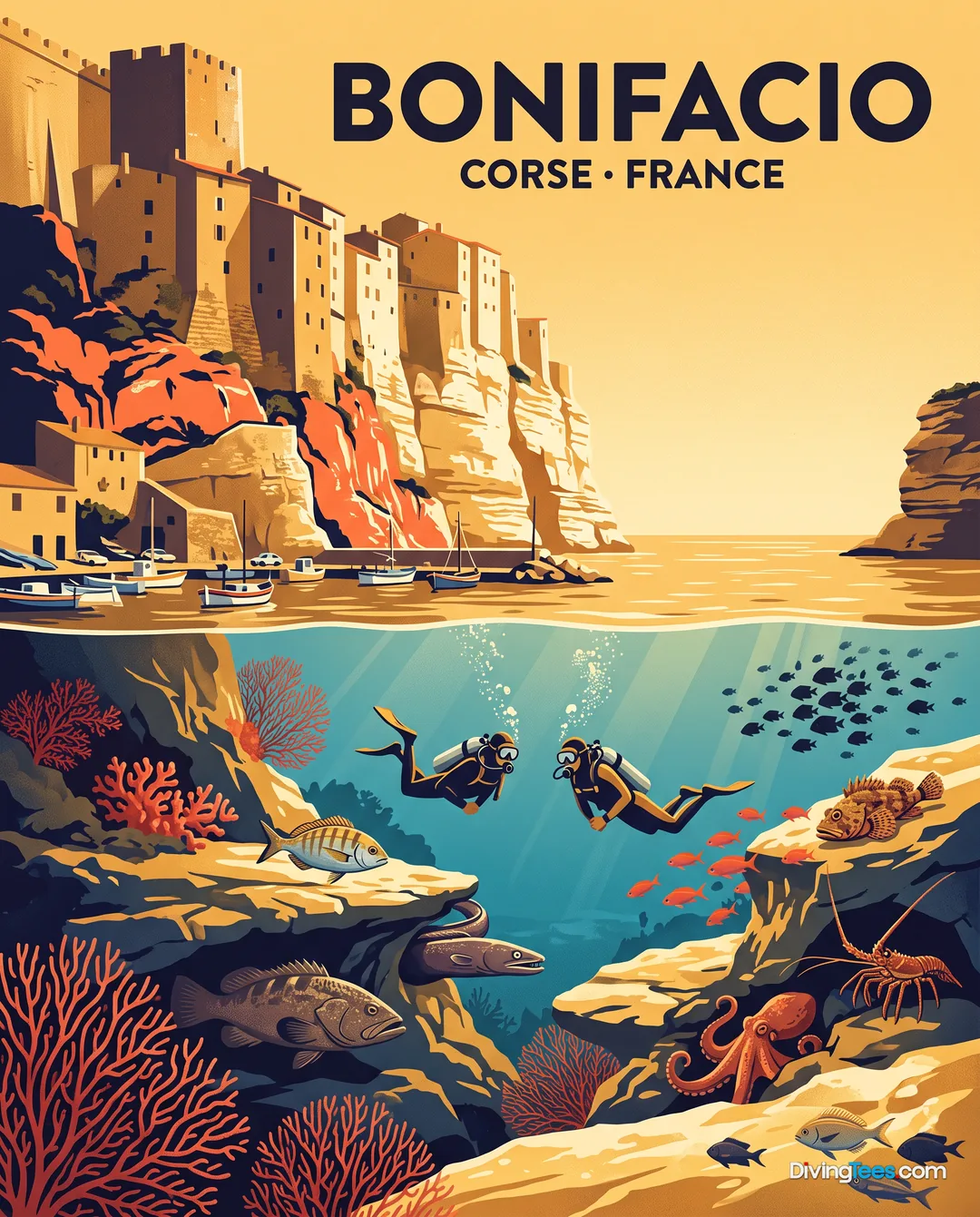
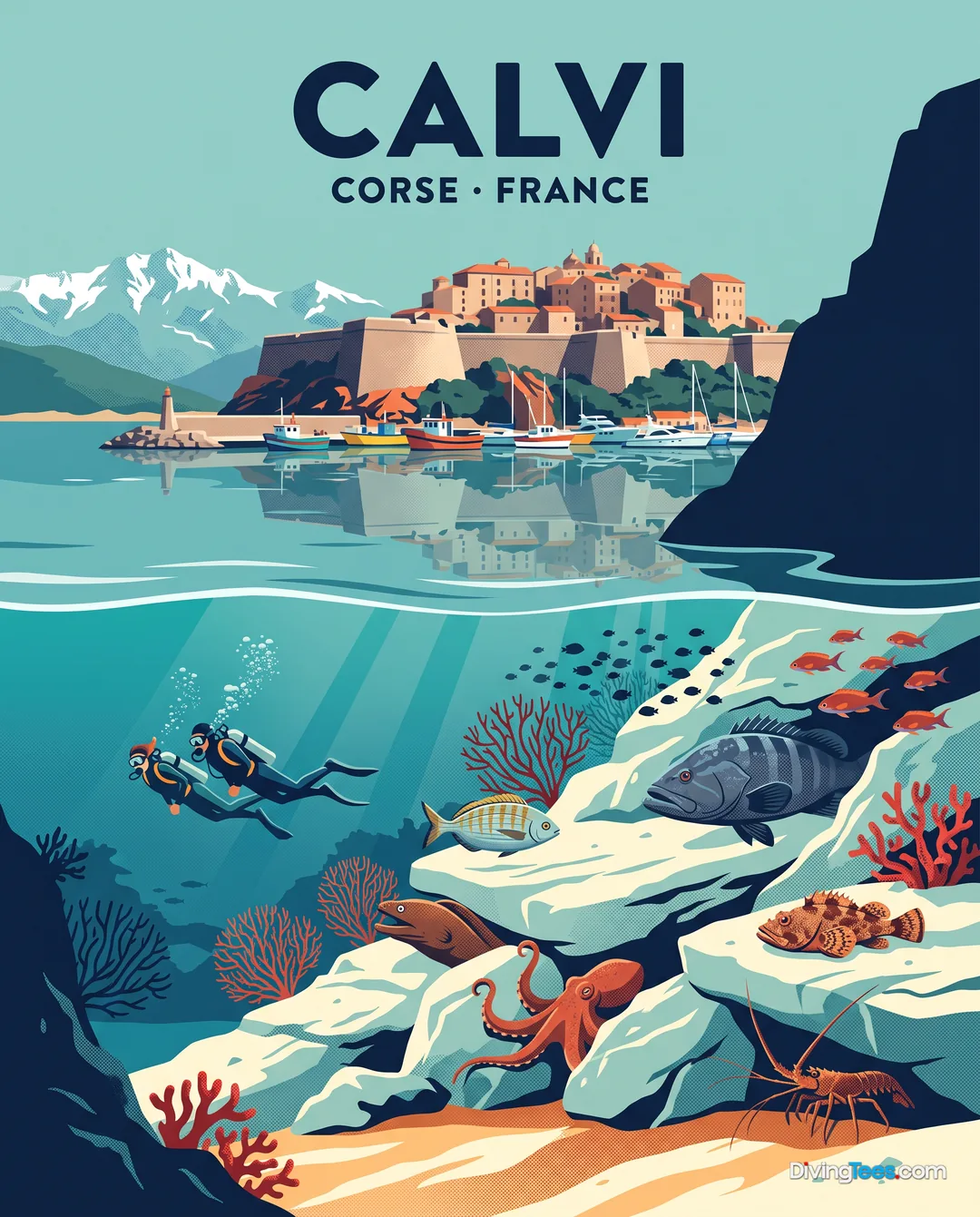
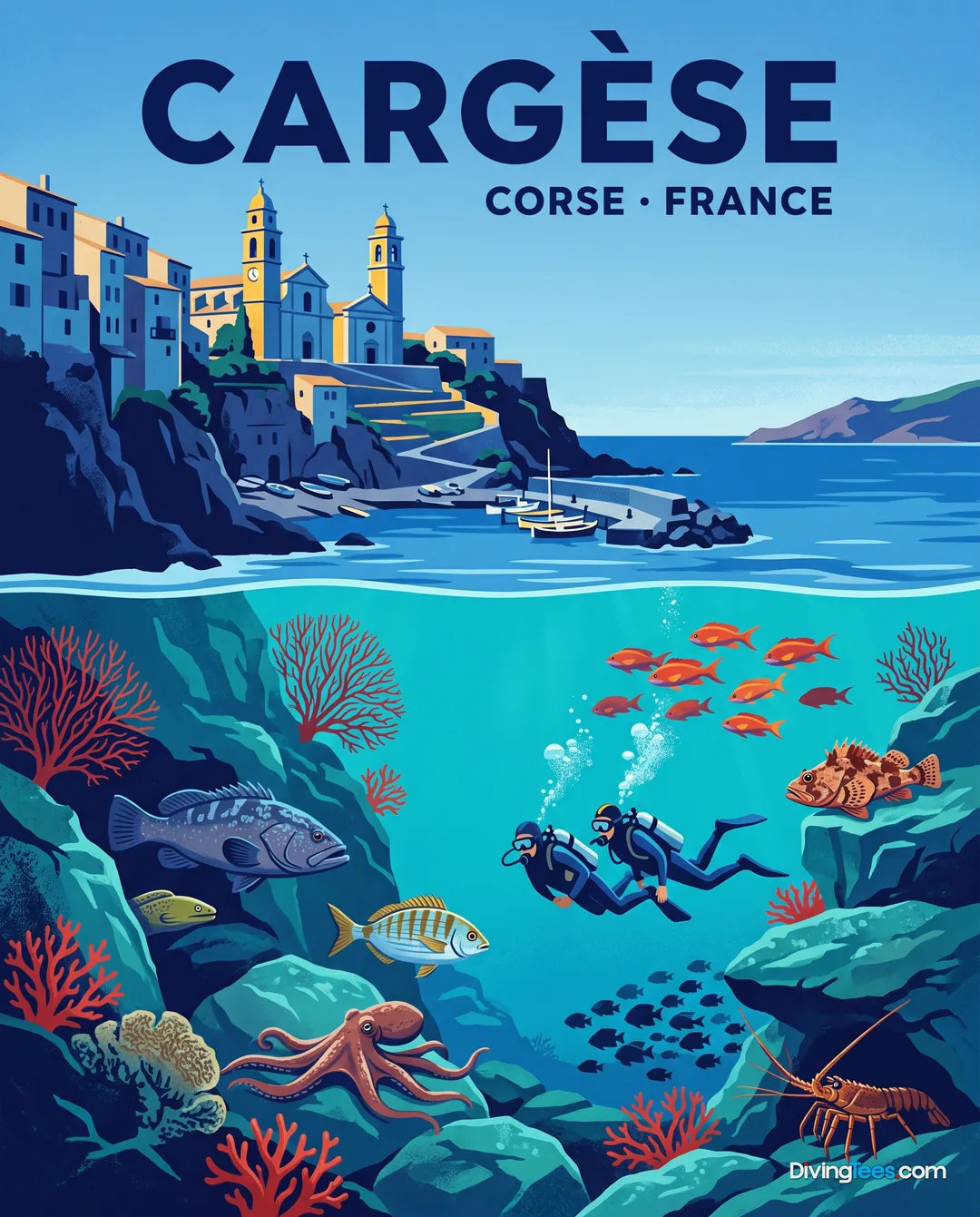
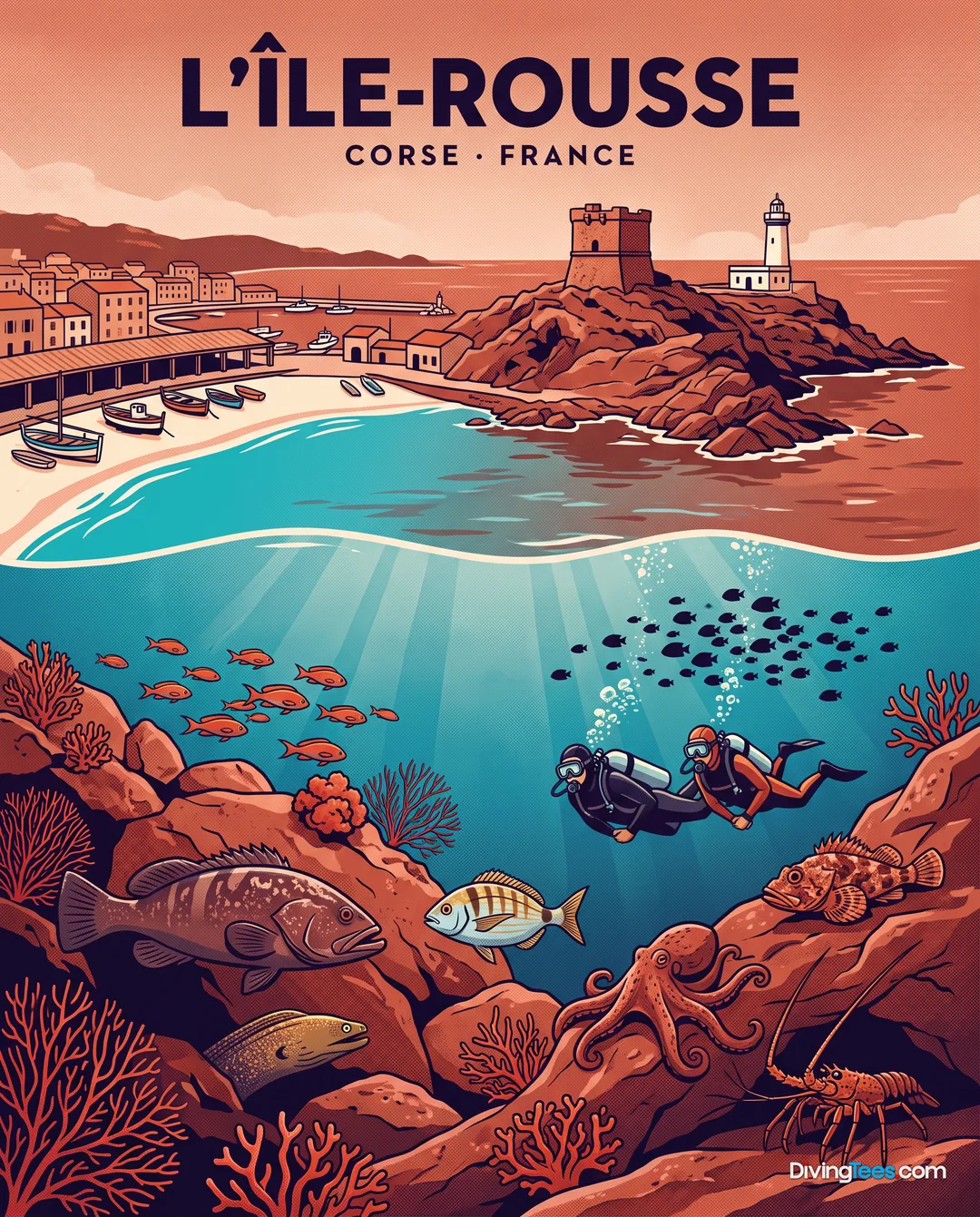
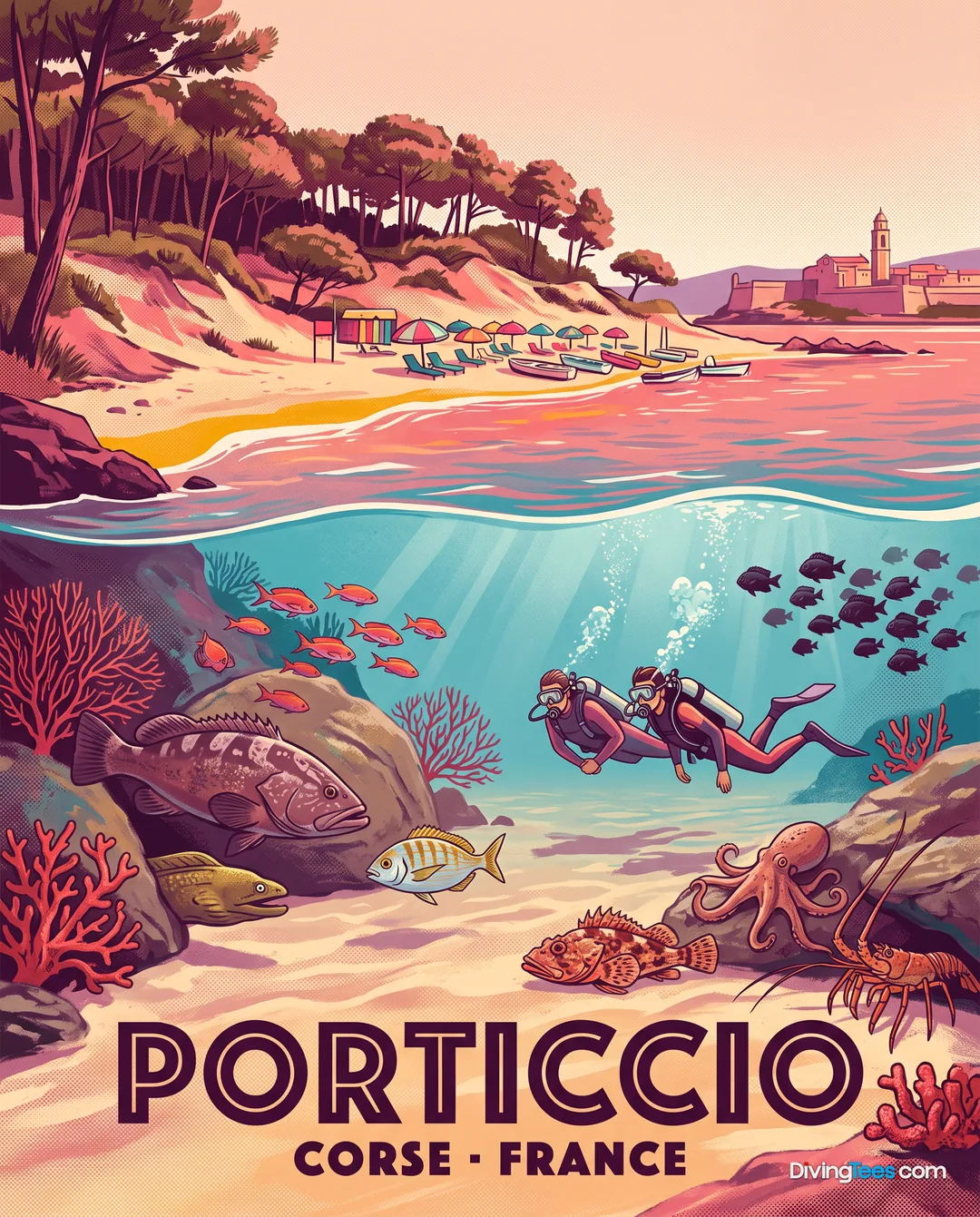
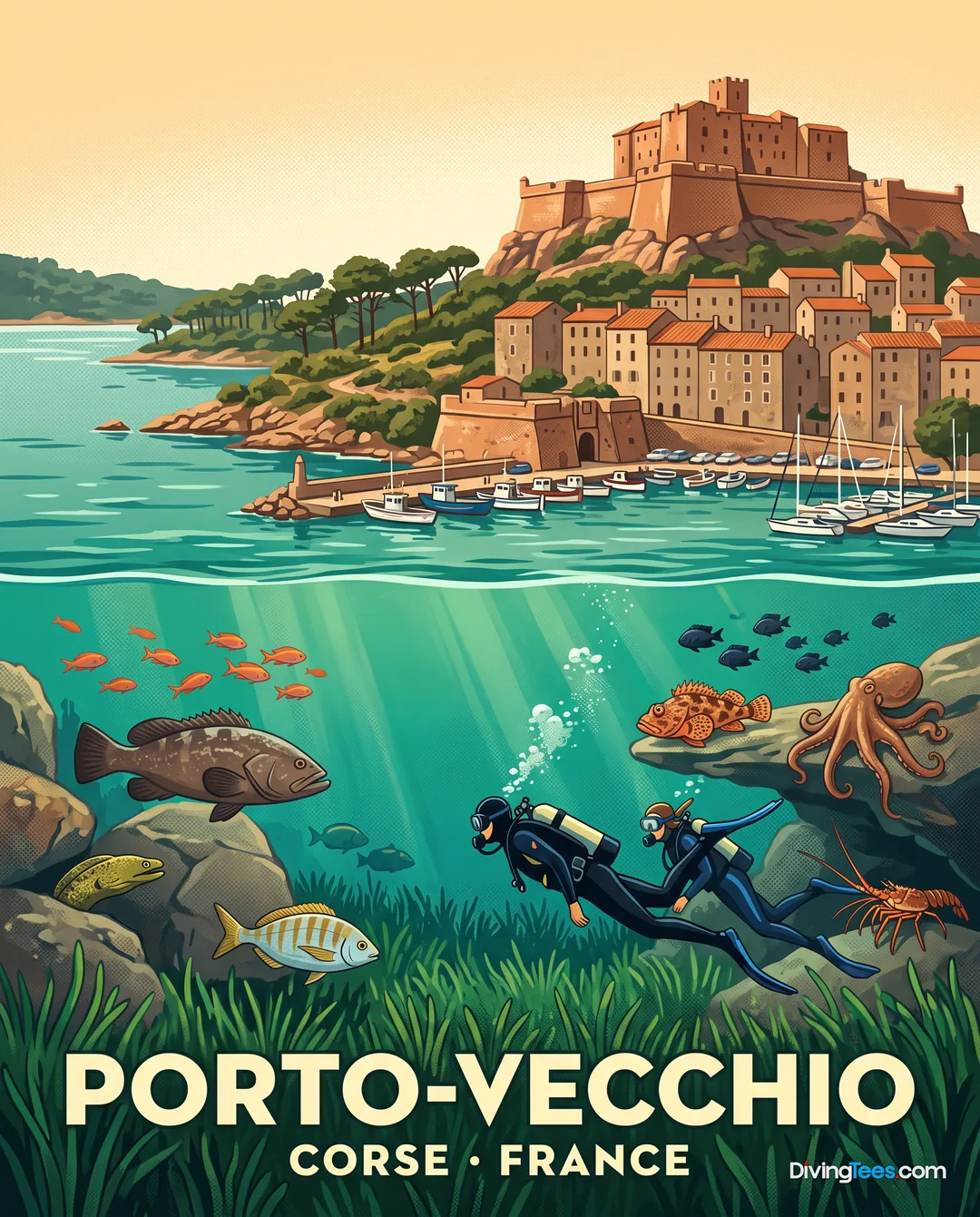
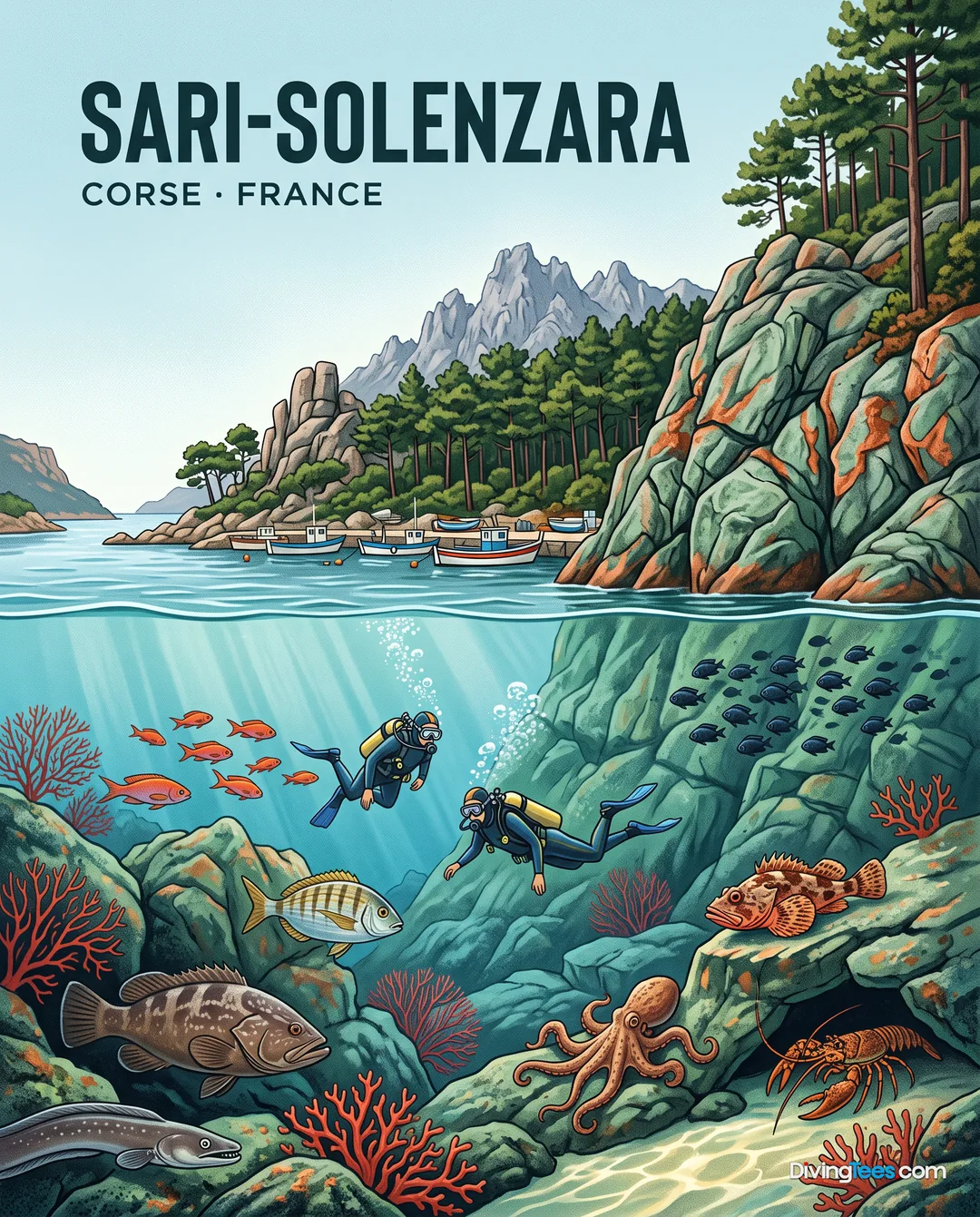
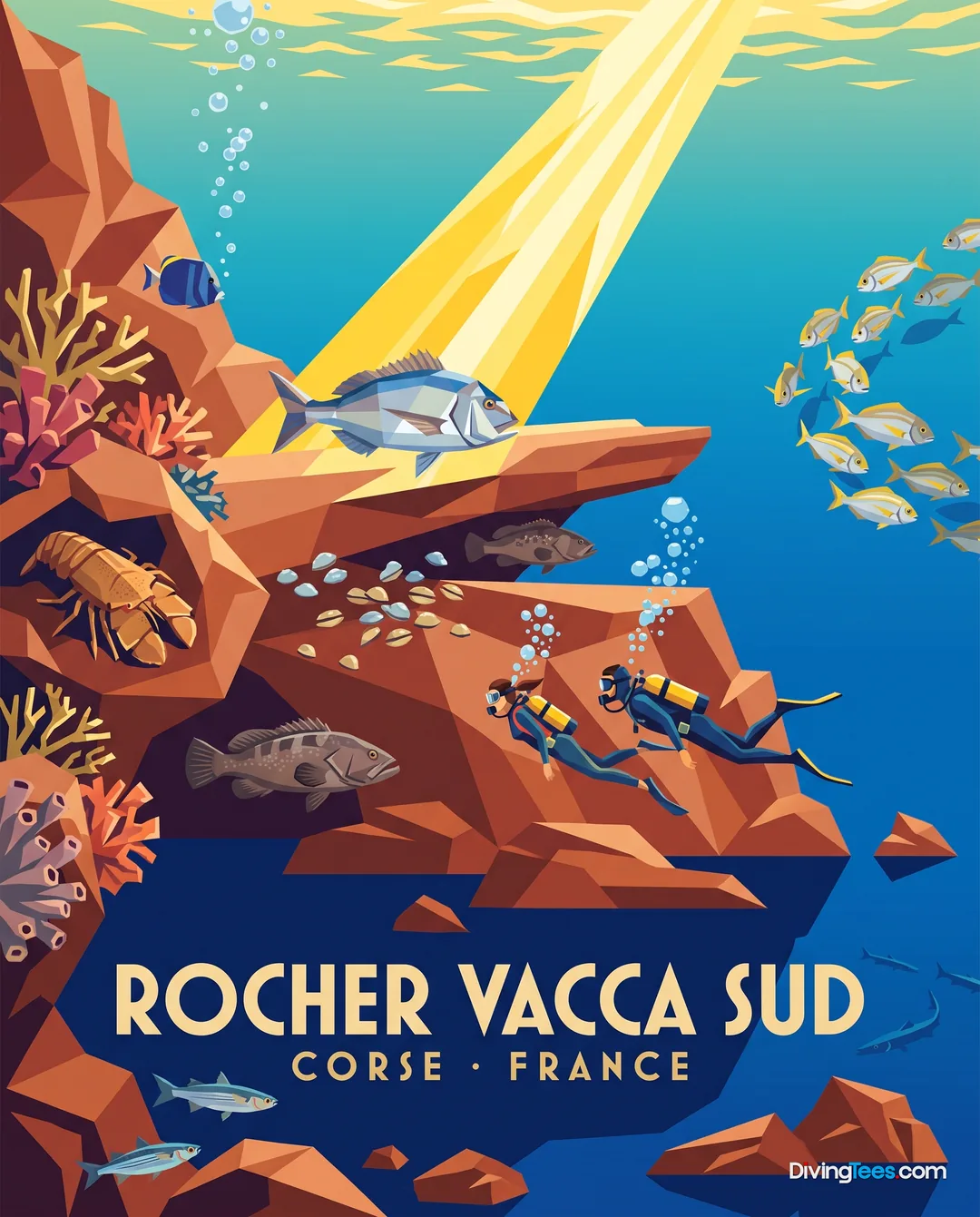
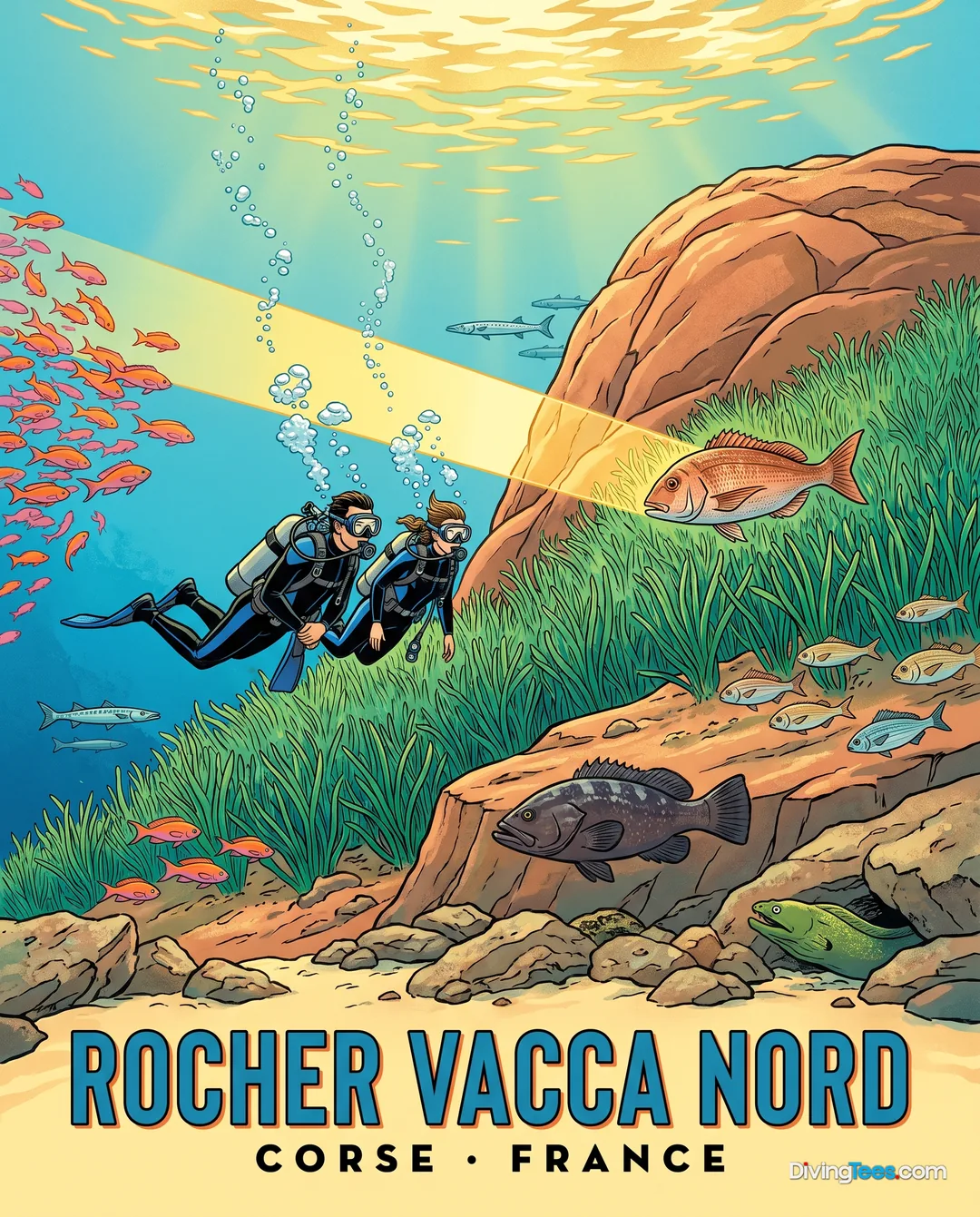
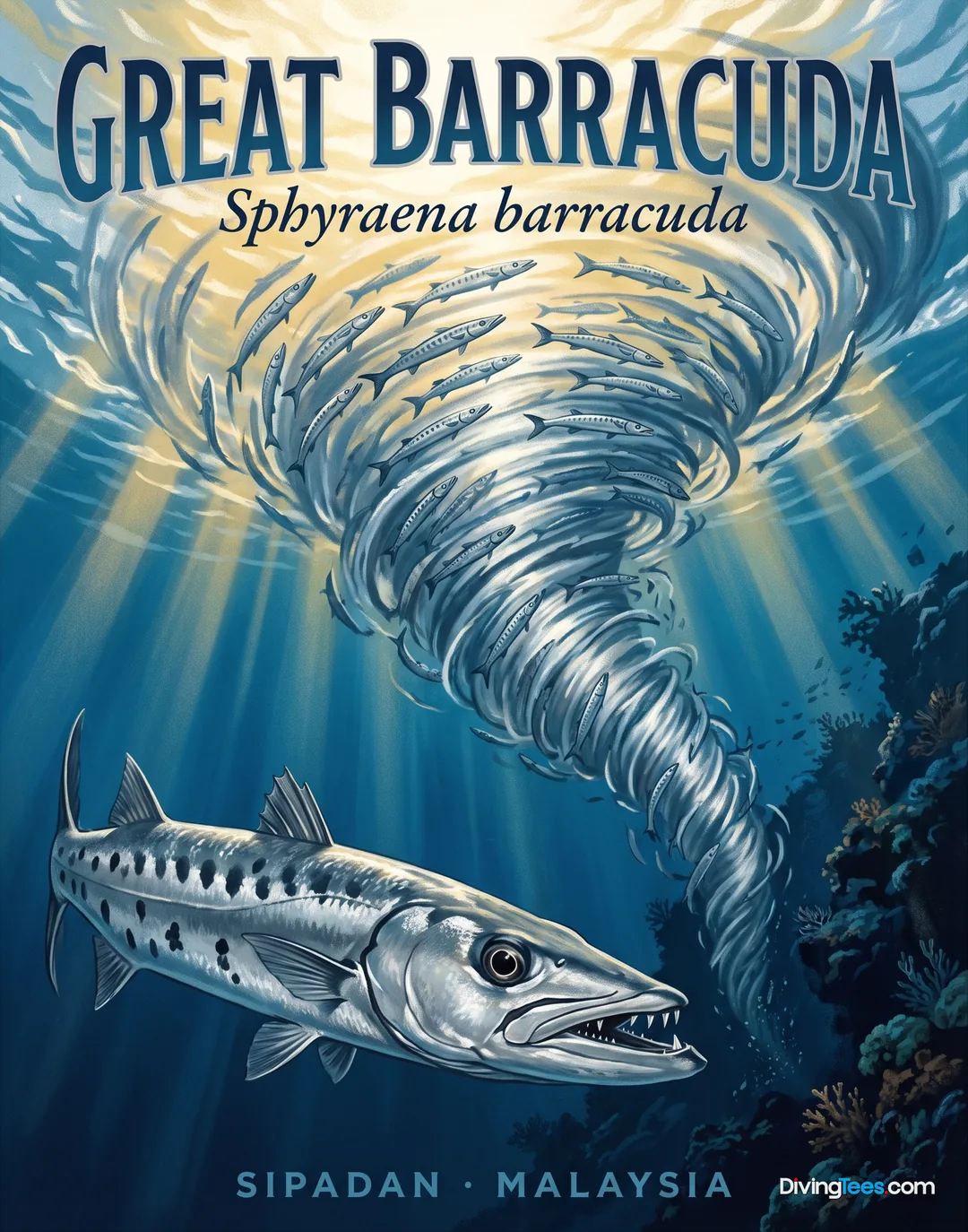
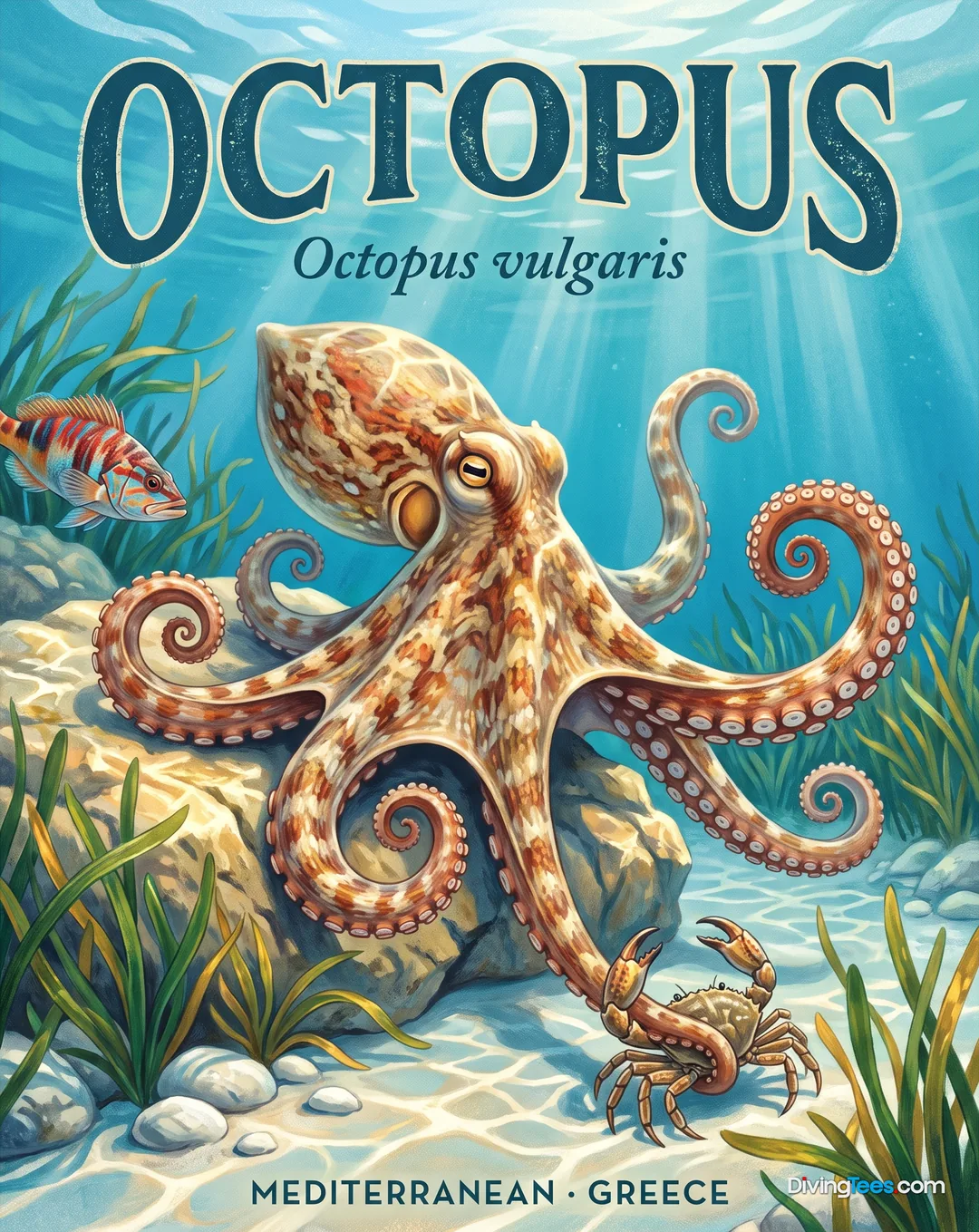
Groupers, corbs, moray eels and Mediterranean moray eels occupy the cracks and walls, with octopus, scorpionfish, sea bream, anthias, damselfish, salema porgy and mullets filling the closer foreground. Schools of fish are a regular part of the rocky scenery, while spiny lobster reward a careful look into holes rather than a fast sweep across the reef. Common dentex and great barracudas are associated particularly with open pinnacles and current-swept sites such as Danger Du Toro. Groupers and corbs are regular from spring into autumn; barracudas are more occasional in summer and autumn. Stingrays may appear in spring and summer, and pelagic Mediterranean species remain an occasional, sector-dependent possibility rather than a dependable feature.
May, June, September and October are the sensible months for a diving stay. The shoulder seasons usually bring more manageable seas and less pressure around ports and popular boat routes than high summer, while still leaving a broad window for marine life. June and July suit sites such as Danger Du Toro when conditions settle, and La Revellata is generally most practical from June to September. Summer can produce good diving, but traffic and wind exposure make the daily programme less predictable. January to March and November to December are less attractive for a leisure dive trip because winter sea conditions constrain boat operations. A 3 mm to 5 mm suit covers the usual seasonal choice.
The destination suits all levels, provided the site matches the diver. Calvi Plage, Île de Forana Nord-Ouest and the Vacca pinnacles work for Open Water and less experienced divers. Advanced Open Water, BSAC Advanced qualifications or equivalent experience become useful for deeper walls, wrecks and exposed pinnacles. Revellata, Punta Muchillina, Alcione and La Vallée des Mérous demand comfort at depth and in mid-water. Nitrox is useful when several moderate-depth boat dives are planned on successive days.
From London Heathrow, London Gatwick or Manchester, Corsica is reached by air through the commercial services listed for the island, followed by a local transfer to the chosen coastal base. The alternative is a ferry from the French or Italian mainland, usually involving the longer road-and-ferry pattern rather than a simple flight connection. In practical terms, allow half a day door to door when a short-haul flight and transfer align, or a full day when travelling overland to the ferry. The island’s geography is the main constraint: dive centres operate from separate regional ports, so a hire car is often the useful link between accommodation and marina. Staying at the port may allow the boat to be reached on foot; otherwise, allow for a short drive or taxi.
Pick the maritime sector before booking the accommodation. Calvi, Porto, Galeria, the south and the Cerbicales are not interchangeable day-trip bases, and trying to cross the island between boat departures wastes both road time and diving. On a short visit, keep the programme within one region; change base only when staying long enough to justify it. Book the first boat departures for exposed sites, when traffic is lighter and the sea is often easier to manage. Keep a weather-flexible day in the schedule, particularly if Revellata, Punta Muchillina or the exposed pinnacles are central to the plan. Ask specifically about the reserve’s zoning and approach rules before diving Scandola, Bonifacio or the Cerbicales: anchoring, navigation and access are controlled in places. Bring small personal comfort items and check equipment sizes early, as seasonal stock varies between bases. Finally, expect Mediterranean granite, not tropical coral; the reward is walls, wreck structure, groupers and clear blue space rather than reef spectacle.
A five- to seven-day stay works well from one regional base, allowing several boat days without turning every dive into a road transfer. Seven to ten days makes more sense if the aim is to combine northern, western and southern sectors, with a change of accommodation between them. Non-divers have plenty to do on land: coastal and mountain walks, historic villages, beaches, kayaking, scenic boat trips and the maquis. The strongest itineraries leave room for both sea conditions and the island’s roads.
Hello, I'm Marina, DivingDeal.com's AI assistant. I guide you through destinations, areas and countries.
Thinking about the whole trip and the flights? Talk it over with Edith →
Marina is an AI. Some links are affiliate links: DivingDeal may earn a commission, at no extra cost to you. Bookings are made with the partner.
Your last day stays dry: no diving in the 18-24 hours before a flight, the perfect window to see the destination from another angle.

⏱ 2 h · ★ 5.0 (29 reviews)
from £80$106€95
see on Viator ↗

⏱ 8 h
from £92$123€110
see on Viator ↗
Ratings and reviews collected by Viator and Tripadvisor.
Choose May, June, September or October for a diving stay in Corse. These shoulder-season months generally bring more manageable seas and less pressure around ports and popular boat routes than high summer. June and July can suit Danger Du Toro when conditions settle, while winter sea conditions can restrict boat operations.
Corse suits different experience levels when you match the site to your abilities. Calvi Plage, Île de Forana Nord-Ouest and the Vacca pinnacles work for Open Water and less experienced divers. Deeper walls, wrecks and exposed pinnacles call for advanced training or equivalent experience, comfort at depth and confidence in mid-water.
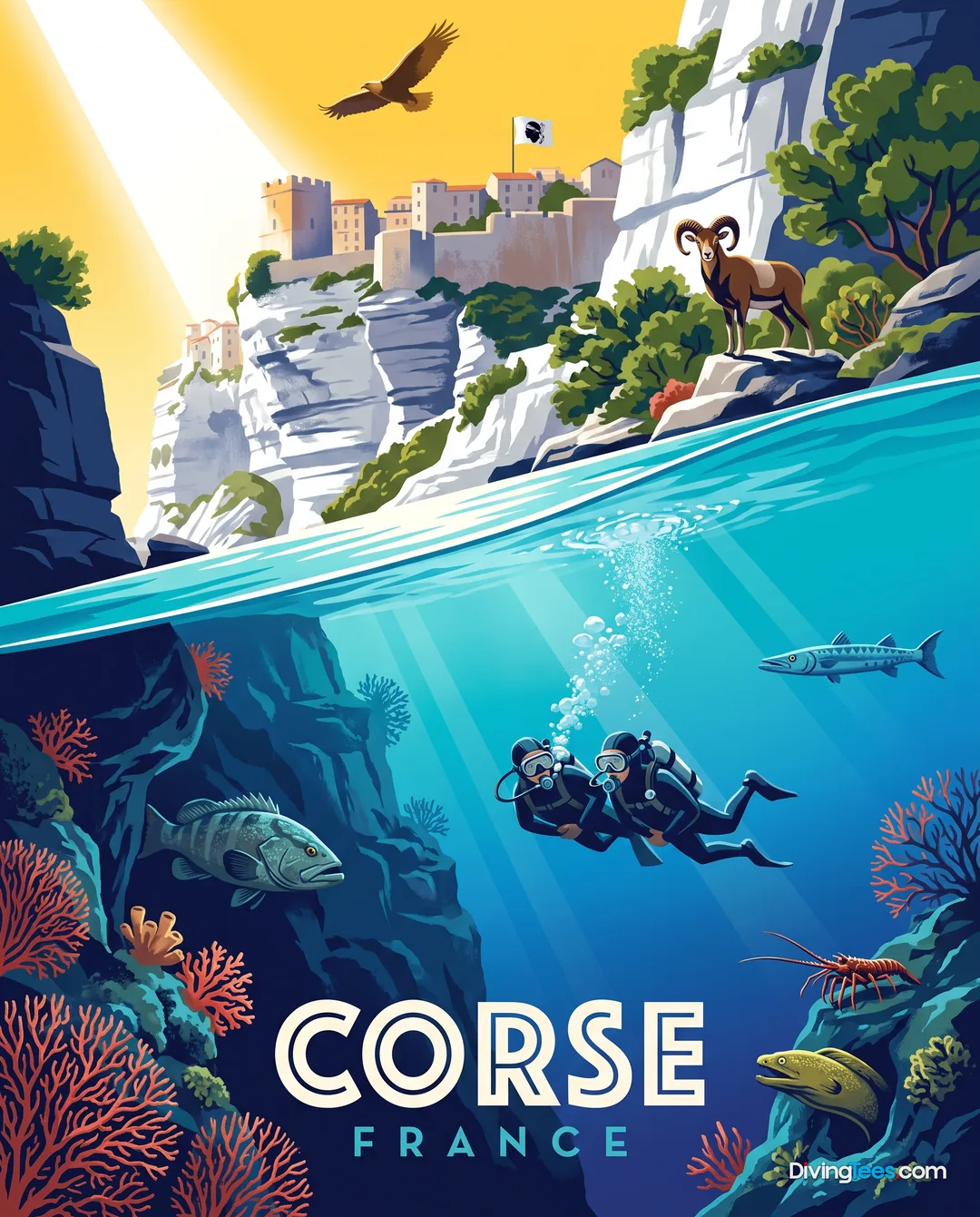
Diving in Corse brings granite pinnacles, walls, plateaux, arches, swim-throughs and posidonia. You may encounter groupers, corbs, moray eels, octopus, scorpionfish, schooling fish and spiny lobster. Open pinnacles can attract barracudas, while the upright B-17 wreck, red gorgonians, canyons, caves and clear blue space add variety.
Choose your maritime sector before booking accommodation, since regional ports are not interchangeable day-trip bases. Keep a short visit within one area, use a hire car or stay near the marina, and leave a weather-flexible day for exposed sites. Ask about reserve access rules, and consider a five- to seven-day stay from one base.