
Opaw Diving Center, Opaw Diving Camiguin
Google 5/5 (86 reviews)
Philippines · Asia
Volcanic reliefs, Mantigue Island’s coral gardens, green turtles and giant clams shape a shore-and-boat diving holiday with macro life in the mix.
For subtitles in English: start the video firstthen click the gearat the top right of the video, select “Subtitles/CC”, then “Auto-translate” and choose “English”.
At Mantigue Island Marine Sanctuary, coral reefs, green turtles and giant clams give Camiguin its clearest underwater identity. Around the main island, volcanic formations, walls, shallow highs and shore entries broaden the choice, with macro life adding a slower, observant side to the diving. This is a land-based Philippine trip rather than a liveaboard proposition, combining boat days with coastal dives and enough volcanic scenery, springs and island excursions to keep non-divers occupied.
Camiguin mixes shore diving with boat trips to Mantigue Island and other offshore sites. Underwater, expect coral reefs, volcanic reliefs, walls, shallow highs, fish-filled sanctuary areas and places where the terrain drops away. Current is variable rather than a constant feature, but it can turn a site into a drift dive, particularly around exposed reliefs and deeper walls. Advanced Open Water training is useful when depth or current becomes part of the plan. Visibility is commonly around fifteen to thirty metres in the more settled season, although coastal sites respond more quickly to swell, runoff and rain. Boat outings are the main way to reach Mantigue Island, while shore sites provide a practical alternative when conditions change. A safety stop is straightforward on suitable profiles, but the day’s current and the planned depth matter more than treating every Camiguin dive as an easy reef tour.
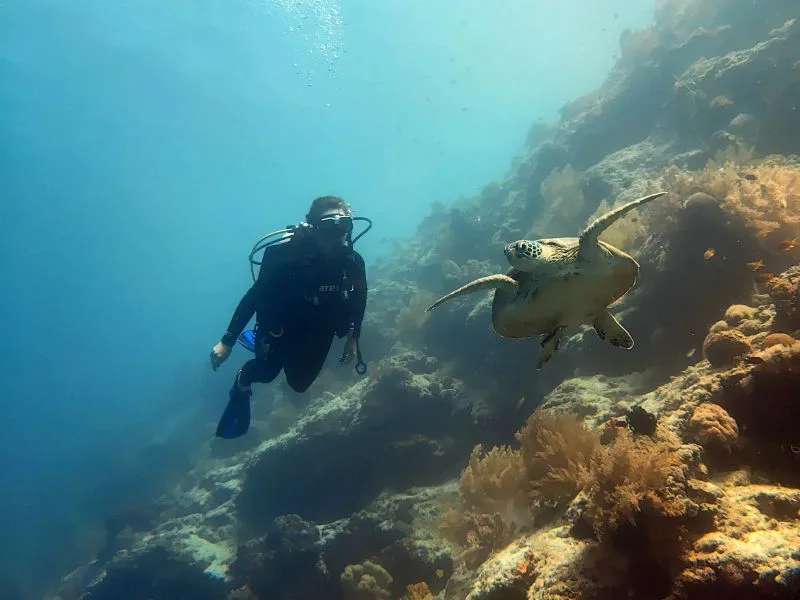
Green turtles are a regular part of the Camiguin picture, particularly around protected reef areas, while giant clams give the sanctuary sites a memorable piece of living structure to look for rather than simply another passing animal. Reef fish occupy the coral and volcanic formations, and nudibranchs reward the slower pace on macro-oriented dives. Mantigue Island brings the strongest combination of coral scenery, turtles and clams, while the main island’s shore sites can be better suited to searching for small life. Manta rays are rare and mobula rays occasional, so they belong in the possibilities rather than the itinerary. Encounters are not tied to a dependable seasonal calendar, making the resident reef life the sensible reason to come.
March to June is generally the most reliable window, when the sea is calmer and visibility is more consistent for the boat trips to Mantigue Island. From December to February, the north-east monsoon can raise chop and make exposed outings less comfortable, with visibility more liable to change. Diving remains possible then, especially on sheltered coastal sites, but the balance shifts towards flexible planning rather than a fixed boat schedule. Heavy rain and runoff can also reduce clarity, particularly close to shore. The best season therefore matters less because of a single seasonal animal than because it gives more dependable access to Camiguin’s offshore reefs.
Camiguin suits beginners on appropriate sheltered sites, as well as experienced divers who want coral, macro and volcanic terrain in one island stay. Mantigue Island can suit all levels when conditions are kind, but deeper walls and stronger current call for Advanced Open Water experience. A Drift Diver speciality is useful where the current dictates the exit. BSAC, PADI and SSI divers should discuss the planned depth, current and boat conditions rather than assume the island is uniformly easy.
From London Heathrow, London Gatwick or Manchester, travel first through Manila or Cebu, then use a domestic connection to Camiguin when available. The alternative is to reach Cagayan de Oro, continue by road to Balingoan and take the ferry to Camiguin, with the crossing taking about an hour. A separate maritime route runs from Jagna in south-east Bohol to Balbagon, taking roughly four to five hours depending on the service. Ferry days and timetables can change, so allow room between road, boat and air connections. Once on the island, accommodation follows the coastal road rather than one central town. Divers may reach their boat or shore meeting point on foot, by tricycle, local taxi or arranged shuttle.
Treat Mantigue Island as a planned boat day, not an addition to the morning’s spare capacity. Ask which side of Camiguin is workable in that day’s wind, and keep coastal diving as the fallback when the sea makes the crossing unattractive. Morning departures are worth prioritising because wind can build later and affect both visibility and comfort. Leave a spare day before the flight or long journey home, and never build a tight air connection around a ferry arrival. On deeper volcanic walls and exposed highs, check the intended depth and current rather than relying on a beginner profile. At Mantigue, follow the local guide and sanctuary rules, including the established moorings or sandy anchorage instead of dropping an anchor on coral. The same practical caution applies in December to February: do not book the trip on the assumption that the north-east monsoon will provide the calmest boat weather.
Allow seven to ten days for a comfortable land-based stay, with several diving days and some weather margin. Accommodation is spread along Camiguin’s coastal road, so the daily transfer to the diving meeting point depends on where you stay. Shore dives can fill a disrupted boat day, while non-divers have springs, waterfalls, volcanic scenery, White Island, the Sunken Cemetery and Mantigue Island’s snorkelling and coastal outings. The result is a flexible island itinerary rather than a concentrated resort schedule.
Hello, I'm Marina, DivingDeal.com's AI assistant. I guide you through destinations, areas and countries.
Thinking about the whole trip and the flights? Talk it over with Edith →
Marina is an AI. Some links are affiliate links: DivingDeal may earn a commission, at no extra cost to you. Bookings are made with the partner.
March to June is generally the most reliable period, with calmer seas and more consistent visibility for boat trips to Mantigue Island. From December to February, the north-east monsoon can bring chop and changing visibility. Diving remains possible on sheltered coastal sites, but rain, runoff and wind call for flexible planning.
Camiguin suits beginners on appropriate sheltered sites and experienced divers interested in coral, macro life and volcanic terrain. Mantigue Island can suit all levels when conditions are kind, while deeper walls and stronger current call for Advanced Open Water experience. A Drift Diver speciality is useful where current determines the exit.
Mantigue Island Marine Sanctuary combines coral reefs, green turtles and giant clams, while Camiguin’s main island offers volcanic formations, walls, shallow highs and reef fish. Slower macro dives may reveal nudibranchs among the reliefs. Manta rays are rare and mobula rays occasional, so resident reef life is the sensible focus.
Plan a land-based island stay with boat days for Mantigue Island and shore dives as a practical fallback when wind disrupts crossings. Keep morning departures flexible, leave room around ferry, road and air connections, and allow spare time before your journey home. Accommodation follows the coastal road, with springs, waterfalls and volcanic scenery for non-divers.