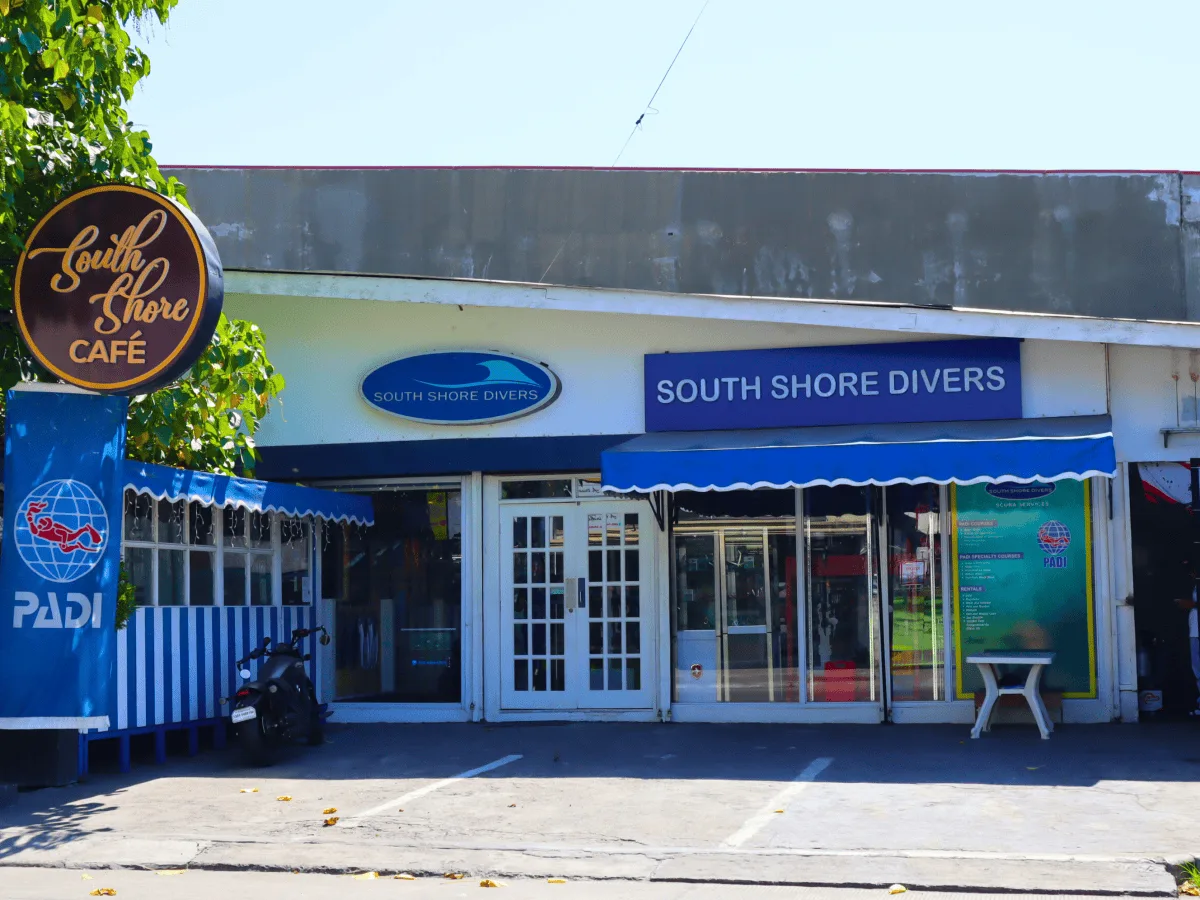

South Shore Divers
Google 4.8/5 (31 reviews)
Philippines · Asia
Coral gardens, deeper walls, macro life and Second World War wrecks spread between Samal, Talikud, Ligid and Malipano.
For subtitles in English: start the video firstthen click the gearat the top right of the video, select “Subtitles/CC”, then “Auto-translate” and choose “English”.
Davao is a city-based launch point for coral gardens, walls, macro sites and Second World War wrecks around Samal, Talikud, Ligid and Malipano. The diving is done mainly from boats, with Davao City and Samal providing practical bases rather than a single resort-style shoreline. That makes it useful for a five- to seven-day trip combining several island outings with time in Davao City, beach days and trips across Samal. It suits divers who want Philippine reef diving without spending the whole holiday in a remote resort.
Underwater, Davao moves between coral gardens, deeper walls, island reefs, drift dives and wartime wrecks. Samal and the nearer coastal sites can offer straightforward dives, while Talikud and the outer islands make longer boat days worthwhile. Currents are variable rather than a constant feature, but some walls and drift dives need a controlled descent, sensible positioning and a clean separation from the boat. Visibility is commonly around 10 to 25 metres from March to June, although coastal water can carry sediment and turn noticeably more turbid than the outer reefs. Ask about the conditions at each island rather than treating a report from Samal as a promise for Davao’s shore. The practical rhythm is a day boat carrying two or more dives, with the return journey governed by the sea and the route back to port.
Coral gardens provide the broadest visual appeal, but Talikud and other Gulf sites are also used for macro diving. Look closely among the reef growth for nudibranchs and other small creatures, and tell the guide in advance if that is the purpose of the dive. The wrecks add a different setting, with metal structure replacing the open reef profile, while the walls give larger, deeper-looking spaces to explore. Whale sharks are an occasional possibility from December to February, not a dependable feature to build the whole trip around. Davao is therefore more convincing for divers happy to alternate reef scenery, small subjects and wreck structure than for anyone expecting one guaranteed animal encounter.
The sea is generally at its most settled from February to June, when the north-east monsoon weakens and boat conditions become more regular. Visibility is also usually more dependable from March to June, with 10 to 25 metres common when recent weather has not stirred up coastal sediment. From July to October, the south-west monsoon can bring more chop and less consistent visibility, although diving does not stop automatically. December to February adds the occasional whale shark possibility, while February remains useful for combining that chance with the improving sea. A 3 mm full suit is the sensible default, and a five- to seven-day stay leaves room to move boat days when conditions change.
Some coral gardens and shallower sites suit beginners, including divers qualifying through PADI, SSI or BSAC, provided the day’s conditions are appropriate. The deeper walls, variable currents and drift dives are better matched to experienced divers with sound buoyancy and current awareness. An Advanced Open Water qualification is useful for the deeper wall sites, while drift-diving training helps where the current determines the route. Experience matters more than collecting a particular card, because the same island area can offer an easy reef dive or a more committing boat briefing.
From London Heathrow, London Gatwick or Manchester, the journey involves reaching the Philippines and then taking a domestic flight to Davao City. Build in connection time rather than treating the domestic leg as an afterthought. In Davao City, Santa Ana Wharf is reached by taxi or an urban transfer, and it is the practical starting point for boats heading towards Samal and the other islands. Samal can also be used as a base, with departures arranged from an island centre or resort jetty. A road journey ends at the quay: the dive sites themselves require a sea crossing, and no road route replaces the boat. Your accommodation therefore affects every morning’s transfer and boat time.
Treat the harbour as part of the dive plan. If you are staying in Davao City and want several different islands, staying near Santa Ana Wharf reduces the risk of losing the morning to urban transfers. For Talikud, Ligid or the outer islands, group the dives into a proper boat day rather than building repeated crossings between Davao City and Samal. Weekends can fill more quickly, so reserve those departures ahead if the visit is short. Keep the day of your flight free from diving, particularly after an island outing that can return late or be delayed by the sea. Bring your own computer and thermal protection if equipment may be shared between centres. Ask specifically for macro sites and nudibranch searches, and ask for the day’s visibility and current at each island. Do not book a wall or drift dive on the assumption that every site is beginner-friendly.
A sensible stay is five to seven days on land, divided between Davao City and Samal if you want both city access and shorter island transfers. Use several days for boat diving, keeping at least one spare day for a change in sea conditions and one non-diving day before flying home. Talikud and the outer islands deserve a full outing rather than a rushed add-on. Non-divers have beaches, island trips, markets, parks, waterfront areas and nature activities to fill the surface interval.
Hello, I'm Marina, DivingDeal.com's AI assistant. I guide you through destinations, areas and countries.
Thinking about the whole trip and the flights? Talk it over with Edith →
Marina is an AI. Some links are affiliate links: DivingDeal may earn a commission, at no extra cost to you. Bookings are made with the partner.
Davao usually has more regular boat conditions from February to June as the north-east monsoon weakens. Visibility is commonly around ten to twenty-five metres from March to June, when recent weather has not stirred coastal sediment. December to February brings an occasional whale shark possibility, while July to October can bring more chop and less consistent visibility.
Davao offers shallower coral gardens and straightforward sites for beginners when conditions suit the day. Deeper walls, variable currents and drift dives are better for experienced divers with reliable buoyancy and current awareness. Advanced Open Water training is useful for deeper walls, while drift-diving experience helps where currents determine the route and positioning.
Davao combines coral gardens near Samal, Talikud and Ligid with deeper walls, island reefs, macro sites and Second World War wrecks reached by boat. Look closely for nudibranchs and other small creatures around Talikud and the Gulf. Whale sharks may appear occasionally from December to February, but reef, macro and wreck diving form the wider experience.
Plan a five- to seven-day stay around boat diving from Santa Ana Wharf or Samal, grouping Talikud, Ligid and outer-island trips into full outings. Staying near the wharf can simplify city departures, while Samal can shorten island transfers. Keep a spare day for changing sea conditions, avoid diving before your flight, and reserve busy weekend departures ahead.