
Reggae Dive Center
★ 4.9/5 (1,673 reviews)
16 km away as the crow flies
Coron · Philippines · Asia
Max. depth · 42 mExplore the Kyokuzan Maru, an immense and largely intact Japanese auxiliary supply ship, offering a unique window into WWII history and a thriving artificial reef.
For subtitles in English: start the video firstthen click the gearat the top right of the video, select “Subtitles/CC”, then “Auto-translate” and choose “English”.
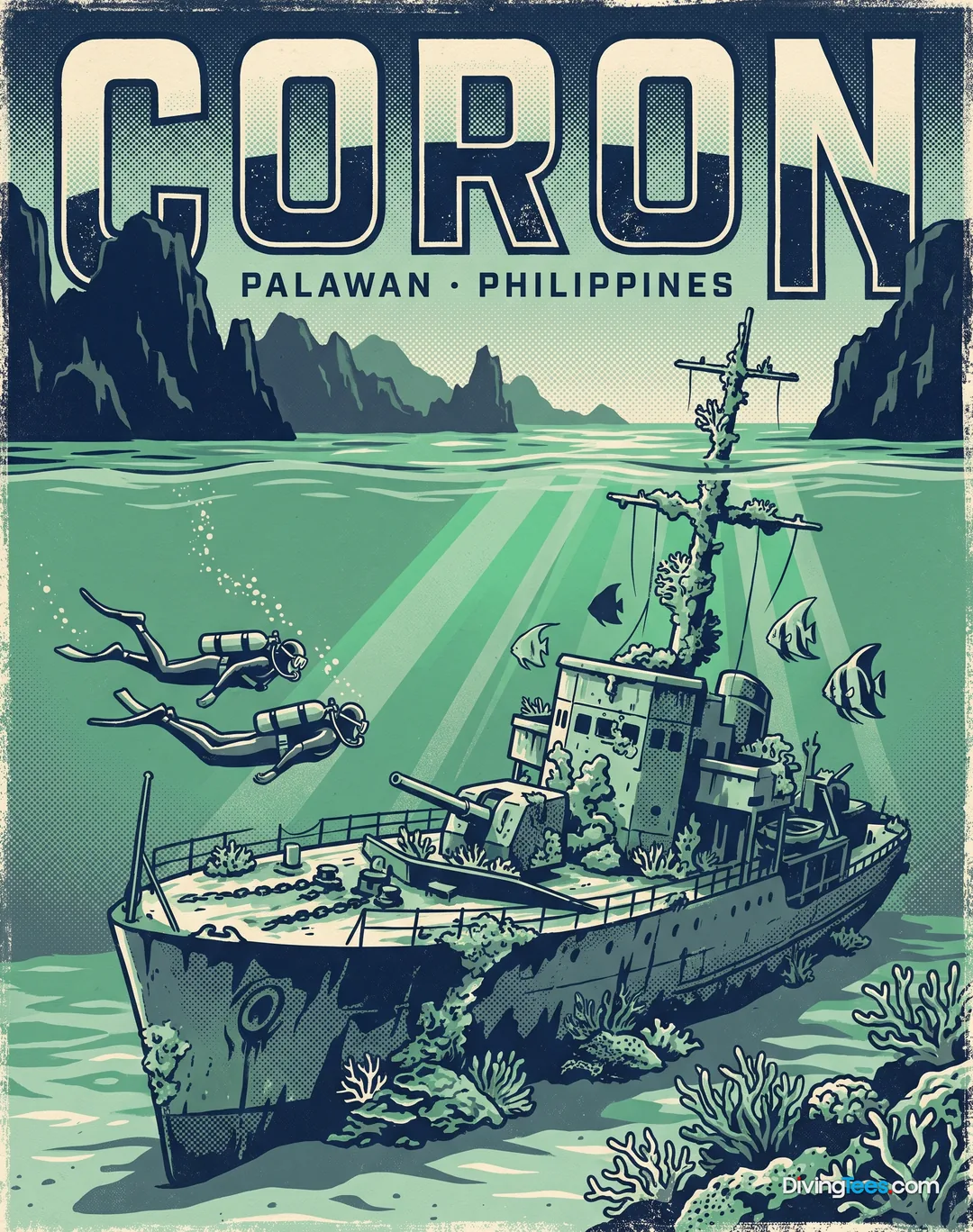
The Kyokuzan Maru, a significant Japanese auxiliary supply ship of the Imperial Japanese Army, rests upright on the seabed off Coron, on the opposite side of Busuanga Island, forming a key part of Palawan’s infamous WWII wreck alley. This extensive wreck, measuring between 160 and 180 meters long, demands careful planning to explore thoroughly. Her hull lies at 42 meters, with the main deck around 26 to 28 meters, and the wheelhouse rising to 22 to 24 meters, offering multiple depth zones for exploration.
Approaching this wreck, its sheer scale comes into view, largely intact despite its wartime sinking on September 24, 1944. The ship was hit on her port side during a U.S. air raid, sustaining severe damage from relentless dive bombings and strafing runs, which turned it into a burning hulk. The bombing hull, cargo holds, and engine room remain solid, suggesting the crew ultimately scuttled and abandoned the ship. This preservation offers a cohesive structure to navigate, rather than a scattered debris field, allowing divers to trace the scars of its violent history, with many sections bearing evidence of the wartime ordnance that tore through its steel.
One of the distinct features of the Kyokuzan Maru is the visible cargo in her holds. Penetrating cautiously into the second aft hold at 31 meters, divers will discover a largely intact Japanese military jeep, a frozen artifact of wartime logistics. Other cargo includes what is believed to be Japanese personnel cars and trucks, offering a unique glimpse into the vessel's original purpose. The interior holds also reveal remnants of the ship's daily life, such as Chinese dinnerware and exposed plumbing, details that add to the historical context of the dive.
While general penetration is not recommended without specific training and adequate gas planning, certain sections of the wreck allow for overhead environment passages accessible to advanced divers. The wreck is not merely a collection of corroded metal; it's a structural time capsule that invites careful exploration, allowing divers to move through an environment sculpted by both human conflict and the gradual processes of marine life reclaiming its dominion. Early stages of coral growth have begun to colonize its surfaces, transforming the wreck into an artificial reef.
Due to its considerable length, exploring the Kyokuzan Maru typically requires at least two separate dives to appreciate its full extent and discover its significant features. The sheer size of the vessel and its remote location mean a full day trip is usually dedicated to this site, providing ample opportunity for thorough exploration without being rushed. Surface intervals near the adjacent Dimalanta islet can offer a different perspective of the area. The light filters through the water column, penetrating deeper into crevices and hold openings, creating dramatic visual effects and highlighting the intricate details of the vessel, from its intact sections to areas of significant rupture caused by its traumatic end.
The Kyokuzan Maru is accessible to Advanced Open Water Divers, with a Wreck Diver Specialty certification recommended for overhead environment exploration. Depths range from a minimum of 22 meters to a maximum of 42 meters. Visibility typically remains around 20 meters. Diving conditions are generally calm, with minimal current observed, making it a stable environment for wreck exploration. The most favorable dive season is from October to June, with the optimal time between October and March, coinciding with the region's warm and generally dry autumn season. Divers should plan to avoid the cooler, wetter tropical monsoon season which runs from July through September. Enriched air nitrox (EANx 32 or 28) is recommended to maximize bottom time.
2 liveaboards depart from Coron another way to explore the region, over several days at sea.