
Reggae Dive Center
★ 4.9/5 (1,673 reviews)
15 km away as the crow flies
Coron · Philippines · Asia
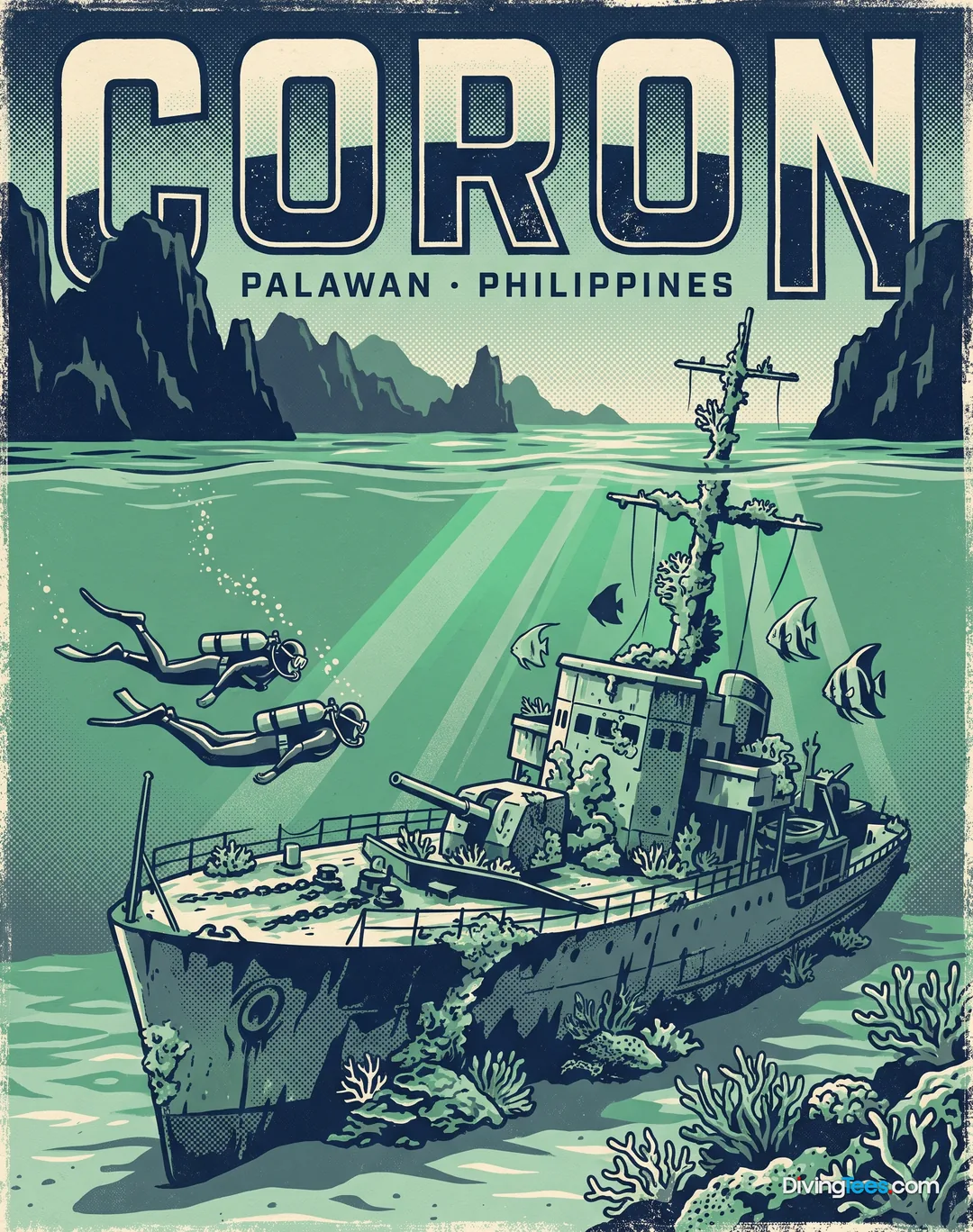
Max. depth · 30 mDive into history and marine life on the remarkably intact 128-meter Olympia Maru, a WWII cargo ship sunk by a fierce aerial assault.
For subtitles in English: start the video firstthen click the gearat the top right of the video, select “Subtitles/CC”, then “Auto-translate” and choose “English”.
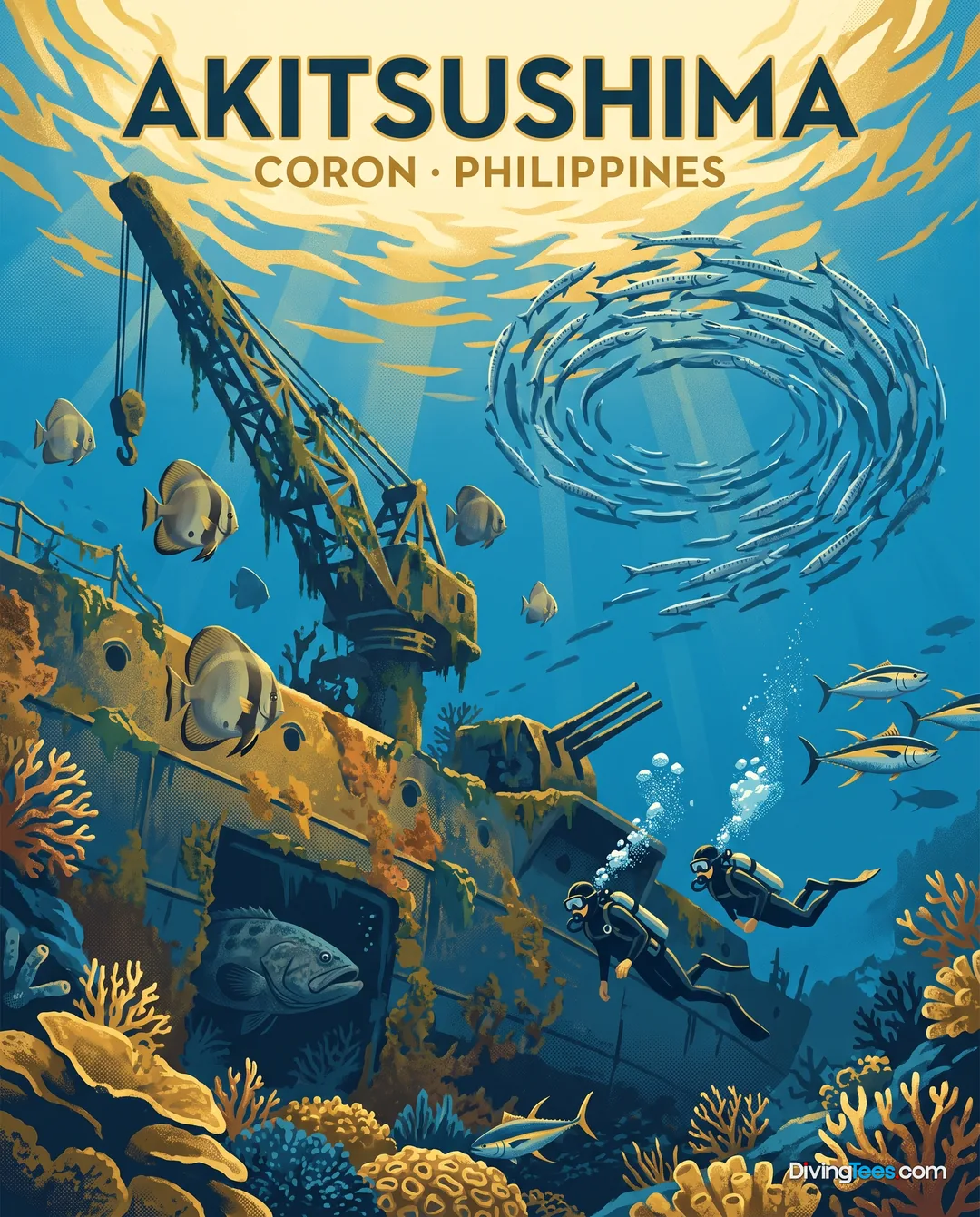
The Olympia Maru, an Imperial Japanese Army auxiliary cargo ship, lies entombed between 18 and 30 meters on its starboard side, a silent testament to a fierce aerial assault during World War II. Measuring 128 meters in length, this freighter is remarkably intact. Its story begins with an attack by ten dive bombers, an intense engagement that ultimately sealed its fate. Accounts detail an unyielding barrage, with initial runs from three American pilots preceding the decisive strike. A fourth attack plane delivered a critical blow amidships, crippling the vessel and rendering it unable to manoeuvre. This impact set in motion the chain of events that led to its sinking, transforming the cargo ship into an underwater monument.
As the ship succumbed to the damage, it began its descent stern-first, reportedly carrying 19 crew members with her, adding a poignant human element to the wreck's narrative. Today, the Olympia Maru rests as a memorial to this moment, inviting divers to connect with its past.
You approach the wreck descending into the thermocline, initially encountering the port side, which faces upwards and is now a thriving reef blanketed in soft and hard corals, including large lettuce corals, black corals, hydroids, and sponges. This vibrant growth offers endless nooks for smaller creatures, setting the tone for the dive. As you move further along the wreck, you'll find the main deck between 18 and 24 meters, making it accessible for extended bottom times. The ship’s original structure is clearly visible, with its cargo holds providing opportunities for easy penetration. The wreck rests upright on the seabed, allowing for clear navigation along its length. Pay attention to the subtle shifts in light as you explore the holds, where different marine life gathers away from the direct current, creating distinct micro-environments within the larger wreck. This layout offers a varied dive experience where you transition from exterior reef to interior exploration.
The Olympia Maru is a dynamic environment for marine life. Large schools of banana fish, giant batfish, and giant pufferfish are a common sight, circulating around the mast, bow, and stern sections. Closer inspection reveals crocodile fish and scorpionfish camouflaged on the deck and hull, waiting for their prey. The general calm currents for much of the dive allow for patient observation of these species, enabling you to take your time and watch their natural behaviors without strong resistance. Beyond the larger schools, the ecosystem of the Olympia Maru supports a wide array of smaller, resident fauna. Sea cucumbers, anemones with clownfish, snapper, fusiliers, gold-spotted rabbitfish, and damselfish populate the coral-encrusted structure.
Groupers are also present, often found near the deeper sections or within the shadow of the wreck. The port side, specifically, with its dense coral growth, acts as a nursery and feeding ground, offering a rich tapestry of life in varying depths. This dive site offers a palpable sense of history, differing from many natural reef systems by its profound narrative. You are not merely observing marine life; you are swimming through a moment frozen in time, a significant piece of WWII history made accessible underwater.
The Olympia Maru is accessible from Open Water Diver certification, with the deeper sections to 30 meters requiring an Advanced Open Water Diver rating. Minimum depth is 18 meters, extending to a maximum of 30 meters. Current is generally calm, but can sometimes be strong, especially during tidal changes, so maintain situational awareness. During the months of October through March, the region typically experiences its warm and generally dry autumn season, offering the most favourable conditions for diving. It is advisable to avoid the cool and wet tropical monsoon season, which runs from July through September, for a more enjoyable experience.
★★★
★ 9.3/10 (277 reviews)
1.1 km away as the crow flies
★★★★
★ 9.5/10 (303 reviews)
11 km away as the crow flies
★★★★
★ 9/10 (912 reviews)
15 km away as the crow flies
★★★
★ 9.5/10 (254 reviews)
25 km away as the crow flies
2 liveaboards depart from Coron another way to explore the region, over several days at sea.