
Palaka Siargao Dive Center
Google 4.7/5 (347 reviews)
Philippines · Asia
Coral gardens around Daku and Casulian, macro life at Pilar, Blue Cathedral’s deep passage and open-water surge define Siargao underwater.
For subtitles in English: start the video firstthen click the gearat the top right of the video, select “Subtitles/CC”, then “Auto-translate” and choose “English”.
Blue Cathedral’s deep, cave-like passage gives Siargao its more serious edge, but much of the diving begins more gently among coral gardens around Daku and Casulian. General Luna is the practical base, with boat trips reaching reefs and rocky sites around nearby islands, Pilar and other points along the coast. It suits a mixed holiday particularly well: diving occupies the calmer days, while surf, beaches, sandbanks, mangroves and island scenery give non-divers plenty to do.
Siargao’s underwater character changes with the shelter available. Around Daku, Casulian, Pilar and San Miguel, expect coral gardens, rocky reef and macro subjects in sites that can suit beginners when the water is settled. The sites facing the Pacific are a different proposition, with surge, variable current, depth and a greater dependence on the day’s sea state. Blue Cathedral is the clearest example, combining a deep passage or cavern-like feature with conditions that can change during the dive. Visibility in sheltered bays is commonly around 15 to 25 metres, although rain and runoff can reduce it. Offshore sites may remain clearer when coastal water is carrying sediment. Most outings leave by boat from the General Luna area, and some exposed dives may involve drift-dive conditions rather than a quiet descent and ascent.
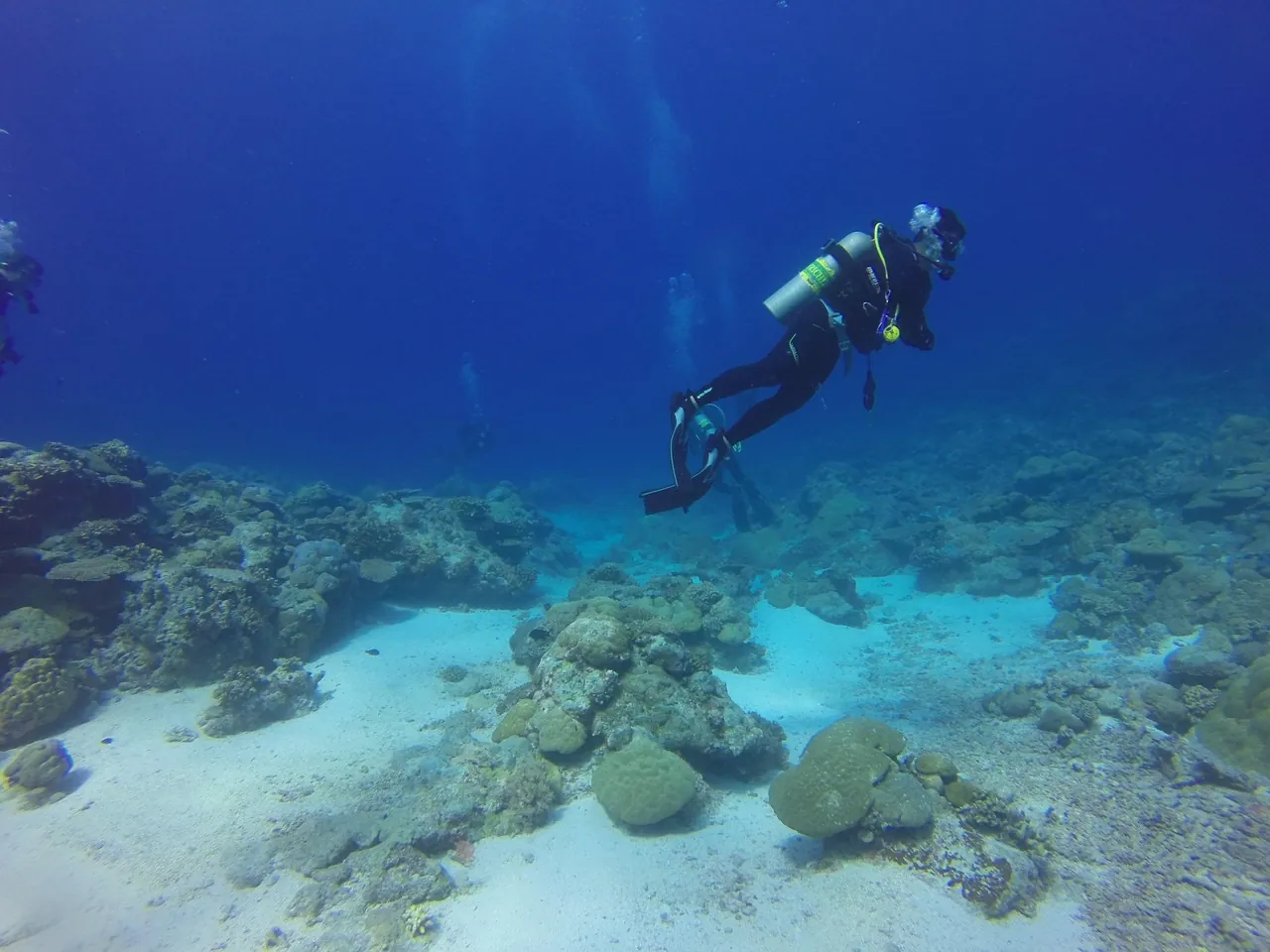
The dependable attraction is the reef itself: coral gardens, reef fish and small invertebrates, with macro diving available around Pilar, San Miguel and the island sites. Rocky reef and sheltered coral areas reward a slow search rather than a rushed sightseeing dive, particularly when visibility is affected by rain or runoff. Blue Cathedral and Shark Point shift the emphasis from close inspection to terrain, depth and moving water, so what you notice there depends as much on position and timing as on a species list. There is no established seasonal animal event to plan around. March to June is the most useful period for seeing into the bays, while calmer days can open the clearer offshore sites.
March to October is the most workable window, with the best visibility generally from March to June and calmer conditions giving boat crews more choice. January and February are less reliable because the north-east monsoon brings stronger swell and heavier rain, especially to the exposed Pacific-facing sites. From June to October, the south-west monsoon can still bring squalls and a rougher sea, even though diving continues. Plan around flexibility rather than a fixed site schedule: sheltered bays may remain possible when Blue Cathedral or another open-water dive is cancelled, and several reserve days make that distinction far less frustrating.
Siargao can work for a newly qualified diver, provided the first dives are in a sheltered bay or around an island with little current. It also gives more experienced divers something to assess, particularly at Blue Cathedral, Shark Point and other Pacific-facing sites where depth, surge and changing current matter. Advanced Open Water is useful for the deeper and more exposed diving, while a Drift Diver speciality is relevant where the water moves. Certification alone is not a substitute for judging the day’s conditions.
From London Heathrow or Gatwick, or from Manchester, the structural journey is a connection through the Philippines rather than a direct arrival. The usual air route is a domestic flight from Manila to Siargao, with Cebu also offering connections according to the timetable. Allow room for the change between international and domestic travel, rather than building a boat departure into a tight itinerary. A ferry from Mindanao is another possibility, but its port, sailing time and timetable depend on the service. Once on Siargao, reach the General Luna diving area by road, using a scooter, tricycle or arranged transfer, then continue to the sites by boat.
Keep the exposed sites flexible. Do not book a week around Blue Cathedral, because swell, surge and current can make it unsuitable even when a bay dive is running. Ask specifically whether each proposed site is sheltered around Daku or Casulian, or open to the Pacific, since those labels tell you far more about the likely dive than a generic difficulty grade. On arrival, make the first dive a low-current bay or island site before committing to a deep passage. Keep several days free for weather, and group the open-water trips on the calmest forecast rather than filling every morning. Carry specialised dive or camera equipment if you need it, as availability of particular accessories should not be assumed. Check ferry arrangements separately from flights, and remember that the protected landscape includes restrictions on anchoring and on taking corals, shells, organisms or protected artefacts.
Most divers stay in or near General Luna, where road transfers lead to the boat departure point. Scooter, tricycle or an arranged transfer covers the land leg, with the exact journey depending on the accommodation. Days are best organised around the sea state: use calm mornings for the exposed Pacific sites, and keep Daku, Casulian or another sheltered island option for rougher weather. A seven- to ten-day stay leaves room for boat cancellations while still allowing time for surf, Cloud 9, beaches, mangroves, lagoons and island excursions.
Hello, I'm Marina, DivingDeal.com's AI assistant. I guide you through destinations, areas and countries.
Thinking about the whole trip and the flights? Talk it over with Edith →
Marina is an AI. Some links are affiliate links: DivingDeal may earn a commission, at no extra cost to you. Bookings are made with the partner.
March to October is the most workable window for diving in Siargao Island. March to June generally offers the clearest bay visibility and calmer conditions. January and February bring stronger swell and heavier rain, while June to October can still bring squalls and rough seas. Keep plans flexible around the forecast.
Siargao Island can suit newly qualified divers when you begin in a sheltered bay or around an island with little current. More experienced divers can assess Blue Cathedral, Shark Point and Pacific-facing sites with depth, surge and changing currents. Advanced Open Water is useful for deeper exposed dives, and Drift Diver training is relevant where water moves.
Diving in Siargao Island features coral gardens around Daku and Casulian, reef fish, rocky reef and small invertebrates. Pilar, San Miguel and island sites offer macro subjects for slow searches. Blue Cathedral adds a deep, cave-like passage, while Shark Point and exposed Pacific sites focus attention on terrain, depth, surge and moving water.
Base yourself in or near General Luna, then travel by scooter, tricycle or arranged transfer to the boat departure point. Keep Blue Cathedral and other exposed sites flexible, using calm mornings for them and sheltered options around Daku or Casulian in rougher weather. Leave several days for cancellations, and allow time for beaches, surf, mangroves and island excursions.