Liveaboards · Thailand
Andaman — a sociable dive boat with the whole Similan route within reach
What makes this boat unique
- Andaman is a 26-metre steel-hulled liveaboard, renovated in 2024, with space for up to 20 passengers.
- The main routes cover the Similan and Surin Islands, Koh Bon, Koh Tachai and Richelieu Rock.
- The boat offers shaded diving space, a dedicated dive platform, DIN adapters, camera rinsing and one tender.
- Trips include full-board meals, snacks, rental equipment, non-alcoholic drinks, Wi-Fi and beach barbecues.
- The strongest passenger impressions concern the crew, food and diving rather than the boat itself.
For subtitles in English: start the video firstthen click the gearat the top right of the video, select “Subtitles/CC”, then “Auto-translate” and choose “English”.
The invitation
Andaman is for divers who want the northern Andaman Sea rather than a polished floating hotel. The reason to board is the route: Similan granite, Surin coral gardens, Koh Bon’s manta cleaning station, Koh Tachai’s current-swept pinnacles and the fish-packed isolation of Richelieu Rock. The boat puts those sites into one trip, with shorter itineraries that can be joined together for more time in the water. It suits divers who enjoy a social boat, shared meals and a crew that stays close to the group. The vessel has history, but the 2024 renovation matters: the appeal is not pretending Andaman is new. It is a working dive boat kept useful, with generous areas where twenty people can spread out after a dive. Choose it for the diving, the people and the easy, communal rhythm around both.
Boarding
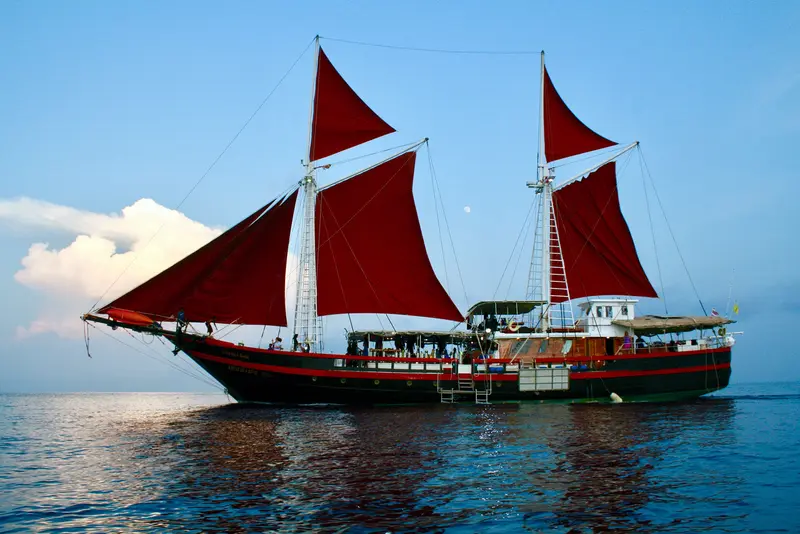
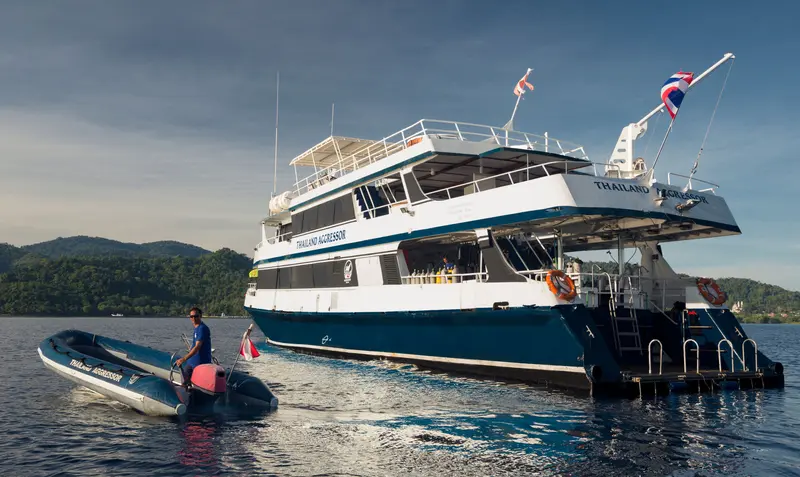
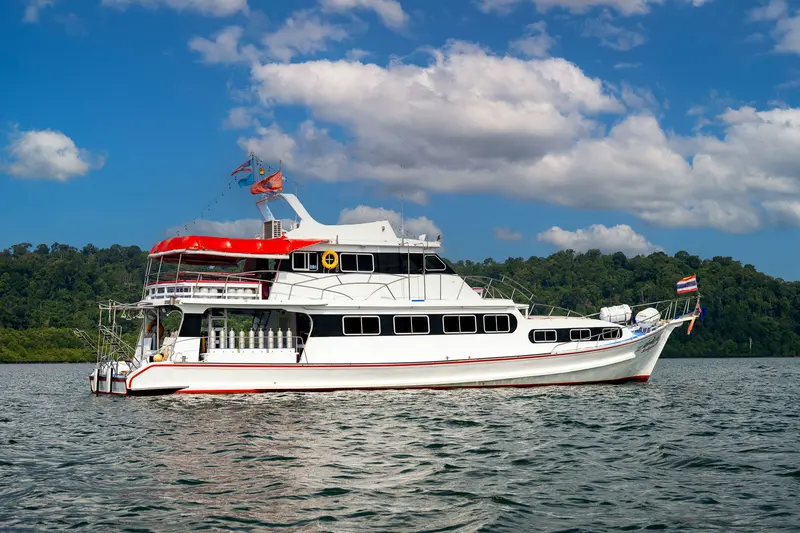
From the dock, Andaman presents as a practical steel-hulled dive vessel rather than a resort yacht. Its working character is part of the point: this is a boat built around getting divers to sites, feeding them well and giving them somewhere to sit between descents. The 2024 renovation has brought the older vessel back into service without erasing its history. Once aboard, the generous communal areas make the passenger limit feel less restrictive than the cabin count suggests. There is a shaded place near the dive operation, open-air dining and an observation level for watching the sea or the islands come past. Movement is straightforward, with the cabins below and the social life above. The boat is large enough to avoid feeling cramped, but still small enough that the same faces and voices follow the trip from the first briefing to the last barbecue.
The atmosphere on board
Andaman’s atmosphere is notably social and playful. The crew becomes part of the daily conversation rather than remaining behind a service counter, and the group tends to form quickly around the dive briefings, meals and stories after surfacing. That matters on a liveaboard: the same people share the tender, the table and the limited dry space for several days. Passenger experience rates the boat itself below the crew, while the crew, food and diving score particularly strongly. In plain terms, Andaman is an older working platform whose people carry much of its character. The gain is a trip that feels human and informal rather than managed from a distance. Evenings lead naturally to dinner, the barbecue area and audio or video entertainment, but the best part is usually the conversation that starts after someone mentions a manta, a whale shark or a small creature found on the last dive.
The sites you’ll dive
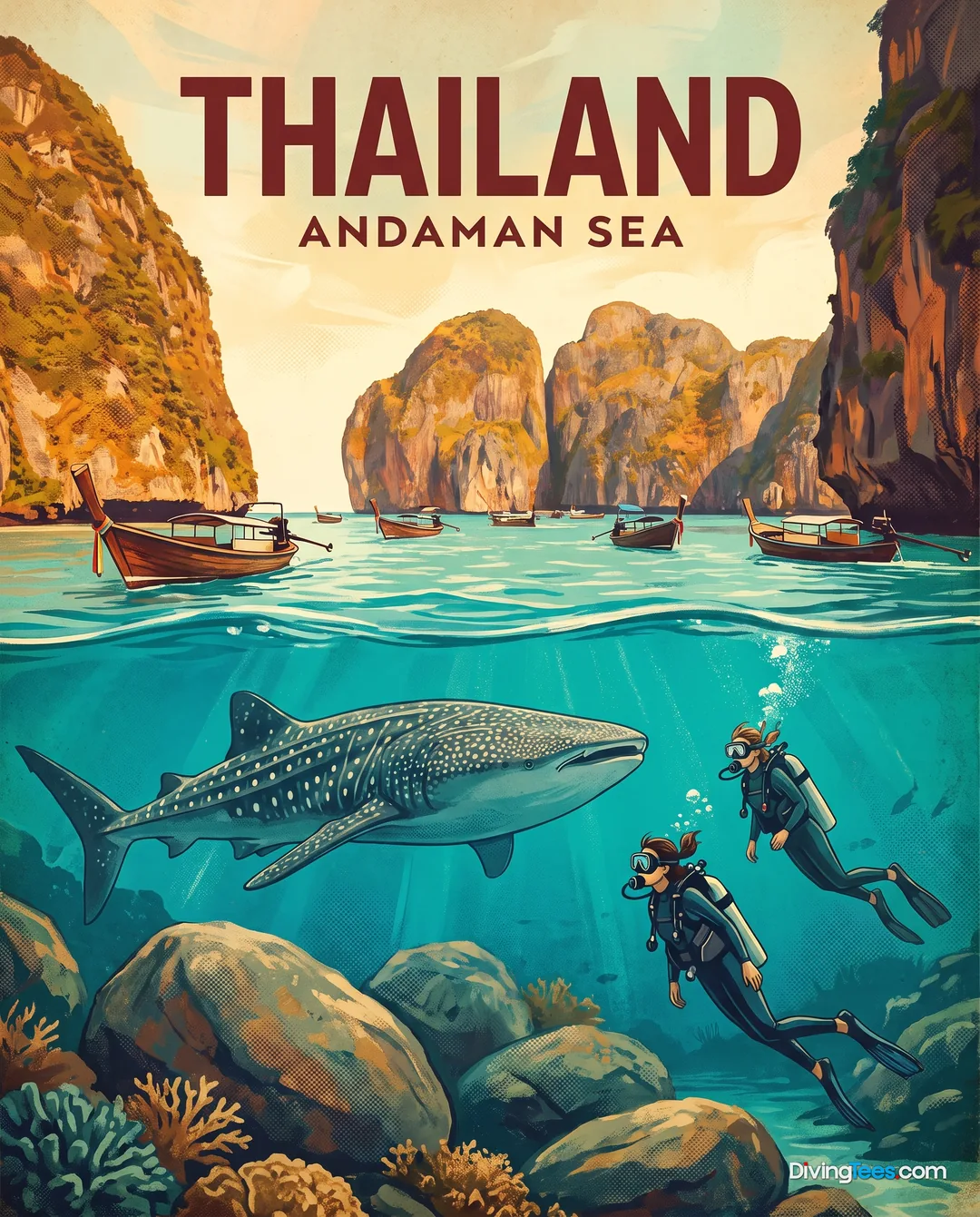
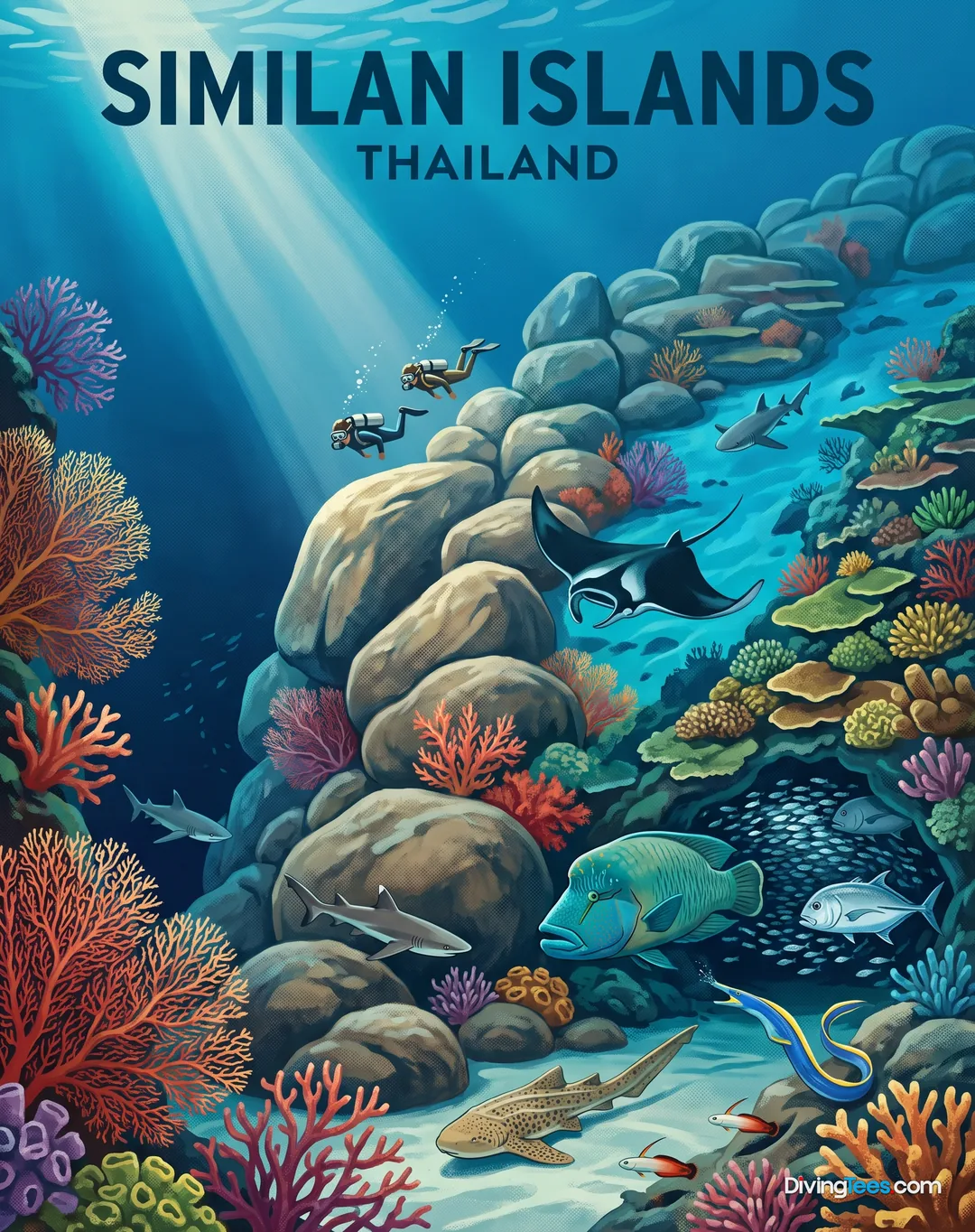
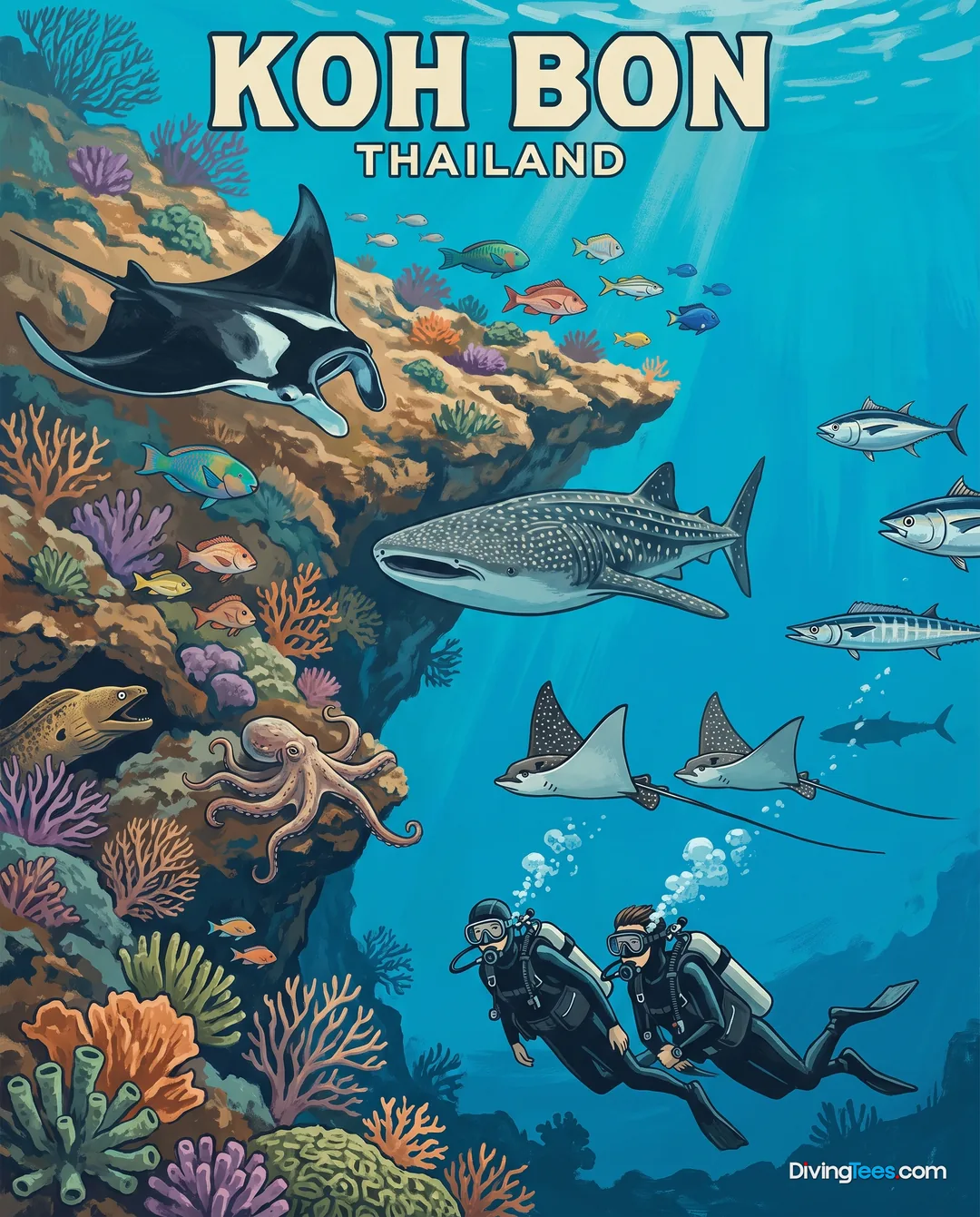
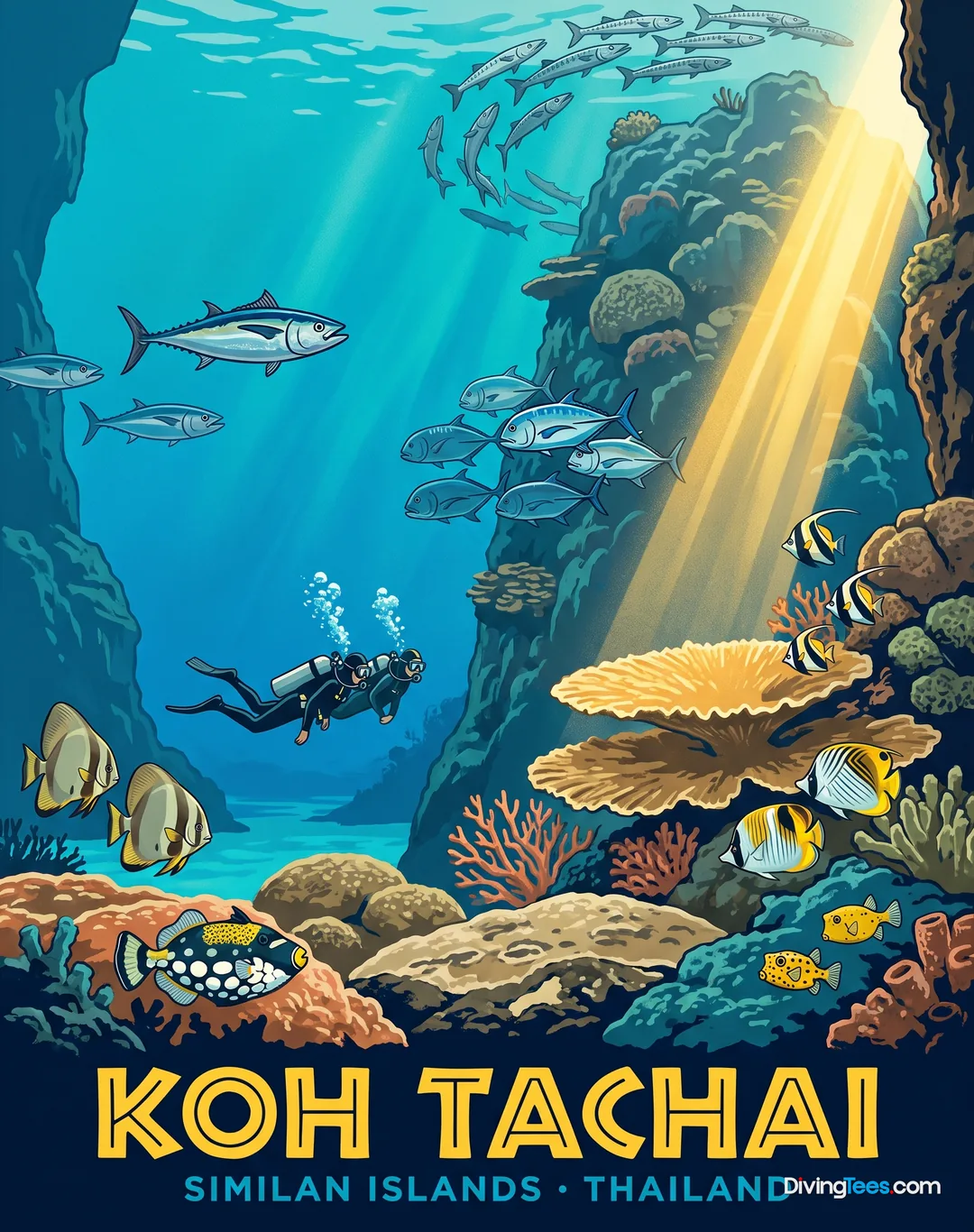
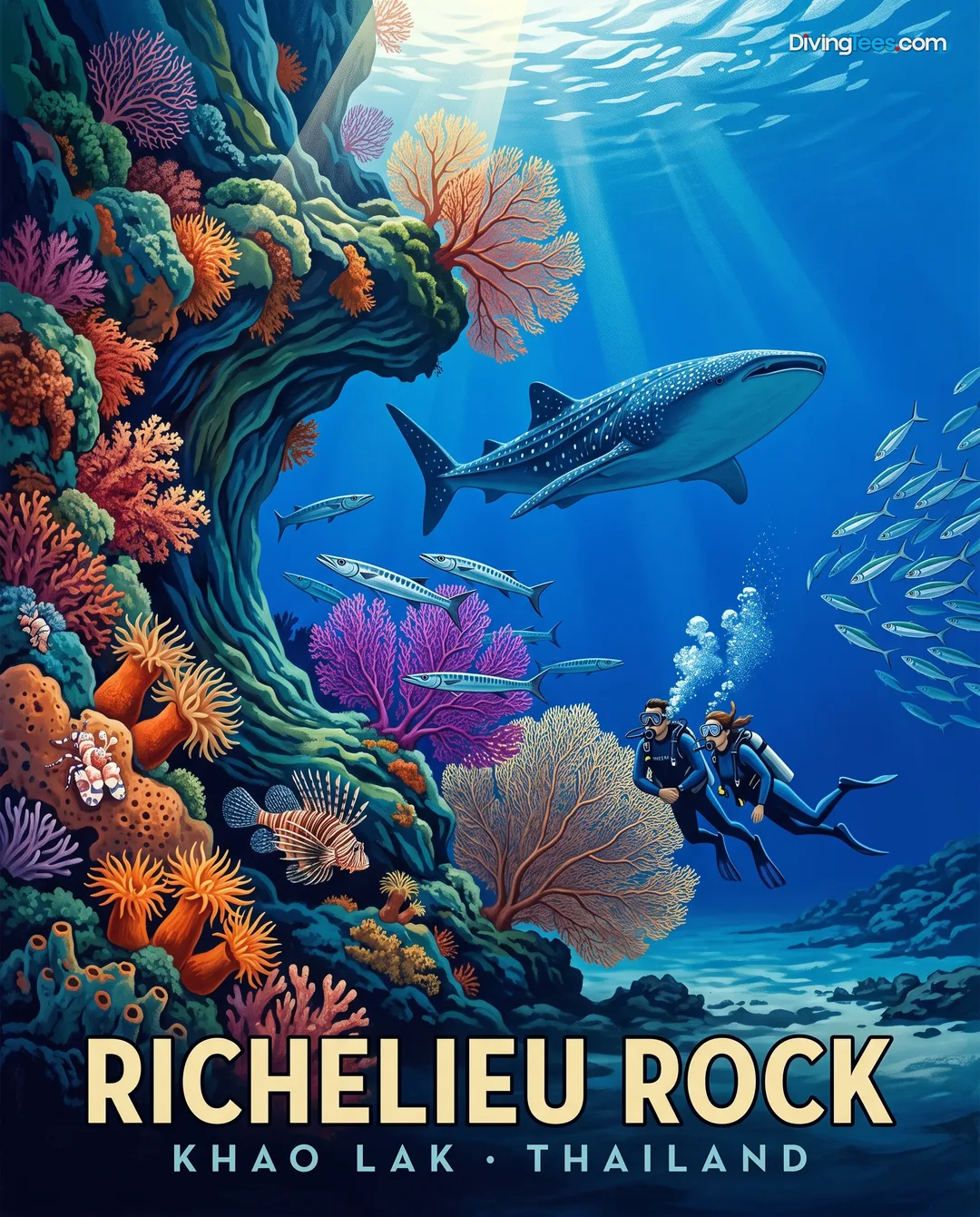
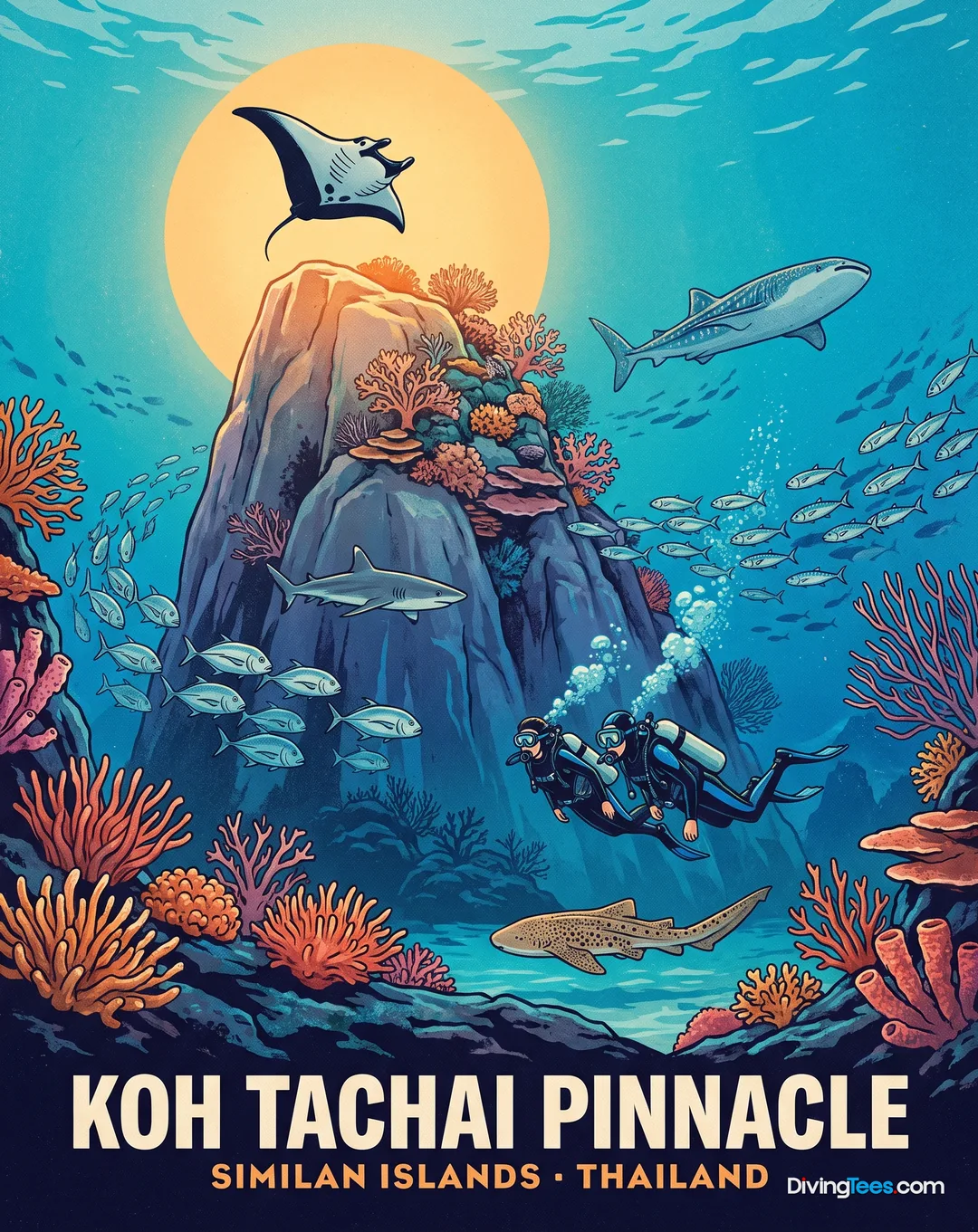
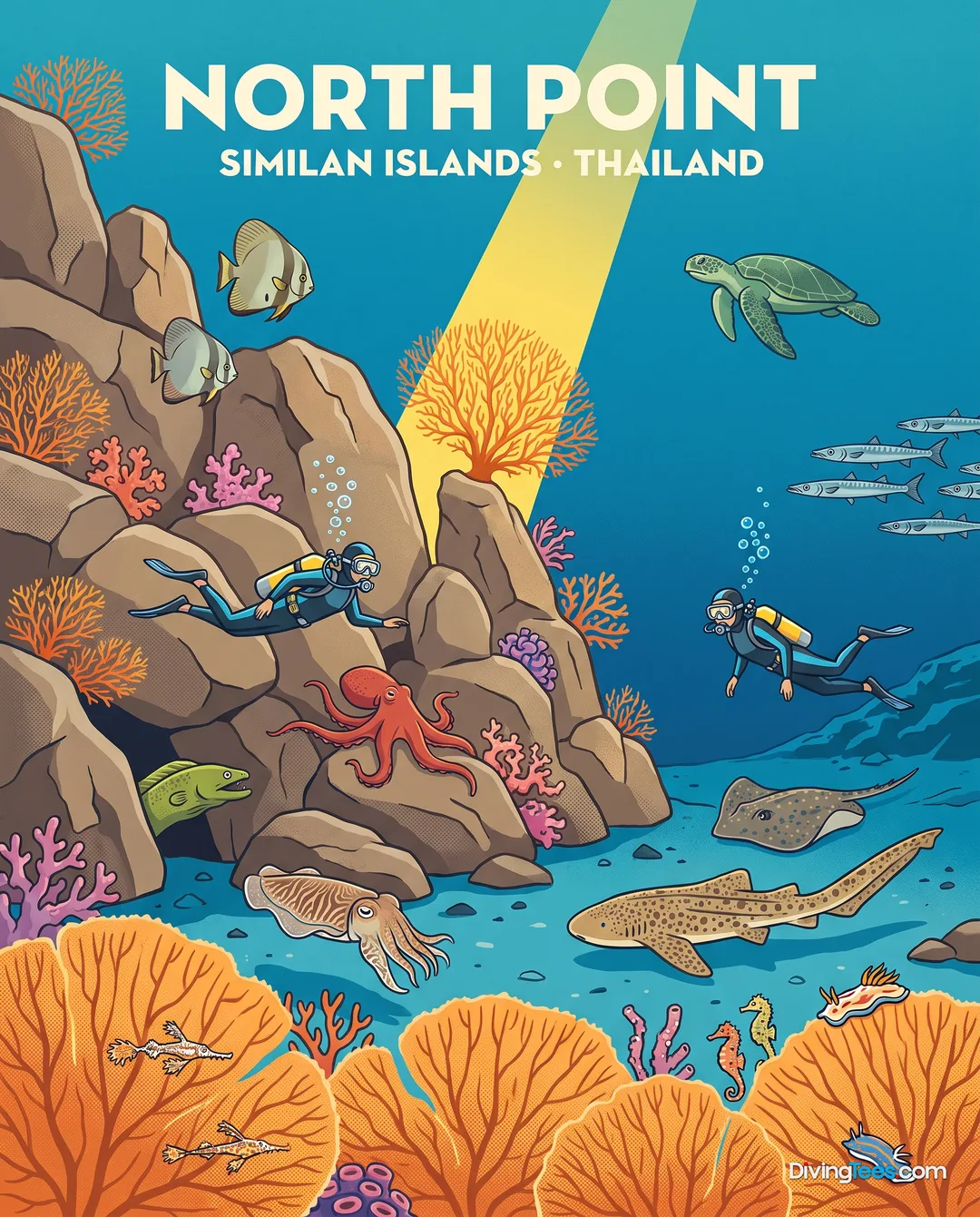
The longer Andaman routes run between Thap Lamu and Khuraburi, linking the Similan Islands, Koh Bon, Koh Tachai, Surin and Richelieu Rock; reverse trips run north to south. The recorded departures are five days and four nights, while shorter three- and four-night itineraries can be combined for a longer passage. At the Similan Islands, coral reefs give way to granite boulders, with dives reaching a maximum of -40m. Koh Bon is the limestone island and cleaning station where manta rays may glide close to the wall. Koh Tachai combines coral gardens, large sea fans and a submerged pinnacle, with the island’s dives reaching -40m; Koh Tachai Pinnacle has the same maximum depth and brings current across a coral-covered dome. Surin is quieter, with hard coral gardens and granite outcrops to -25m. North Point drops through deeper channels and coral-covered pinnacles to -35m, where sharks may patrol the sand. Richelieu Rock is the isolated submerged pinnacle known for dense fish life and occasional large visitors.
Itineraries, dates and prices
Prices per person. Each month shows its lowest price: click a month, or pick an itinerary.
Next departures · 129 departuresfrom £404$540€482
October 2026
November 2026
See dates and prices
If you click these links and make a purchase on the partner site, DivingDeal may earn a commission, at no extra cost to you.
Dates and prices taken from liveaboard.com, updated 19 October 2026
What you’ll meet underwater
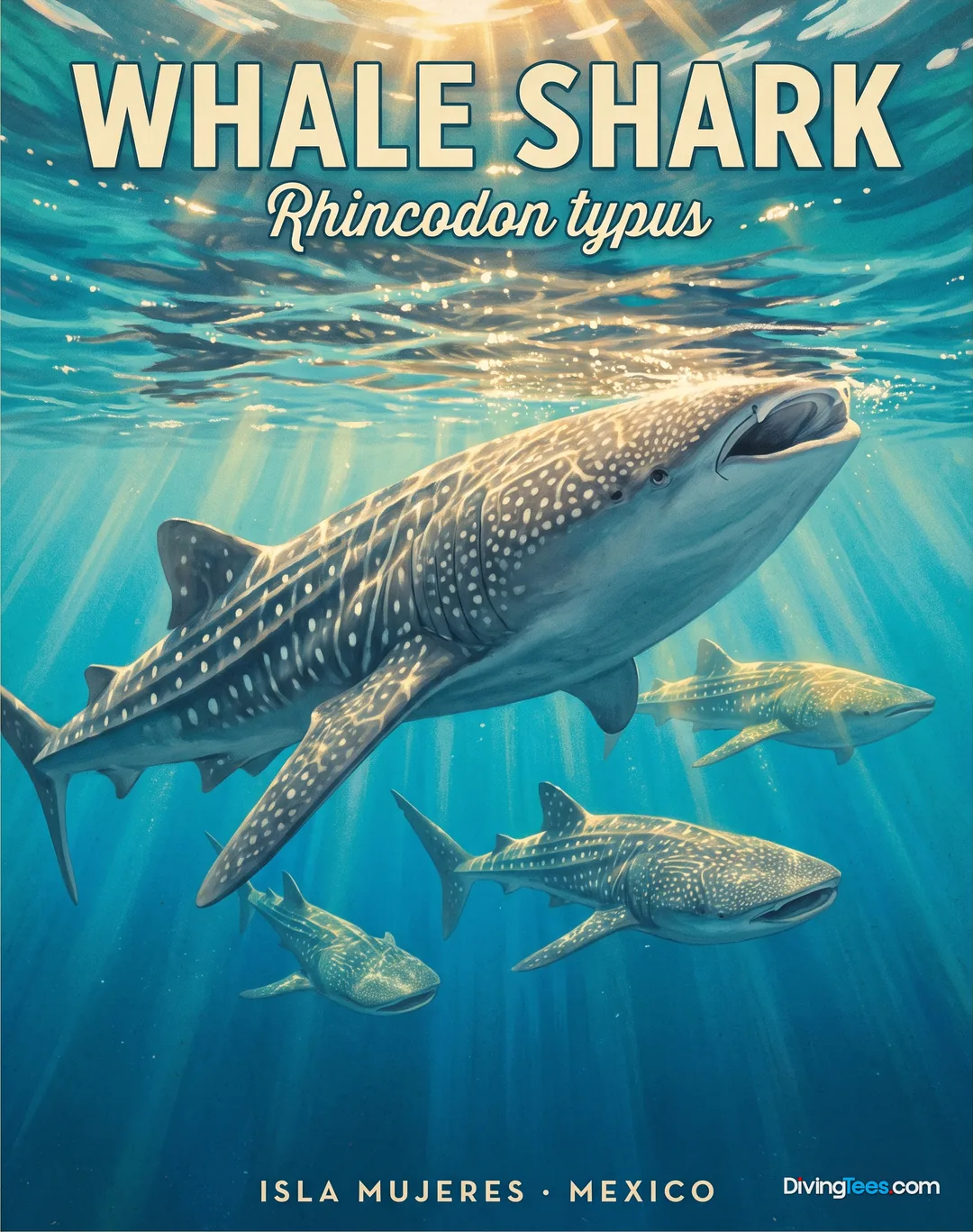
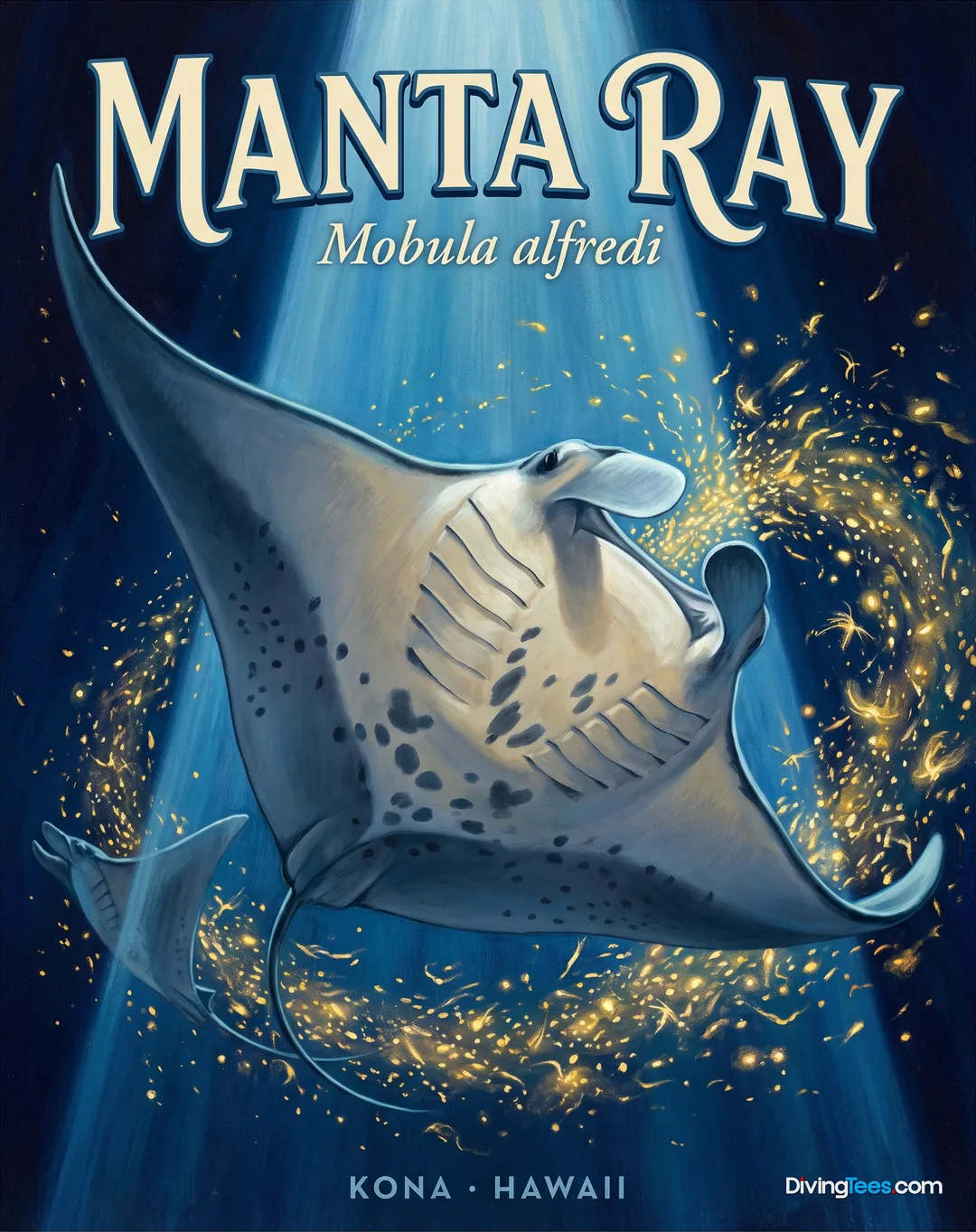
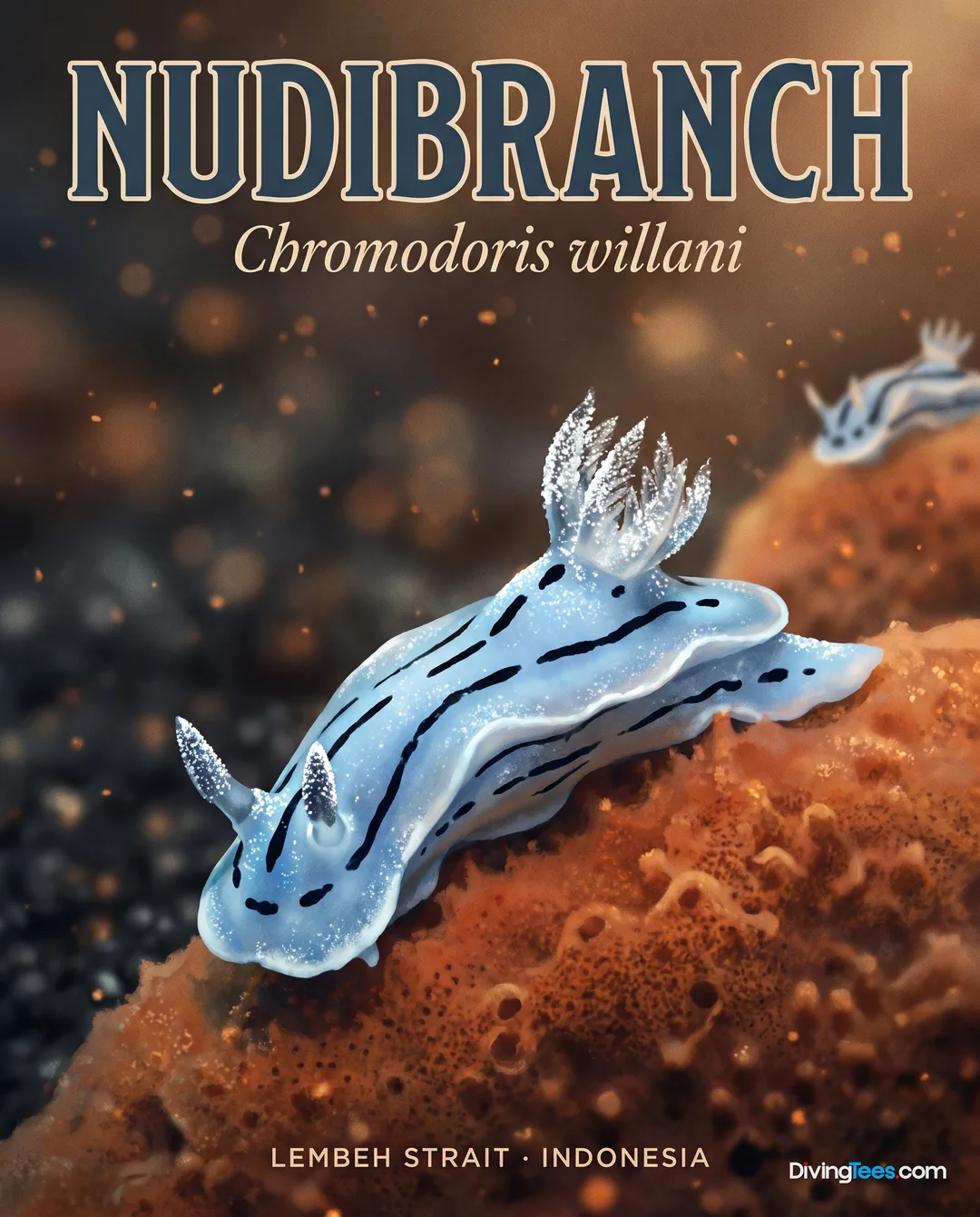
Barracuda, nudibranchs, giant morays, jacks, fusiliers, whale sharks, reef sharks, leopard sharks, groupers, manta rays, tuna and turtles recur across much of this route. The pattern is not a promise of sightings; it reflects how many different sites offer the same kinds of habitat, current and cleaning activity. The site-specific animals are what give certain dives their own reason to exist. Racha Noi is the place linked with grey reef sharks and garden eels. Koh Doc Mai is where a bamboo shark may turn up among the limestone wall, macro life and caves. Surin is notable for lobsters and humphead parrotfish. South Tip is the site associated with titan triggerfish and unicornfish, as well as converging currents that can bring pelagics through the soft coral garden. Sail Rock holds the unusual stonefish, chromis and Spanish mackerel. At Koh Bon and Koh Tachai, manta rays or whale sharks may visit between January and May, but the timing is unpredictable.
Who puts you in the water
The crew speaks English, German, Thai and French, giving mixed-language groups a practical range of support. Dive staff organise the briefings and groups around the sites and conditions rather than treating every diver as one block. Sea Dragon also offers training that can be combined with liveaboard diving, including the PADI Advanced Open Water course, whose five course dives can be completed aboard. Divers joining a liveaboard are expected to have dived within the past year; anyone returning after a longer break can take a refresher course before boarding. Safety equipment includes oxygen, first-aid kits, fire alarms, extinguishers, life jackets, rescue boats, VHF/DSC/SSB radio, GPS, sonar and emergency flares. The crew is trained in first aid. A private guide can be arranged as an optional extra, but the normal trip is built around the boat’s dive staff and shared groups rather than one-to-one guiding.
The dive deck and the gear
The dive operation is arranged for repeated use: a shaded working area, tank stations, a dedicated platform and a ladder for getting back aboard. One tender supports the diving, collecting divers after they surface rather than leaving everyone to make a long swim to the boat. DIN adapters are available. Rental equipment is included in the package, while 15-litre tanks are an optional extra and have limited availability for some items such as long wetsuits and X-Deep wings. Nitrox packages are available. Cameras have their own separate rinse area, and charging stations are provided away from the wet workflow. The boat also carries oxygen, first-aid kits and other emergency equipment. What is not clear from the published specifications is the tank metal, compressor system, SMB provision or a dedicated hot-water rinse for divers, so those details are not dressed up here. The useful facts are the ones a diver handles every day: gear setup, entry, exit, camera care and surface recovery.
Between dives
Between dives, the shaded dive area is the practical refuge: a place to get out of the sun, check a camera and talk through what just passed. The terrace and observation areas offer the other choice, with open air, views of the islands and room to sit without standing in the way of the dive operation. When conditions and the itinerary allow, the tender can take guests to the beach, and snorkelling is possible from the boat. There is also the simple pleasure of doing nothing until the next briefing: drying gear, charging a camera, finding a quiet corner or joining the group outside. The barbecue area gives the evening its own destination. Andaman makes the gaps useful without pretending every hour needs an organised activity.
A day on board
The day starts early enough that the first briefing belongs to the cool part of the morning. Divers set up, listen to the site plan and enter before breakfast or soon after it, depending on the movement of the boat and the route. Food follows the first dives, then the surface interval gives way to another briefing and another descent. Lunch lands between dives, with snacks filling the longer gaps; on the fuller itineraries, the boat works through several daytime dives before the evening meal. A night dive is included on routes that offer one, changing the preparation, the entry and what counts as a successful sighting. When the dive work is over, Andaman may move between sites or settle near an island for a beach visit. Dinner, a barbecue and the final gear check close the day. Then the boat becomes quiet enough for the next early briefing.
What you eat aboard
Meals are full board, with buffet and à la carte service alongside local Thai cooking. Vegetarian and vegan options are available, and snacks appear throughout the day rather than only at set meals. Tea, coffee, drinking water and non-alcoholic drinks are included; beer and other alcoholic drinks are separate. The useful detail is where food fits in the dive cycle: breakfast follows the early part of the day, lunch belongs in the surface interval, and dinner closes the work of the last dive. Eating outdoors is part of the boat’s routine, with the barbecue giving one evening a different shape from the meals between tanks. On a trip built around repeated descents, good food is not decoration. It is the recovery time that lets the next briefing matter.
Nights at sea
The cabins sit on the lower deck, where air conditioning and standard windows give the night a quieter, enclosed feel than the open decks. Cabins 1 and 2 are double cabins with en-suite bathrooms; cabins 3 and 4 are doubles, while cabins 5 and 6 are dormitories. The remaining bathrooms are shared. That distinction matters after four dives: the en-suite cabins offer the simplest return from the dive deck, while the other categories trade privacy for a different use of space. Luggage can be stowed in the cabin after boarding, and the cabins are non-smoking. Outside, the boat remains part of the night. The upper areas hold the air, conversation and sound of a liveaboard still working around its guests. Andaman is a boat for sleeping between dives, not for hiding away in a private room all day.
Cabin #1 Beds Left - DBL Ensuite
Cabin #2 Beds Right - DBL Ensuite
Cabin #3 Beds Right - Double
Cabin #4 Beds Left - Double
Cabin #5 Beds Left - Dorm
Cabin #6 Beds Right - Dorm
What to know before boarding
South Andaman departures and returns run from Phuket to Phuket. The Similan and northern routes travel from Thap Lamu to Khuraburi, or from Khuraburi to Thap Lamu, depending on direction. Airport and hotel transfers can be arranged as optional services rather than being included automatically. Arriving in the area the night before gives useful margin before boarding.
Deck plan
- Year built
- 1996
- Year renovated
- 2024
- Length
- 26 m
- Beam
- 5.5 m
- Maximum number of passengers
- 20
- Number of cabins
- 6
- Number of bathrooms
- 5
- Engines
- 2 × 6-cylinder Hino engines, 315 hp
- Cruising speed
- 10 knots
- Tenders
- 1
- Website
- seadragondivecenter.com ↗
Hello, I'm Marina, DivingDeal.com's AI assistant. I answer in detail about hotels, dive centres and liveaboards.
Thinking about the whole trip and the flights? Talk it over with Edith →
Marina is an AI. Some links are affiliate links: DivingDeal may earn a commission, at no extra cost to you. Bookings are made with the partner.