Liveaboards · Thailand
Manta Queen 8 — a dive-first wooden liveaboard with strong crew and fresh food
What makes this boat unique
- Manta Queen 8 takes up to 24 divers in 12 air-conditioned cabins, with double en-suite, twin en-suite and twin non-en-suite choices.
- The five-day, five-night itinerary includes 19 dives around the Similan Islands, Koh Bon, Koh Tachai, Surin Islands, Richelieu Rock and Boonsung Wreck.
- Dive groups are kept to a maximum of five divers, with four dives offered each day and a shaded dive area.
- Freshly cooked buffet meals, snacks, fruit, Wi-Fi, transfers in the Khao Lak area and a 12-litre aluminium tank are included.
- Nitrox is available on board as an optional extra, with DIN adapters and separate camera-rinse facilities.
For subtitles in English: start the video firstthen click the gearat the top right of the video, select “Subtitles/CC”, then “Auto-translate” and choose “English”.
The invitation
Manta Queen 8 suits divers who put the sites, the guides and the food ahead of a polished yacht finish. The boat is a practical wooden liveaboard built around repeated diving: four dives a day, small groups and a route that reaches the Similan and Surin national parks, Richelieu Rock and Boonsung Wreck. The reason to choose it over a larger, more anonymous boat is the working scale of the operation. Up to five divers share a group, while five dive staff are available on board. The vessel scores lower for the boat itself than for its crew, diving and food; that points to an older, less refined platform whose people carry much of the experience. In return, divers get a crew-led week where the important things are clear briefings, tanks ready when needed, a fresh plate after the dive and access to some of Thailand’s strongest pelagic sites.
Boarding
Manta Queen 8 presents as a working dive boat rather than a floating resort. Its wooden hull and broad beam give the vessel a solid, purposeful presence at the dock, while the renovation keeps the common areas usable for a full week of diving. Boarding leads into a saloon, an open dining area and a large sundeck, so divers can move from kit preparation to food to shade without having to retreat into a cramped cabin. The open dining space matters after a morning in the water: meals are served where wet gear, towels and conversation naturally gather. The boat was renovated in 2017, but it is not sold as a new yacht. Its appeal is the arrangement and the people running it, not immaculate designer finishes.
The atmosphere on board
The atmosphere is built by the dive team more than by luxury fittings. Five dive staff work alongside six boat crew, and the operation is set up for small groups rather than a single crowd entering the water together. By the second day, divers have seen the same guides at the briefings, on the platform and back at the tanks; that continuity makes it easier to ask for help with weighting, cameras or a difficult entry. English, Dutch, German, Spanish and Italian are spoken among the crew. Evenings are simple: dinner, a review of the day’s animals and time in the saloon or outside before the next round of diving. Manta Queen 8 is best for divers who value capable people, fresh food and a sociable week over silence and luxury finishes.
The sites you’ll dive
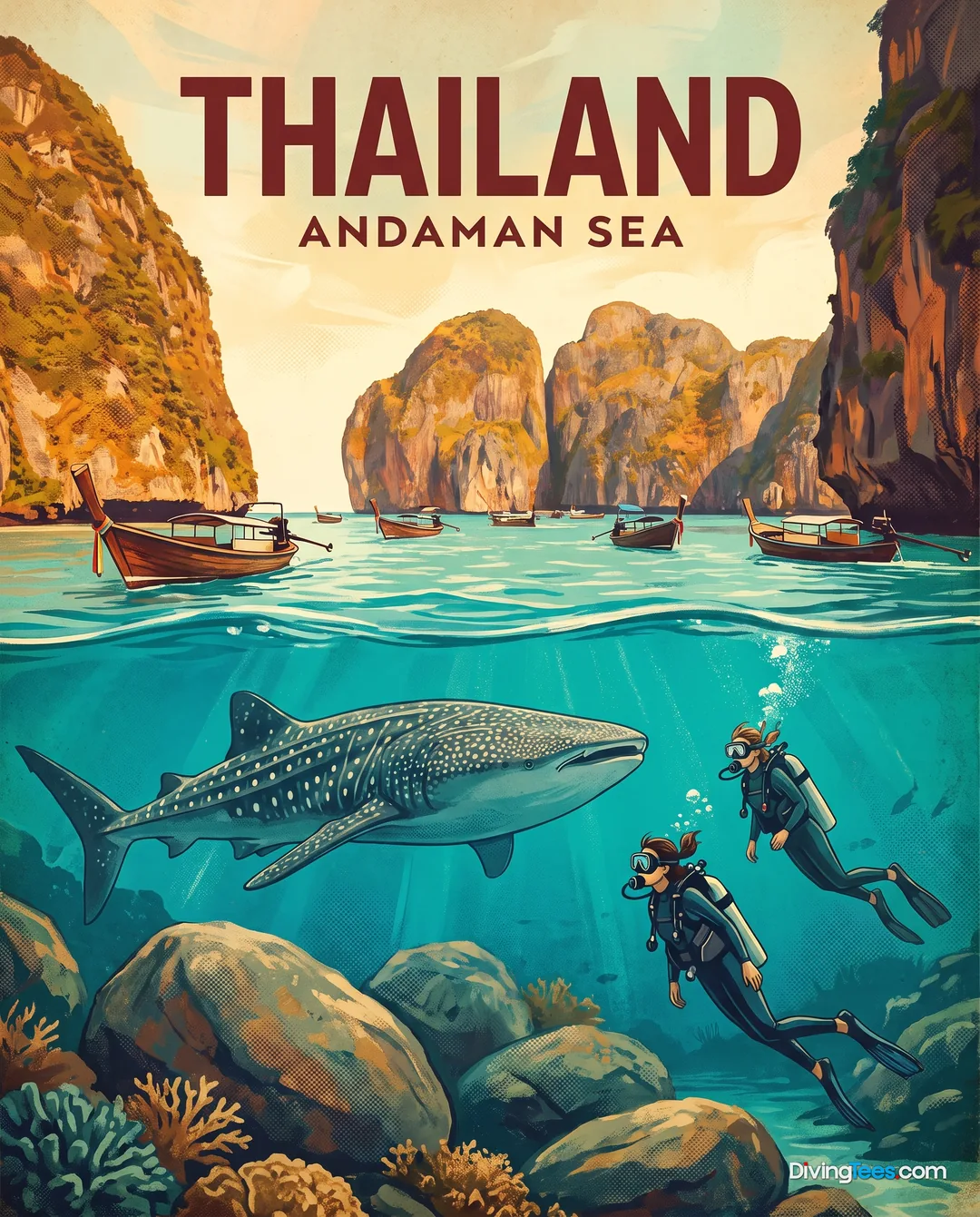
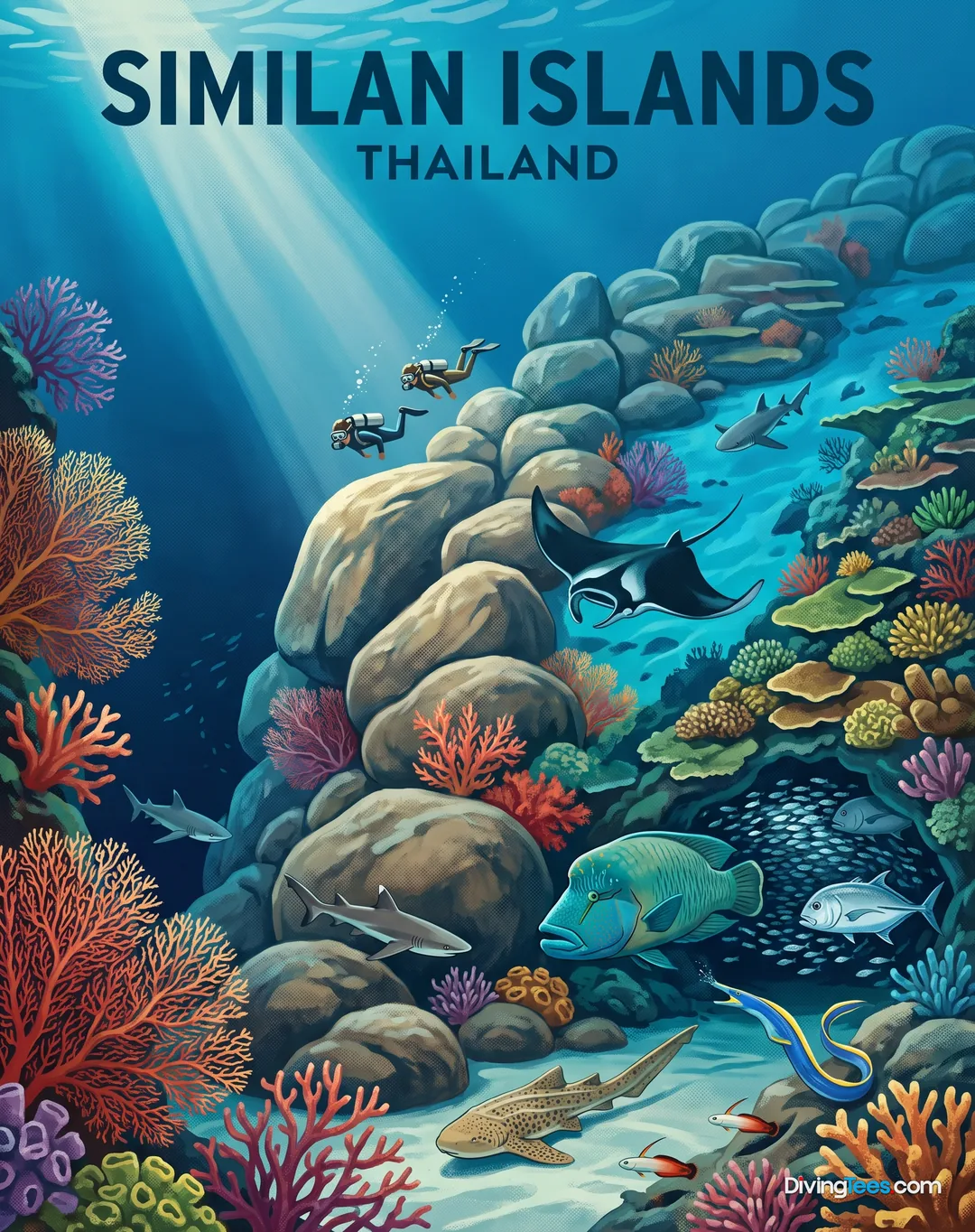
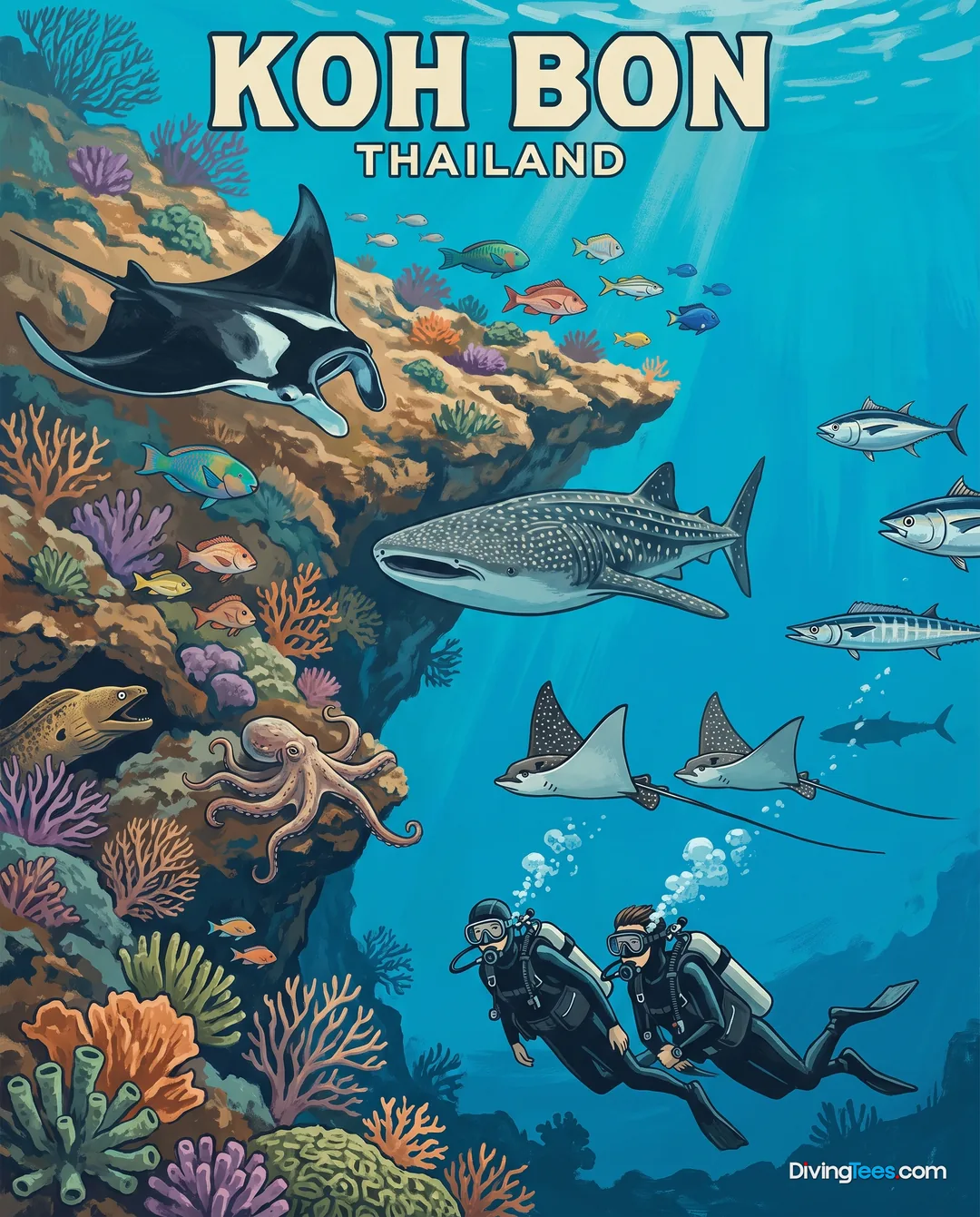
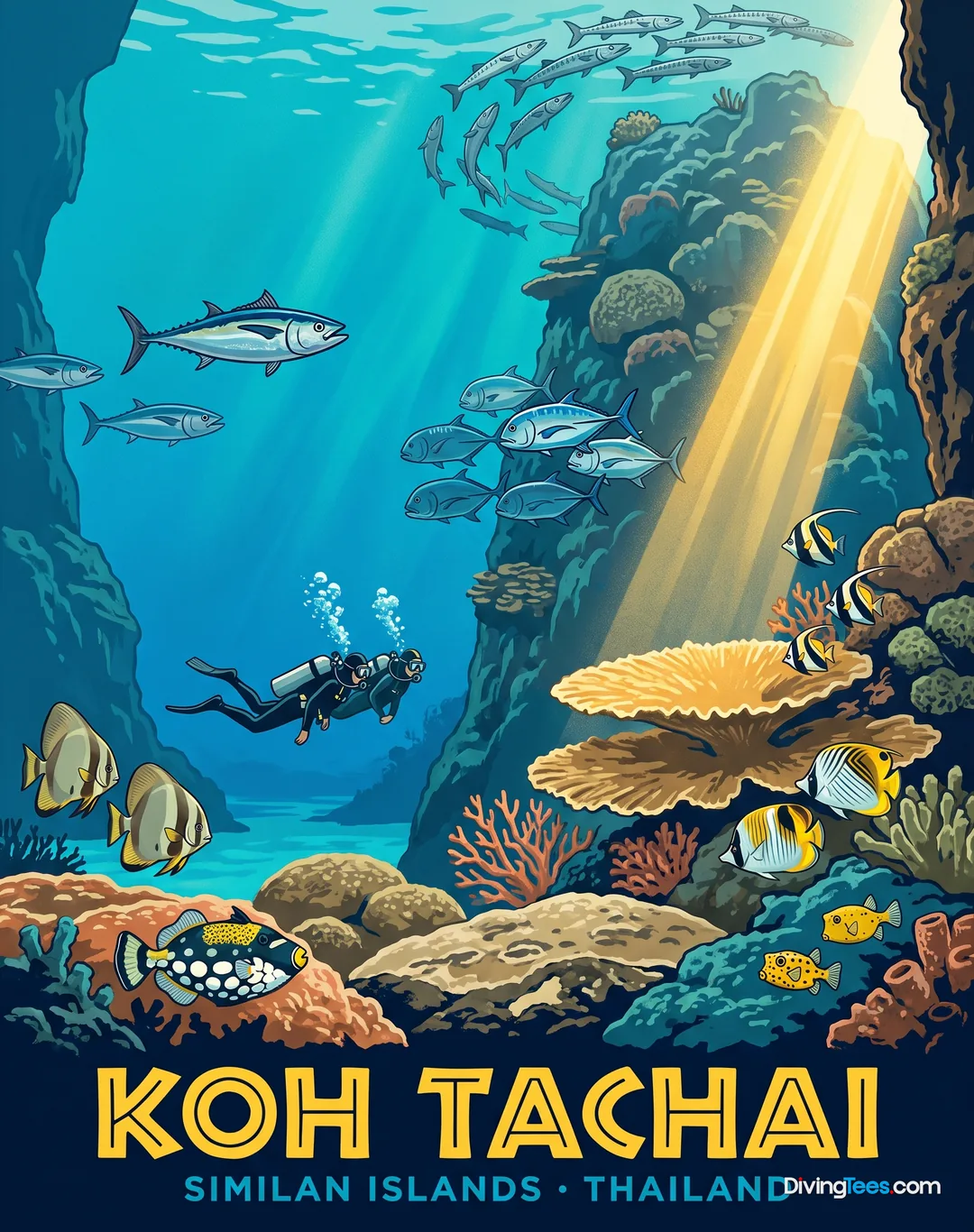
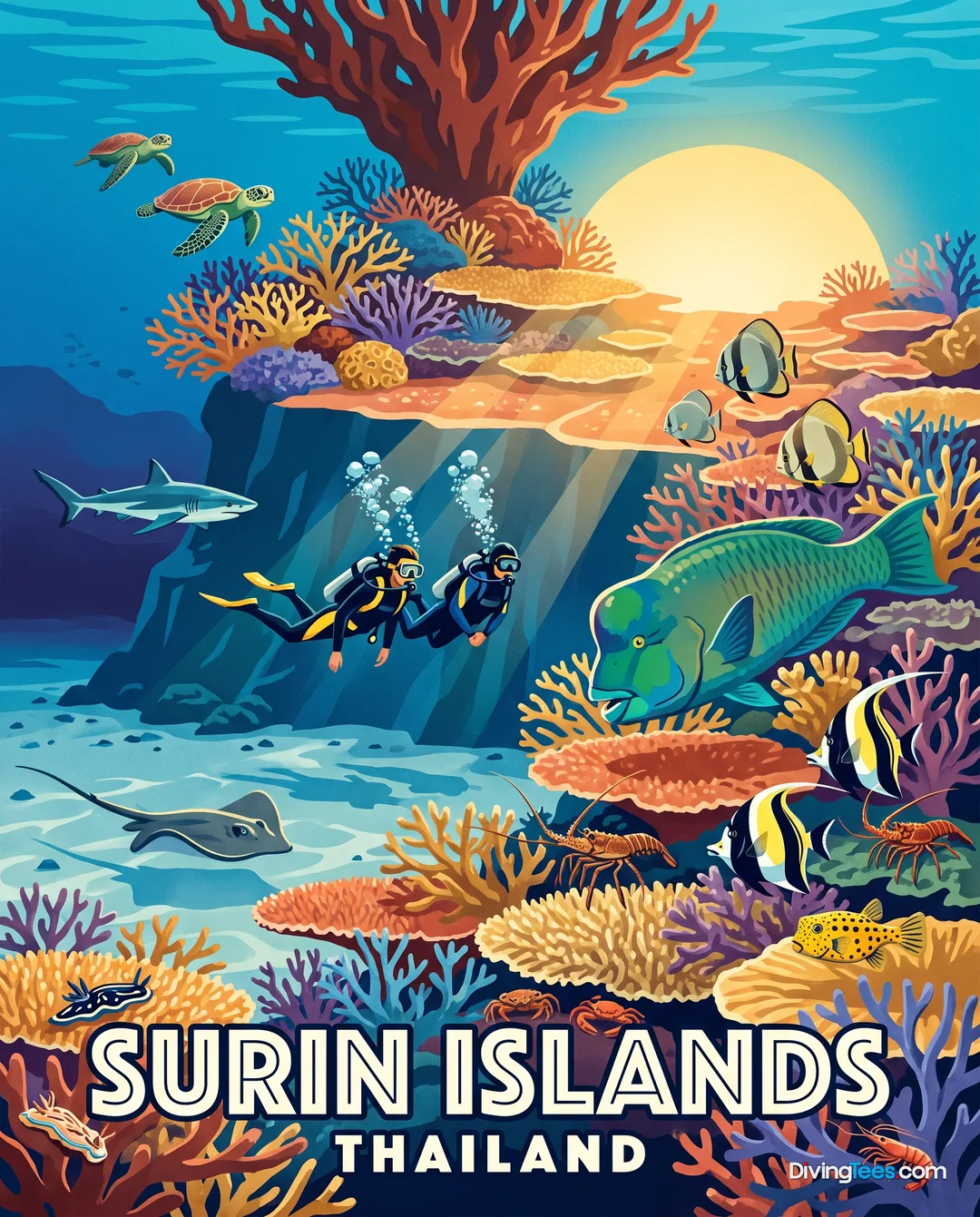
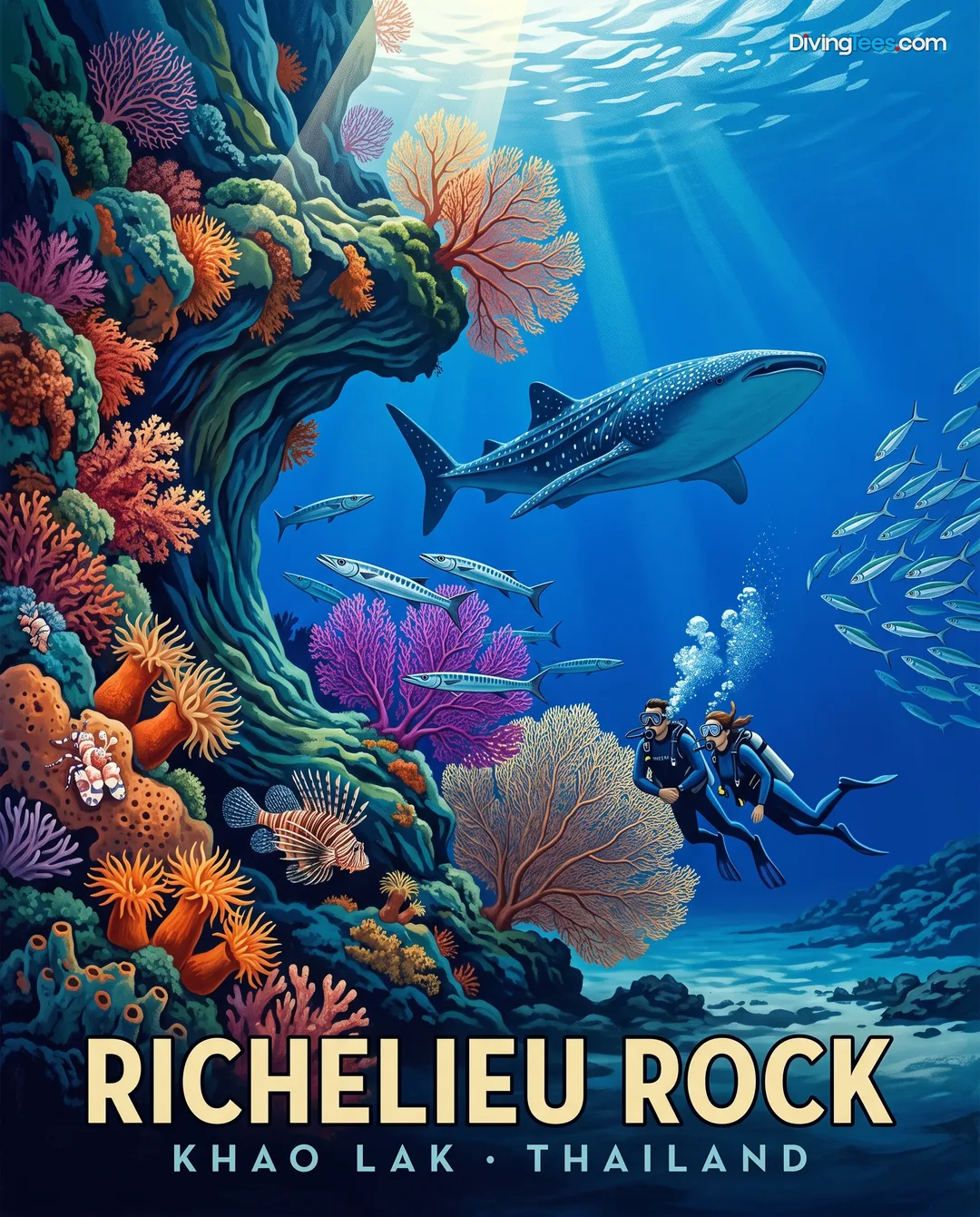
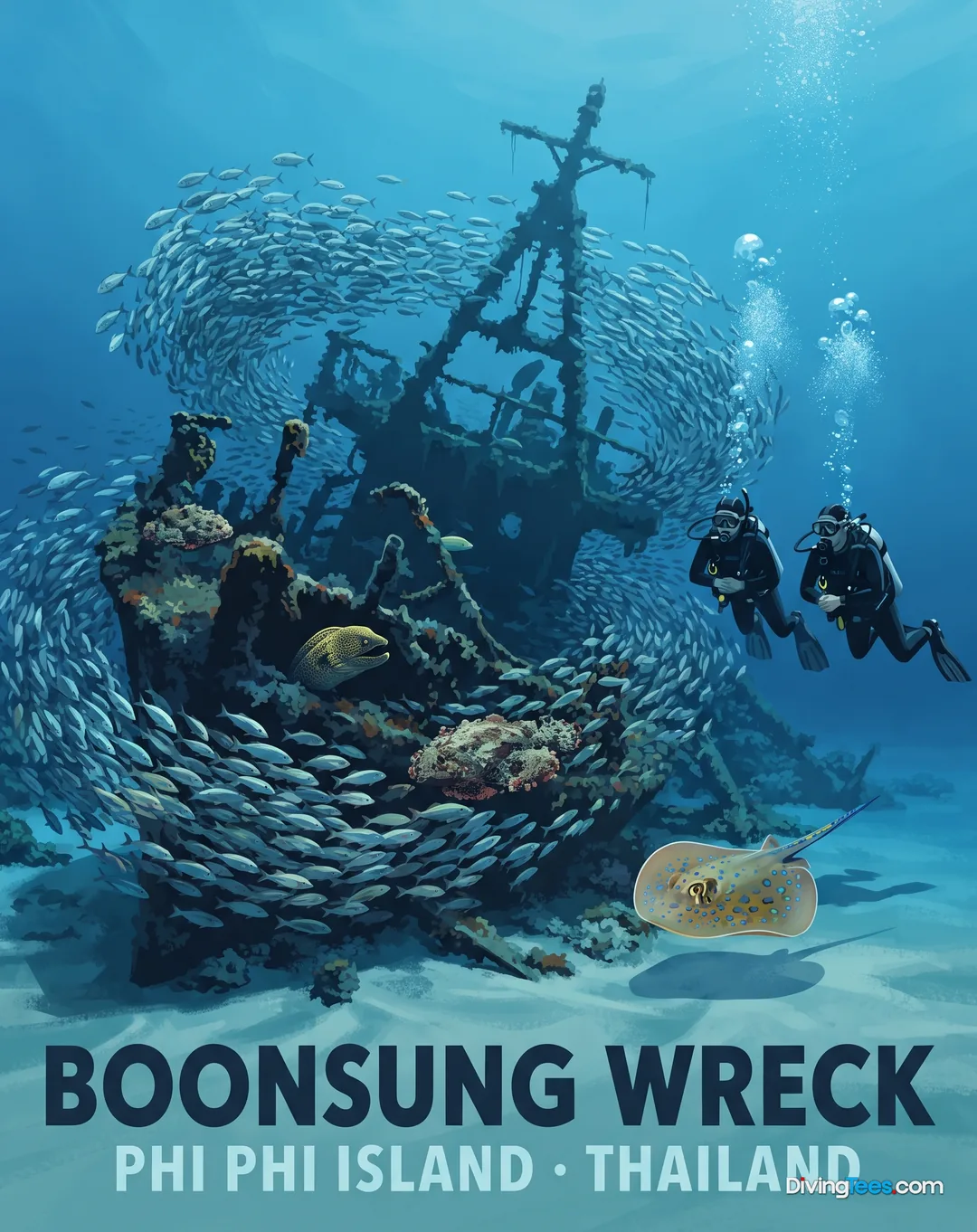
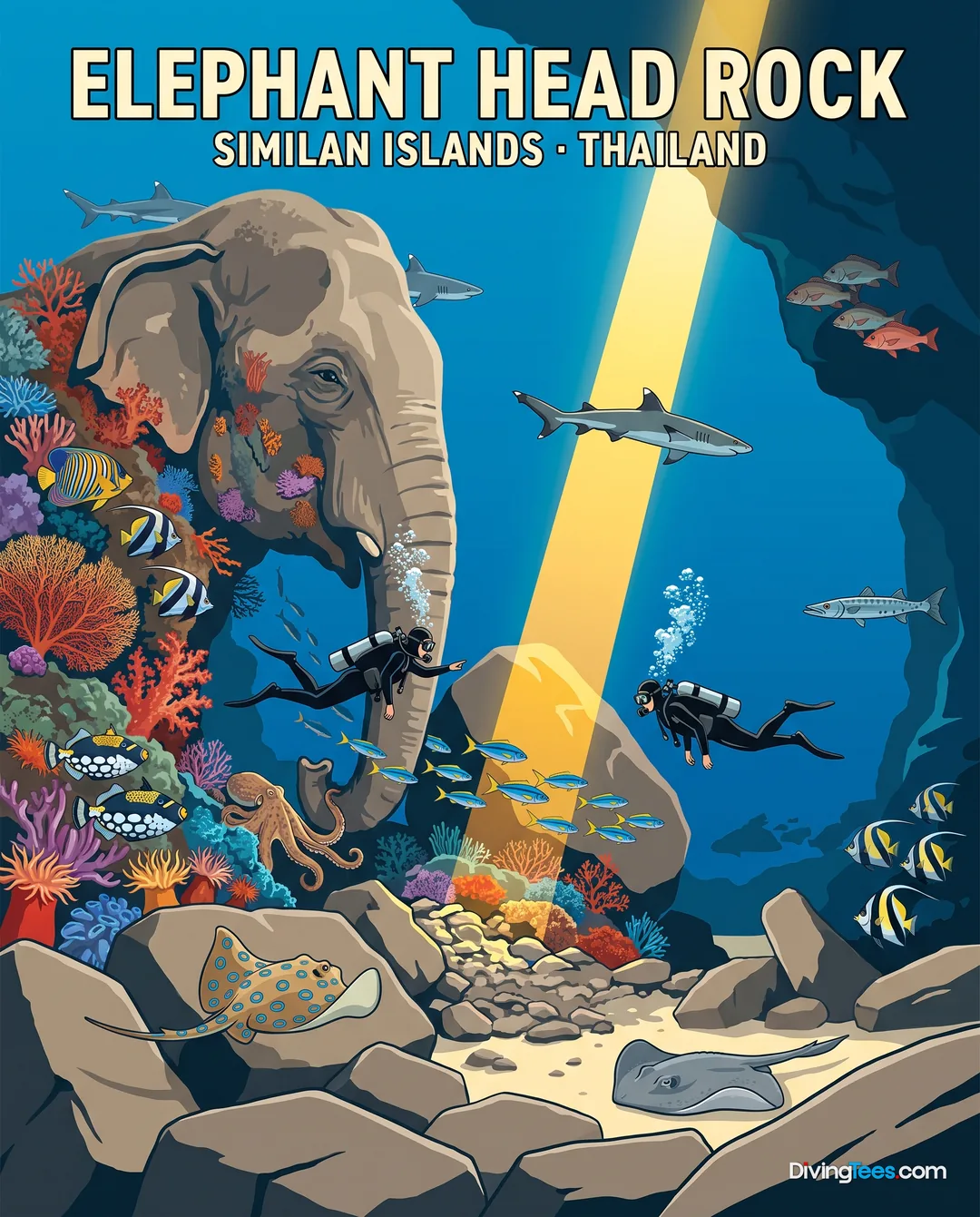
This is a 5-day, 5-night route with 19 dives from Khao Lak to Khao Lak: Similan Islands, Koh Bon, Koh Tachai, Surin Islands, Richelieu Rock and Boonsung Wreck. Koh Bon is the manta stop, with walls leading to a cleaning station where mantas may arrive for service while pelagic fish pass outside. The Similan Islands combine coral reef with granite boulders and reach a maximum of -40 m; Elephant Head Rock adds arches, tunnels and caverns down to -60 m. Koh Tachai’s submerged pinnacles and coral gardens reach -40 m, while Surin offers hard-coral gardens and granite outcrops to -25 m. Richelieu Rock is the large, isolated pinnacle of the route, covered in soft corals, sea fans and small shelters, with a maximum depth of 35 m. Boonsung Wreck, an old tin dredger turned artificial reef, reaches -18 m and can be so crowded with fish that the surface disappears from view. The route earns its length by moving between big-animal stations, boulder sites and wreck diving rather than repeating one reef.
What you’ll meet underwater
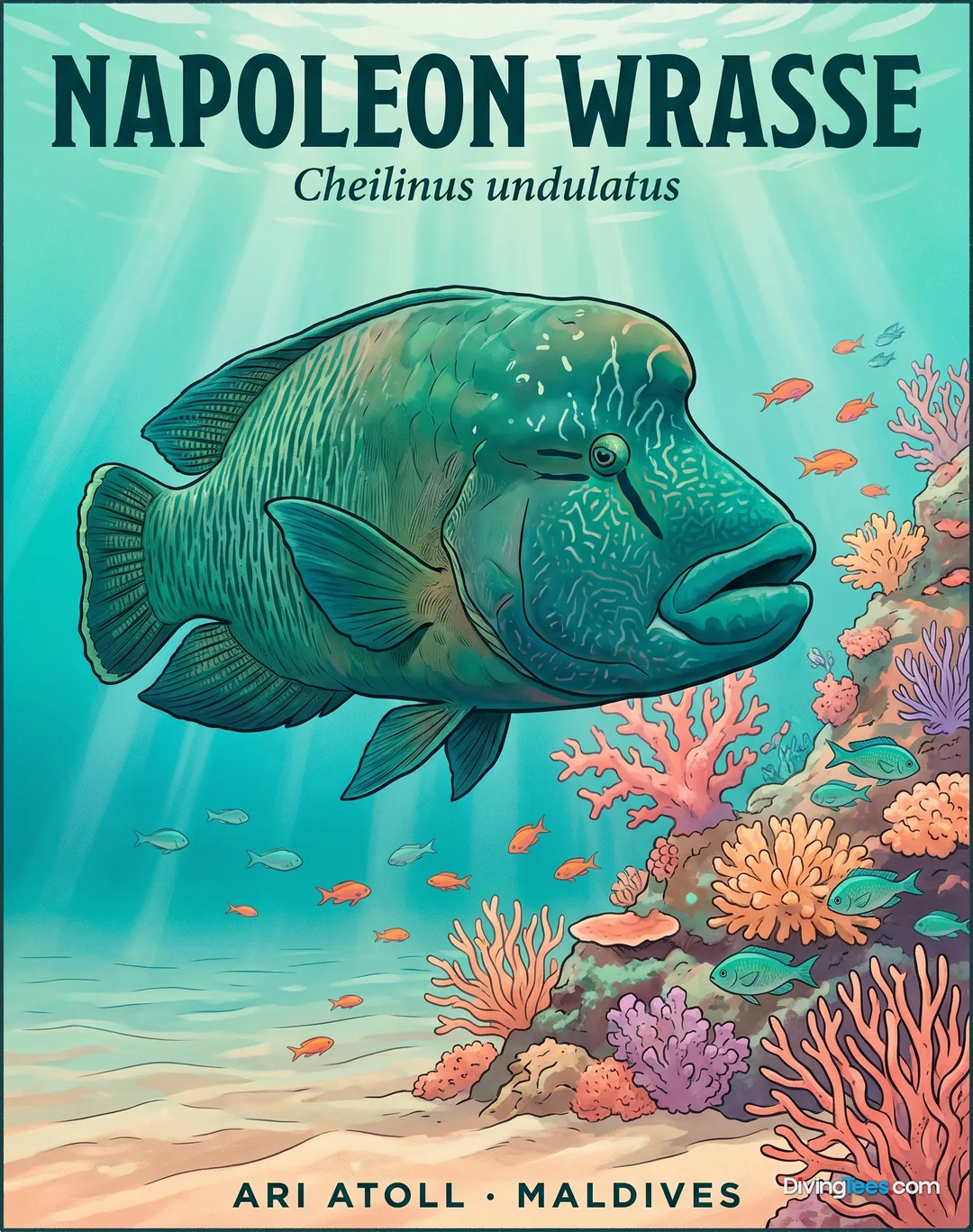
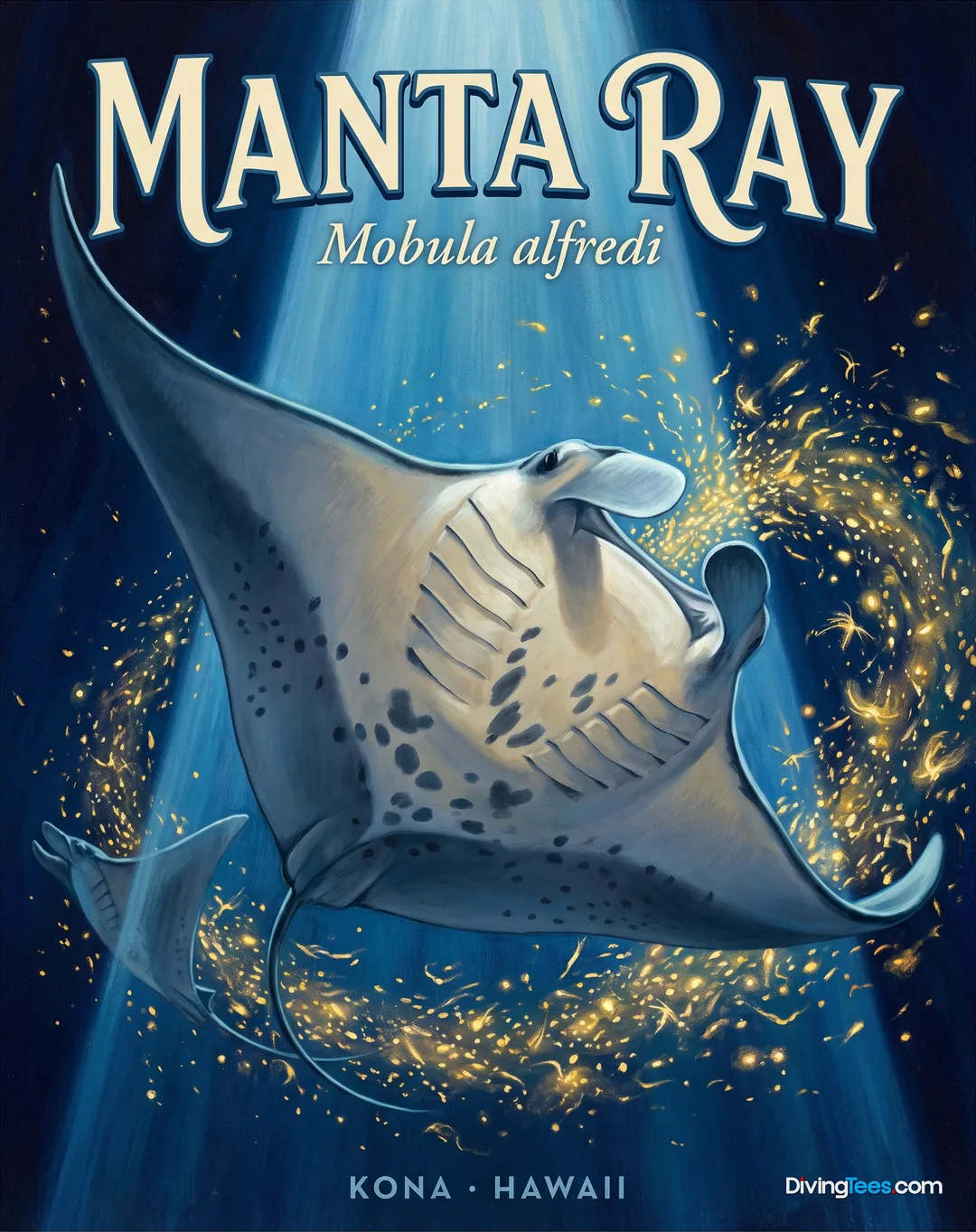
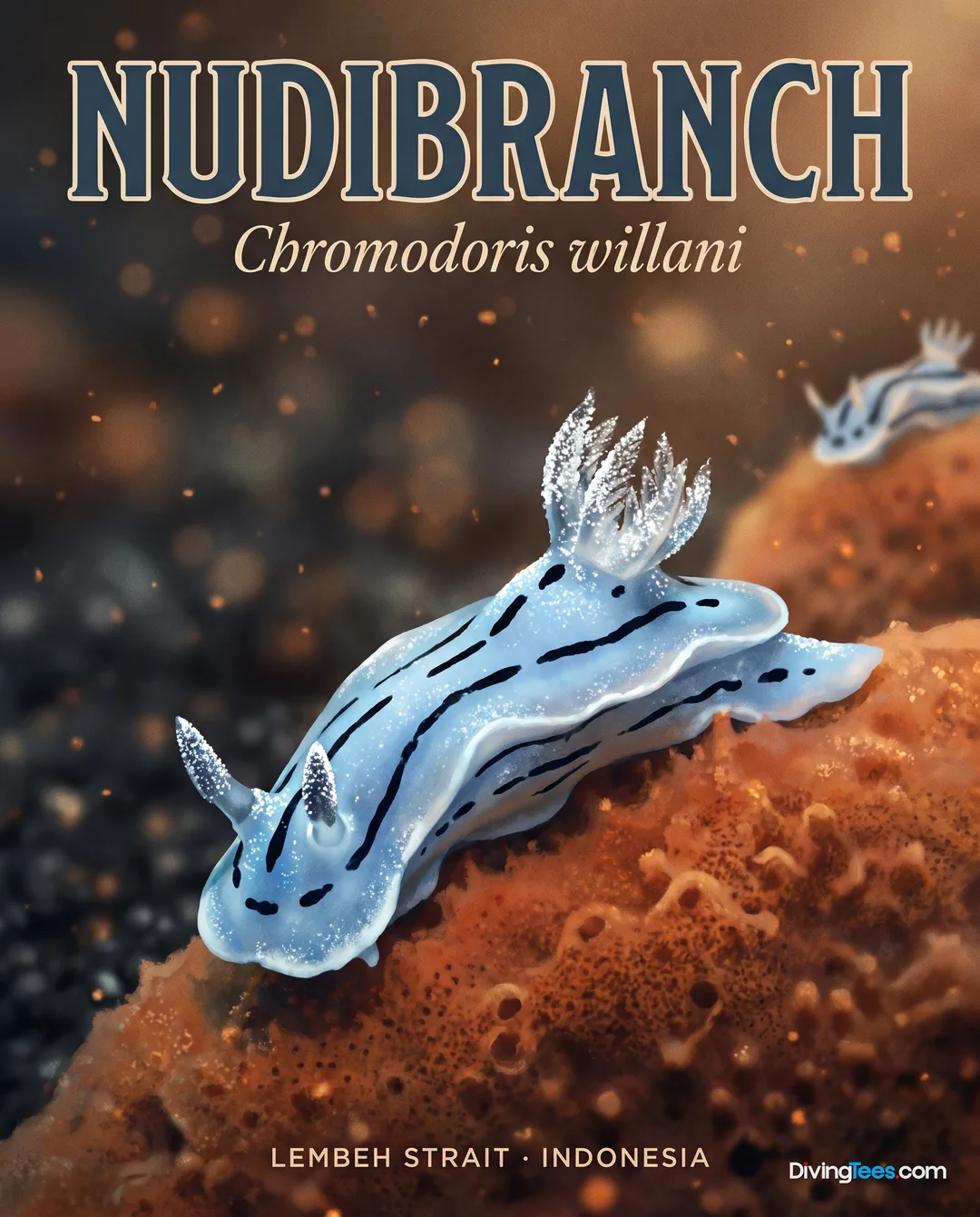
The route is built for large animals, but it also rewards a slow search. Barracuda, reef sharks, whitetip reef sharks, tuna, leopard sharks, turtles, Napoleon wrasse, groupers, manta rays, nudibranchs, jacks, morays and octopus are recorded across many of the sites. At Koh Bon, the cleaning station gives manta rays a reason to hold position rather than simply pass through. At pinnacles such as Koh Tachai and Richelieu Rock, current can bring barracuda, tuna and other pelagics across the reef. The distinctive finds are more localised: Boonsung Wreck is the place to look for porcupinefish and stonefish; Elephant Head Rock is where a triggerfish is specifically recorded; King Cruiser Wreck is associated with eels and bamboo sharks; Christmas Point with anemones and reef sharks; and Deep Six with blennies. None of these sightings is guaranteed. The attraction is having enough dives to search the same kind of habitat carefully, then moving on when the site offers something different.
Who puts you in the water
Five PADI-certified dive staff put divers in the water, with groups limited to a maximum of five. That ratio is useful at sites where the guide’s position matters, especially around a cleaning station, a wreck or a granite passage. Briefings organise the group before each entry, and the small format leaves room for the guide to discuss current, depth and the likely search areas without addressing a packed deck. The team speaks English, Dutch, German, Spanish and Italian. Courses available through the operation include Open Water, Advanced Open Water, Rescue, Emergency First Response, Enriched Air Nitrox, Deep, Wreck and digital underwater photography. Oxygen, first-aid kits, fire equipment, life rafts, radios and trained first-aid crew are carried for emergencies. A required logged-dive level is not stated, so the itinerary should be matched to certification and recent experience rather than assumed from the boat name.
The dive deck and the gear
The dive setup is arranged for repeated entries, with a shaded dive area, a platform, tank racks and separate rinse tanks for cameras. Standard tanks are 12-litre aluminium cylinders fitted with DIN and INT valves; 15-litre tanks and double sets are available as optional rental equipment. DIN adapters are carried on board. Nitrox is available for 12- and 15-litre tanks as an optional extra, and an enriched-air course can be taken through the operator. Rental equipment uses Scubapro sets, including BCDs and regulators, with short 3 mm wetsuits suited to tropical water; a dive computer, prescription mask and full-length wetsuit can also be rented. A dinghy supports shore visits, but details of tender numbers and diver collection procedures are not given. Hot-water and outdoor showers are available after the dive, and the camera rinse is kept separate from general gear.
Between dives
Between dives, the best place is the shaded dive area when the sun is high, or the large sundeck when a diver wants air and space. The air-conditioned saloon provides the other option, with audio and video entertainment for the gaps that feel longer after a deep or current-affected dive. An open dining area keeps snacks and drinks close without turning every pause into a formal meal. The boat’s dinghy can take passengers to beaches, adding a shore break when the itinerary allows it. Wi-Fi is available, although reception will not cover every day of the route. There is enough choice to recover properly: shade, air conditioning, an outdoor table or the waterline.
A day on board
A day begins with the first briefing before the first dive, usually after the compressor and deck crew have already prepared the cylinders. Breakfast supports the opening dive, then divers return to eat, rest, hydrate and listen to the next briefing before going back in. Four dives are offered across the day, with lunch and snacks filling the intervals and dinner waiting after the final entry. The gaps are practical rather than empty: cameras go into the separate rinse tank, wet gear dries under cover, and divers choose between the shaded deck, the air-conditioned saloon and the open dining area. When the boat moves to the next site, the view changes above water while the guides prepare the next plan below it. A night dive is supported by the on-board torch. Then comes sleep, followed by the same clean cycle: briefing, water, food, recovery, repeat.
What you eat aboard
The galley is one of Manta Queen 8’s strongest points. Meals arrive as freshly cooked buffets, with both Thai and Western dishes rather than a single style repeated through the trip. Breakfast, lunch and dinner are supported by fruit and snacks between dives, which matters when four entries into the water leave a diver hungry long before the evening. Vegetarian and vegan options are available. The open dining area makes meals part of the dive rhythm: divers come up, eat, compare what moved through the reef, then go back to tanks and briefing. Full board is included, along with drinking water, tea, coffee and non-alcoholic drinks. The food is not an afterthought between dives; it is one of the reasons this boat scores so well.
Nights at sea
The cabins are on the lower deck, where the night is quieter than the social areas but still belongs unmistakably to a dive boat. Panoramic windows bring in more daylight than a small portlight, and air conditioning gives divers a place to cool down after the last dive. Double en-suite and twin en-suite cabins suit divers who want a private bathroom; twin non-en-suite cabins trade that convenience for a simpler setup. There are 13 bathrooms for 12 cabins, so sharing is not built into every room. Daily housekeeping, hot water, towels and shower gel keep the practical side easy. The boat’s character remains present below deck: this is a bunk for recovering between dives, not a room designed to keep anyone indoors all day.
Double En-Suite Cabin
Twin En-Suite Cabin
Twin Non-Ensuite Cabin
What to know before boarding
The itinerary departs from Khao Lak and returns to Khao Lak. Airport and hotel transfers in the Khao Lak area are included; a Phuket–Khao Lak shared transfer is an optional extra. Transfer arrangements are communicated as part of the booking process. Arriving in the area the night before is the sensible choice, leaving room for delays before boarding.
- Year renovated
- 2017
- Length
- 28 m
- Beam
- 7 m
- Maximum number of passengers
- 24
- Number of cabins
- 12
- Number of bathrooms
- 13
- Website
- mantaqueen.com ↗
Hello, I'm Marina, DivingDeal.com's AI assistant. I answer in detail about hotels, dive centres and liveaboards.

Thinking about the whole trip and the flights? Talk it over with Edith →
Marina is an AI. Some links are affiliate links: DivingDeal may earn a commission, at no extra cost to you. Bookings are made with the partner.