
Fuerteventura Buceo
Google 4.9/5 (1,089 reviews)
58 km away as the crow flies
Fuerteventura · Canary Islands · Atlantic
Max. depth · 36 mExplore a labyrinth of narrow volcanic gorges and rocky walls that define this structured reef system.
The topography of El Monasterio is defined by its volcanic origins, creating a structured environment that differs significantly from a simple sloping reef. Instead of a continuous wall, you will encounter a labyrinthine network of narrow gorges and tight rock passages. These formations give the site its name, as the close-knit rocky structures resemble the narrow corridors of a monastery. This complex layout provides numerous nooks and crannies for marine life to inhabit, making navigation a central part of the dive experience.
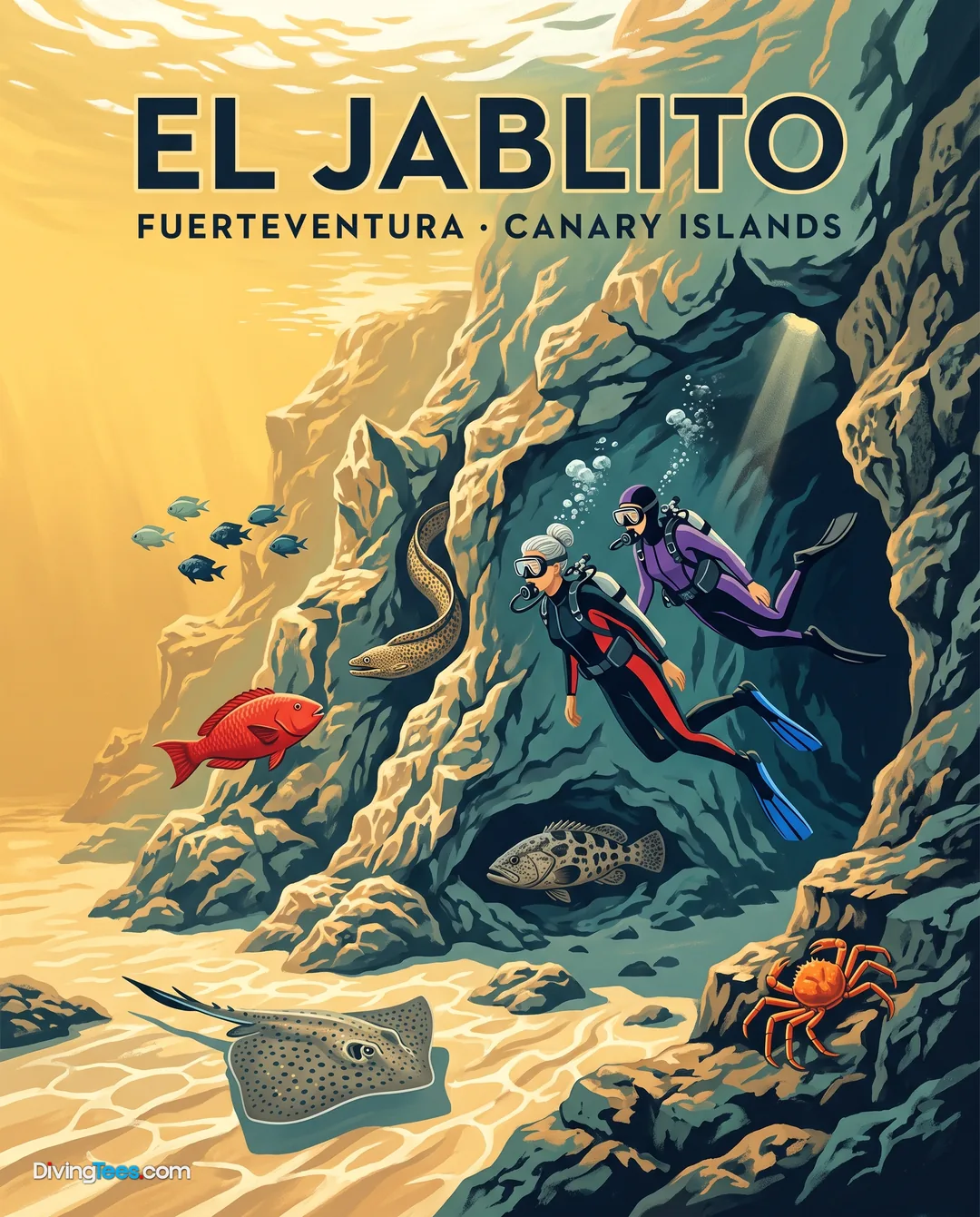
As you descend toward the reef, you will find a transition between different ecological zones. The seabed features patches of clear, light-coloured sand that sit in front of the rocky openings, providing a high-contrast backdrop for the darker volcanic stone. These sandy areas are often adjacent to vertical or near-vertical walls that are heavily colonised by small organisms, corals, and various anemones. Moving through the passages requires careful buoyancy control to avoid contact with the delicate life clinging to the narrow rock faces.
The depth profile of the site provides several layers of interest, starting from a shallow 14 metres and extending down to 36 metres. This range allows for a varied dive plan, whether you are cruising along the upper reef plateau or exploring the deeper sections of the canyons. The transition between these depth zones is often marked by changes in light and the density of the marine life. Monitoring your air consumption is important when moving between the more open areas and the more sheltered, deeper passages.
The resident fauna is well-distributed throughout the different geological features of the site. In the tighter spaces and crevices of the volcanic rock, you can find the common octopus (Octopus vulgaris) and various cuttlefish using the terrain for camouflage. These cephalopods are often found near the transitions between the sandy patches and the rocky walls. Watching for movement in the shadows of the narrow passages is often more productive than scanning the open water.
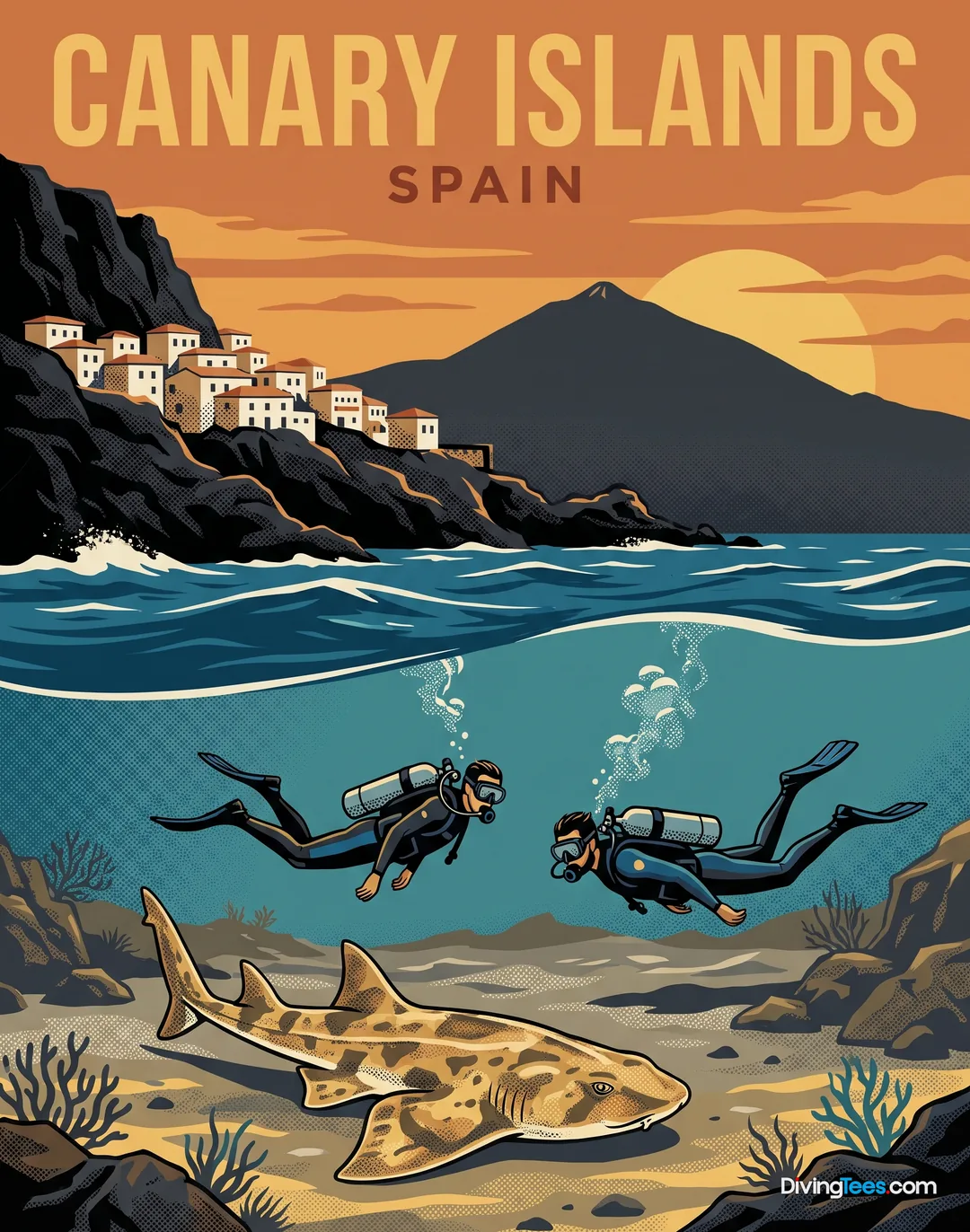
Larger species tend to frequent the more open sections of the reef or hover near the edges of the rock formations. You will often see rays gliding over the light sandy bottoms that sit before the canyon entrances. In the mid-water column, particularly where the currents are more active, schools of amberjack and barracuda are common sights. These predators often patrol the edges of the structure, waiting for smaller prey to pass through the reef corridors.
Navigating El Monasterio requires a steady hand and an understanding of how the topography influences water movement. The moderate current that characterizes the site can influence how you approach the different passages. You may find that the water remains relatively calm within the tighter gorges, while the more exposed edges of the reef feel the movement more strongly. This variability makes the site an excellent environment for practicing precise positioning and trim while exploring the intricate layout.
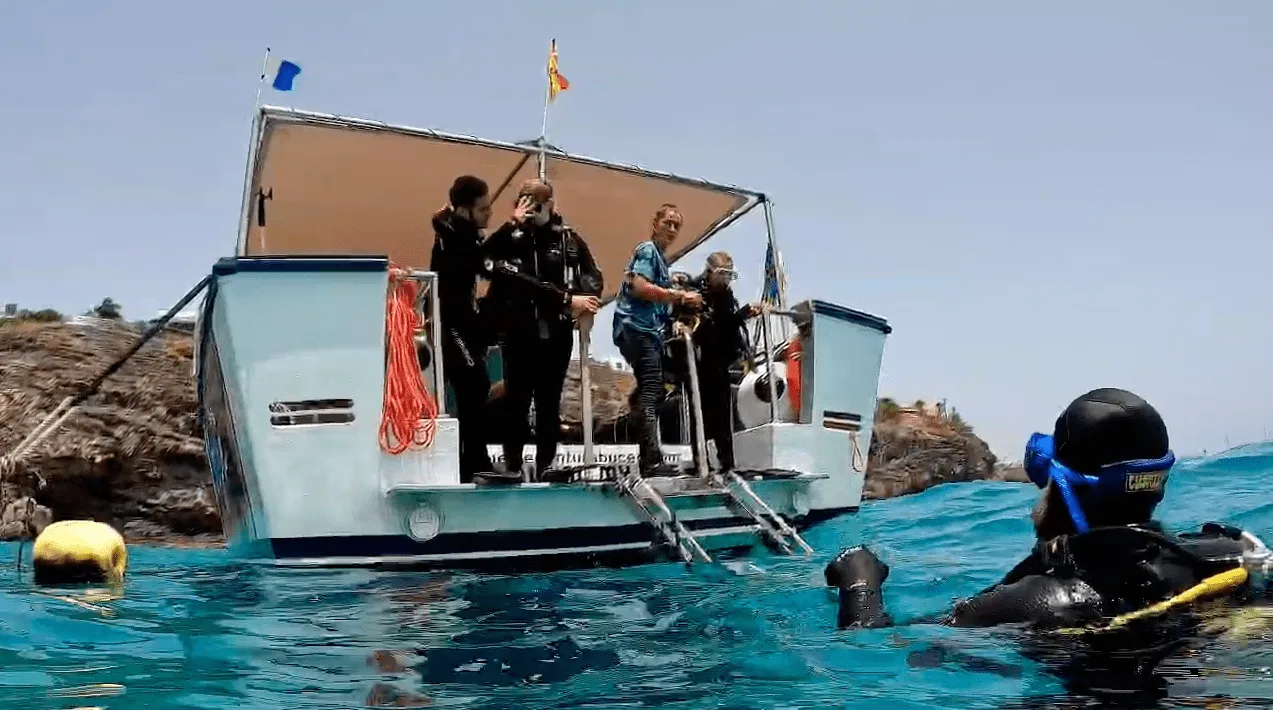
The accessibility of the site is via boat, typically involving a short 10 to 15-minute transit from the Salinas del Carmen area. Because the site is located in an exposed area, the surface conditions can be affected by waves, which may impact the entry and exit procedures. It is important to be prepared for these surface conditions before you leave the dive centre. Once submerged, the focus shifts to the complex interplay of rock, sand, and the marine life that calls these volcanic structures home.
The site has a depth range of 14 to 36 metres and requires an Advanced level of certification. A moderate current is typically present, and the site is exposed to waves, which can affect boat access and surface conditions.
El Monasterio requires an Advanced level of certification. The site includes a labyrinth of narrow volcanic gorges and tight rocky passages, so navigation is an important part of the dive. Careful buoyancy control is also needed to avoid touching delicate life attached to the narrow rock faces.
El Monasterio ranges from 14 to 36 metres. You can follow the upper reef plateau or plan an exploration of the deeper canyon sections. Moving between these zones brings changes in light and marine life, while monitoring your air consumption remains important in deeper, more sheltered passages.
El Monasterio usually has a moderate current, with stronger movement along the exposed reef edges and calmer water inside the narrow gorges. The site is exposed to waves, which can affect boat access and surface conditions during entry and exit. These conditions also require precise positioning and trim.
At El Monasterio, volcanic gorges and narrow rock passages resemble monastery corridors, with light sandy bottoms near their entrances. Common octopus and cuttlefish shelter around rocky and sandy transitions, while rays glide over the sand. In mid-water, amberjack and barracuda patrol the structure where currents are more active.