
Diving Atlantis
Google 4.9/5 (2,723 reviews)
1.8 km away as the crow flies
Tenerife · Canary Islands · Atlantic
Max. depth · 25 mA gentle volcanic descent offering frequent encounters with green sea turtles and rays.
For subtitles in English: start the video firstthen click the gearat the top right of the video, select “Subtitles/CC”, then “Auto-translate” and choose “English”.
El Bufadero, often referred to as the Palm-Mar Wall or Guaza Cliff, is a site defined by its gradual volcanic topography. The dive begins on a relatively shallow rocky plateau, typically sitting between 6 and 8 metres, which provides a stable platform for entry. From this initial ledge, the seabed follows a consistent volcanic slope that descends toward the deeper sections of the site. This structure allows for a controlled descent that is manageable for a wide range of experience levels.
As you descend the slope, the terrain transitions from the rugged volcanic rock of the plateau to a more open sandy zone at the bottom. This interface between rock and sand is a critical feature of the site, as it creates different micro-habitats within a short horizontal distance. You will notice small cavities and crevices embedded in the volcanic formations during the mid-section of your dive. These shallow indentations serve as essential shelter for various smaller marine organisms looking to avoid the open water.
The depth profile concludes at approximately 23 to 25 metres where the slope meets the sandy floor. This deeper zone is where the terrain flattens out, offering a different visual perspective compared to the verticality of the upper sections. Navigating this transition requires attention to buoyancy to avoid disturbing the sediment on the sandy bottom. Staying slightly above the floor allows you to observe the boundary where the volcanic rock meets the sand.
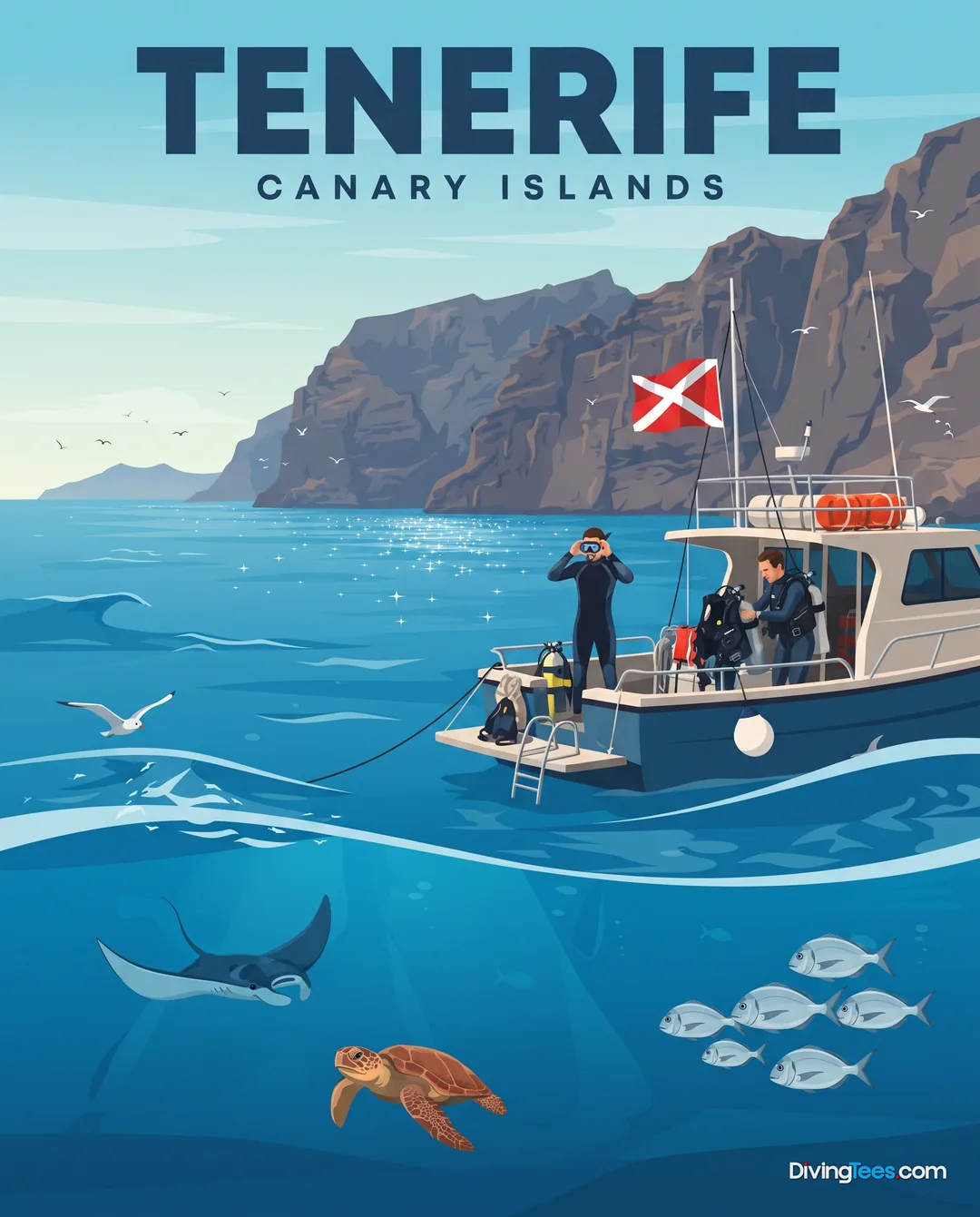
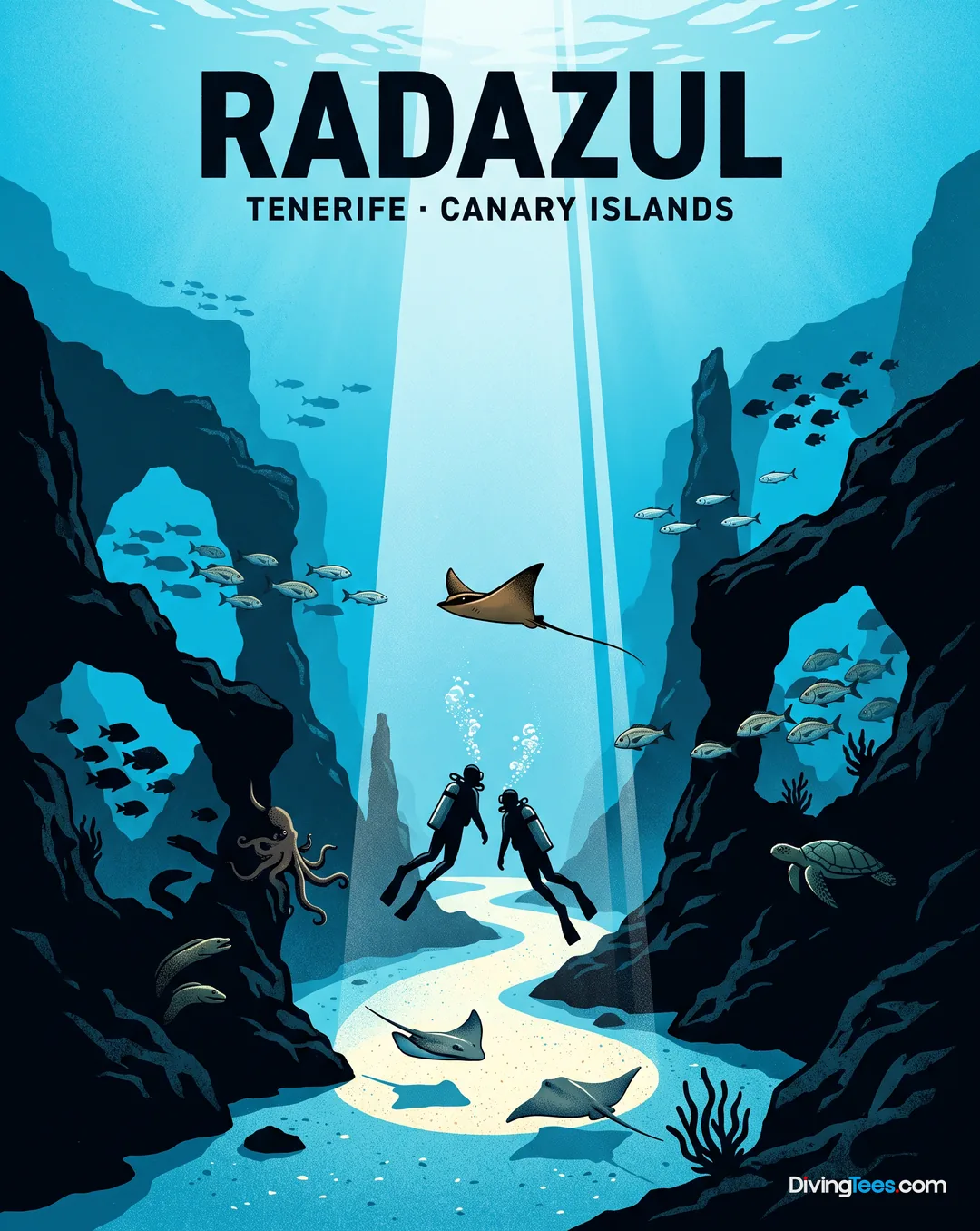
Marine life at El Bufadero is frequently tied to these habitat transitions, particularly the presence of rays and turtles. You will often encounter green sea turtles cruising along the slope or resting near the rocky outcrops. Rays, including both bull rays and eagle rays, are common residents that can be spotted gliding over the sandy patches or hovering near the reef edges. Their presence is a reliable feature of the site's ecosystem throughout much of the year.
The rocky sections of the wall provide a home for several resident species that remain stationary during your dive. Moray eels are frequently found tucked into the small cavities and rock crevices that characterize the mid-depths. You may also observe schools of various seabream, including white, striped, and black seabream, moving through the water column. These fish tend to patrol the edges of the volcanic structures, feeding on smaller organisms near the reef.
Observing the bottom fauna requires a keen eye for movement in the sand and within the rocks. Garden eels are known to inhabit the sandy areas, emerging from their burrows to feed in the current. Larger fish like barracuda and parrotfish are also part of the regular activity around the site. The combination of structured rock and soft sand makes this a biologically diverse area for a relatively shallow dive.
While the site is generally sheltered and lacks significant current, the topography can influence how you move through the water. The descent along the volcanic slope is predictable, making it an excellent location for practicing buoyancy control and navigation. For those interested in exploring more complex structures, nearby features like La Catedral or the local pinnacles offer additional geological interest. However, the main El Bufadero site remains a reliable and consistent dive for those seeking a calm profile.
The site has a depth range of 6 to 25 metres. It is accessible to Open Water Diver levels, though additional experience is recommended for exploring the cavities and the La Catedral area. There is no significant current reported at this site. The best period for diving is from April to October, though winter dives may bring sightings of angel sharks in cooler water.
You can dive El Bufadero from April to October, identified as the best period for diving at the site. Winter dives take place in cooler water and may bring sightings of angel sharks. The site remains suitable for exploring its volcanic slope, rocky plateau, cavities, and sandy bottom throughout the year.
El Bufadero is accessible to Open Water Diver levels, with additional experience recommended if you want to explore the cavities and the La Catedral area. The dive begins on a rocky plateau between 6 and 8 metres, follows a volcanic slope, and reaches approximately 23 to 25 metres above the sandy floor.
You can expect sheltered conditions at El Bufadero, with no significant or notable current reported. The volcanic slope provides a predictable descent, while the transition from rock to sand requires attention to buoyancy so you avoid disturbing sediment. This profile also allows you to practise buoyancy control and navigation.
At El Bufadero, you may see green sea turtles cruising along the slope or resting near rocky outcrops, as well as bull rays and eagle rays over sandy patches. Moray eels shelter in crevices, while seabream, garden eels, barracuda, and parrotfish add activity around the volcanic rock and sand.