
Deep Divers Center
Google 5/5 (405 reviews)
less than 1 km away as the crow flies
Tenerife · Canary Islands · Atlantic
Max. depth · 34 mExplore a large, intact wooden wreck lying upright on a sandy plain near the southern coast of Tenerife.
For subtitles in English: start the video firstthen click the gearat the top right of the video, select “Subtitles/CC”, then “Auto-translate” and choose “English”.
Located off the southern coast of Tenerife near Palm-Mar, El Meridian lies on a flat, sandy seabed. This wreck is not a typical metal hull; it is a wooden structure, a former German minesweeper from World War II that was later converted into a sailing vessel. The site is characterized by its relatively intact condition, with its masts rising from the seabed towards the mid-water column between 12 and 18 metres. This verticality provides a unique profile for divers compared to the many metal wrecks found elsewhere in the region.
As you descend along the anchor line, the wreck emerges from the sand as a substantial artificial reef. The hull rests firmly on the bottom, and its superstructure and various sections are accessible for external inspection. The wood has become heavily encrusted with marine growth, creating a complex habitat for smaller organisms and resident fish. You will notice that the wreck occupies a transitional zone where the sandy plain meets nearby rocky reef outcrops, offering two distinct types of terrain in one dive.
The depth profile of the site varies from 12 metres at the top of the masts to 34 metres at the deepest part of the hull. This range allows for a varied decompression profile and different light conditions depending on your depth. Most of the interesting structural details are located in the upper sections, but the way the hull settles into the sand makes for an interesting exploration of the lower sections. It is a site that rewards a slow, methodical approach to observe how the wood and rock have integrated with the local ecosystem.
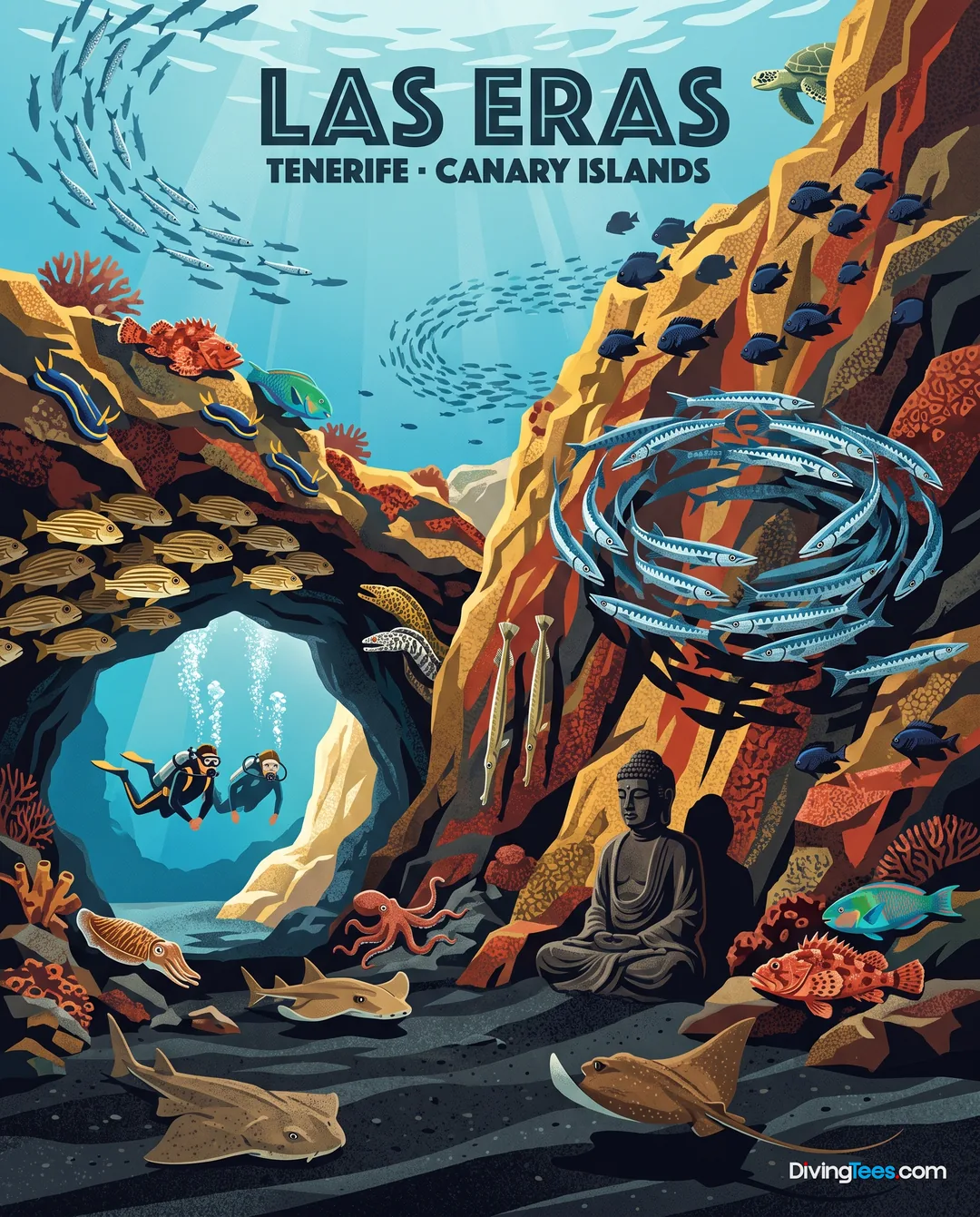
The marine life at El Meridian is driven by the structure's role as an artificial reef. You can expect to see schools of Bream and larger Amberjack moving through the water column around the masts. As you scan the sandy floor near the hull or the adjacent rocky outcrops, you are likely to encounter Rays and various species of Moray eels. These residents make use of the crevices created by the wooden structure and the natural rock to find shelter from the currents.
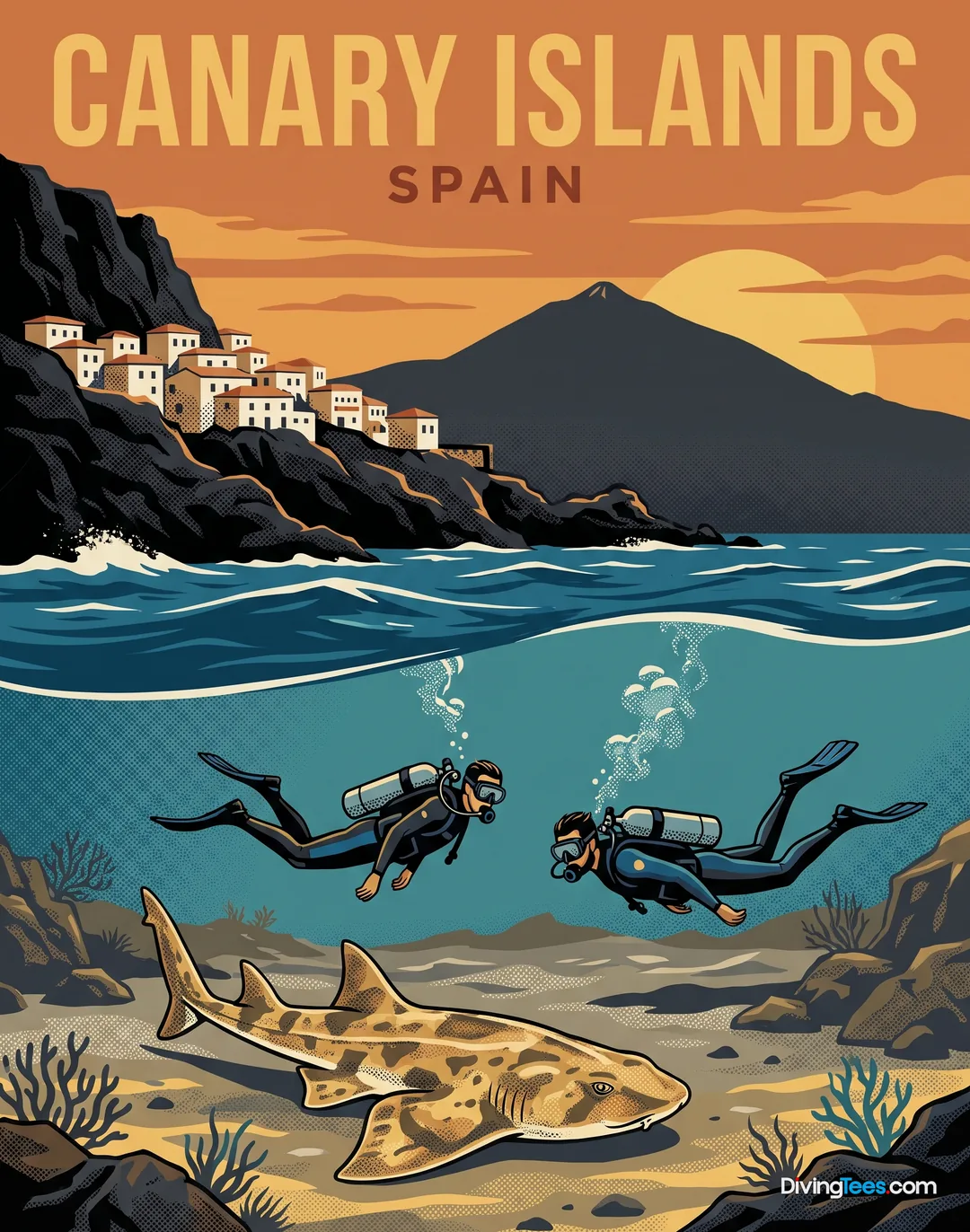
During the winter months, the site becomes a significant location for observing Angelsharks. These bottom-dwelling fish prefer the sandy areas surrounding the wreck, where they can blend into the seabed. Their presence is more consistent during this season, making winter dives particularly interesting for those looking for specific bottom fauna. The visibility at the site typically ranges between 15 and 30 metres, depending on the swell and local conditions.
The site is frequently visited by larger pelagic species that use the reef systems of Tenerife as feeding grounds. You may encounter Barracuda patrolling the edges of the wreck or Dolphins passing through the area. While these encounters are not guaranteed, the combination of the wreck's structure and the nearby reef makes it a natural point of interest for larger swimmers. The presence of these animals adds a sense of scale to the wreck and highlights its importance as a localized ecosystem.
Navigation at the site is straightforward once you reach the wreck from the boat. Most dive operators anchor on the sandy bottom near the structure and descend along a line. The combination of open sand and rocky reef requires you to stay aware of your buoyancy to avoid contact with the encrusted wood. Staying close to the structure or the reef edges ensures you stay within the most biologically active zones of the site.
The site reaches depths of 12 to 34 metres. It is recommended for Advanced divers who are comfortable at 25–30 metres and have experience in currents and wreck exteriors. Currents can be strong due to the site's exposed position off the south coast, particularly during winter or during certain tides. Visibility typically ranges from 15 to 30 metres.
Winter dives at El Meridian are particularly interesting if you want to look for angelsharks, which use the sandy areas around the wreck and are more consistently present then. Visibility typically ranges from 15 to 30 metres, depending on swell and local conditions, while currents may be stronger during winter or certain tides.
El Meridian is recommended for advanced divers who are comfortable at 25 to 30 metres and experienced with currents and wreck exteriors. Its exposed position off Tenerife’s south coast can produce strong currents, particularly during winter or certain tides. You should remain aware of buoyancy near the encrusted wood and rocky reef.
El Meridian ranges from 12 metres at the tops of its masts to 34 metres at the deepest part of the hull. The wreck rests on a flat, sandy seabed, with many structural details in the upper sections. Its varied depth profile creates different light conditions and allows exploration of both upper and lower areas.
At El Meridian, you can explore an intact wooden former German minesweeper, with masts rising through the water and marine growth covering the structure. Schools of bream and amberjack move around the masts, while rays and moray eels shelter near the hull and rocks. Winter may bring angelsharks, with barracuda or dolphins also possible.