
One Two Dive
Google 5/5 (518 reviews)
7.8 km away as the crow flies
Tenerife · Canary Islands · Atlantic
Max. depth · 30 mNavigate through a complex volcanic landscape of arches, tunnels, and deep crevices.
For subtitles in English: start the video firstthen click the gearat the top right of the video, select “Subtitles/CC”, then “Auto-translate” and choose “English”.
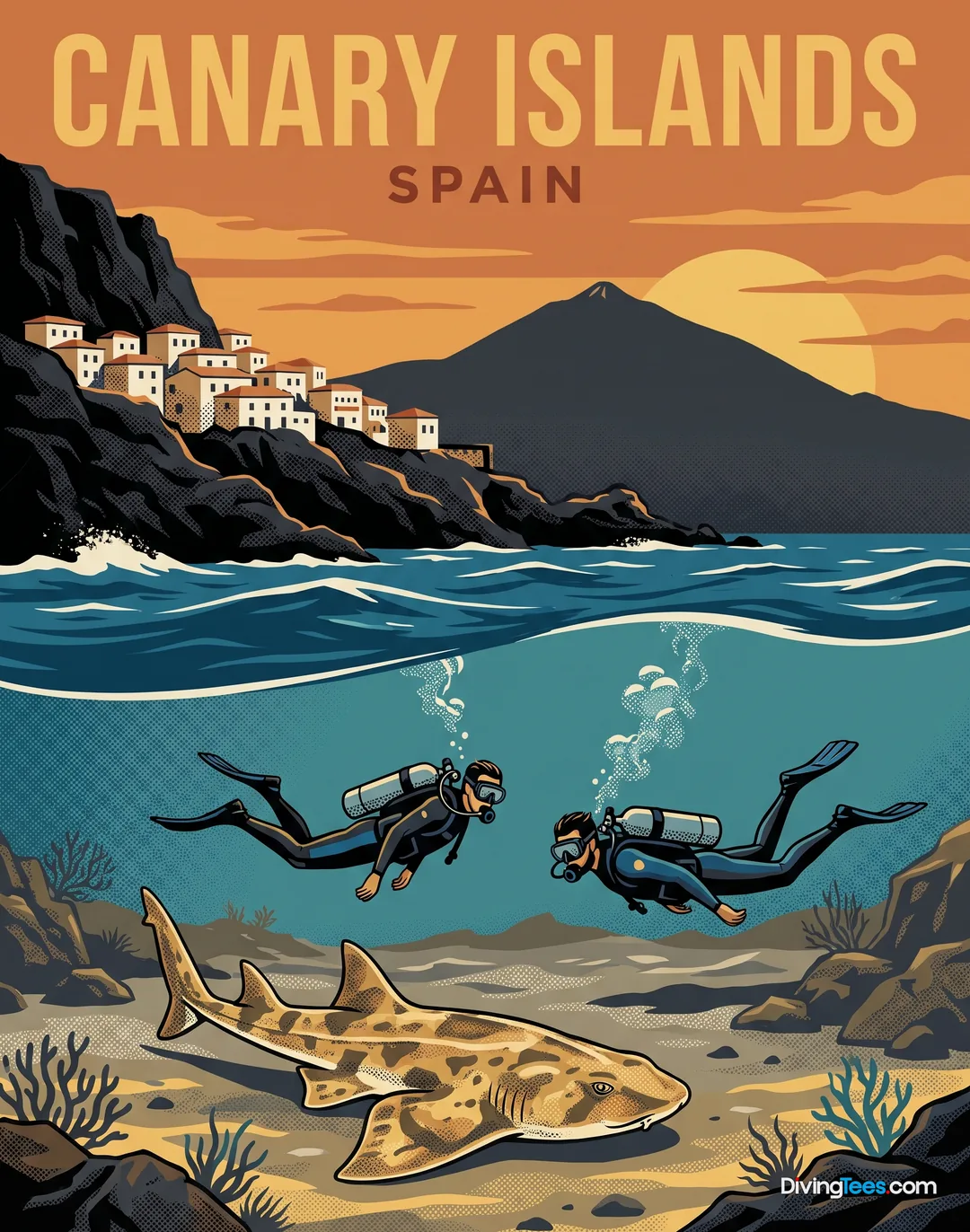
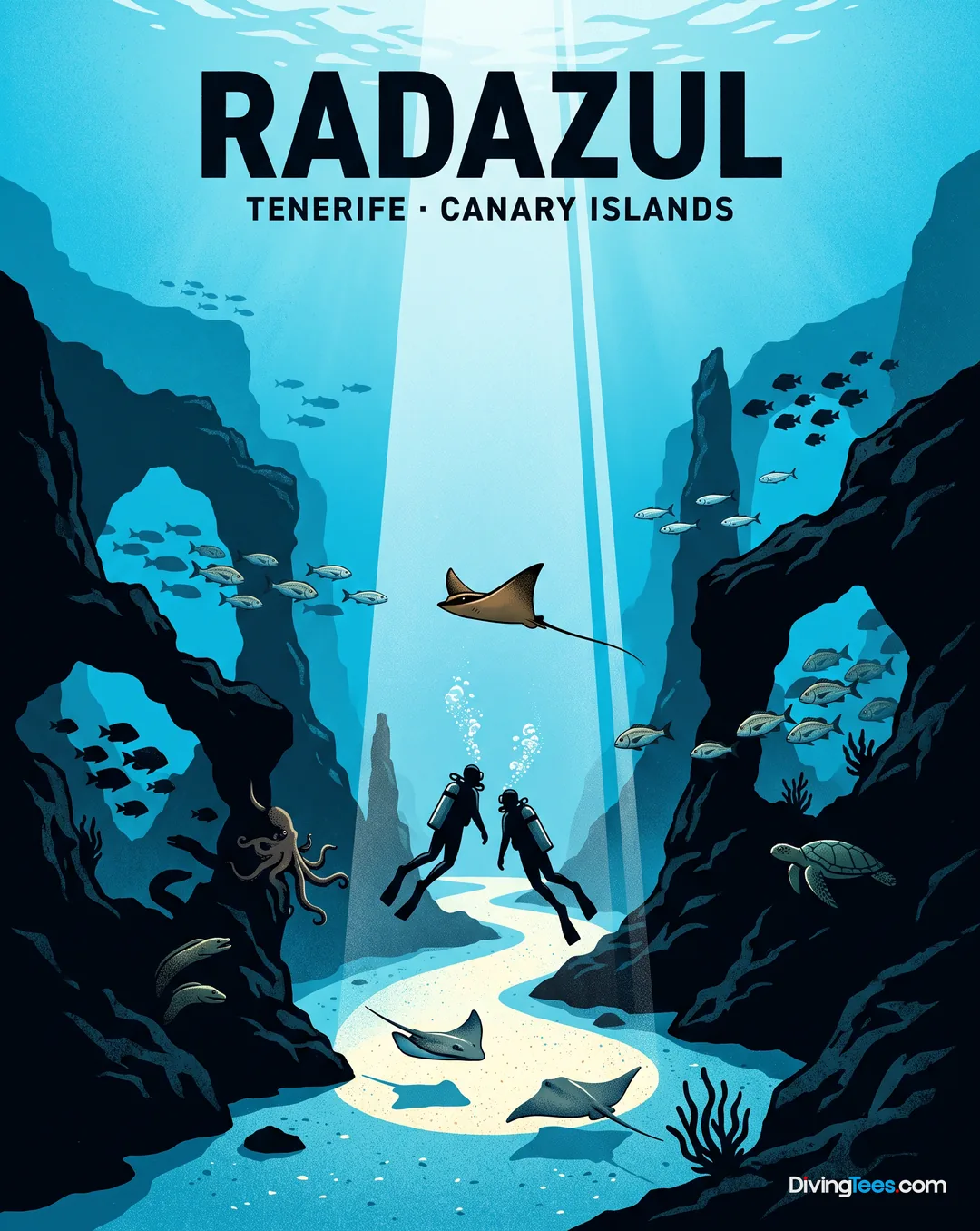
The topography of Marazul is defined by its volcanic origin, creating a rugged and layered landscape. You will find yourself navigating a multi-level terrain that includes dark volcanic rock, sandy openings, and various underwater structures. This site is not a simple wall or a flat bottom, but a complex geometry of overhangs and channels that invite exploration. The structure is diverse enough to offer different dive profiles depending on your chosen route.
For those looking for depth, the site transitions into significant formations around 26 to 30 metres. This deeper section features large arches and complex rock structures that catch the light differently than the shallower areas. At approximately 23 metres, you can find a specific cave that is notable for its blowhole opening toward the surface. This geological feature allows sunlight to penetrate the cavern, creating a unique lighting effect within the volcanic rock.
The descent can be tailored to your experience level, starting from shallow plateaus to deeper cavernous systems. You will encounter a variety of passages, including swim-throughs and tunnels that weave through the volcanic stone. These structures create a sense of enclosure, making the site feel more intimate than the open oceanic walls found elsewhere in Tenerife. The layout requires careful navigation to ensure you don't lose your orientation within the more complex tunnel sections.
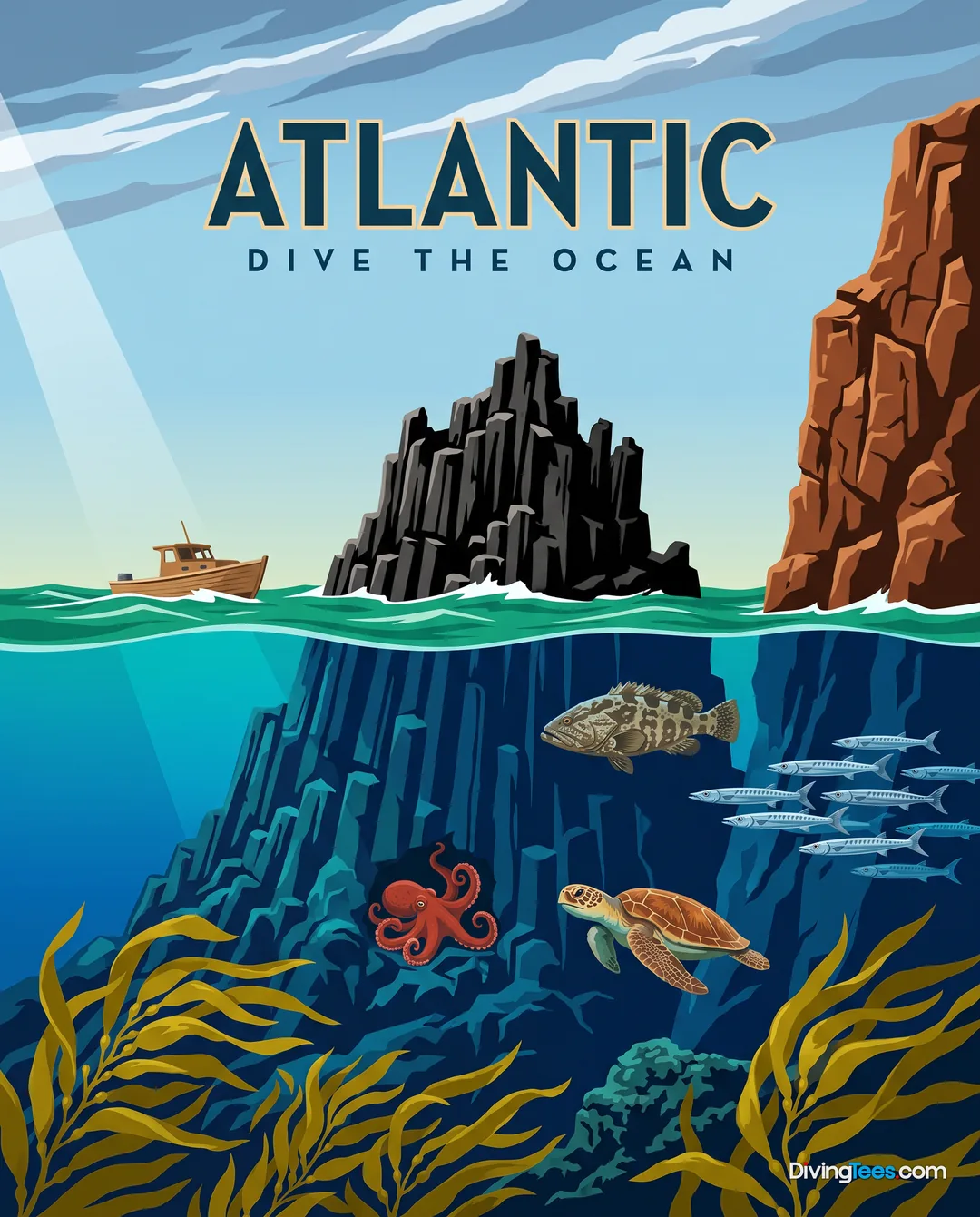
The marine life at Marazul is well-integrated into the rocky crevices and overhangs. You can find octopus and cuttlefish tucked away in the sheltered spots provided by the volcanic formations. Stingrays and rays are often found resting on the sandy sections between the rock structures. It is a site where the geology dictates the biology, as every crevice and cave provides a natural habitat for resident species.
As you move through the deeper sections, you will encounter more schooling fish and larger predators. Barracuda are common along the edges of the rock formations, and you may see striped seabream moving through the water column. For those observing the reef more closely, look for moray eels and lobsters hiding in the deeper cracks. The presence of various sponges and anemones on the rocks adds texture to the volcanic substrate.
The site is most accessible from the shoreline, near the old small port or coastal loading point. This land-based access makes the transition from boat to water straightforward. Because the site is part of a coastal volcanic formation, the underwater topography can be quite irregular. Staying close to the rock formations is key to spotting the smaller species like spider crabs and trumpetfish.
Visibility at Marazul typically ranges between 15 and 25 metres, depending on local conditions. The clarity of the water allows for good visibility of the larger structures like the deep arches. However, the dark colour of the volcanic rock can create high-contrast environments. You will need to manage your light and positioning to effectively see into the deeper crevices and tunnels.
The current at Marazul is generally manageable, but it is highly dependent on the sea state. The site is best explored when the sea is calm, as the surface conditions directly influence the water movement around the rocks. When the sea is calm, the site provides a stable environment for exploring the intricate tunnels and caves. However, the complex topography can create local variations in water movement even when the surface appears still.
Dive depths range from 5 to 30 metres. Open Water certification is required, though experience is recommended for the deeper sections and for navigating through the rock passages. Visibility is typically 15-25 metres. The site is best dived year-round when the sea is calm.
You can dive Marazul year-round when the sea is calm. Surface conditions influence water movement around the volcanic rocks, so calm conditions support exploration of the tunnels, caves and swim-throughs. Shore access is available near the old small port or coastal loading point.
You need Open Water certification for Marazul. Experience is recommended for the deeper sections and for navigating the rock passages. The site offers variable profiles from shallow plateaus to deeper cavernous systems, with tunnels, arches and swim-throughs requiring careful navigation to maintain your orientation.
Marazul ranges from 5 to 30 metres. Around 23 metres, you can find a cave with a blowhole opening toward the surface. The deeper section, from 26 to 30 metres, includes large arches and complex rock structures, while shallower areas provide different routes and profiles.
At Marazul, you can look for octopus and cuttlefish in crevices, stingrays and rays on sandy sections, and barracuda and striped seabream near the rock formations. Moray eels, lobsters, spider crabs and trumpetfish also occur around the volcanic rocks, alongside sponges and anemones.