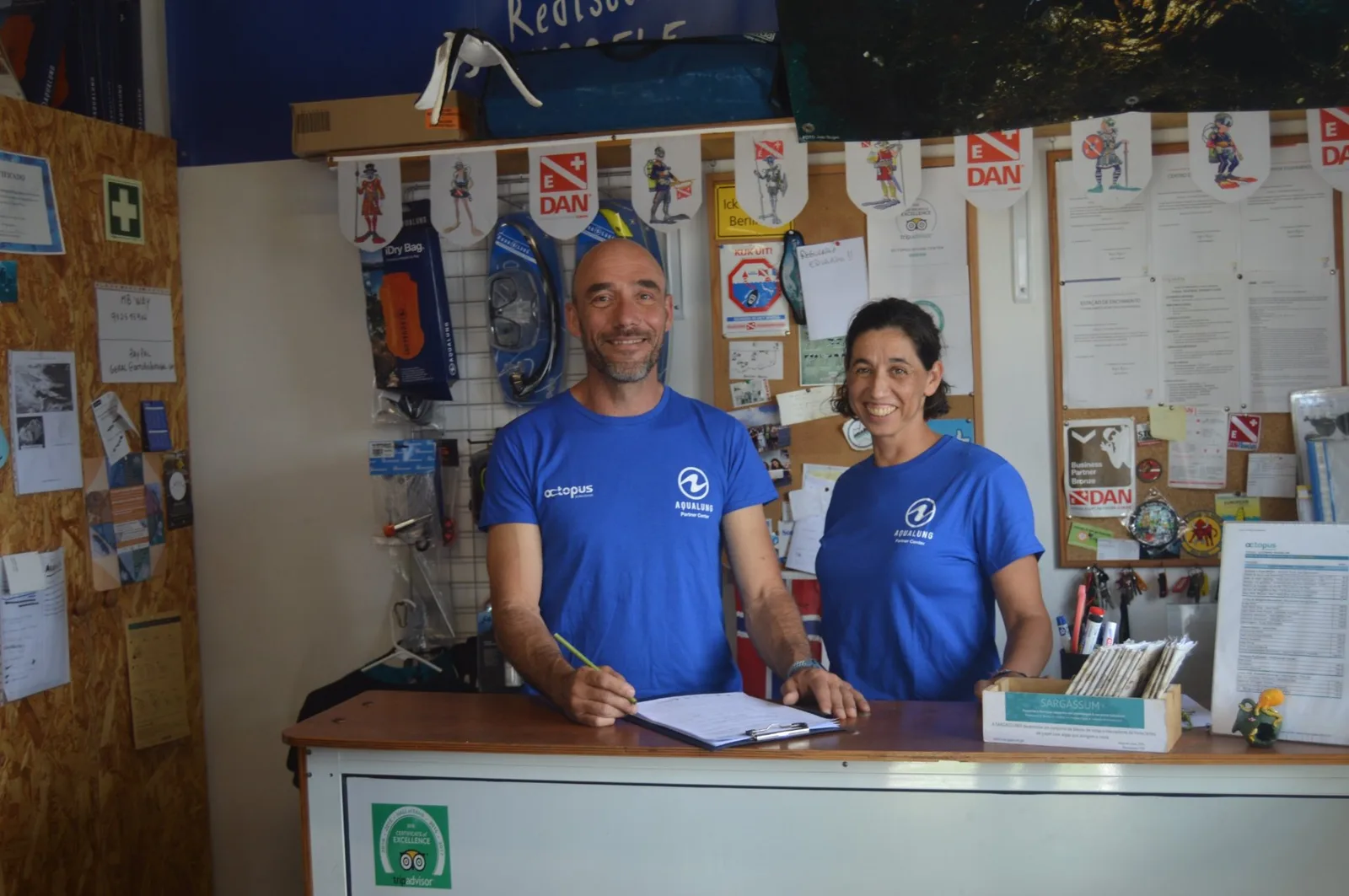

Octopus Diving Center
Google 4.9/5 (213 reviews)
132 km away as the crow flies
Terceira · Azores · Atlantic
Max. depth · 20 mExplore the dramatic volcanic formations of Arcos do Calhau, where two perfect lava arches descend into the deeper plateaus of Terceira.
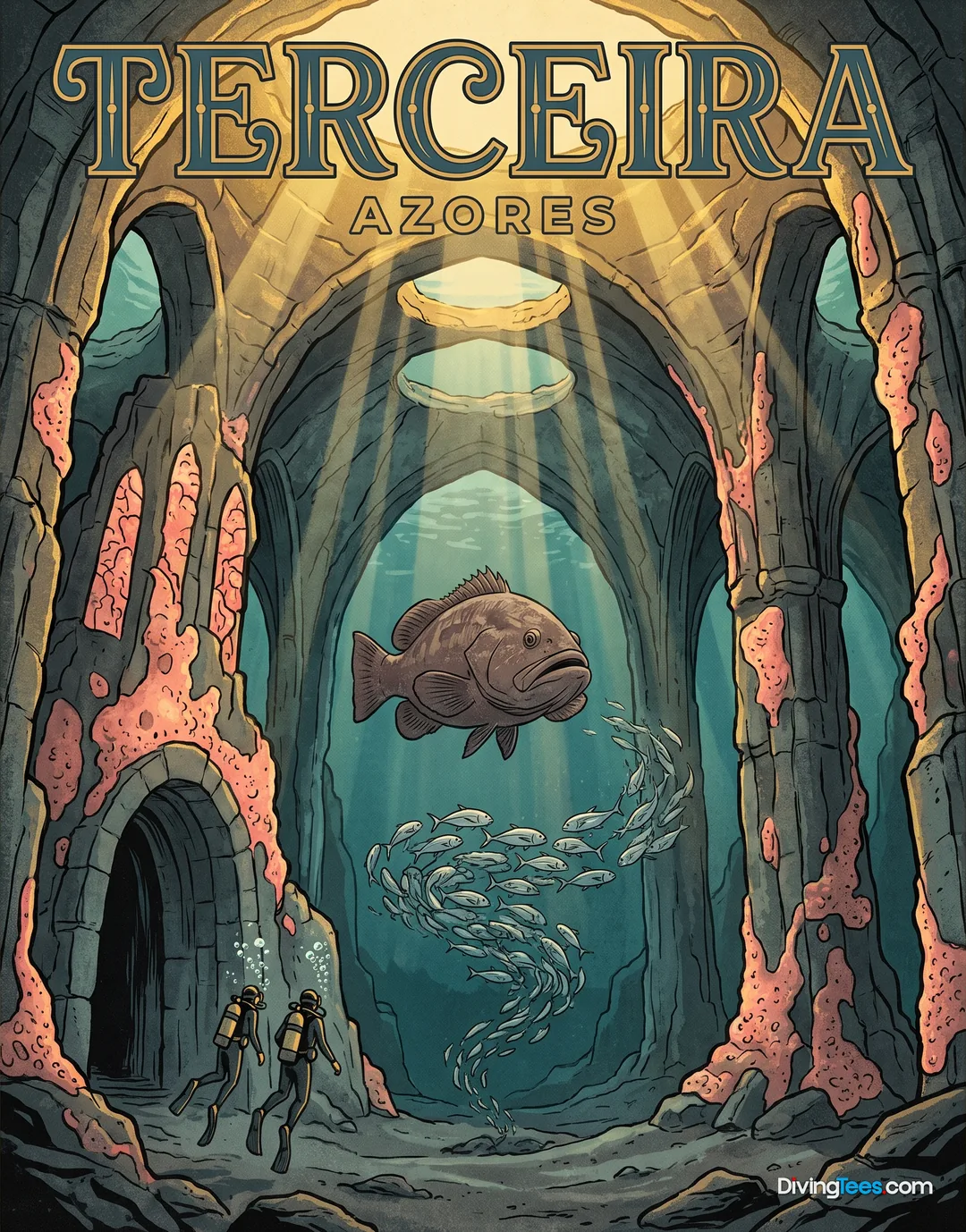
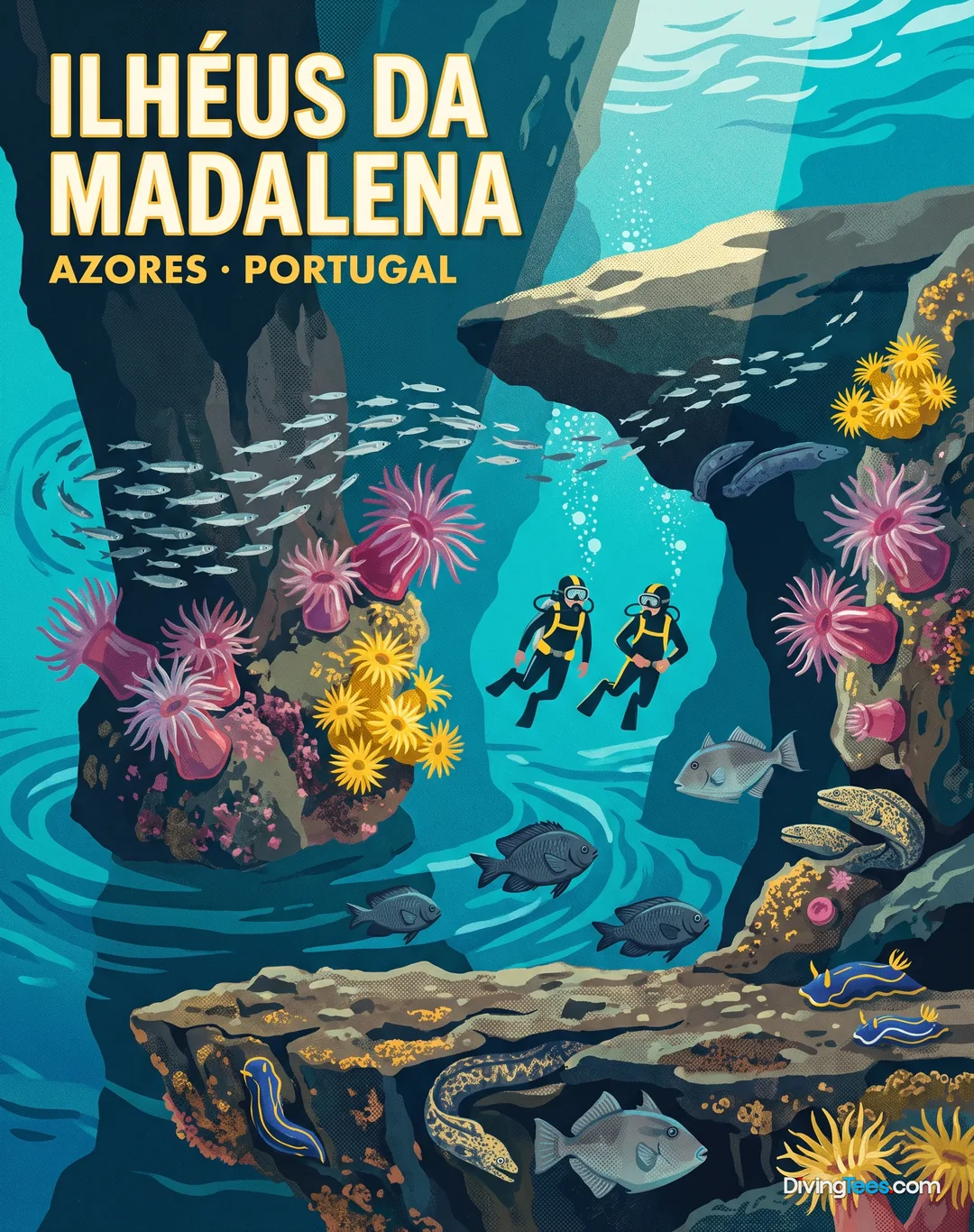
Descending into Arcos do Calhau, you'll immediately encounter a rocky plateau at a comfortable 10 metres. This initial depth provides an excellent orientation point as you begin to explore the distinctive volcanic topography. The site's namesake — two impressive lava arches — become visible almost immediately, inviting you to navigate through their natural formations. Sunlight filters through the archways, creating a dynamic play of light and shadow, truly immersing you in the geological history of the Azores.
The journey through the arches leads you into deeper territory, with the volcanic structures extending down to 20 metres. As you move beyond the initial plateau, the environment transforms, revealing the intricate details of the lava flows that shaped this underwater landscape. The arches themselves are not merely passages but vibrant habitats, offering shelter and foraging grounds for a variety of resident species, making every turn a potential encounter.
Within the crevices and underhangs of the lava formations, you'll find yellow anemones (Actiniaria) clinging to the rocks, their colours contrasting with the darker volcanic stone. Keep a close watch for moray eels (Muraenidae) peeking from their hidden spots, their watchful eyes following your progress. These nocturnal hunters are often seen during the day resting in their territories, adding a sense of wildness to the dive.
The rocky bottom and arch structures are also home to a selection of reef fish. Look for the vibrant colours of Turkish wrasse (Labridae), darting in and out of cover. Damselfish (Pomacentridae) are omnipresent, forming small aggregations around the more sheltered areas of the site. Their constant activity brings a lively energy to the volcanic seascape, as they feed and interact within their immediate environment.
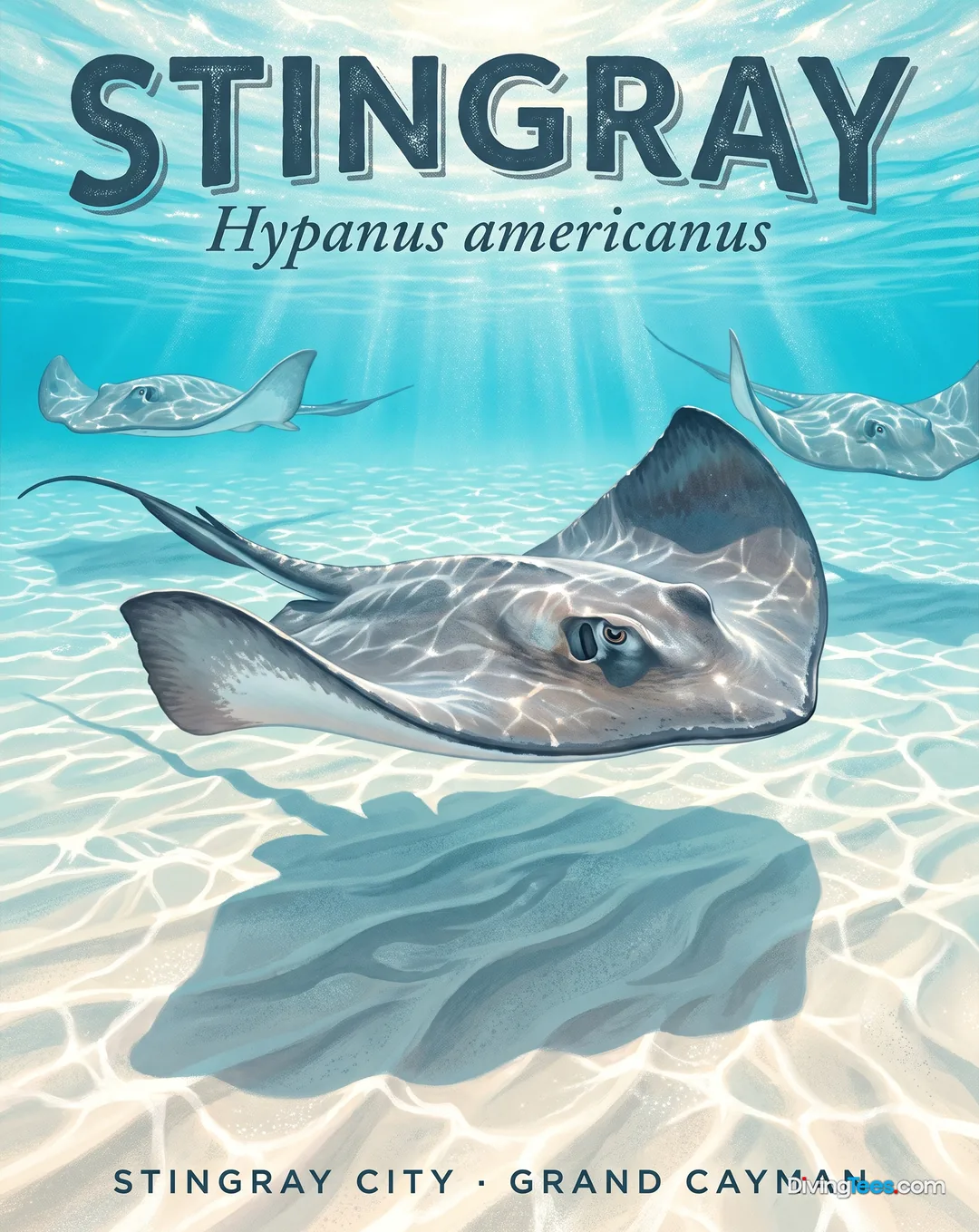
As you explore the deeper sections of Arcos do Calhau, keep an eye on the sandy patches adjacent to the rocky plateau. Here, you might spot common stingrays (Dasyatis pastinaca) camouflaged against the seabed. These graceful creatures often rest partially buried in the sand, and with a careful approach, you can observe their gentle movements as they navigate the area, a quiet counterpoint to the more active reef inhabitants.
Arcos do Calhau is an advanced dive, with depths ranging from 10 to 20 metres. The best period for diving here, and throughout the Azores, is generally July, August, and September. Visibility in the region typically ranges from 20 to 30 metres, offering clear views of the volcanic structures and marine life. Water temperatures vary between 16 and 23°C.
You can generally dive Arcos do Calhau during July, August, and September, the period identified as best for this site and throughout the Azores. Regional visibility typically ranges from 20 to 30 metres, while water temperatures vary between 16 and 23°C, helping you anticipate conditions.
Arcos do Calhau is an advanced dive, so you should choose it if you are comfortable exploring volcanic formations and moving from a rocky plateau at 10 metres into sections reaching 20 metres. The site includes two lava arches, deeper structures, crevices, underhangs, and sandy patches.
Arcos do Calhau ranges from 10 to 20 metres deep. You begin on a rocky plateau at 10 metres, which provides an orientation point for the dive, then follow the volcanic structures toward the arches and deeper areas extending to 20 metres.
At Arcos do Calhau, you can swim through two lava arches and explore a complex volcanic rock plateau. Look for yellow anemones in crevices, moray eels beneath overhangs, Turkish wrasse, damselfish schooling around sheltered structures, and common stingrays resting on nearby sandy bottoms.