Taj Exotica Resort & Spa, Andamans
★★★★★
★ 9.4/10 (108 reviews)
7.2 km away as the crow flies
Dive centre · Havelock · India
4.91,691 Google reviewsExperience the Andaman Islands with a 1:1 instructor-to-diver ratio and a specialised focus on quality training and small group dives.
For subtitles in English: start the video firstthen click the gearat the top right of the video, select “Subtitles/CC”, then “Auto-translate” and choose “English”.
Seahawk Scuba is situated on Havelock Island (Swaraj Dweep) in the Andaman archipelago. The centre is managed by Seahawks Watersports and operates with a philosophy that prioritises dive quality over sheer volume, ensuring you receive dedicated attention throughout your experience.
Access to the centre is provided via speed boat from either Port Blair or Havelock. Whether you are looking to begin your training or are an experienced diver seeking new sites, the centre provides a structured environment for exploring the local reefs.
The centre operates with a strict 1:1 diver-to-guide ratio, ensuring that every diver in a group has direct access to professional supervision. This approach is designed to maximise safety and allow for personalised instruction during both training and exploration dives.
All instruction and dive guidance is conducted in English. The centre is well-equipped to handle a range of divers, including those looking for introductory sessions or those requiring specific guidance through the SSI curriculum.
As an SSI affiliated centre, Seahawk Scuba offers a comprehensive range of training from entry-level to professional grades. Beginners can start with the Basic Diver, Scuba Diver, or Open Water Diver courses. For those looking to expand their skills, the centre provides Advanced Adventure Diver, Deep Diving, Navigation Specialty, and Perfect Buoyancy courses.
More advanced divers can pursue specialized training such as Wreck Diving, Night Diving, and Marine Ecology. The centre also offers the Stress And Rescue, React Right, and Science Of Diving modules, as well as the Divemaster Pro programme for those pursuing a professional career.
Full equipment hire is available on-site, including wetsuits, which allows you to travel light. For those choosing to dive at night, torches are provided to assist with visibility.
On board during your dives, light snacks and water are provided to keep you hydrated and nourished between sessions.
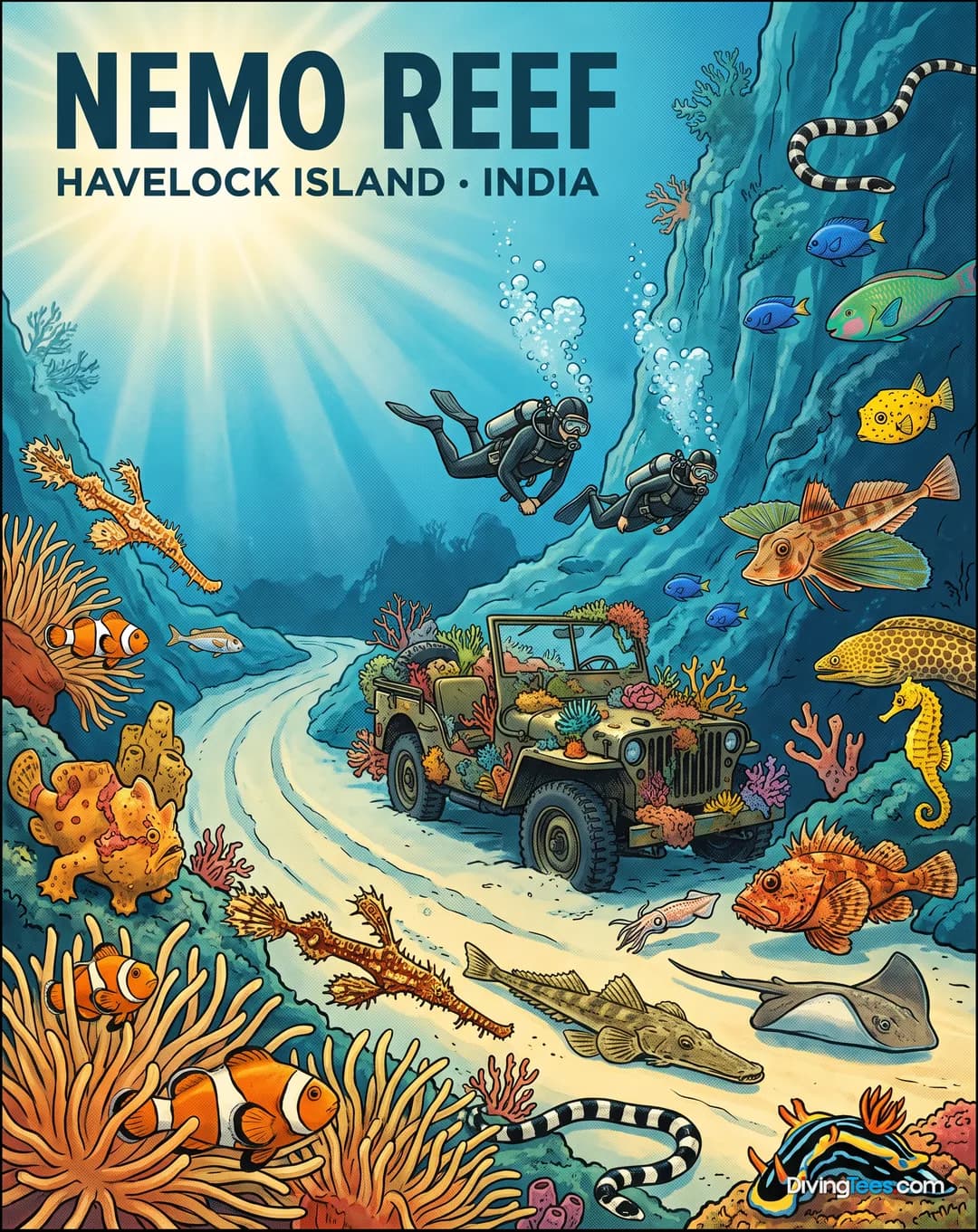
Nemo Reef is a reef located at depths between 2 and 10 metres. It is the only site on Havelock suitable for shore dives, making it an ideal location for training and buoyancy work.
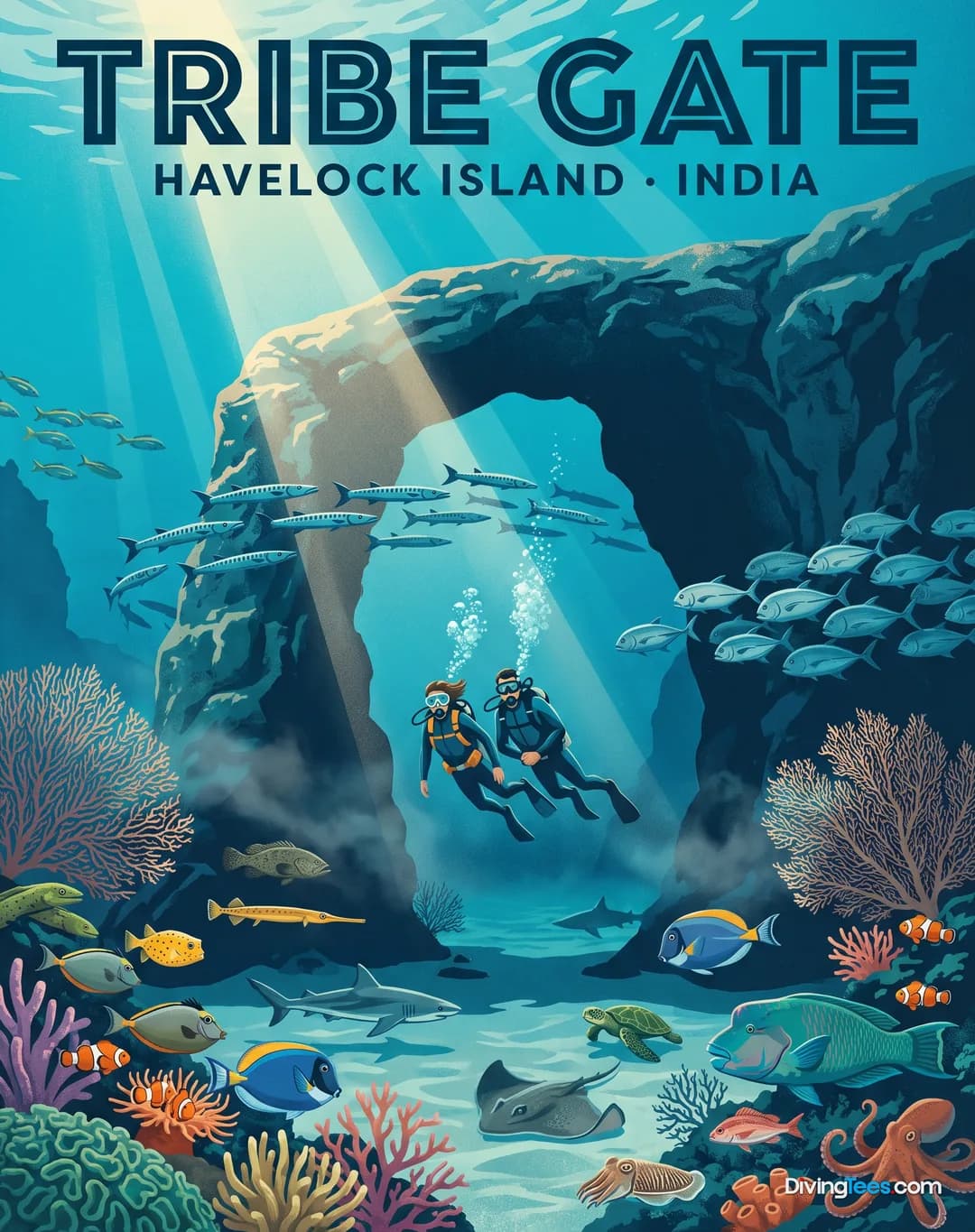
Tribe Gate is a large, oval-shaped reef situated between the Havelock channel and John Lawrence Island. Ranging from 4 to 13 metres, it features moderate currents and is a popular site for all levels.
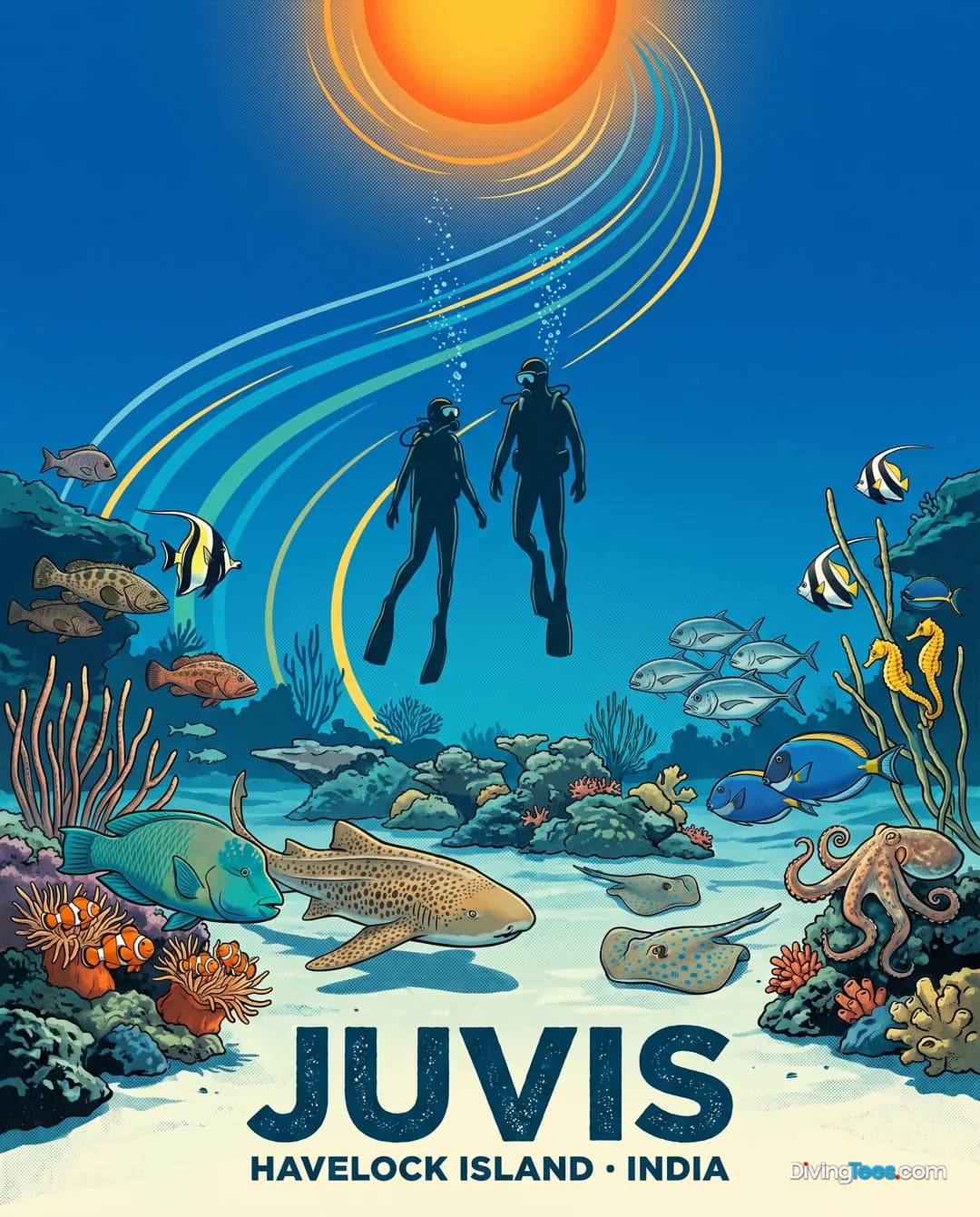
Juvis is a colourful coral reef located near John Lawrence Island with depths reaching up to 18 metres. It offers a varied terrain for divers exploring the local reef structures.
Jetty Channel Marker is a plateau site located near the Neil Island ferry station. With depths between 7 and 11 metres, the area is centred around a large rock formation that hosts a variety of marine life.
And some of the dive sites the centre runs.
The reefs are home to a diverse array of fish, including various species of snapper (Lutjanus), trevally, and fusiliers (Caesio). You will often see parrotfish, butterflyfish (Chaetodon), and surgeonfish (Acanthuridae) navigating the coral. Larger pelagics such as great barracuda (Sphyraena barracuda) and various jacks (Carangidae) are also present in the area.
The reef structure itself is built upon healthy corals, including staghorn coral and various soft corals (Alcyonacea). You can find large clams and sea anemones (Actiniaria) providing habitat for anemonefish and other small reef residents.
For those interested in macro life, the sites host a variety of crustaceans, octopuses (Octopus vulgaris), and scorpionfish (Scorpaenidae). Keep an eye out for more subtle inhabitants like pipefish, crabs (Brachyura), and various species of shrimp (Caridea) tucked into the reef crevices.
The best time to dive in this region is from October to mid-May. During the rainy season, from June to September, visibility can be reduced and the sea state often becomes rough.
Sea currents can vary significantly, ranging from light to intense depending on the tides. Surface conditions can also be affected by swell, which may result in choppy water.
Hello, I'm Marina, DivingDeal.com's AI assistant. I answer in detail about hotels, dive centres and liveaboards.

Thinking about the whole trip and the flights? Talk it over with Edith →
Marina is an AI. Some links are affiliate links: DivingDeal may earn a commission, at no extra cost to you. Bookings are made with the partner.