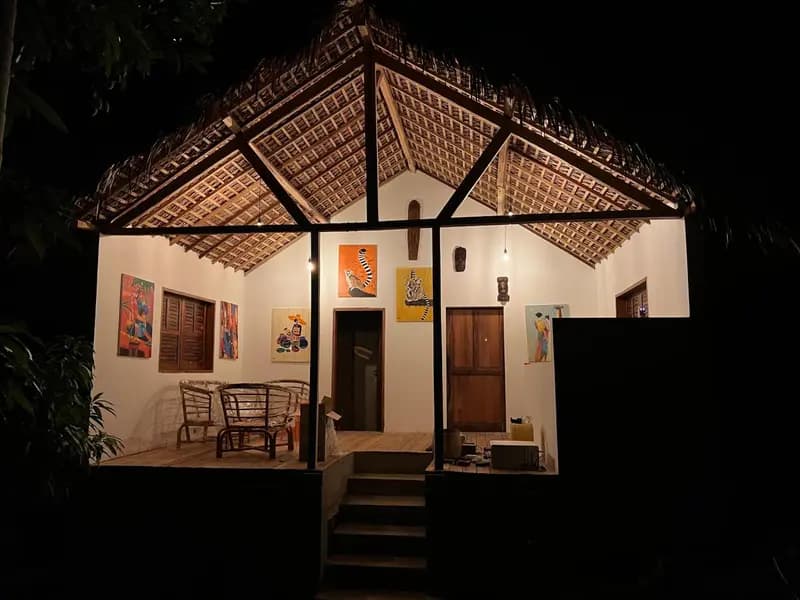
Canopee Lodge
★ 9.1/10 (160 reviews)
17 km away as the crow flies
Dive centre · Nosy Be · Madagascar
4.8173 Google reviewsWith 20 years of local experience, this instructor training centre operates four boats to explore the reefs and deep walls of Nosy Be.
For subtitles in English: start the video firstthen click the gearat the top right of the video, select “Subtitles/CC”, then “Auto-translate” and choose “English”.
Located in Nosy Be, Madagascar, Scuba Nosy Be has been operating for two decades, building a deep understanding of the local marine environment. The centre serves as a hub for both recreational divers and professional candidates, offering training across multiple major agencies including SSI, PADI, and CMAS.
The operation is designed around small-group exploration, utilising a fleet of four boats to reach various sites throughout the bay and the Radama archipelago. This allows for diverse daily itineraries, whether you are looking for shallow reef flats or deeper offshore walls.
The centre functions as a professional instructor training facility, holding affiliations with SSI, PADI, CMAS, FFESSM, IANTD, and SDI. This high level of accreditation means the team is equipped to handle everything from basic certifications to advanced instructor training (IDC).
A team of three instructors manages the daily operations, maintaining a strict ratio of a maximum of four divers per guide. This ensures that instruction and dive supervision remain focused and safe for every diver in the group.
Communication is straightforward for international divers, as the team is proficient in English, French, Italian, and Polish. For those staying longer, the centre offers free accommodation in single rooms or dormitories, subject to availability, when booking two dives per day online.
The training programme is extensive, catering to all levels of experience. You can begin with basic certifications and progress through to advanced levels, including specialized training such as the PADI Advanced Recreational Trimix course and Tec Sidemount.
For those pursuing a professional career, the centre is an Instructor Training Centre (IDC) offering various instructor-level paths. Technical divers can also access training in hypoxic Trimix and crossover courses through their SSI, PADI, and CMAS affiliations.
The centre operates four small boats, which provide the flexibility to visit different destinations each day. These vessels allow the team to navigate between the local reefs of Nosy Be and the more remote sites in the Radama area.
Technical diving support is available on the water, with Nitrox and Trimix gases accessible for those on deeper or extended profiles. The fleet is used for everything from standard day trips to specialised 'croisières-bivouacs' (liveaboard-style excursions) to areas such as Mitsio, Nosy Saba, and Nosy Lava.
The centre maintains a high standard of kit, with BCDs, regulators, and wetsuits replaced every two years to ensure reliability. Full equipment hire is available on-site, including sizes suitable for children.
For gas blending and air quality, the compressors are replaced every four years. Nitrox is available for use in both 12-litre and 15-litre cylinders. Safety is supported by the proximity of a hyperbaric chamber, located less than three kilometres from the centre.
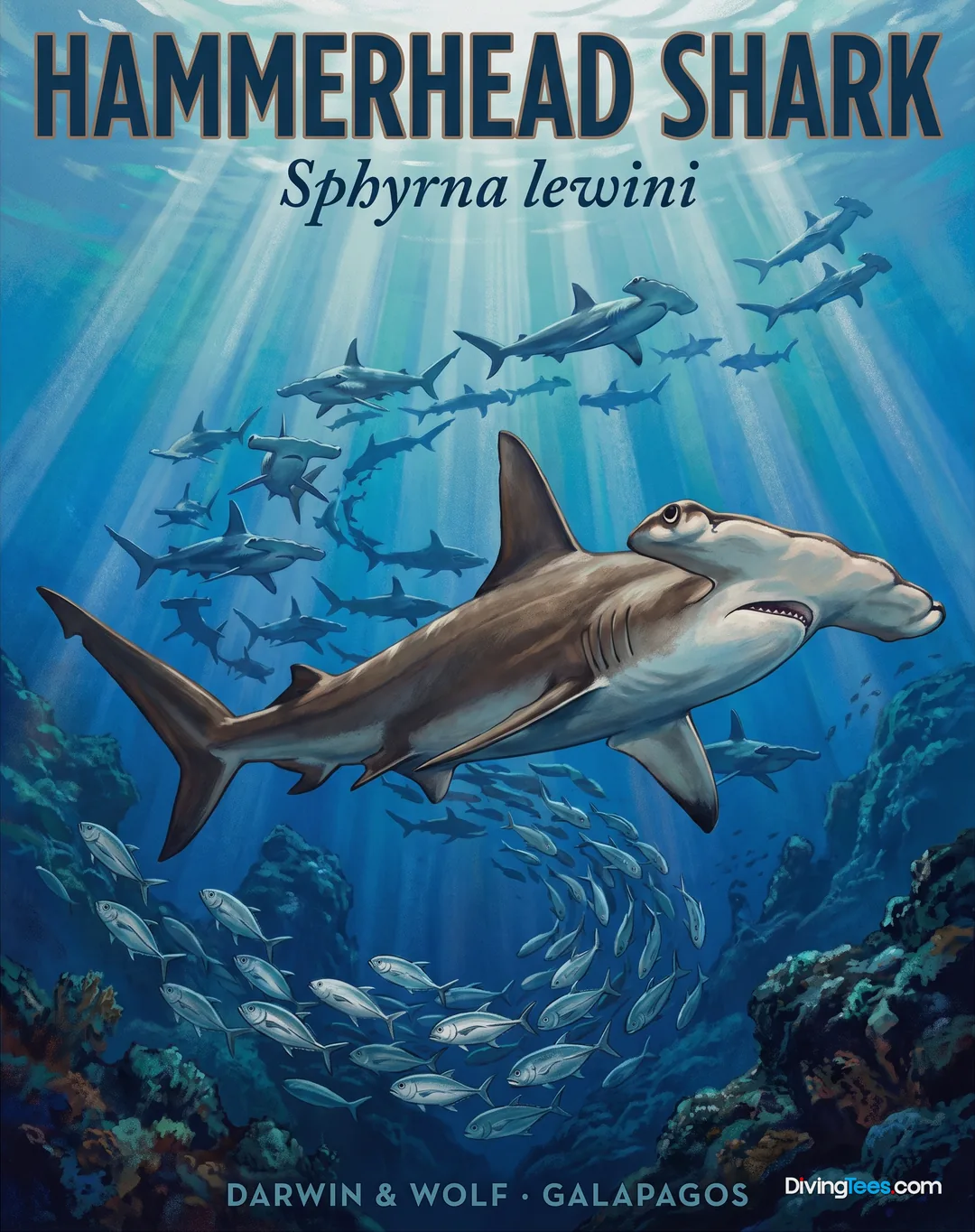
Shark Point is an oceanic wall that descends from 18 to 50 metres, offering excellent visibility and the chance to see pelagic species. It is a prime location for spotting reef sharks and potentially hammerhead sharks.
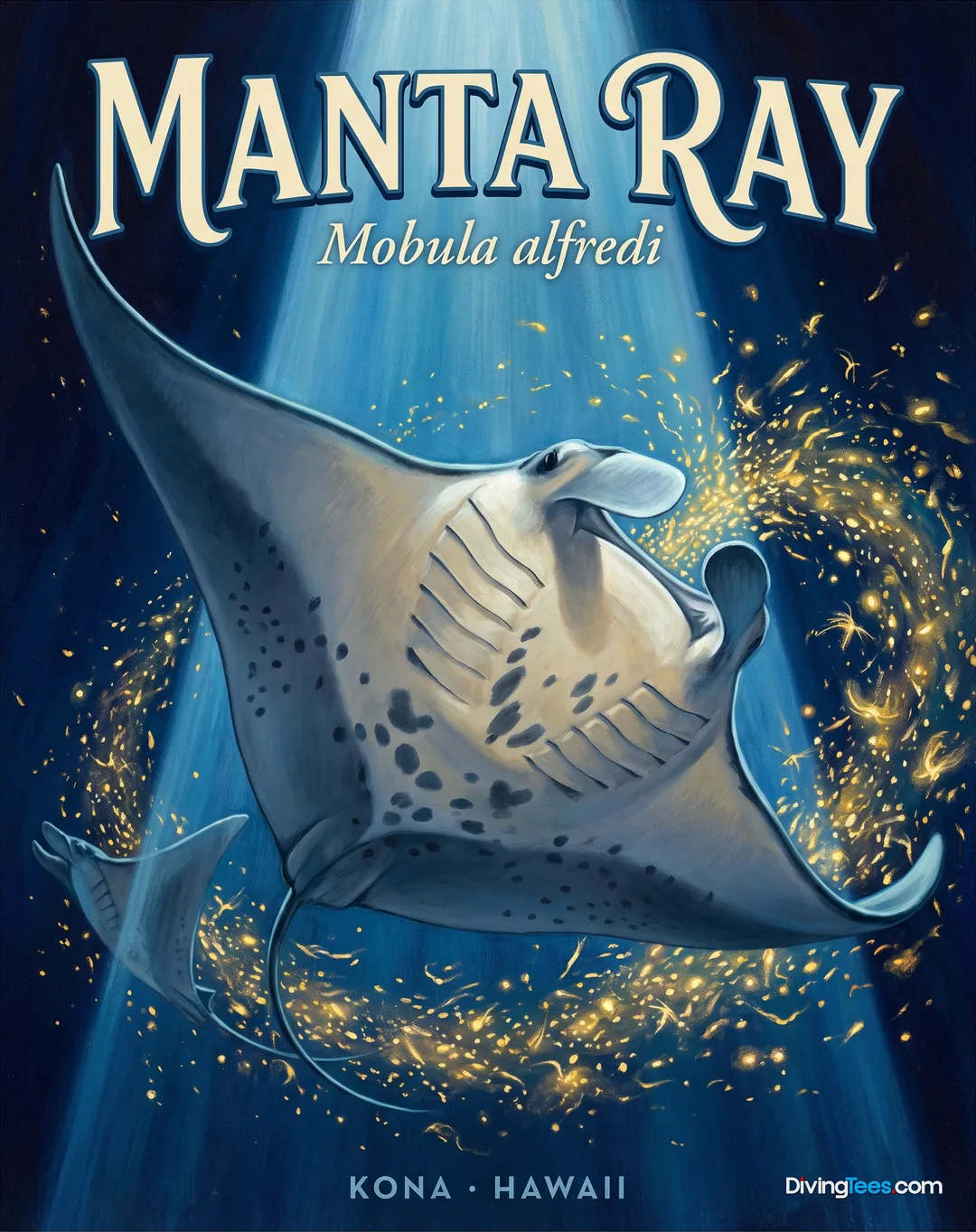
The Abyss is a significant site located 40 minutes away by fast boat, featuring a coral fan field at 18-20 metres. It is best visited on a rising tide to encounter tuna, jacks, and manta rays.
Submarine Park of Tanikely is a protected marine park offering shallow dives between 1 and 23 metres. This site is a reliable spot for seeing sea turtles, groupers, and various reef fish in a no-fishing zone.
Wreck diving is available at a site located at 26-29 metres, where four small to medium wrecks are covered in coral. These structures host large schools of fish, including barracudas and jacks.
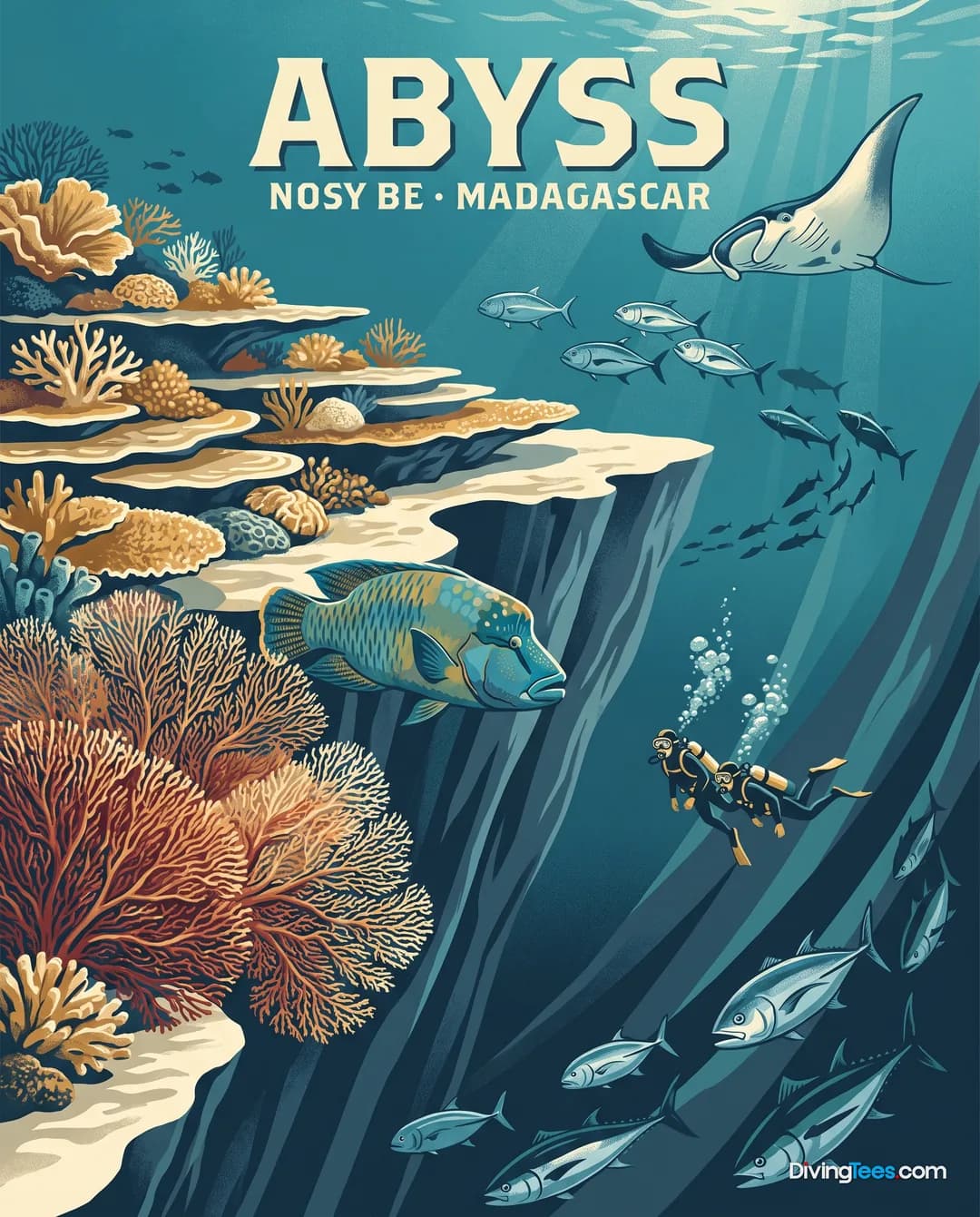
down to 20 m
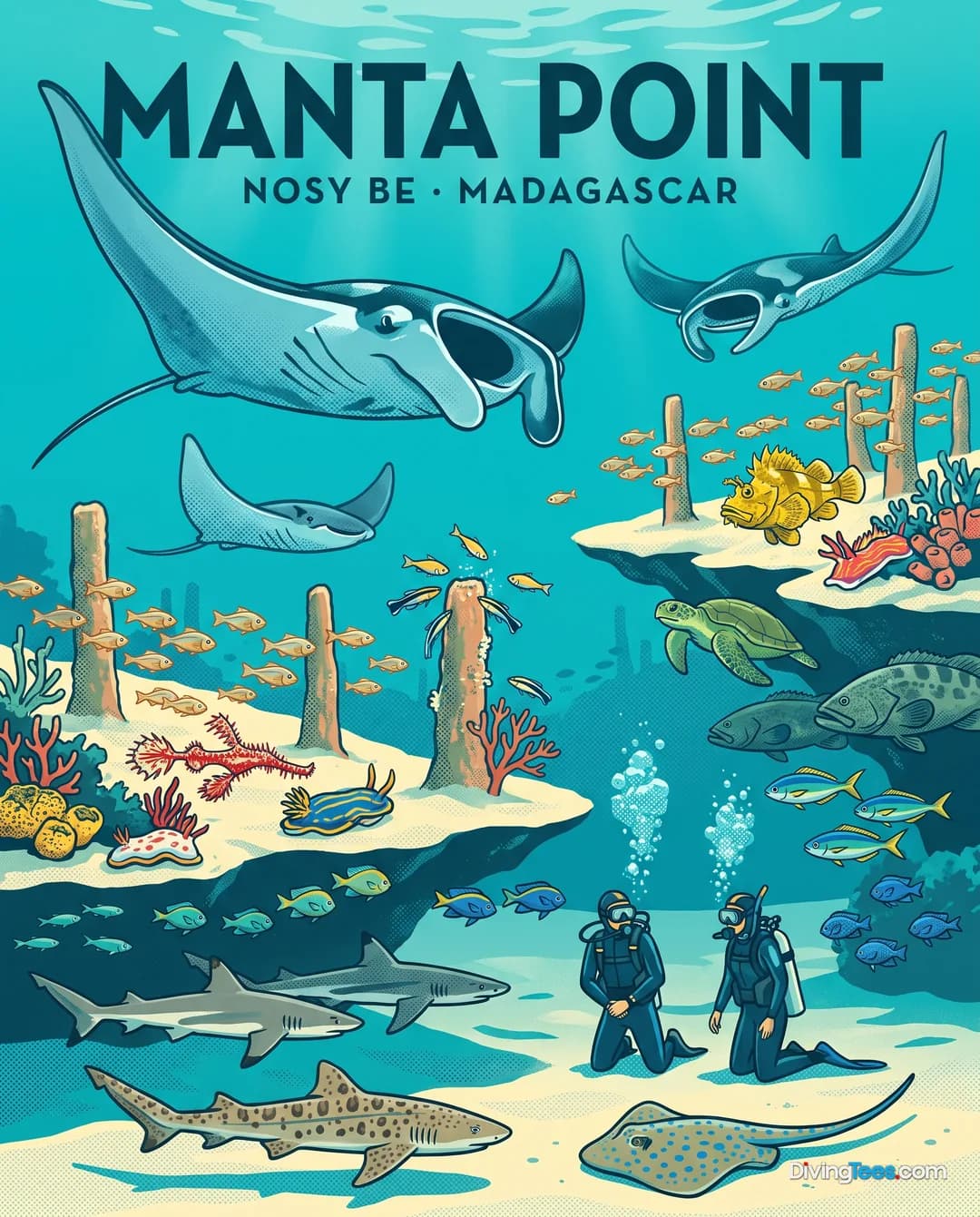
down to 22 m
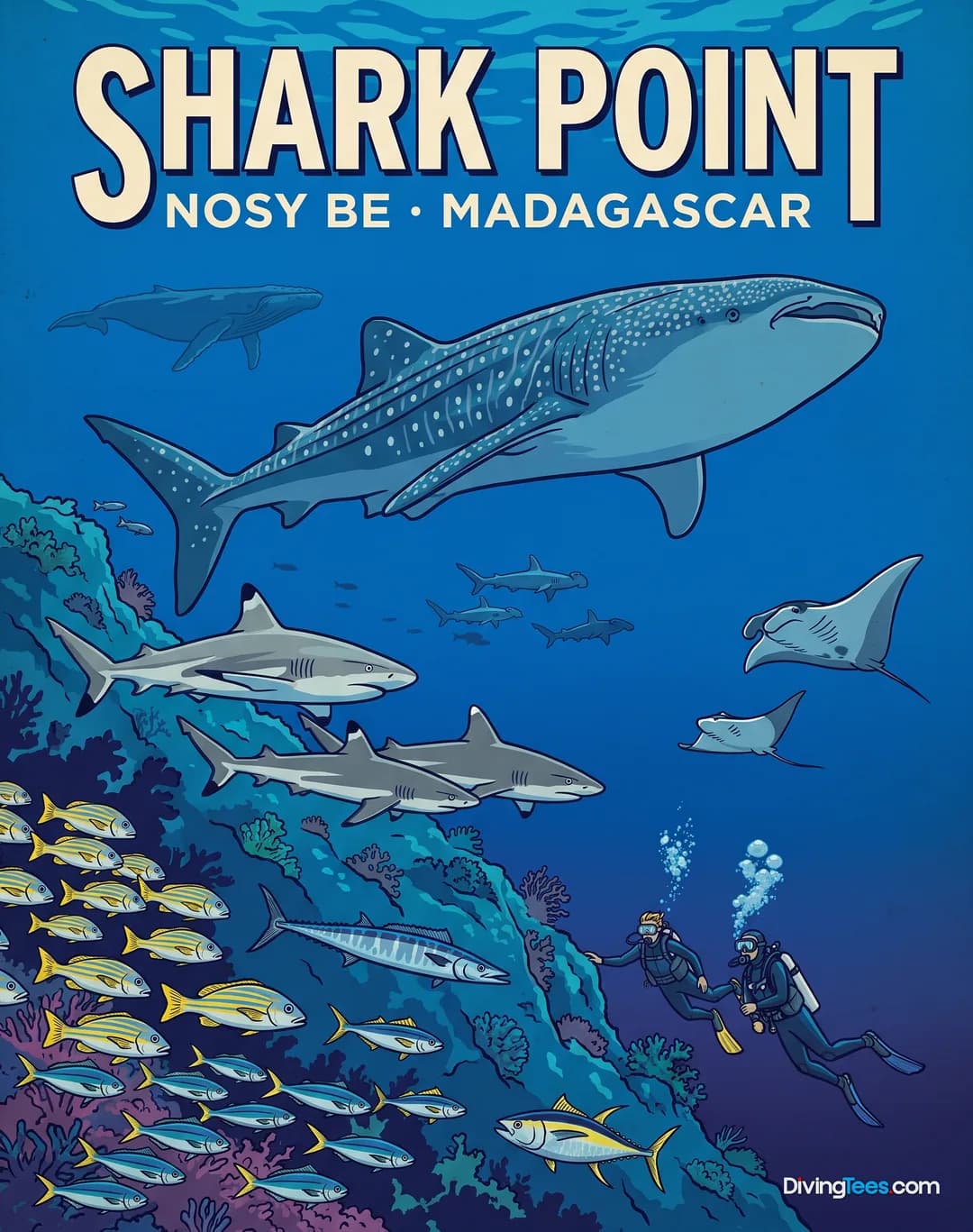
down to 50 m
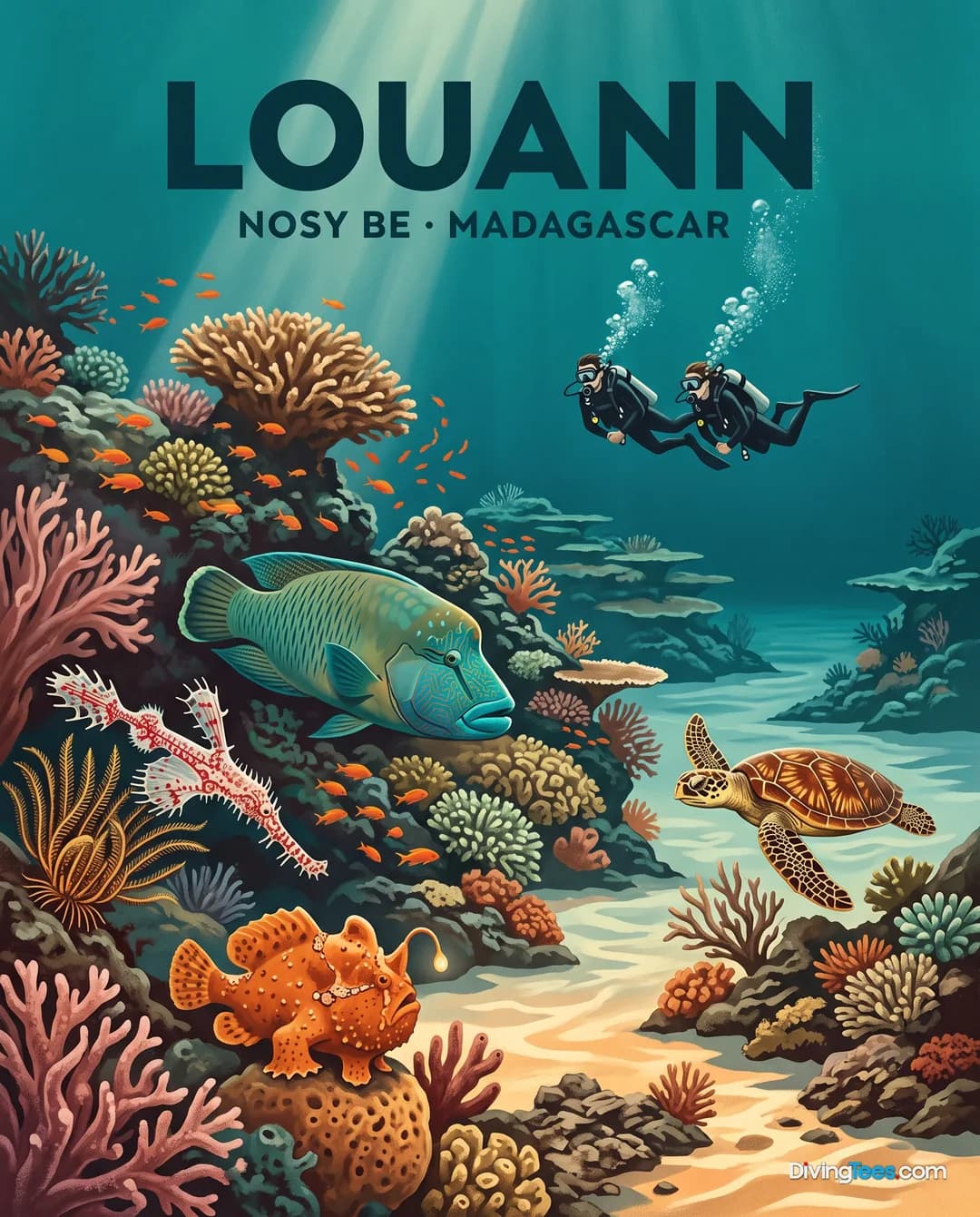
down to 50 m
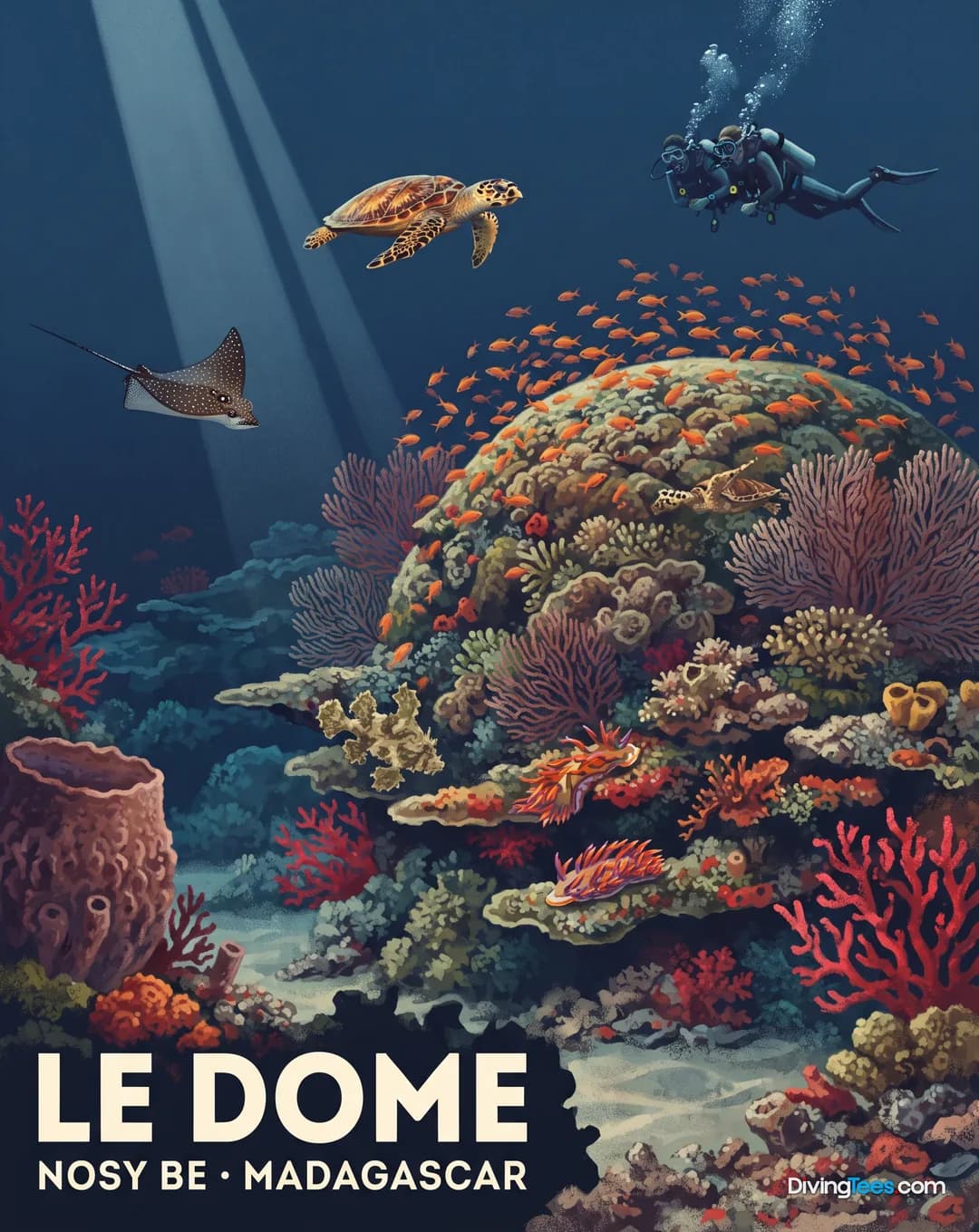
down to 40 m
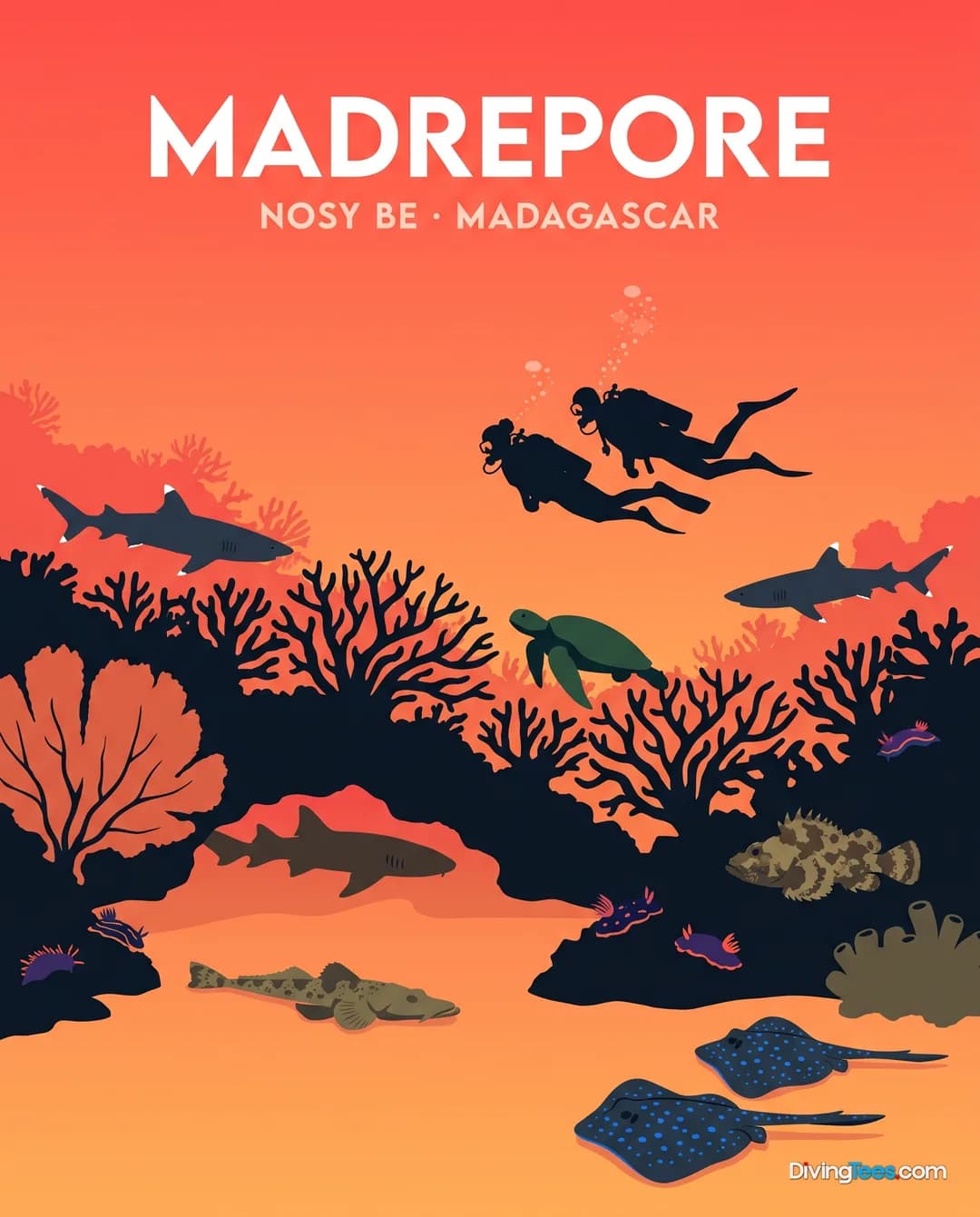
down to 23 m
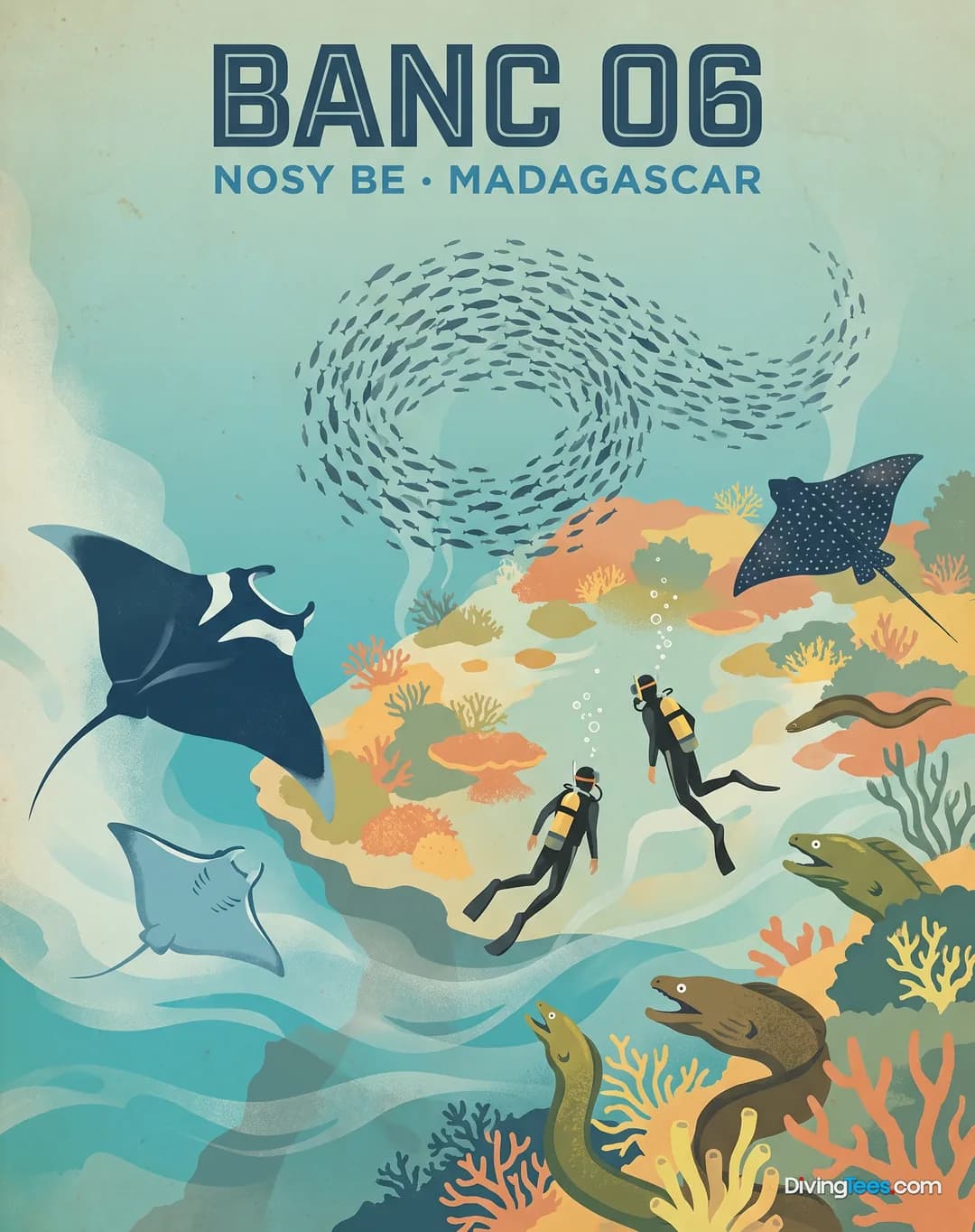
down to 19 m
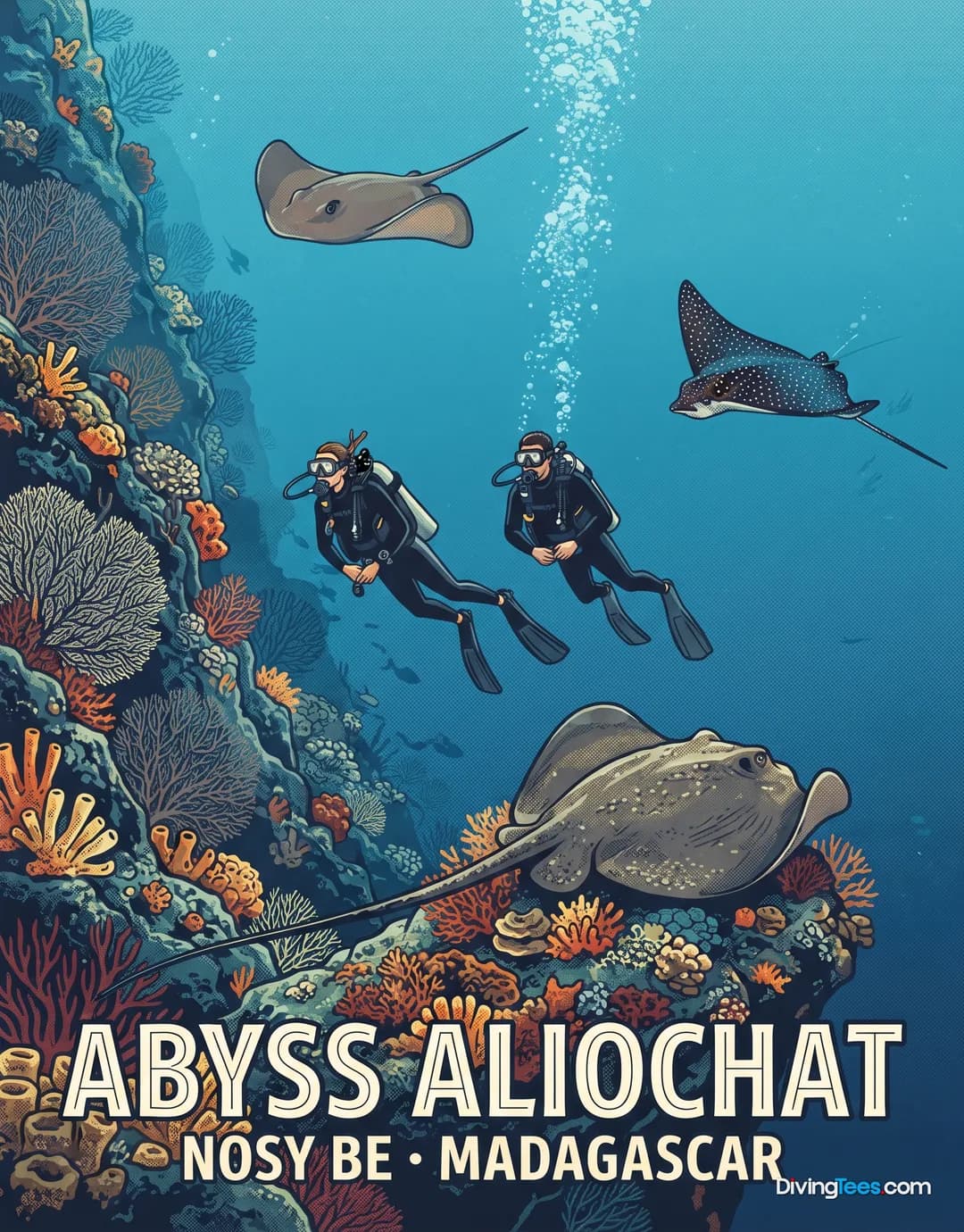
down to 60 m
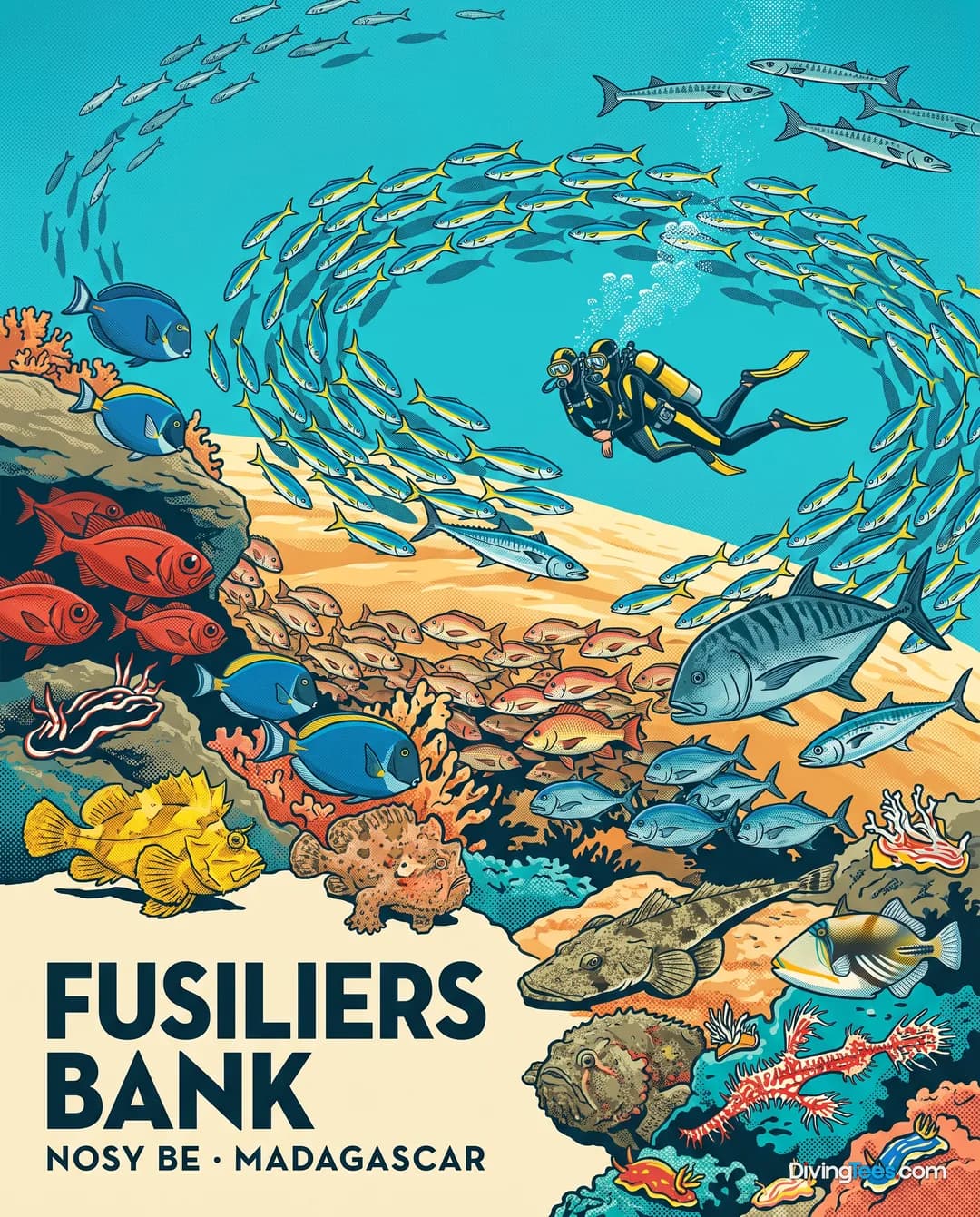
down to 21 m
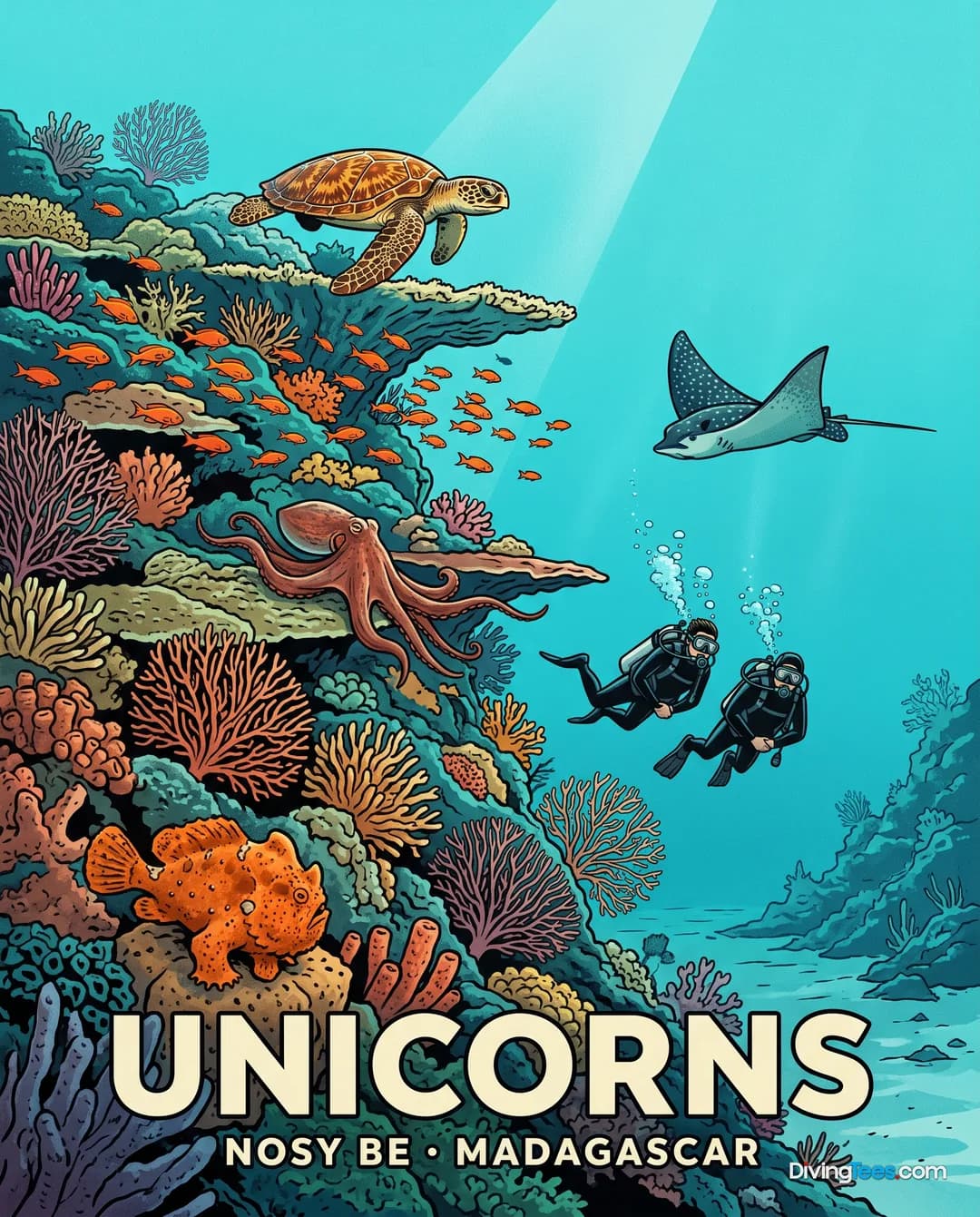
down to 19 m
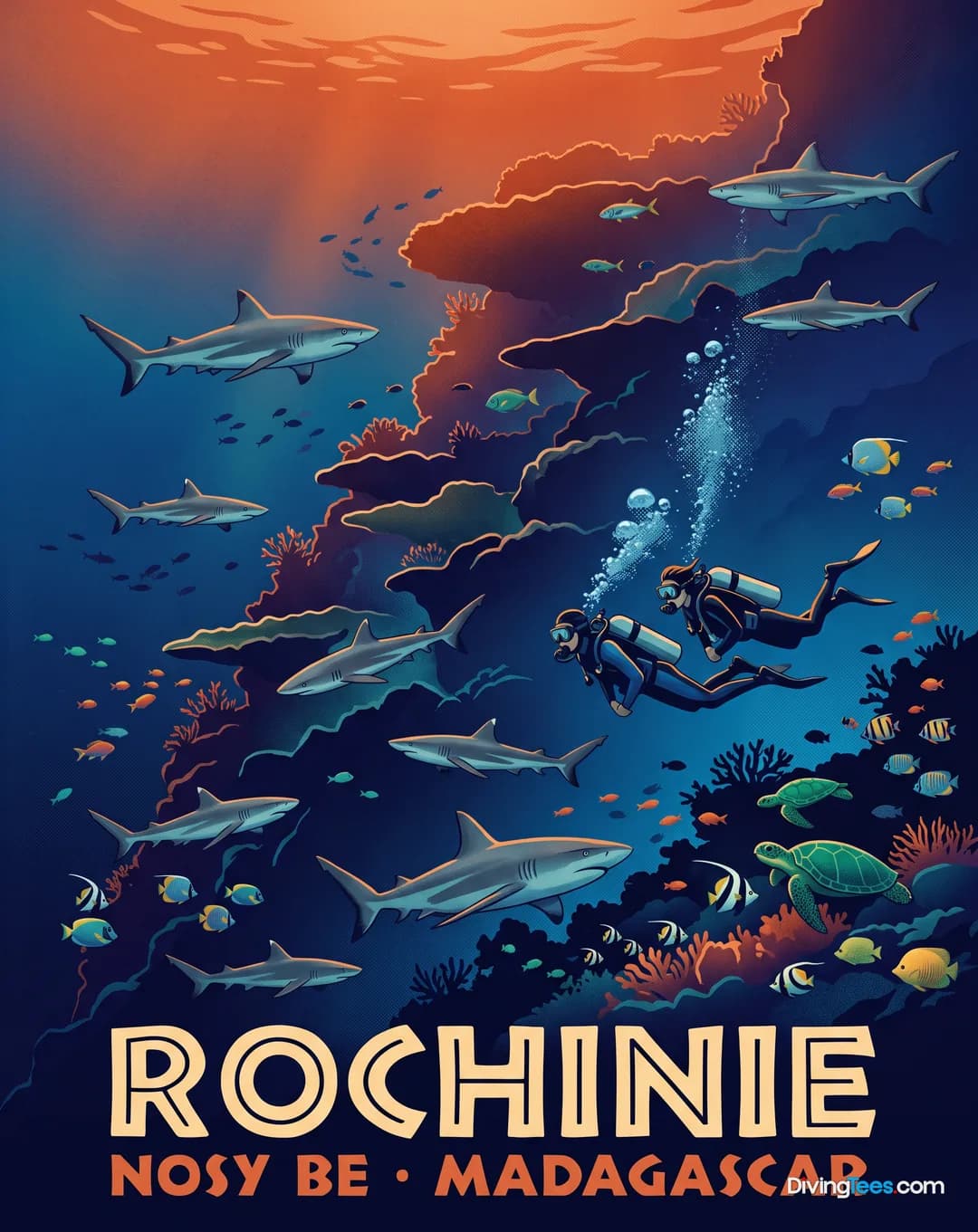
down to 22 m
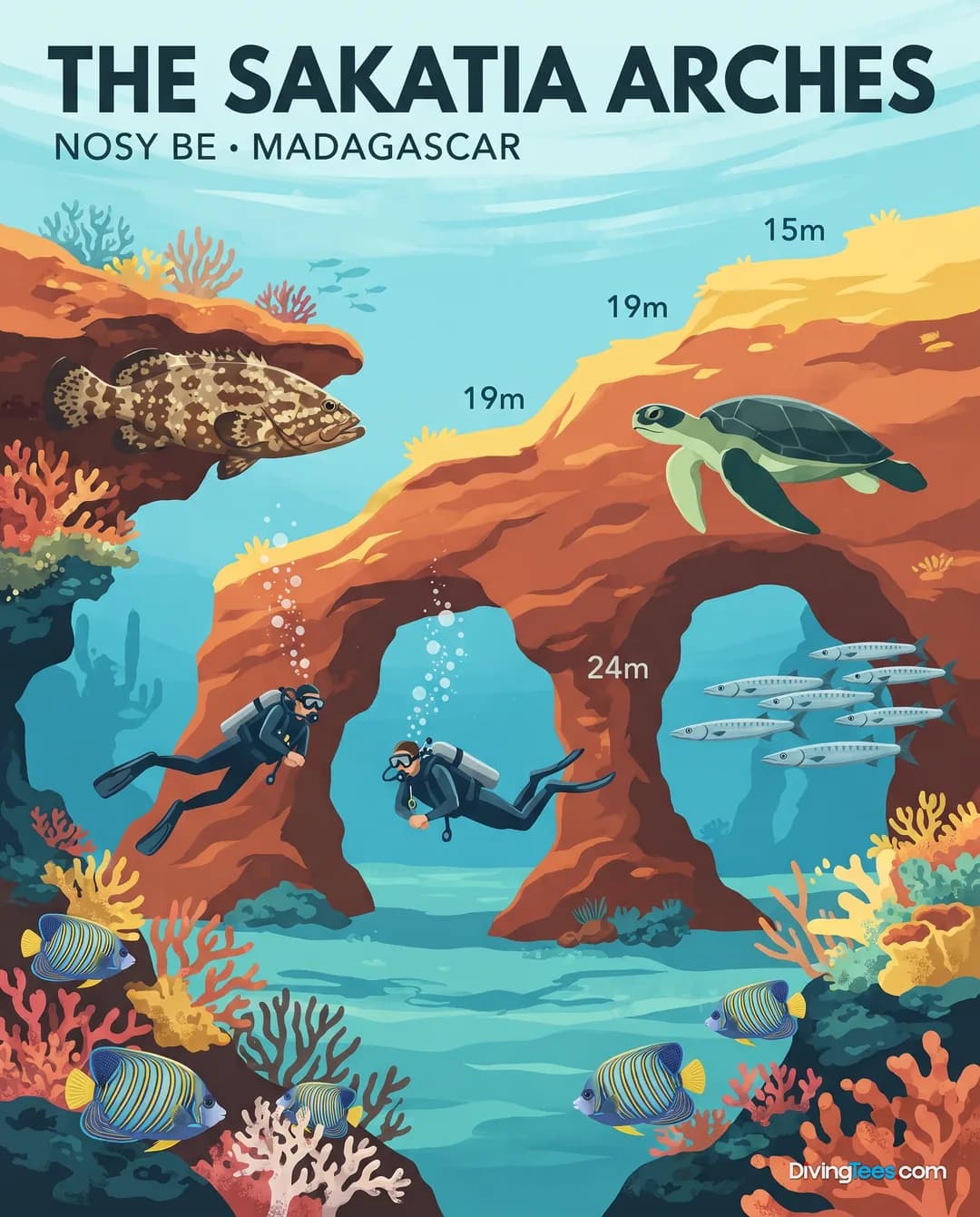
down to 24 m

down to 65 m
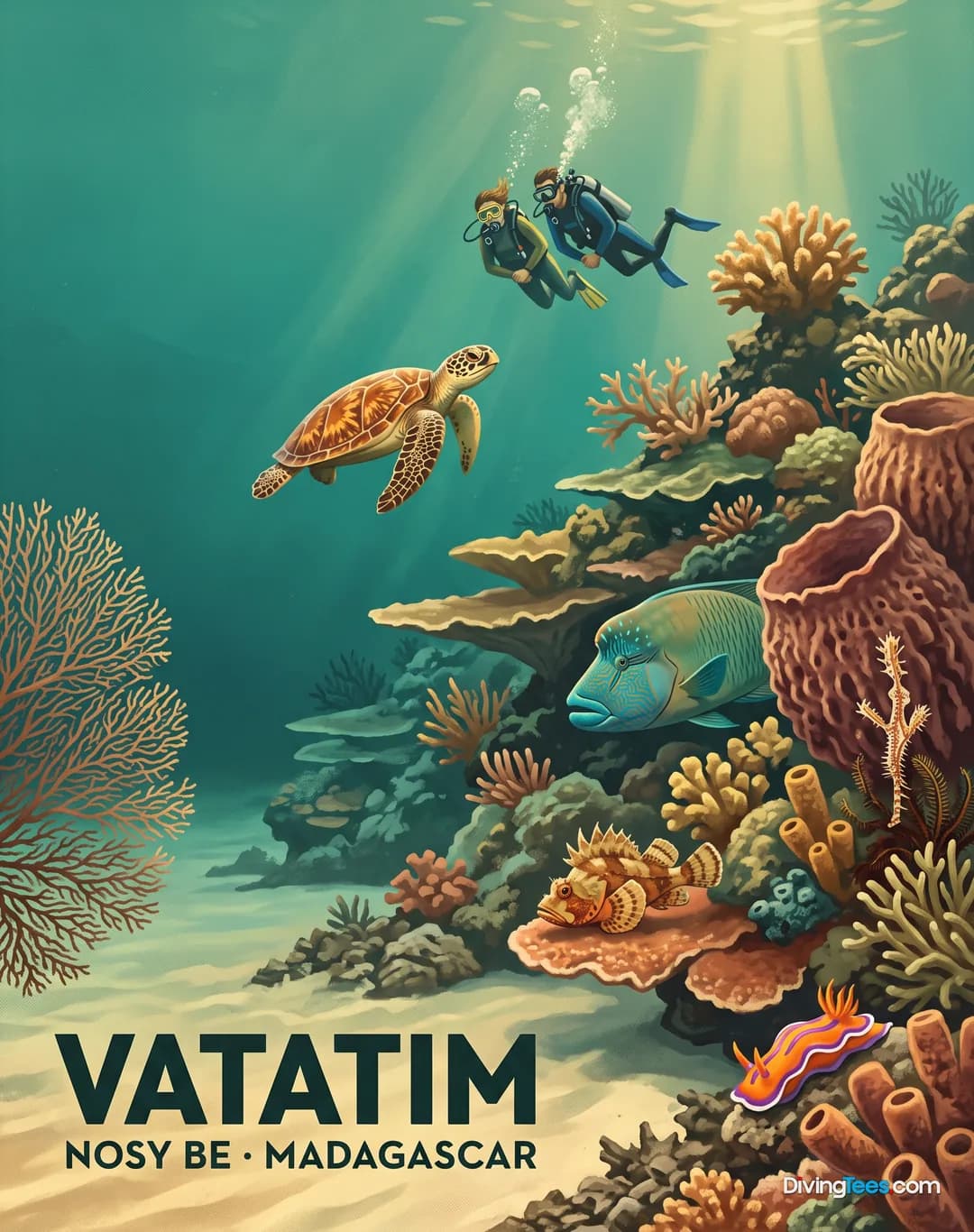
down to 24 m
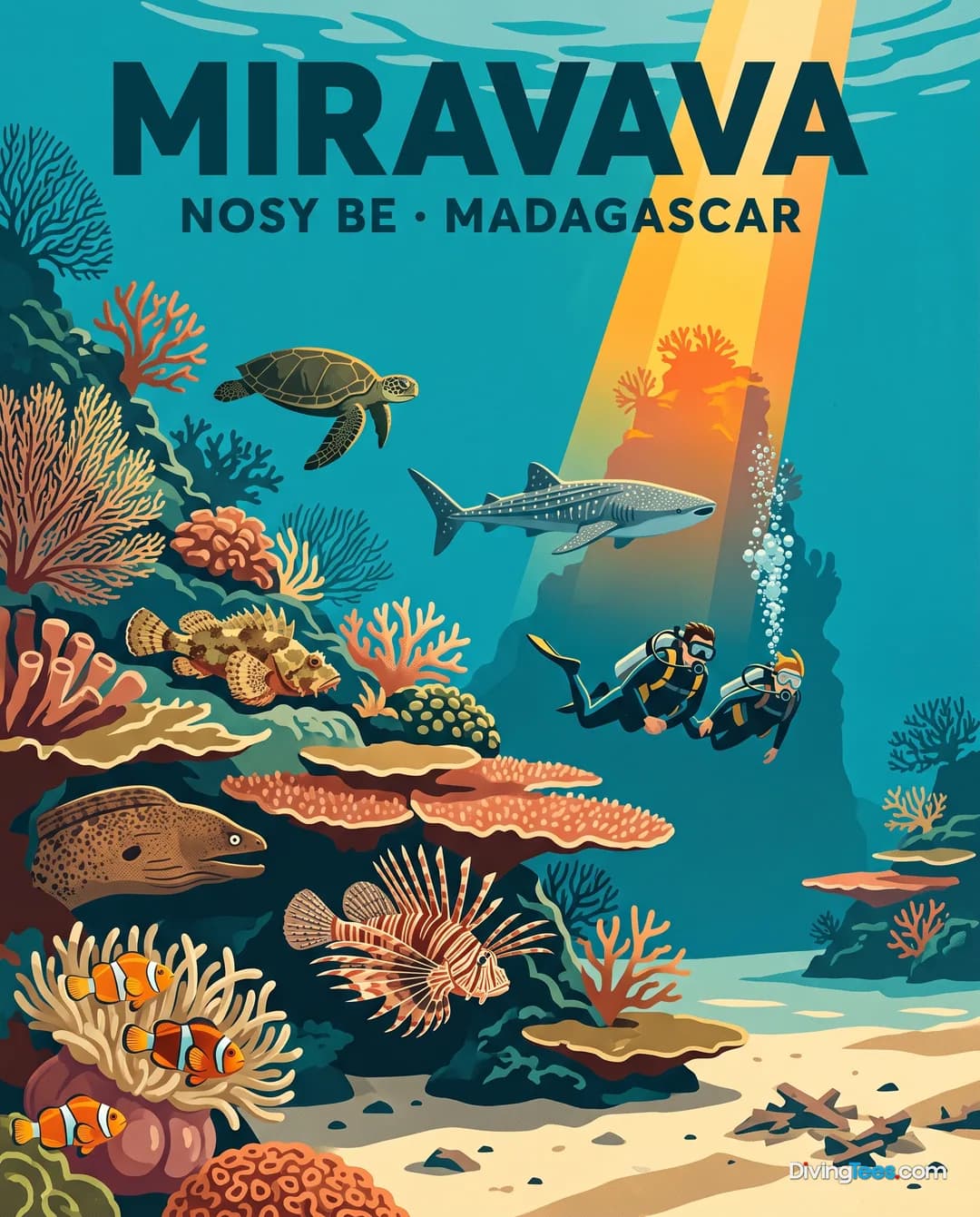
down to 20 m
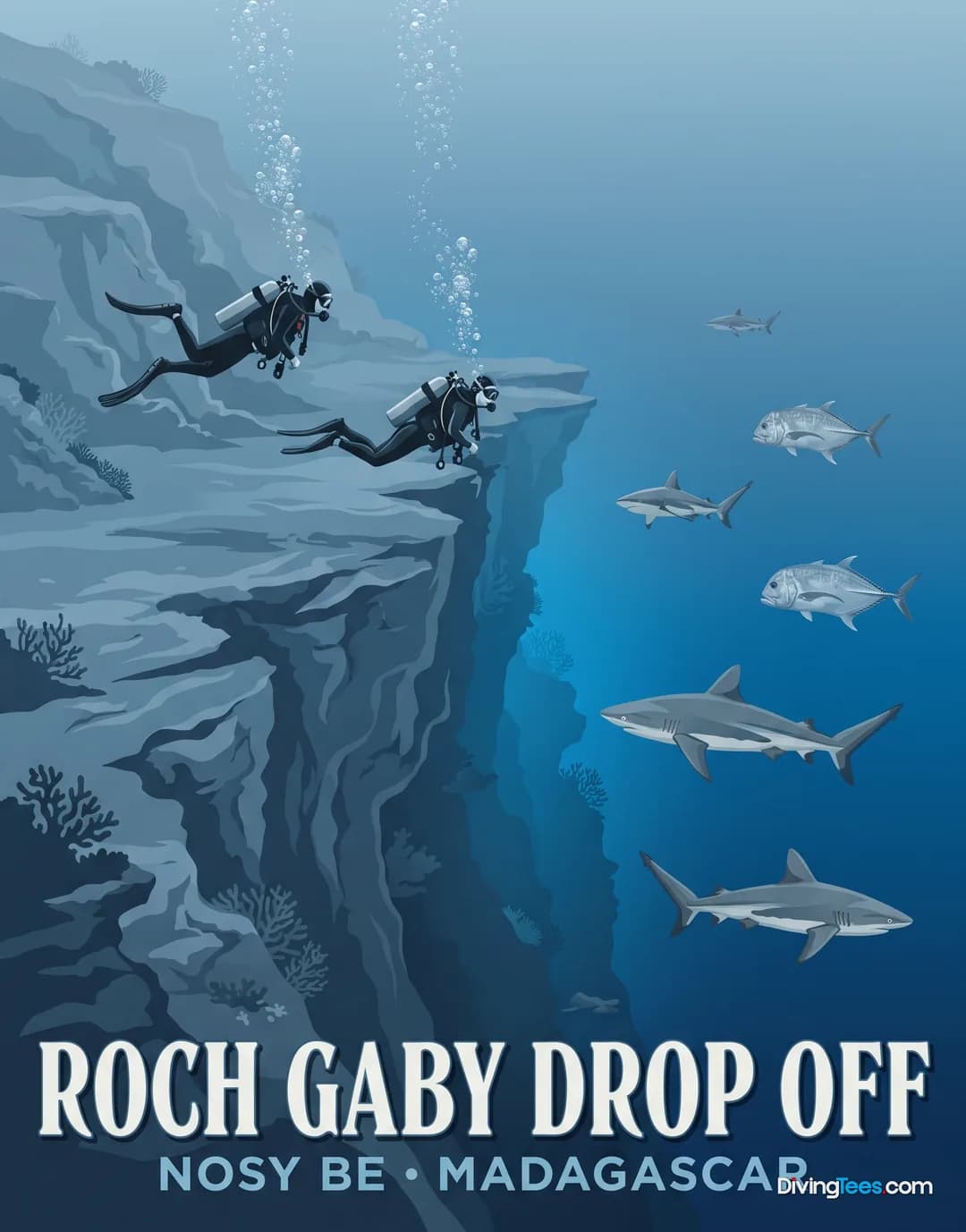
down to 70 m
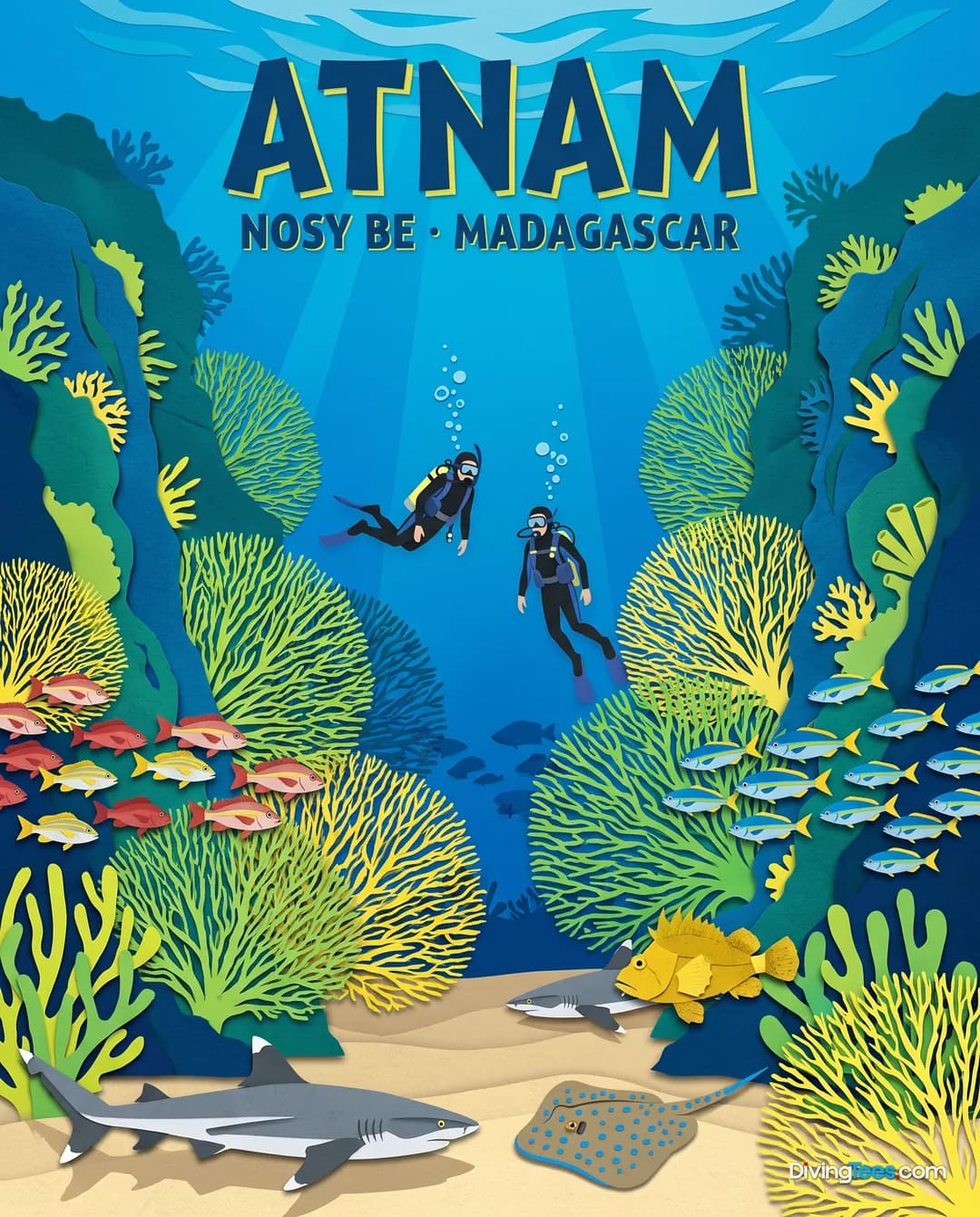
down to 43 m
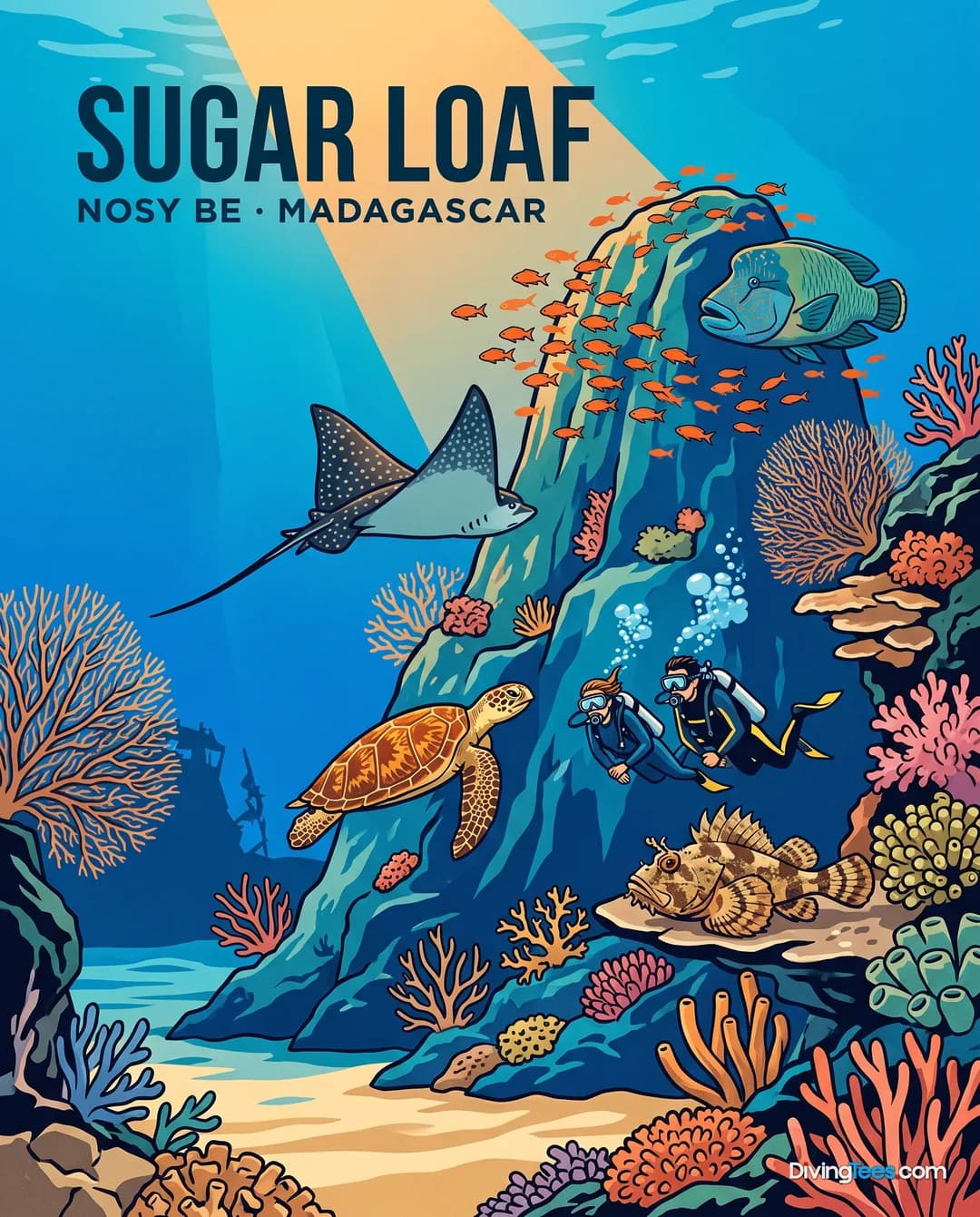
And some of the dive sites the centre runs.
The marine life in the region is defined by its diversity, from large pelagics to intricate reef residents. You can expect to encounter various sharks, including whitetip reef sharks, blacktip reef sharks, grey reef sharks, and leopard sharks. During specific windows, you may also see hammerhead sharks in December, January, and early March, or whale sharks between mid-September and mid-December.
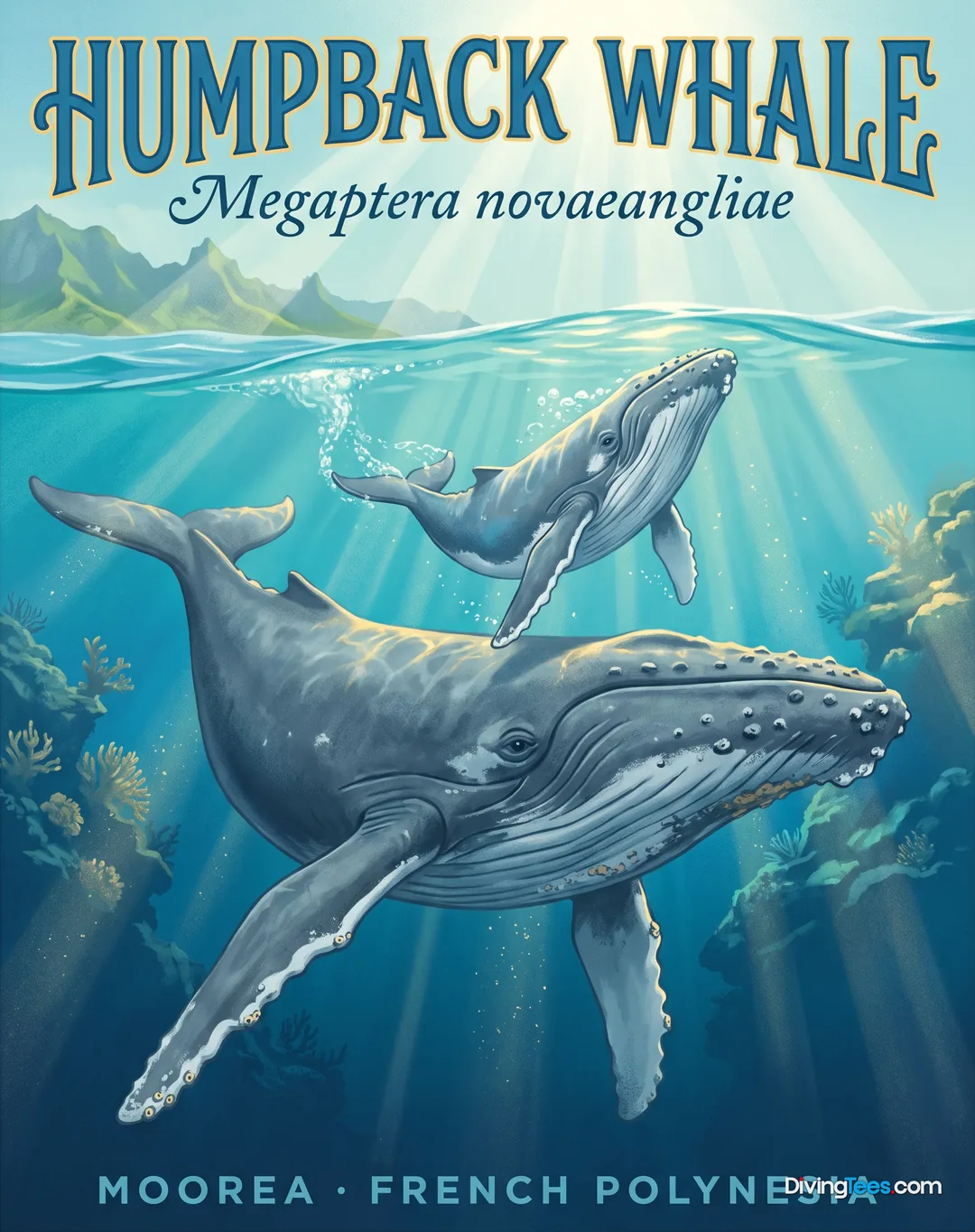
Large species are frequently seen on the deeper walls and offshore banks. Manta rays (Mobula alfredi) and mobula rays are present, particularly between August and December, while humpback whales can be observed from the boat between August and October. You may also encounter various rays, such as eagle rays, leopard eagle rays, and blue-spotted stingrays.
The reefs are heavily populated by schooling fish, including jacks (Carangidae), barracudas (Sphyraena barracuda), tuna (Thunnus), and fusiliers (Caesio). Humphead parrotfish (Bolbometopon) and various snapper species are also common sights among the coral structures.
For those interested in macro life, the area holds many treasures. Look for nudibranchs (Chromodoris willani), seahorses (Hippocampus kuda), and various species of scorpionfish (Scorpaenidae), including leaf scorpionfish. Other notable residents include frogfish (Antennarius), stonefish (Synanceia), and crocodilefish.
The best time to dive in the region is between April and November. During the months of January to March, the area is in its rainy season and carries a risk of cyclones, which may affect diving schedules.
Sea temperatures typically range between 26 and 29 degrees Celsius. The availability of certain large species is seasonal, such as humpback whales from August to October and whale sharks from mid-September to mid-December.
Hello, I'm Marina, DivingDeal.com's AI assistant. I answer in detail about hotels, dive centres and liveaboards.

Thinking about the whole trip and the flights? Talk it over with Edith →
Marina is an AI. Some links are affiliate links: DivingDeal may earn a commission, at no extra cost to you. Bookings are made with the partner.
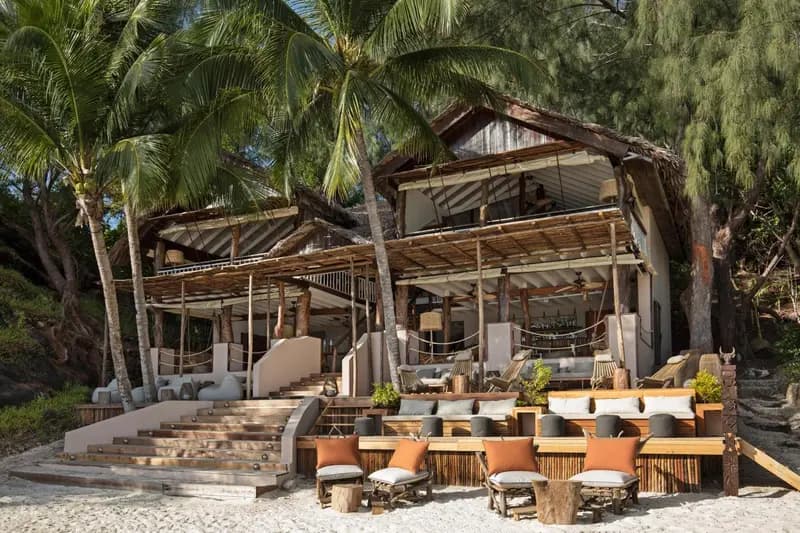
★ 9.1/10 (160 reviews)
17 km away as the crow flies
★★★★★
★ 9.8/10 (46 reviews)
54 km away as the crow flies
★★
★ 9.1/10 (79 reviews)
3 km away as the crow flies
★★
★ 8.4/10 (424 reviews)
16 km away as the crow flies
Your last day stays dry: no diving in the 18-24 hours before a flight the perfect window to see the destination from another angle.
 Culture
⏱ 6 h · ★ 4.8 (32 reviews)
from €86
see on Viator ↗
 Culture
⏱ 9 h · ★ 4.4 (14 reviews)
from €80
see on Viator ↗
Ratings and reviews collected by Viator and Tripadvisor.