Liveaboards · Maldives
Adora — a spacious Maldivian dive yacht built for big-animal routes
What makes this boat unique
- Adora combines three decks, 11 private-bath cabins and room for up to 21 divers.
- Nitrox, airport transfers, full-board meals and the scheduled dive package are included.
- The dive programme reaches central Maldivian atolls, including South Ari, North Ari, Baa and Hanifaru Bay.
- The shaded dive area has DIN adapters, rinse tanks, a camera rinse station and a dive platform.
- Cabins have air conditioning, panoramic windows and accessible balconies in the relevant categories.
For subtitles in English: start the video firstthen click the gearat the top right of the video, select “Subtitles/CC”, then “Auto-translate” and choose “English”.
The invitation
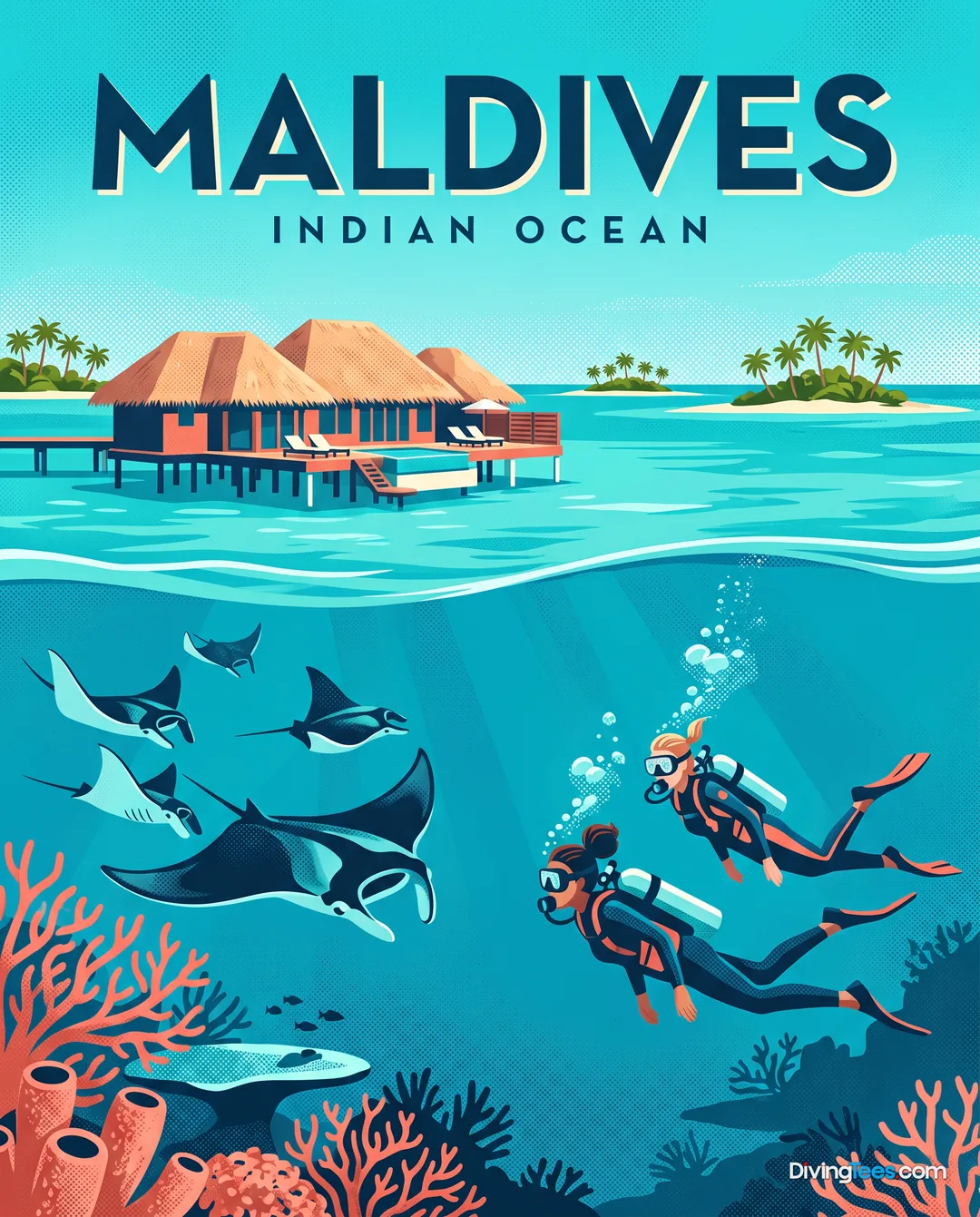
Adora suits divers who want one boat to cover the central Maldives rather than spend a week repeating one atoll. The itineraries move between channels, thilas, reef drifts and cleaning stations, with routes built around mantas, sharks and whale sharks. The Hanifaru version adds Baa Atoll and the chance to witness reef mantas feeding in cyclone formation during the southwest monsoon, usually in August or September. On board, the emphasis is comfort without losing the diving purpose: a shaded working deck, Nitrox, private bathrooms and enough interior and exterior space to spread out between dives. The choice is simple. Come here for a broad Maldivian dive circuit, a boat that feels more like a small yacht than a cramped dive platform, and a crew whose service is repeatedly remembered as one of the trip's strengths.
Boarding
From the dock, Adora presents as a large white fiber yacht with three usable levels rather than a narrow dive boat built only around cabins. The layout gives divers somewhere to move after boarding: an interior lounge, an air-conditioned salon, an outdoor terrace and a dedicated photo area. The hull and generous beam translate into a spacious feel, which matters when the boat is full and wet gear is moving through the day. Boarding is organised around an airport transfer, welcome briefing, safety procedures, boat orientation and gear check-in. Once the engines start, the vessel is a proper liveaboard rather than a resort shuttle: the route changes atolls while the dive operation continues around it. The boat scores particularly well for its physical space, food and overall value, while the crew's more uneven score makes the gain clear: Adora's strongest impression comes from the combination of a capable platform and hands-on service.
The atmosphere on board
Adora's atmosphere is shaped less by formality than by the crew keeping the week moving: meals arrive, cabins are cleaned, dive logistics are handled and the boat remains comfortable after repeated entries and exits. The team is local and international, with English and Italian spoken on board. Passengers describe the service as unusually willing, and the food as good enough to become part of the boat's reputation rather than a detail between dives. The group itself has space to form because Adora is large enough not to force everyone into one corner, yet the shared dive schedule keeps people meeting at the same briefings and tables. Evenings can mean a sunset dinner, a marine talk, a night-sky session, a barbecue or simply a drink after the last dive. The tone is polished, but the purpose remains clear: eat, recover, talk about the reef, then do it again.
The sites you’ll dive
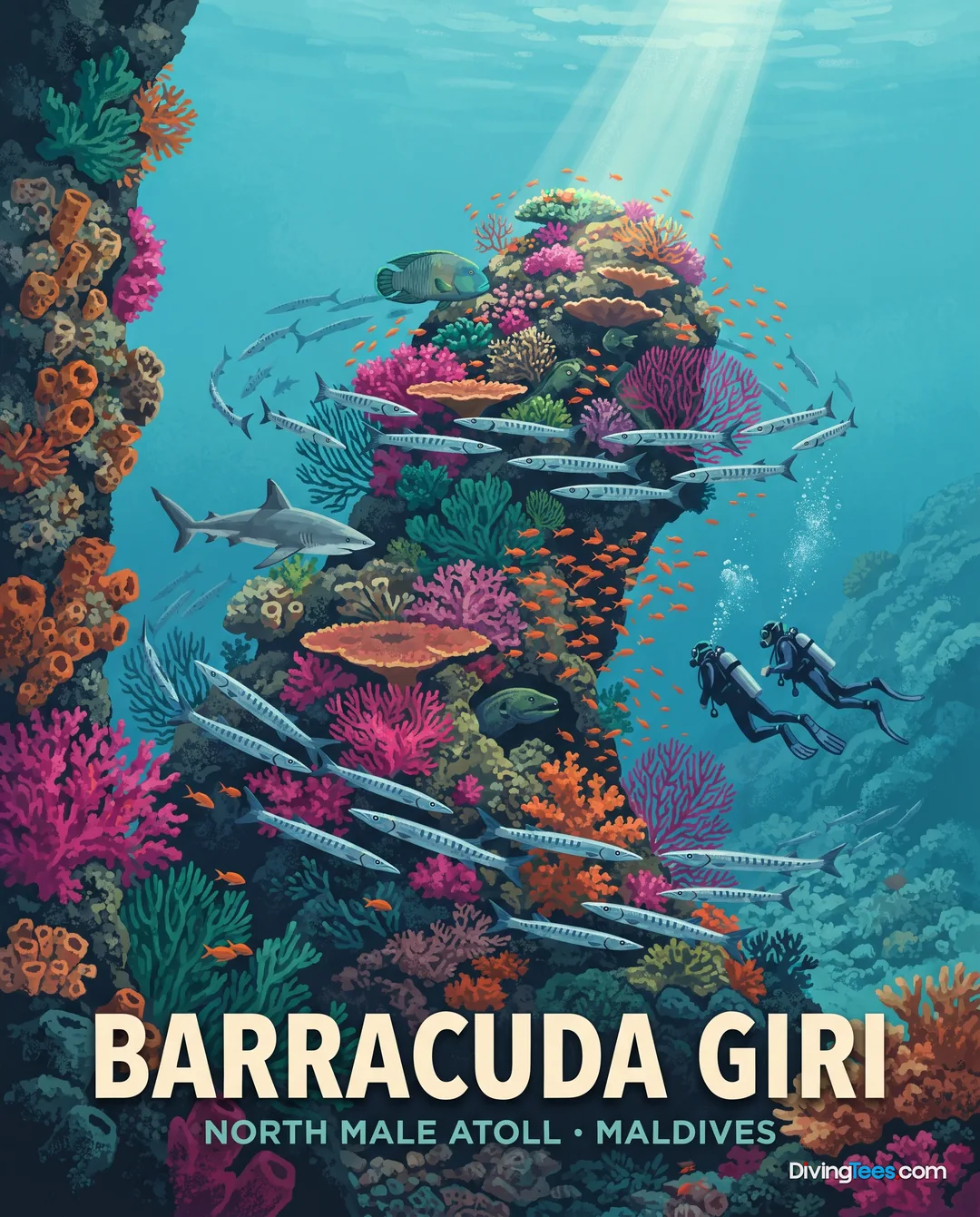
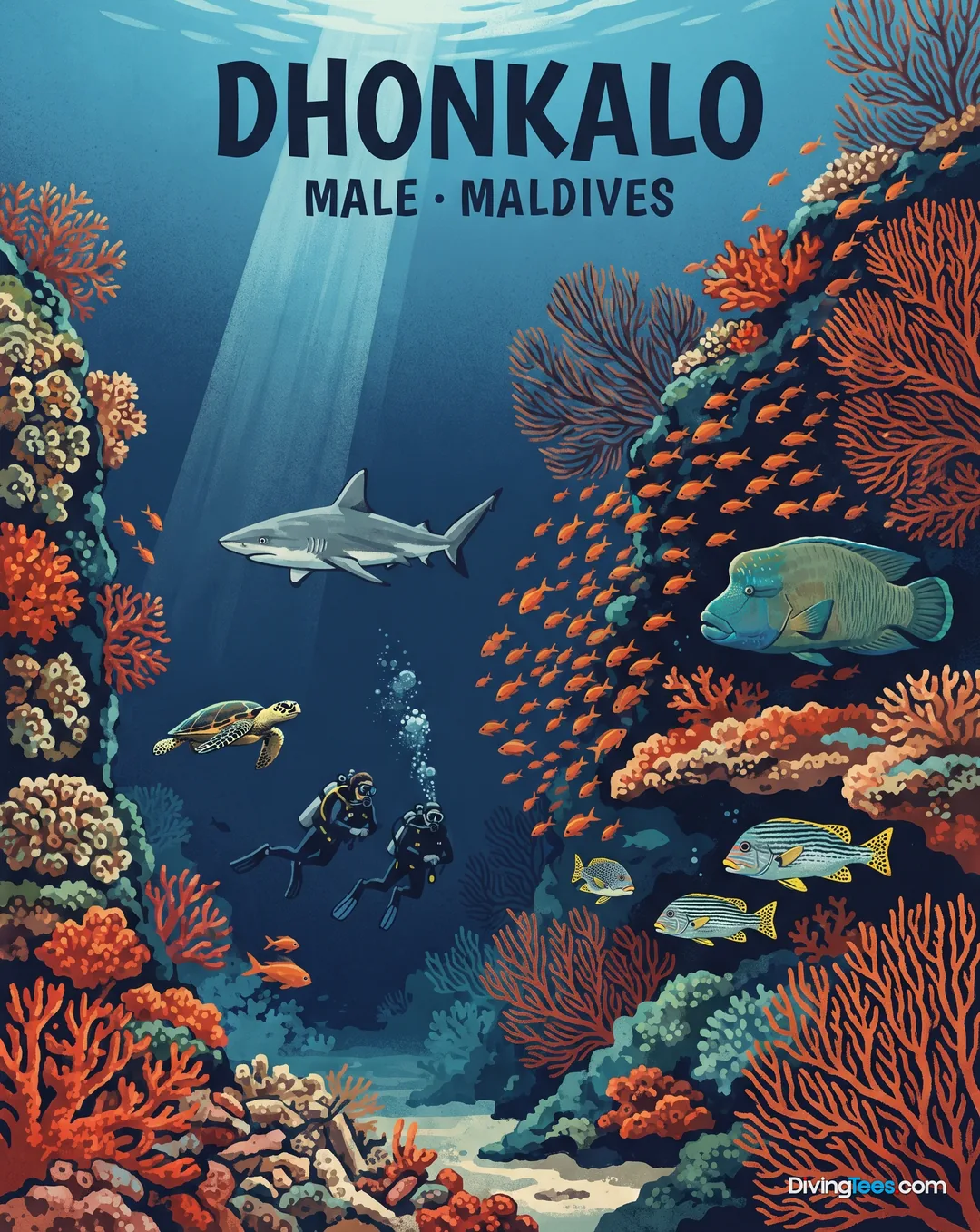
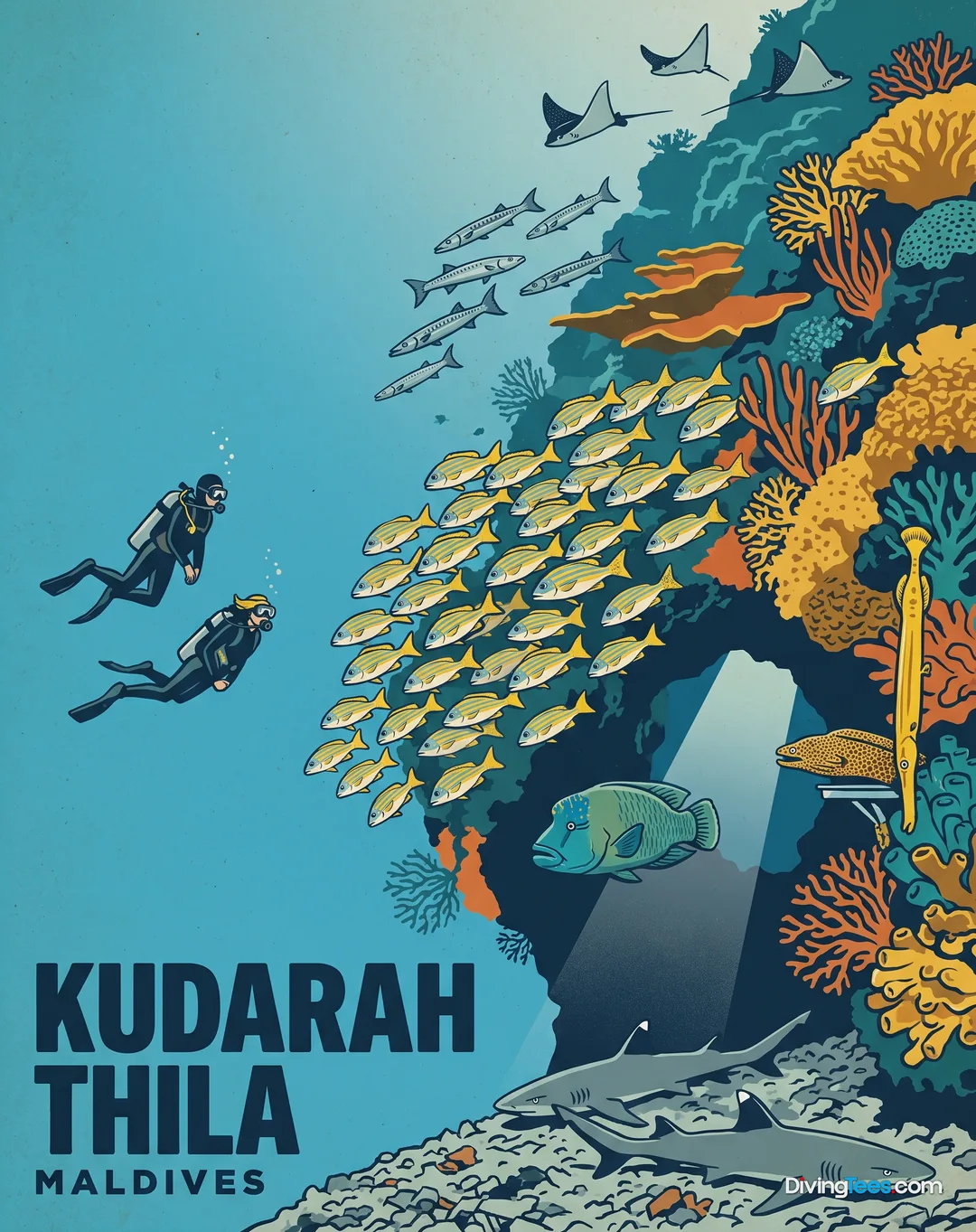
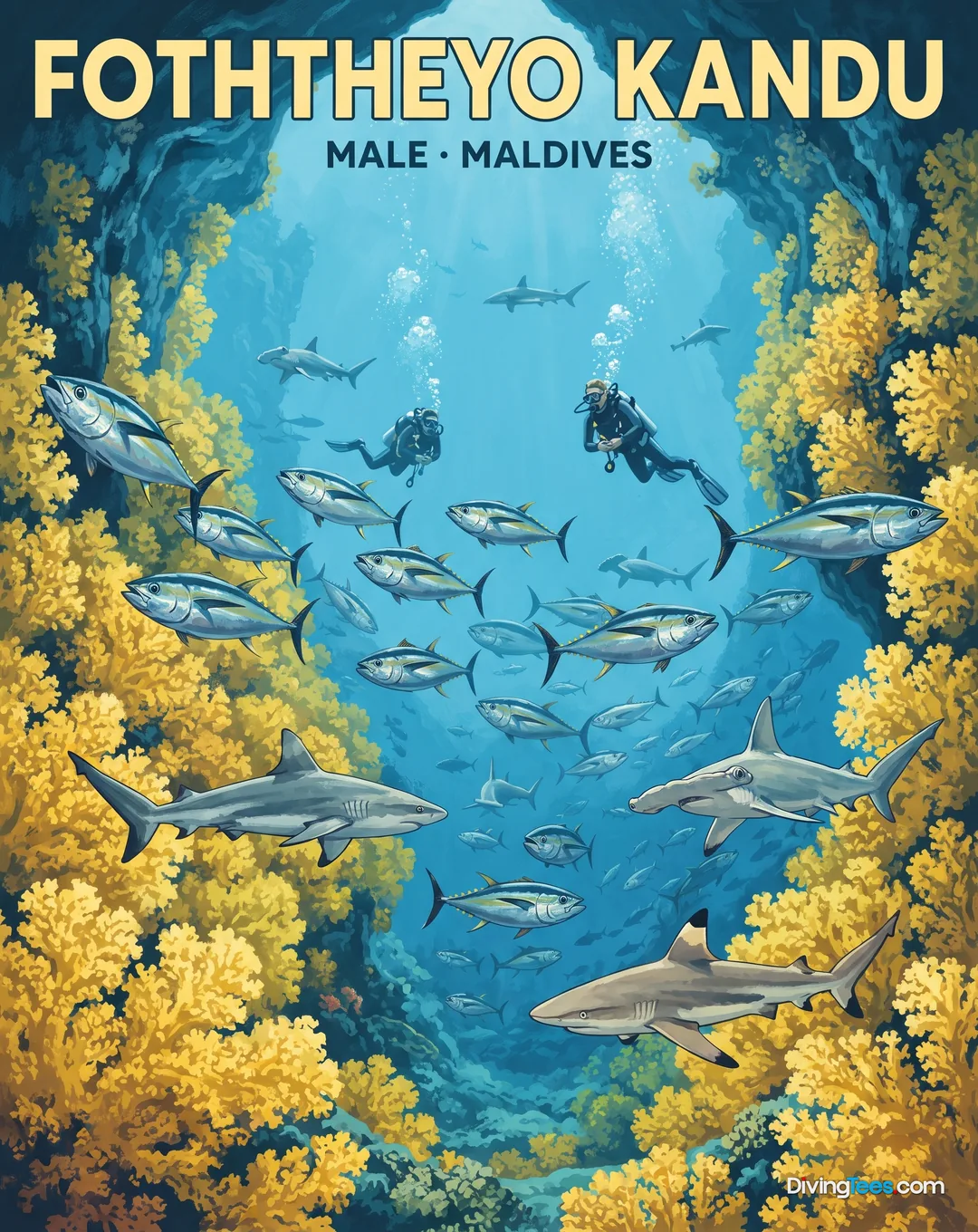
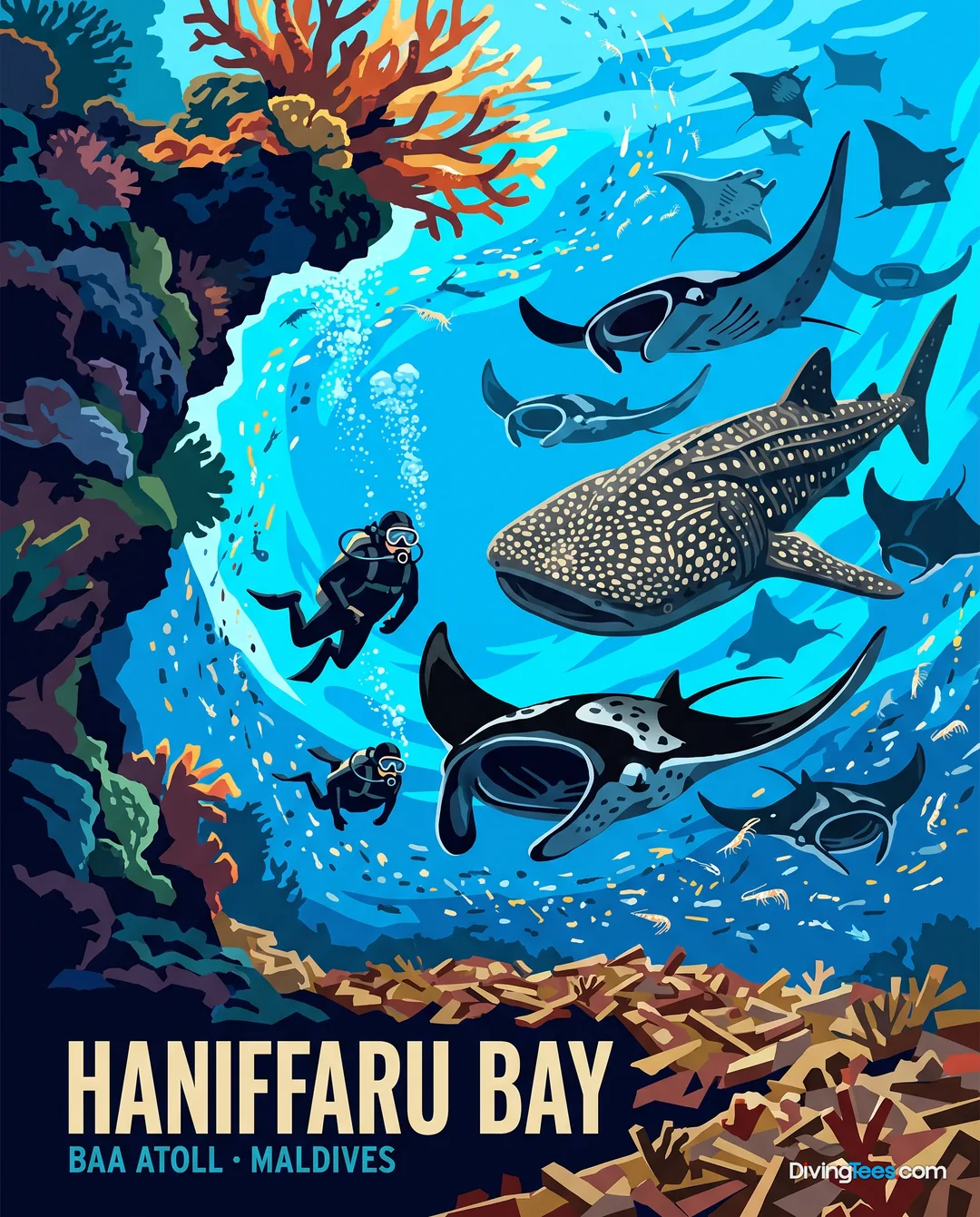
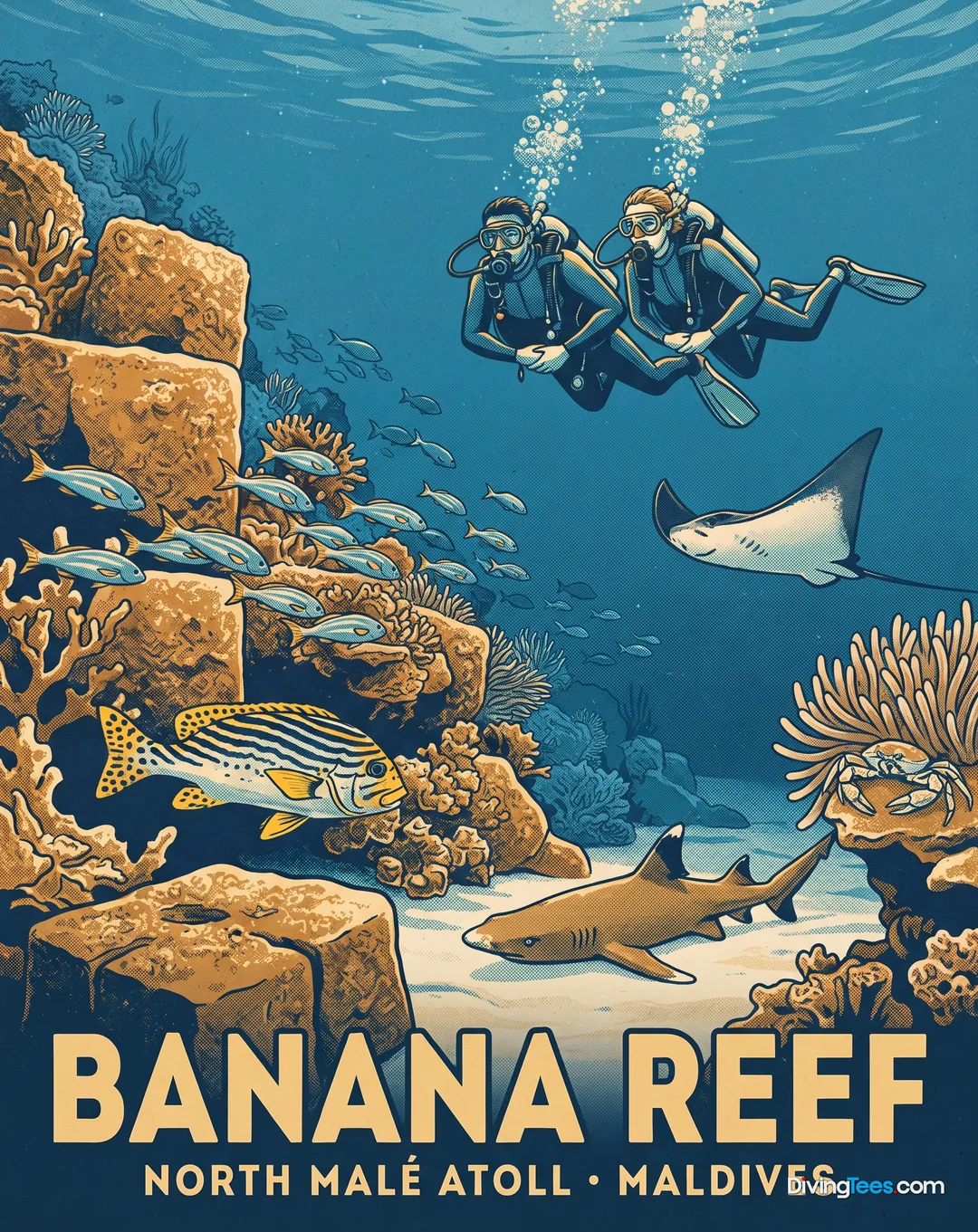
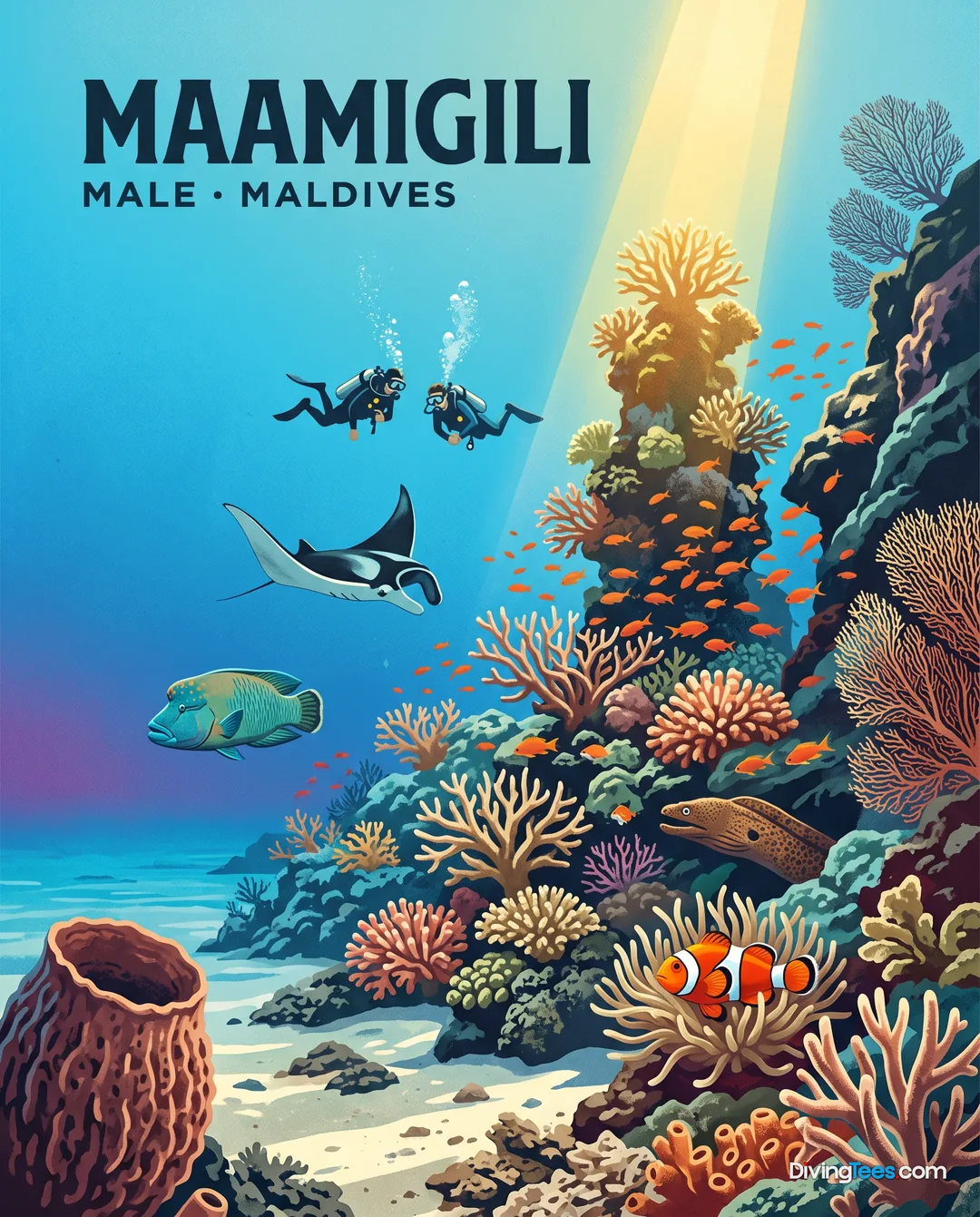
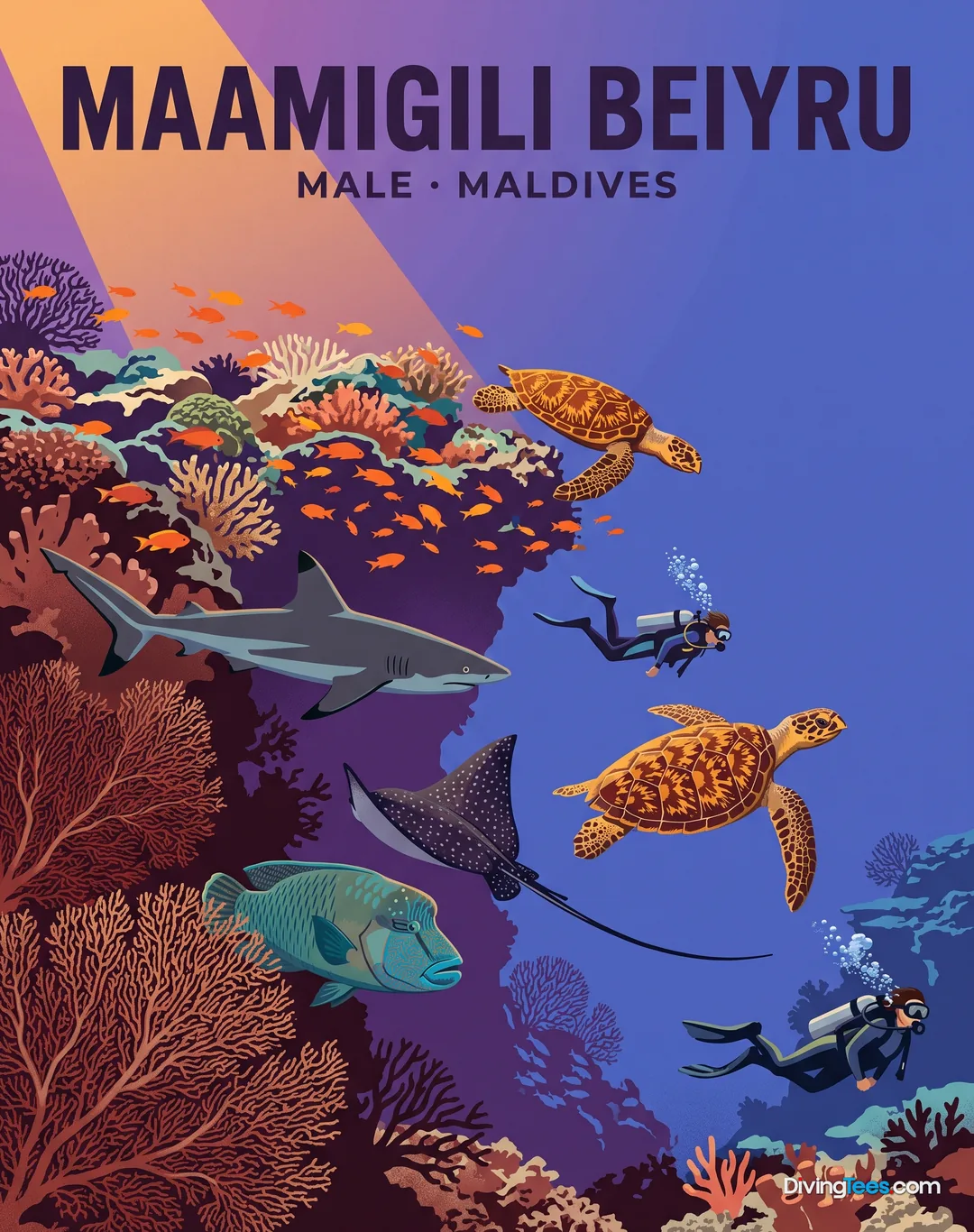
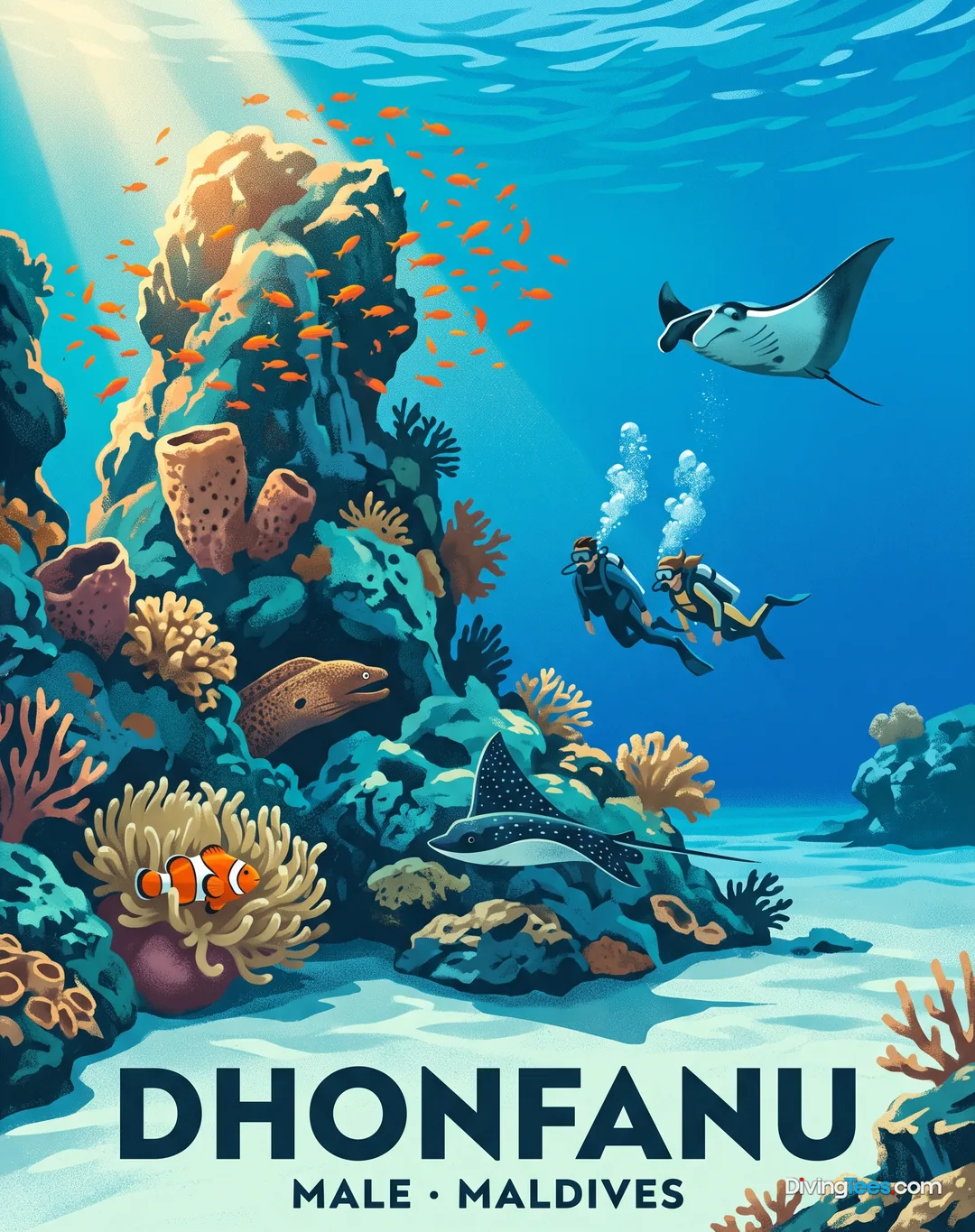
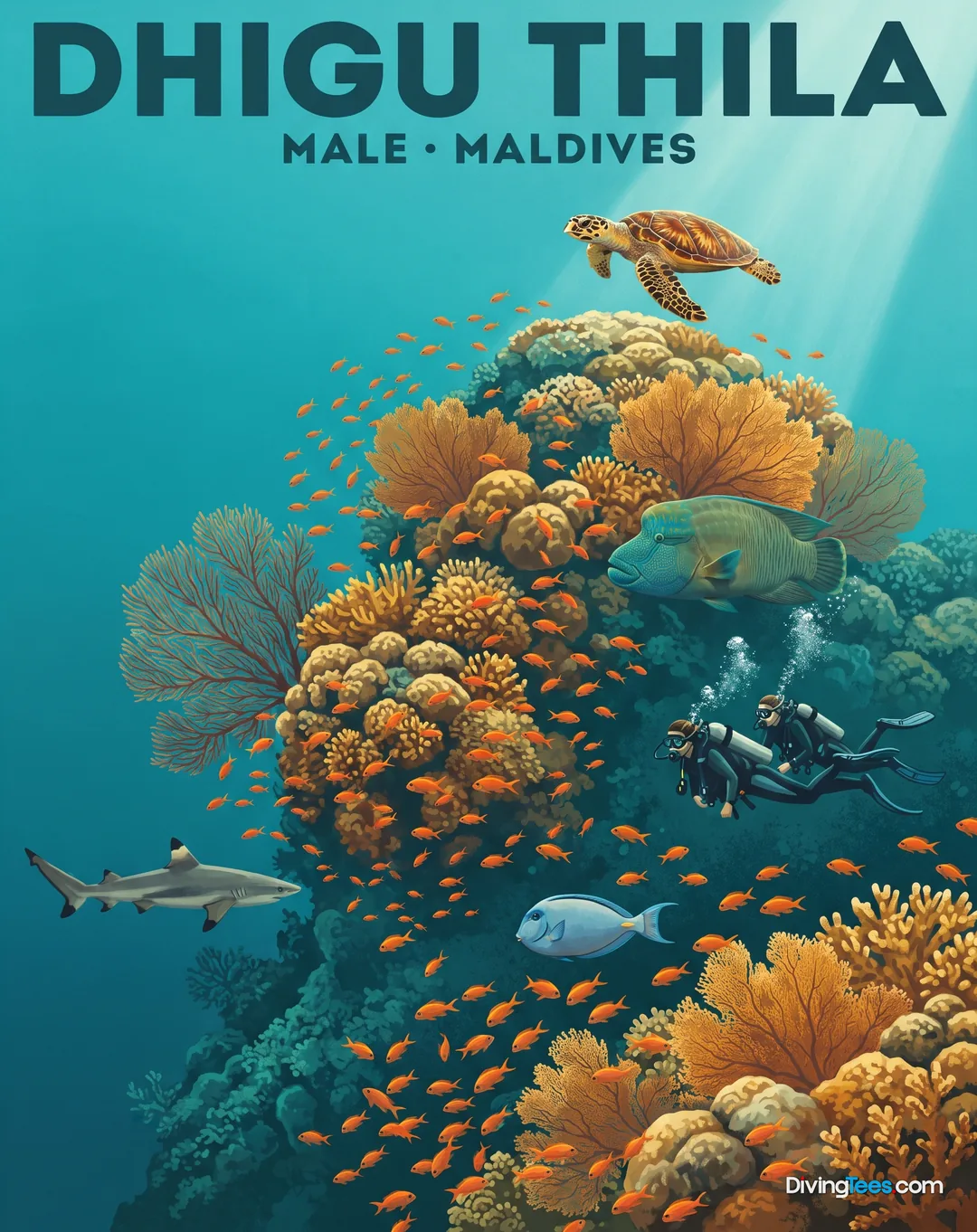
The route is the reason to choose Adora. Seven-night Best of Maldives and Best of Ari trips are built around roughly 17–18 dives, while the Hanifaru version reaches 24–25 dives over seven nights; five-night learn-to-dive trips offer about nine dives, and extended itineraries run to ten nights. Depending on the departure, the boat can visit North and South Malé, Vaavu, North and South Ari and Baa Atoll. In the channels, Barracuda Giri drops onto three pinnacles to a maximum of -30m, where current gathers barracuda, tuna, jacks and fusiliers. Mushimasmigili Thila reaches -30m and is known for grey reef sharks at its up-current pinnacle. Dhonkalo is a -25m manta cleaning station in a sandy channel. Kudarah Thila reaches -30m through clefts, overhangs and caves filled with batfish. Foththeyo Kandu is the serious channel: a maximum of -40m, strong current, caves covered in yellow soft coral and open-ocean pelagics. Hanifaru Bay is the headline above water and below it: protected Baa Atoll waters where hundreds of reef mantas may feed in a cyclone formation. Other route highlights include Banana Reef's lively reef, Maamigili and Maamigili Beiyru for whale sharks and mantas, Guraidhoo and Myaru Kandu for shark-filled channels, Dhigalhi Haa for red coralline algae and acropora coral, Dhonfanu for mantas and a swim-through, and Dhigu Thila, a current-fed pinnacle in South Malé.
What you’ll meet underwater
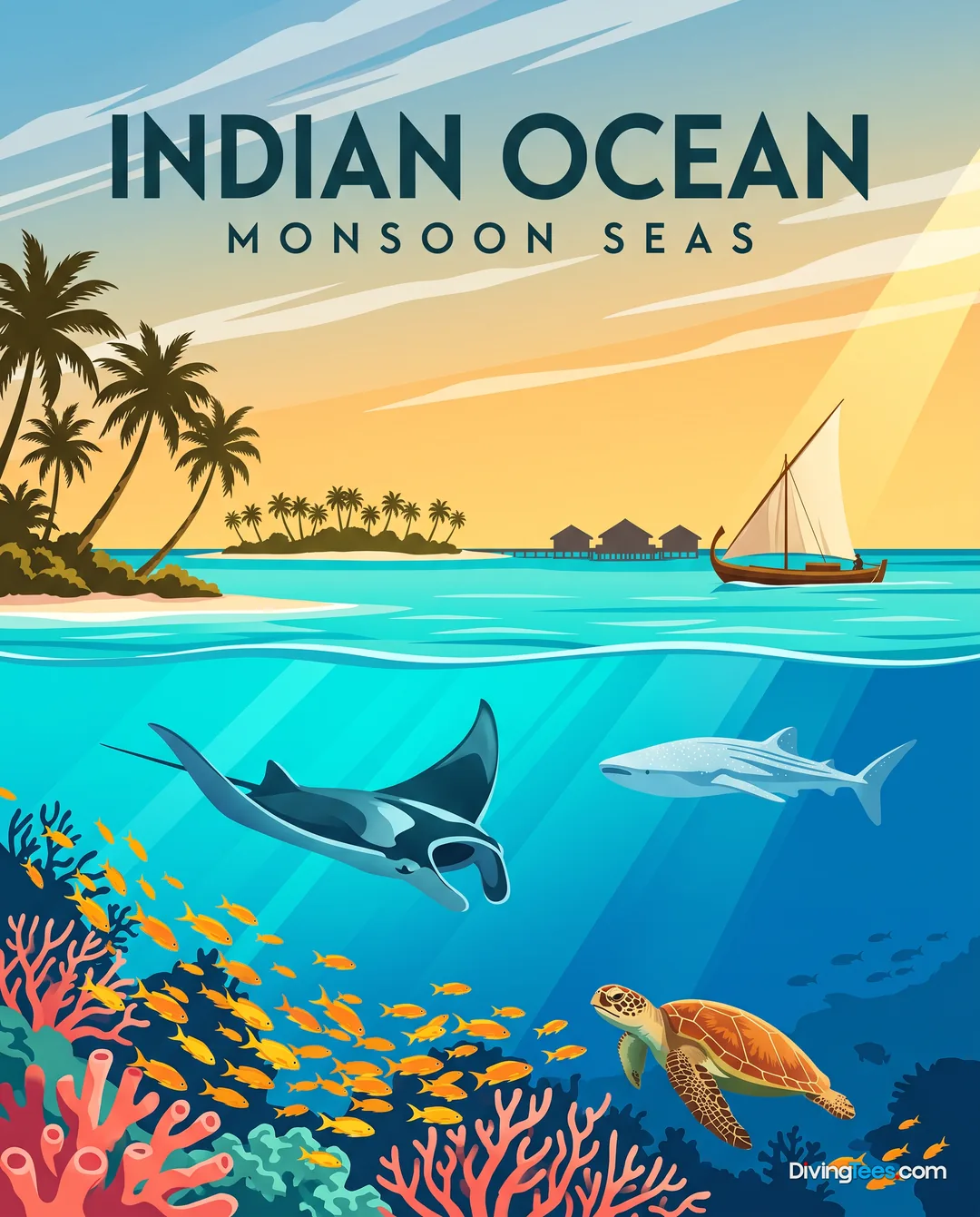
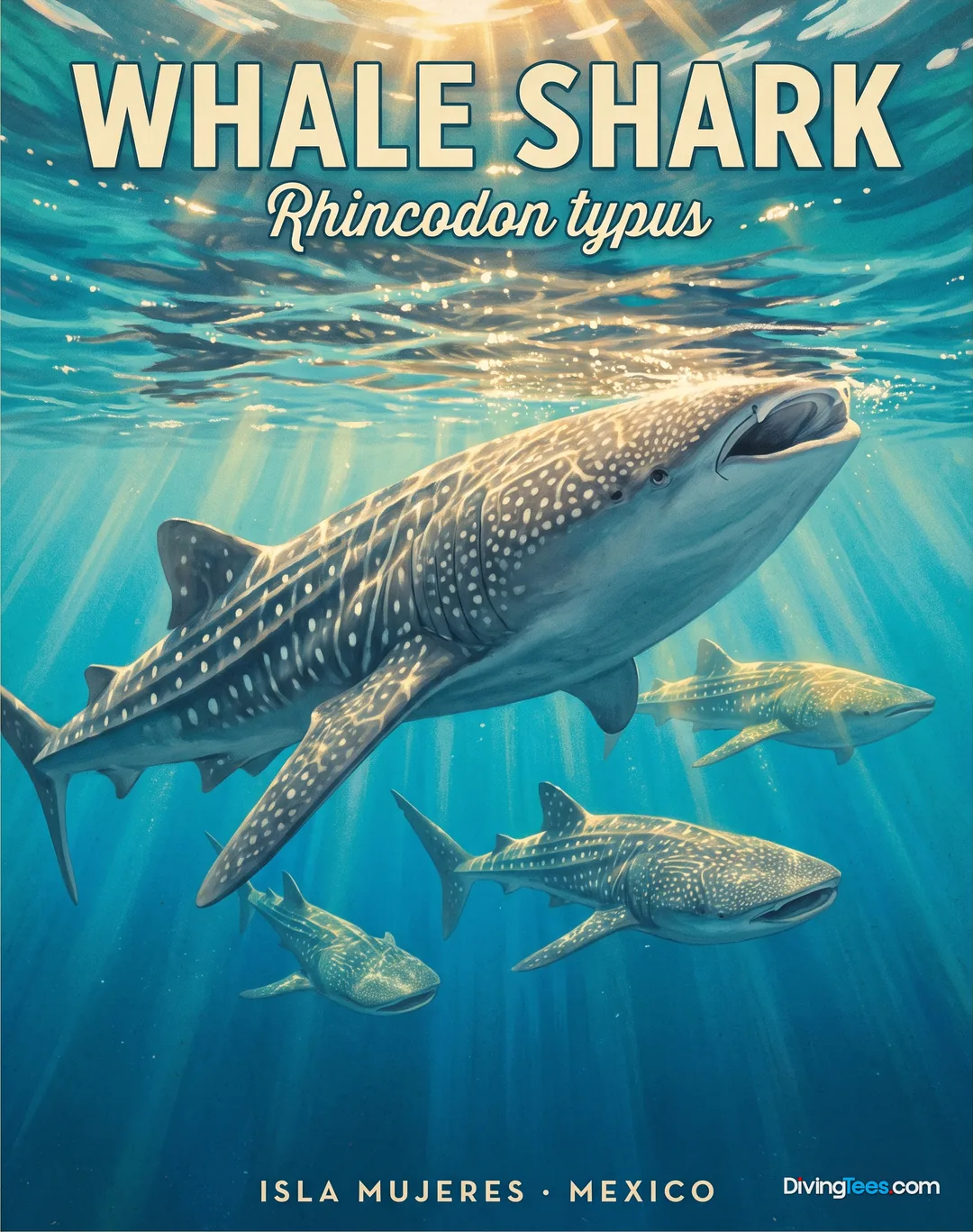
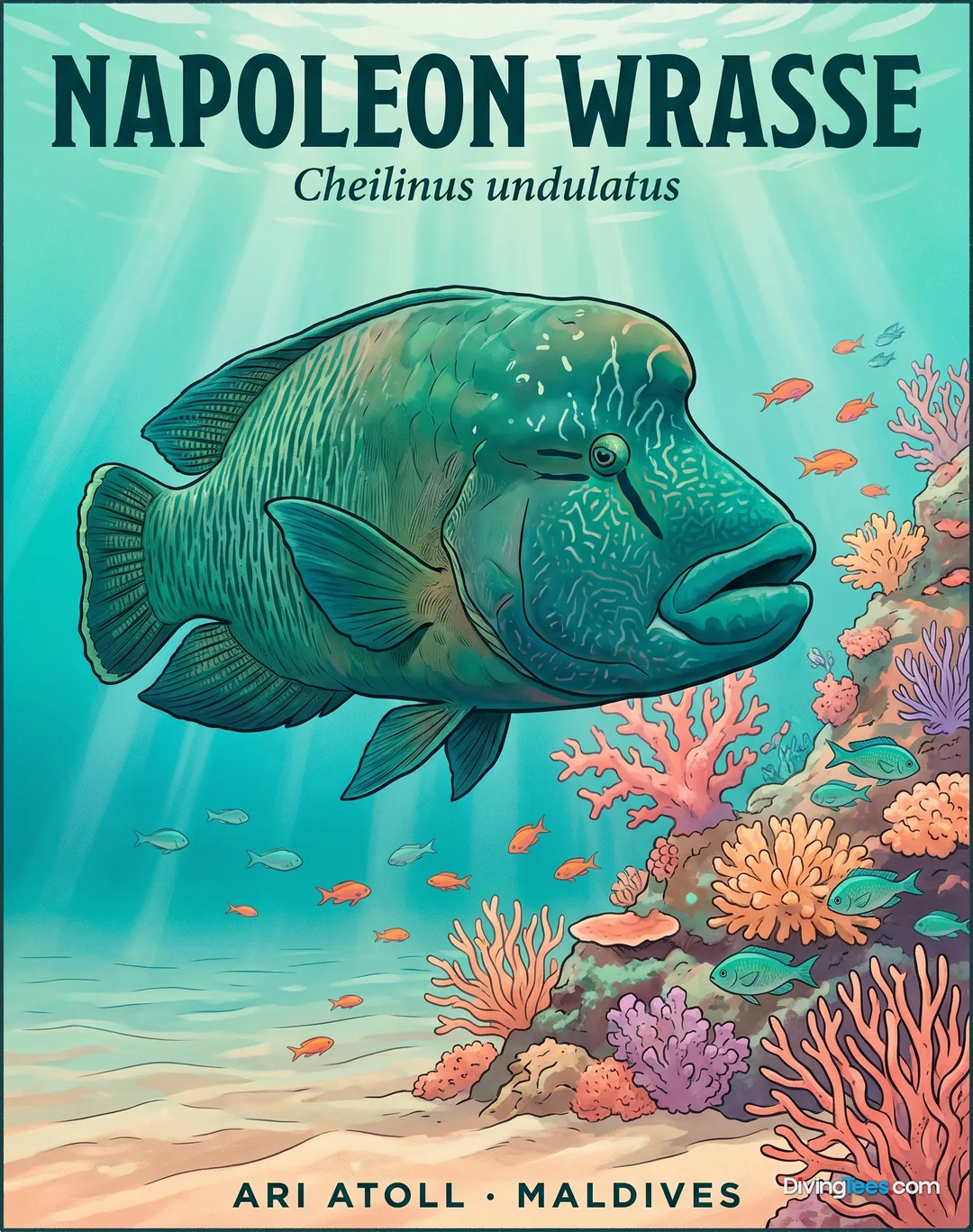
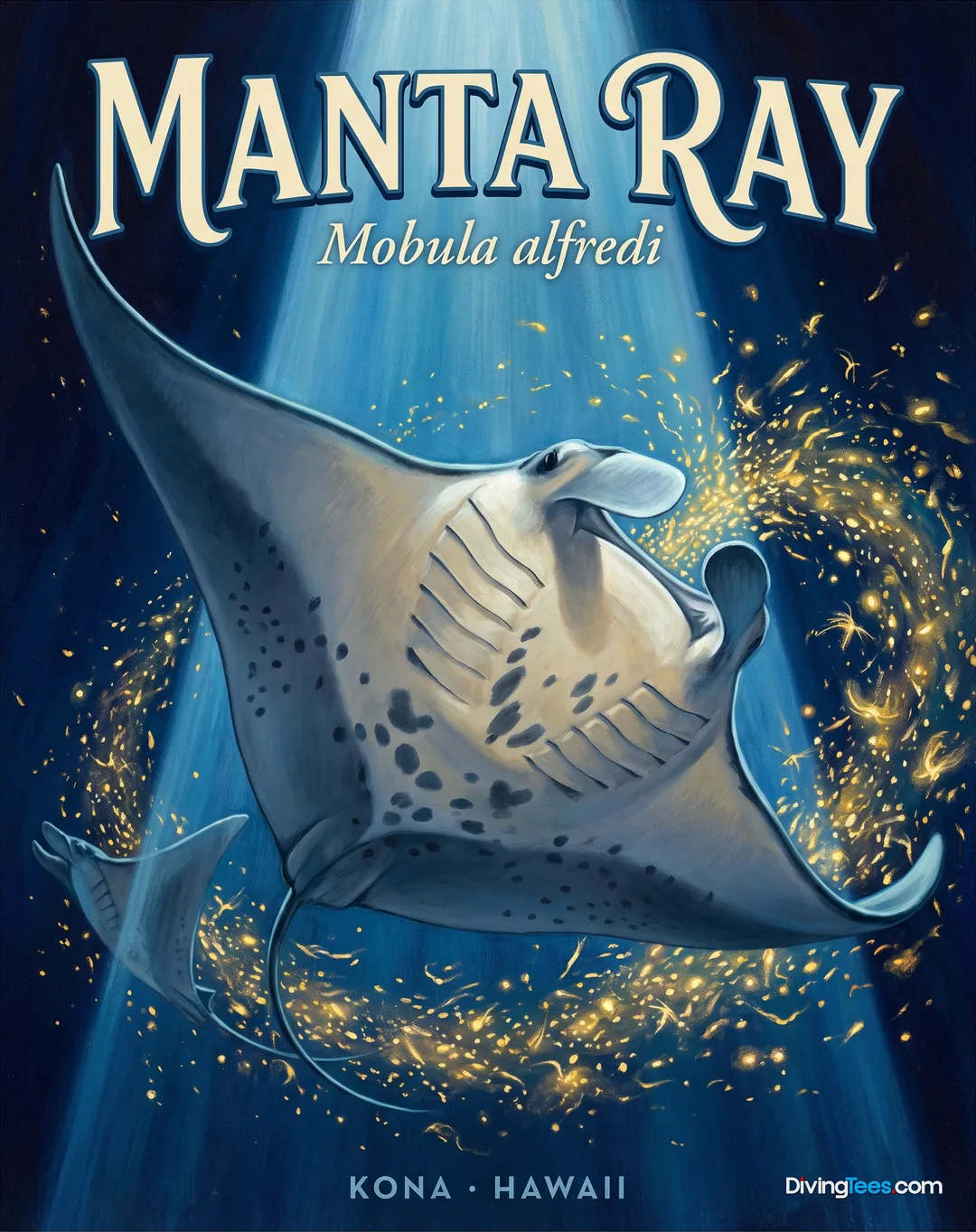
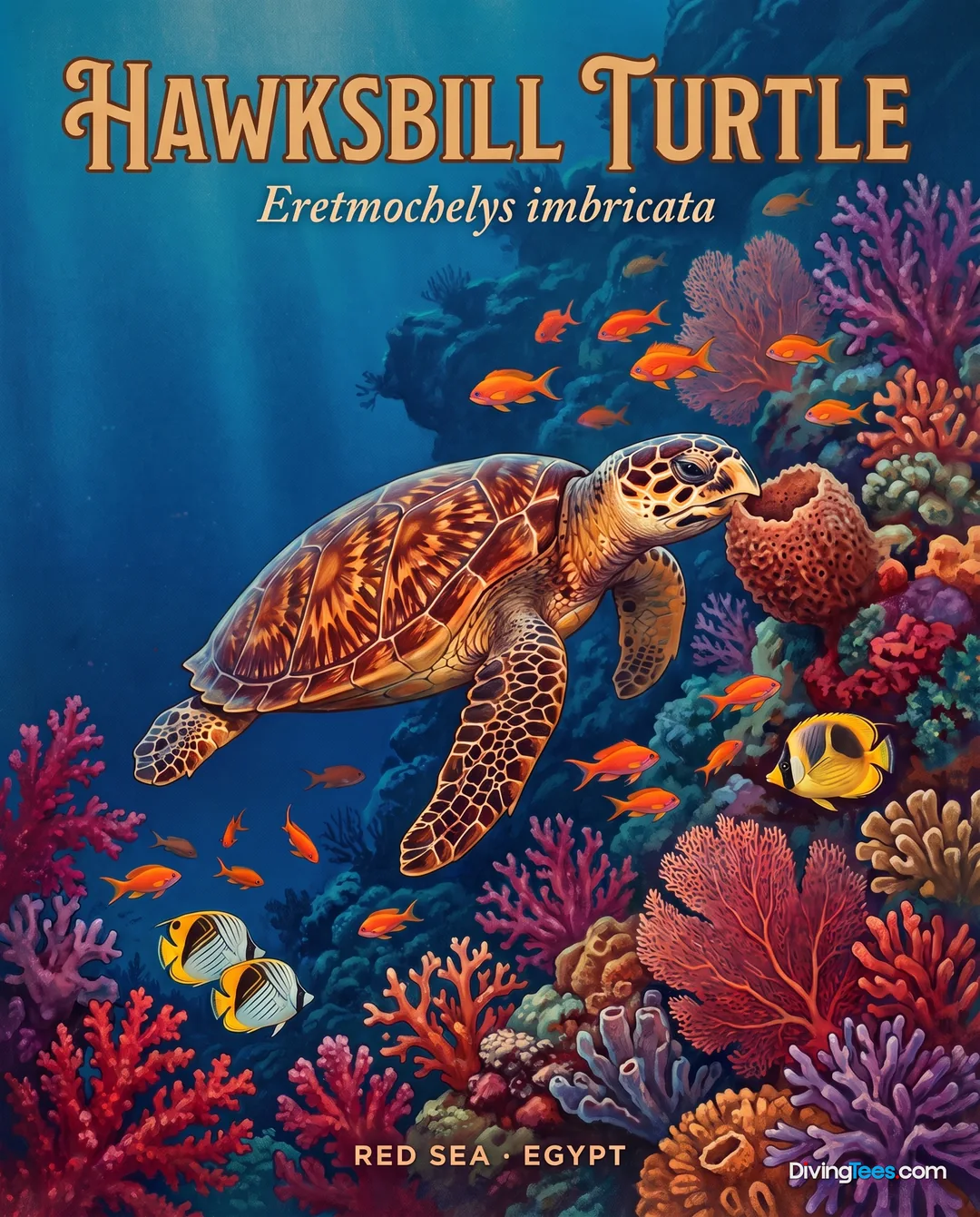
The recurring cast is large and unmistakably Maldivian: Napoleon wrasse, grey reef sharks, fusiliers, manta rays, tuna, sea turtles, eagle rays, barracuda, white-tip reef sharks, trevally, jacks, morays and batfish. They appear for different reasons. Currents feed channels and pinnacles, while cleaning stations concentrate mantas and sharks in one place. Whale sharks are a route possibility at Maamigili and Maamigili Beiyru, both within the South Ari Marine Protected Area, and at Hanifaru Bay a plankton bloom can draw reef mantas into cyclone feeding; the Hanifaru spectacle is tied to the southwest monsoon, usually August or September, and full-moon tides. The rarer details give individual sites their point. Barracuda Giri is the place for groupers and anthias; Banana Reef has anemones; Maamigili has gaterins and porcupinefish; Dhigalhi Haa has soft coral and gorgonians; Dhigu Thila is where a hawksbill turtle is recorded. No single dive promises the whole list. The route works because the habitats keep changing.
Who puts you in the water
The onboard team speaks English and Italian, and the crew is trained in first aid. Oxygen and first-aid kits are carried on board, with fire alarms, extinguishers, radio equipment and GPS supporting the wider safety system. Briefings and gear check-in are part of boarding, while dive groups are organised around the itinerary and diver level rather than presented as one fixed ratio. The standard Best of Maldives and Best of Ari routes recommend Advanced Open Water certification with around 25 logged dives; Open Water divers are welcome, but some sites exceed Open Water depth limits. A private guide or an onboard PADI Advanced Open Water course can provide access to deeper dives. Courses available across the programmes include Open Water, Advanced, Deep, Navigation, Night and Nitrox training. No guide-to-diver ratio, instructor count, defibrillator or recall system is stated, so the practical choice is to confirm those details before departure if they matter to the group.
The dive deck and the gear
The dive deck is built around a shaded working area, rinse tanks and a platform for water entries. DIN adapters are available, and Nitrox is available on board; Nitrox is included in the scheduled package, while Nitrox certification is an optional course. Rental equipment is available for divers who do not bring a complete kit, though the equipment brands and tank materials are not stated. Photographers get a separate camera rinse area and charging stations, which prevents cameras from being treated as ordinary wet gear. The boat also provides beach and deck towels, hot-water showers and a place to leave the kit between dives. There is no reliable detail here on tank volume, aluminium or steel cylinders, compressor type, SMB provision, tender numbers or a tender transfer system, so those points should not be assumed. What is clear is the important daily workflow: shaded preparation, a platform entry, rinsing and a dedicated camera setup.
Between dives
Between dives, Adora gives the choice that a liveaboard needs: shade on the dive area, sun on the terrace, or air conditioning inside. The salon has room for a book, a video or a quiet conversation, and the boat also carries a library and audio-video entertainment. Photographers have a dedicated area, separate camera rinse and charging stations, so cameras do not have to compete with masks and fins for every usable surface. A stand-up paddle board provides an alternative when the boat is stopped near an island, while beach barbecues break up the days on longer routes. The useful feature is the range of temperatures and noise levels. A diver can sit outside with the horizon, move inside to cool down, or retreat to the cabin without leaving the boat's working centre.
A day on board
A typical diving day starts with the boat already positioned for the first site and a briefing before divers kit up. The first dives are followed by breakfast or another meal, a surface interval and time to rinse gear, eat, cool off or sit on the terrace. On the seven-night programmes, the target is roughly 17–18 dives; the shorter learn-to-dive route uses confined-water work before afternoon Open Water dives, then moves certified guests into three-dive days and two morning dives near the end. The order matters more than a clock: briefing, entry, recovery, food, surface interval, then the next descent. On some routes, a night dive or a marine-life-focused dive is available, while evenings may instead be used for a sunset cruise, a theory review, a barbecue or a farewell dinner. The boat gets underway between sites or while guests are resting, carrying the group to the next channel, thila or cleaning station.
What you eat aboard
Food is served as a full-board buffet, with vegan options available and all regular meals included. The table also carries the social rhythm of the trip: divers come straight from a dive to eat, compare what passed the reef and then disappear again to prepare for the next entry. Beer, wine and cocktails are available, while barbecue meals can be served on a beach during the route. The kitchen is not presented as a local cooking school, but passengers consistently remember the food as one of Adora's strongest points: tasty, plentiful and well planned for people diving repeatedly through the day. That matters more than decorative menus. After a current dive or a long drift, a reliable plate waiting in the salon is part of the dive operation.
Nights at sea
The cabins are on the main deck, with private bathrooms and air conditioning, so returning from a dive does not mean crossing the whole boat to reach a shower. Standard, Ocean View Suite and Superior Single categories cover the basic choice between a straightforward room, more view and space, or a single-occupancy arrangement. Panoramic windows bring daylight into the cabins; selected cabins also open onto accessible balconies, giving the sea a place to sit rather than only a view through glass. Hot-water showers, daily housekeeping, towels and toiletries keep the practical side simple. The appeal is not a boutique hotel finish. It is having a private bathroom, a cooled room and enough separation from the communal areas after several dives. For a liveaboard week, that difference is felt most clearly at night, when the cabin becomes a real retreat instead of another shared part of the dive deck.
Standard
Ocean View Suite
Superior Single
What to know before boarding
Adora's trips begin and end in Malé, at Velana International Airport, for the central Maldives itineraries. Airport pickup on arrival and drop-off after the trip are included. Arriving in Malé the night before is sensible, so a delayed flight does not become a rushed boarding day. The transfer and check-in arrangements are handled around the airport arrival.
- Year built
- 2014
- Length
- 37.5 m
- Beam
- 10.4 m
- Maximum number of passengers
- 21
- Number of cabins
- 11
- Number of bathrooms
- 11
- Engines
- 600 hp Doosan
- Cruising speed
- 12 knots
- Website
- maldivesboatclub.com ↗
Hello, I'm Marina, DivingDeal.com's AI assistant. I answer in detail about hotels, dive centres and liveaboards.

Thinking about the whole trip and the flights? Talk it over with Edith →
Marina is an AI. Some links are affiliate links: DivingDeal may earn a commission, at no extra cost to you. Bookings are made with the partner.