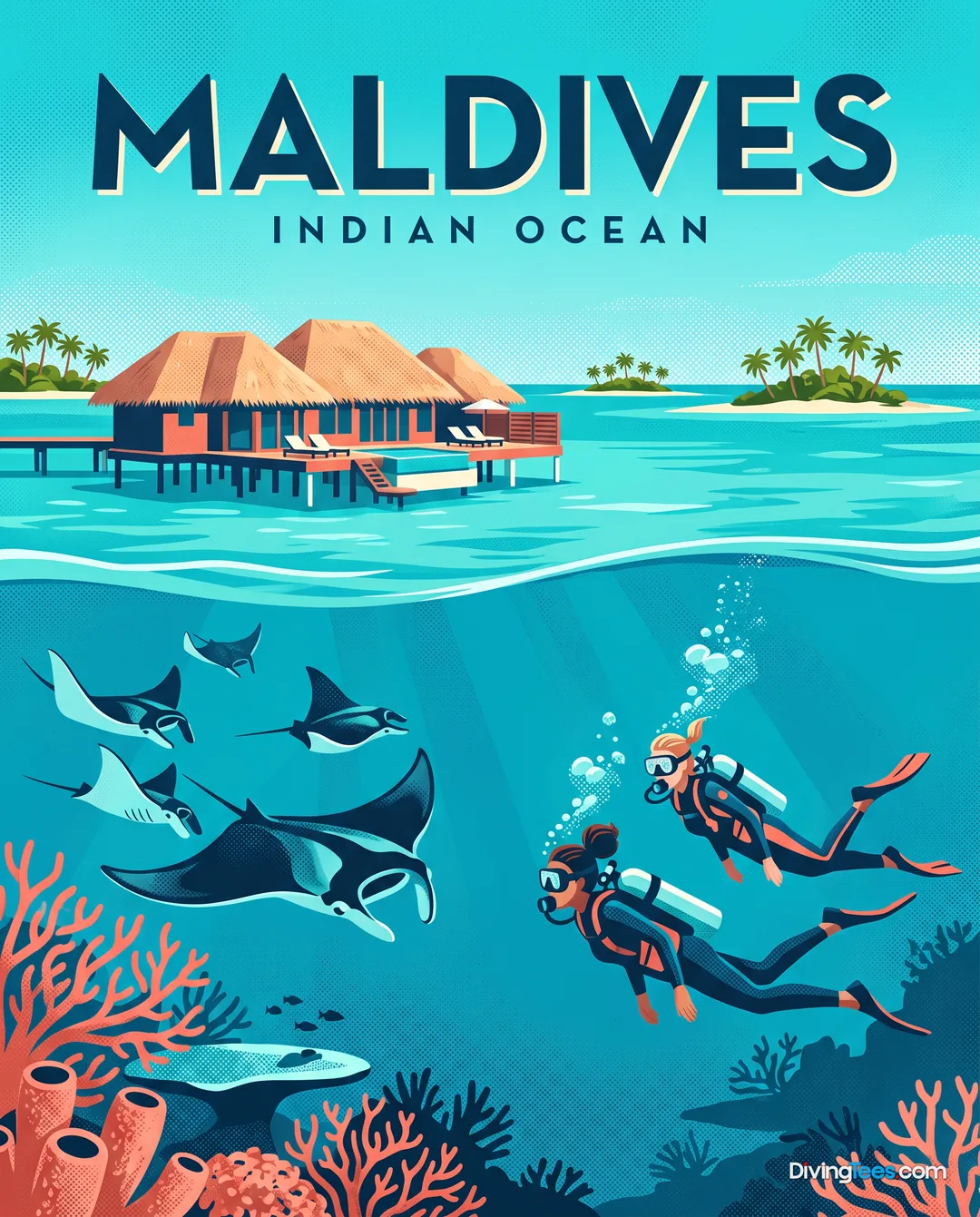
Liveaboards · Maldives
Emperor Leo — a modern Maldivian dive boat with a traditional wooden feel
What makes this boat unique
- A 35-metre liveaboard with 12 air-conditioned ensuite cabins and space for 24 divers.
- A separate 20-metre diving dhoni carries the compressors, tanks and oxygen kits.
- Four dive guides are available, with free Nitrox, DIN adapters and PADI courses on board.
- Best of Maldives departures run from Malé to Malé for 8 days and 7 nights.
- Port, fuel and park fees, airport transfer, full-board meals, Nitrox and the dive package are included.
For subtitles in English: start the video firstthen click the gearat the top right of the video, select “Subtitles/CC”, then “Auto-translate” and choose “English”.
The invitation
Emperor Leo is for divers who want the Maldives’ current-driven sites without giving up a proper liveaboard lounge, a Jacuzzi and a cabin that feels finished rather than improvised. The boat keeps a traditional note through its wooden interior, but the layout is modern: air-conditioned cabins, ensuite bathrooms, a dedicated photo area and a separate dhoni that stays with the diving. That separation matters. The main boat remains a place to eat, sleep and come back to, while the dhoni handles the wet work. The route reaches the pinnacles, channels and cleaning stations where sharks, mantas, whale sharks and schooling fish gather. It suits a diver who wants a broad Malé, Ari and Vaavu itinerary, with the option of Best of Maldives, South Central Atolls, or Deep South and Southern Sharks routes.
Boarding
From the dock, Leo presents as a substantial wooden liveaboard rather than a stripped-down dive platform. The wooden decor continues inside, where the traditional appearance is softened by air-conditioning, clean modern fittings and a spacious saloon. The arrangement is easy to read on arrival: cabins below, living space on the main deck, outdoor seating above, and the diving kept on the large dhoni alongside. There is no need to carry wet equipment through the saloon after a dive. The boat was built in 2009 and renovated in 2012, which fits what the design promises: an established vessel with a contemporary working interior, not a new-build showcase. Once aboard, the useful detail is the division between life on Leo and diving from the tender.
The atmosphere on board
Leo’s atmosphere comes from a crew that keeps the machinery of a dive trip from becoming the diver’s problem. The dhoni crew helps with kitting up, and the working style described aboard is one of readiness rather than ceremony: questions get answered, equipment gets moved, and the next dive is prepared while divers are still coming back from the last one. Four guides give the boat enough guiding capacity for different experience levels and interests, while English, French and Spanish cover the main languages used on board. In the evening, the group comes back together in the saloon or around the bar before dinner, with the day’s sightings doing most of the social work. Leo is not the smallest boat in the Maldives, but the crew’s hands-on role keeps the diving personal.
The sites you’ll dive
The Best of Maldives route runs Malé to Malé over 8 days and 7 nights, covering Rasdhoo, North and South Ari, Vaavu, and North and South Malé atolls. The sites explain the appeal. Barracuda Giri drops onto three submerged pinnacles to meet barracudas, tunas and schooling pelagics, to a maximum of -30m. Banana Reef is a lively reef landmark with reef sharks and eagle rays. At Mushimasmigili Marine Reserve, the up-current pinnacle of Mushimasmigili Thila is known for grey reef sharks, to -30m. Dhonkalo is a manta cleaning station in a sandy channel, while Maamigili and Maamigili Beiyru sit inside the South Ari protected area for whale sharks and mantas, each to -30m. Kudarah Thila adds clefts, overhangs and caves with schools of batfish, to -30m. Guraidhoo, Myaru Kandu and Dhigu Thila bring channel currents and sharks; Myaru Kandu reaches -30m. Foththeyo Kandu reaches -40m, with yellow soft corals in caves and open-ocean pelagics. Northern routes can include Dhigalhi Haa, Dhonfanu and Fushifaru Thila, where red algae, acropora, mantas and cleaning stations take over.
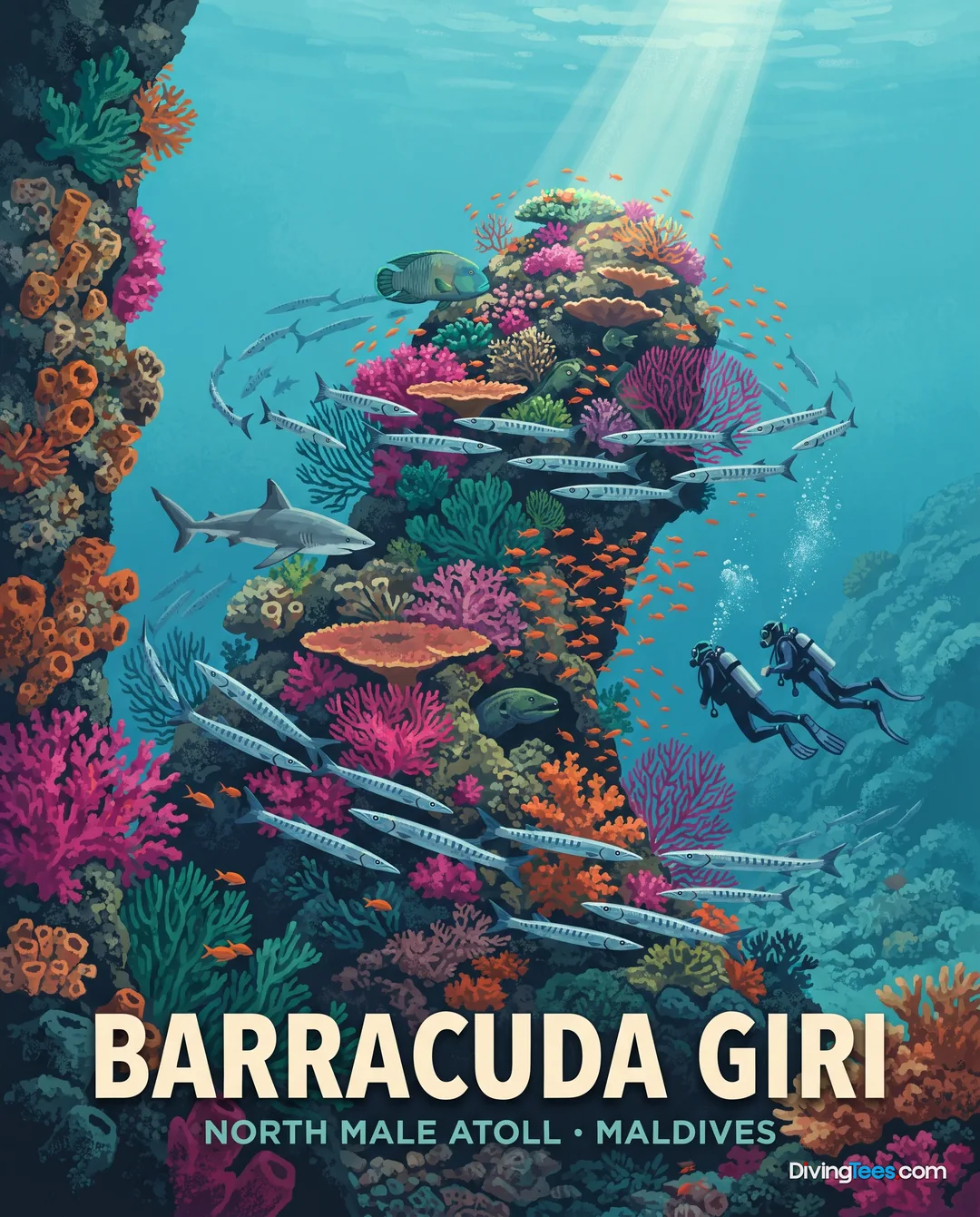
Barracuda Giri →
Max. depth · 30 m
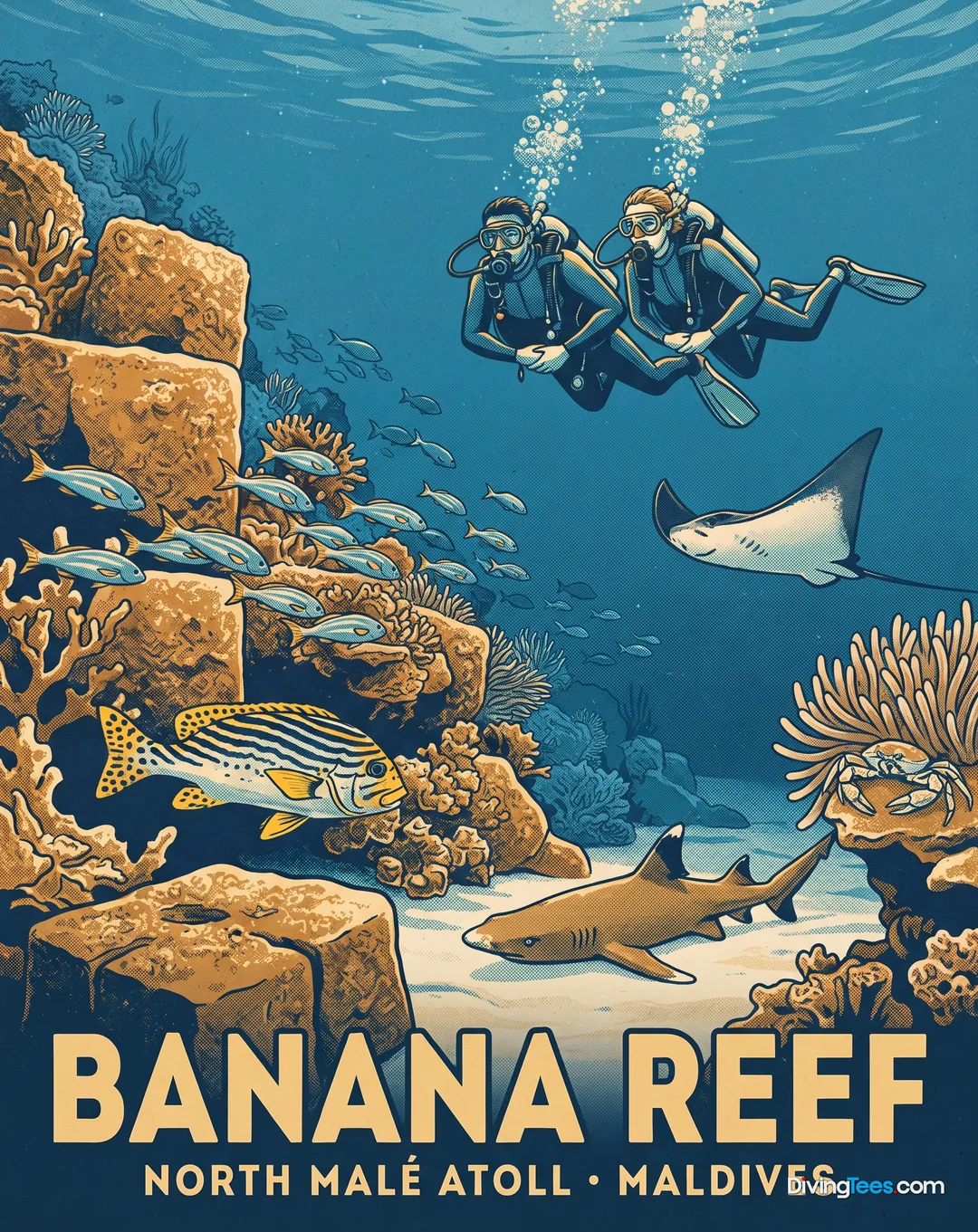
Banana Reef →
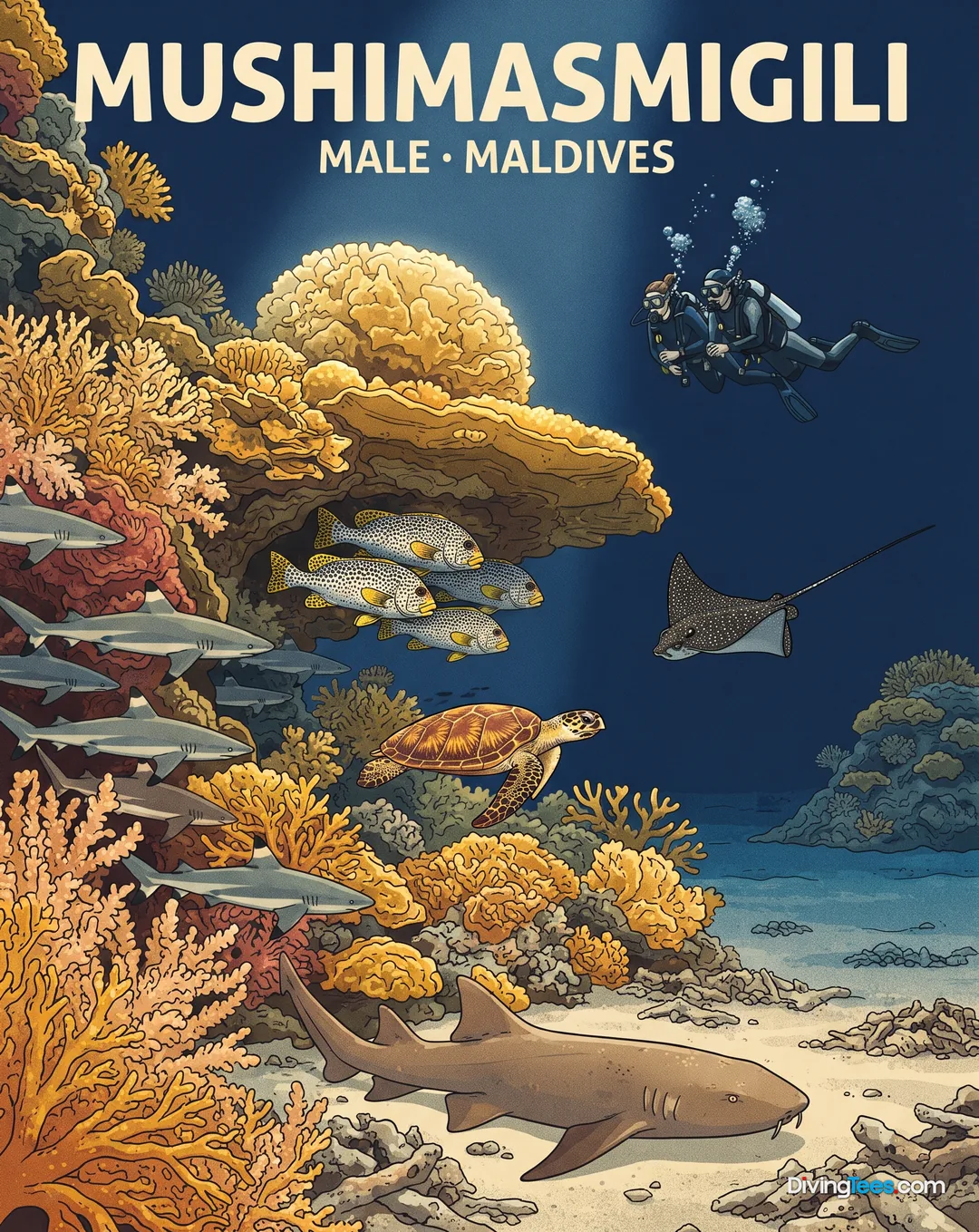
Mushimasmigili Marine Reserve →
Max. depth · 30 m
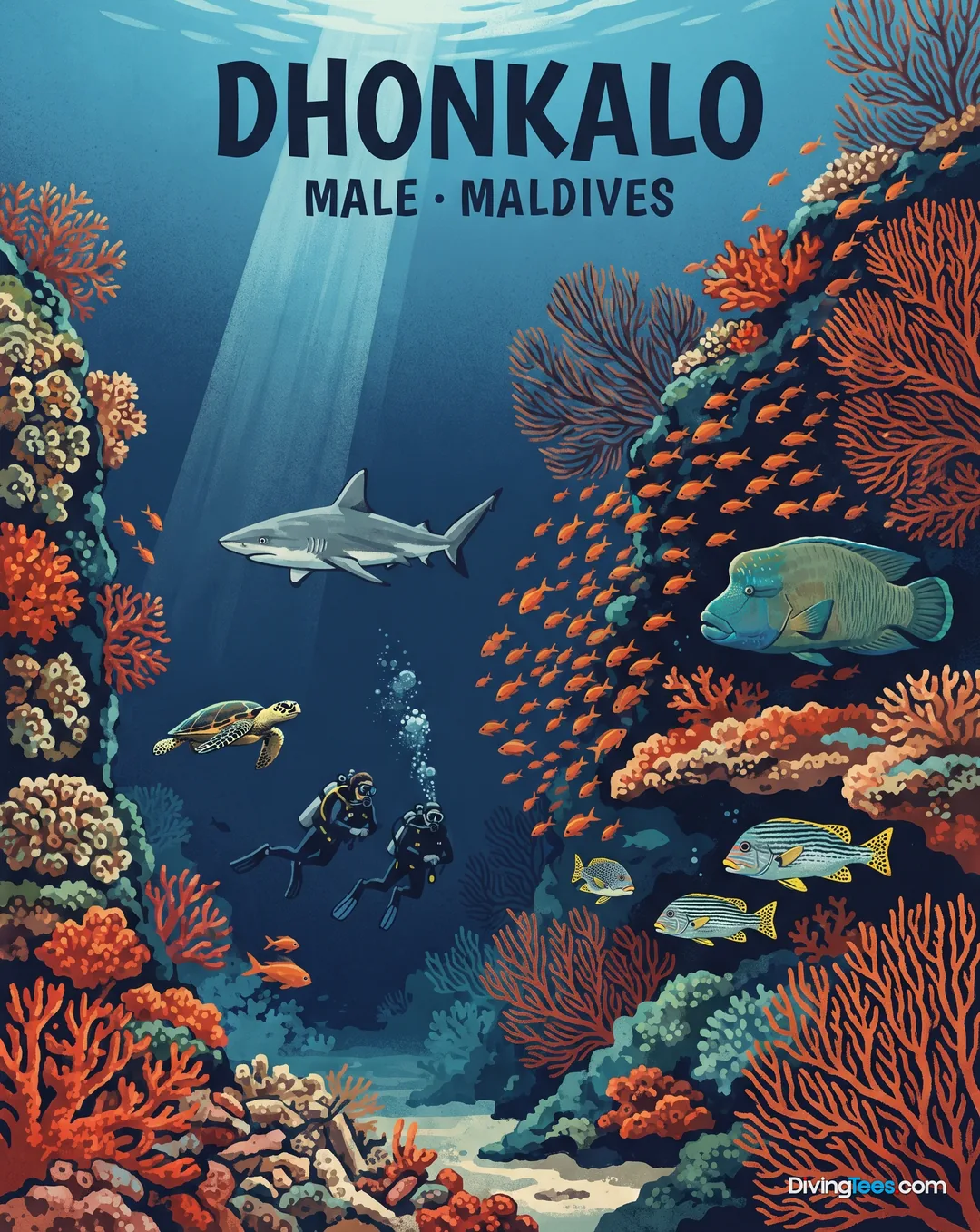
Dhonkalo →
Max. depth · 25 m
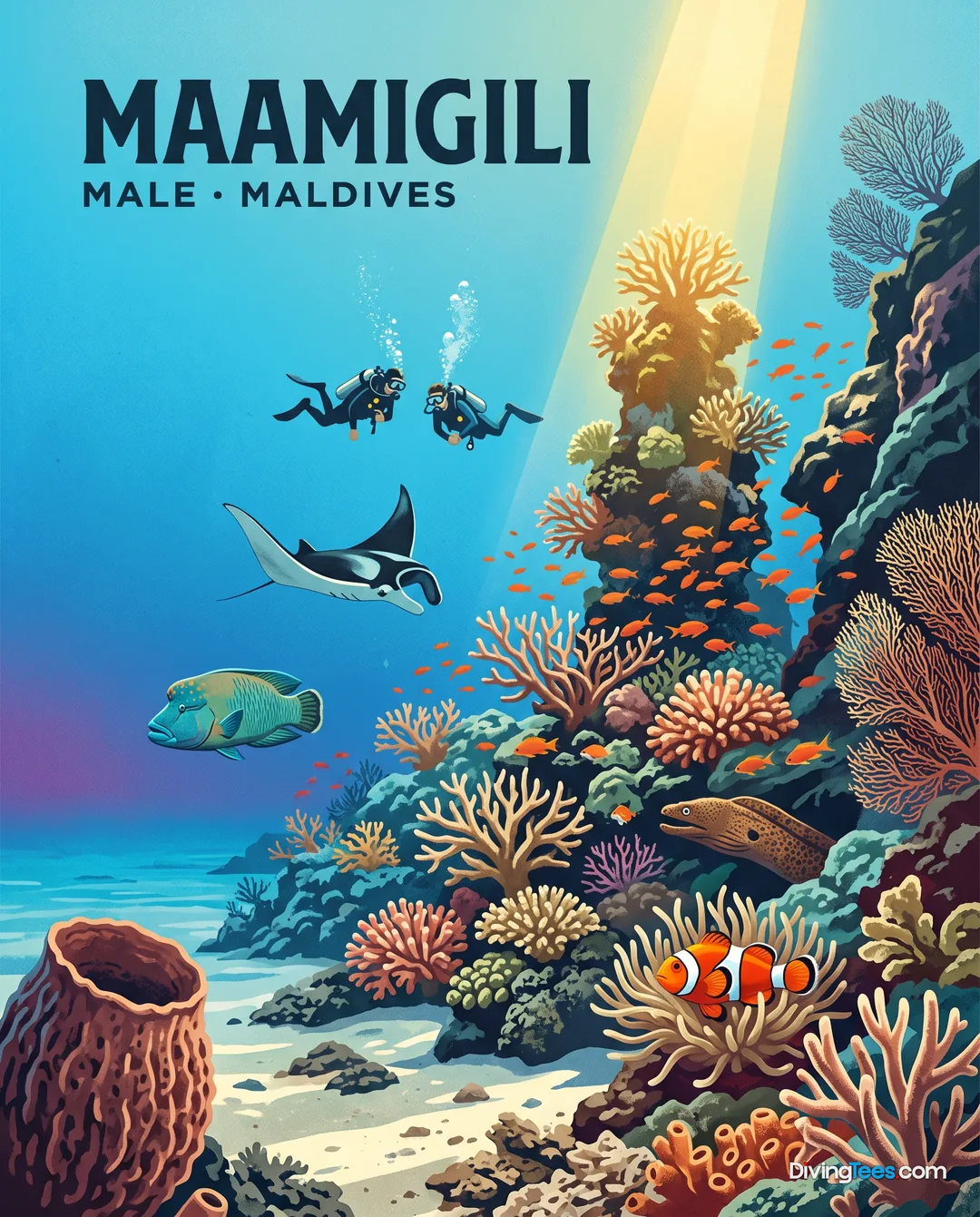
Maamigili →
Max. depth · 30 m
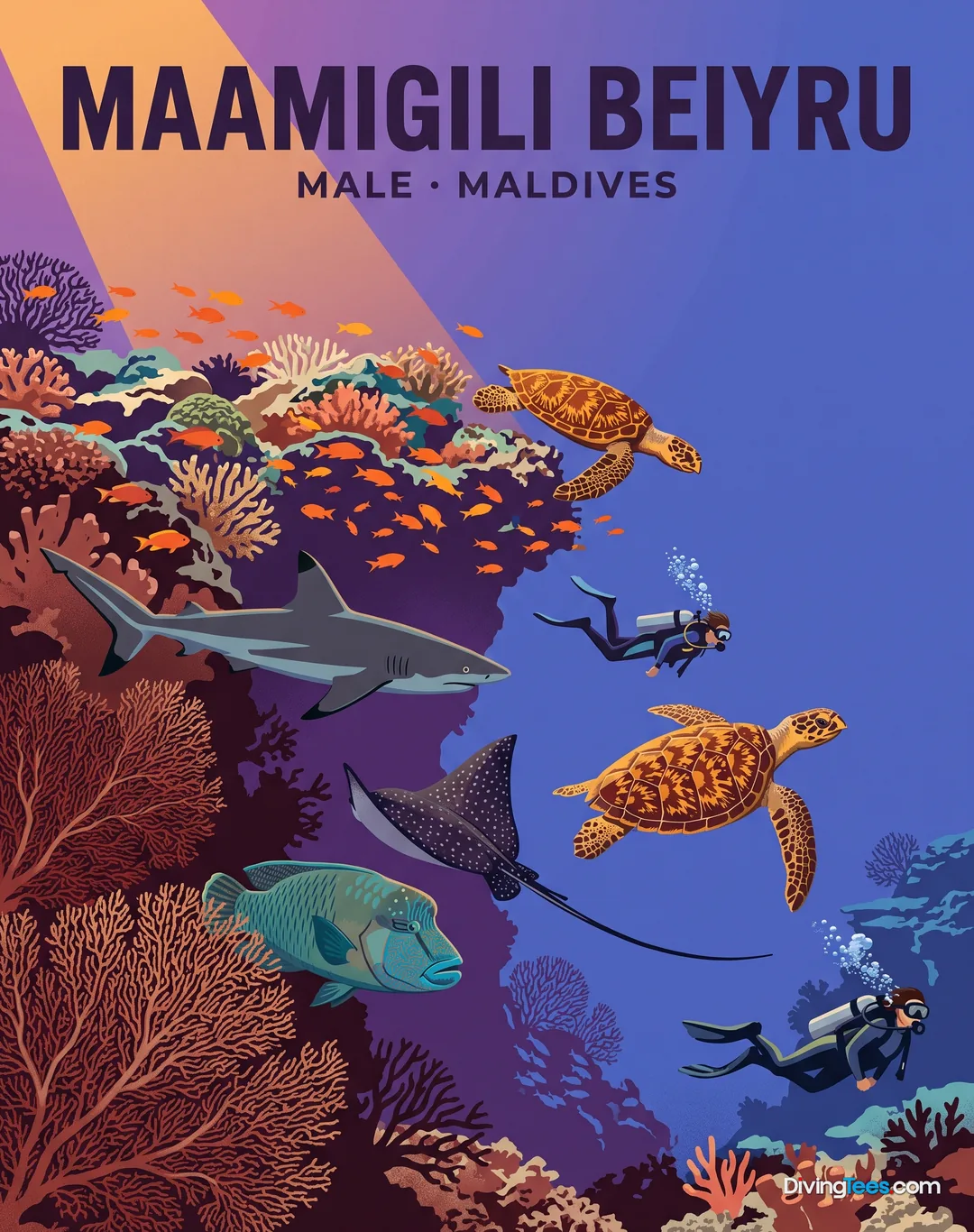
Maamigili Beiyru →
Max. depth · 30 m
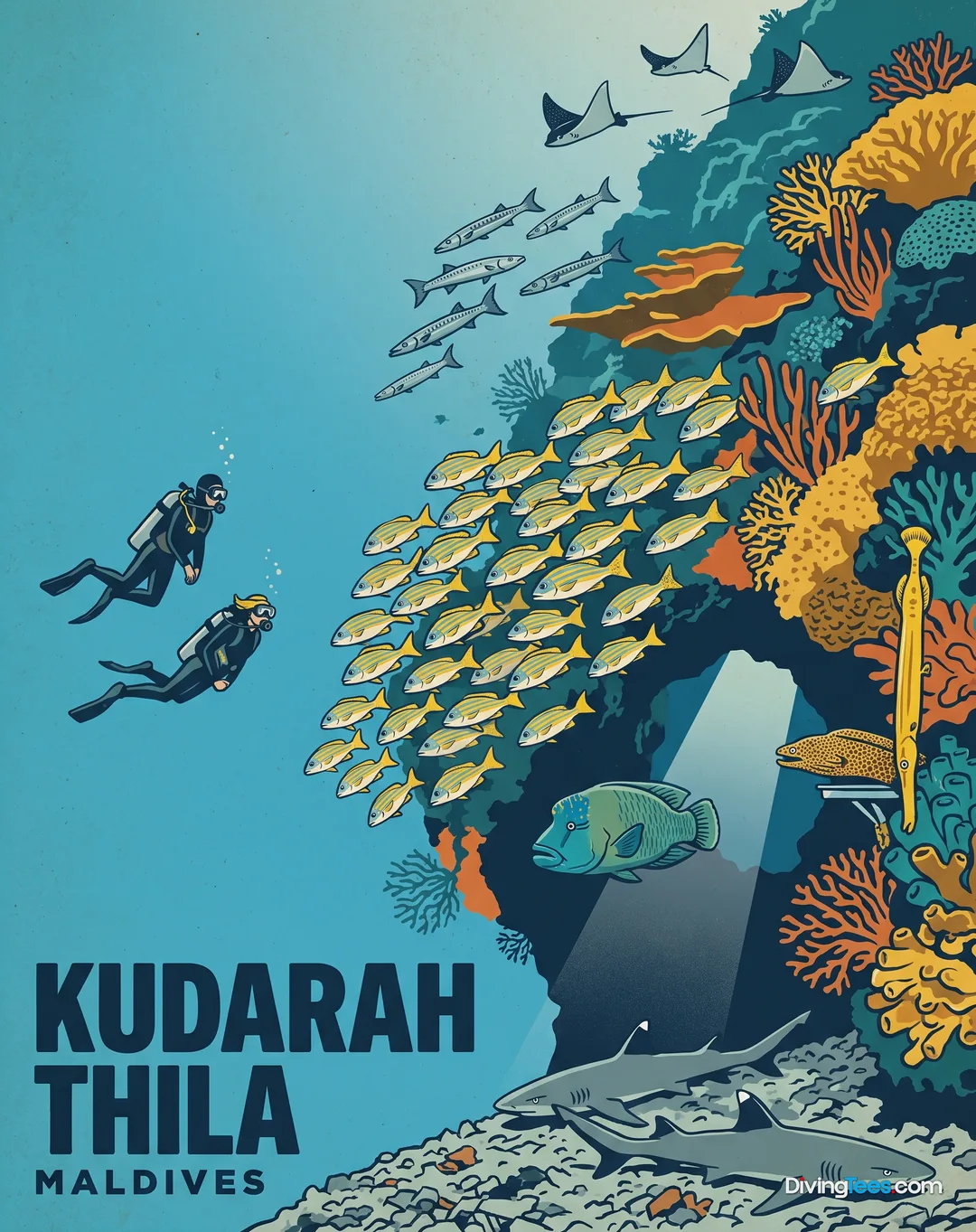
Kudarah Thila →
Max. depth · 25 m
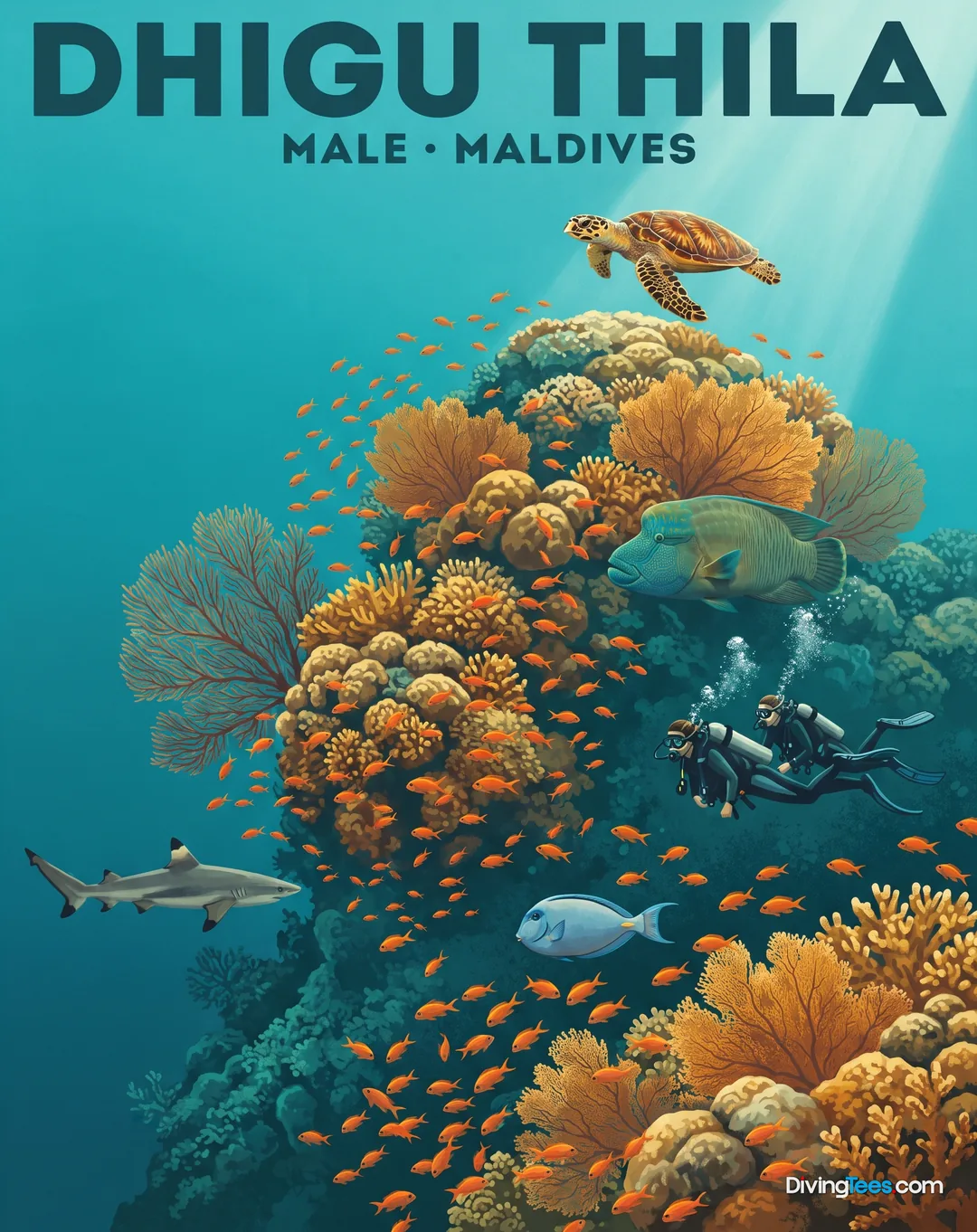
Dhigu Thila →
Max. depth · 30 m
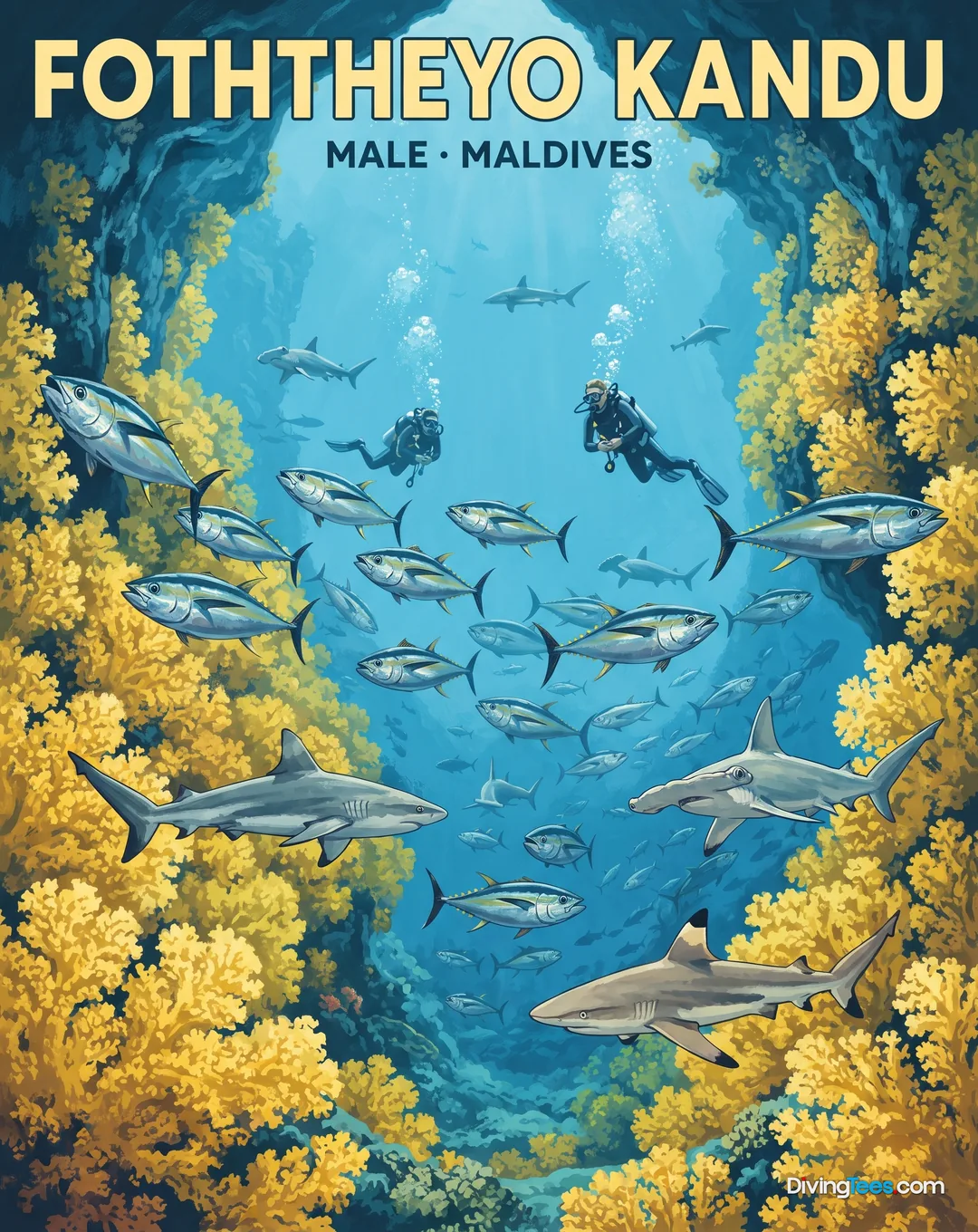
Foththeyo Kandu →
Max. depth · 40 m
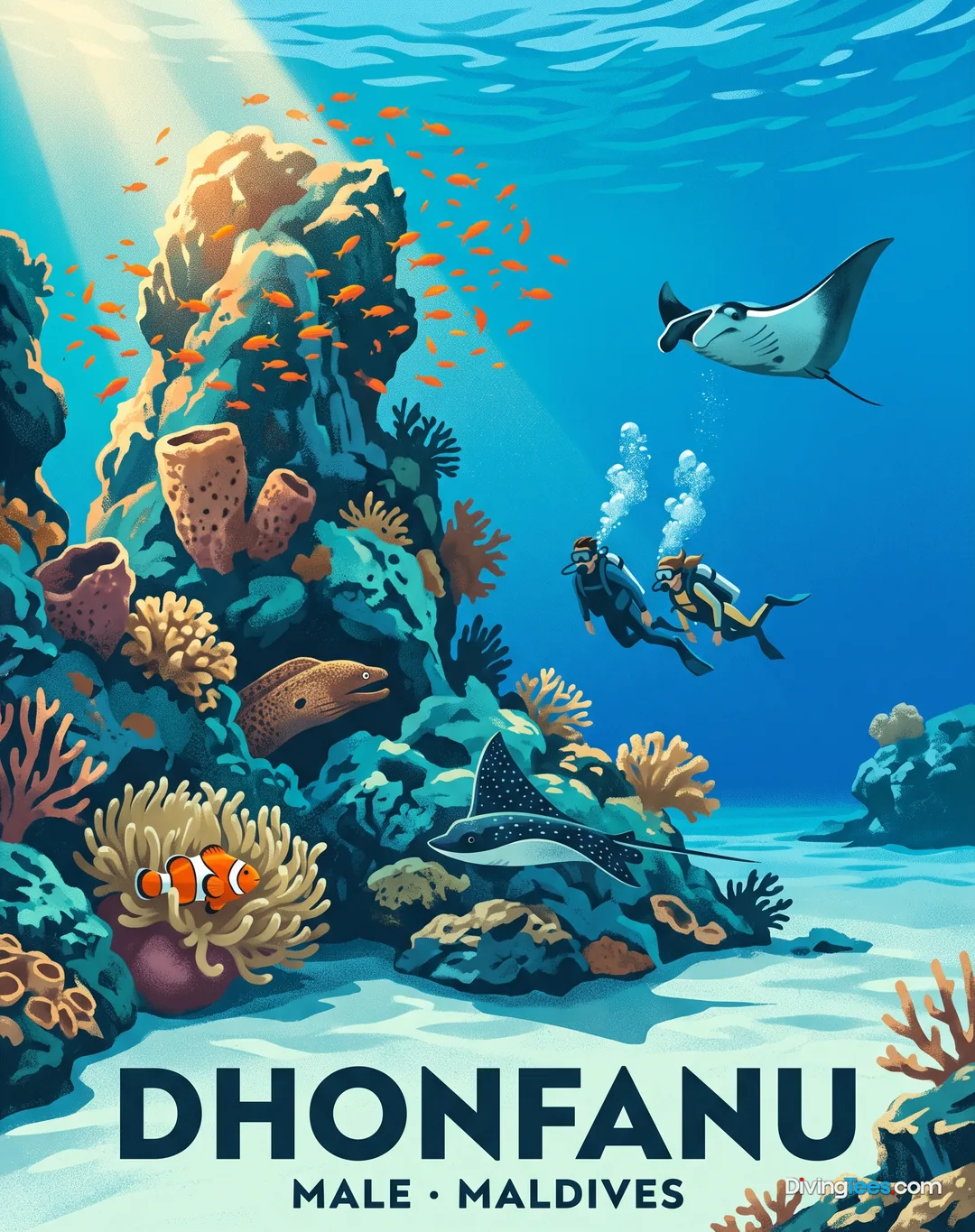
Dhonfanu →
Max. depth · 30 m
What you’ll meet underwater
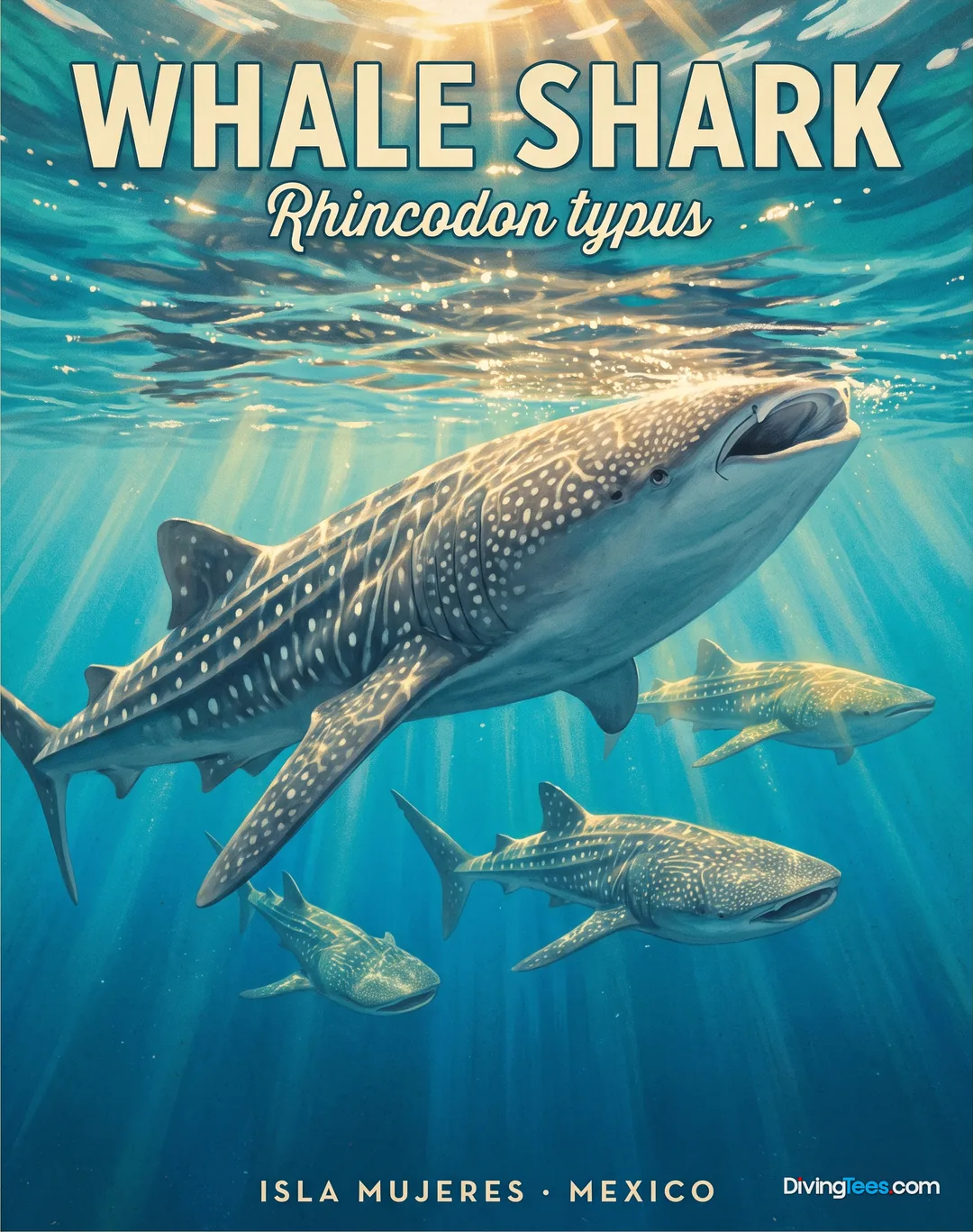
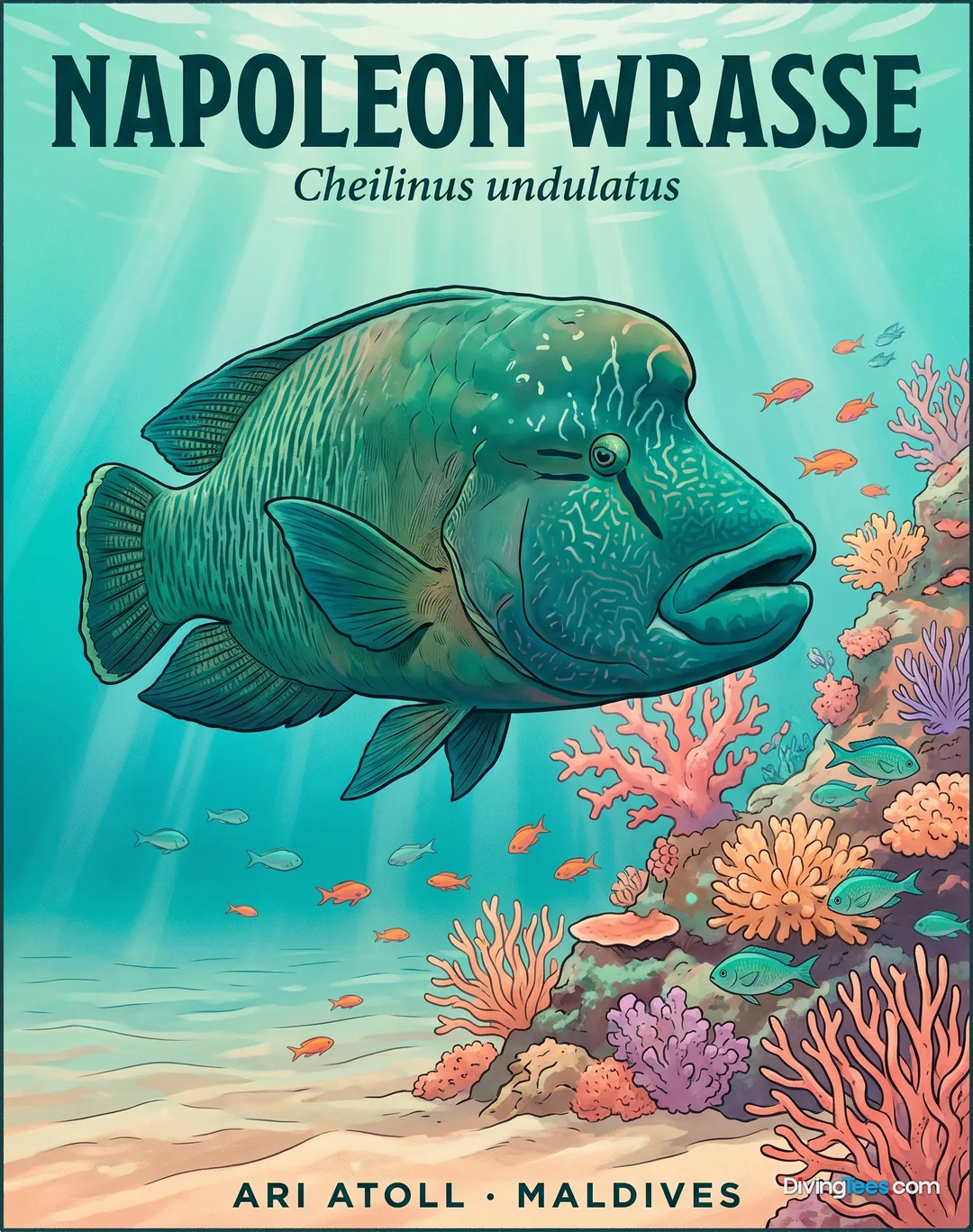
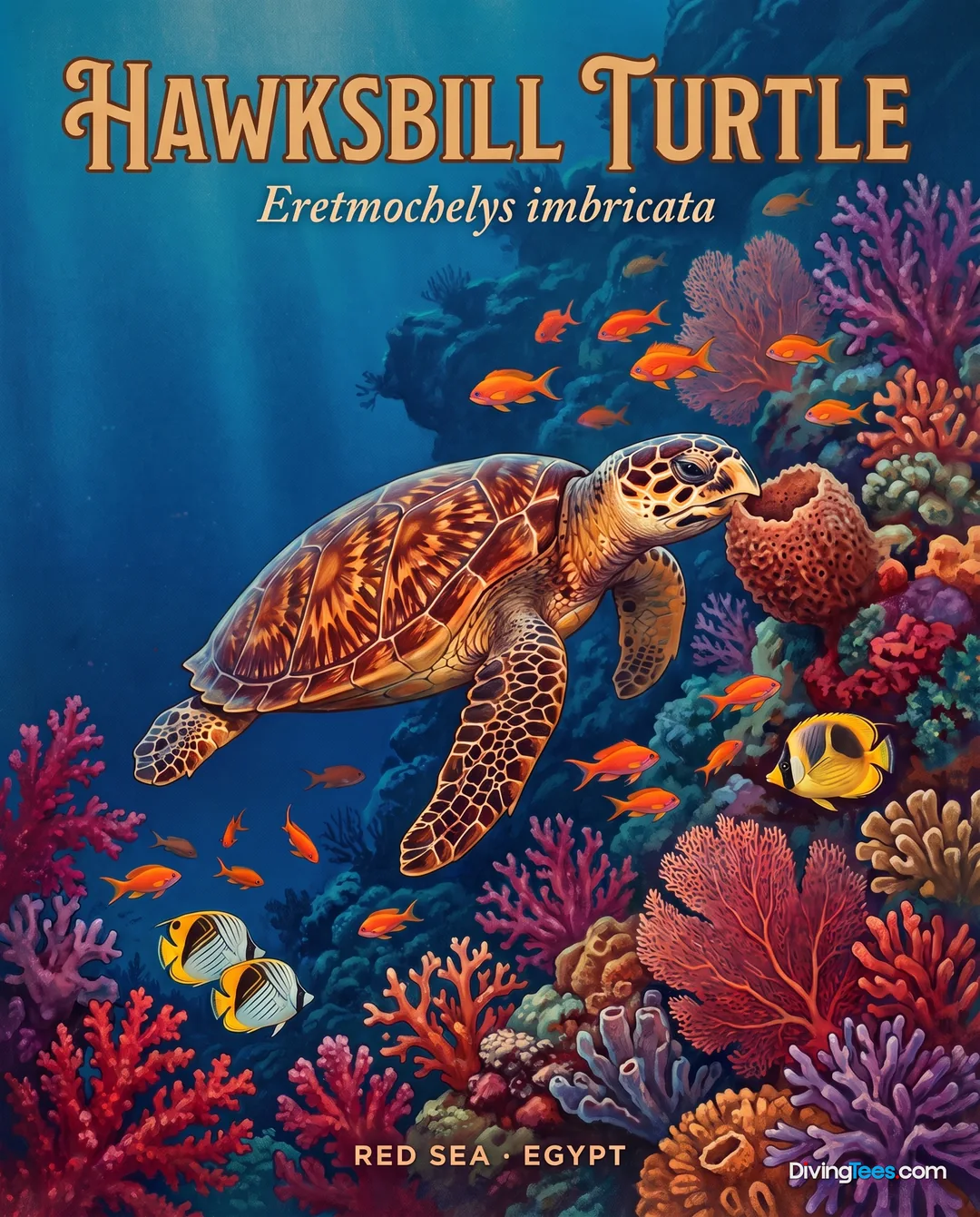
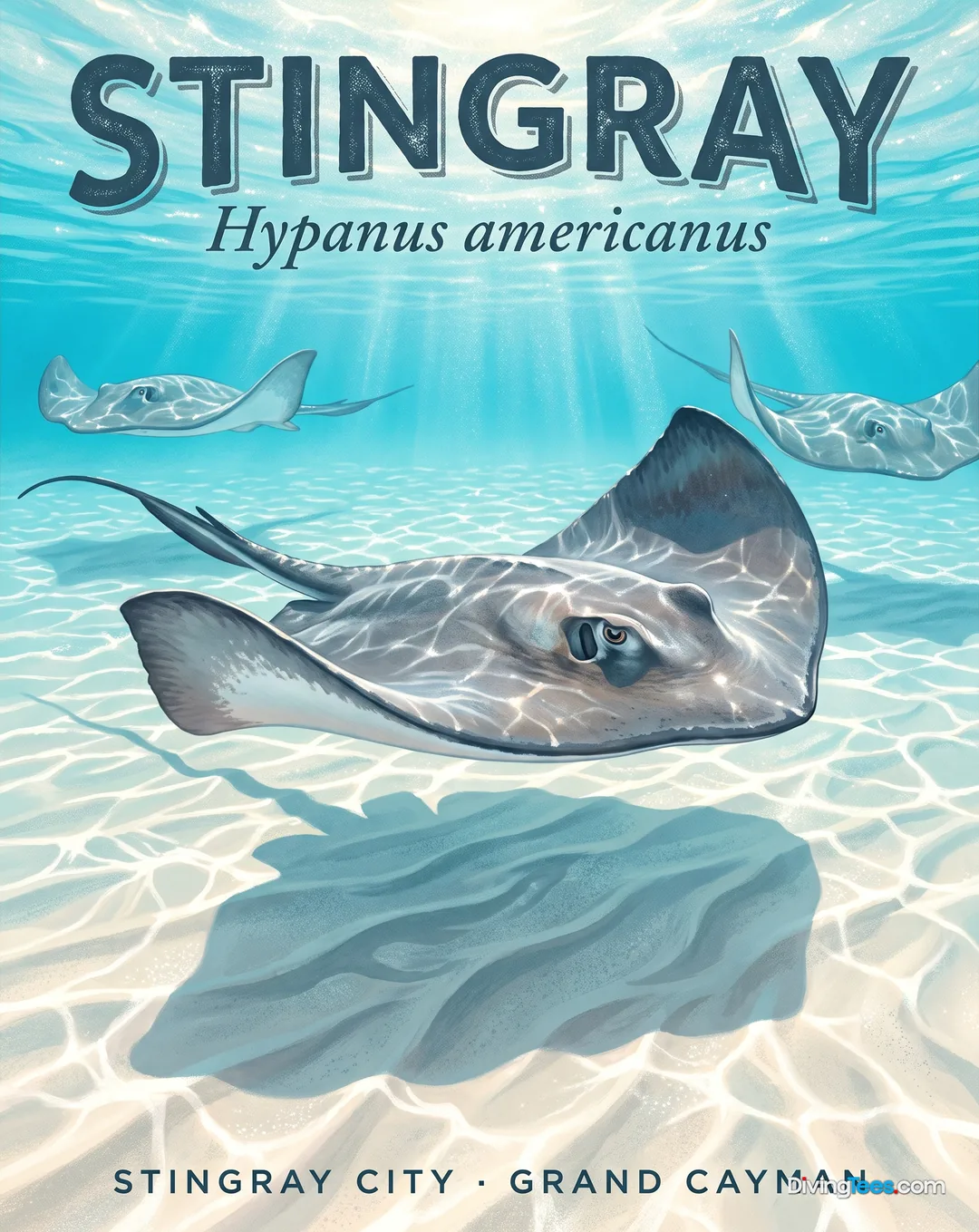
The route is built around large animals drawn to current, structure and cleaning stations. Napoleon wrasse and grey reef sharks are recorded across nine sites, while fusiliers appear at the same number of locations. Sea turtles, eagle rays, barracudas, mantas, tuna and jacks are recurring possibilities rather than promises. The reason to follow the route is the change in scale from one site to the next: grey reef sharks hold position at Mushimasmigili Thila, mantas gather at the sandy cleaning station at Dhonkalo, and whale sharks and mantas are associated with the protected waters of Maamigili and Maamigili Beiyru. Barracuda Giri is the place for groupers and anthias, species not recorded elsewhere on this route. Banana Reef is the named site for anemones. Dhigalhi Haa Marine Reserve is where soft coral and gorgonians stand out, while Dhigu Thila is the site linked with hawksbill turtles. Fushifaru Thila Marine Reserve offers the route’s recorded stingray sighting.
Who puts you in the water
Four dive guides work with the groups, and the crew speaks English, French and Spanish. Divers must be PADI Open Water qualified or equivalent and able to complete the dive with a buddy or by following a guide; no minimum number of logged dives is stated for these routes. Some sites involve strong or unpredictable currents, so Advanced Open Water or Deep Diver training is advisable where the dive profile requires it. The maximum diving depth with an equally qualified buddy is 30 metres, subject to training and experience. PADI Advanced Open Water, Adventure Dives and Specialties can be taken on board. A check dive is required before normal diving begins, and the first-aid equipment and oxygen carried on the dhoni are backed by emergency equipment on the main vessel. The guide decides when a site is beyond a diver’s current ability.
The dive deck and the gear
The diving is done from a large dedicated dhoni equipped with compressors, tanks and oxygen kits. It stays with Leo, so divers can leave their cylinders and core equipment set up there instead of moving them between decks. Nitrox is free and produced through a membrane system; DIN adapters are available, and rebreather diving is supported. Rental equipment can be arranged, but it is not included by default. The dhoni also carries first-aid equipment and diving towels, while the main boat provides camera charging stations, an air gun, rinse facilities and a camera area. The equipment list does not turn the dive deck into a technical-diving operation: decompression, solo and technical diving are prohibited under Emperor Maldives’ rules. What Leo gets right is the basic working sequence—kit on the dhoni, briefing there, water entry from the tender, and a direct return to the same station after the dive.
Between dives
Between dives, most people will move between the air-conditioned saloon, the main-deck Jacuzzi and the outdoor seating on the upper deck. The saloon gives divers somewhere cool to download photographs, read, or let the surface interval pass without baking in the sun. Above, deckchairs, sunbeds and beanbags make the open decks better for watching the atolls slide by or drying off after the dhoni returns. The photo area and charging stations support the diver who wants to deal with cameras before the next briefing rather than at the end of the day. On most evenings, a two-for-one happy hour runs before dinner. It is a small routine, but on a boat built around repeated dives, these quiet transitions are what make the week manageable.
A day on board
A day on Leo is shaped by the water rather than by a clock. The first briefing comes early, followed by the first descent; breakfast and a surface interval separate it from the next dive. Later, the boat may move while divers eat, rest, or sit on the upper deck, then the pattern starts again with another briefing and another entry from the dhoni. Lunch and snacks keep the gaps short, while dinner marks the point at which the diving day is finished. Between those fixed events, the useful work happens quietly: cameras are rinsed and charged, tanks are prepared, and guides adjust the next dive to the current and the site. The evening leaves room for the Jacuzzi, the saloon and the pre-dinner happy hour. Then the boat settles back into its night passage and the cabins become the quietest place on board.
What you eat aboard
Meals are served buffet-style, with both Western and local cooking, snacks available through the day, and full-board meals included. The food is one of Leo’s strongest points: the onboard score for food is 9.7, higher than the scores for the boat and crew. That matters on a diving route, because breakfast comes before the first descent, food has to be ready again after the water, and dinner is the meal that closes the working day. Wine is included with dinner, while beer and other wines are available on board. A beach barbecue is also part of the trip. The table is not treated as an afterthought between dives; it is one of the reasons Leo works for a full week of diving.
Nights at sea
The cabins are where Leo’s practical side shows best. Lower-deck twin cabins have portholes, individual air-conditioning and ensuite bathrooms; some twin cabins can be converted to doubles, while the upper deck has a suite with a double bed. The porthole gives a low, enclosed view of the water rather than a panoramic outlook, but it also keeps the cabins suited to sleeping between dives. With 12 cabins and a private bathroom for each, there is no shared-bathroom shuffle after a long day in a wetsuit. Above, the saloon has sofas, a library of books, music and films, and an internationally stocked bar. The boat’s real luxury is not a huge bedroom. It is returning to a cool, quiet cabin without having to reset the whole dive station.
Lower Deck Twin Cabins
Upper Deck Twin Cabins
Upper Deck Suite Double
Lower Deck Double Cabin
What to know before boarding
The recorded Best of Maldives departures leave from Malé and return to Malé. Airport transfer is included. Divers should arrive in Malé the night before embarkation, leaving room for an international flight delay rather than trying to connect directly with the boat.
Deck plan
- Year built
- 2009
- Year renovated
- 2012
- Length
- 35 m
- Beam
- 9.4 m
- Maximum number of passengers
- 24
- Number of cabins
- 12
- Number of bathrooms
- 12
- Engines
- 500 hp Mitsubishi
- Cruising speed
- 10 knots
- Tenders
- Large diving dhoni, fully equipped with compressors, tanks & oxygen kits
- Website
- emperordivers.com ↗
Hello, I'm Marina, DivingDeal.com's AI assistant. I answer in detail about hotels, dive centres and liveaboards.

Thinking about the whole trip and the flights? Talk it over with Edith →
Marina is an AI. Some links are affiliate links: DivingDeal may earn a commission, at no extra cost to you. Bookings are made with the partner.