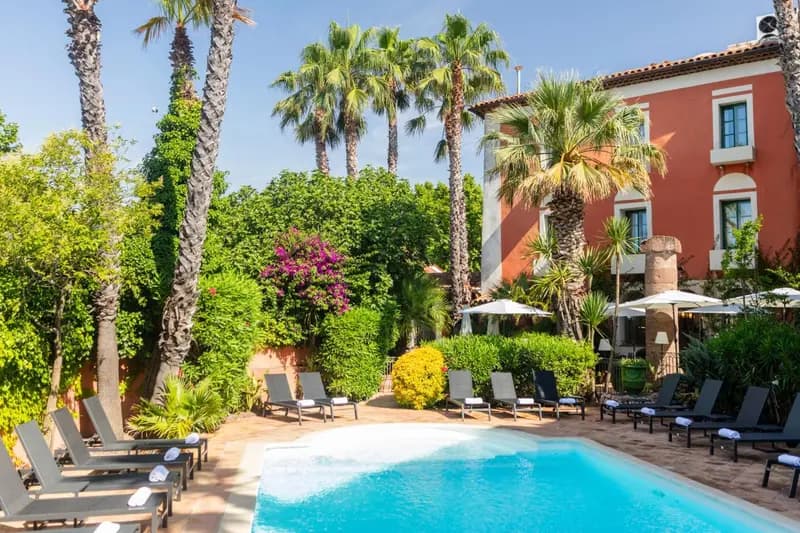
Hôtel l'Arena
★★★
★ 8.3/10 (1,937 reviews)
4.6 km away as the crow flies
Dive centre · Fréjus · France
4.8183 Google reviewsExplore the volcanic reefs of the Cap Roux reserve and the iconic Le Rubis wreck from Saint Aygulf.
For subtitles in English: start the video firstthen click the gearat the top right of the video, select “Subtitles/CC”, then “Auto-translate” and choose “English”.
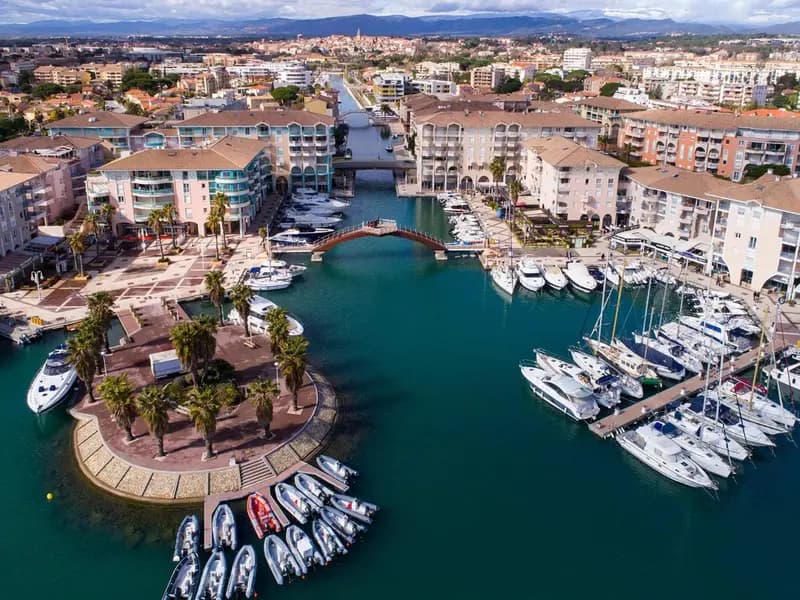
Saint Aygulf Plongée is situated in the coastal area of Fréjus, providing a base for exploring the varied underwater topographies of the Côte d'Azur. The centre operates throughout the year, focusing on sea-based activities from April to November and moving to pool-based training during the winter months.
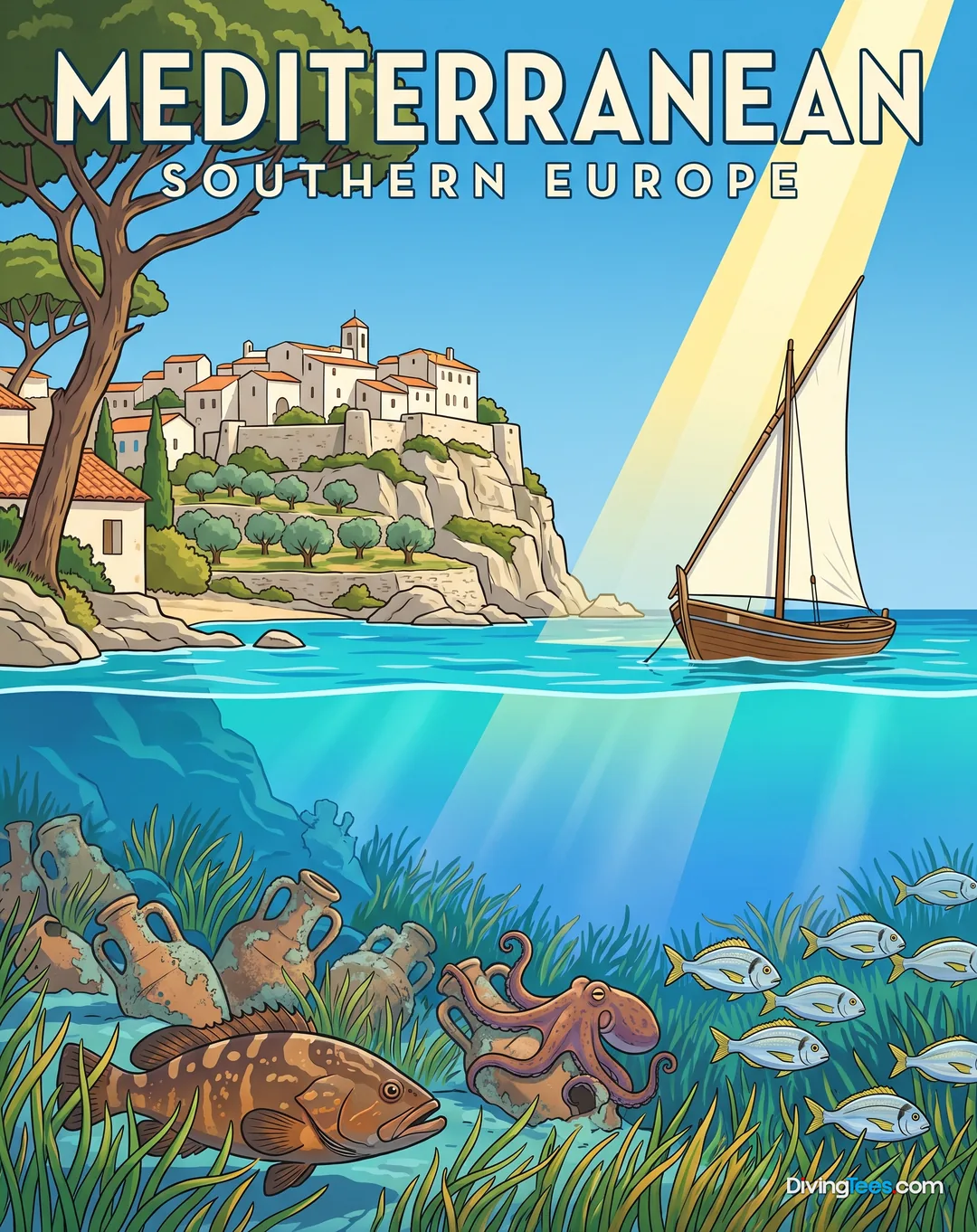
The location offers immediate access to the Mediterranean's diverse ecosystems, ranging from the sheltered seagrass meadows of the Baie de Fréjus to the deeper, current-swept plateaus near Saint-Tropez. Whether you are looking for technical training or recreational exploration, the centre is positioned to reach the most significant sites in the Var department.
The centre is managed by two brothers, Alexandre and Richard, both of whom are highly qualified DEJEPS instructors. Alexandre holds DEJEPS E4 qualifications in both scuba and freediving, alongside AIDA instructor status. Richard is also a DEJEPS E4 instructor and holds a CAH 2B certificate for aptitude to hyperbaric environments.
The instructional team includes Valentine, a DEJEPS diving instructor in training, and Benjamin, an AIDA freediving instructor. Support for safety and surface operations is provided by Théo, a qualified life-saver. This multi-disciplinary team covers everything from technical scuba instruction to professional freediving coaching.
The training programme is extensive, catering to multiple certifying bodies including FFESSM, CMAS, SSI, ANMP, and AIDA. For those following the French federation route, courses range from Niveau 1 through to Niveau 4, including specific modules like PE12, PA 20, and PE 40.
SSI divers can progress through the full range of certifications, from Open Water Diver and Advanced Open Water Diver to Divemaster. The centre also offers specialised SSI modules such as Deep Diver, Navigation, and Perfect Buoyancy. Freediving training is also a core component, with AIDA stages 1, 2, and 3 available.
Beyond standard certification, the centre provides specific skills training in areas such as Night & Limited Visibility, Marine Ecology, Fish Identification, and Computer Diving.
The centre operates two main vessels to reach the dive sites. A vedette provides capacity for up to 25 people, while a semi-rigid boat is used for smaller groups of up to 18 divers.
Onboard services include refreshing snacks during certain outings, such as special night dives or fireworks excursions. Nitrox is available for use on the boats, allowing for extended bottom times on deeper sites like the Le Rubis wreck.
For divers travelling without their own kit, the centre offers full rental sets including BCDs, regulators, and wetsuits. Individual items such as wetsuits can also be hired separately.
Nitrox is available on-site, and the centre provides cylinder filling services. For those looking to manage their own gas, pre-paid cylinder fill cards are available to simplify the process.
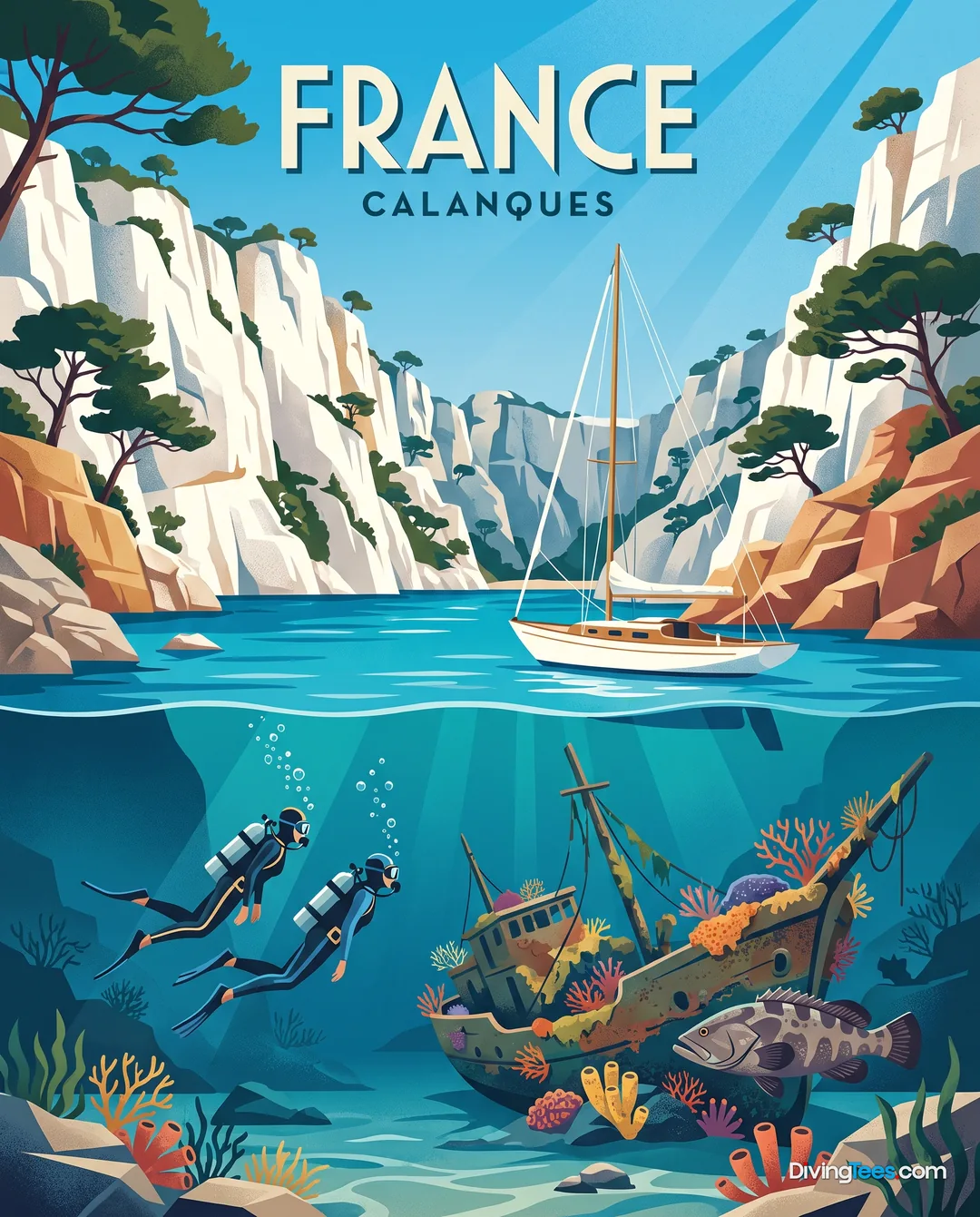
Le Rubis is a legendary Mediterranean wreck located at depths between 32 and 40 metres. This well-preserved submarine is an iconic site for experienced divers, offering significant historical interest and a rich habitat for marine life.
Réserve du Cap Roux is a protected sanctuary where fishing is prohibited, making it a haven for biodiversity. The volcanic reefs here are home to large groupers and dentex swimming amongst red gorgonians.
Baie de Fréjus / Saint-Raphaël features natural arches known as the Lion de Mer, alongside coral caves and seagrass meadows. The visibility here is often limpide, making it an ideal spot for exploring underwater structures.
Dramont (Île d'Or) offers a striking volcanic topography with vertical reliefs of red porphyry rock. Divers can explore the Pyramids or the miniature underwater village, navigating through impressive geological formations.
And some of the dive sites the centre runs.
The marine life in this region is defined by the diverse habitats of the Mediterranean. In the protected volcanic reefs and rocky plateaus, you will encounter large pelagics and resident species such as grouper, barracuda, dentex, and various species of sea bream. Moray eels and octopuses are frequently found navigating the crevices of the porphyry rocks and wrecks.
The macro life and smaller residents are equally significant, with scorpionfish and various species of rascasse often camouflaged against the seabed. You can also find many species of eels and various fish such as sars and castagnoles inhabiting the seagrass meadows and coral caves.
Fixed life provides the backdrop for these encounters, with red gorgonians and diverse coral formations covering the reefs. The seagrass meadows are essential to the local ecosystem, supporting a wide array of smaller species and providing a nursery for the region's fish populations.
Diving in the Var is subject to seasonal shifts, with sea-based activities primarily conducted from April to November. During the winter months, from December to April, the centre focuses on pool-based training.
Certain sites, such as the plateau near Saint-Tropez (Sèche à l’Huile), are known for currents that favour the presence of larger fish and schools of dentex. These open-sea environments require more experienced divers to manage the movement of water around the deep rocky walls.
Hello, I'm Marina, DivingDeal.com's AI assistant. I answer in detail about hotels, dive centres and liveaboards.

Thinking about the whole trip and the flights? Talk it over with Edith →
Marina is an AI. Some links are affiliate links: DivingDeal may earn a commission, at no extra cost to you. Bookings are made with the partner.