
Planet Ocean
★ 4.9/5 (288 reviews)
less than 1 km away as the crow flies
France · Mediterranean
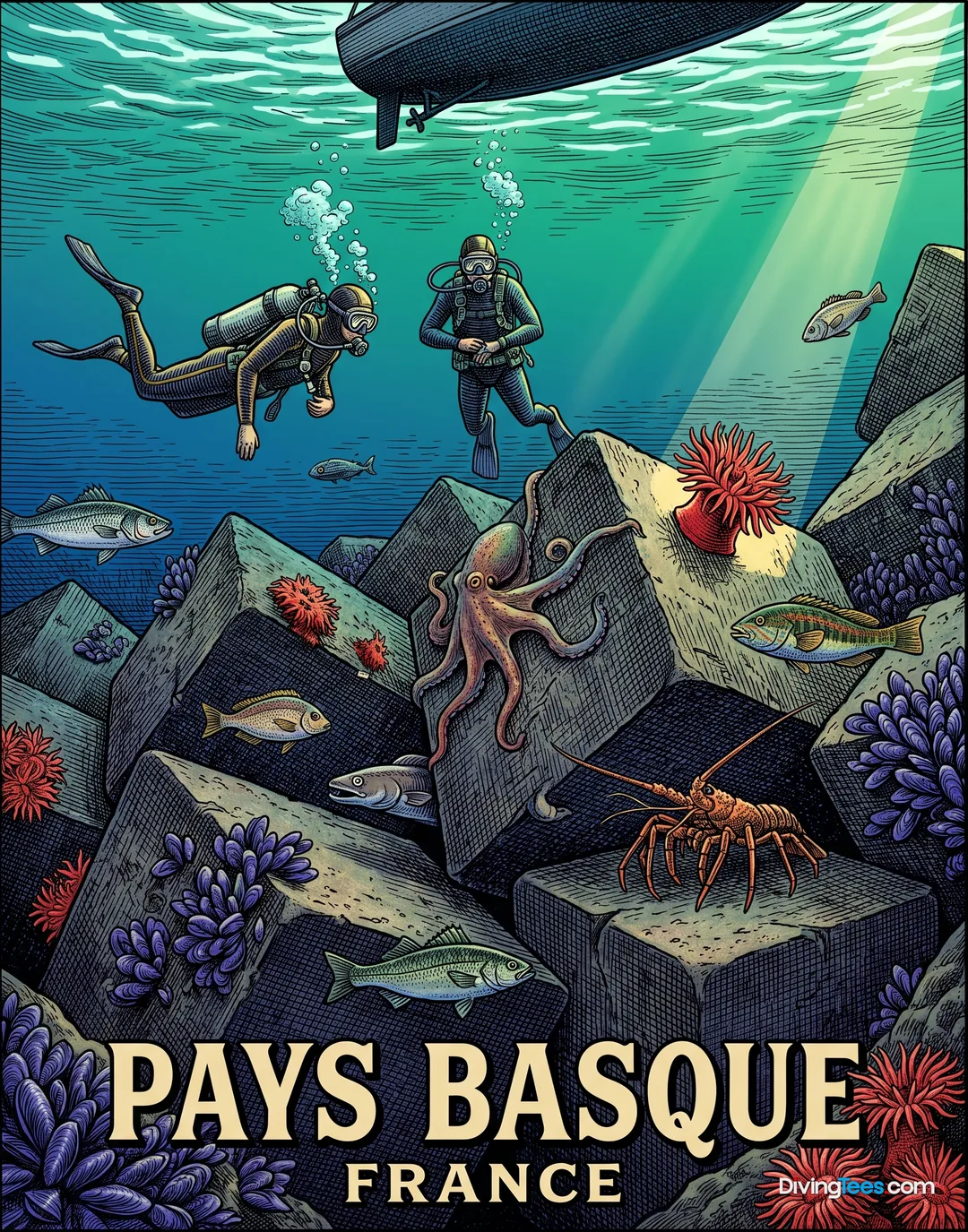
Rocky plateaux, small caves, breakwaters and conger eels shape low-distance diving along the French Basque coast, where the day’s Atlantic swell sets the terms.
For subtitles in English: start the video firstthen click the gearat the top right of the video, select “Subtitles/CC”, then “Auto-translate” and choose “English”.
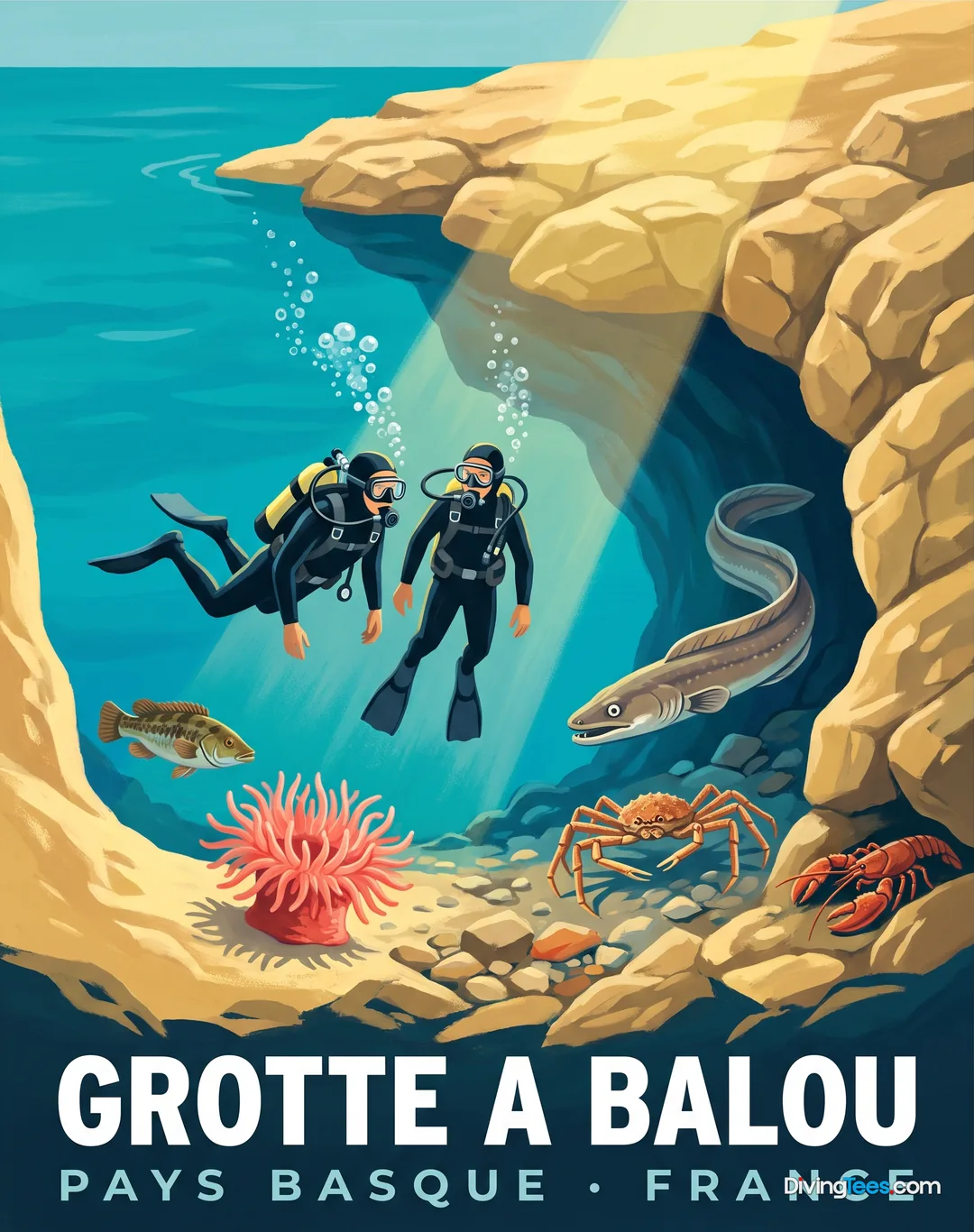
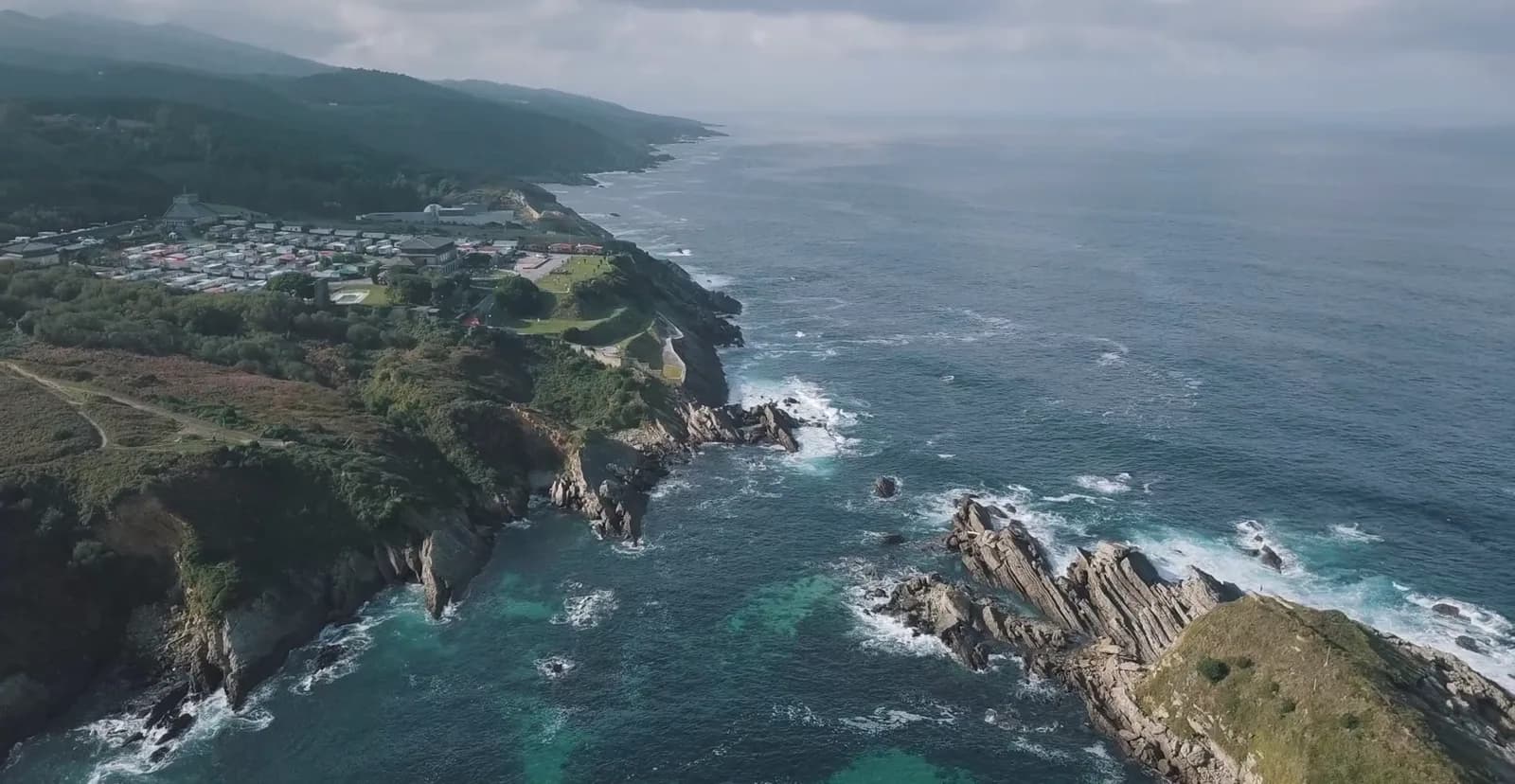
The French Basque Country is a shore-based and short-boat diving destination built around rocky Atlantic coastlines rather than coral reefs. Saint-Jean-de-Luz Bay provides gentler terrain at Digue Artha and Digue de Socoa, while sites such as Grotte à Balou add a small cave and a rocky plateau down to 20 metres. It suits divers who want real underwater relief, manageable logistics and a good coastal holiday, without pretending that every day will bring tropical visibility or calm water.
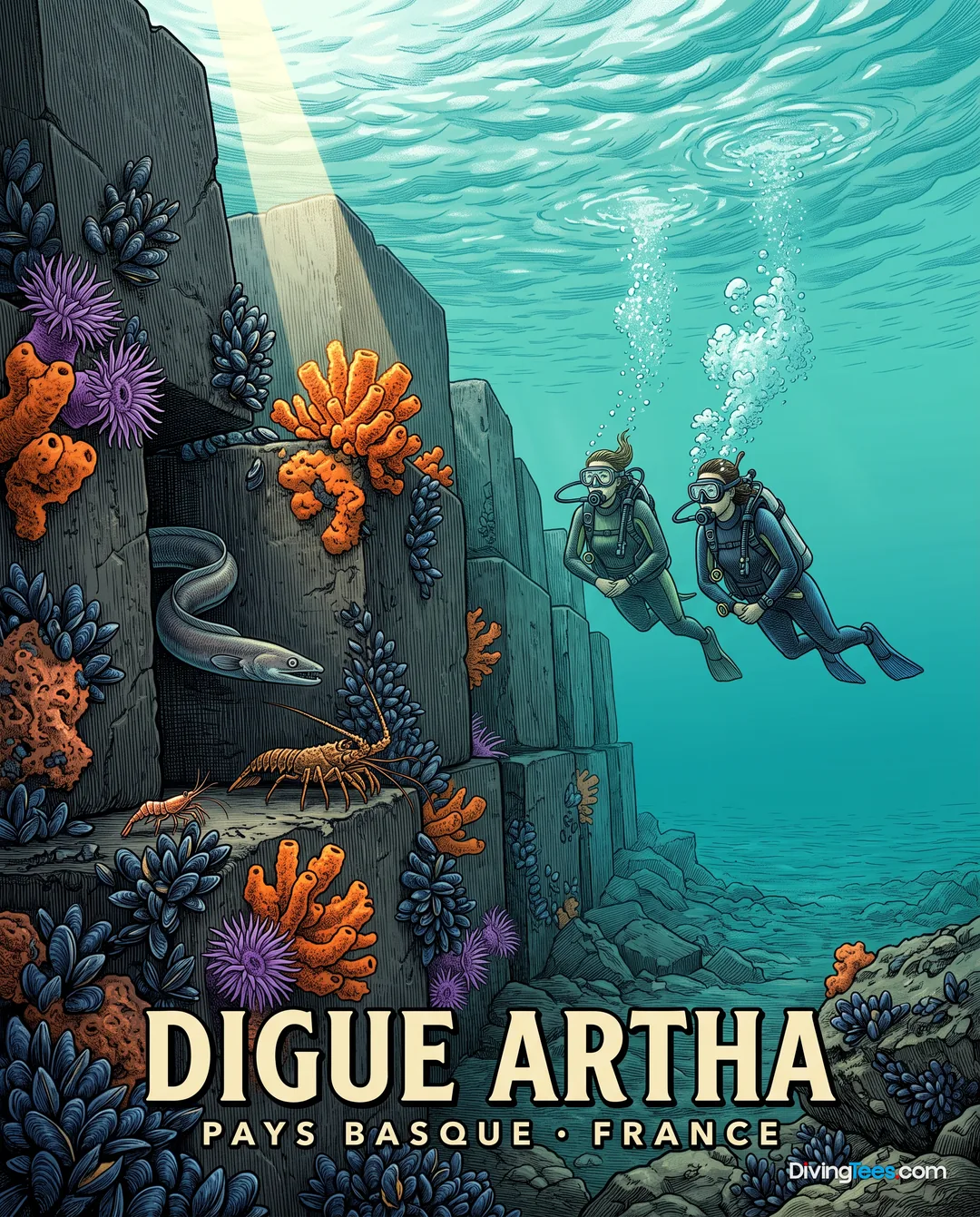
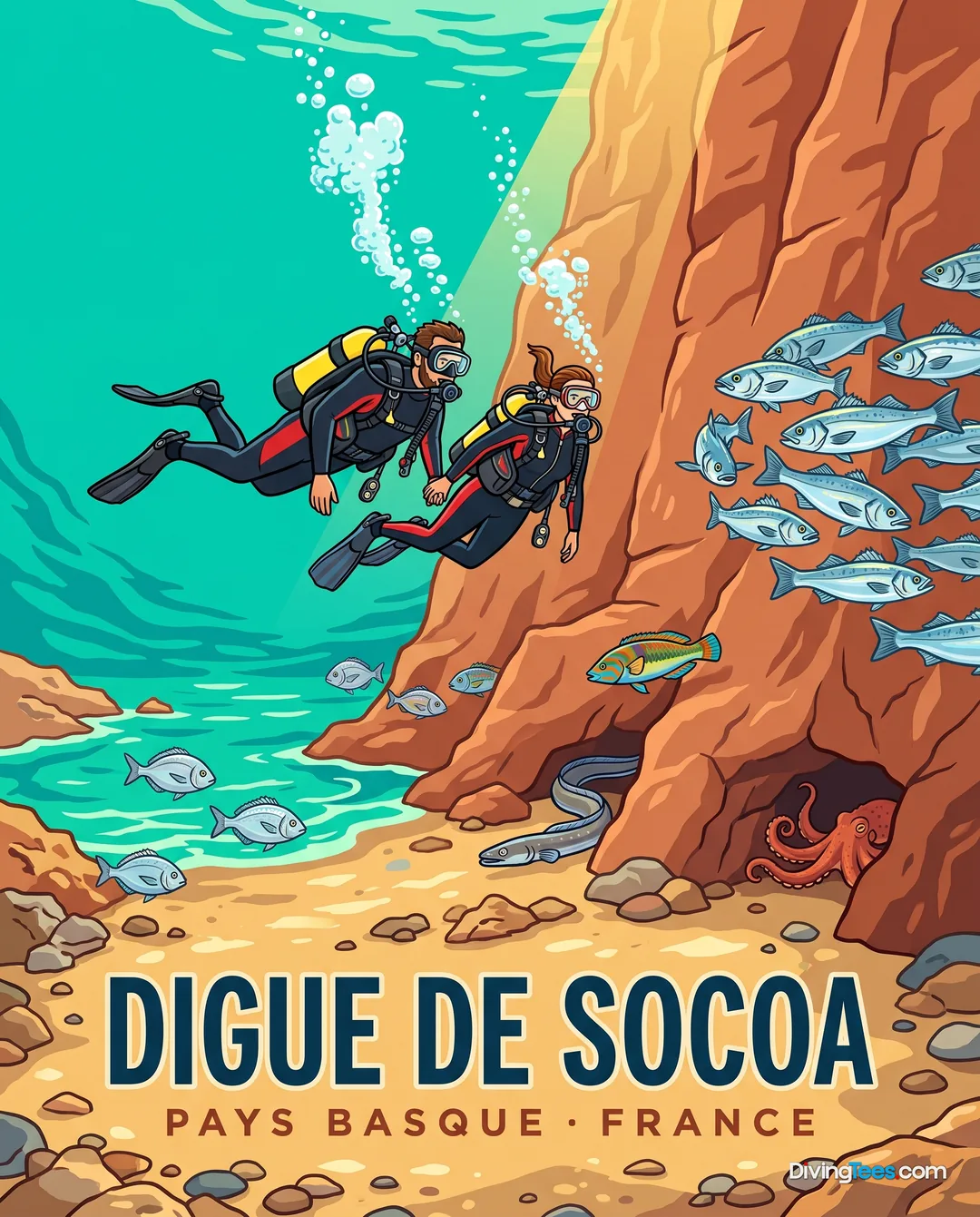
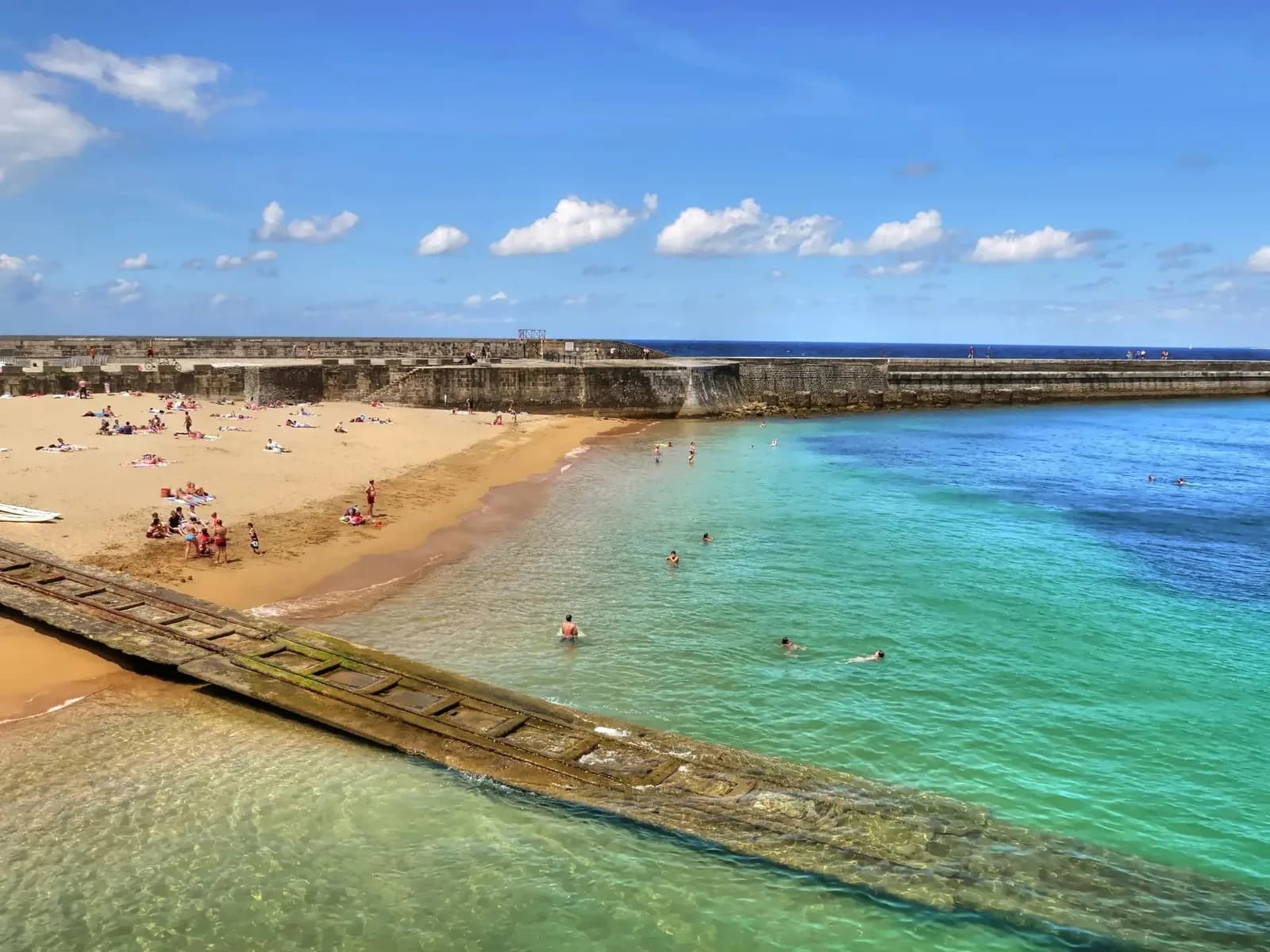
The diving alternates between coastal breakwaters, rocky plateaux, small vertical faces and short boat outings from the local ports. Digue Artha reaches only 10 metres, with colonised surfaces and blocks that reward a slow macro-style search. Digue de Socoa is similarly shallow, protected within the Saint-Jean-de-Luz/Ciboure bay and marked by rocks and small walls. At Grotte à Balou, the terrain extends from roughly 10 to 20 metres, with sandy patches and an accessible cave for a straightforward swim-through. Currents are generally light, but tidal effects and Atlantic swell can alter the feel of a site. Visibility is variable; Grotte à Balou is described at around 10 to 15 metres, while wind, swell and coastal run-off can reduce clarity. The deciding factor is usually the sea state, not the depth on the plan.
Conger eels are the clearest named encounter for this coast, and the rocky structures at the breakwaters and plateaux provide the places to look: inside gaps, beneath blocks and along colonised surfaces. Digue Artha is particularly suited to a patient, close inspection rather than a fast circuit. The listed sites also combine rock with sandy areas, giving the eye a change of texture as the dive progresses. No reliable seasonal pattern is established for particular species here, so the wildlife should be approached as resident temperate marine life rather than a calendar of guaranteed visitors. Calm conditions matter because they make slow searching easier, especially on the shallow sites where bottom time is generous.
There is no dependable month-by-month formula for this coast: the useful window is the period when the Atlantic settles, with several workable days in the forecast rather than a single hoped-for morning. Swell and wind can change the programme, and coastal run-off may affect visibility after unsettled weather. That makes a three-to-five-day stay more sensible than a single weekend built around fixed dives. A flexible itinerary can use the sheltered bay sites when conditions are modest, then take advantage of clearer, calmer water for the more exposed rocky terrain. The practical reason to come is therefore not a promised season, but enough time for the sea to offer a usable window.
Open Water divers, including PADI, SSI and BSAC Ocean Divers with suitable experience, can use the shallow breakwaters and Digue Artha. Grotte à Balou is also within Open Water depth limits, provided a diver is comfortable with a simple overhead swim-through. Advanced training is useful for handling exposed Atlantic conditions, rocky relief and changing water movement rather than for chasing extreme depth. Nitrox can be useful on repetitive days, but the more important preparation is confidence in temperate-water exposure protection and calm, deliberate finning around rock.
From London Heathrow, London Gatwick or Manchester, the journey is organised around reaching a regional airport and then continuing by road to the French Basque coast. Biarritz and Bayonne are the main practical reference points for the northern part of the area, with Saint-Jean-de-Luz and Hendaye further along the coast. There is no compulsory ferry crossing from mainland Europe, so the structural issue is the ground transfer rather than a sea connection. Once there, a diver staying close to a port or centre can often manage on foot or by taxi; a car is useful when moving between towns, accommodation and launch points. The compact coastline makes local access straightforward, but early departures and changing plans reward staying near the selected harbour rather than inland.
Treat the Atlantic forecast as part of the dive plan, not background information. A short weekend with no spare day can disappear when swell closes the coast, so keep one day free at the end of a three-to-five-day stay. Morning departures are the most likely to benefit from calmer conditions, making accommodation near the port a practical choice. Pack thermal protection suited to temperate Atlantic water; it is the item most likely to determine whether a second dive remains enjoyable. Do not arrive expecting a tropical reef or stable, crystal-clear visibility: the appeal is the rock, the small cave at Grotte à Balou, the breakwaters and the patient search for conger eels. Use the sheltered Digue de Socoa or Digue Artha when the bay offers the better option, and leave the more exposed relief for a settled sea. With a non-diver, base the stay in Biarritz, Bayonne or Saint-Jean-de-Luz so a cancelled boat trip still leaves coastal walks, towns and food rather than a wasted day.
This works best as a land-based coastal break rather than a liveaboard holiday. Three to five days leaves room for the sea to settle and allows dives at Digue Artha, Digue de Socoa or Grotte à Balou to sit alongside time in Saint-Jean-de-Luz, Biarritz, Bayonne or Hendaye. Staying near a port keeps early starts simple, while the compact coastline makes it easy to combine diving with walks, town visits, gastronomy and gentle outdoor activities.
Hello, I'm Marina, DivingDeal.com's AI assistant. I guide you through destinations, areas and countries.

Thinking about the whole trip and the flights? Talk it over with Edith →
Marina is an AI. Some links are affiliate links: DivingDeal may earn a commission, at no extra cost to you. Bookings are made with the partner.
★ 4.9/5 (288 reviews)
less than 1 km away as the crow flies
 ANMP
ANMP★ 4.8/5 (153 reviews)
8.1 km away as the crow flies

★ 4.7/5 (100 reviews)
less than 1 km away as the crow flies
★ 4.8/5 (49 reviews)
1.5 km away as the crow flies
★★★
★ 9/10 (379 reviews)
less than 1 km away as the crow flies
★★★
★ 8.8/10 (837 reviews)
9.1 km away as the crow flies
★★★★
★ 8.6/10 (1,870 reviews)
less than 1 km away as the crow flies
★★★
★ 8.6/10 (716 reviews)
9.6 km away as the crow flies