
Open Water Diving Center La Herradura
Google 4.9/5 (1,034 reviews)
2.2 km away as the crow flies
Almuñécar · Spain · Mediterranean
Max. depth · 40 mExplore a rugged, deep rocky reef defined by its dense population of large European conger eels hiding in labyrinthine rock formations.
For subtitles in English: start the video firstthen click the gearat the top right of the video, select “Subtitles/CC”, then “Auto-translate” and choose “English”.
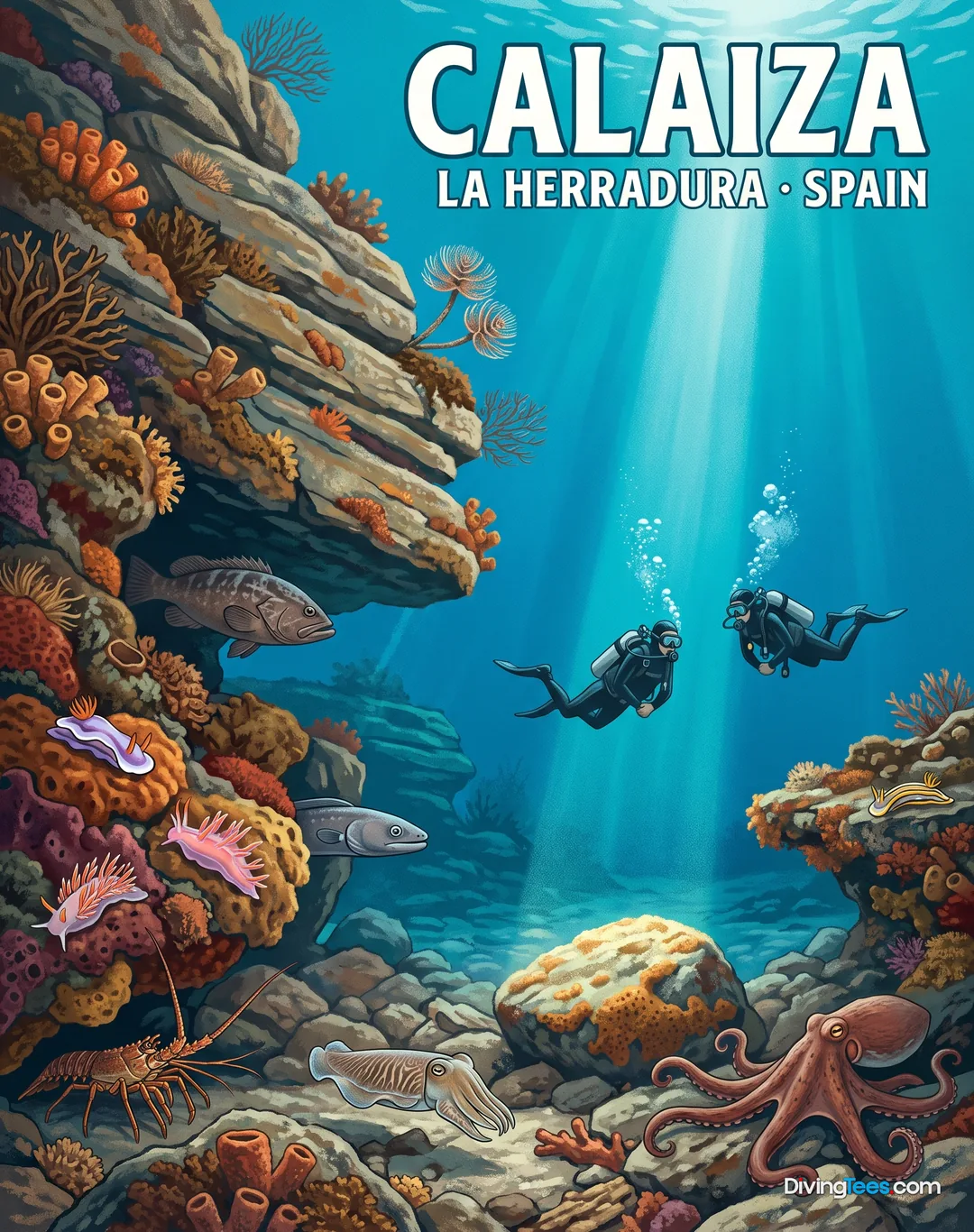
Territorio Congrio is a significant deep rocky reef located within the Paraje Natural Acantilados de Maro-Cerro Gordo area near La Herradura. Unlike the shallower, more sheltered reefs often found along the Costa Tropical, this site features a much more rugged and imposing topography. The seafloor is defined by large rock formations, sharp pinnacles, and deep canyons that create a complex, uneven relief. These structural features are central to the site's character, offering an intricate landscape for divers to navigate and explore.
The dive profile starts at approximately 20 metres and descends to a maximum depth of 40 metres. As you descend, the terrain becomes increasingly complex, transitioning into a series of crevices and overhangs that define the site's ruggedness. This depth profile requires divers to be comfortable managing buoyancy and gas consumption at depth. The verticality of the terrain provides a sense of scale, as the rocky structures drop away into the deeper parts of the reef.
The site is specifically named for its high concentration of European conger eels (Conger conger). These large predators are the defining feature of the territory, utilizing the numerous cracks and deep overhangs as hunting grounds and shelters. You will find them tucked into various crevices throughout the canyon-like structures. Their presence is a primary reason for the site's reputation among local divers seeking encounters with large, resident reef fauna.
Beyond the conger eels, the biodiversity of the reef is driven by the complex topography. Mediterranean morays are also commonly found among the rocks, often occupying the same types of crevices as the conger eels. You can also expect to encounter dusky grouper, scorpionfish, and octopus throughout the reef's structure. The habitat supports a variety of smaller life, including nudibranchs, spiny squat lobsters, and Mediterranean damselfish, which inhabit the more sheltered zones of the reef.
Visibility at Territorio Congrio typically ranges between 15 and 30 metres, making the detailed rock formations easy to observe. The clarity of the water allows for a clear view of the deeper sections of the reef, where the light begins to fade. This transparency is essential for navigating the complex canyons and spotting smaller species like nudibranchs or scorpionfish hidden within the reef structure. The visibility is most consistent during the calmer months of the season.
The site's conditions are influenced by the general Mediterranean weather and swell, which can impact the current. While it is often mild to moderate, the exposure of this deeper site means that increased wind or swell can quickly strengthen the flow along the reef. This variability makes it important to assess the local conditions with a boat operator before descending. The movement of water along the rock walls is a key element of the diving experience here.
Diving here is best experienced during the late spring to early autumn period. This window aligns with the broader Costa Tropical diving season, when the seas are generally calmer and water temperatures are more comfortable. During these months, the combination of stable visibility and manageable currents provides the best opportunity to explore the deeper canyons and observe the resident fauna without excessive struggle against the swell.
Depth ranges from 20 to 40 metres. This site requires an Advanced level of certification and a high degree of comfort in water below 25-30 metres. Because the site is exposed and the current can increase with wind and swell, we recommend a minimum of 50 logged dives for safe navigation. Expect moderate currents that can change based on local weather and swell conditions. Visibility typically ranges from 15 to 30 metres. The best time to dive is from late spring to early autumn when the sea is calmer.
You should plan Territorio Congrio from late spring to early autumn, when the sea is generally calmer and water temperatures are more comfortable. This period also tends to offer more stable visibility and manageable currents, helping you explore the deeper canyons and observe resident fauna with less exposure to swell.
Territorio Congrio requires an Advanced certification and a high degree of comfort in water below 25 to 30 metres. You should also have at least 50 logged dives because the exposed reef has complex terrain, and currents may increase with wind and swell, making navigation more demanding.
Territorio Congrio begins at approximately 20 metres and reaches 40 metres. You can expect moderate currents that change with local weather and swell. Because the exposed reef may experience stronger flow when wind or swell increases, assess conditions with the boat operator before descending and manage buoyancy and gas carefully.
At Territorio Congrio, you can explore deep rocky reef, sharp pinnacles, crevices, overhangs and canyons. European conger eels shelter throughout the reef, while Mediterranean morays, dusky groupers, scorpionfish, octopus, nudibranchs, spiny squat lobsters and Mediterranean damselfish occupy its varied rock formations and more sheltered zones.