
Buceo España
Google 5/5 (415 reviews)
3.5 km away as the crow flies
La Herradura · Spain · Mediterranean
Max. depth · 18 mA series of shallow rock cavities and fissures located under the cliffs west of Cantarrijan beach.
The site is defined by a rocky profile situated directly beneath the cliffs located to the west of Cantarrijan beach. The topography transitions from a sandy bottom, generally found between 8 and 10 metres, to more complex vertical and recessed structures. The layout is structured around a succession of four specific cavities that vary in size and shape. This geological arrangement allows for a diverse dive profile within a relatively shallow depth range.
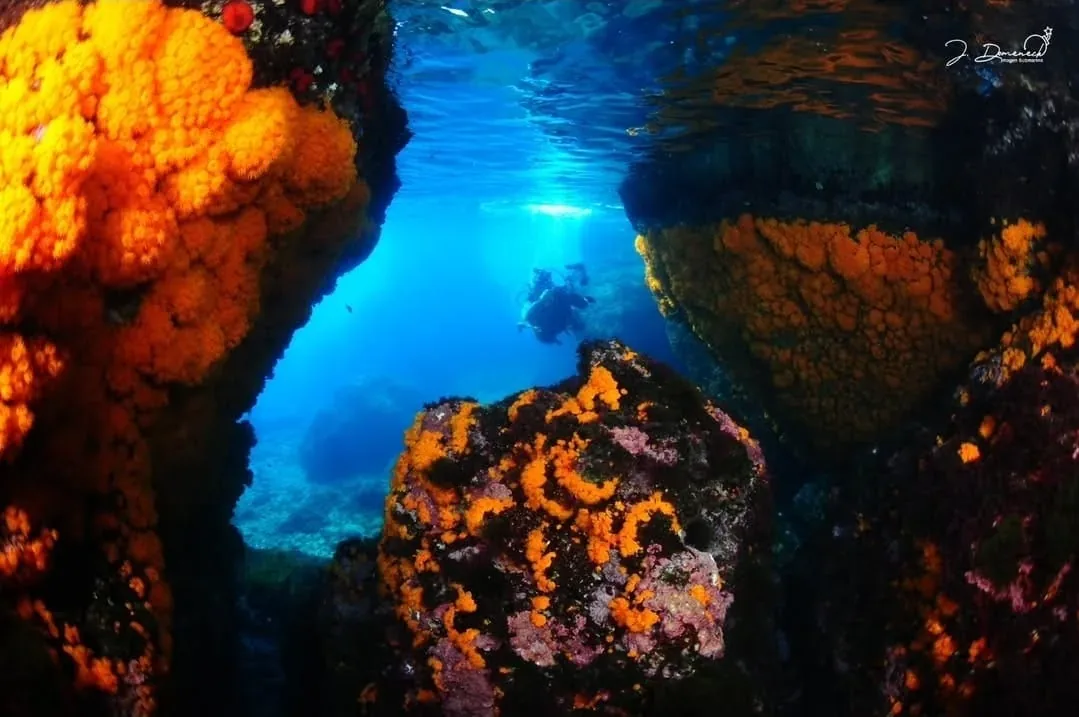
As you approach the rock face, the dive unfolds through a sequence of geological features including two short fissures and two larger open rooms. These larger cavities are notable for being well-lit by natural light filtering through openings in the ceiling. Navigating these spaces requires precise buoyancy control to avoid contact with the rock walls or the sandy floor. The transition between the open sandy areas and the confined rocky structures defines the movement of the dive.
One of the most distinctive features of the site is the presence of a freshwater seep within one of the deepest cavities. This continuous flow of fresh water into the marine environment creates a unique local micro-environment. Divers should be aware that this seepage can affect local visibility by introducing sediment or changing the water density in that specific area. Observing how this freshwater interaction influences the surrounding rock and life is a key part of the experience.
The final cavity in the sequence offers a different character than the others, featuring a narrower entrance that leads into a large, open room. The floor of this room is rocky, providing a different substrate compared to the sandy sections found earlier in the dive. Natural light enters through several openings in the ceiling, creating a play of shadows and light across the bottom. This area is particularly suited for observing how light penetrates the rocky recesses of the coastline.
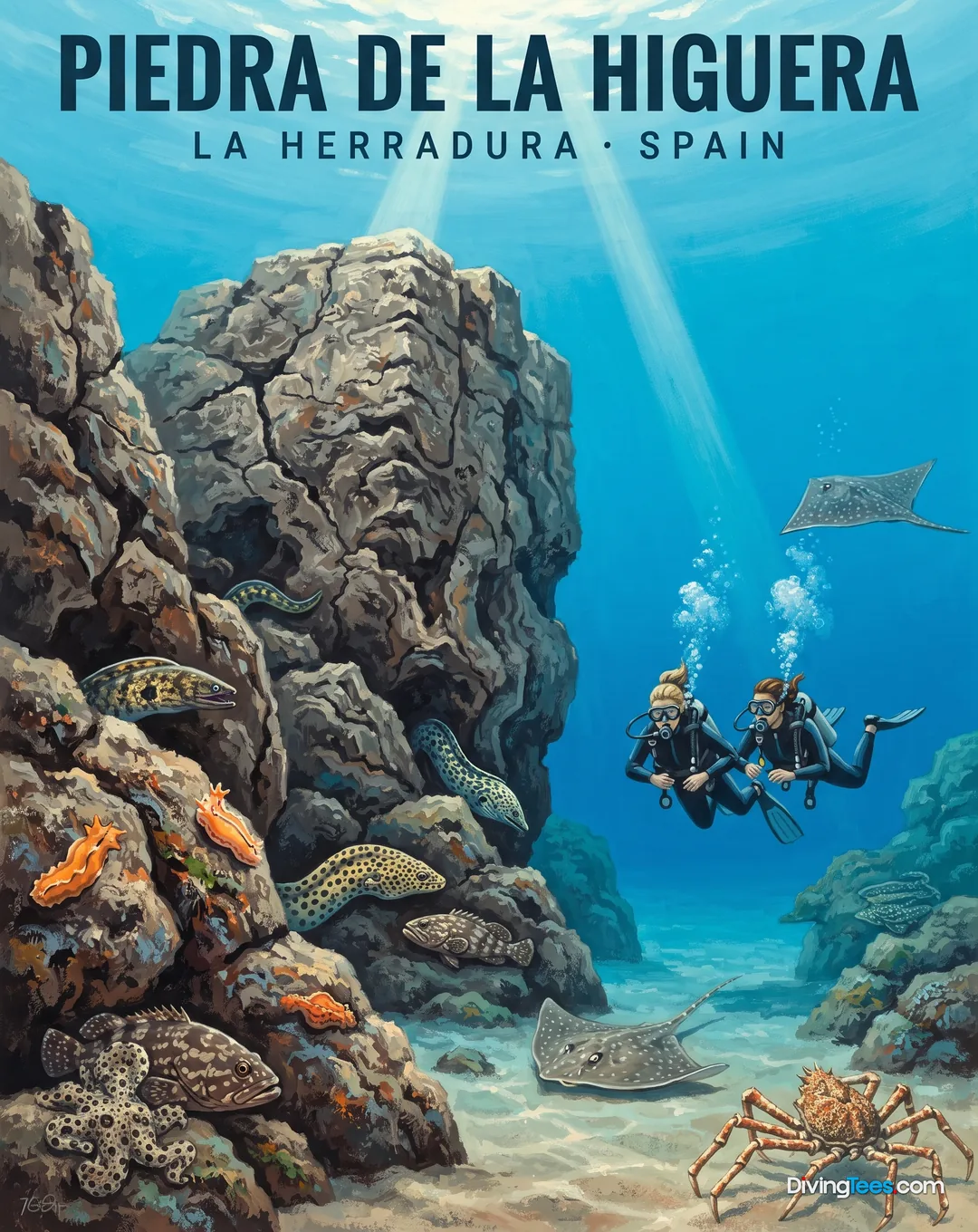
Marine life at Cuevas De Cantarrijan is closely tied to these rocky structures and the light availability. You will find gorgonians growing along the rock faces, utilizing the structure for stability. In the sandy sections and near the rocky transitions, electric rays may be encountered partially buried or moving along the bottom. The crevices and openings also provide ideal habitats for various species of shrimp that hide within the small cracks of the rock.
Because the cavities are largely open and do not require technical ceiling penetration, the site is accessible to a wide range of divers. However, the proximity of the rock walls means that maintaining a steady position is essential. Even in calm conditions, the topography requires constant attention to your trim and your distance from the substrate. A dive light is considered indispensable here to illuminate the darker corners of the fissures and the deeper rooms.
The site's accessibility can vary depending on whether you approach from the beach or via boat. While boat access is common for reaching the precise rocky profile under the cliff, the proximity to the shore makes it a recognizable landmark. The shallow nature of the site, with a maximum depth reaching approximately 18 metres, makes it a frequent choice for exploring the coastal geology of La Herradura. Each cavity offers a different perspective on the intersection between the cliff face and the Mediterranean seabed.
The site depth ranges from 5 to 18 metres. It is accessible from the Open Water Diver level, provided you have strong buoyancy control and experience managing yourself in shallow cavities. While the site is generally sheltered and described as having no notable current, visibility can reach 30 metres but may be locally reduced by freshwater seepage in the deeper cavities.
Cuevas De Cantarrijan is accessible from the Open Water Diver level if you have strong buoyancy control and experience managing yourself in shallow cavities. The open cavities do not require technical ceiling penetration, but you must maintain a steady position and avoid touching the rock walls or sandy floor.
Cuevas De Cantarrijan ranges from 5 to 18 metres. The dive begins around sandy areas generally found between 8 and 10 metres, then continues toward vertical rock structures, two short fissures and two larger open rooms. Its shallow profile supports varied navigation through four cavities with different sizes and shapes.
Cuevas De Cantarrijan is generally sheltered and has no notable current. Visibility can reach 30 metres, although freshwater seepage may locally reduce it in the deeper cavities by introducing sediment or changing water density. Conditions remain calm in the site’s sheltered setting, but the rock formations require attention to your trim and position.
At Cuevas De Cantarrijan, natural light enters large cave rooms through openings in the ceilings, creating patterns across the rocky floors. You can see gorgonians on the rock faces, electric rays on sandy sections and shrimp hiding in crevices. The deepest cavity also contains a freshwater seep, creating a distinct local environment.