
Buceo España
Google 5/5 (415 reviews)
1.9 km away as the crow flies
La Herradura · Spain · Mediterranean
Max. depth · 28 mA large, square rock formation rising from the seabed, offering dense life within its many crevices and cracks.
For subtitles in English: start the video firstthen click the gearat the top right of the video, select “Subtitles/CC”, then “Auto-translate” and choose “English”.
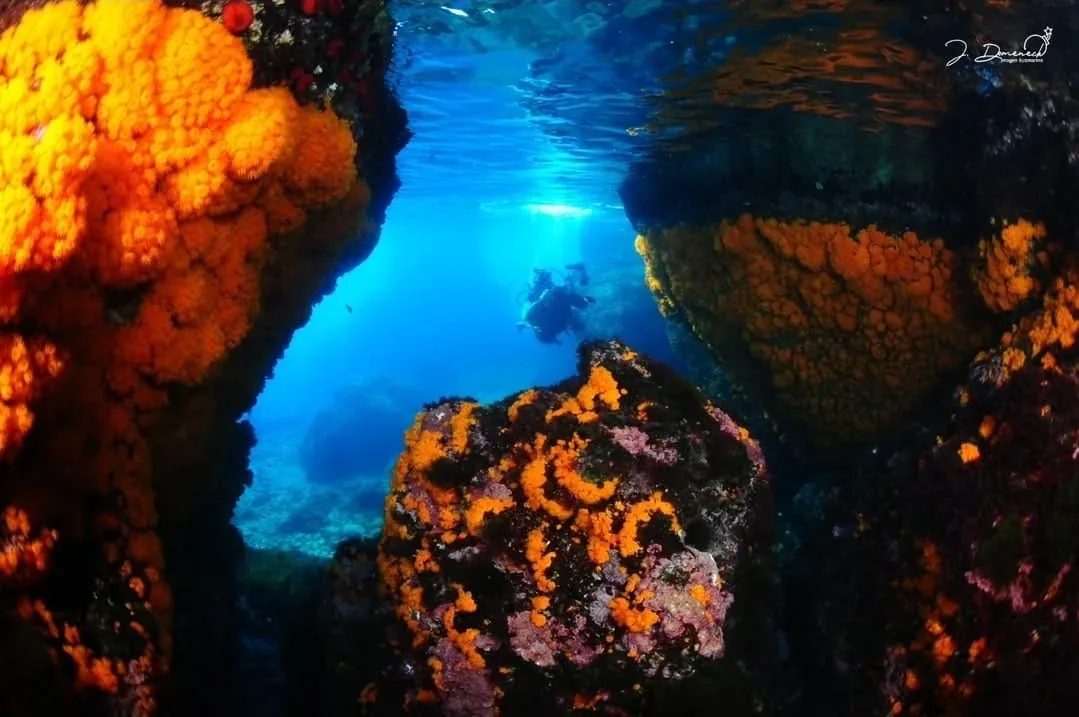
Piedra De La Higuera is a substantial, almost square rock formation that rises abruptly from the sandy floor of the Ensenada de los Berengueles. Located near Marina del Este, the site acts as a central landmark within the bay. The rock's surface is not uniform, featuring a shallower northeast section that forms a small pinnacle at approximately 12 metres. Most of the structure is defined by its complexity, with numerous cracks, deep crevices, and hollows that provide shelter for resident marine life. The surrounding seabed transitions from sand to an area of pebbles and small stones covered in brown algae fronds on the western side.
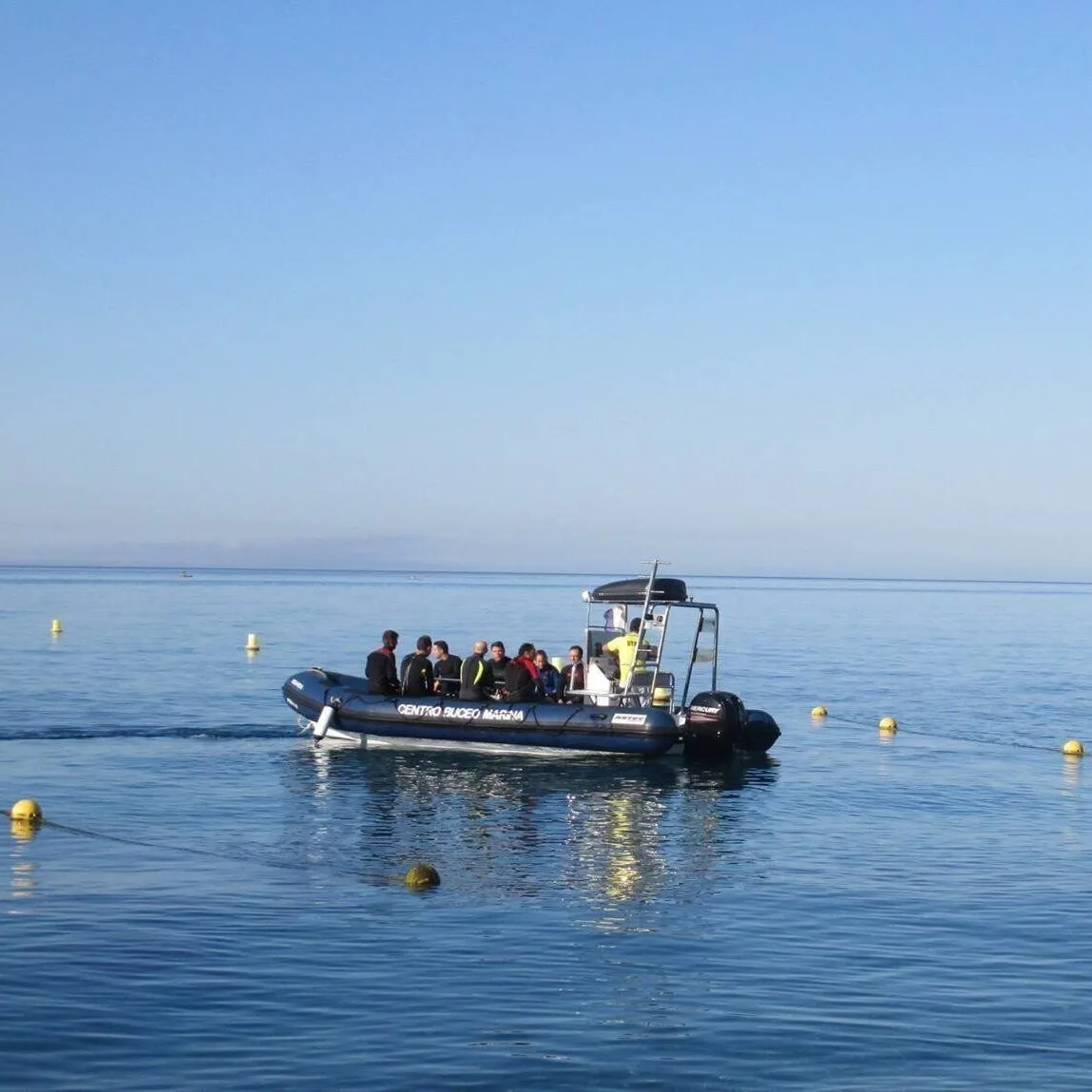
Approaching the site usually involves a boat transfer from Marina del Este, with the rock positioned roughly 200 metres from the shore. The standard descent begins on the sandy area surrounding the formation, where divers can observe the transition from the open seabed to the rock's perimeter. As you move closer to the structure, the topography becomes more vertical and intricate. The dive profile typically stays within a range of 10 to 28 metres, allowing for a gradual exploration of the different zones. This depth range makes it a versatile site for various experience levels, provided the diver is comfortable with boat entries.
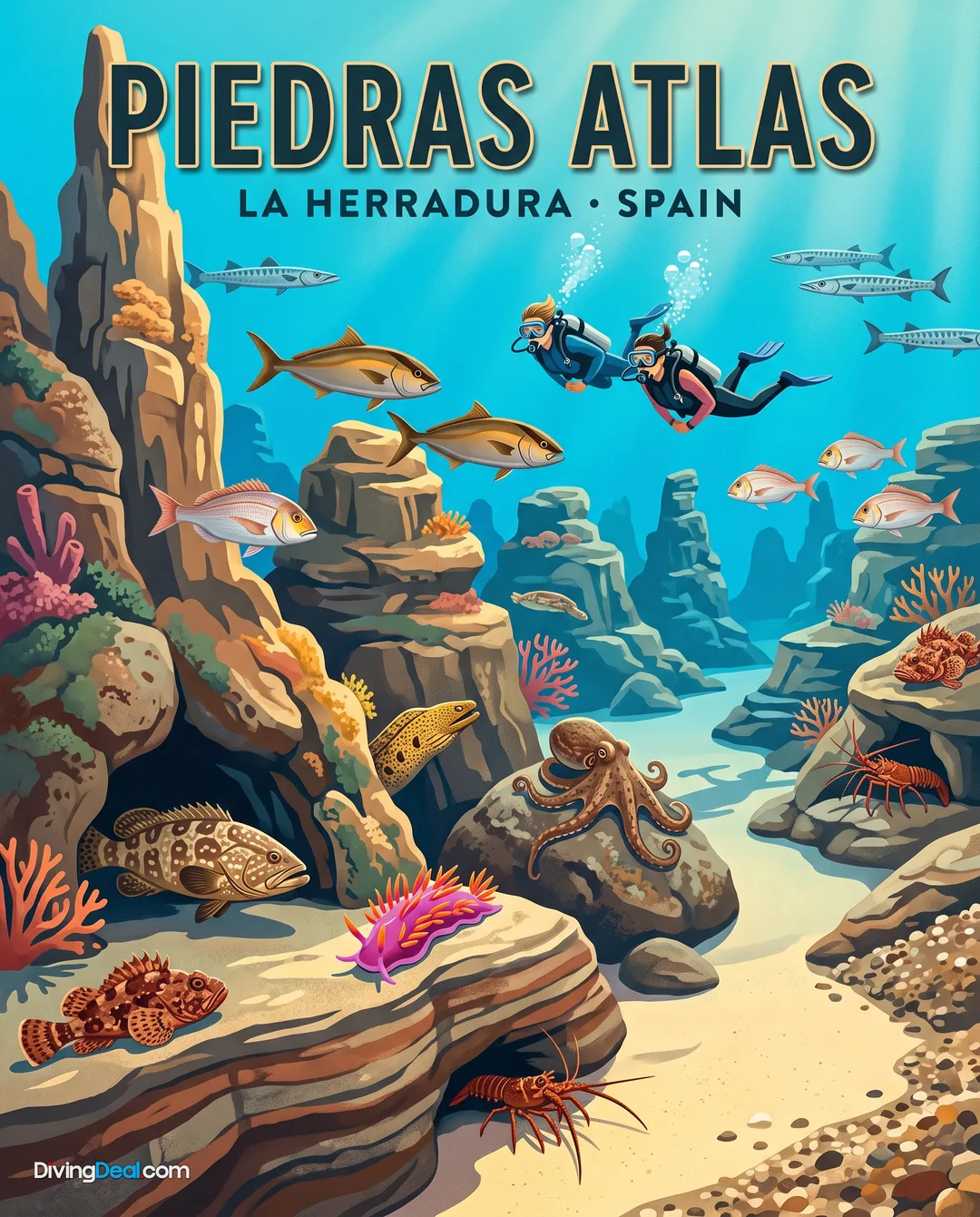
The biological density of the site is concentrated within the rock's structural details. The many overhangs and holes serve as primary habitats for various predators and scavengers. You will often find conger eels and moray eels stationed within these protected gaps, watching the passing divers. Larger residents like the dusky grouper (Epinephelus morio) are also frequently encountered near the heavier recesses of the rock. These species rely on the shelter provided by the stone to hunt and rest, making the cracks and hollows the most interesting areas for close-up observation.
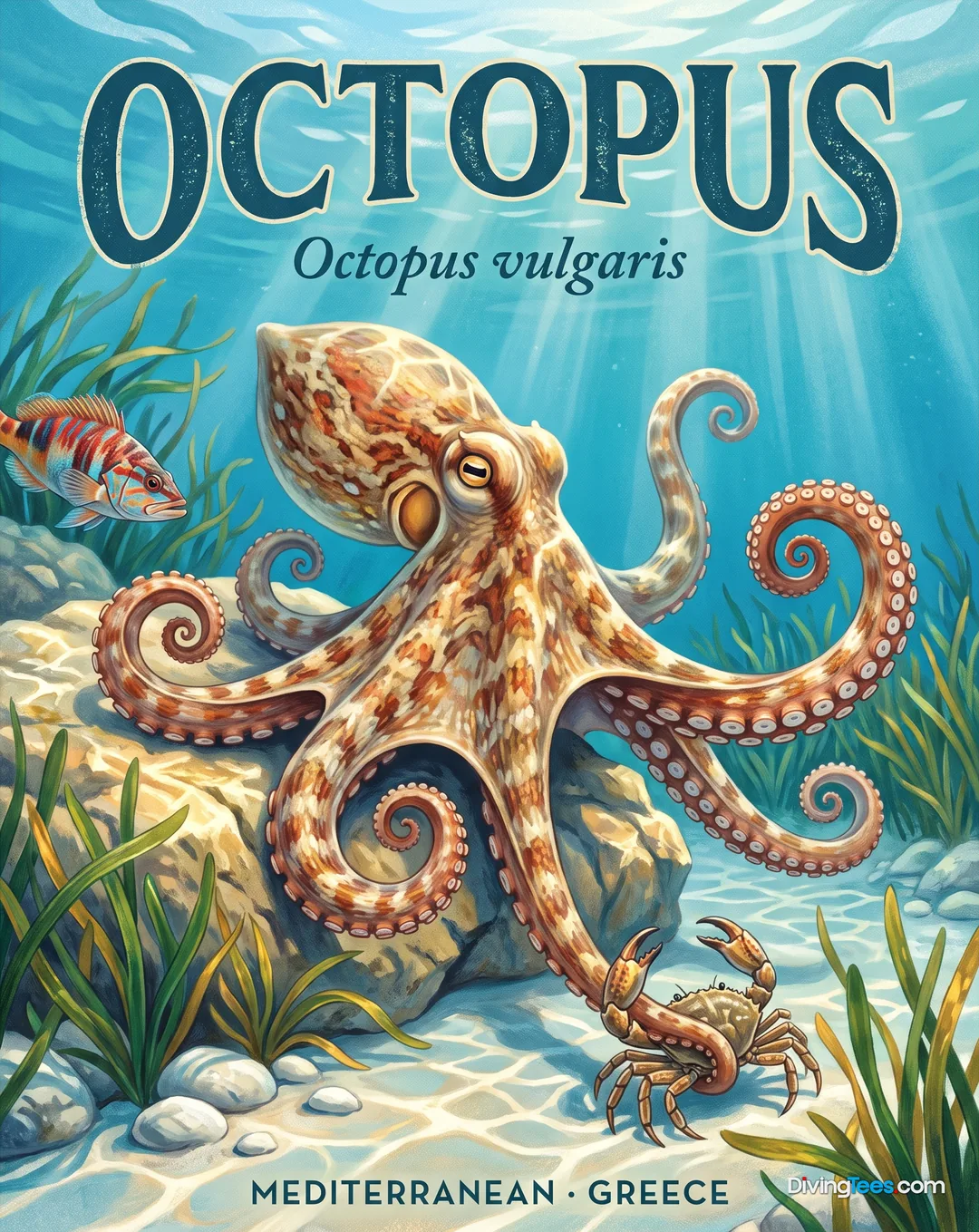
Smaller organisms add significant detail to the visual experience, especially when exploring the rocky surfaces. Nudibranchs are abundant across the structure, offering subtle colors against the rock and algae. If you look closely at the substrate and the crevices, you can also find octopus and spider crabs tucked away in hiding spots. The presence of mosaic rays on the sandy patches near the rock adds another layer to the site's biodiversity. For those interested in macro life, the various textures of the rock and the surrounding pebble areas provide constant points of interest.
Beyond the immediate life on the rock, the surrounding sandy floor holds its own unique features. At deeper levels, you can find two sunken cars, which have become a local point of interest for divers. These wrecks are relatively small and sit on the sand, acting as additional substrates for marine growth. They are often combined with dives to nearby sites like Roqueo de los 14 or the Punta de la Mona wall to create a full itinerary. These artificial elements provide a different perspective compared to the natural limestone and algae-covered sections of the main pinnacle.
The environmental conditions at Piedra De La Higuera are generally stable due to its position in a semi-sheltered bay. While visibility can range from 10 to 30 metres, the clarity is often influenced by local seasonal changes in the Costa Tropical. The current is typically light, which makes navigation around the rock relatively straightforward for most divers. However, you should always be aware of how local winds or swell might affect the surface conditions during your ascent. The predictability of the water movement allows for a relaxed exploration of the site's many geological features.
The site is accessible throughout the year, with local operators conducting dives from January to December. The most consistent conditions are usually found from late spring through to early autumn. During these months, the water temperature and visibility tend to be more favorable for extended bottom time. Whether you are focusing on the larger groupers in the crevices or the smaller nudibranchs on the rock face, the site offers a consistent level of activity. It remains a reliable location for divers looking to explore a structured, life-rich environment in the La Herradura area.
The site reaches depths of 10 to 28 metres. It is suitable for Open Water and Advanced divers who are comfortable at depths of 15-25 metres and capable of managing boat entries. Currents are generally light, and visibility typically ranges from 10 to 30 metres. The best period for diving is from late spring to early autumn.
You can dive Piedra De La Higuera throughout the year, with local operators running trips from January to December. The most consistent conditions are usually from late spring through early autumn, when water temperature and visibility tend to be more favorable for spending longer periods underwater.
Piedra De La Higuera suits Open Water and Advanced divers who are comfortable at depths of 15 to 25 metres. You should also be capable of managing a boat entry, as the site is usually reached by boat from Marina del Este before descending onto the surrounding sandy seabed.
Piedra De La Higuera ranges from 10 to 28 metres, with a shallower northeast section forming a small pinnacle at approximately 12 metres. The site is semi-sheltered and currents are generally light, while visibility typically ranges from 10 to 30 metres, though local winds or swell can affect conditions.
At Piedra De La Higuera, you can explore a square rock pinnacle with cracks, crevices, hollows and overhangs sheltering moray eels, conger eels and dusky groupers. You may also find abundant nudibranchs, octopus, spider crabs and mosaic rays, while two sunken cars rest on the surrounding sandy bottom.