
Norway Dive
Google 5/5 (1,221 reviews)
8.7 km away as the crow flies
Mallorca · Spain · Mediterranean
Max. depth · 20 mA sheltered cove offering a gradual descent into rocky platforms and a swimmable underwater tunnel.
For subtitles in English: start the video firstthen click the gearat the top right of the video, select “Subtitles/CC”, then “Auto-translate” and choose “English”.
The geography of Cala Fornells is defined by a gradually sloping rocky coastline that descends from the shoreline into the Mediterranean. As you move away from the beach, the seabed transitions from shallow reef areas at 3 to 10 metres down to deeper rocky platforms reaching 18 to 20 metres along the western side of the cove. This topography is typical of the Calvià coastline, consisting of uneven rocky terrain and small natural formations. The approach is straightforward via a shore entry, using steps and a small sandy area located in front of the Hotel Cala Fornells. While most divers arrive on foot, the site is also accessible via a short boat ride from nearby Santa Ponsa.
The dive profile is designed for a controlled descent through several distinct depth zones. Starting in the very shallow sections, you can explore the upper reef before following the gradual incline toward the deeper western edge. This predictable depth change allows for easy buoyancy management, which is particularly useful when navigating the more complex structures. As you progress deeper, the terrain shifts from sunlit rocky shelves to more shadowed areas where the seabed reaches its maximum depth of 20 metres. This progression provides a sense of depth without the sudden drop-offs found in more advanced sites.
One of the most distinctive features of this site is the presence of mild overhead environments within a very accessible area. A notable swim-through tunnel begins at approximately 6 metres depth, offering a change in perspective as you pass through the rock. In addition to this tunnel, the coastline is dotted with small caves and rocky ledges that invite exploration. These structures are integrated into the reef and provide various nooks for marine life to inhabit. For a site so close to the shore, these features add a level of topographical interest that is often missing from basic training locations.
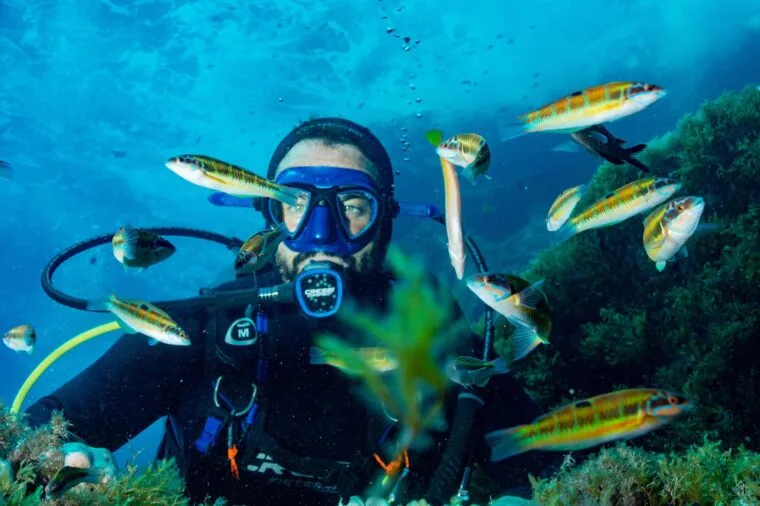
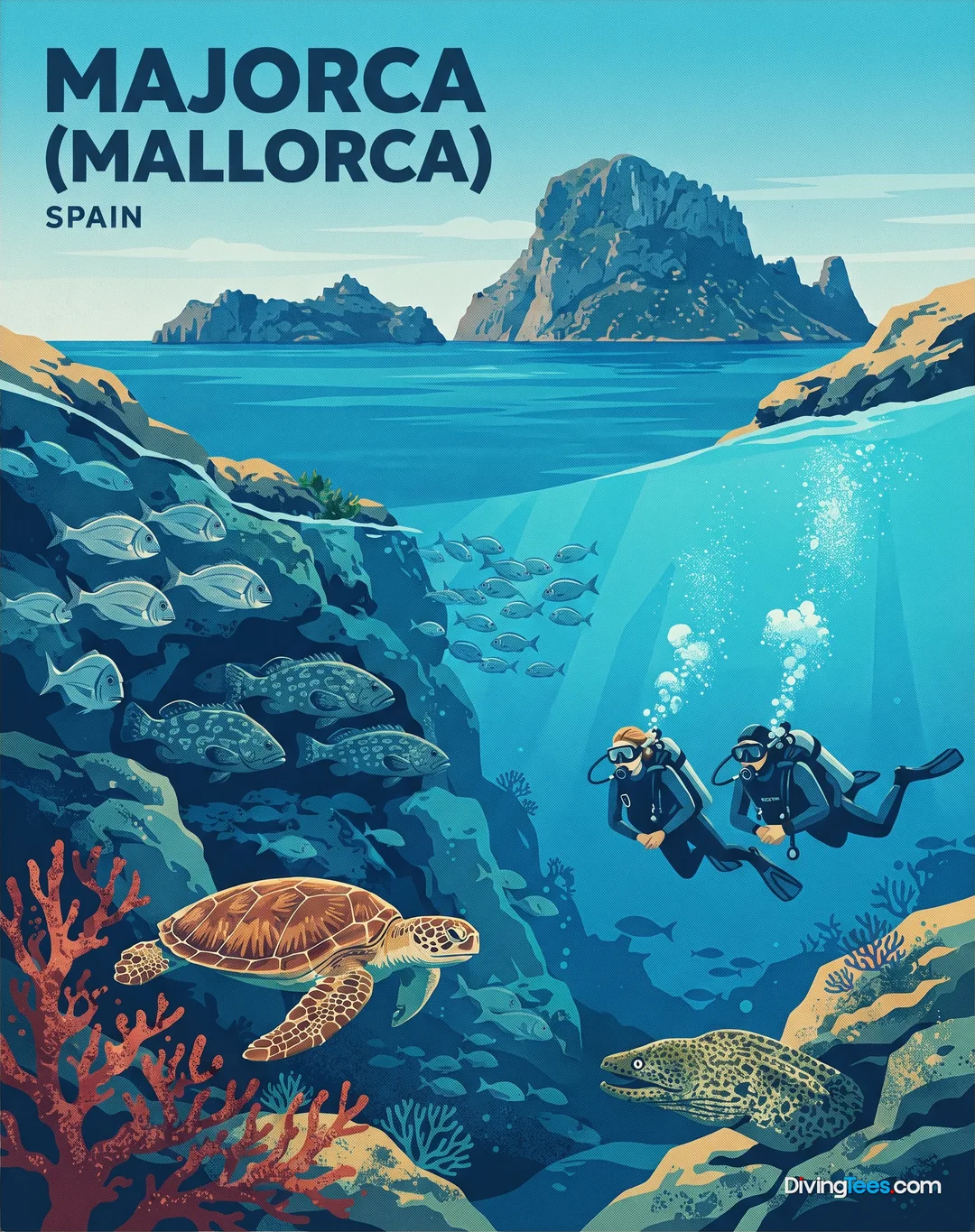
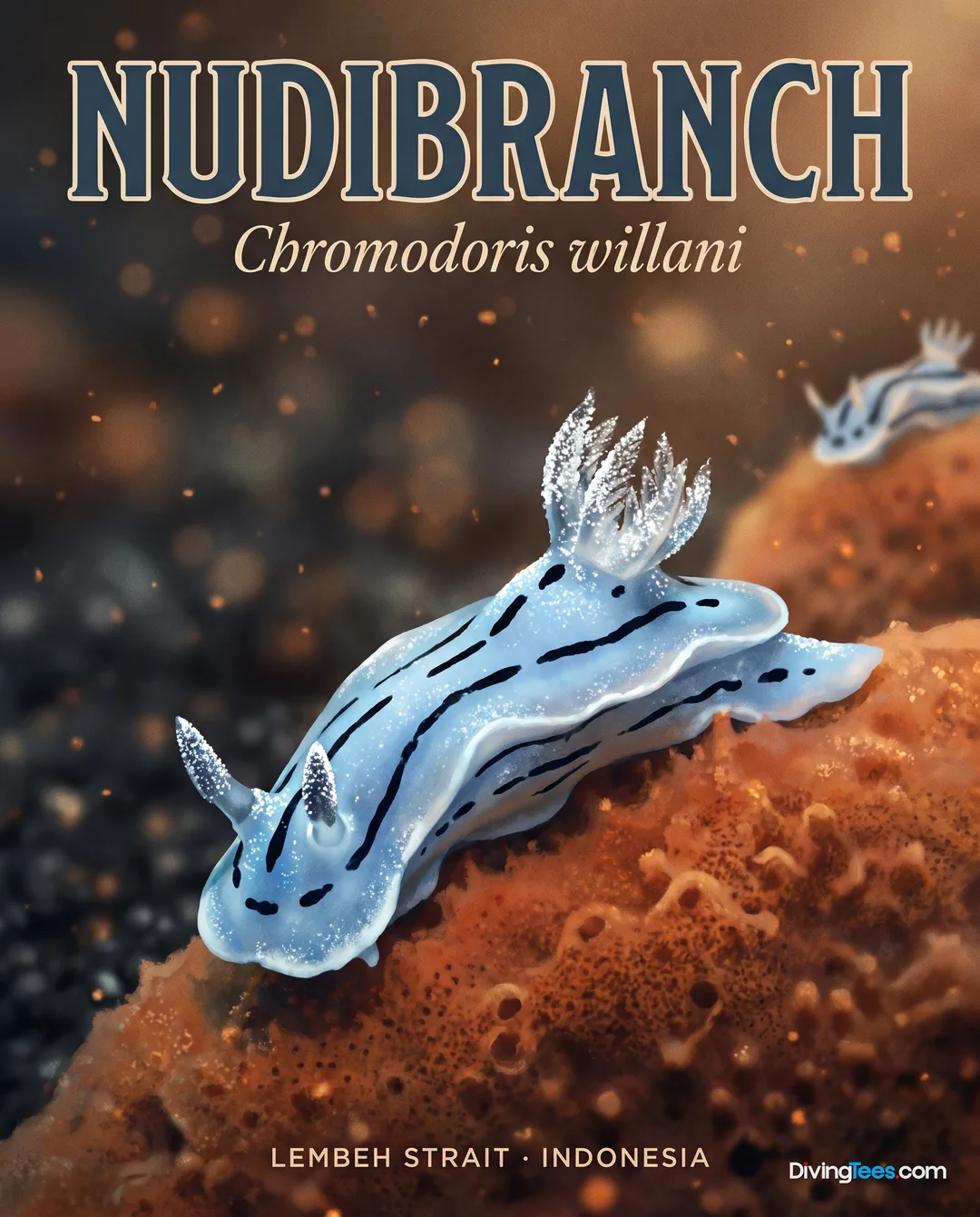
The marine life at Cala Fornells is well-distributed across the different depth zones of the reef. On the rocky platforms and around the cave entrances, you are likely to encounter scorpionfish waiting in ambush among the crevices. For those interested in smaller details, the reef supports various nudibranchs that can be found on the substrate or attached to rock surfaces. The presence of these organisms adds significant color and detail to the macro-observation aspect of the dive. These species are characteristic of the Mediterranean rocky reef ecosystem and are easily spotted with a close eye on the terrain.
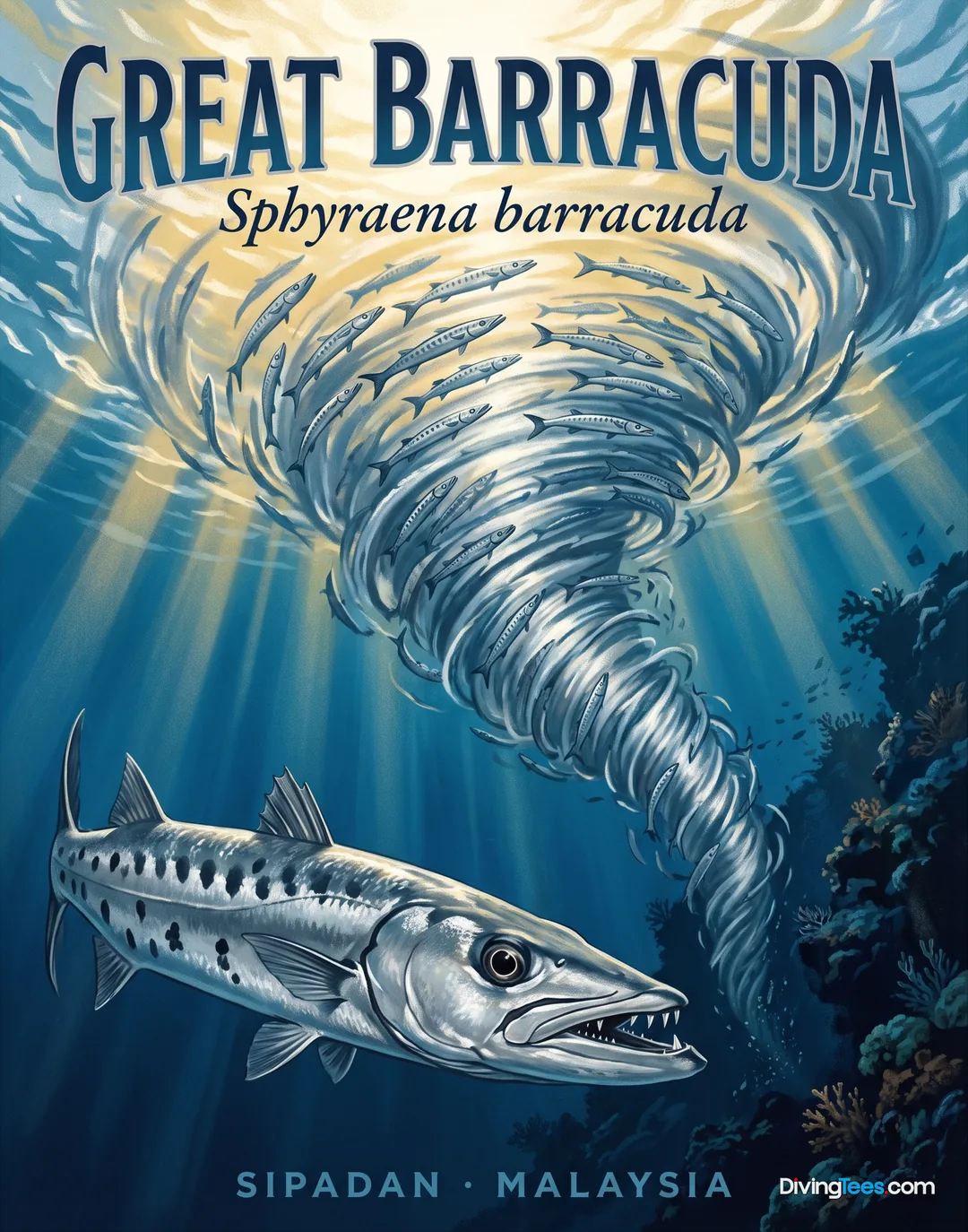
Moving into the mid-depth sections, the fauna becomes more mobile and larger in scale. You can often spot amberjack patrolling the edges of the rocky formations, moving through the water column with steady, rhythmic strokes. Barracuda are also known to frequent the area, often appearing as larger silhouettes against the light filtering down from the surface. Observing these predators requires a calm approach, as they typically cruise the boundaries between the reef and the open water. Their presence indicates a healthy, functioning reef environment that attracts various levels of the local food chain.
Conditions at Cala Fornells are generally defined by the sheltered nature of the cove. Under normal circumstances, the water remains calm with only light currents, which makes it a reliable location for those practicing buoyancy or completing certification dives. However, the site's environment can change depending on external weather patterns. Strong easterly or southerly winds can affect this section of the southwest Mallorcan coast, potentially altering the water movement and surface conditions. Monitoring the wind direction is a practical step for any diver planning to enter the water here.
Visibility at the site is typically consistent, providing a clear view of the underwater topography and the resident fauna. You can expect to see the structures of the reef and the tunnel clearly, even when navigating the slightly deeper sections near the 20-metre mark. The clarity of the water allows for easy navigation by visual reference points along the coastline. This combination of easy access, gradual depth, and clear visibility makes the site a functional and predictable environment for a wide range of diving activities.
The site features depths from 3 to 20 metres and is accessible from Open Water Diver level. Expected visibility is between 15 and 30 metres. Currents are generally light due to the sheltered cove, though they can increase during strong easterly or southerly winds. The best period for diving is from May to October.
You can dive Cala Fornells from May to October. The cove is sheltered and generally calm, with light currents under normal conditions. Strong easterly or southerly winds can change water movement and surface conditions, so checking the wind direction is useful before entering the water.
Cala Fornells is accessible from Open Water Diver level. Its shore entry uses steps and a small sandy area in front of the Hotel Cala Fornells. The gradual depth profile supports controlled descents and buoyancy practice, while the rocky formations and tunnel add interest within an accessible setting.
Cala Fornells ranges from 3 to 20 metres, with shallow reef areas near the shore and deeper rocky platforms along the western side of the cove. Currents are generally light because the location is sheltered, although strong easterly or southerly winds can increase water movement.
At Cala Fornells, you can swim through a tunnel beginning at 6 metres and explore small caves, ledges, and rocky reef. Scorpionfish and nudibranchs inhabit the formations, while amberjack and barracuda move through the mid-depth zones. Visibility typically ranges from 15 to 30 metres.